
Mt. Croach Patrick
Ireland's holiest mountain, where Patrick fasted forty days and pilgrims have climbed barefoot for millennia
County Mayo, Westport-Belmullet Municipal District, Ireland
At A Glance
- Coordinates
- 53.7599, -9.6598
- Suggested Duration
- Three to four hours round trip for the Pilgrim Path climb from Murrisk (seven kilometers linear). Longer if performing all prayer stations. Add one to two days for the full thirty-five-kilometer Tochar Phadraig walk from Ballintubber Abbey. On Reek Sunday, allow extra time for crowds and summit Mass.
- Access
- The main trailhead is at the Croagh Patrick Visitor Centre in Murrisk, approximately 8 km west of Westport, County Mayo. Parking available at the visitor centre but fills up quickly on Reek Sunday and busy weekends. Bus Eireann route 450 runs from Westport to Murrisk. The Visitor Centre includes a coffee shop, restaurant, craft shop, hot showers, and secure lockers. The Tochar Phadraig begins at Ballintubber Abbey, thirty-five kilometers from Croagh Patrick; registration required. Walking sticks available for rent at the Murrisk car park. The climb divides into three sections: a gradual-to-steep approach to the shoulder, a relatively level shoulder section, and a steep final ascent over loose scree to the summit. Mobile phone signal is generally available in the lower sections but may become unreliable near the summit.
Pilgrim Tips
- The main trailhead is at the Croagh Patrick Visitor Centre in Murrisk, approximately 8 km west of Westport, County Mayo. Parking available at the visitor centre but fills up quickly on Reek Sunday and busy weekends. Bus Eireann route 450 runs from Westport to Murrisk. The Visitor Centre includes a coffee shop, restaurant, craft shop, hot showers, and secure lockers. The Tochar Phadraig begins at Ballintubber Abbey, thirty-five kilometers from Croagh Patrick; registration required. Walking sticks available for rent at the Murrisk car park. The climb divides into three sections: a gradual-to-steep approach to the shoulder, a relatively level shoulder section, and a steep final ascent over loose scree to the summit. Mobile phone signal is generally available in the lower sections but may become unreliable near the summit.
- No formal religious dress code, but appropriate hiking attire is essential for safety. Waterproof layers, warm clothing, and sturdy hiking boots with ankle support are strongly recommended. Walking sticks are available for rent at the Murrisk car park and are highly recommended. The mountain weather can change rapidly.
- Photography is freely permitted throughout the climb and at the summit. During Mass at the summit chapel on Reek Sunday, discretion is expected. The Boheh Stone should be photographed without touching.
- Barefoot climbing is now discouraged by authorities due to the genuine risk of injury on the scree section. If you choose to climb barefoot, understand that the rocks are sharp and unstable. The final section is dangerous in wet conditions even with boots. Check weather conditions before climbing. The mountain is exposed to rapid weather changes. Inform someone of your plans. Carry water and appropriate gear.
Overview
Croagh Patrick rises 764 meters above Clew Bay in County Mayo, carrying unbroken sacred significance from the Neolithic period to the present day. Known as the Reek, the mountain is where Saint Patrick is said to have fasted for forty days, banished snakes from Ireland, and defeated the forces of darkness. Each year on Reek Sunday, tens of thousands of pilgrims climb this mountain as they have for millennia.
They call it the Reek, and they climb it in bare feet.
On the last Sunday of July, an estimated twenty-five to forty thousand people ascend Croagh Patrick, Ireland's holiest mountain, for Reek Sunday. Some wear hiking boots. Some carry walking sticks rented at the car park. And some, following a tradition of penitential climbing that predates Christianity, remove their shoes and pick their way up seven hundred and sixty-four meters of rock, scree, and wind on their bare soles.
The mountain earned its sanctity long before Patrick. Five thousand years ago, Neolithic communities carved over two hundred and fifty cup-and-ring marks into the Boheh Stone a few kilometers to the east. From this stone, on April 18 and August 24, the setting sun appears to roll down the northwestern flank of the mountain, a phenomenon the carvers clearly understood and deliberately recorded. A Celtic hilltop fort encircles the summit. The ancient chariot road from Rathcroghan, the royal capital of Connacht, led directly to the mountain's base.
Patrick arrived, according to tradition, in 441 AD. He spent forty days on the summit in prayer and fasting, paralleling the biblical fasts of Jesus and Moses. Demons assailed him in the form of blackbirds and snakes. He drove them away by hurling his black bell at them and banished all snakes from Ireland. The story is triumphalist by design, a narrative of Christianity conquering paganism. But the mountain holds both layers. The timing of Reek Sunday aligns with the ancient Lughnasa harvest festival. The prayer stations involve circumambulating cairns that predate Christianity. The mountain itself was sacred before any saint set foot on it.
What draws people today is partly devotion, partly tradition, partly the physical challenge, and partly something harder to name. The mountain's conical peak, rising above the scattered islands of Clew Bay, is one of the most recognizable shapes in Ireland. Climbing it is an act of participation in something vast and continuous. Whether you carry a rosary or not, the mountain asks the same thing of everyone: keep going.
Context And Lineage
Croagh Patrick has been a sacred mountain for at least five thousand years, from Neolithic astronomical observation through the Celtic Lughnasa harvest festival to its status as Ireland's premier Catholic pilgrimage site. The mountain embodies the full arc of Irish spiritual history.
Multiple narratives converge at Croagh Patrick. In the Christian tradition, Saint Patrick climbed the mountain in 441 AD during Lent and spent forty days in prayer and fasting. Demons assailed him in the form of blackbirds and snakes. He drove them away by hurling his black bell, the Clog Dubh, at them, casting them into the lake at the mountain's north base known as Log na nDeamhan, the Demon's Hollow. He then banished all snakes from Ireland.
In the pre-Christian mythological tradition, Crom Dubh, a dark harvest deity who guarded the grain, was overcome by Lugh at the mountain. The contest between light and darkness, between the forces that release the harvest and those that withhold it, was enacted here annually at Lughnasa. The survival of Crom Dubh's name in Crom Dubh Sunday, which coincides with Reek Sunday, preserves the older narrative within the Christian framework.
Deeper still, the Boheh Stone's rolling sun phenomenon demonstrates that the mountain's astronomical properties were recognized and recorded by Neolithic peoples over five thousand years ago.
The mountain's sacred lineage begins with the Neolithic communities who carved the Boheh Stone and observed the rolling sun phenomenon. Bronze Age communities developed an extensive ritual landscape oriented toward the peak. Celtic peoples celebrated Lughnasa on the summit, honoring Lugh and the harvest. Patrick Christianized the mountain in the 5th century, and the pilgrimage has been documented from 1113 onward. Pope Eugene IV issued an indulgence in 1432. The Tochar Phadraig was restored from 1987 by the Ballintubber Abbey Trust. Today, the mountain draws over one hundred thousand visitors annually, continuing a tradition of ascent that is among the oldest continuously practiced in Europe.
Saint Patrick
founder
Ireland's patron saint, who according to tradition spent forty days fasting and praying on the summit in 441 AD, banished snakes and demons from Ireland, and established the mountain as the preeminent sacred peak of Irish Christianity.
Lugh
deity
Celtic sun god associated with the Lughnasa harvest festival. The mountain, anciently called Cruachan Aigle, was believed to be his domain. The festival of Lughnasa celebrated his annual victory over Crom Dubh.
Maire MacNeill
scholar
Folklorist whose landmark 1962 book 'The Festival of Lughnasa' established the pre-Christian origins of the Croagh Patrick pilgrimage, demonstrating that Reek Sunday preserves the ancient Celtic harvest festival.
Gerry Bracken
researcher
Researcher who rediscovered the Boheh Stone rolling sun phenomenon between 1989 and 1992, confirming the mountain's role in a Neolithic astronomical landscape extending back over five thousand years.
Why This Place Is Sacred
Croagh Patrick's thin place quality emerges from the convergence of at least five thousand years of sacred intent, the physical extremity of the climb, the mountain's dramatic visual presence, and astronomical phenomena that connect it to the Neolithic understanding of the solar cycle. The summit, frequently above the clouds, literalizes the sense of standing between earth and sky.
The thinness of Croagh Patrick is earned, not given. The mountain does not offer easy transcendence. It offers a steep, rocky, physically demanding climb that strips away comfort and certainty, leaving the pilgrim exposed to weather, fatigue, and whatever arises in the space that effort creates.
The final section is the most demanding. Loose scree shifts underfoot, making each step uncertain. For those climbing barefoot, the rocks are unforgiving. The body's protest against this treatment is part of the tradition's design. In the Christian framework, the discomfort is understood as penance. In the older, pre-Christian understanding, it may have served as a liminal practice, pushing the body past ordinary thresholds into a state where encounter with the sacred becomes possible.
At the summit, the world transforms. On clear days, Clew Bay spreads below with its hundreds of islands, said by local tradition to number three hundred and sixty-five, one for each day of the year. The Atlantic stretches to the horizon. The small white chapel, built in 1905, sits at the peak where Mass is celebrated on Reek Sunday, connecting the contemporary pilgrim to a tradition of summit worship that extends back through Patrick to the unknown peoples who built the hilltop fort and observed the rolling sun at the Boheh Stone.
The Boheh Stone itself adds a dimension of astronomical thinness. Twice a year, on April 18 and August 24, the setting sun appears to roll down the mountain's flank, creating a visual phenomenon that the Neolithic carvers clearly considered significant enough to mark with over two hundred and fifty carvings. These dates bracket the growing season and the ancient harvest festival. The mountain is not merely climbed. It is observed, tracked, measured against the sky.
The Tochar Phadraig, the thirty-five-kilometer pilgrim path from Ballintubber Abbey, extends the liminal experience across an entire landscape. Walking this ancient route, which follows a pre-Christian chariot road later Christianized by the monks of Ballintubber, the pilgrim approaches the mountain through a day of steady effort that makes the climb itself the culmination of a longer threshold crossing.
The mountain's sacred use extends to at least the Neolithic period, evidenced by the Boheh Stone rock art and the rolling sun phenomenon. During the Celtic era, it was the domain of Lugh, the sun god, and the site of the Lughnasa harvest festival. The summit hilltop fort indicates organized ritual or defensive activity at the peak. Saint Patrick's forty-day fast Christianized this existing sacred mountain, establishing it as the primary pilgrimage site in Ireland.
The transition from Celtic harvest festival to Christian pilgrimage was gradual rather than sudden. The timing of Reek Sunday, on the last Sunday of July, directly preserves the Lughnasa date. The rounding rituals at the prayer stations likely preserve pre-Christian circumambulation practices. The 1113 entry in the Annals of Ulster provides the earliest written reference to the pilgrimage. Pope Eugene IV issued a plenary indulgence in 1432, confirming the medieval Church's formal recognition. The current summit chapel was built in 1905. The Tochar Phadraig was restored beginning in 1987 by the Ballintubber Abbey Trust. Through all these changes, the essential act has remained the same: people climb this mountain because it has been climbed by those who came before.
Traditions And Practice
The Reek Sunday pilgrimage on the last Sunday of July is the primary event, drawing tens of thousands of pilgrims for a climb that includes prescribed prayer stations, summit Mass, and Confession. The Tochar Phadraig from Ballintubber Abbey offers a thirty-five-kilometer approach. The mountain is climbed year-round by both pilgrims and hikers.
The traditional Reek Sunday pilgrimage involves climbing the mountain and performing prayers at three stations. At Leacht Beanain, pilgrims walk around seven times reciting seven Our Fathers, seven Hail Marys, and one Creed. At the summit chapel, fifteen circuits with fifteen Our Fathers, fifteen Hail Marys, and one Creed, praying for the Pope's intentions. At Leabha Phadraig, seven circuits with prayers. Finally, seven circuits each of three ancient burial cairns at Reilig Mhuire. Some pilgrims climb barefoot as an act of penance. Pre-Christian rituals included Lughnasa harvest celebrations, possible sun worship connected to the Boheh Stone, and the mythological contest between Lugh and Crom Dubh.
Reek Sunday draws an estimated twenty-five to forty thousand pilgrims in a single day. Mass and Confession are available at the summit chapel. The prayer stations are performed by devout pilgrims, though many visitors climb without performing them. Some still climb barefoot despite discouragement from authorities concerned about injuries on the scree. The Tochar Phadraig walk from Ballintubber Abbey, thirty-five kilometers following an ancient processional route, is organized with registered group walks available. The mountain is climbed year-round. The Boheh Stone rolling sun phenomenon draws observers on April 18 and August 24.
If you come for the pilgrimage, learn the prayer station sequence before you arrive. The routine of circuits, prayers, and circumambulation gives structure to the climb that transforms physical exertion into spiritual practice. Even if you are not Catholic, performing the stations provides a way of engaging with the mountain that goes deeper than hiking.
If the full Reek Sunday experience is more than you seek, climb on a quiet weekday. The mountain is no less sacred without the crowds. Pause at Leacht Beanain on the shoulder and look at the view before the final ascent. The transition from the gradual approach to the steep scree section is significant. Notice how your attention changes when the footing becomes uncertain.
For the fullest experience, walk the Tochar Phadraig from Ballintubber Abbey. Register at the abbey beforehand. The thirty-five-kilometer walk through the Mayo landscape, following the ancient chariot road, transforms the mountain from a single climb into the culmination of a pilgrimage that fills an entire day or more.
Roman Catholicism - Reek Sunday Pilgrimage
ActiveCroagh Patrick is Ireland's holiest mountain, directly associated with Saint Patrick, Ireland's patron saint. According to tradition, Patrick spent forty days fasting and praying on the summit in 441 AD. The mountain symbolizes the Christianization of Ireland. The earliest documented reference to the pilgrimage is from 1113, and a Papal indulgence was issued in 1432. The tradition has continued unbroken for at least 1,500 years, with Reek Sunday drawing tens of thousands annually.
The Reek Sunday pilgrimage involves climbing the mountain and performing prayers at three stations: Leacht Beanain (seven circuits), the summit chapel (fifteen circuits), and Leabha Phadraig (seven circuits), followed by circuits of three cairns at Reilig Mhuire. Mass and Confession at the summit chapel on Reek Sunday. Some pilgrims climb barefoot as penance. The Tochar Phadraig offers a thirty-five-kilometer approach from Ballintubber Abbey.
Lughnasa / Celtic Harvest Festival
HistoricalThe Croagh Patrick pilgrimage pre-dates Christianity and was originally the Celtic festival of Lughnasa, the harvest celebration. The mountain was the domain of Lugh, the Celtic sun god. The timing of Reek Sunday directly preserves the Lughnasa date. The myth of Lugh's contest with Crom Dubh, in which Lugh seizes the grain from the dark god on behalf of mankind, was likely enacted through ceremony at the summit.
Lughnasa festival activities included climbing to the summit to honor Lugh, celebrating the harvest season, and ritually marking the transition from summer to autumn. The surviving rounding rituals around cairns and landscape features may preserve pre-Christian circumambulation practices.
Neolithic and Bronze Age Ritual Landscape
HistoricalThe Boheh Stone, with over 250 cup-and-ring carvings, and the rolling sun phenomenon on April 18 and August 24 demonstrate that the mountain's sacred significance extends back at least five thousand years. The prehistoric monuments surrounding and oriented toward the mountain confirm its central role in the pre-Christian ritual landscape of County Mayo.
The Boheh Stone rock art and its astronomical alignment suggest seasonal ceremonies marking the sowing season (April) and the harvest (August). The ancient chariot road from Rathcroghan to the mountain suggests organized processions over millennia.
Neo-Paganism (Lughnasa Revival)
ActiveModern Neo-Pagan practitioners celebrate Lughnasa at and around Croagh Patrick, honoring the mountain's pre-Christian significance as a site of harvest festival and solar observation. The synchronicity of Reek Sunday with Lughnasa provides opportunity for interfaith and syncretic observance.
Neo-Pagan groups and individuals climb the mountain around August 1 to honor the Celtic heritage of the site and perform seasonal rituals. The Boheh Stone rolling sun phenomenon on August 24 also attracts Neo-Pagan observers.
Experience And Perspectives
Pilgrims and visitors consistently describe the extraordinary views from the summit, the physical challenge of the climb, the communal atmosphere on Reek Sunday, and a sense of participating in something continuous across millennia. The final scree section is universally noted as demanding, and the descent is often reported as more difficult than the ascent.
The climb begins gently. From the car park at the Croagh Patrick Visitor Centre in Murrisk, the Pilgrim Path rises through farmland and then steepens across open moorland. The first section is wide and well-trodden, the mountain's conical peak visible ahead. On busy days, the path fills with a cross-section of Irish society: families with children, elderly pilgrims with decades of experience, young people testing themselves, tourists who may not fully understand what they have signed up for.
The shoulder of the mountain offers a level respite and expanding views of Clew Bay. Here, at Leacht Beanain, the first prayer station, devout pilgrims begin their circuits: seven rounds of the cairn with seven Our Fathers, seven Hail Marys, and one Creed. Others pause, catch their breath, and look at the landscape opening below.
The final ascent changes everything. The path becomes a steep scramble over loose scree. Each step upward risks sliding back. Walking sticks, rented or brought, become essential. For those climbing barefoot, this section is an ordeal. The rocks are sharp, unstable, and unforgiving. The body's full attention is required, leaving no room for the mental noise that normally accompanies travel.
At the summit, on clear days, the reward is one of Ireland's finest views. Clew Bay with its mosaic of islands, the mountains of Connemara to the south, the rolling hills of Mayo to the north. The small white chapel, stark against the sky, holds Mass and Confession on Reek Sunday. On cloudy days, the summit exists above or within the cloud line, a world reduced to stone, wind, and the other pilgrims who have made it to the top.
The descent is widely reported as more challenging than the ascent. The scree that was difficult going up becomes treacherous going down. Knees take punishment. Concentration flags. The mountain reminds you, on the way down, that pilgrimage is not just about reaching the goal.
Those who walk the full Tochar Phadraig from Ballintubber Abbey describe a qualitatively different experience. Thirty-five kilometers of walking through the Mayo landscape, following an ancient route, creates a cumulative weariness and openness that transforms the mountain climb from an event into a culmination.
Respect the mountain. Check Met Eireann weather forecasts before climbing. Bring waterproof layers, warm clothing, and sturdy boots with ankle support. Rent a walking stick at the Murrisk car park if you do not have one. Tell someone your plans.
For the pilgrimage dimension, come on Reek Sunday. The communal experience of climbing with thousands of others is irreplaceable. Arrive early. If you wish to perform the traditional prayer stations, learn the sequence beforehand. If you wish to walk the Tochar Phadraig, register at Ballintubber Abbey, as the route crosses private land.
For the astronomical dimension, visit the Boheh Stone on April 18 or August 24 to witness the rolling sun phenomenon, weather permitting.
Croagh Patrick invites interpretation from Catholic theology, Celtic studies, archaeology, and contemporary pilgrimage studies. Academic analysis has increasingly recognized the mountain as a site where multiple traditions coexist rather than succeed one another, with the Christian pilgrimage carrying visible traces of its pre-Christian foundations.
Scholars recognize Croagh Patrick as a site of continuous sacred significance spanning at least five thousand years. Maire MacNeill's landmark 1962 study established the pre-Christian Lughnasa origins of the pilgrimage. Archaeological excavations confirmed a Celtic hilltop fort on the summit and a 5th-century chapel or oratory. The Boheh Stone rolling sun phenomenon, rediscovered by Gerry Bracken between 1989 and 1992, confirmed the mountain's role in a Neolithic astronomical landscape. Academic analysis frames the Reek Sunday pilgrimage as a syncretic event blending official Catholic narratives, Celtic pagan traditions, Irish nationalist history, and personal spiritual experience. The earliest documentary evidence is the 1113 Annals of Ulster entry. The 1432 Papal indulgence confirms medieval institutional recognition.
Within Irish Catholic tradition, Croagh Patrick represents the foundational moment of Irish Christianity. Saint Patrick's forty-day fast symbolizes the sanctification of the Irish landscape and the victory of the Christian faith. The mountain is understood as the Irish equivalent of Mount Sinai, where Patrick communed with God at a great height. The story of banishing snakes and demons is understood both literally and symbolically as the expulsion of paganism from Ireland.
Within the older Irish mythological tradition, the mountain was the domain of Lugh and the site of the eternal struggle between light and darkness. The survival of Crom Dubh in local folklore, even after Christianization, testifies to the resilience of the pre-Christian tradition.
Some practitioners view Croagh Patrick as a major earth energy center, with the conical peak acting as a natural focal point. The mountain's astronomical alignments, particularly the Boheh Stone rolling sun, are interpreted as evidence of advanced geomantic knowledge among prehistoric peoples. The physical challenge of the climb is seen as a form of embodied spiritual practice that opens the practitioner to non-ordinary states of consciousness. The layering of multiple religious traditions at a single site is viewed as evidence of the mountain's intrinsic sacred quality that transcends any particular cultural framework.
The exact nature and extent of Neolithic ritual practices at the mountain remain unknown. Whether the Boheh Stone rolling sun phenomenon was the primary reason for the mountain's sacred status or one of several factors is unclear. The process by which the Lughnasa festival was converted into Reek Sunday is not documented. The full archaeological record of the summit chapel's evolution from the 5th century to the present is incomplete. Whether the Celtic hilltop fort was defensive, ceremonial, or both is not established.
Visit Planning
The main trailhead is at the Croagh Patrick Visitor Centre in Murrisk, approximately 8 km west of Westport, County Mayo. The round-trip climb takes three to four hours. Reek Sunday is the last Sunday in July.
The main trailhead is at the Croagh Patrick Visitor Centre in Murrisk, approximately 8 km west of Westport, County Mayo. Parking available at the visitor centre but fills up quickly on Reek Sunday and busy weekends. Bus Eireann route 450 runs from Westport to Murrisk. The Visitor Centre includes a coffee shop, restaurant, craft shop, hot showers, and secure lockers. The Tochar Phadraig begins at Ballintubber Abbey, thirty-five kilometers from Croagh Patrick; registration required. Walking sticks available for rent at the Murrisk car park. The climb divides into three sections: a gradual-to-steep approach to the shoulder, a relatively level shoulder section, and a steep final ascent over loose scree to the summit. Mobile phone signal is generally available in the lower sections but may become unreliable near the summit.
Westport (8 km east) offers extensive accommodation from hostels to hotels and is the most practical base for climbing Croagh Patrick. Murrisk itself has limited B&B options near the trailhead. For those walking the Tochar Phadraig, Ballintubber and the villages along the route offer some accommodation.
Croagh Patrick is Ireland's holiest mountain and most important pilgrimage site. Respectful behavior is expected at all times, particularly during Reek Sunday and at the summit chapel. The mountain also demands practical respect as a serious climbing challenge.
The summit chapel is a place of worship, not a viewpoint. On Reek Sunday, Mass is celebrated and Confession heard. If you are present during services, behave as you would in any church: quiet, respectful, aware that those around you may be in the midst of a profound spiritual experience. For many Irish people, the Reek Sunday climb is a deeply personal act of faith. Your presence should honor that.
On non-pilgrimage days, the summit still carries the weight of its history. Treat the cairns, the ruins, and the landscape with care. Carry out everything you bring. The mountain is a conservation area.
The Tochar Phadraig crosses private land by agreement with local landowners. This access is a privilege maintained by Ballintubber Abbey Trust. Registration is required and courtesy toward the landowners whose fields you cross is essential.
The Boheh Stone is a protected National Monument. Do not touch, climb on, or disturb the rock art. Over two hundred and fifty Neolithic carvings survive on this stone. Each careless contact risks damage to an irreplaceable five-thousand-year-old record.
No formal religious dress code, but appropriate hiking attire is essential for safety. Waterproof layers, warm clothing, and sturdy hiking boots with ankle support are strongly recommended. Walking sticks are available for rent at the Murrisk car park and are highly recommended. The mountain weather can change rapidly.
Photography is freely permitted throughout the climb and at the summit. During Mass at the summit chapel on Reek Sunday, discretion is expected. The Boheh Stone should be photographed without touching.
Catholic pilgrims may make donations at the summit chapel. No specific offering tradition exists at the mountain itself. The appropriate offering to the mountain is effort and respect.
Check weather conditions before climbing using Met Eireann forecasts. Inform someone of your climbing plans. The Tochar Phadraig path requires registration at Ballintubber Abbey as it crosses private land. Respect the summit chapel as a place of worship, especially during Mass. Carry out all litter. Do not disturb the Boheh Stone rock art.
Sacred Cluster
Nearby sacred places create the location cluster described in the growth plan. This block is intentionally crawlable and links into the wider regional graph.
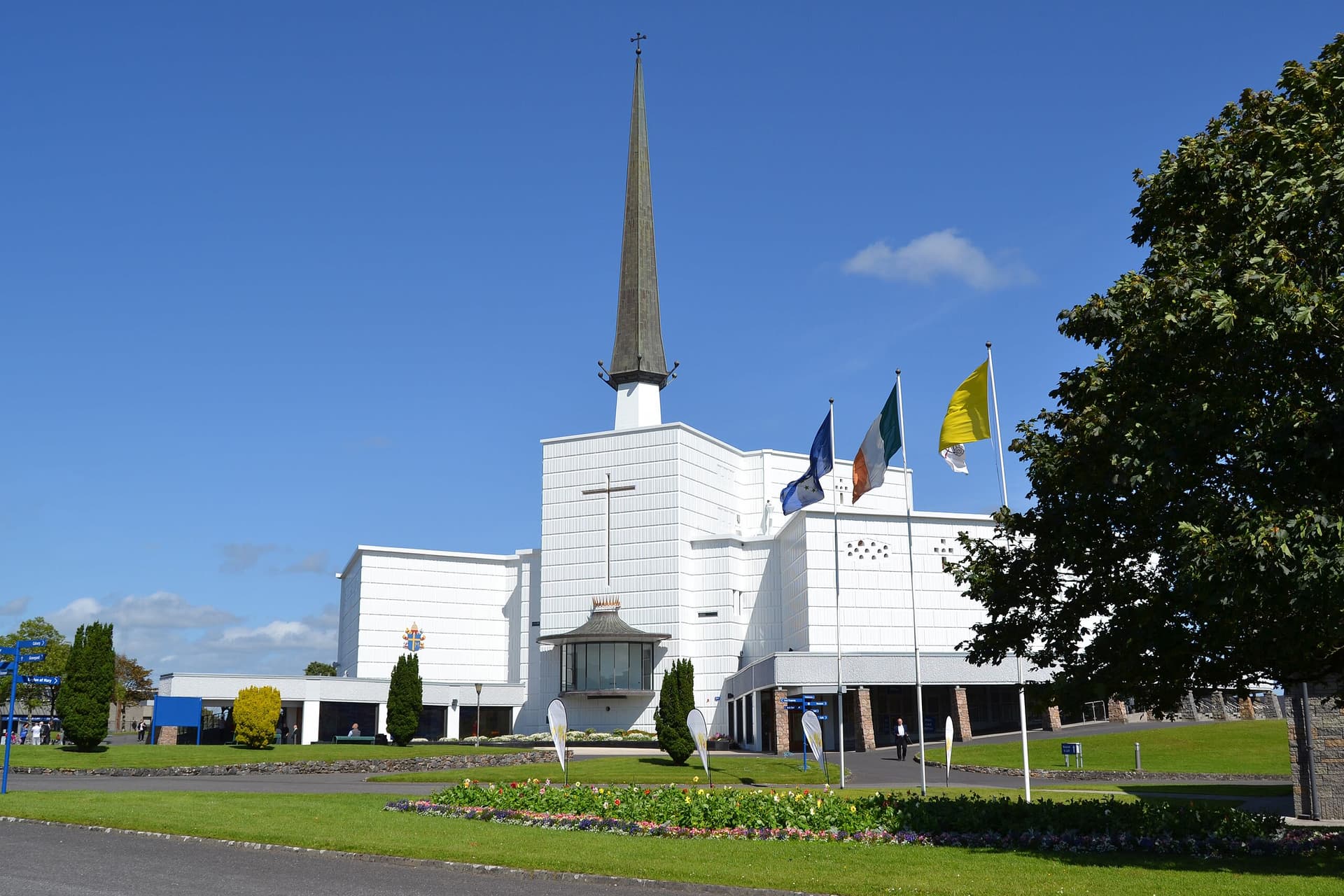
Basilica of Our Lady of Knock, Queen of Ireland
County Mayo, Claremorris-Swinford Municipal District, Ireland
48.9 km away
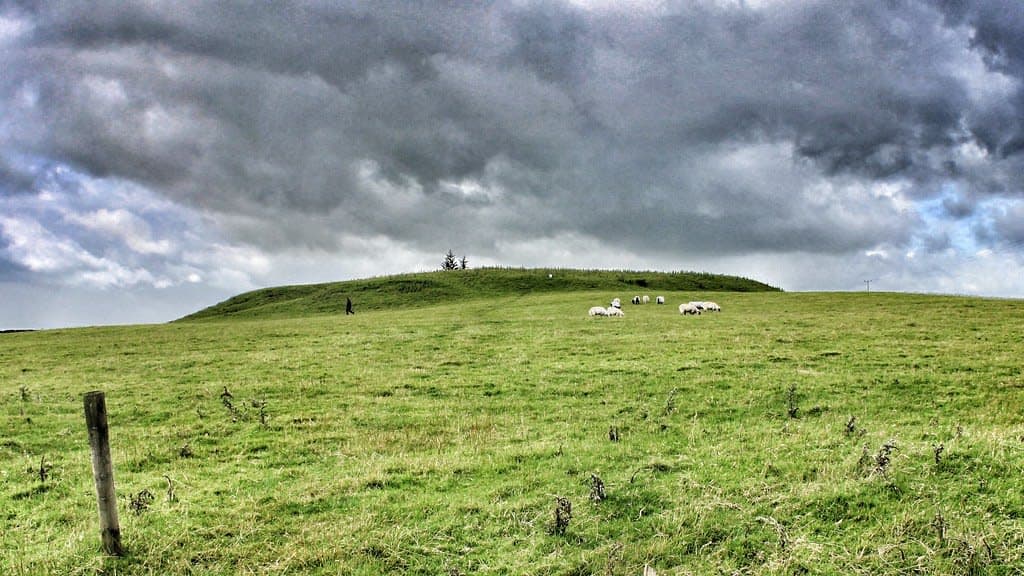
Rath Cruachan, Roscommon, Ireland
County Roscommon, Boyle Municipal District, Ireland
89.2 km away
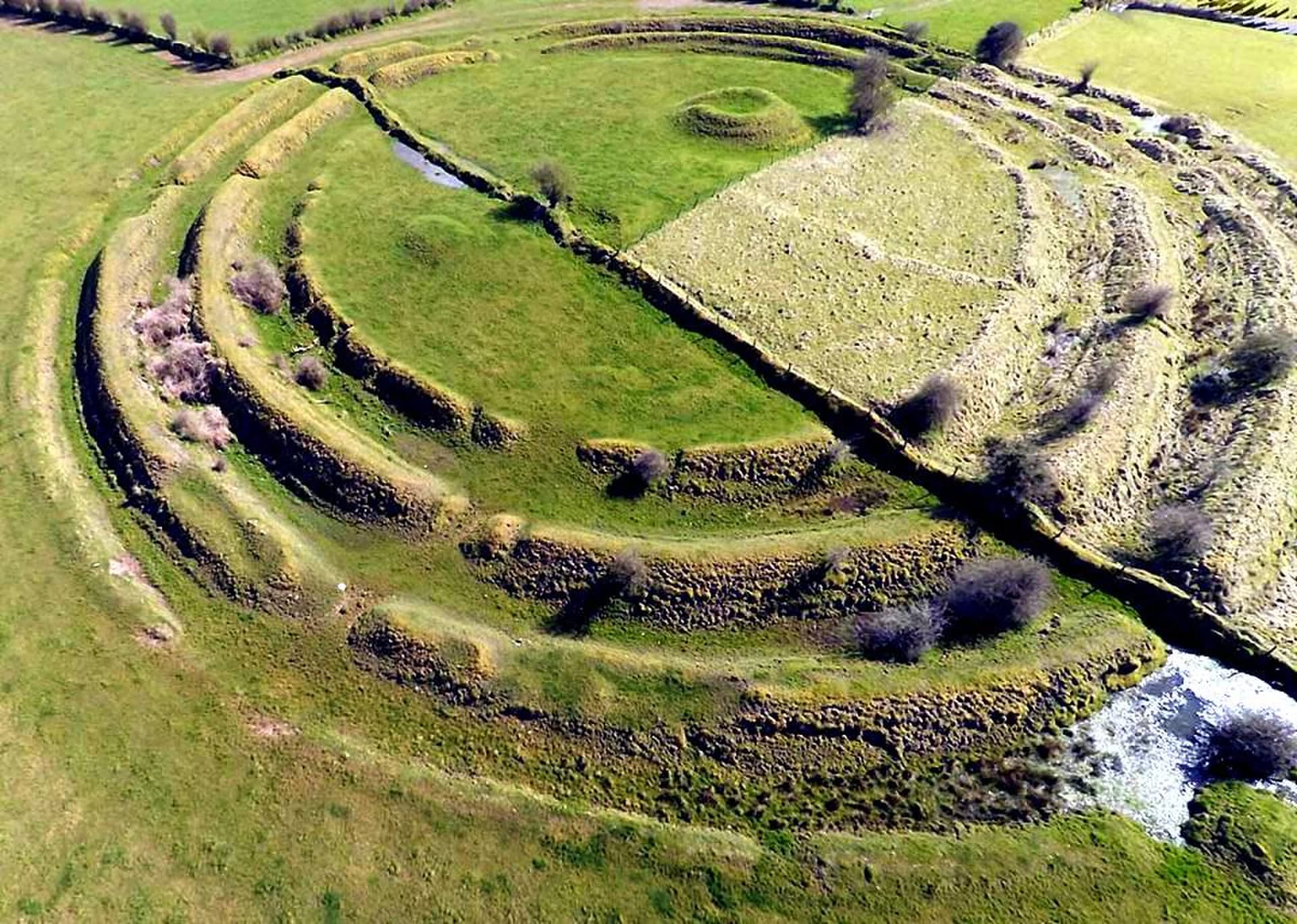
Rathcroghan
Tulsk, County Roscommon, Ireland
89.2 km away
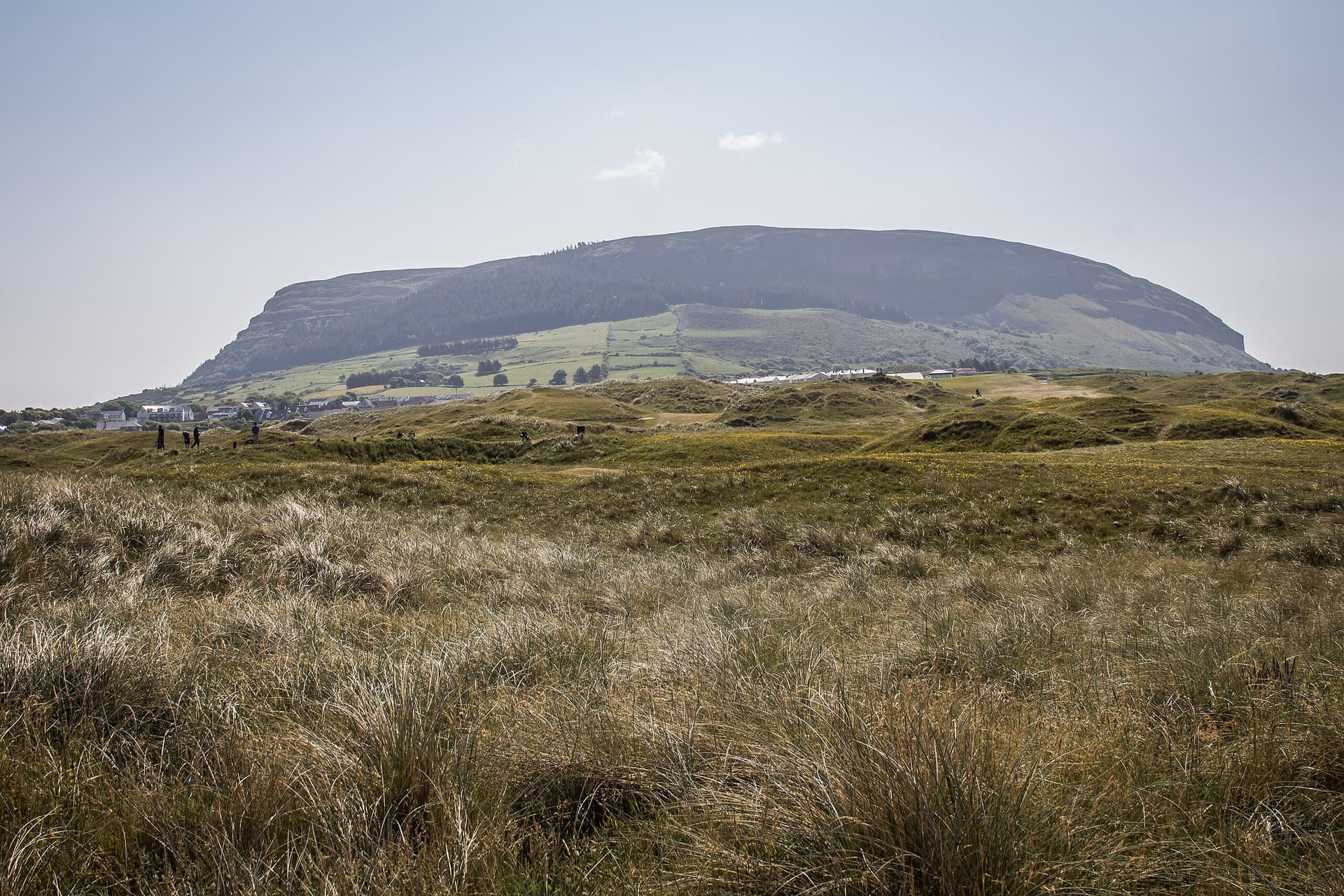
Knocknarea megalthic site, Sligo, Ireland
County Sligo, Sligo Municipal Borough District, Ireland
90.0 km away