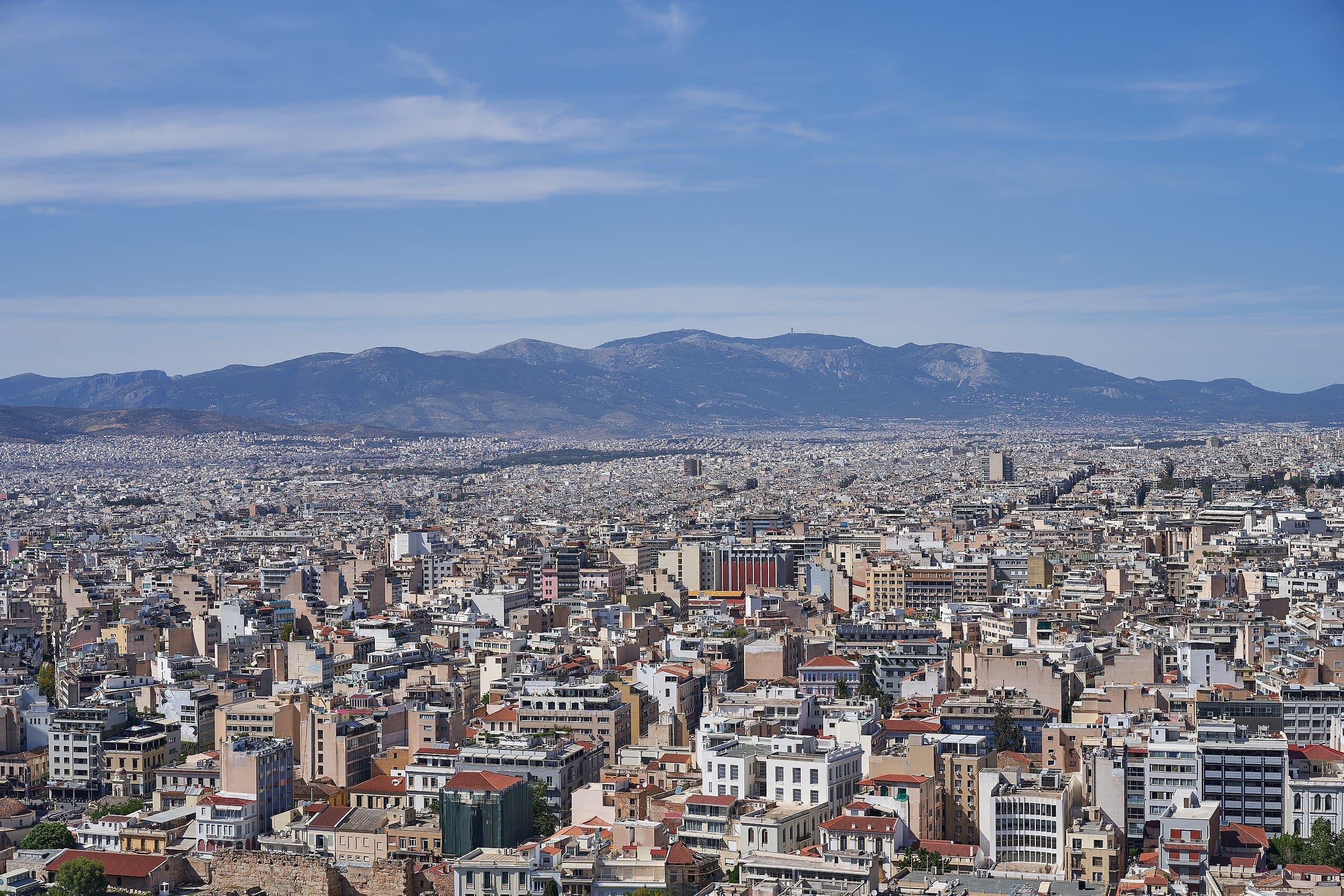
Mount Parnitha
The wild mountain above Athens where Pan still inhabits the caves and the forest remembers
Regional Unit of East Attica, Attica, Greece
At A Glance
- Coordinates
- 38.1737, 23.7177
- Suggested Duration
- Half day for the Panos Cave trail (three to four hours round trip). Full day for the summit. Phyle Fortress: two hours round trip from its trailhead.
- Access
- Thirty kilometers north of Athens center via the road through Thrakomakedones. A car is the most practical option, as public transport is limited. Parking at the Mpafi refuge. Mountain refuges at Bafi and Flambouri (1,158 meters, capacity fifty each) offer basic shelter. Trails are well-marked with red blazes. Mobile signal is intermittent; carry offline maps.
Pilgrim Tips
- Thirty kilometers north of Athens center via the road through Thrakomakedones. A car is the most practical option, as public transport is limited. Parking at the Mpafi refuge. Mountain refuges at Bafi and Flambouri (1,158 meters, capacity fifty each) offer basic shelter. Trails are well-marked with red blazes. Mobile signal is intermittent; carry offline maps.
- Sturdy hiking boots, sun protection, and layered clothing for changing mountain conditions. Modest dress for the Kliston Monastery: covered shoulders and knees.
- Permitted throughout the national park and at archaeological sites. Ask before photographing inside the monastery or any active church.
- Respect all fire regulations; the 2007 wildfire devastated the mountain, and the forest is still recovering. Do not remove stones, pottery, or other materials from archaeological sites. Some caves may be unstable. In summer, heat and sun exposure are serious concerns on exposed trails.
Overview
Mount Parnitha rises as the highest peak in Attica, a forested wilderness just thirty kilometers north of Athens. Its caves once served as sanctuaries to Pan and the Nymphs, its summit held offerings to Zeus, and its slopes still shelter a Byzantine monastery. Greece's first national park carries the accumulated presence of millennia spent at the threshold between civilization and the wild.
There is a tension at the heart of Attica. To the south, Athens sprawls across its basin, dense with human intention. To the north, Mount Parnitha rises to 1,413 meters, holding forests, caves, and silences that predate the city by ages uncounted. This was Pan's mountain. The god of shepherds and wild places was worshipped not in temples but in the caves and grottoes where the rock opened into darkness and the forest pressed close.
The Phyle Cave and the Panos Cave still hold the memory of that worship. Archaeologists recovered over two thousand oil lamps from one cave alone. Votive reliefs depicting Pan, the Nymphs, and their devotees now rest in the National Archaeological Museum, but the caves that received them remain.
Today the mountain wears the scars of a devastating 2007 wildfire alongside the slow patience of regenerating forest. The Kliston Monastery maintains an Orthodox Christian presence dating to the Byzantine era. Hikers follow red-blazed trails through terrain that shifts from fire-scarred scrubland to dense fir groves. The mountain has not stopped being what it always was: the wild counterpart to everything Athens represents.
Context And Lineage
Mount Parnitha's sacred history spans from Classical-era Pan worship through Byzantine Christianity to its modern role as Greece's first national park, a living palimpsest of how cultures relate to wilderness.
Pan was the son of Hermes, a god who belonged to no city and needed no temple. He was the god of shepherds and flocks, of rustic music played on reed pipes. He was also the god of panic, the sudden terror that seizes travellers in wild places when the silence becomes too large. His worship required only what the mountain already provided: a cave where the darkness felt inhabited, a spring where the water ran cold, a forest where the trees grew close enough to hide what moved between them.
The Nymphs who shared his caves were spirits of the living landscape. To worship Pan and the Nymphs was to acknowledge that the wild places were not empty but occupied by presences older than any human settlement.
The ancient worship of Pan and the Nymphs belongs to Greek Classical religion, part of a broader pattern of cave sanctuaries across the Greek world. The Byzantine-era Kliston Monastery represents the Christian continuation of mountain worship. The 1961 national park designation reflects a modern recognition that certain landscapes merit protection beyond their economic value.
Pan
God of the wild, shepherds, and rustic music. Son of Hermes. The caves of Parnitha were among his primary sanctuaries in Attica, where he was worshipped not in built temples but in the natural darkness of the mountain.
The Nymphs
Nature spirits of springs, caves, and forests who were venerated alongside Pan. The votive reliefs from the Panos Cave depict them receiving worship from human devotees.
Thrasybulus
Athenian general who seized the Phyle Fortress in 404 BC as the base for overthrowing the Thirty Tyrants, giving the mountain a role in Athenian democratic history.
Why This Place Is Sacred
Parnitha's sacred quality arises from its position as the wild threshold above Athens, where cave sanctuaries accumulated centuries of devotion to Pan, the god who inhabits the liminal spaces between the tamed and the untamed.
The Greeks understood that the divine did not confine itself to built spaces. Pan belonged to the caves, the forests, the rocky places where shepherds grazed their flocks at the edge of civilization. The caves that open in the mountain's flanks were not decorated or transformed into temples. They were entered as they were, dark and dripping with stalactites, and the worship that happened there acknowledged the mountain on its own terms.
Over two thousand oil lamps found in the Panos Cave testify to centuries of continuous devotion. Each lamp carried up the mountain, lit in the darkness, and left behind. Three votive reliefs, now preserved in Athens, depict the encounter between worshippers and the divine inhabitants of the cave. These are intimate gestures, the quiet persistence of people who returned to a place where something felt close.
The thinness of Parnitha is inseparable from its wildness. The mountain does not offer the composed beauty of the Acropolis or the theatrical grandeur of Delphi. It offers the unmediated presence of rock, forest, wind, and the quality of light that falls into a cave mouth. Pan did not need marble columns. He needed the mountain to remain wild.
The caves served as natural sanctuaries to Pan and the Nymphs. Zeus was worshipped at the summit, following the Greek tradition of offering to the sky god at the highest point. The mountain functioned as the sacred wilderness counterpart to the civic religion of Athens below.
As ancient Greek religion gave way to Christianity, the mountain's sacred character transformed rather than disappeared. The Kliston Monastery established an Orthodox presence continuing the pattern of worship in a wild setting. In 1961, Parnitha became Greece's first national park. The devastating 2007 wildfire, which burned over sixty percent of the forest, added a layer of grief and renewal to the mountain's meaning.
Traditions And Practice
Ancient worship centered on cave offerings to Pan and the Nymphs. Today, hiking serves as the primary form of engagement, while the Kliston Monastery maintains active Orthodox services.
Worshippers ascended the mountain carrying oil lamps, which they lit inside the caves and left as offerings to Pan and the Nymphs. The accumulation of over two thousand lamps in the Panos Cave suggests this practice continued for centuries. Votive reliefs depicting Pan, the Nymphs, and human worshippers were dedicated as more permanent expressions of devotion. Zeus received offerings at the summit, following the widespread Greek practice of placing sanctuaries to the sky god at the highest available point.
The Kliston Monastery maintains Orthodox services, and small churches including Agia Paraskevi and Agios Georgios serve local communities. Hiking has become the primary contemporary engagement with the mountain's sacred landscape. Some Hellenic polytheist practitioners regard the Pan caves as living sacred sites. The national park authority maintains the archaeological sites.
Walk to Panos Cave with the awareness that you follow a path worn by centuries of pilgrims. At the cave entrance, stop and listen before entering. Inside, sit quietly and let the darkness speak. The cave is not a museum; it held meaning for people who understood the wild as sacred. At the Kliston Monastery, attend with the openness you would bring to any place where prayer has been practiced for centuries.
Ancient Greek Religion — Pan and the Nymphs
HistoricalMount Parnitha was a primary sanctuary of Pan in Attica. The cave sanctuaries, with their accumulation of over two thousand oil lamps and finely carved votive reliefs, attest to centuries of continuous worship from the Classical period onward.
Worshippers ascended carrying oil lamps, which were lit in the caves as offerings. Votive reliefs depicting Pan, the Nymphs, and human devotees were dedicated as more permanent expressions of reverence. Pan was worshipped in natural settings rather than built temples.
Ancient Greek Religion — Zeus
HistoricalZeus was worshipped at the summit, consistent with the Greek practice of establishing sanctuaries to the sky god at the highest available points.
Summit worship and offerings to Zeus. Less archaeological evidence survives from the peak than from the cave sites.
Eastern Orthodox Christianity
ActiveThe Kliston Monastery and mountain churches maintain an active Christian presence dating to the Byzantine period, continuing the impulse to worship in the mountain's wild setting.
Orthodox liturgical services at the Kliston Monastery and churches including Agia Paraskevi and Agios Georgios. Pilgrimage hiking to mountain chapels.
Experience And Perspectives
The experience of Parnitha is one of ascent from the urban basin into genuine wilderness, arriving at cave sanctuaries where the darkness and silence carry the weight of centuries of devotion.
The approach begins in the northern suburbs of Athens, where the city frays into scattered development and then stops. The road climbs through pine and fir forest, and even from a car the shift is palpable: the air cools, the noise drops away, the scent of resin replaces exhaust.
The trail to the Panos Cave follows a route that ancient worshippers would recognize. The cave mouth opens in the rock face without ceremony, a dark threshold in the sunlit mountainside. Inside, the space expands into chambers hung with stalactites. The air is cool and still. This is where the oil lamps were lit, where Pan was addressed not with the pomp of civic religion but with the quiet intimacy of a visitor to someone else's home.
The Phyle Fortress, perched on a rocky spur, adds a different register. Its partially preserved walls frame views across the Attic plain that make the relationship between city and mountain immediately legible.
Approach with hiking gear and adequate water. The trail to Panos Cave from the Kliston Monastery trailhead takes three to four hours round trip. At the cave, pause before entering and let your eyes adjust. The darkness is part of the experience. Carry a headlamp if you intend to explore deeper. Be mindful of fire risk in summer and respect all park regulations.
Mount Parnitha can be read as an archaeological site, a national park, or a sacred landscape where the wild divine was once directly addressed.
Archaeological investigation has produced material evidence of continuous worship from at least the fifth century BC. Over two thousand oil lamps and three votive reliefs from the Panos Cave, now in the National Archaeological Museum, confirm the caves as significant sanctuaries in the broader pattern of Pan and Nymph worship. The mountain's role in Attica's sacred geography, alongside Penteli and Hymettus, is recognized in scholarship on Greek religion, though Parnitha has received less individual attention than more prominent sanctuaries.
For Athenians, Parnitha has always been the mountain that watches over the city. Its forests provided timber, its springs fed streams, and its caves held the gods of the wild. The relationship was practical and sacred simultaneously: the mountain was a resource, a boundary, and a dwelling place of powers that demanded acknowledgment. The 2007 wildfire was experienced as personal grief, revealing how deeply the mountain remains woven into the city's identity.
Modern Hellenic polytheist practitioners regard the Pan caves as sites of continuing spiritual significance, visiting them with ritual intention. More broadly, the mountain attracts those who experience wilderness itself as sacred, finding in the ascent from city to summit a passage from the ordinary to the numinous. The regeneration of the fire-scarred forest adds a dimension of death and renewal that resonates with ancient understandings of cyclical time.
The relationship between the various cave sanctuaries on the mountain, and whether they served as a connected ritual landscape or as independent sites, has not been established. The transition from pagan to Christian worship on the mountain lacks documentation. The mountain's sacred geography before the Classical period remains almost entirely unknown.
Visit Planning
Thirty kilometers north of Athens, accessible by car. Half-day to full-day hikes depending on route. Spring and autumn are ideal seasons. Mountain refuges available.
Thirty kilometers north of Athens center via the road through Thrakomakedones. A car is the most practical option, as public transport is limited. Parking at the Mpafi refuge. Mountain refuges at Bafi and Flambouri (1,158 meters, capacity fifty each) offer basic shelter. Trails are well-marked with red blazes. Mobile signal is intermittent; carry offline maps.
Athens offers abundant accommodation, with the northern suburbs providing the closest base. Mountain refuges at Bafi and Flambouri (capacity fifty each) offer basic overnight stays; confirm availability with the national park authority.
National park etiquette applies throughout. Archaeological sites require respectful distance. Modest dress at the monastery. Absolute prohibition on fire.
The mountain asks relatively little of its visitors, but what it asks matters. At the cave sanctuaries, observe without disturbing. The temptation to pick up a fragment of pottery or pocket a stone from a cave floor must be resisted completely; these are protected archaeological contexts. At the Kliston Monastery and mountain churches, the expectations of any Orthodox sacred space apply: quiet voices, respectful bearing, awareness that you are entering a place of active worship.
Sturdy hiking boots, sun protection, and layered clothing for changing mountain conditions. Modest dress for the Kliston Monastery: covered shoulders and knees.
Permitted throughout the national park and at archaeological sites. Ask before photographing inside the monastery or any active church.
Not appropriate at archaeological sites. At the monastery, lighting a candle is the customary offering.
No open flames anywhere on the mountain. Stay on marked trails. Do not remove artifacts from caves or archaeological sites. Some trails may be seasonally closed. Check conditions before hiking in summer.
Sacred Cluster
Nearby sacred places create the location cluster described in the growth plan. This block is intentionally crawlable and links into the wider regional graph.