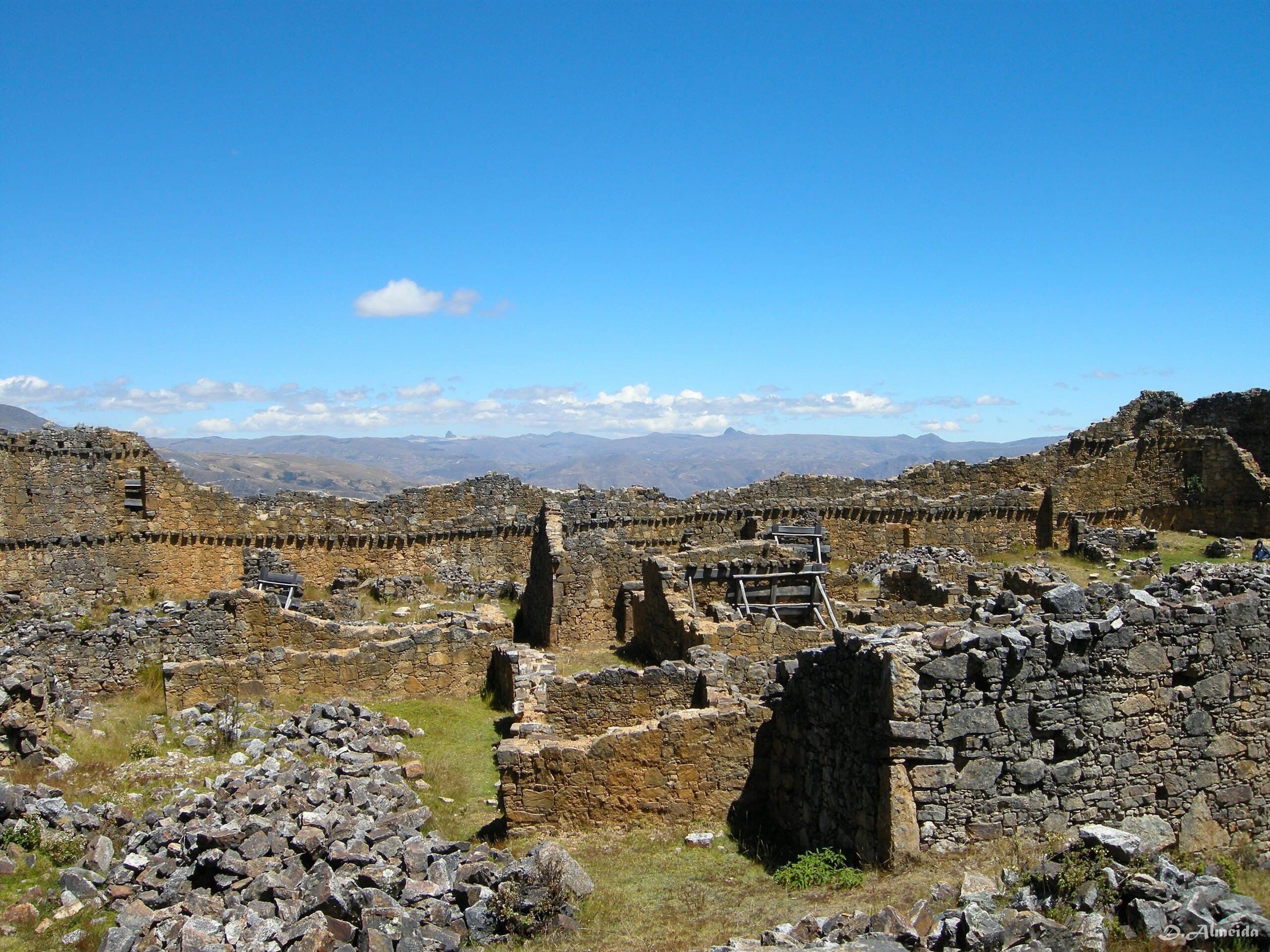
Marcahuamachuco Archaeological Complex
Machu Picchu of the North—a pre-Inca oracle center where 12-meter walls guard the secrets of Ataujo and Catequil
Huamachuco, La Libertad, Peru
At A Glance
- Coordinates
- -7.8000, -78.0333
- Suggested Duration
- Two to four hours for the site; plan additional time for travel.
Pilgrim Tips
- Comfortable hiking clothing appropriate for altitude and variable weather. Sun protection essential.
- Photography permitted. Be respectful of any ongoing archaeological work.
- The site is remote and at 3,600 meters elevation. Plan transportation and allow time for altitude adjustment. Facilities are limited.
Overview
On an elongated mesa dominating three mountain valleys in northern Peru, Marcahuamachuco sprawls across 260 hectares—a vast sanctuary built between 400 and 1,200 CE, centuries before the Inca claimed it. This was an oracle center where communities from the northern Andes journeyed to honor their dead, worship the gods Ataujo and Catequil, and seek divination. El Castillo, the great temple with walls reaching 12 meters high, was the largest work built by humans in the northern highlands at the time of its construction.
Marcahuamachuco rises on an isolated highland mesa at 3,600 meters, dominating a vast territory of Peru's northern highlands. The mesa stretches five kilometers long and 500 meters wide, offering a commanding view of the surrounding valleys that made this site both defensible and spiritually powerful. Built defensively on this natural fortress, yet functioning primarily as a sanctuary, Marcahuamachuco represents one of the most significant pre-Inca sites in South America.
Construction began around 400 CE during the Andean Middle Horizon period and continued until approximately 800 CE—well before the Wari culture and centuries before Inca expansion. The Huamachuco culture that built this site controlled a region of approximately 6,800 square kilometers in what is now La Libertad and Cajamarca. Marcahuamachuco was their religious, political, and military center.
Investigations from 1981-1989 revealed the site's primary function: a vast sanctuary where communities from across the region gathered to honor their dead and worship tutelary deities. The cult of Ataujo (an older deity) and Catequil (a more recent one) drew pilgrims from the northern Andes. Marcahuamachuco likely housed oracles who attracted seekers from what is now Peru and Ecuador.
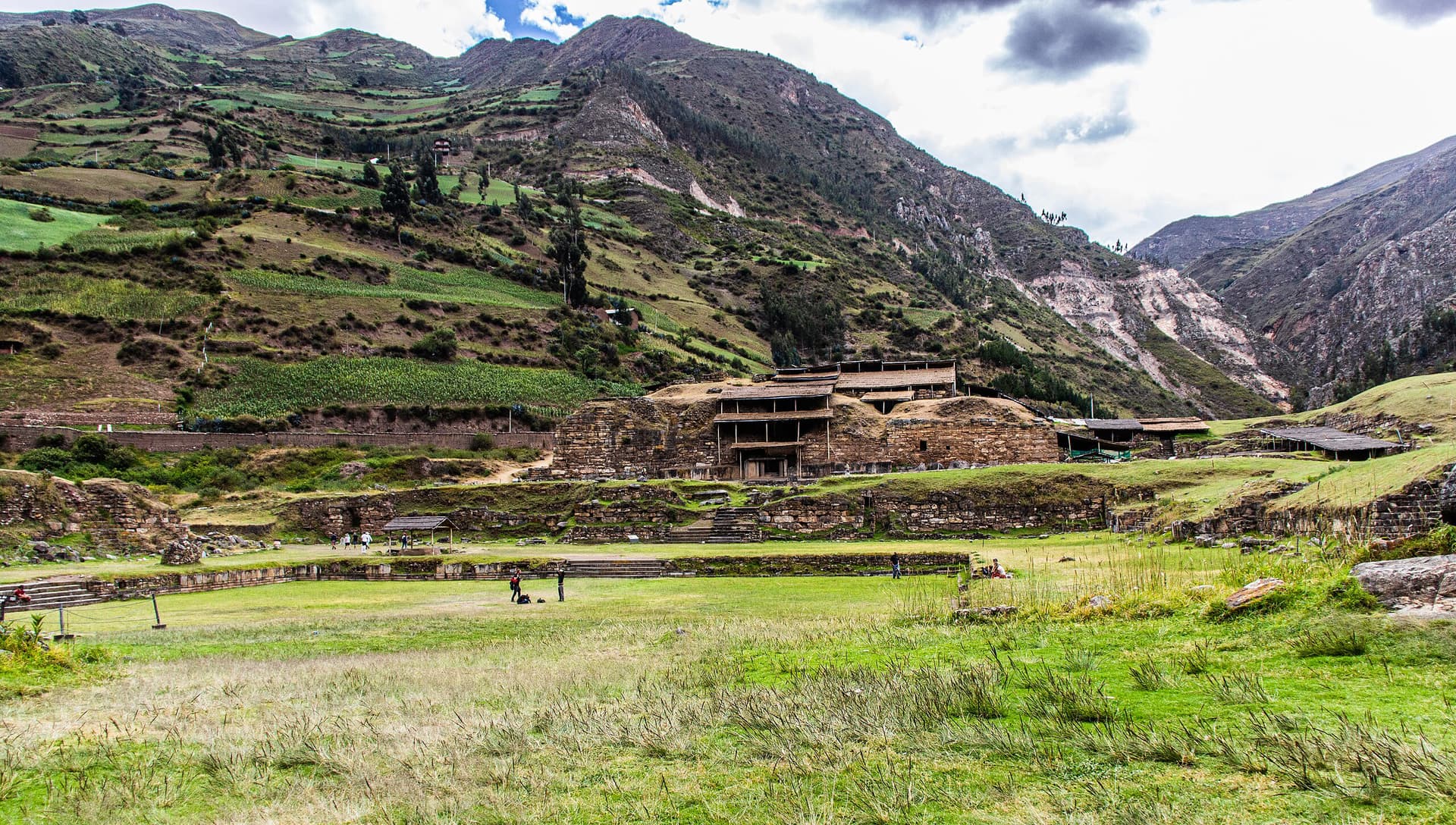
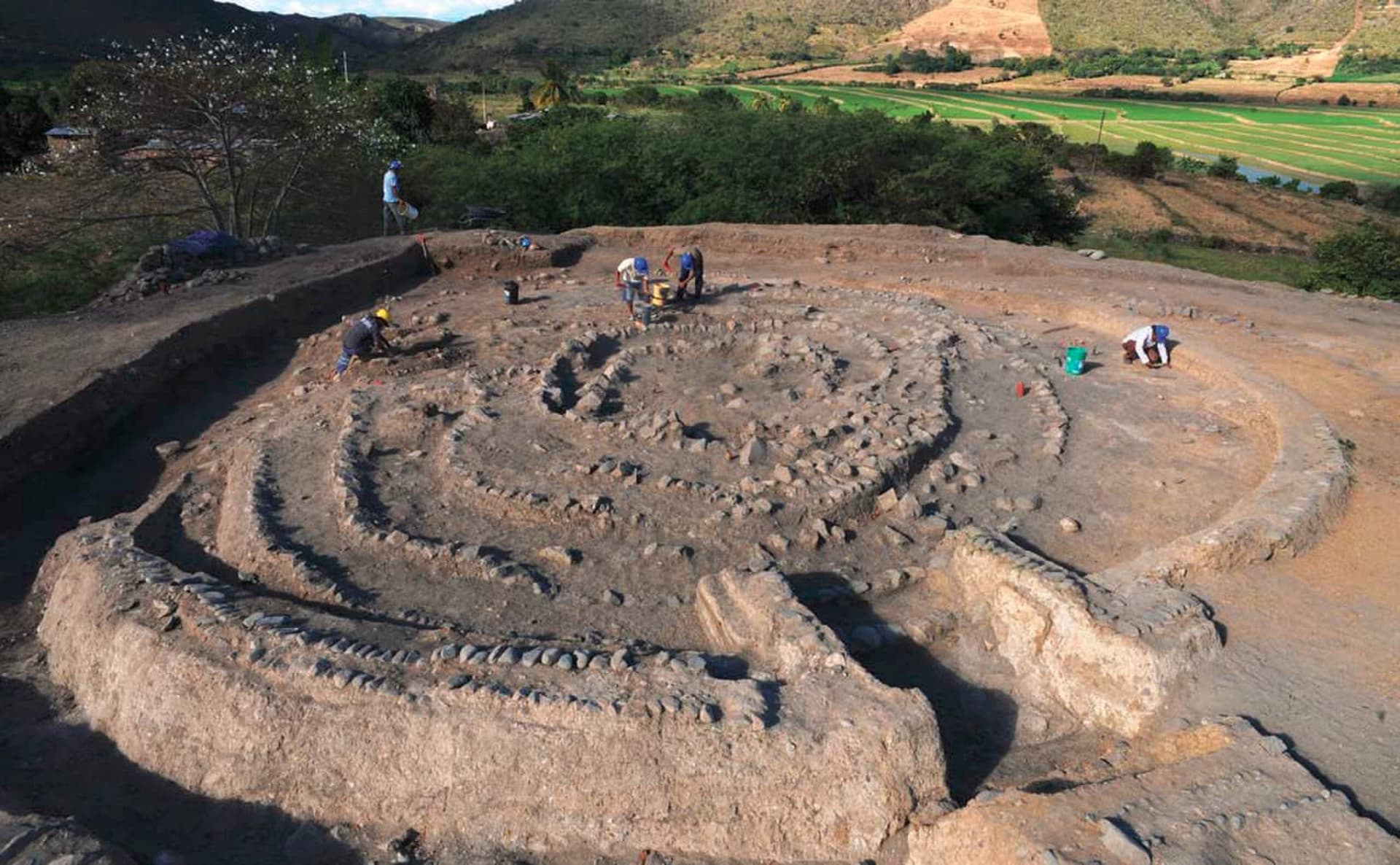
The architecture reflects this sacred function. El Castillo—the Castle—features curved walls reaching 12 meters high, built of stone with extraordinary craftsmanship. At the time of construction (8th-9th century CE), this was the greatest work built by humans in Peru's northern highlands. Circular double-walled structures, unique to this site, surrounded compounds used for ceremonial purposes. The remains of galleries, rooms, and plazas suggest both administrative and religious functions.
Before the Inca conquered this region in the 14th century, Marcahuamachuco served as northern Peru's most important political, economic, and military center. The Inca incorporated it into their empire but could not erase what had been built before them. Today, the site is on UNESCO's Tentative List for World Heritage consideration, compared to Caral-Supe and Chaco Canyon for its concentration of monumental architecture.
Context And Lineage
The Huamachuco culture built Marcahuamachuco between 400-1,200 CE as an oracle center and sanctuary. The site dominated northern Peru politically and religiously before Inca conquest in the 14th century. Comparison to Caral-Supe and Chaco Canyon recognizes its monumental significance.
The Huamachuco culture emerged in the northern highlands of Peru, controlling approximately 6,800 square kilometers in what is now La Libertad and Cajamarca. Around 400 CE, they began constructing their religious and political capital on a mesa that offered both natural defense and spiritual elevation.
Construction continued for eight centuries, with the site reaching its greatest elaboration around 800 CE. The architecture developed distinctive features: curved walls reaching 12 meters high, circular double-walled structures found nowhere else, compounds for ceremonial and administrative use. El Castillo became the largest structure built by humans in the northern highlands.
The site functioned primarily as a sanctuary. Investigations from 1981-1989 by the Huamachuco Archaeological Project revealed that communities from across the region gathered here to honor their dead and worship the tutelary deities Ataujo and Catequil. The oracles of Marcahuamachuco attracted pilgrims from as far as Ecuador, seeking divination that could guide decisions on war, agriculture, and political matters.
The first formal archaeological research came in 1900, when Max Uhle and Julio C. Tello excavated for three months under the auspices of UC Berkeley. The Huamachuco Archaeological Project, supported by Canadian researchers, has studied the site since 1981.
When the Inca expanded into this region in the 14th century, Marcahuamachuco had been functioning as the northern highlands' most important center for nearly a millennium. The Inca conquest incorporated the site into their empire but could not erase its pre-Inca character. Today, Marcahuamachuco sits on UNESCO's Tentative List, awaiting the recognition its monumental architecture deserves.
Huamachuco culture (400-1,200 CE), later conquered by the Inca (14th century). No continuous religious use, but the site remains central to understanding pre-Inca Andean civilization.
Max Uhle and Julio C. Tello
Early archaeologists
Why This Place Is Sacred
Marcahuamachuco's thin quality emerges from its function as an oracle center—a place where divination connected human seekers with divine knowledge—combined with its role in ancestor worship and the accumulated power of pilgrimage over eight centuries.
Oracle sites represent thin places of particular intensity. Where divination occurs, the boundary between human knowledge and divine wisdom grows permeable. At Marcahuamachuco, pilgrims journeyed from across the northern Andes to consult oracles, to receive answers to questions that ordinary knowledge could not resolve. That accumulated seeking—century after century of questions brought to this mesa—created sacred power that persists.
The cult of Ataujo and Catequil adds theological dimension. These tutelary deities received worship here from communities across the region. Ataujo was the older god; Catequil the more recent one. The relationship between them—old and new, perhaps replaced or perhaps merged—encoded mysteries that drew worshippers. Whatever the gods revealed through their oracles concentrated power at this site.
Ancestor worship intensified the thinness. The communities that gathered here came to honor their dead as well as to worship the living gods. The boundary between the world of the living and the world of the dead was deliberately traversed at Marcahuamachuco. The dead were remembered, addressed, fed with offerings. In later stages, elite burials transformed parts of the site into permanent connection points between realms.
The architecture amplifies these spiritual functions. El Castillo's 12-meter walls create spaces of enclosed power. The circular double-walled structures found nowhere else suggest specialized ceremonial functions whose purposes remain partially obscure. Building on the mesa's highest points connected worshippers to the sky and the gods it contained.
The site's position dominating three valleys gave it visual power over the landscape. Those who came to consult the oracle climbed to a place that surveyed their entire world. The arrival was itself a kind of ascent—from ordinary territory to sacred summit.
Oracle center and sanctuary where communities gathered to honor the dead, worship the gods Ataujo and Catequil, and seek divination. Also served political, economic, and military functions.
From regional capital and oracle center (400-1,200 CE) through Inca conquest (14th century) to modern archaeological investigation and UNESCO consideration.
Traditions And Practice
Oracle consultations, ancestor worship, and veneration of the gods Ataujo and Catequil drew pilgrims from across the northern Andes. Elite burials in later periods transformed parts of the site into permanent connection points between worlds.
Oracle consultations for matters of war, harvest, and politics. Ancestor worship and honoring the dead. Worship of tutelary deities Ataujo and Catequil. Elite burials. Regional pilgrimage ceremonies. Political and religious gatherings.
The site functions as an archaeological destination, offering encounter with pre-Inca Andean civilization away from the more visited sites of Cusco. UNESCO consideration recognizes its monumental significance.
Approach the site with awareness of its oracle function—this was a place of seeking and receiving. Explore El Castillo and the circular structures with attention to how the architecture may have shaped ceremonial experience. Consider the views and what they meant to pilgrims who climbed here.
Huamachuco Oracle Tradition
HistoricalMarcahuamachuco served as an oracle center for eight centuries, where the gods Ataujo and Catequil were consulted on matters of war, harvest, and governance. Pilgrims from across the northern Andes sought answers here.
Oracle consultation, ancestor worship, veneration of Ataujo and Catequil, elite burial, pilgrimage ceremonies.
Experience And Perspectives
Explore massive castillos and unique circular structures across 260 hectares of highland mesa. The commanding views and monumental architecture speak of an oracle center where pilgrims sought answers the ordinary world could not provide.
Marcahuamachuco lies nine kilometers from the town of Huamachuco, accessible by car in approximately 30 minutes. The mesa rises at 3,600 meters, commanding views across the northern highlands that make the journey's end visually striking.
Approach with awareness of what you're entering. This was not a city but a sanctuary—a place people came to rather than lived in, where they sought answers from oracles and honored ancestors who had gone before. For eight centuries, pilgrims climbed to this mesa to participate in mysteries that connected human need with divine response.
Begin with El Castillo, the site's most imposing structure. The curved walls reaching 12 meters high represent the greatest architectural achievement in the northern highlands at the time of construction (8th-9th century CE). Stand within this space and consider what ceremonies it witnessed, what questions were asked of the gods who were addressed here.
Explore the circular double-walled structures unique to this site. Their specialized function remains partially understood—ceremonial purposes seem certain, but the specifics elude modern knowledge. The architecture itself suggests sophistication of religious practice that required equally sophisticated space.
Find the areas identified as associated with ancestor worship. Communities gathered here to honor their dead, maintaining connections that death could not sever. In later periods, elite burials transformed parts of the site into permanent memorials.
The views from the mesa extend across the territory the Huamachuco culture once controlled. Those who came to consult the oracle would have seen their world spread below—the valleys where they lived, the mountains that bounded their territory, the landscape over which the gods Ataujo and Catequil held sway.
Unlike the crowded sites of Cusco, Marcahuamachuco sees few visitors. The remoteness that protected it from extensive looting also preserves its atmosphere of encounter with genuine antiquity.
Located 9 km from Huamachuco town in La Libertad Region, at 3,600 meters elevation. The site covers 260 hectares on an elongated mesa 5 km long and 500 m wide.
Marcahuamachuco can be understood as a pre-Inca oracle center where divination connected humans with divine knowledge, as northern Peru's political capital before Inca conquest, as a sanctuary for ancestor worship, or as one of the Americas' great pre-Columbian monuments awaiting fuller recognition.
The Huamachuco Archaeological Project has documented the site's ceremonial and political functions while comparison to Caral-Supe and Chaco Canyon recognizes its monumental significance in pre-Columbian architecture.
The cult of Ataujo and Catequil drew pilgrims seeking divination for eight centuries, creating a sacred geography that the Inca later incorporated but could not replace.
The site's relative obscurity compared to Cusco's monuments invites reflection on how tourism shapes our understanding of the pre-Columbian world—what we know depends partly on what we choose to visit.
The specific practices of oracle consultation. The full meaning of the unique circular double-walled structures. The relationship between the gods Ataujo and Catequil.
Visit Planning
Located 9 km from Huamachuco (30 min by car) at 3,600 meters. Site covers 260 hectares. On UNESCO Tentative List. Fewer visitors than Cusco sites offer more intimate experience.
Accommodations available in Huamachuco. More options in Trujillo.
Approach with reverence for an oracle center where pilgrims sought answers from the divine. Do not disturb architectural features or burial areas.
Marcahuamachuco served sacred functions for eight centuries before modern archaeology arrived. The site's relative isolation has preserved its integrity; visitors should maintain that preservation.
Comfortable hiking clothing appropriate for altitude and variable weather. Sun protection essential.
Photography permitted. Be respectful of any ongoing archaeological work.
No offerings at archaeological structures.
Do not climb on or damage walls or structures. Stay on designated paths. Do not disturb burial areas.
Sacred Cluster
Nearby sacred places create the location cluster described in the growth plan. This block is intentionally crawlable and links into the wider regional graph.