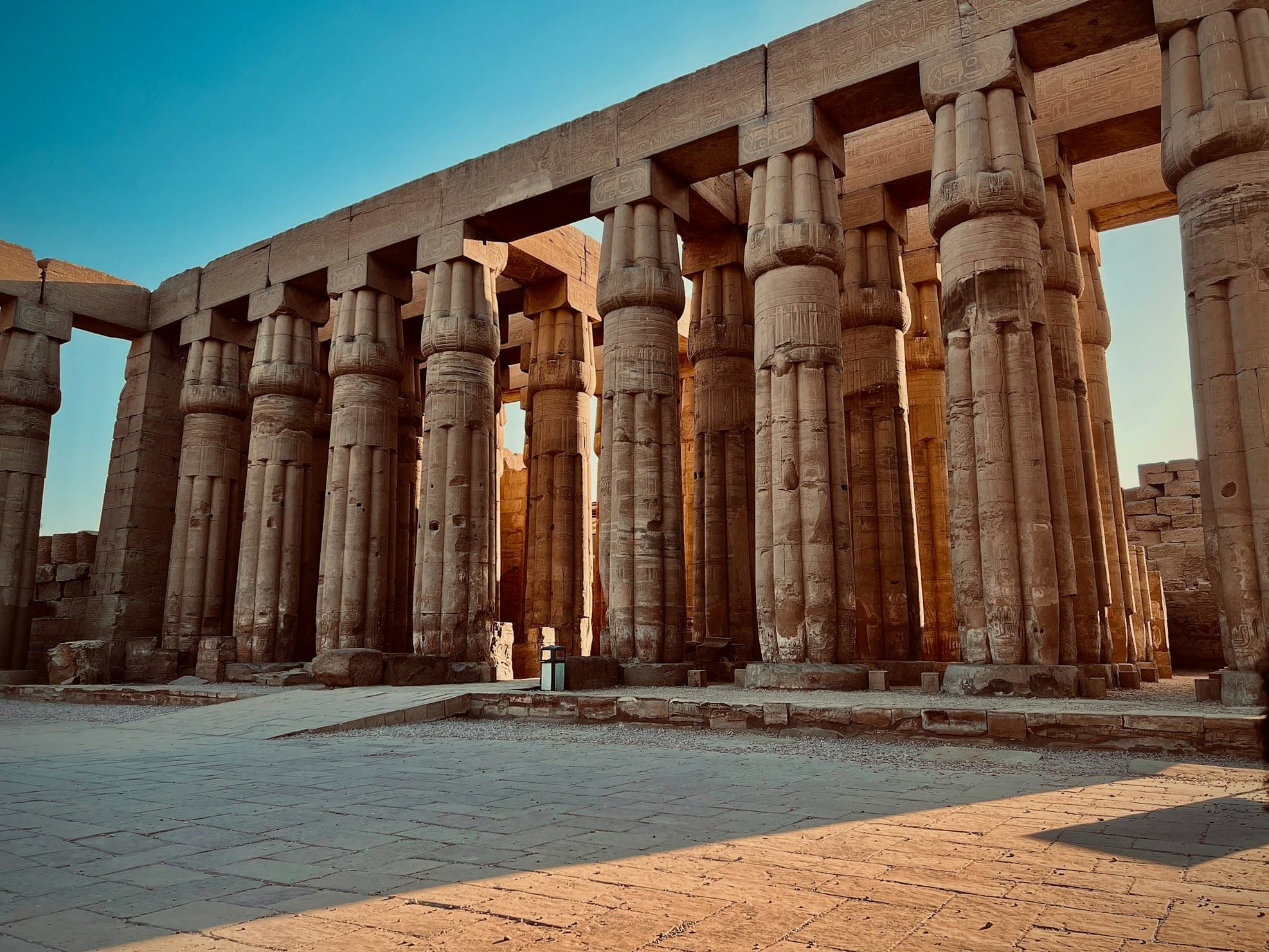
Luxor Temple, Luxor
Thirty-four centuries of continuous worship—from pharaonic ritual to Islamic prayer within the same sacred walls
Luxor, Luxor, Egypt
At A Glance
- Coordinates
- 25.6995, 32.6391
- Suggested Duration
- 1-2 hours for the temple itself. Add 45-60 minutes if walking the Avenue of Sphinxes from Karnak (2.7 km). Combined visits with Karnak require 4-6 hours total. The nighttime experience benefits from unhurried time—arrive before sunset and stay until the illumination reaches full effect.
- Access
- Located on the East Bank of the Nile in central Luxor, approximately 1 kilometer from the main railway station. Easy to reach by foot from most East Bank hotels. Taxis, horse carriages (calèches), and tuk-tuks available throughout the city. Wheelchair accessible with ramps and pathways. Entry fee approximately 500 EGP for foreign adults, 250 EGP for students (as of early 2025—verify current prices, as fees change frequently). Open 6:00 AM to 9:00 PM (hours may vary seasonally—verify locally).
Pilgrim Tips
- Located on the East Bank of the Nile in central Luxor, approximately 1 kilometer from the main railway station. Easy to reach by foot from most East Bank hotels. Taxis, horse carriages (calèches), and tuk-tuks available throughout the city. Wheelchair accessible with ramps and pathways. Entry fee approximately 500 EGP for foreign adults, 250 EGP for students (as of early 2025—verify current prices, as fees change frequently). Open 6:00 AM to 9:00 PM (hours may vary seasonally—verify locally).
- Light, modest clothing recommended. Shoulders and knees covered is respectful given the functioning mosque, practical for sun protection during daytime, and appropriate for the site's historical significance. Comfortable walking shoes essential. Evenings can be cool in winter—bring a light layer.
- Photography is generally permitted throughout the temple complex. Be respectful around the Abu Haggag Mosque, particularly during prayer times. Flash photography may be restricted in certain areas. The nighttime illumination creates excellent conditions for photography but also draws crowds; patience required for unobstructed shots.
- The Abu Haggag Mosque is an active place of worship, not a museum exhibit. Visitors should maintain respectful behavior and appropriate dress around the mosque area, particularly during prayer times. The annual Abu Haggag moulid draws large crowds of worshippers and may affect access to certain temple areas. Check dates before planning your visit if you prefer quieter conditions—or embrace the opportunity to witness living faith within ancient walls.
Overview
Luxor Temple has never stopped being a place of worship. The pharaohs built it for divine renewal. The Romans converted it to emperor worship. Christians constructed churches within its walls. And today, the Abu Haggag Mosque still calls the faithful to prayer from above the ancient courts. Four traditions, one location, thirty-four centuries of unbroken sacred use. No other monument on earth can make this claim.
Something persists at Luxor Temple that transcends the traditions that have worshipped here. Egyptian priests awakened the gods at dawn. Roman soldiers honored their emperor in the same courtyards. Christian hymns echoed from chapels carved from pharaonic halls. And five times daily, the call to prayer still sounds from the Abu Haggag Mosque, built upon the ruins of the church, which was built upon the temple's eastern corner.
This is not a site of successive destructions and replacements. Each tradition adapted rather than erased what came before. The pharaonic reliefs survive beneath the Roman frescoes. The Christian murals remain faintly visible near the Islamic architecture. Luxor Temple is a palimpsest of faith—layers visible simultaneously, evidence that whatever draws humans to mark certain places as sacred persists across cultures, centuries, and theologies.
The ancient Egyptians believed this temple maintained cosmic order itself. During the Opet Festival, the pharaoh was ritually reborn as the divine son of Amun—a ceremony they believed actually kept the universe functioning. The mechanics of that ritual are lost. But the sense that something essential happens here, that this ground is set apart, has persisted long after anyone remembered why. The mosque's faithful still come. The seekers still arrive. Something is still being maintained.
Context And Lineage
Luxor Temple was dedicated not to a god but to the concept of divine kingship. It served as the stage for the Opet Festival, where the pharaoh was ritually reborn as the son of Amun. This function made it unique among Egyptian temples and helps explain why successive traditions continued to recognize it as sacred.
The temple's theological foundation rests on the divine birth of the pharaoh. The Birth Room contains detailed reliefs depicting the god Amun visiting Queen Mutemwiya, the divine conception, the queen's pregnancy attended by gods, and the birth of the future Amenhotep III. These theogamy scenes were not myth but political theology—they established that the pharaoh was literally the son of Amun-Ra, giving divine legitimacy to earthly rule.
During the annual Opet Festival, this divine sonship was ritually renewed. The sacred barques of Amun, Mut, and Khonsu traveled in procession from Karnak, carried by priests along the Avenue of Sphinxes. At Luxor Temple, in ceremonies hidden from public view, the pharaoh entered the inner sanctuary and emerged reborn—his divine nature restored for another year. The Egyptians did not understand this as symbolic. They believed the ritual actually maintained cosmic order. Without it, ma'at would fail and chaos would return.
The temple's lineage extends across Egypt's entire span as a major civilization. Amenhotep III built the core structures during the 18th Dynasty's golden age. Tutankhamun—the boy king who reversed Akhenaten's religious revolution—completed the colonnade's decoration. Ramesses II, perhaps Egypt's most prolific builder, expanded the temple dramatically during the 19th Dynasty. Alexander the Great and the Ptolemies maintained and modified the structures during the Hellenistic period. Roman emperors converted the site to imperial cult worship. Christians established basilicas within the ancient walls. And the Abu Haggag Mosque has served Muslim worshippers since the 11th century. This unbroken sequence—pharaonic, Ptolemaic, Roman, Christian, Islamic—makes Luxor Temple the world's longest continuously used religious site.
Amenhotep III
Ramesses II
Sheikh Yusuf Abu al-Haggag
Alexander the Great
Why This Place Is Sacred
Luxor Temple's thinness lies not in dramatic encounters but in the accumulated weight of continuous devotion. Something about this specific location has drawn worship for thirty-four centuries across traditions that share almost nothing in common except their recognition that this ground matters.
The thinness at Luxor Temple operates through time rather than space. Other sites feel thin because of what happens in a moment—a sudden shift, a presence encountered. Luxor feels thin because of what has accumulated. Thirty-four centuries of prayer, ritual, offering, and devotion have left something in these stones that visitors consistently recognize, even without knowing the history.
The ancient Egyptians had a concept for why Luxor Temple mattered: it was the place where the pharaoh's divine nature was renewed. During the Opet Festival, the human ruler entered the inner sanctuary and emerged as the son of Amun—literally reborn. This was not metaphor but operational theology. Without this annual renewal, they believed cosmic order would collapse. The temple was a machine for maintaining reality.
That theology is long dead. No one performs the Opet Festival. But the sense that this place participates in maintaining something persists. When the call to prayer sounds from the Abu Haggag Mosque at sunset, when floodlights illuminate the colossal statues of Ramesses II, when visitors stand in courtyards where four traditions have worshipped—the accumulated sacred attention of millennia becomes palpable. The stones have absorbed devotion. They radiate it back.
Perhaps this is why tradition after tradition built here rather than elsewhere. Not because the previous tradition proved anything, but because each new arrival recognized what the others had felt. The Romans did not need to believe in Amun to sense that this was ground worth claiming for their emperor cult. The Christians did not need to believe in Augustus to build their churches here. Each tradition added its own understanding to a quality that preceded all of them.
Luxor Temple served a function unlike any other in Egyptian religion. While Karnak and other temples were dedicated to the daily worship of specific gods, Luxor Temple was dedicated to the concept of divine kingship itself—the cult of the Royal Ka. The temple existed to perform the pharaoh's ritual rebirth as the divine son of Amun, an annual ceremony called the Opet Festival that renewed the cosmic compact between gods and ruler. This made the temple not merely a place of worship but the engine of universal order. The Birth Room's reliefs depicting Amun's union with the queen and the divine conception of the pharaoh established the theological claim that legitimized earthly rule.
The temple's evolution demonstrates remarkable adaptability. Amenhotep III built the core structures around 1400 BCE. Tutankhamun and Horemheb added decorations. Ramesses II expanded dramatically, adding the massive first pylon, the courtyard, the colossal statues, and the obelisks. Alexander the Great rebuilt the barque sanctuary. Under Roman rule, the temple became a military camp and center for imperial cult—Roman frescoes appeared on pharaonic walls. By the 4th century CE, Christians had established a basilica within the temple. And by the 11th century, the Abu Haggag Mosque rose above the ancient courts, built upon the church which was built upon the temple. Through all these transformations, the essential structures survived—adapted, not destroyed. The mosque still functions. The temple remains the only ancient monument in the world that has been continuously used for religious purposes for over three thousand years.
Traditions And Practice
The ancient rituals that made Luxor Temple the engine of cosmic order have fallen silent. But the Abu Haggag Mosque continues to call the faithful to prayer five times daily, and visitors can walk the restored Avenue of Sphinxes, recreating the ancient processional route.
The Opet Festival was Luxor Temple's defining ritual. During the second month of Akhet—the Nile's flooding season—the sacred barques of Amun, Mut, and Khonsu were carried in solemn procession from Karnak to Luxor, a journey of approximately 2.7 kilometers along the Avenue of Sphinxes. Priests, musicians, dancers, soldiers, and crowds accompanied the gold-covered barques. The procession could last hours, transforming the city into a stage for divine theater.
At Luxor Temple, the public celebration gave way to private ritual. In the inner sanctuary, priests performed the Opening of the Mouth ceremony and other rites to restore the pharaoh's divine power. The festival affirmed the sacred marriage of Amun and Mut, ensuring Egypt's fertility. Most importantly, the pharaoh emerged from the inner sanctuary renewed—his divine nature as the son of Amun restored for another year.
The festival's duration grew over time: 11 days under Thutmose III, 24 days by Ramesses III's coronation, 27 days by his death. This expansion suggests the ceremony's increasing importance. For the Egyptians, the Opet Festival was not celebration but cosmic maintenance—the annual repair of the bond between gods and ruler that kept the universe functioning.
The Abu Haggag Mosque maintains the five daily prayers of Islamic tradition. Friday prayers draw larger congregations. The annual moulid (festival) of Abu Haggag occurs according to the Islamic calendar and features boat processions around the temple—a practice that intriguingly echoes the ancient Opet barque processions, though whether this represents genuine cultural continuity or coincidence remains debated.
The November 25, 2021 reopening of the Avenue of Sphinxes included a ceremonial reenactment of the Opet Festival procession, suggesting official interest in cultural revival of ancient elements. Whether such revivals will become regular events remains to be seen.
Walk the Avenue of Sphinxes from Karnak to Luxor Temple—approximately 2.7 kilometers, taking 45-60 minutes at a contemplative pace. This recreates the ancient processional route and provides context for the temple's function. Arrive at Luxor Temple in late afternoon and remain through sunset to experience the transition from daylight archaeology to illuminated spectacle.
If your visit coincides with sunset prayer, remain respectfully silent as the call sounds from the Abu Haggag Mosque. This juxtaposition—Islamic prayer echoing across pharaonic stones—captures what makes Luxor Temple unique among the world's ancient sites.
Ancient Egyptian Religion
HistoricalLuxor Temple held a unique position in Egyptian religion. Unlike other temples dedicated to the daily worship of specific gods, Luxor served the cult of the Royal Ka—the divine essence of kingship itself. The temple was the stage for the Opet Festival, where the pharaoh was ritually reborn as the son of Amun, renewing his divine nature and maintaining cosmic order. This made Luxor not merely a place of worship but the engine of universal stability. The Birth Room's reliefs depicting Amun's union with the queen and the divine conception of the pharaoh established the theological claim that legitimized earthly rule. Without the annual renewal performed here, the Egyptians believed reality itself would fail.
The Opet Festival was the defining ritual. During the flooding season's second month, sacred barques of Amun, Mut, and Khonsu traveled from Karnak to Luxor in a procession lasting days. Priests performed the Opening of the Mouth ritual and other ceremonies in the inner sanctuary to restore the pharaoh's divine power. The festival affirmed the sacred marriage of Amun and Mut, ensuring Egypt's fertility. Daily offerings and maintenance rituals would have continued throughout the year.
Islam
ActiveThe Mosque of Abu Haggag represents living continuity with the temple's sacred function. Built in the 11th century CE above the remains of a Coptic church, the mosque sits approximately 9 meters above the original temple floor—when excavation began in the 19th century, the accumulated debris of centuries had buried three-quarters of the temple. Named after Sheikh Yusuf Abu al-Haggag, a respected Sufi saint who settled in Luxor around the 12th century, the mosque remains an active place of worship. The faithful gather daily for prayer; the call to prayer sounds five times daily across the ancient stones.
The mosque maintains regular Islamic prayers and Friday congregational services. The annual moulid (festival) of Abu Haggag features boat processions around the temple—a practice that intriguingly echoes the ancient Opet barque processions, suggesting possible cultural continuity across religious boundaries. The festival draws large crowds of worshippers and represents living devotion within the ancient structure.
Roman Imperial Cult
HistoricalWhen Egypt came under Roman rule, Luxor Temple was incorporated into a Roman military camp and converted to emperor worship. The Romans added frescoes blending Egyptian and Roman artistic styles, painting over pharaonic reliefs. The temple's courtyards served civic and military ceremonies. A statuary cache discovered in 1989—likely buried during this transition—suggests how the temple's sacred objects were carefully deposited as the old religion gave way to the new. This transformation demonstrates Rome's strategy of adapting local sacred sites to imperial religion while maintaining their sacred status.
Imperial cult worship centered on veneration of the emperor as divine. Military ceremonies and civic functions occurred within the temple complex. The exact rituals performed are not documented in detail, but the temple's adaptation to Roman use continued its function as a place where earthly power claimed divine sanction.
Coptic Christianity
HistoricalBy the late 4th century CE, parts of Luxor Temple were converted into a Coptic basilica. Christian murals replaced pharaonic reliefs in certain areas—faint traces remain visible today. By the late sixth century, a church had been constructed within the first court itself. This Christian layer preserved the temple while adapting it for new worship, continuing the pattern of sacred use rather than destruction. The church's remains underlie the current Abu Haggag Mosque, creating a literal stratigraphy of faith.
Christian worship services, liturgical celebrations, and church functions occurred within the adapted temple spaces. The specific practices of Coptic Christianity in this setting are not documented in detail, but the transformation from pagan temple to Christian church followed patterns seen throughout the Roman world.
Experience And Perspectives
Luxor Temple offers something rare: dramatic nighttime visits when floodlights transform ancient stone into theater. Unlike most Egyptian temples that close at sunset, Luxor remains open into the evening, and this is when the site comes fully alive—shadows lengthening across colossus and colonnade, the mosque's call to prayer sounding across stones carved before the Trojan War.
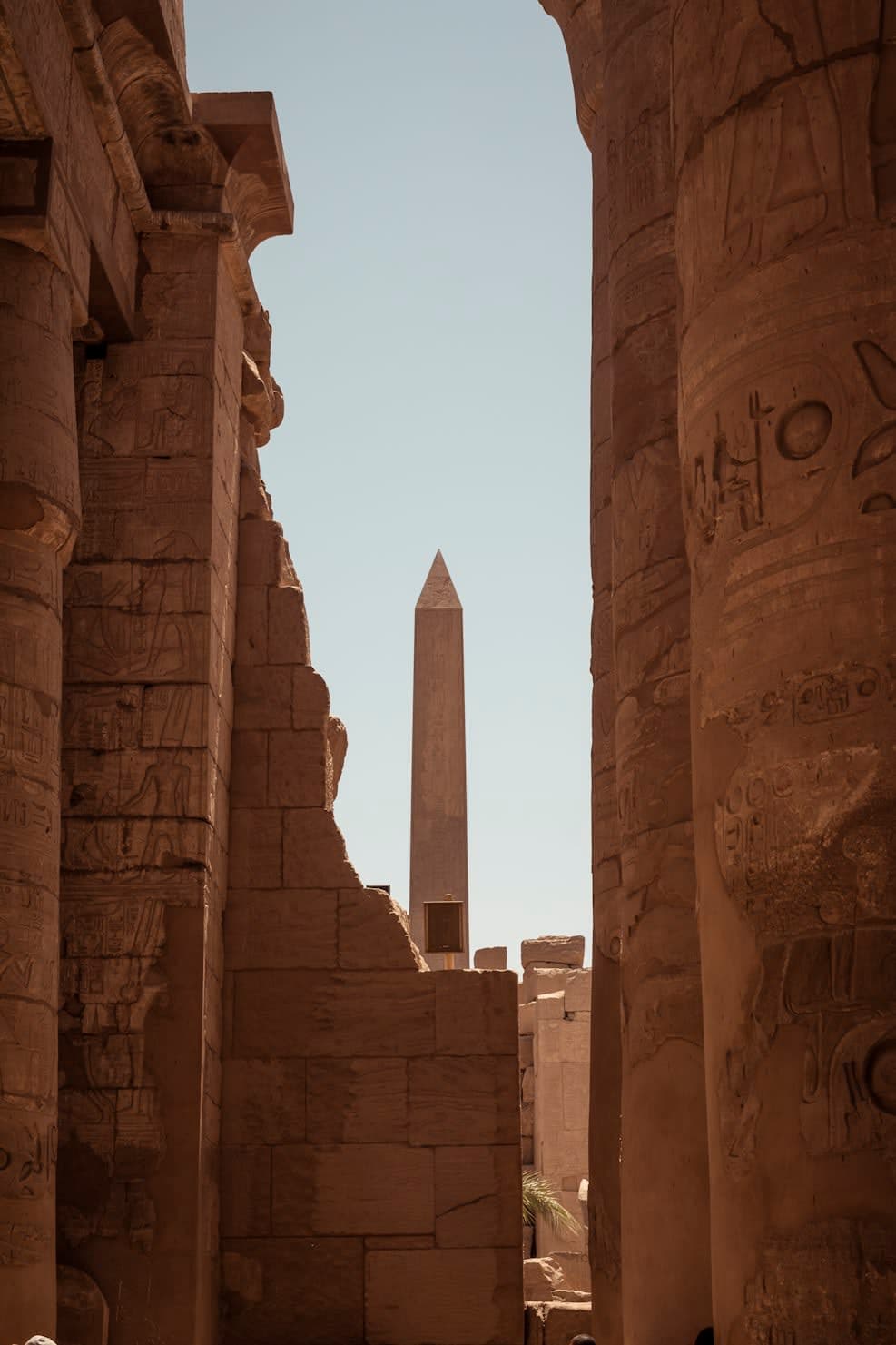
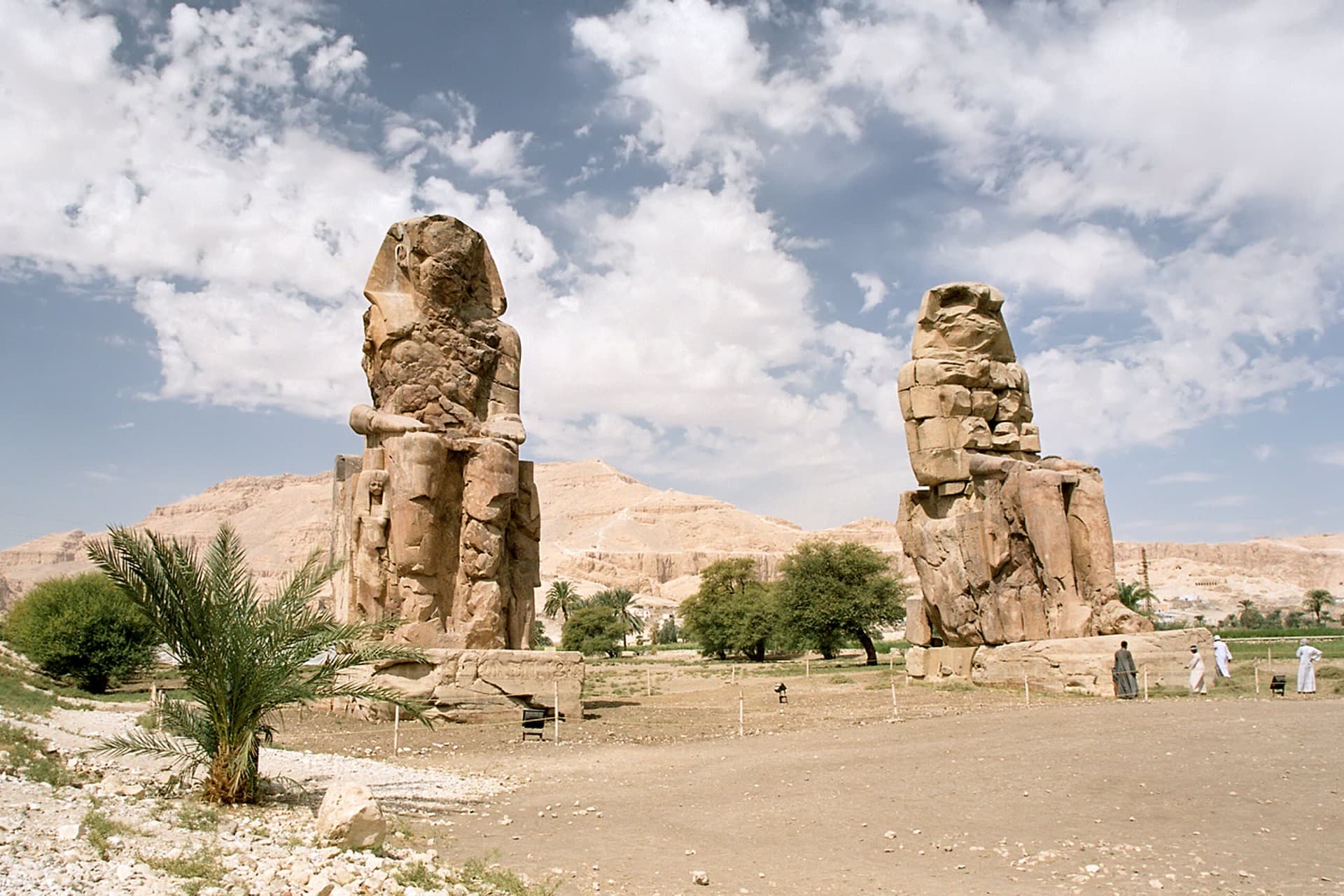
The approach from the corniche reveals the temple's scale before any detail becomes clear. The first pylon rises 24 meters—the height of an eight-story building—with seated colossi of Ramesses II flanking the entrance like sentinels. Only one of the original obelisks remains; its twin has stood in Paris's Place de la Concorde since 1836. This asymmetry registers immediately, a gap in an otherwise overwhelming symmetry.
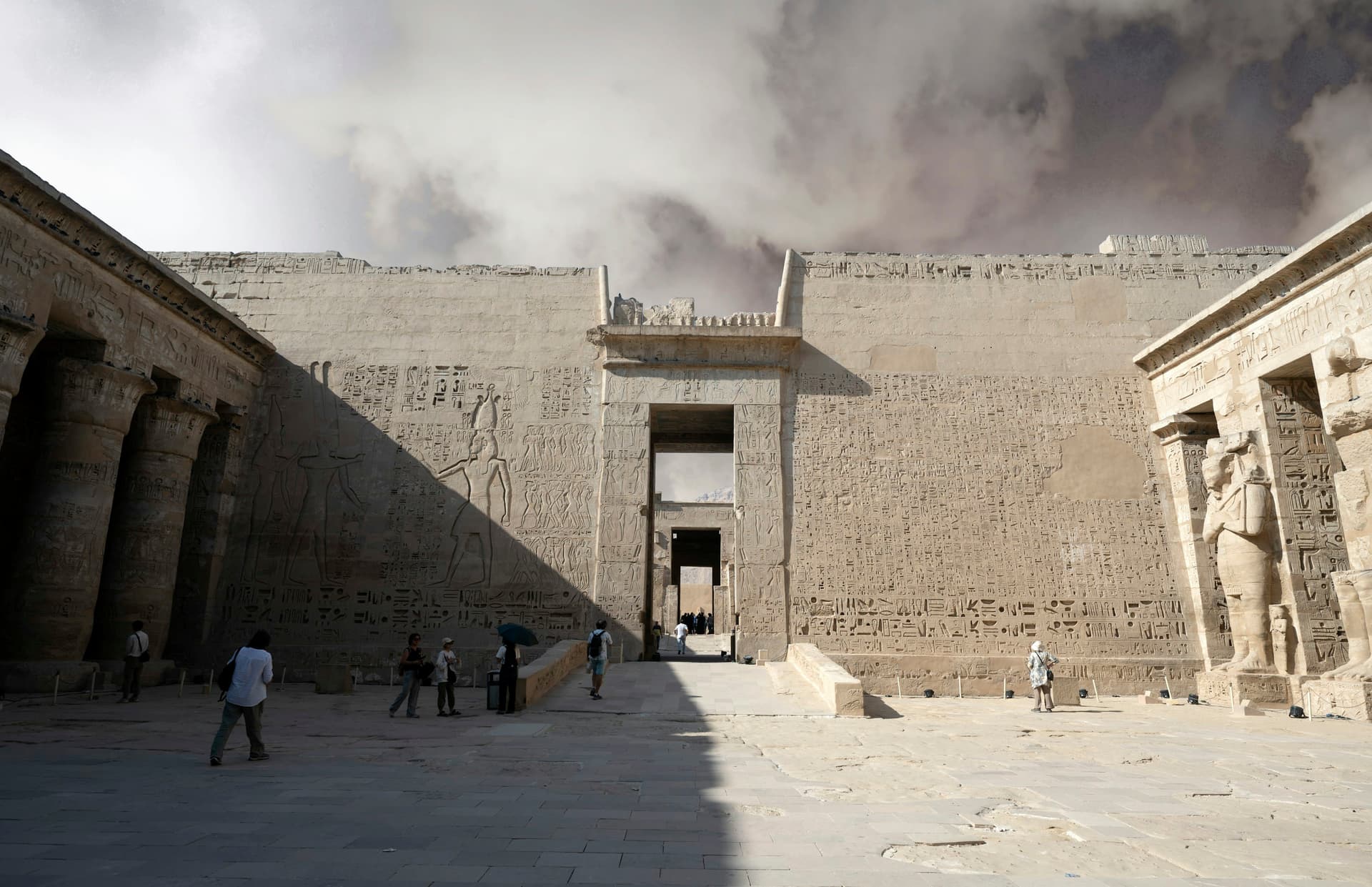
Passing through the pylon gateway enters the Court of Ramesses II, ringed by double rows of papyrus-bundle columns. Here the layering of traditions becomes visible. High on the eastern wall, the Abu Haggag Mosque projects from what was once the temple's upper level—when excavations began in the 19th century, the accumulated debris of ages had buried three-quarters of the temple. The mosque's door opens at what was once the temple's roof line.
Beyond the court, the great colonnade of Amenhotep III stretches ahead. Fourteen columns, each 19 meters tall, carved to resemble bundled papyrus stalks, create a processional corridor. The walls bear reliefs of the Opet Festival—priests carrying sacred barques, musicians and dancers, the pageantry of divine renewal. These images document rituals performed here for centuries.
The hypostyle hall beyond holds 32 columns in four rows, a forest of carved stone leading toward the inner sanctuaries. Here the light changes. The atmosphere becomes more enclosed, more intimate. This was the private heart of the temple, where priests performed rituals hidden from public view. Alexander the Great rebuilt the innermost shrine; his cartouches appear on walls covered with images of offerings to Amun.
But the full experience of Luxor Temple requires returning at night. When floodlights ignite and shadows deepen, when the colossal statues seem to lean forward from their seats, when the colonnade becomes a corridor of light and darkness—then the temple reveals what daylight obscures. The call to prayer from the Abu Haggag Mosque sounds across the illuminated courts. Tourists fall silent. For a moment, the boundary between archaeological site and living sacred space dissolves.
Luxor Temple is located in central Luxor on the East Bank of the Nile, approximately 1 kilometer from the main railway station. The temple is oriented north-south—unusual for Egyptian temples, which typically face east-west. Visitors enter through the first pylon (south), passing the colossal statues and remaining obelisk. The Court of Ramesses II opens immediately beyond, with the Abu Haggag Mosque visible above on the eastern side. The colonnade leads north toward the hypostyle hall and inner sanctuaries. The Avenue of Sphinxes extends 2.7 kilometers north from the temple's northern gate to Karnak, now restored and walkable.
Luxor Temple invites interpretation across multiple frameworks—as archaeological treasure, as evidence for the theology of divine kingship, as demonstration of cultural continuity, as palimpsest of faith. Each perspective reveals something genuine; none exhausts the site's meaning.
Egyptologists understand Luxor Temple as uniquely dedicated to the cult of the Royal Ka—the divine essence of kingship itself rather than a specific god. The Epigraphic Survey team at the University of Chicago has studied the temple extensively, confirming this interpretation through analysis of reliefs and texts. The temple functioned as the setting for the Opet Festival, which renewed the pharaoh's divine nature annually through ritual rebirth.
The temple's north-south orientation—unusual for Egyptian temples, which typically align east-west with the sun—suggests its function differed from standard divine cult temples. Its relationship to Karnak, connected by the processional Avenue of Sphinxes, created a sacred geography that structured ritual movement through the landscape.
Archaeological work continues to reveal the temple's complex history. The 1988-1989 discoveries in Amenhotep III's court, including a cache of statuary likely buried during the Roman period's religious transitions, demonstrate how much remains to be understood about the temple's post-pharaonic adaptations.
In ancient Egyptian understanding, Luxor Temple maintained reality itself. The Opet Festival performed within its walls was not symbolic celebration but cosmic maintenance. The pharaoh who entered the inner sanctuary emerged as the literal son of Amun, his divine nature renewed for another year. Without this annual renewal, the Egyptians believed ma'at—cosmic order—would fail and chaos would consume the world.
The temple was therefore a machine for maintaining the universe. Its function was as practical as it was spiritual—which is to say, the Egyptians did not distinguish between these categories. The reliefs and rituals were not art and ceremony but working technology for keeping reality functional.
This understanding has been dead for two millennia. But the persistence of sacred use at the site—Roman cult, Christian worship, Islamic prayer—suggests that whatever the Egyptians recognized here has continued to be recognized, even by traditions with entirely different theologies.
Contemporary spiritual practitioners sometimes view Luxor Temple as evidence for perennial sacred geography—the proposition that certain locations possess inherent qualities that successive cultures recognize, regardless of their specific beliefs. The temple's unusual north-south orientation has attracted attention from those interested in sacred geometry and astronomical alignments.
The function of the Birth Room in divine birth ceremonies connects to broader interests in sacred architecture as technology for transformation. Some practitioners visit seeking to access the transformative energies they believe the temple was designed to channel.
The Abu Haggag boat processions—whether or not they represent genuine cultural continuity with Opet—interest those exploring how sacred practices persist across religious boundaries.
Several mysteries persist around Luxor Temple. The precise rituals performed in the inner sanctuary during the Opet Festival remain only partially reconstructed from reliefs and texts—no one witnessed them after the ancient religion's end, and no complete liturgical texts survive.
The contents and arrangement of the 1989 statuary cache await complete publication. These objects, buried likely during the 4th century CE transition to Roman imperial cult, may reveal how the temple's sacred function was understood during its final pharaonic phase.
Whether the Abu Haggag boat processions represent genuine cultural continuity with ancient Opet barque processions—preserved across the centuries despite religious transformation—or coincidental similarity remains debated. The question touches on deep issues about how sacred practices persist and transform.
Most fundamentally: why has this particular location drawn continuous religious attention for thirty-four centuries across traditions that share almost nothing in common? What quality of place persists across such radical theological discontinuity? The stones offer no answer. The worship continues.
Visit Planning
Luxor Temple is located in central Luxor, easily walkable from most hotels. Unlike most Egyptian sites, it remains open after dark—the nighttime visit is often more powerful than daytime. Allow 1-2 hours for the temple, longer if walking from Karnak via the Avenue of Sphinxes.
Located on the East Bank of the Nile in central Luxor, approximately 1 kilometer from the main railway station. Easy to reach by foot from most East Bank hotels. Taxis, horse carriages (calèches), and tuk-tuks available throughout the city. Wheelchair accessible with ramps and pathways. Entry fee approximately 500 EGP for foreign adults, 250 EGP for students (as of early 2025—verify current prices, as fees change frequently). Open 6:00 AM to 9:00 PM (hours may vary seasonally—verify locally).
Full range of accommodations in Luxor from budget hostels to five-star hotels on both East and West Banks. East Bank locations offer walking access to Luxor Temple. Some Nile-facing hotels offer views of the illuminated temple at night—a memorable backdrop for evening meals.
Luxor Temple functions as both archaeological site and living sacred space. Standard archaeological site protocols apply throughout, with additional respect required around the active Abu Haggag Mosque.
The presence of the Abu Haggag Mosque within Luxor Temple creates a unique etiquette situation. Most visitors experience the site primarily as archaeology—ancient walls, carved reliefs, massive columns. But the mosque remains an active place of worship where Muslim congregants gather daily for prayer. These two realities coexist, requiring visitors to navigate both.
In the main temple areas, standard archaeological site behavior applies. Do not touch reliefs or climb on structures. Photography is generally permitted. Guides may offer explanations; guards may offer assistance for tips. The nighttime illumination creates popular conditions that draw crowds; patience is required.
Near the Abu Haggag Mosque, additional consideration applies. The mosque's door opens high on the temple's eastern wall—when the temple was excavated, the accumulated debris of centuries had raised ground level to the temple's original roof. Non-Muslim visitors cannot enter the mosque, but the call to prayer sounds across the entire site. When it does, a moment of stillness is appropriate. You are hearing a living tradition in conversation with three thousand years of predecessors.
Light, modest clothing recommended. Shoulders and knees covered is respectful given the functioning mosque, practical for sun protection during daytime, and appropriate for the site's historical significance. Comfortable walking shoes essential. Evenings can be cool in winter—bring a light layer.
Photography is generally permitted throughout the temple complex. Be respectful around the Abu Haggag Mosque, particularly during prayer times. Flash photography may be restricted in certain areas. The nighttime illumination creates excellent conditions for photography but also draws crowds; patience required for unobstructed shots.
Not expected or traditional at this archaeological site.
Do not touch reliefs or climb on structures. Maintain quiet and respectful behavior around the Abu Haggag Mosque. Follow directions from site guards. Some areas may have restricted access during prayer times or special events. The mosque is not accessible to non-Muslim visitors.
Sacred Cluster
Nearby sacred places create the location cluster described in the growth plan. This block is intentionally crawlable and links into the wider regional graph.