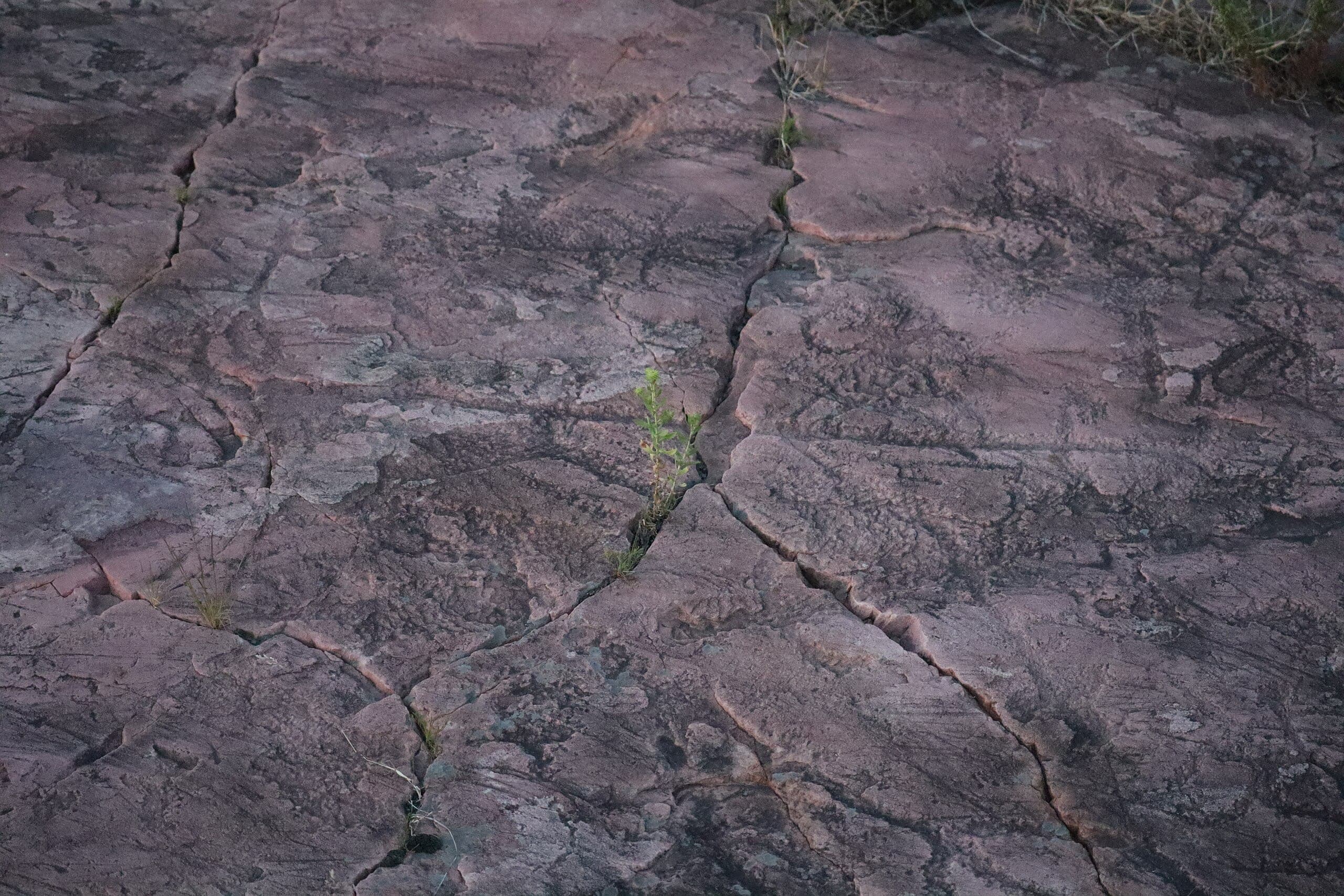
Jeffers Petroglyphs, Comfrey, Minnesota
Seven thousand years of prayers carved in stone, where descendants still come to worship
Comfrey, Minnesota, United States
At A Glance
- Coordinates
- 44.0672, -95.0308
- Suggested Duration
- One hour is minimum for a meaningful visit. Two to three hours allows for interpretive programs and careful viewing. A half day permits contemplative time among the carvings.
Pilgrim Tips
- Appropriate outdoor clothing. Sun protection is essential on exposed rock. Good walking shoes for uneven terrain. The site is outdoors with minimal shade.
- Check current policies. Photographing the petroglyphs is generally permitted for personal use. Do not photograph Indigenous people without permission. Do not photograph ceremonial offerings or prayer ties.
- This is an internationally significant Native American sacred site, a place of worship comparable in significance to major sites of any religion. The Minnesota Historical Society describes it as such. Approach accordingly. Do not touch the petroglyphs under any circumstances. Every touch damages irreplaceable carvings. The temptation is powerful; resist it. Do not disturb evidence of recent ceremony. Prayer ties, tobacco, and other offerings are private communications between the living and the sacred. They are not artifacts or photo opportunities. Do not attempt your own rituals or ceremonies. The sacred tradition here belongs to the Indigenous peoples who have maintained it for seven millennia. Your role is witness, not participant.
Overview
On a ridge of red Sioux quartzite in southwestern Minnesota, approximately five thousand rock carvings stretch across one of the oldest continuously used sacred sites in the world. For over seven thousand years, Native peoples have come to this exposed bedrock to fast, pray, seek visions, and carve their encounters with the spirit world. Dakota elders describe it as an encyclopedia of Native American history. The Thunderbird appears only three times. Turtles mark connections to the underworld. Holy people retreated here to commune with spirits. Today, descendants of those who carved these images still pray here and conduct ceremonies.
Jeffers Petroglyphs is one of the most sacred sites in Native American spirituality and one of the oldest continuously used sacred sites in the world. For over seven thousand years, Indigenous peoples have carved images into this exposed outcrop of Sioux quartzite, creating an encyclopedia of prayers, visions, and spiritual encounters that spans millennia.
The scale staggers comprehension. Approximately five thousand petroglyphs cover the Red Rock Ridge, a 23-mile-long quartzite formation that extends across southwestern Minnesota. Thunderbirds spread their wings. Dragonflies hover. Turtles mark passages to the underwater world. Human figures raise their arms. Shamans wear the antlers and regalia of their office. Weapons and tools document the material culture of vanished ages. Abstract symbols carry meanings that their carvers understood but did not explain to posterity.
This is not a museum but a place of worship. Dakota elders describe it as 'an encyclopedia of Native American history, recording historic and cultural knowledge.' But more than that, it is a prayer place. Holy people came here to fast, seek guidance, and commune with spirits. Some petroglyphs are healing altars. Others are prayers to the Great Spirit. Still others record visions received at this very spot.
The sacred character persists. In the twenty-first century, members of the Dakota, Cheyenne, Arapaho, Ioway, and Ojibwe nations still pray and conduct ceremonies at Jeffers. The continuity across seven thousand years is not merely historical but living. Descendants of those who carved the earliest images come to this same bedrock for the same purposes their ancestors served.
The Minnesota Historical Society operates a visitor center that interprets the site while respecting its ongoing sacred significance. Elders from affiliated tribes help with this interpretation, ensuring that Indigenous voices shape how non-Indigenous visitors understand what they are seeing. But interpretation can only go so far. The complete meanings of the symbols, the full protocols of the ceremonies, the deepest teachings of this place remain within the tribes that have guarded them for millennia.
Context And Lineage
Jeffers Petroglyphs has been used continuously for over seven thousand years, making it one of the oldest continuously used sacred sites in the world. The approximately five thousand carvings span from 5000 BCE to 1750 CE. The site is sacred to Dakota, Cheyenne, Arapaho, Ioway, and Ojibwe peoples, who help interpret it and continue to use it for ceremony.
The sacred character of this site predates human presence. The exposed quartzite of the Red Rock Ridge formed over a billion years ago, long before life existed on Earth. The red stone was here when the first humans arrived in this region after the last ice age. They recognized something in the stone worth reverence.
The earliest petroglyphs date to approximately 5000 BCE, carved by peoples whose names and languages have been lost. They came to this exposed bedrock, recognized it as sacred, and began the tradition of carving that would continue for seven millennia.
Who these earliest carvers were, what they believed, what specific meanings they attached to their images: these questions cannot be answered. The stone preserves their marks but not their words. What can be said is that they recognized this place as suitable for sacred communication, and their descendants agreed.
The Jeffers Petroglyphs participate in the broader tradition of rock art found across North America and worldwide. Indigenous peoples around the globe have used exposed rock surfaces for sacred marking, creating images that document their spiritual encounters.
Within North America, the Jeffers site represents the largest collection of petroglyphs in the Midwestern United States. Similar sites exist across the continent, each with its own character and tradition, but Jeffers' combination of quantity, antiquity, and continuity is distinctive.
The Dakota, Cheyenne, Arapaho, Ioway, and Ojibwe who maintain connection to this site are among the many Indigenous peoples who have used it over millennia. The specific chain of cultural transmission across seven thousand years is not fully documented, but the continuity is acknowledged. Contemporary Indigenous people recognize the ancient carvers as ancestors in spirit if not always in lineage.
The Ancient Carvers
Original creators of the petroglyphs
Dakota Elders
Traditional knowledge keepers
Why This Place Is Sacred
Jeffers Petroglyphs has been a place of prayer and vision for seven thousand years. The bedrock holds carved records of spiritual encounters across millennia. Dakota elders describe it as a place where Grandmother Earth speaks of past, present, and future. Holy people came here to fast, seek guidance, and commune with spirits. This is not history but living practice: descendants still pray here today.
Kneel beside the red quartzite and look at the images carved there. These marks were made by human hands, but not recently. Some are two hundred years old. Some are two thousand years old. Some are seven thousand years old. The stone has held these prayers across spans of time that dwarf recorded history.
The Dakota understand this place as holy ground where Grandmother Earth speaks. The petroglyphs are not merely carvings but communications: prayers sent upward, visions received and recorded, healing requested and perhaps granted. The stone itself is sacred, red like blood, ancient beyond measure, chosen by generations of holy people as the surface on which to inscribe their encounters with the spirit world.
Consider what it means for a place to be sacred for seven thousand years. The pyramids of Giza are younger. Stonehenge is younger. The earliest writing systems had not yet been invented when people began carving prayers into this rock. Empires have risen and fallen. Languages have appeared and vanished. Climate has shifted across multiple cycles. Through it all, people have come to this ridge to pray.
The thinness here is the thinness of accumulated devotion. Seven thousand years of fasting, prayer, and vision have consecrated this ground in a way that newer sacred sites cannot match. The veil between ordinary and sacred has been worn thin by countless seekers pressing against it. Whatever is on the other side has been contacted here more times than can be counted.
Spiritual power accumulates. Places that have been the focus of prayer and ceremony for generations carry the weight of that attention. Jeffers has been the focus for millennia. The weight is immense.
This weight is still being added to. In the twenty-first century, Dakota and other tribal members continue to pray here, continue to conduct ceremonies whose specifics are not shared with outsiders. The sacred tradition is not concluded but ongoing. The petroglyphs may be ancient, but the prayer is contemporary.
The original purpose of Jeffers was prayer and communion with the spirit world. Holy people came here to fast, seek visions, and receive guidance. The act of carving itself was likely ceremonial, not merely commemorative. To mark the stone was to participate in the sacred, to contribute to the ongoing dialogue between human and divine.
Some petroglyphs served as healing altars, places where the sick could come to seek supernatural aid. Others recorded visions received during fasting retreats. Others communicated with spirits of the Upper and Lower worlds. The variety of purposes reflects the complexity of Indigenous spiritual practice.
The site's location on the Red Rock Ridge was not arbitrary. Exposed bedrock of this type was considered sacred, a place where the earth's bones were visible. The red color of the quartzite, formed over a billion years ago, added to the significance: red like blood, like the life force that runs through all beings.
Archaeological analysis divides the petroglyphs into earlier and later periods. The earliest carvings date to approximately 5000 BCE, making them contemporary with the earliest known writing in Mesopotamia. Later carvings, dating from 900 CE to 1750 CE, show different styles and subject matter, reflecting the different cultures that used the site over millennia.
The identity of the earliest carvers is unknown. The later carvings are associated with the Otoe, Sioux (Dakota), and Iowa (Ioway) peoples. The transition between cultures, if transition is the right word, is not fully documented. What is clear is that multiple peoples across multiple millennia recognized this place as sacred.
European colonization disrupted but did not destroy the sacred tradition. The tribes were displaced, their ceremonies suppressed, their children sent to boarding schools designed to erase Indigenous identity. Yet the connection to Jeffers persisted. Today, affiliated tribes help the Minnesota Historical Society interpret the site, and tribal members continue to use it for ceremony.
The establishment of the Jeffers Petroglyphs Historic Site provides protection and interpretation while respecting ongoing sacred use. The balance is delicate. The site must be accessible enough for public education and preserved enough for ongoing Indigenous practice. This tension is navigated through consultation with tribal elders.
Traditions And Practice
Traditional practices at Jeffers included fasting, prayer, vision seeking, and ceremonial carving. Contemporary Indigenous peoples continue to use the site for prayer and ceremony. General visitors should approach with reverence, learn from the interpretive programs, and not disturb any evidence of recent ceremony.
Holy people came to Jeffers to fast, pray, seek visions, and commune with spirits. The act of fasting, depriving the body of food and sometimes water, was preparation for spiritual encounter. In the altered state that fasting produces, seekers opened themselves to communication from the spirit world.
The carving of petroglyphs was itself ceremonial. To mark the stone was to participate in the sacred, to record a vision or a prayer in permanent form. The Thunderbird that appears only three times across seven thousand years of carving suggests that such powerful symbols were not lightly inscribed.
Some petroglyphs served as healing altars, places where the sick came to request supernatural aid. The specific protocols are not publicly known, but the function is documented in tribal tradition.
In the twenty-first century, Dakota and other tribal members continue to pray and conduct ceremonies at Jeffers. The specifics of these ceremonies are not shared with outsiders. The Minnesota Historical Society accommodates this ongoing use while managing the site for public interpretation.
Tribal elders from Dakota, Cheyenne, Arapaho, Ioway, and Ojibwe communities help interpret the site for visitors. Their participation ensures that Indigenous voices shape how non-Indigenous people understand what they are seeing.
The visitor center offers interpretive programs that educate about the petroglyphs and their significance. These programs operate within limits set by tribal advisors: some information is shared, some is protected.
For general visitors, the appropriate practice is reverent attention. This is a place of worship comparable to a church, synagogue, or mosque. Your presence is permitted but your participation in Indigenous ceremony is not assumed.
Before visiting, learn about the site from Minnesota Historical Society materials. Understanding that you are approaching one of the oldest continuously used sacred sites in the world changes how you experience it.
At the site, walk slowly and look carefully. The petroglyphs reveal themselves gradually. Morning and evening light makes them most visible. Take time.
Do not touch the petroglyphs. Do not disturb any evidence of recent ceremony: prayer ties, tobacco, offerings. Do not attempt your own rituals. The sacred tradition here is not yours to participate in.
After your visit, consider what you have experienced. Seven thousand years of prayer have consecrated this ground. Something of that weight should travel home with you.
Dakota Sacred Site
ActiveThe Jeffers Petroglyphs are located in Dakota homeland. Dakota elders describe the site as an encyclopedia of Native American history and a place where Grandmother Earth speaks. Holy people came here to fast, seek guidance, and commune with spirits. Some petroglyphs are healing altars or prayers to the Great Spirit.
Prayer. Fasting. Vision seeking. Ceremonies conducted by tribal members. The specifics are not publicly shared. General visitors should approach with reverence and not attempt to participate in traditions that are not theirs.
Multi-Tribal Sacred Heritage
ActiveThe site is sacred to multiple Native American nations including Dakota, Cheyenne, Arapaho, Ioway, and Ojibwe. These tribes help the Minnesota Historical Society interpret the site for visitors, ensuring that Indigenous perspectives inform public understanding.
Ongoing tribal involvement in site interpretation. Recognition of shared sacred heritage across tribal nations. Ceremonies continue to be conducted by tribal members.
Seven Thousand Year Petroglyph Tradition
HistoricalFrom approximately 5000 BCE to 1750 CE, multiple cultures carved images into the Sioux quartzite at Jeffers. This represents one of the longest continuous traditions of sacred rock art anywhere in the world. The carvings document spiritual beliefs, visions, and practices across seven millennia.
Ceremonial carving of petroglyphs. Fasting and vision seeking. Prayer at carved images. Use of specific symbols: Thunderbird, turtle, human figures with raised arms, shamans with regalia.
Experience And Perspectives
Visiting Jeffers Petroglyphs offers encounter with seven thousand years of Native American sacred history. The Minnesota Historical Society operates a visitor center with exhibits and interpretive programs. Visitors can walk among the petroglyphs on the exposed quartzite outcrop. Morning and evening light provides the best conditions for viewing the carvings. Approach as you would any place of active worship.
The visitor center provides essential orientation before walking among the petroglyphs. Exhibits explain what is known about the carvings, the cultures that created them, and the ongoing sacred significance to affiliated tribes. Take time here before approaching the rock itself.
The walk to the petroglyphs is short but transitional. You are moving from interpretive space to sacred ground. The shift should be conscious. What you are about to see is not museum display but prayer made visible.
The petroglyphs appear gradually as you approach the outcrop. At first, the rock looks like ordinary red stone. Then you begin to see the marks: here a thunderbird, there a turtle, there a human figure with arms raised. The more you look, the more you see. Five thousand carvings reward patient attention.
Lighting matters enormously. Petroglyphs are carved shallow into stone, and direct overhead light washes out the images. Morning and evening, when the sun strikes at an angle, shadows fill the carved grooves and make the images visible. Midday is the worst time to visit for actually seeing what is there.
Do not touch the petroglyphs. The temptation is powerful. These marks were made by human hands, and human hands want to touch them. But the carvings are irreplaceable, already damaged by centuries of weather and wear. Every touch accelerates their loss. Look, but do not touch.
Walk slowly. There is no correct path, no prescribed route. Wander among the outcrops and discover what reveals itself. Some carvings are obvious; others require time and light to emerge. The experience rewards patience.
Know that you are walking through seven thousand years of prayer. The specific meanings are not yours to know. But the atmosphere is accessible to anyone willing to receive it. This is holy ground. Act accordingly.
If you see evidence of recent ceremony, prayer ties or tobacco offerings, leave them undisturbed. These are private communications between the living and the sacred. They are not artifacts or photo opportunities.
Jeffers Petroglyphs Historic Site is located in southwestern Minnesota, near the town of Jeffers in Cottonwood County. The site encompasses a portion of the Red Rock Ridge, a 23-mile-long quartzite outcrop that extends from Watonwan County to Brown County.
The Minnesota Historical Society operates the site, including a visitor center with exhibits, gift shop, and restrooms. The quartzite outcrop where the petroglyphs are located is a short walk from the visitor center.
The site is open seasonally, typically from May through October. Hours and programs vary. Check with the Minnesota Historical Society for current information.
Jeffers Petroglyphs is understood through archaeological and Indigenous frameworks. Archaeologically, it represents the largest collection of rock carvings in the Midwestern United States, spanning seven thousand years. For Dakota, Cheyenne, Arapaho, Ioway, and Ojibwe peoples, it is a living sacred site where ceremony continues.
Archaeological research has documented the Jeffers site's extraordinary span, from approximately 5000 BCE to 1750 CE. The approximately five thousand carvings represent multiple cultures and time periods, visible in differences of style, technique, and subject matter.
The site is recognized as internationally significant, the largest group of Indigenous petroglyphs in the Midwestern United States. Research continues into the chronology, cultural affiliations, and meanings of specific images, though many questions remain unanswered.
The petroglyphs document changing technologies and iconographies across millennia. Atlatl points in early carvings give way to bow-and-arrow imagery in later ones. Thunderbirds and turtles persist across periods, suggesting continuity of religious belief despite other changes.
Dakota elders describe Jeffers as an encyclopedia of Native American history, recording historic and cultural knowledge. But more than historical record, it is a place of worship, where Grandmother Earth speaks of past, present, and future.
The site is sacred to multiple nations: Dakota, Cheyenne, Arapaho, Ioway, and Ojibwe. These tribes help the Minnesota Historical Society interpret the site and continue to use it for ceremony. The sacred character is not past but present.
Some petroglyphs are healing altars. Some are prayers to the Great Spirit. Some record visions received during fasting retreats. The variety reflects the complexity of Indigenous spiritual life across seven millennia.
No significant alternative or esoteric interpretations complicate understanding of Jeffers Petroglyphs. The site is understood through archaeological and Indigenous frameworks without substantial fringe theories. This is refreshing clarity.
The complete meanings of the petroglyph symbols remain unknown to outsiders. Dakota and other tribal elders hold traditional knowledge that is not shared publicly. What visitors see is surface; the depth belongs to those who inherit it.
The identities of all cultures who carved at the site have not been established. The earliest carvers, from 5000 BCE, left no written records and cannot be assigned to known peoples.
The full ceremonial calendar across seven thousand years cannot be reconstructed. What ceremonies were conducted when, by whom, for what purposes: these questions exceed available evidence.
Visit Planning
Jeffers Petroglyphs Historic Site is located in southwestern Minnesota near the town of Jeffers. The Minnesota Historical Society operates the site seasonally, typically May through October. Morning and evening light provides the best viewing conditions. Check current hours and programs before visiting.
Lodging available in nearby communities. The area is rural; plan accordingly.
Jeffers Petroglyphs is a place of active worship for Indigenous peoples. Treat it with the reverence you would give any sacred site. Do not touch the petroglyphs. Do not disturb prayer offerings. Stay on designated paths. Quiet, respectful behavior is required.
This is a place of worship. Dakota, Cheyenne, Arapaho, Ioway, and Ojibwe peoples consider it sacred and continue to use it for ceremony. Your presence is permitted, but it comes with obligations.
Do not touch the petroglyphs. This cannot be overstated. The carvings are irreplaceable, some of them seven thousand years old. Every touch, however gentle, contributes to their erosion. The Minnesota Historical Society explicitly prohibits touching. Honor this rule.
Do not disturb any evidence of recent ceremony. If you see prayer ties, tobacco offerings, or other ceremonial objects, leave them untouched. They are private spiritual communications. Photographing them is questionable; disturbing them is unacceptable.
Stay on designated paths where marked. The site is fragile. Foot traffic on the exposed rock accelerates wear. Walk where you are directed to walk.
Quiet, respectful behavior is required. This is not a place for loud conversation, games, or recreation. Others may be present for prayer. The atmosphere should support contemplation, not entertainment.
If you encounter Indigenous people engaged in ceremony, withdraw quietly. Their practice takes precedence over your tourism. Give them space and privacy.
Appropriate outdoor clothing. Sun protection is essential on exposed rock. Good walking shoes for uneven terrain. The site is outdoors with minimal shade.
Check current policies. Photographing the petroglyphs is generally permitted for personal use. Do not photograph Indigenous people without permission. Do not photograph ceremonial offerings or prayer ties.
Not appropriate for general visitors. Do not leave offerings or create makeshift shrines. The sacred tradition here is not yours to participate in.
{"Do not touch the petroglyphs","Do not disturb prayer offerings or ceremonial objects","Stay on designated paths","Quiet, respectful behavior required","Do not photograph people without permission","Do not leave offerings or create rituals"}
Sacred Cluster
Nearby sacred places create the location cluster described in the growth plan. This block is intentionally crawlable and links into the wider regional graph.
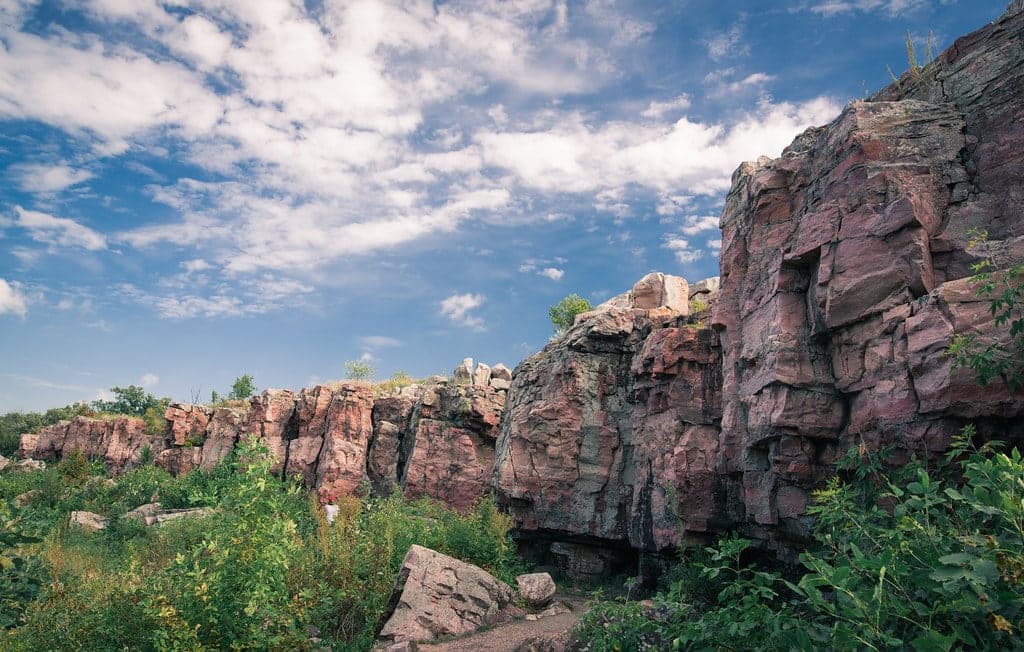
Pipestone National Monument, Minnesota
Pipestone, Minnesota, United States
103.7 km away
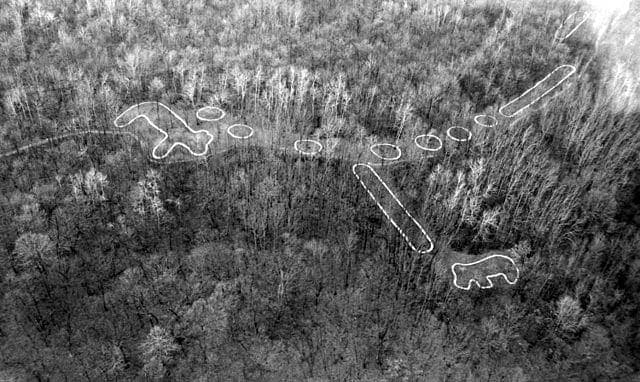
Effigy Indian Mound, Iowa
Allamakee County, Iowa, United States
327.1 km away
Pahuk Hill, Nebraska
Cedar Bluffs, Nebraska, United States
335.4 km away
Aztalan Mounds, Wisconsin
Lake Mills, Wisconsin, United States
509.1 km away