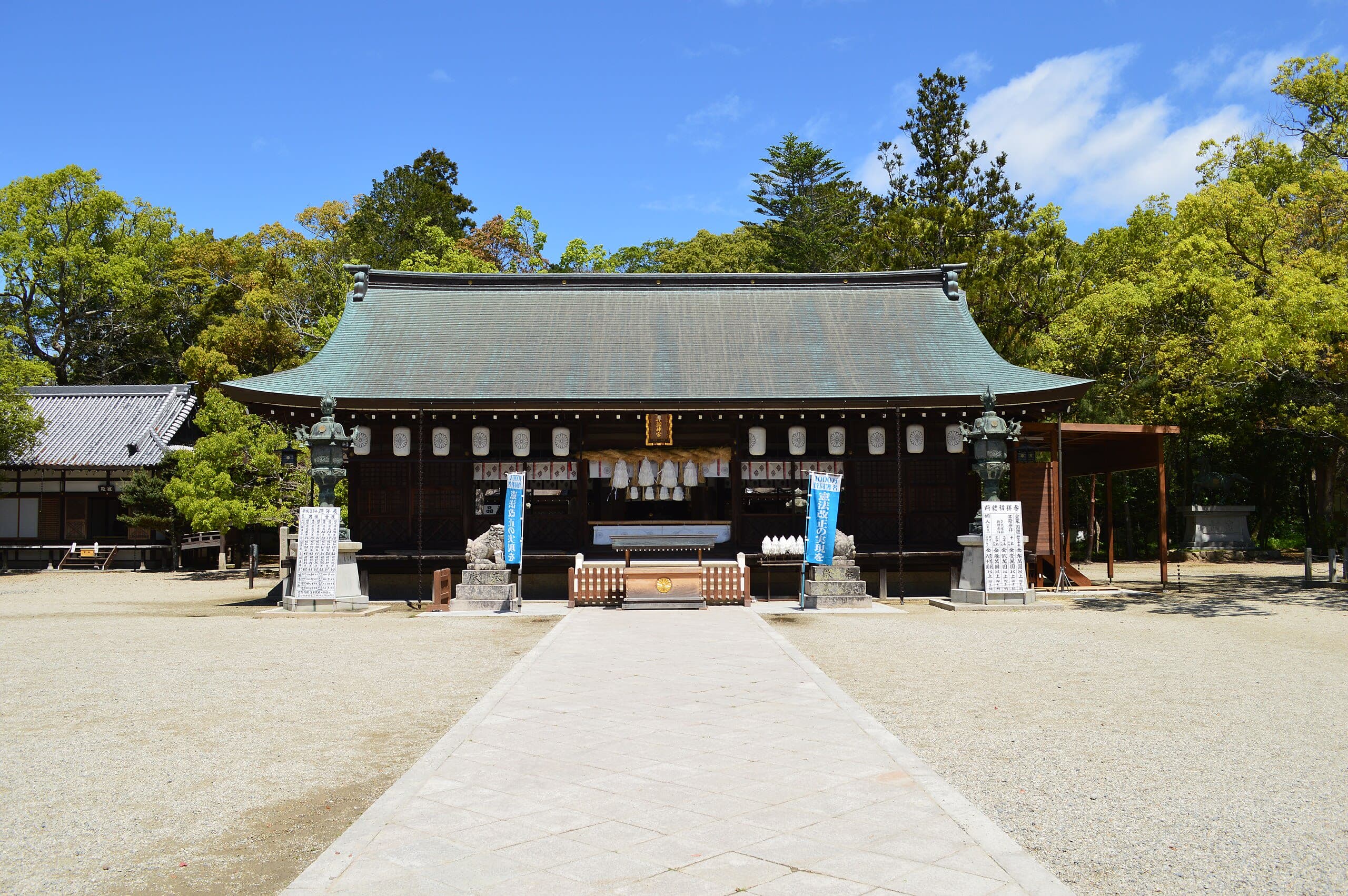
Izanagi Shinto Shrine, Awaji Island
Japan's oldest shrine, where the creator deity rests beneath the altar
Awaji, Hyogo Prefecture, Japan
At A Glance
- Coordinates
- 34.4594, 134.8508
- Suggested Duration
- One to two hours allows for proper worship, time with the sacred camphor trees, and contemplation. Those wishing to meditate or sit with the site should allow longer.
Pilgrim Tips
- Modest, respectful attire appropriate for one of Japan's most sacred shrines. Avoid revealing clothing, beach attire, or overly casual dress. Shoes will be removed if entering any buildings.
- Generally permitted in outdoor areas of the shrine. Ask about restrictions for inner areas. Avoid photographing worshippers without permission.
- The tomb beneath the main hall is not accessible to visitors and should not be expected as part of the visit. The shrine's supreme importance in Shinto hierarchy asks for corresponding respect in visitor conduct.
Overview
On Awaji Island—the first land formed in Japanese creation mythology—stands the shrine built over the tomb of the god who created Japan. Izanagi Shrine enshrines the deity who, with his consort Izanami, churned the primordial ocean and gave birth to the Japanese islands. Here, at one of only 24 shrines bearing the supreme 'Jingu' designation, you stand at the mythological origin of a nation.
According to the Kojiki, Japan's oldest written chronicle, Izanagi and Izanami were sent from the High Plain of Heaven to create land from the formless void. They stood on the Floating Bridge of Heaven and stirred the ocean with a jeweled spear. When they raised it, drops fell from the tip and formed Onogoro Island. From there they created the eight principal islands of Japan, beginning with Awaji—this very island where the shrine now stands.
After a journey through grief and the underworld, Izanagi retired to a hidden palace on Awaji, where he spent his final days in quiet seclusion. The shrine was built over this site, and beneath the main hall lies what tradition holds to be his tomb.
This is not simply a memorial to a mythological figure. In Shinto understanding, the kami remain present. Izanagi Shrine is considered among the most spiritually powerful in Japan precisely because the creator deity resides here. The shrine's solar alignments with other major shrines across Japan—forming lines to Suwa Taisha, Izumo Taisha, and Kumano Nachi Taisha—suggest an ancient understanding of sacred geography that radiates from this point of origin.
Context And Lineage
Izanagi Shrine's significance derives from its position in Japanese creation mythology as the resting place of the deity who brought forth the Japanese islands.
In the age before the world took form, Izanagi and Izanami were sent from the High Plain of Heaven to create land from the primordial ocean. Standing on the Floating Bridge of Heaven, they stirred the waters with a jeweled spear. Drops falling from the raised spear formed the first island, Onogoro. The divine couple descended and created the eight great islands of Japan, beginning with Awaji. Izanami died giving birth to the fire god; Izanagi journeyed to Yomi, the underworld, to retrieve her but fled in horror at her decayed form. After purifying himself—a process that created Amaterasu, Tsukuyomi, and Susanoo—Izanagi retired to his Hidden Palace on Awaji to spend his final days. The shrine marks this location.
Izanagi Shrine is one of only 24 shrines in Japan designated with the supreme 'Jingu' rank, indicating its position at the apex of Shinto sacred sites. The shrine has maintained continuous worship since ancient times and was formally elevated during the Meiji period's reorganization of Shinto.
Izanagi-no-Mikoto
Principal deity enshrined; creator of Japan; buried beneath the main hall
Izanami-no-Mikoto
Co-creator of Japan; Izanagi's consort; jointly enshrined
Why This Place Is Sacred
As the resting place of Japan's creator deity and the shrine built over his tomb, Izanagi Jingu represents a uniquely direct connection between worshippers and the divine source of the Japanese islands.
The thinness at Izanagi Shrine operates on mythological rather than merely historical dimensions. Where other sacred sites mark events in human history, this shrine marks the presence of the being who brought forth the physical world itself. The tomb beneath the altar is not simply a burial place but a point where the creator remains accessible.
Awaji Island's position as the first land created adds geographical specificity to this thinness. Visitors do not merely visit a shrine; they stand on soil that mythology describes as the prototype of all Japanese land, the drop from the heavenly spear that became the template for an archipelago.
The Hinomichishirube monument at the shrine documents something remarkable: solar alignments connecting Izanagi Shrine to other major shrines across Japan. On the summer solstice, the rising sun aligns with Suwa Taisha. On the winter solstice, it aligns with Kumano Nachi Taisha. At equinoxes, alignments connect to Izumo Taisha and Takachiho. Whether these alignments were intentionally created or later recognized, they position the shrine at the center of a solar-sacred geography spanning the Japanese islands.
The 900-year-old camphor trees in the shrine grounds—called Meoto Okusu, the Married Camphor—are said to embody the spirits of both Izanagi and Izanami, the creator couple, their marriage literally rooted in this soil.
The shrine was established at the location where Izanagi-no-Mikoto built his 'Yukyu no Miya' (Hidden Palace) and spent his final days after creating Japan and purifying himself from his journey to the underworld. The site served to mark his resting place and allow worship of the creator deity.
For most of its history, the area believed to contain Izanagi's tomb was considered so sacred that structures were not built directly upon it. In 1882, during the Meiji period of State Shinto, the decision was made to construct the current main hall (honden) directly over the tomb site, bringing worshippers into closer proximity with the deity. The shrine was designated a National Shrine in 1871 and elevated to Imperial Shrine, 1st rank in 1885, reflecting its supreme importance in the Shinto hierarchy.
Traditions And Practice
Izanagi Shrine offers standard Shinto worship practices with particular power for prayers related to marriage, family harmony, and new beginnings—domains reflecting the creator deities' work.
Traditional Shinto worship at the shrine follows established protocols: purification at the temizuya (water basin), approach to the haiden (worship hall), offerings of coins, bowing twice, clapping twice, prayer, and a final bow. The shrine offers formal blessing ceremonies (oharai) for those seeking more intensive spiritual support.
The shrine continues to offer all standard Shinto services including blessings for marriage, family safety, good relationships, and new ventures. Omamori (protective amulets) related to these domains are available. The shrine's connection to the creator deities makes it particularly popular for prayers involving beginnings and creativity.
Begin with proper purification at the temizuya. Approach the haiden with awareness of what lies beneath—the tomb of the creator. Allow the mythology to inform your prayers without requiring literal belief; the power of the site operates through multiple registers. Spend time with the Meoto Okusu, the married camphor trees embodying the divine couple. If visiting at solstice or equinox, consider the solar alignments connecting this site to other sacred places across Japan.
Shinto
ActiveIzanagi Shrine is one of 24 shrines in Japan bearing the supreme Jingu designation, placing it at the apex of Shinto sacred sites. As the resting place of the creator deity, it holds unique theological significance. The shrine represents direct continuity with the mythological origins of Japan and maintains living worship tradition.
The shrine offers all standard Shinto services including daily worship, formal blessings, and omamori distribution. It is particularly associated with prayers for marital harmony, family safety, and new beginnings—domains reflecting the creator deities' work. Annual festivals, especially the main festival on April 22, continue traditional observances.
Experience And Perspectives
Visitors consistently report an unusual sense of sanctity and spiritual power at Izanagi Shrine—a feeling of standing at the source of something vast.
Awaji Island itself begins preparing visitors for the encounter. The bridge from Honshu crosses waters that mythology describes as the primordial ocean stirred by a heavenly spear. The island landscape holds other sites connected to the Kuniumi (birth of Japan) mythology, creating a geographical context of sacred origin.
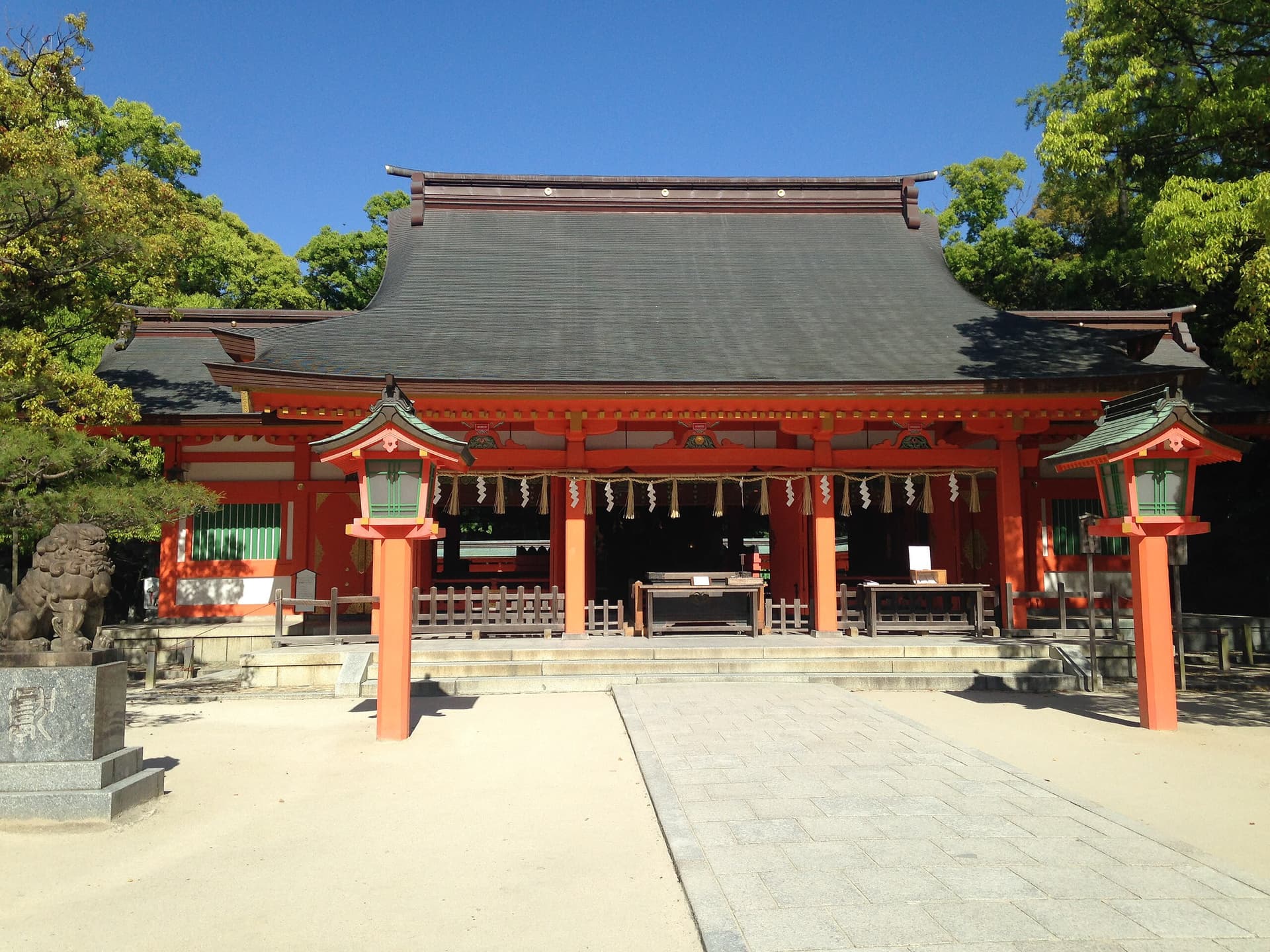
The shrine grounds convey antiquity and care. The approach passes through traditional torii gates and leads to the worship hall (haiden) facing the main hall (honden). The knowledge that beneath this building lies what tradition holds to be the creator's tomb adds weight to every gesture of worship.
The Meoto Okusu—two ancient camphor trees whose branches have grown together—stands as living embodiment of the divine couple. At approximately 900 years old, the trees have witnessed centuries of worship and are believed to house the spirits of both Izanagi and Izanami. Visitors often pause here, touched by the tangible form the mythology takes.
What visitors most consistently report is a sense of spiritual power exceeding typical shrine experiences. Whether this reflects the site's genuine antiquity, its mythological significance, or some quality inherent to the location, visitors describe feeling they have touched something foundational.
The shrine is approached through the main torii gate and along the sando (approach path) to the haiden (worship hall). The main hall behind it sits over the traditional tomb site. The Meoto Okusu (married camphor trees) stands in the grounds. A Hinomichishirube stone monument documents the solar alignments to other major shrines. The shrine can be visited in one to two hours, though those wishing contemplative time should allow longer.
Izanagi Shrine invites interpretation as mythology, as Shinto practice, as archaeological curiosity, and as evidence of ancient sacred geography.
Historians recognize the Kojiki and Nihon Shoki creation narratives as foundational Japanese mythology rather than literal history, while acknowledging that the myths may preserve genuine memory of settlement patterns or cultural developments. The shrine's antiquity is well-documented, though precise dating of original structures remains uncertain. The solar alignments documented by the Hinomichishirube monument have received scholarly attention, with debate continuing about whether they represent intentional ancient planning or later recognition of coincidental patterns.
In Shinto understanding, the mythology is not merely symbolic but describes real events in sacred time. Izanagi-no-Mikoto created the Japanese islands, retired to Awaji, and remains present at the shrine. The tomb beneath the main hall contains not a historical corpse but the resting place of a deity whose presence continues to bless worshippers. The Meoto Okusu trees genuinely embody the spirits of the creator couple.
The documented solar alignments connecting Izanagi Shrine to other major shrines across Japan attract those interested in sacred geography, ley lines, and ancient astronomical knowledge. Some interpret these alignments as evidence of a sophisticated understanding of sacred space among ancient shrine builders.
The exact antiquity of shrine structures before the documented Meiji period remains uncertain. The contents or state of the tomb beneath the main hall are not publicly known. The origins of the creation myth among Awaji Island's fishing communities—and why this particular island was identified as the first land—remain subjects of speculation.
Visit Planning
Izanagi Shrine is located on Awaji Island, accessible by bridge from Honshu or ferry from various ports. Allow 1-2 hours for a meaningful visit.
Awaji Island offers various accommodations from ryokan to hotels. The island is also accessible as a day trip from Osaka, Kobe, or other Kansai cities.
Standard Shinto shrine etiquette applies, with particular care appropriate to one of Japan's most sacred sites.
As one of only 24 shrines bearing the supreme Jingu designation, Izanagi Shrine asks for the same respectful conduct given to Ise Jingu or Meiji Jingu. This means modest dress, quiet demeanor, and careful attention to shrine protocols. The knowledge that you stand over the tomb of the creator deity should inform the quality of attention you bring.
Formal worship follows the standard Shinto sequence: purify hands and mouth at the temizuya, approach the haiden, deposit an offering in the box, bow twice deeply, clap twice, offer your prayer silently, and bow once more. If uncertain about any element, observe other worshippers before approaching.
Modest, respectful attire appropriate for one of Japan's most sacred shrines. Avoid revealing clothing, beach attire, or overly casual dress. Shoes will be removed if entering any buildings.
Generally permitted in outdoor areas of the shrine. Ask about restrictions for inner areas. Avoid photographing worshippers without permission.
Small coins placed in the offering box before the haiden. Five-yen coins are considered auspicious in Japanese tradition (the word for five yen, go-en, also means 'good fortune' or 'connection').
{"Purify hands and mouth at the temizuya before worship","Bow before passing through torii gates","Follow proper worship protocol (bow twice, clap twice, pray, bow once)","Maintain quiet and respectful demeanor","Do not attempt to access the tomb area beneath the main hall"}
Sacred Cluster
Nearby sacred places create the location cluster described in the growth plan. This block is intentionally crawlable and links into the wider regional graph.