Iona Abbey
The island where Christianity took root in Scotland and prayer has not ceased for nearly fifteen centuries
Isle of Iona, Argyll and Bute, United Kingdom
At A Glance
- Coordinates
- 56.3350, -6.3914
- Suggested Duration
- A minimum half-day on the island allows time for the abbey, museum, Reilig Odhrain, and the Nunnery. A full day permits walking to Columba's Bay or climbing Dun I. Those staying overnight or joining a residential programme experience the island's deepest dimensions. Many visitors find that a single day is insufficient and return.
- Access
- The abbey is open April to September daily 9:30am to 5:30pm (Sundays from 12:30pm), and October to March daily except Sundays 10am to 4pm. Summer booking is recommended. The abbey is a 600-metre uphill walk from the ferry pier. A taxi service operates on the island and can carry folded wheelchairs. Blue Badge holders may bring vehicles on the ferry, but parking is very limited.
Pilgrim Tips
- The abbey is open April to September daily 9:30am to 5:30pm (Sundays from 12:30pm), and October to March daily except Sundays 10am to 4pm. Summer booking is recommended. The abbey is a 600-metre uphill walk from the ferry pier. A taxi service operates on the island and can carry folded wheelchairs. Blue Badge holders may bring vehicles on the ferry, but parking is very limited.
- No dress code. Warm, waterproof clothing and sturdy walking shoes are practical necessities rather than formalities. The island is exposed to Atlantic weather at all times of year.
- Photography is permitted throughout the abbey grounds and museum. Discretion is expected during worship services. The carved stones and crosses are frequently photographed; the museum lighting is designed to facilitate this.
- The abbey church is a working place of worship. Visitors should not enter during services unless intending to participate respectfully. The island has limited facilities; bring food and water, especially outside summer months. Weather changes rapidly; waterproofs and layers are essential regardless of season. The walk to Columba's Bay and Dun I involves rough terrain.
Overview
Iona Abbey stands on a small Hebridean island where St Columba founded a monastery in AD 563. From this remote outpost, Celtic monks carried Christianity across Scotland and into northern England, creating some of the finest manuscripts of the medieval world. Today the restored abbey remains a living place of worship, its daily services continuing a tradition of prayer that has endured through Viking raids, reformation, and ruin.
The journey to Iona is itself a pilgrimage. Two ferries and a drive across Mull separate the island from the mainland, and each crossing strips away a layer of the ordinary world. By the time you step onto Iona's shore, something has already shifted. The island is three miles long, a mile and a half wide, and holds more accumulated sanctity per acre than almost any ground in Europe.
Columba arrived here in AD 563 with twelve companions, exiled from Ireland after a dispute that led to bloodshed. On this exposed Atlantic island, he built a monastery that became the spiritual engine of early medieval Britain. From Iona, monks evangelised the Picts and converted the Anglo-Saxons of Northumbria. In the scriptorium, they created illuminated manuscripts of breathtaking beauty, most probably including the Book of Kells. They buried their kings here, carrying royal bodies across the sea along the Street of the Dead to the hallowed ground of Reilig Odhrain.
Then came the Vikings. In 795, raiders struck for the first time. In 806, sixty-eight monks were massacred in Martyrs' Bay. The community split, some fleeing to Ireland. Yet monasticism persisted on Iona. Around 1200, a Benedictine abbey rose on the old foundations, and an Augustinian nunnery was established nearby. The Reformation ended monastic life in 1560, and the buildings crumbled for three centuries.
In 1938, George MacLeod brought craftsmen and ministers to rebuild the abbey and found the Iona Community, an ecumenical order committed to worship, justice, and peace. The abbey church was restored. Services resumed. The prayers that had been silenced for four hundred years began again. They have not stopped since.
Context And Lineage
Iona's significance extends far beyond its abbey walls. This island was the hinge on which British Christianity turned, the point from which the faith spread across Scotland and into northern England. Its influence shaped the spiritual, artistic, and political landscape of early medieval Britain.
In AD 563, Columba, a prince of Ireland's O'Neill dynasty, arrived on Iona with twelve companions. The circumstances of his departure from Ireland are recorded in hagiographic rather than historical terms: Adomnan's Life of Columba, written around AD 700, presents the journey as missionary zeal, while later traditions frame it as self-imposed exile after Columba's involvement in the Battle of Cooldrevny, which cost thousands of lives. Whether penitent or pioneer, Columba chose an island at the western edge of Dal Riata, the Gaelic kingdom that straddled the Irish Sea. From this seemingly marginal position, he built a community that transformed the religious life of Britain.
The monastery Columba founded was built of wattle, timber, and thatch. The monks lived in individual cells around a central church and scriptorium. Their days followed a pattern of prayer, manual labour, and scholarship. Columba himself is described as spending long hours copying manuscripts, a practice that would culminate, centuries after his death, in the creation of the Book of Kells.
Columba died on Iona in AD 597, the same year that Augustine of Canterbury arrived in England on his Roman mission to convert the Anglo-Saxons. The coincidence is historically resonant: two traditions of Christianity, Celtic and Roman, meeting at the edges of the British Isles. The tension between them would define the church in Britain for the next century, culminating in the Synod of Whitby in 664, where the Roman tradition prevailed in matters of practice but the Celtic tradition's spiritual legacy endured.
The spiritual lineage of Iona flows from the Celtic Christianity of Columba through Benedictine monasticism to the ecumenical Christianity of the Iona Community. Each phase built upon what came before, both literally and spiritually. The Benedictine abbey rose on the foundations of the Columban monastery. The Iona Community rebuilt the Benedictine ruins and resumed daily worship. The thread connecting these phases is the conviction that this island is holy ground and that prayer offered here carries particular weight.
Columba (Colm Cille)
founder
An Irish prince, monk, and missionary who founded the Iona monastery in AD 563. Columba evangelised the Picts and established Iona as the most influential monastic centre in early medieval Britain. He died on Iona on 9 June 597. His shrine became a major pilgrimage destination, and his legacy defines the island's spiritual identity to this day.
Adomnan of Iona
historical
Ninth abbot of Iona (679-704) and author of the Life of Columba, the primary source for the monastery's early history. Adomnan also authored De Locis Sanctis, an account of the Holy Land, and promulgated the Law of Innocents, an early protection of women and children in wartime.
Reginald, son of Somerled
patron
Lord of the Isles who around 1200 invited Benedictine monks to Iona and built the abbey church that forms the core of the present buildings. He also established the Augustinian nunnery nearby.
George MacLeod
restorer
A Church of Scotland minister who in 1938 led a group of ministers and craftsmen to Iona to rebuild the ruined abbey. He founded the Iona Community, an ecumenical order committed to worship, peace, and justice. MacLeod's vision restored the abbey as a living place of worship and established Iona as a centre of contemporary Christian pilgrimage.
Why This Place Is Sacred
Iona has been called a thin place for so long that the phrase has become inseparable from the island itself. The thinness here is not metaphorical. Visitors from every background and belief system report an immediate change in atmosphere upon arrival, a sense of proximity to something beyond the visible.
The quality that makes Iona a thin place operates on several registers at once. There is the physical reality of the island: its smallness, its exposure to Atlantic weather, the extraordinary clarity of its light. Iona marble, unique to the island, carries veins of green through white stone. The sea surrounding the island shifts between turquoise and slate grey within hours. The landscape itself seems to vibrate at a frequency that quiets the mind.
Then there is the accumulated weight of prayer. People have been praying on this ground for nearly fifteen hundred years. That is a staggering continuity. The Columban monks chanted psalms here through the long northern nights. The Benedictines sang the offices for three and a half centuries. After four hundred years of silence, the Iona Community resumed daily worship. The prayers are not abstract: they soaked into this stone, this soil, this air. Many visitors report feeling them before they know anything about the history.
The island's remoteness contributes to its thinness. Reaching Iona requires intention. No one arrives accidentally. The journey itself, with its multiple crossings by water, creates a natural transition from one state of being to another. By the time you walk up from the ferry pier to the abbey, you have already been stripped of the pace and noise of ordinary life.
Finally, there is the presence of the dead. Reilig Odhrain holds the remains of kings and monks and ordinary islanders across more than a thousand years. The Street of the Dead, the ancient processional path, runs from the harbour to the graveyard. Walking it is to join a procession that has been moving along this route since the early medieval period. The living and the dead share this island with an intimacy that larger, busier places cannot sustain.
Columba founded the monastery as a place of prayer, penance, and missionary work. The monastic community existed to worship God through the daily offices, to produce sacred art and manuscripts, to offer hospitality to pilgrims, and to train missionaries who would carry Christianity into pagan lands. The island's isolation was not a drawback but a feature: separation from the world was the condition for drawing closer to God.
The site has passed through distinct phases of sacred use. The Columban community (563 to roughly 1200) followed an Irish monastic rule emphasising asceticism, scholarship, and mission. The Benedictine abbey (circa 1200 to 1560) brought continental monasticism to the site, constructing the stone buildings whose remains define the present landscape. The post-Reformation period (1560 to 1899) saw the buildings fall to ruin while the island retained its reputation as hallowed ground. The restoration period (1899 to present) began with the Iona Cathedral Trust's acquisition of the ruins and accelerated dramatically with George MacLeod's founding of the Iona Community in 1938. Today the abbey functions as both a heritage monument managed by Historic Environment Scotland and a living place of ecumenical Christian worship maintained by the Iona Community.
Traditions And Practice
Worship has been offered on Iona for nearly fifteen hundred years. Today the Iona Community maintains daily services in the restored abbey church, open to all visitors. The weekly pilgrimage walk around the island continues a tradition of sacred movement across this landscape.
The Columban monks structured their days around the offices of prayer, chanting the psalms at set hours from before dawn until after dark. Between prayers, they worked: copying manuscripts in the scriptorium, farming the island's sparse soil, building the coracles in which they would sail to the mainland on missionary journeys. The scriptorium's output was extraordinary. The Book of Kells, now in Trinity College Dublin, is widely believed to have been produced at least in part on Iona around AD 800, its intricate illuminations representing the pinnacle of Insular art.
Pilgrimage to Columba's shrine was central to the abbey's life for centuries. Kings came to be buried. Monks came to pray. Ordinary Christians came seeking the saint's intercession. The economy and architecture of the medieval abbey were shaped by the needs of pilgrims, with guest houses and processional routes designed to channel devotion through the sacred landscape.
The Iona Community holds morning and evening worship daily in the abbey church. The services are ecumenical, drawing on the Iona Community's own liturgical tradition, which emphasises justice, peace, and the integrity of creation alongside praise and prayer. All are welcome regardless of denomination or belief.
The weekly pilgrimage walk, typically held on Tuesdays during the summer season, traces a route around the island's sacred sites, pausing at Columba's Bay, the hermit's cell, and other locations of spiritual significance. The walk combines physical effort, historical reflection, and communal contemplation.
Residential programmes at the Iona Community's centres offer immersive experiences of communal living, worship, and discussion on themes ranging from social justice to personal spirituality. These programmes run primarily during the summer months and require advance booking.
Attend a worship service in the abbey church. The simplicity of the setting and the quality of the community's worship create an experience available nowhere else. If visiting on a Tuesday in summer, join the pilgrimage walk around the island.
For solitary contemplation, sit in the abbey church between services, or find a place among the stones of Reilig Odhrain. The graveyard is never crowded. The dead keep their own silence.
Walk to Columba's Bay at the southern tip of the island, where tradition says Columba first landed. The beach is composed of smooth rounded stones, and it is customary for visitors to carry a stone from the beach as a memento of their pilgrimage.
If staying overnight, step outside after the last ferry has departed. The island after the day visitors leave is a different place: quieter, deeper, closer to what Iona has always been.
Celtic Christianity
HistoricalIona was the principal centre of Celtic Christianity in Britain. Founded by Columba in AD 563, the monastery sent missionaries throughout Scotland and into northern England, shaping the spiritual landscape of early medieval Britain. The Celtic tradition emphasised monasticism, scholarship, connection to the natural world, and a distinctive artistic tradition that produced the Book of Kells and the great high crosses.
The Columban community followed a monastic rule of prayer, manual labour, and missionary work. The daily offices structured life from before dawn to after dark. The scriptorium produced illuminated manuscripts. Monks maintained a tradition of peregrinatio, voluntary exile for Christ, travelling to remote islands and foreign lands as an act of devotion. Pilgrimage to Columba's shrine drew visitors from across the Christian world.
Benedictine Monasticism
HistoricalAround 1200, Benedictine monks were invited to Iona by Reginald, son of Somerled, Lord of the Isles. They built the abbey church and monastic buildings whose stone remains define the present site. The Benedictine community maintained the abbey for over three centuries until the Scottish Reformation in 1560, which ended monastic life on the island.
The Benedictine monks followed the Rule of St Benedict, structuring their days around the eight canonical hours of prayer, communal meals, study, and manual work. They maintained the pilgrimage infrastructure for visitors to Columba's shrine and oversaw the royal burial ground. The Lords of the Isles and other Highland chiefs patronised the abbey and enriched its buildings.
Iona Community (Ecumenical Christianity)
ActiveFounded in 1938 by George MacLeod, the Iona Community rebuilt the ruined abbey and re-established daily worship on the island. The community is an ecumenical order with members across denominations, committed to prayer, social justice, and peace. It represents the restoration of Iona as a living place of faith after four centuries of silence.
Daily morning and evening worship in the abbey church. Weekly pilgrimage walk around the island. Residential programmes combining communal living, prayer, and discussion. Liturgical innovation drawing on Celtic Christian sources. Advocacy for justice, peace, and the integrity of creation. The community's distinctive liturgy, including the Iona Community Worship Book, is used by congregations worldwide.
Experience And Perspectives
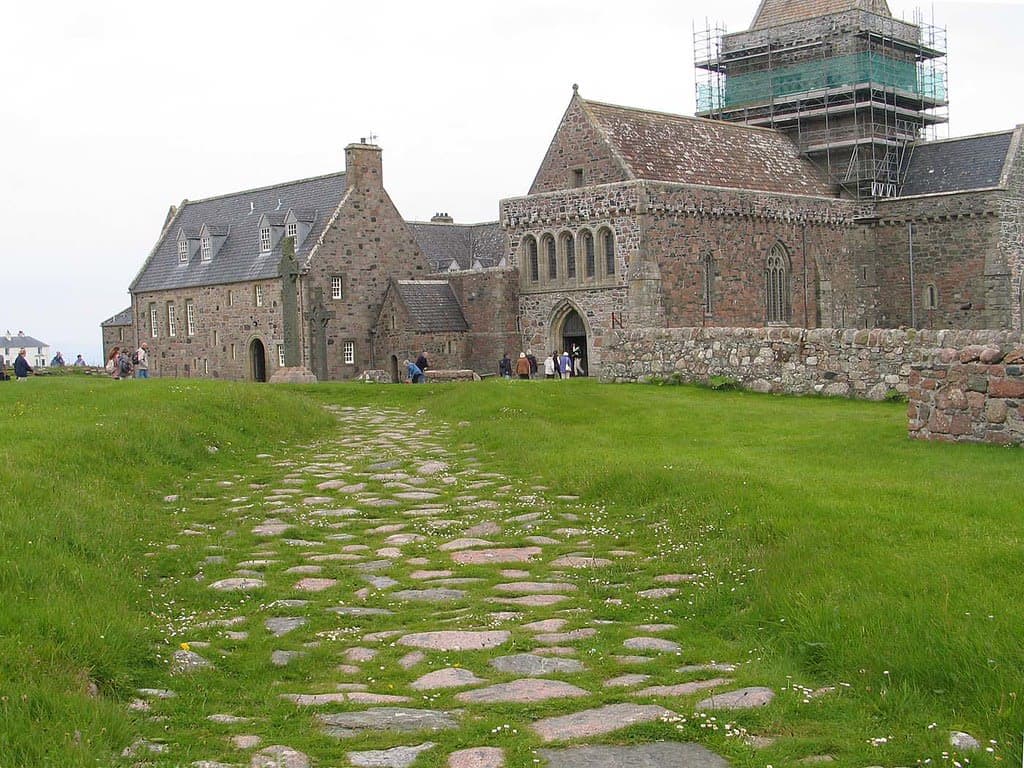
The experience of Iona Abbey begins not at the abbey door but at the ferry pier, with the crossing from Mull that separates the island from the mainland world. The walk uphill from the pier passes the Nunnery ruins before the abbey comes into view, its square tower rising against the sky.
The first thing you notice, walking up from the pier, is the Nunnery. Its roofless walls of pink granite stand open to the sky, wildflowers growing where nuns once prayed. The ruins are among the best-preserved medieval nunnery remains in Britain, yet they are quiet, often overlooked by visitors heading up the road toward the abbey. The carved effigy of Prioress Anna MacLean, who died in 1543, lies among the graves, the pleats of her Augustinian surplice still visible in the stone.
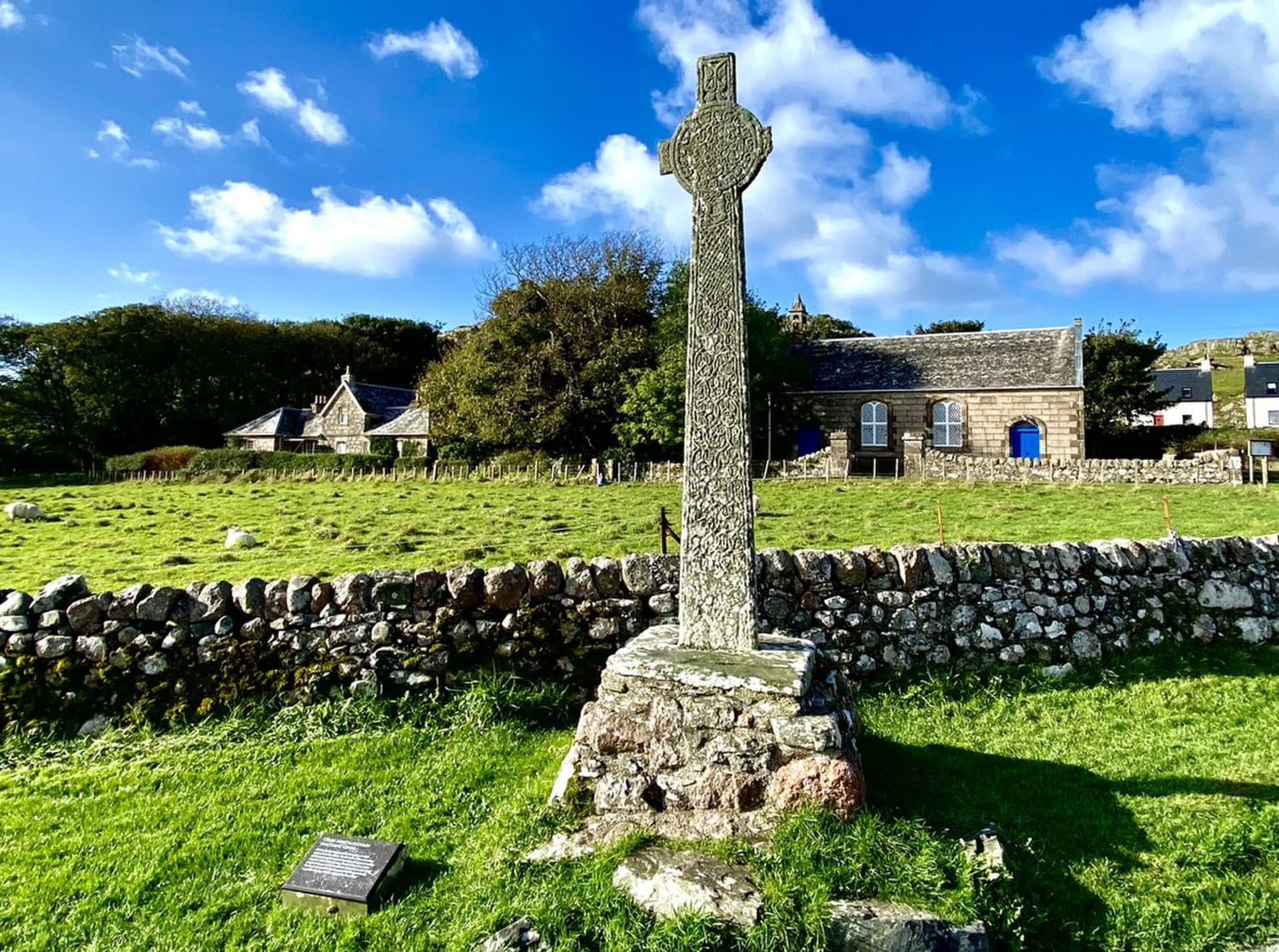
The abbey precinct opens ahead. St Martin's Cross, carved in the 8th century, stands before the west door of the abbey church, fifteen feet of interlaced patterns and biblical scenes enduring wind and rain for twelve hundred years. It is the finest intact high cross in Scotland. Nearby, a replica of St John's Cross marks where the original stood before it was moved indoors for conservation. These crosses once oriented pilgrims, marking the boundary between the ordinary world and sacred ground.
The abbey church itself, restored by the Iona Community, is a working church. Services are held daily. The interior is simple, deliberate in its austerity. The Romanesque and Gothic stonework of the medieval building has been carefully preserved, but the space is not a museum. Chairs face the communion table. Candles burn. Hymn books wait on the seats. The community worships here morning and evening, and visitors are welcome to join.
Outside, to the south, lies Reilig Odhrain, Scotland's oldest Christian cemetery. The graveslabs and carved stones here span a millennium. An inventory from 1549 recorded forty-eight Scottish kings, eight Norwegian kings, and four Irish kings buried in this ground. None of their graves can now be identified, the inscriptions long since worn away, but the knowledge of their presence gives weight to every step. Beside the graveyard stands St Oran's Chapel, the oldest intact building on Iona, built in the 12th century and named for Columba's companion whose legend involves one of the stranger stories in Scottish hagiography.
The abbey museum, housed in the medieval infirmary, contains Scotland's finest collection of early medieval carved stones. The interlace patterns, the figures of riders and animals, the abstract designs speak of an artistic tradition that flourished on this island a thousand years ago. The original St John's Cross, reassembled from fragments, stands here in quiet grandeur.
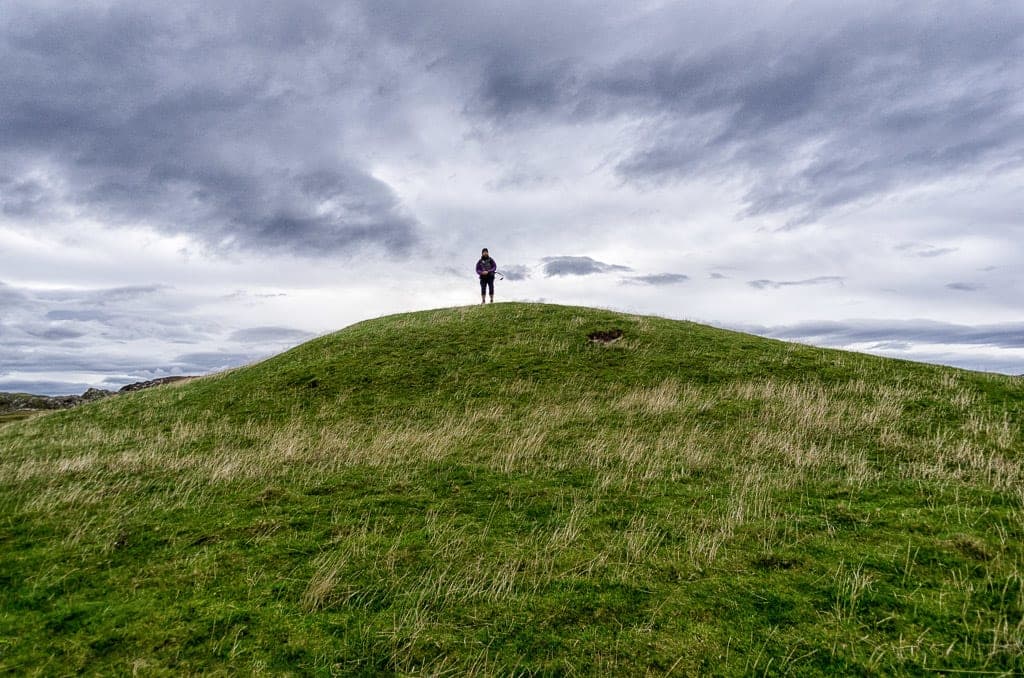
Beyond the abbey precinct, the island itself becomes the experience. The weekly pilgrimage walk led by the Iona Community traces a route around Iona's sacred sites: Columba's Bay in the south, where the saint is said to have first landed; the marble quarry on the west coast; the hermit's cell; Dun I, the island's highest point, from whose summit the whole sacred landscape unfolds. Walking this route is to understand that the abbey is not an isolated monument but the centre of a sacred island.
Begin at the Nunnery ruins near the ferry pier to encounter the site's history in chronological layers. Walk north to the abbey precinct, pausing at the high crosses before entering the church. Visit Reilig Odhrain and St Oran's Chapel. Spend time in the museum with the carved stones. If time allows, walk south to Columba's Bay or climb Dun I for the panoramic view. Those staying overnight should attend morning or evening worship.
Iona sits at the confluence of history, archaeology, faith, and legend. Scholars, believers, and spiritual seekers approach the island from different angles, and the site is spacious enough to hold their differing perspectives without contradiction.
Archaeologists and historians regard Iona as one of the most significant early medieval monastic sites in Europe. The archaeological record confirms Columban-era activity from the 6th century, with the monastery producing manuscripts, carved stones, and metalwork of the highest quality. The Book of Kells, the supreme achievement of Insular art, is widely attributed to the Iona scriptorium, though some scholars argue it was completed at Kells in Ireland after the Viking raids forced the community's partial relocation.
The royal burial ground of Reilig Odhrain is accepted as a high-status cemetery of the 9th to 11th centuries, though the medieval claim of containing forty-eight Scottish kings cannot be individually verified. The high crosses of Iona are among the finest surviving examples of early medieval sculpture in Scotland. Much of the early monastery remains unexcavated beneath the later Benedictine buildings, and future archaeology may significantly expand understanding of the site.
For Christians, Iona is holy ground consecrated by nearly fifteen centuries of continuous prayer, interrupted but never extinguished. The island holds a unique place in the spiritual geography of British Christianity as the site from which the faith spread to Scotland and beyond. Columba is venerated as one of the great saints of the Celtic church, and his presence on Iona is understood as spiritually enduring rather than merely historical.
The Iona Community's ecumenical approach welcomes Christians of all traditions and invites engagement with the island's Celtic Christian heritage as a living resource rather than a museum piece. For those who participate in the community's worship and programme, Iona offers an encounter with a form of Christianity rooted in place, prayer, and social justice.
Iona attracts spiritual seekers beyond the Christian tradition. The island's reputation as a thin place draws those interested in earth energies, sacred geography, and pre-Christian spirituality. Some understand the island as having been sacred long before Columba's arrival, with the saint recognising and consecrating an existing power rather than creating sanctity from nothing. The Celtic Christian tradition, with its emphasis on the divine in nature and the permeable boundary between worlds, resonates with contemporary seekers who find conventional religious institutions insufficient.
The New Age and earth-spirituality engagement with Iona has sometimes created tension with the Iona Community and the island's residents, but the island's spaciousness, both physical and spiritual, generally accommodates diverse approaches.
Whether Iona was sacred before Columba's arrival remains an open and perhaps unanswerable question. The tradition that the island was already known as a holy place when the saint arrived is persistent but unverified by archaeology. The story of St Oran's burial and resurrection, with its echoes of pre-Christian foundation sacrifice, hints at older layers of belief.
The precise circumstances of the Book of Kells' creation, and the extent of the early monastery's surviving remains beneath the later buildings, await future investigation. The identities of those buried in Reilig Odhrain are largely lost; the inscriptions that might have confirmed or denied the claims of medieval chroniclers wore away centuries ago. Iona keeps its deepest secrets.
Visit Planning
Reaching Iona requires a ferry from Fionnphort on the Isle of Mull, which itself is reached by ferry from Oban. The journey is part of the experience. The abbey is a ten-minute walk uphill from the Iona pier.
The abbey is open April to September daily 9:30am to 5:30pm (Sundays from 12:30pm), and October to March daily except Sundays 10am to 4pm. Summer booking is recommended. The abbey is a 600-metre uphill walk from the ferry pier. A taxi service operates on the island and can carry folded wheelchairs. Blue Badge holders may bring vehicles on the ferry, but parking is very limited.
The Iona Community operates the MacLeod Centre and the Abbey itself for residential guests during programme weeks. The island has several B&Bs, a hotel (the St Columba Hotel), and a hostel. Camping is possible with the landowner's permission. Accommodation should be booked well in advance for summer visits.
Iona Abbey is both a heritage site and an active place of worship. Standard respectful behaviour is expected. No special dress or preparation is required, but awareness that services are ongoing and that the graveyard is hallowed ground enriches the visit.
The abbey welcomes all visitors. There is no expectation of particular religious belief or practice. What is expected is the same respect one would show in any sacred space where people are actively praying.
During worship services, visitors are welcome to sit and participate or simply to be present in silence. Entering and leaving during services should be done quietly. The community's worship is not a performance for visitors; it is the continuation of a tradition that predates the abbey's current walls by centuries.
The graveyard of Reilig Odhrain is sacred ground containing remains spanning more than a thousand years. Walking through it is permitted and encouraged, but the space asks for a certain gravity. The carved stones and crosses are fragile; touching or climbing on them accelerates deterioration that has already been working on them for centuries.
The island itself is a fragile environment. Iona has no rubbish collection service; visitors are asked to take their waste with them. The machair grasslands and coastal habitats are sensitive. The Scottish Outdoor Access Code applies.
No dress code. Warm, waterproof clothing and sturdy walking shoes are practical necessities rather than formalities. The island is exposed to Atlantic weather at all times of year.
Photography is permitted throughout the abbey grounds and museum. Discretion is expected during worship services. The carved stones and crosses are frequently photographed; the museum lighting is designed to facilitate this.
Admission fees support the maintenance of the heritage site through Historic Environment Scotland. The Iona Community welcomes donations toward its work in worship, justice, and peace. The abbey shop sells books, crafts, and Iona-related items.
The abbey is a Scheduled Ancient Monument. Any disturbance to structures or archaeological deposits is illegal. Cars require a permit to travel to Iona. No camping is permitted on the abbey grounds. Dogs should be kept on leads near livestock.
Sacred Cluster
Nearby sacred places create the location cluster described in the growth plan. This block is intentionally crawlable and links into the wider regional graph.