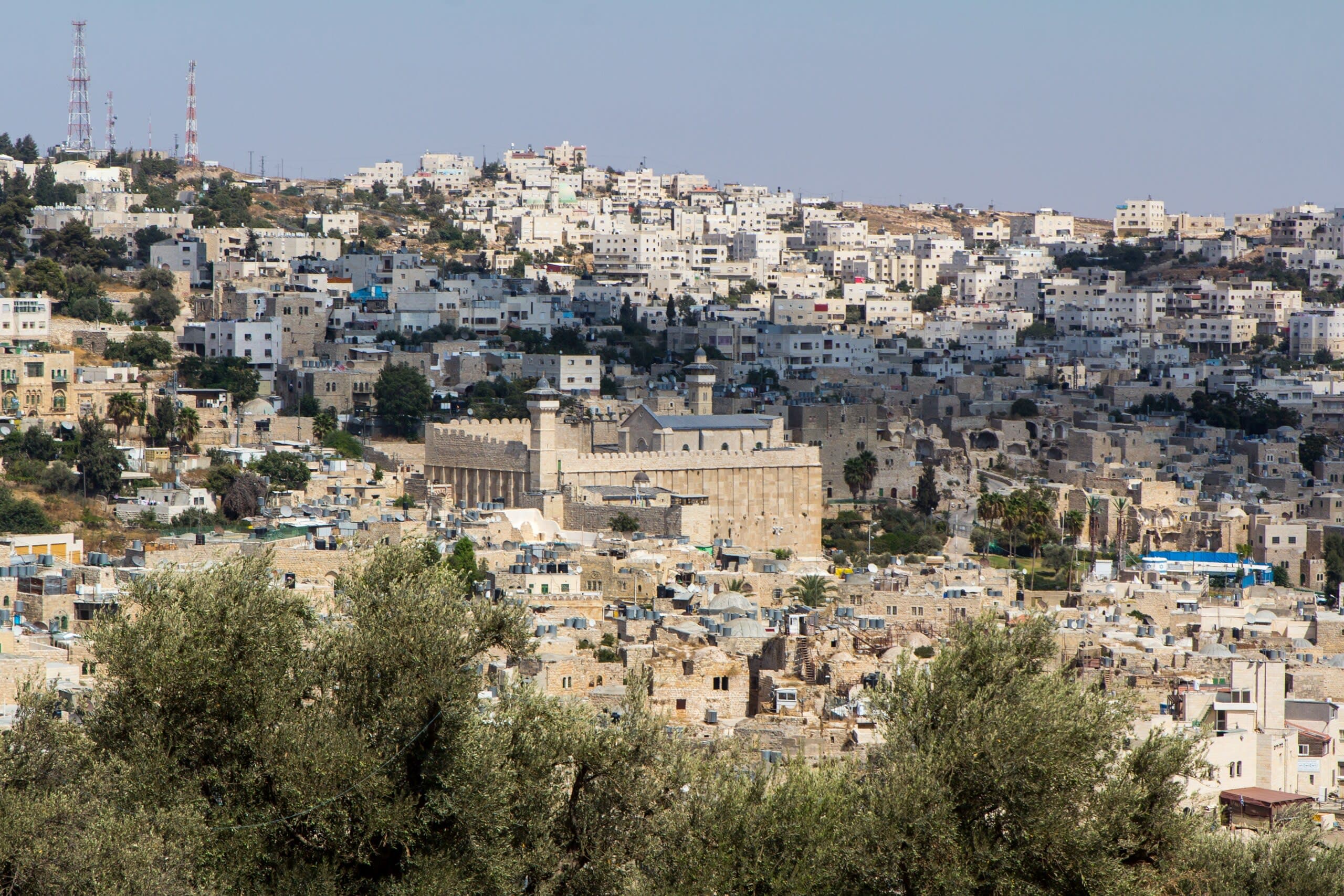
Hebron/Al-Khalil Old Town
Where Abraham chose to bury Sarah, and three faiths still gather at the tombs of their shared ancestors
Hebron, Judea and Samaria, Palestinian Territories
At A Glance
- Coordinates
- 31.5247, 35.1107
- Suggested Duration
- Plan at least 2-3 hours for the site itself, plus travel time. If visiting both Jewish and Muslim sections, add time for exiting and re-entering through separate entrances. Many visitors combine Hebron with the Old City market (the Tel Rumeida archaeological area and traditional souks). A half-day is realistic; a full day allows for deeper exploration.
Pilgrim Tips
- For the synagogue section: head covering required for men (kippah provided at entrance), modest dress for all (shoulders and knees covered), married women may wish to cover hair in Orthodox custom. For the mosque section: women must cover hair and wear loose, long-sleeved, full-length clothing; men should wear long pants; shoes removed before entering prayer areas. Carrying a scarf or shawl is advisable for women entering either section.
- Photography is generally permitted in public areas but should be approached with restraint. Do not photograph worshippers without explicit permission. During active prayer times, avoid photography entirely if possible. In the mosque section, photography near the mihrab and minbar may be restricted. Flash photography is inappropriate in both sections. Remember that this is not primarily a tourist site but an active place of worship.
- Be prepared for security screening and potential delays at checkpoints. Carry identification, especially a passport for international visitors. Access can be restricted or denied based on the current security situation—this is not personal but reflects ongoing tensions in the area. Do not attempt to move between sections without exiting and re-entering through the proper entrance. Do not photograph worshippers without permission. Do not engage in political discussions or displays within the site—whatever your views, this is a place of prayer for communities in actual conflict. Be aware that visiting Hebron itself, beyond the holy site, involves navigating one of the most contentious environments in the region. Areas designated H1 and H2 have different jurisdictions and access rules. Guided tours from Jerusalem or Bethlehem often provide logistical assistance and context.
Overview
One of the oldest continuously inhabited cities on Earth, Hebron holds the Cave of Machpelah—the burial place of the patriarchs and matriarchs venerated by Judaism, Christianity, and Islam. Here, within walls that Herod built two thousand years ago, Abraham and Sarah, Isaac and Rebecca, Jacob and Leah are said to rest. Three faiths pray at these tombs daily, separated now by bulletproof glass, yet bound by common origin.
Somewhere beneath the massive Herodian stones of Hebron lies a cave—the cave Abraham purchased four thousand years ago to bury his wife Sarah. That purchase, recorded in Genesis, is the first real estate transaction in scripture, the first legal claim to land in what would become the most contested territory on Earth.
The building above it is the only fully intact Herodian structure still standing, and possibly the oldest continuously used prayer building in the world. For over two millennia, pilgrims have come here: Jews seeking connection to their patriarchs and matriarchs, Muslims honoring Ibrahim Khalil Allah—Abraham the Friend of God—and Christians tracing the lineage of their faith to its Abrahamic roots.
Today the site is divided. A 1994 massacre led to the installation of bulletproof partitions separating Jewish and Muslim prayer areas. Separate entrances, heavy security, and restricted access create an atmosphere that mixes profound devotion with palpable tension. Yet what draws seekers here transcends the politics that divide it. To stand at the cenotaphs of Abraham and Sarah is to stand at the origin point of monotheism itself—the place where the story began that would shape half the world's population.
This is not a comfortable pilgrimage. It asks visitors to hold contradiction: the weight of sacred history alongside the reality of ongoing conflict, the unity of Abrahamic origin alongside the division of Abrahamic descendants.
Context And Lineage
Hebron is one of the oldest continuously inhabited cities in the world, with settlement dating back five thousand years. According to tradition, Abraham purchased the Cave of Machpelah here around 1800 BCE. King David ruled from Hebron before moving his capital to Jerusalem. Herod enclosed the tombs in the first century BCE. Since then, the site has passed through Byzantine, Islamic, Crusader, Mamluk, Ottoman, British, Jordanian, and Israeli control—each layer adding to its significance and its contestation.
The biblical account in Genesis 23 describes Abraham as a stranger and sojourner in the land of Canaan when Sarah died at the age of 127. The Hittite population of Hebron offered to give him a burial site, but Abraham insisted on purchasing the Cave of Machpelah from Ephron for its full price: four hundred shekels of silver, weighed out in the presence of witnesses at the city gate.
This careful legal transaction, scholars note, stands apart from the divine promises that elsewhere grant Abraham's descendants the land. Machpelah was acquired by purchase, creating an uncontestable claim. Abraham was buried there by his sons Isaac and Ishmael—together, in a rare moment of unity between the two lineages that would become Israel and the Arab peoples. Isaac and Rebecca, Jacob and Leah followed, each generation joining the ancestral tomb.
Jewish mystical tradition in the Zohar adds deeper layers. The cave, it teaches, is the entrance to the Garden of Eden. Adam recognized this when he saw light emanating from the site and dug the first burial chamber. The patriarchs, buried here, guard the threshold between worlds.
From Abraham, the lineage divides. Through Isaac and Jacob come the Israelites, later the Jews. Through Ishmael come the Arab peoples, among whom Islam would emerge. Through both, Christianity claims its ancestry, tracing Jesus's lineage through the patriarchs while understanding Abraham as the exemplar of faith for all believers.
This single cave thus contains the roots of traditions now encompassing half the world's population. Every Jew, every Muslim, every Christian stands—spiritually if not genetically—among the descendants of those buried here. What began as a family tomb became the origin point of civilizations.
For twenty centuries, that origin has been contested. Byzantine Christians, Muslim conquerors, Crusaders, Mamluk sultans, Ottoman governors, British administrators, Jordanian and Israeli governments—each has controlled this site and determined who may pray within. The current division, with its bulletproof glass and separate entrances, is only the latest arrangement. Whether it is the final one, history does not yet reveal.
Abraham / Ibrahim
patriarch
The founding patriarch of monotheism, called by God to leave his homeland and journey to Canaan. In Judaism, he is the first Jew, whose faith was tested through the binding of Isaac. In Islam, he is Ibrahim Khalil Allah, the Friend of God, the first Muslim, who built the Kaaba with Ishmael. In Christianity, he is the father of faith. His purchase of this cave established the first Jewish claim to land in Canaan.
Sarah / Sara
matriarch
The wife of Abraham and mother of Isaac, the first to be buried in the Cave of Machpelah. Her death occasioned Abraham's purchase of the site, establishing it as the family burial ground for all subsequent generations.
Isaac / Ishaq
patriarch
Son of Abraham and Sarah, father of Jacob and Esau. In Jewish tradition, his near-sacrifice on Mount Moriah (the Akedah) exemplifies ultimate submission to God. Buried here with his wife Rebecca.
Rebecca / Rifqa
matriarch
Wife of Isaac, mother of Jacob and Esau. Her favoritism toward Jacob helped secure his inheritance of the covenant, continuing the line to Israel.
Jacob / Yaqub
patriarch
Son of Isaac, renamed Israel after wrestling with an angel. Father of the twelve tribes. Though he died in Egypt, he commanded his sons to bury him in the Cave of Machpelah with his fathers. Buried here with his wife Leah.
Leah / Laya
matriarch
First wife of Jacob, mother of six of the twelve tribes including Judah and Levi. Buried here with her husband. (Rachel, Jacob's other wife, is buried near Bethlehem.)
Why This Place Is Sacred
Hebron's sacredness rests on its claim as the burial place of the founders of monotheism—Abraham, Isaac, Jacob, and their wives. For Jews, Muslims, and Christians alike, these figures are not distant historical characters but spiritual ancestors whose presence at this site creates a direct link to the origins of faith. Over two thousand years of continuous prayer have accumulated here, within walls unchanged since Herod built them.
The name Machpelah means 'doubled' in Hebrew—a word that has generated centuries of interpretation. Some understand it as referring to doubled caves, inner and outer chambers. Others see the pairs of patriarchs and matriarchs buried together. Mystical tradition in the Zohar teaches that this is the entrance to the Garden of Eden, where Adam himself was first laid to rest.
What is certain is that for three Abrahamic faiths, this is where the story begins. Abraham's purchase of this cave from Ephron the Hittite, described in Genesis 23, established the first Jewish claim to land in Canaan. Isaac and Ishmael together buried their father here—a moment of fraternal unity that their descendants have struggled to recover. Jacob, dying in Egypt, gave explicit instructions to be brought back to this cave, to rest with his fathers.
For Muslims, Ibrahim is not merely an ancestor but a prophet and the first Muslim—one who submitted entirely to God. The city itself is named Al-Khalil, 'The Friend,' honoring Ibrahim's status as Khalil Allah. According to Islamic tradition, the Prophet Muhammad visited this site during his night journey, paying respect to his predecessor in prophecy.
Christians trace the lineage of Jesus through these patriarchs. The story of Abraham entertaining three divine visitors at nearby Mamre is interpreted in Orthodox tradition as a revelation of the Trinity. The Book of Hebrews calls Abraham the exemplar of faith.
What makes Hebron thin—what creates the sense of the boundary dissolving between ordinary and sacred—is this convergence. Three streams of civilization flow from these tombs. To stand here is to stand at a source.
The biblical account describes Abraham's purchase of the cave as a burial site for Sarah. Unlike other sites claimed through divine promise, Machpelah was acquired through negotiation and payment—four hundred shekels of silver—establishing legal ownership that none could dispute. This intentional, permanent claim suggests Abraham understood the site's importance for his descendants. The cave became a family tomb, holding the bodies of the founding generation and creating a physical anchor connecting future generations to their origins.
For centuries the site remained a simple tomb complex. Then Herod the Great, in the first century BCE, enclosed it within massive walls of precisely cut stone—the same architectural style he used at the Temple Mount in Jerusalem. This monumental enclosure, with stones weighing up to seven tons, proclaimed the site's importance to the Hellenistic world.
Byzantine Christians built a basilica over the tombs. After the Muslim conquest in 638 CE, the site became a mosque. Crusaders reconverted it to a church in 1100. Saladin restored it as a mosque in 1188, bringing the 11th-century minbar that still stands today—one of the oldest wooden pulpits in the Islamic world. For seven hundred years thereafter, Jews were permitted only to the seventh step of the eastern staircase, praying from outside the building their ancestors had helped build.
The 1967 war brought the site under Israeli control and restored Jewish access to the interior for the first time in centuries. The 1994 massacre by Baruch Goldstein, who killed 29 Muslim worshippers during Ramadan prayers, led to the site's division into separate Jewish and Muslim sections—the configuration that remains today.
Traditions And Practice
Daily worship continues at Hebron in both the synagogue and mosque sections. Jews pray at the cenotaphs of Jacob and Leah; Muslims pray in the main hall housing Abraham and Sarah, Isaac and Rebecca. Ten days per year, each community has exclusive access to the entire complex. Christians may visit but have no regular worship presence.
Jewish tradition holds that Caleb, the scout who supported Moses's call to enter Canaan, came to Hebron to pray at the patriarchs' tombs before the Israelite conquest. Since then, generations have sought the intercession of Abraham, Isaac, and Jacob. Traditional practices include reciting psalms, lighting candles, inserting prayer notes into crevices near the cenotaphs, and simply sitting in the presence of the ancestors.
Islamic practice at the Ibrahimi Mosque follows standard mosque observance: the five daily prayers, Friday congregational worship, and special observances during Ramadan and the Eids. Visitors to the tomb perform ziyara—the visitation of holy sites—offering prayers and seeking the baraka (blessing) associated with proximity to the prophets.
Historical Christian practice included pilgrimage from Byzantine times onward. The Pilgrim of Bordeaux, writing in 333 CE, described a 'monument of wondrous beauty' at the site. Crusader-era worship used the building as a cathedral. Today, Christian engagement is primarily through pilgrimage rather than regular worship.
In the synagogue section, daily prayer services follow standard Jewish liturgy. Bar and bat mitzvahs and occasionally weddings take place here, connecting life cycle events to the patriarchal presence. During Shabbat Chayei Sarah—the Torah portion recounting Sarah's death and Abraham's purchase of the cave—thousands of Jews gather for the largest annual congregation.
In the mosque section, daily salat continues as it has for nearly fourteen centuries. Friday prayers draw large congregations. During Ramadan, the mosque sees increased devotional activity. The ancient minbar, brought by Saladin himself, remains in use.
Ten days per year are designated for exclusive Jewish access; ten days for exclusive Muslim access. During these periods, one community has the entire complex while the other cannot enter. The scheduling follows the liturgical calendars of each tradition—Passover, Sukkot, and major Shabbats for Jews; Eids and other Islamic holy days for Muslims.
For Jewish visitors, timing your visit to coincide with regular prayer services allows participation in the living worship tradition. Shabbat observance at the site carries particular weight. If you can time your visit for Shabbat Chayei Sarah (November), you join thousands in marking the Torah portion that recounts this very place.
For Muslim visitors, arriving during prayer times allows you to pray in the mosque section and experience the continuity of fourteen centuries of worship. Friday prayers are especially significant.
For visitors of other traditions or none, consider simply sitting quietly near the cenotaphs. You need not share the faith of those around you to sense the weight of what this place holds. Many find that formulating a personal intention—a question you carry, a relationship you seek blessing for, a transition you are navigating—gives the visit additional depth.
If you are able to visit both sections (possible on most days, through separate entrances), doing so offers perspective on how the same ancestors are honored by different descendants.
Judaism
ActiveThe Cave of Machpelah is the second holiest site in Judaism, after the Temple Mount. It is the burial place of the patriarchs Abraham, Isaac, and Jacob, and matriarchs Sarah, Rebecca, and Leah—the founders of the Jewish people. Abraham's purchase of the cave from Ephron the Hittite, described in Genesis 23, represents the first legal Jewish acquisition of land in Israel and carries particular significance for Jewish connection to the land. The Zohar identifies the cave as the entrance to the Garden of Eden. King David ruled from Hebron for seven years before establishing Jerusalem as his capital.
Daily prayer services take place in the synagogue section. Bar and bat mitzvahs and occasional weddings connect life cycle events to the patriarchs. The largest annual gathering occurs during Shabbat Chayei Sarah (November), when tens of thousands come to mark the Torah portion describing Sarah's death and the cave's purchase. Prayer notes are inserted near the cenotaphs. On ten designated Jewish holy days, Jews have access to the entire complex including the Abraham and Isaac halls normally in the Muslim section.
Islam
ActiveAl-Haram al-Ibrahimi is the fourth holiest site in Islam after the two holy mosques in Mecca and Medina and Al-Aqsa Mosque in Jerusalem. Ibrahim (Abraham) holds exceptional status as Khalil Allah—the Friend of God—the only human honored with this title in the Quran (4:125). Muslims understand Ibrahim as the first Muslim, one who submitted entirely to God's will. The city's Arabic name, Al-Khalil, honors this designation. The Prophet Muhammad is believed to have visited the site during his night journey (Isra and Mi'raj).
The five daily prayers are performed in the mosque section. Friday congregational prayers draw large crowds. Ramadan sees increased devotional activity. The 11th-century minbar, brought by Saladin in 1191, remains in use—one of the oldest wooden pulpits in the Islamic world. Pilgrims perform ziyara (pious visitation), offering prayers at the cenotaphs of the prophets and their wives. On ten designated Islamic holy days, Muslims have access to the entire complex including the Jacob hall normally in the Jewish section.
Christianity
ActiveChristians venerate the site as the burial place of Jesus's ancestors according to the flesh and the spiritual ancestors of all who share Abraham's faith. The Book of Romans (ch. 4) and the Letter to the Hebrews (ch. 11) present Abraham as the model of faith for Christian believers. Orthodox Christianity especially treasures the nearby Oak of Mamre, where Abraham's reception of three divine visitors (Genesis 18) is interpreted as a revelation of the Holy Trinity—three persons who speak as one God.
Christian practice at Hebron is primarily pilgrimage rather than regular worship. Groups visit as part of Holy Land tours, often combining Hebron with Bethlehem and Jerusalem. The Russian Orthodox maintain the Monastery of the Holy Trinity at nearby Mamre. Some Christian pilgrims focus on Mamre rather than the cave itself. Within the shrine, Christians may visit either section, offering prayers and reflecting on their spiritual lineage.
Experience And Perspectives
Visitors to Hebron encounter a site of profound spiritual significance overlaid with the visible apparatus of conflict: checkpoints, soldiers, bulletproof glass, separate entrances. The experience is rarely simple. Those who come report being moved by the weight of four thousand years of sacred history—and troubled by what that history has become.
The first thing many visitors notice is not the ancient stones but the security. Passage through metal detectors and bag checks, the presence of armed soldiers, the turnstiles separating one section from another—all create an atmosphere that contrasts sharply with the reverence expected at a holy site. Some find this jarring. Others come to see it as part of the site's teaching: the cost of shared sacred ground when sharing becomes impossible.
Passing through security into the synagogue section, visitors encounter the cenotaphs of Jacob and Leah. The actual tombs lie in caves below, inaccessible for centuries. Small openings allow prayer notes to be placed, as at the Western Wall. Through windows, you can glimpse the Abraham and Isaac halls—now part of the mosque section. Through bulletproof glass, you can see Muslims at prayer.
Entering from the Muslim side, the mosque portion holds the cenotaphs of Abraham and Sarah, Isaac and Rebecca. The 12th-century minbar of Saladin stands near the mihrab. The space is vast, quiet between prayer times, filled with worshippers during salat. Through the same bulletproof glass, you can see Jews praying in their section.
Visitors across traditions report a sense of the massive weight of history concentrated in this place. The Herodian stones—some of the largest ancient building blocks still standing—create a container that has held continuous worship for two thousand years. Whatever visitors believe about the patriarchs' burials, the accumulated intention of millions of pilgrims has left something palpable.
Yet many also report complex emotions: reverence mixed with grief, connection mixed with discomfort. To feel moved by Abraham's tomb while walking past soldiers is to experience the site fully. Hebron does not allow comfortable pieties. It confronts visitors with the unfinished business of its legacy.
Approach Hebron as a pilgrimage that includes difficulty as part of its teaching. The checkpoints, the division, the tension—these are not obstacles to the experience but aspects of it. The founding story of monotheism is also the origin of disputes that continue today.
Consider what draws you here. If you come as a Jew, you encounter your patriarchs and matriarchs—and you encounter them through a lens of conflict that implicates your tradition. If you come as a Muslim, you honor Ibrahim Khalil Allah—in a building you cannot fully access. If you come as a Christian, you meet your spiritual ancestors—in a land where your tradition once ruled and now stands peripheral.
Those who report the most meaningful visits often describe simply sitting with the complexity. Not resolving it. Not defending one narrative against another. Allowing the weight of shared ancestry and divided inheritance to exist together, because that is what is true here.
Hebron asks visitors to hold multiple perspectives simultaneously—not to resolve them but to experience their coexistence. Scholars, the three traditions, and contemporary seekers each bring valid lenses. The site is large enough to hold them all, and contested enough that none can claim monopoly.
Archaeological evidence confirms Hebron as one of the oldest continuously inhabited cities in the world. Excavations at Tel Rumeida have uncovered Chalcolithic remains (c. 3500 BCE), Bronze Age fortifications with massive cyclopean walls (c. 1800-1600 BCE), and continuous occupation through Iron Age and later periods. The Herodian enclosure, scholars agree, dates to the first century BCE and is the only fully intact Herodian structure surviving today.
Whether the patriarchs are actually buried in the cave cannot be archaeologically verified. The caves beneath the building have been minimally explored—Crusader monks entered in 1119, and a limited investigation occurred in 1981, finding pottery from the 8th century BCE suggesting ancient pilgrimage use. Some scholars view the burial traditions as memory preserved over millennia; others see them as later attributions to an already-ancient sacred site.
UNESCO inscribed Hebron as a World Heritage Site in 2017, recognizing the Old Town's outstanding universal value as an example of Mamluk urban planning and the site's exceptional importance to multiple faiths. The immediate placement on the List of World Heritage in Danger reflects the contested nature of preservation efforts.
For Judaism, the Cave of Machpelah is the second holiest site in the world after the Temple Mount. The legally documented purchase by Abraham establishes the most uncontestable Jewish claim to land in Israel. To pray here is to connect directly with the patriarchs and matriarchs—to be in the presence of the founders of the covenant.
For Islam, Al-Haram al-Ibrahimi is the fourth holiest site after Mecca, Medina, and Jerusalem. Ibrahim is revered as Khalil Allah, the Friend of God, and the first Muslim—one who submitted wholly to the divine will. The city named for his epithet carries this honor in every mention of its name.
For Christianity, the site holds the remains of Christ's ancestors according to the flesh and the exemplars of faith whom the New Testament cites as models for all believers. Abraham's faith, tested through the near-sacrifice of Isaac, prefigures God's sacrifice of his own Son.
Each tradition holds its understanding as authoritative and central. The difficulty is that all three are present, all three are valid for their practitioners, and all three must share the same stones.
Some visitors approach Hebron through a lens of interfaith reconciliation, seeing the shared ancestry as a call to move beyond current divisions. Various peace organizations have framed pilgrimages to Hebron as opportunities for Jews, Christians, and Muslims to encounter their common roots and reimagine shared futures.
Others bring political frameworks that interpret the site through the lens of occupation, resistance, or historical rights. These perspectives shape how visitors understand the security arrangements, the division of the building, and the restrictions on Palestinian movement in the surrounding area.
Kabbalistic and mystical Jewish traditions understand the site as more than a tomb: a gateway to the Garden of Eden, where souls pass between worlds. Some contemporary seekers draw on this understanding, approaching the site as an energetically powerful location where the veil between realms is thin.
These alternative framings—interfaith, political, mystical—each add dimensions that purely historical or devotional approaches may miss. The site accommodates all of them, without allowing any to resolve the tensions it holds.
What actually lies in the cave? The burial chambers have been essentially sealed since the Crusader period. The 1981 investigation was limited. Some traditions hold additional burials—Adam and Eve in Jewish mysticism, Esau's head in some accounts. Without excavation, which would be politically and religiously explosive, the contents remain a matter of faith and tradition rather than archaeology.
Why did the Hittites control Hebron in Abraham's time, and what was the site's significance before the patriarchal burials? The archaeological record shows pre-Israelite sacred use of the Mamre area, but its character remains unclear.
How will the site's future unfold? Every arrangement in its long history has been temporary. The current division is now three decades old, but permanent settlement remains elusive. The site holds enough significance that any final resolution will carry enormous weight—which is precisely why it remains contested.
Visit Planning
Hebron lies 30 kilometers south of Jerusalem in the occupied West Bank. Access requires passing through Israeli checkpoints. The site is open most days but access conditions vary. Visiting as part of a guided tour is often advisable given the complex logistics and political sensitivity.
Most visitors base themselves in Jerusalem or Bethlehem and visit Hebron as a day trip. Accommodation options in Hebron itself are limited and the security situation makes overnight stays less common for international visitors. Jerusalem offers the widest range of options at all price points. Bethlehem provides a Palestinian perspective and easier access to Hebron. Some pilgrimage groups arrange stays at religious guesthouses in either city.
Hebron demands the etiquette of an active worship site—because that is what it is. Both sections have dress codes, behavioral expectations, and photography restrictions. The divided nature of the site means following different protocols depending on which section you enter.
The fundamental principle is respect for ongoing worship. Both Jewish and Muslim communities use these spaces for daily prayer, life cycle events, and intense devotional activity. Your presence is permitted but not assumed; you are a guest in someone's house of worship.
In the synagogue section, men should wear a kippah (head covering)—these are available at the entrance. Married women in Orthodox tradition cover their hair. Modest dress is expected: no shorts, no sleeveless shirts, shoulders and knees covered. During Shabbat and Jewish holidays, writing, photography, and electronics are not used by observant Jews; visitors should refrain as well or be extremely discreet.
In the mosque section, women must cover their hair, arms, and legs; loose-fitting clothing that does not reveal body shape is appropriate. Coverings are sometimes available at the entrance. Men should wear long pants. Remove shoes before entering the prayer area. During prayer times, non-Muslims should remain at the periphery or exit; standing in the midst of worshippers during salat is disrespectful.
In both sections, maintain a quiet, contemplative demeanor. Do not treat the cenotaphs as tourist attractions to be photographed and moved past. Allow time for stillness. If you see others deep in prayer, give them space.
For the synagogue section: head covering required for men (kippah provided at entrance), modest dress for all (shoulders and knees covered), married women may wish to cover hair in Orthodox custom. For the mosque section: women must cover hair and wear loose, long-sleeved, full-length clothing; men should wear long pants; shoes removed before entering prayer areas. Carrying a scarf or shawl is advisable for women entering either section.
Photography is generally permitted in public areas but should be approached with restraint. Do not photograph worshippers without explicit permission. During active prayer times, avoid photography entirely if possible. In the mosque section, photography near the mihrab and minbar may be restricted. Flash photography is inappropriate in both sections. Remember that this is not primarily a tourist site but an active place of worship.
In the Jewish section, it is customary to place prayer notes (kvitlach) in crevices near the cenotaphs, similar to the Western Wall practice. Candle lighting may be available. Charitable donations are welcome. In the Muslim section, no physical offerings are expected; prayer and contemplation are the appropriate forms of devotion.
Separate entrances serve the synagogue and mosque sections—you cannot walk between them internally. Security screening is required at each entrance. On exclusive-access days (10 Jewish days, 10 Muslim days per year), the opposite community cannot enter at all. Large bags are not permitted. The site is under heavy security with military presence. Access conditions can change with little notice based on security situations. The cave itself, beneath the building, is not accessible to visitors.
Sacred Cluster
Nearby sacred places create the location cluster described in the growth plan. This block is intentionally crawlable and links into the wider regional graph.
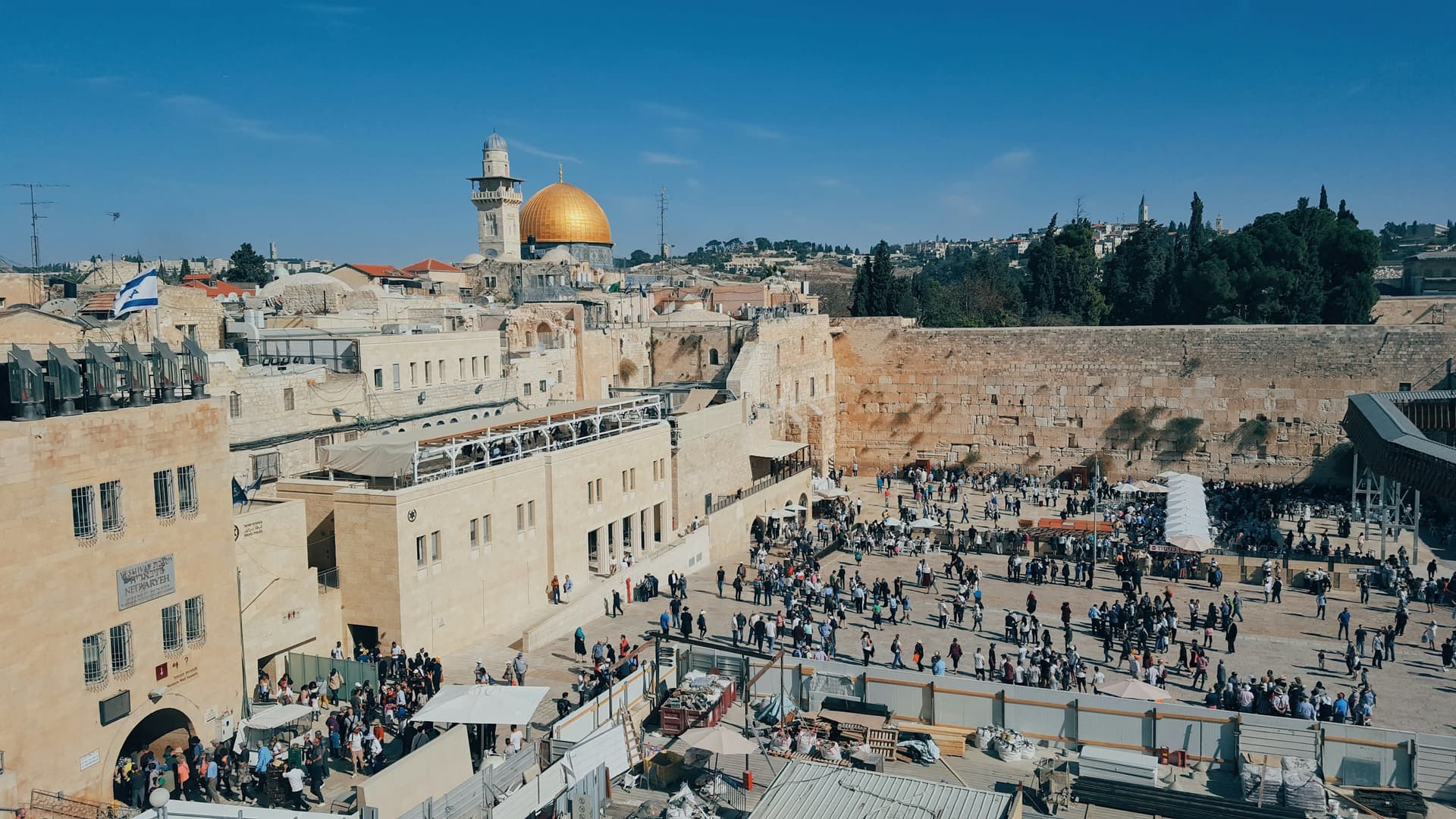
Western Wall
Jerusalem, Jerusalem, Israel
30.4 km away
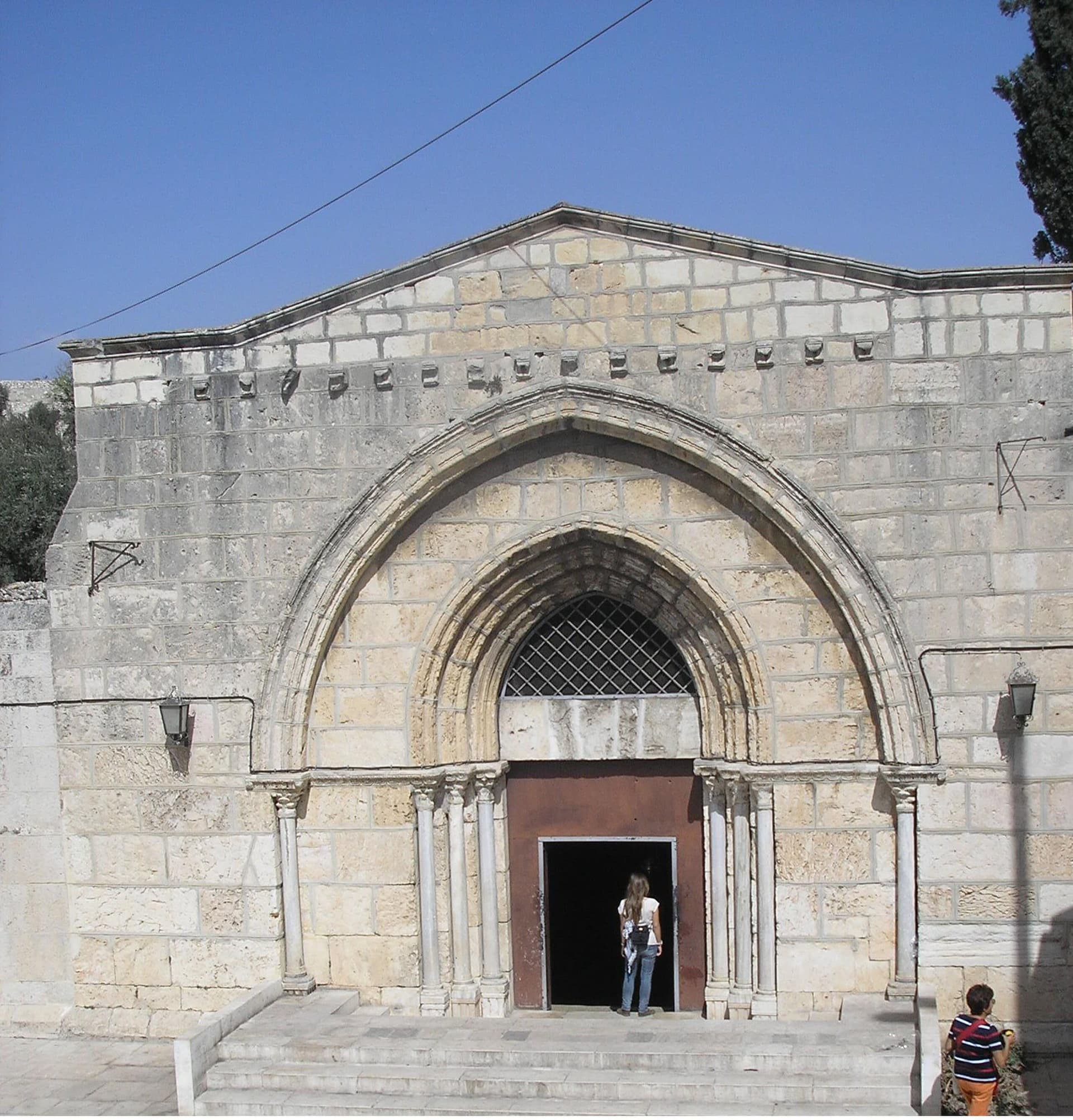
Tomb of the Virgin
Jerusalem, Jerusalem District, Israel
30.9 km away
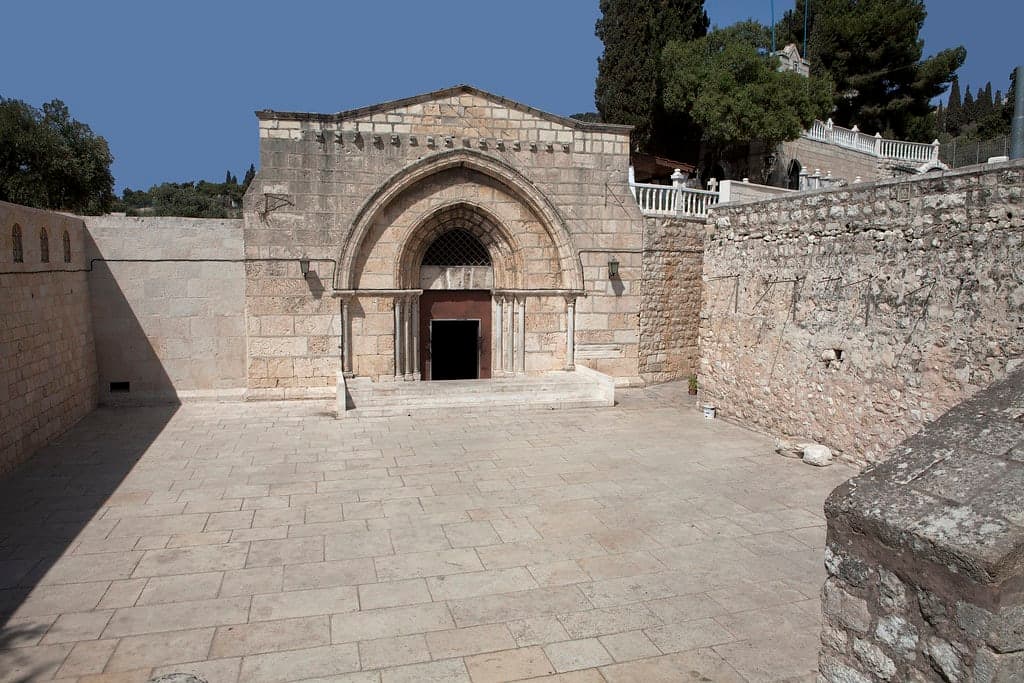
Tomb of Mary, Valley of Cedron, Jerusalem, Israel
Jerusalem, Jerusalem District, Israel
30.9 km away
Ancient Jericho/Tell es-Sultan
Jericho, West Bank, Palestinian Territories
49.8 km away