Gyeongju Historic Area
A thousand years of Silla devotion written in stone, where Buddhist temples still breathe among royal tombs
Gyeongju, North Gyeongsang, South Korea
At A Glance
- Coordinates
- 35.8560, 129.2246
- Suggested Duration
- A rushed visit covering Bulguksa, Seokguram, and Tumuli Park requires a full day. A meaningful visit to these plus Mount Namsan and Wolji Pond requires two to three days. An immersive experience including temple stay, multiple Mount Namsan trails, and unhurried exploration requires four to five days.
- Access
- From Seoul, take the KTX from Seoul or Yongsan Station to Singyeongju Station (approximately 2 hours, 50,000-60,000 KRW). The SRT from Suseo Station is an alternative (approximately 2 hours). From Busan, KTX takes about 30 minutes from Busan Station to Singyeongju. From Singyeongju Station, buses 50-2, 51, 60, 61, 70, 203, 332, or 700 reach downtown Gyeongju in 20-30 minutes (1,200-1,500 KRW). Taxis take 10-15 minutes (15,000-20,000 KRW). Within Gyeongju, a T-Money transit card simplifies bus travel. Bicycles are available for rent and practical for flat areas between central sites. Taxis are readily available.
Pilgrim Tips
- From Seoul, take the KTX from Seoul or Yongsan Station to Singyeongju Station (approximately 2 hours, 50,000-60,000 KRW). The SRT from Suseo Station is an alternative (approximately 2 hours). From Busan, KTX takes about 30 minutes from Busan Station to Singyeongju. From Singyeongju Station, buses 50-2, 51, 60, 61, 70, 203, 332, or 700 reach downtown Gyeongju in 20-30 minutes (1,200-1,500 KRW). Taxis take 10-15 minutes (15,000-20,000 KRW). Within Gyeongju, a T-Money transit card simplifies bus travel. Bicycles are available for rent and practical for flat areas between central sites. Taxis are readily available.
- Temples require modest dress: shoulders and knees should be covered, and clothing should not be revealing. Avoid sleeveless shirts, very short skirts, and shorts. Shoes should be easy to remove, as you will remove them frequently when entering buildings. Comfortable walking shoes with good traction are essential for temple grounds, Mount Namsan trails, and the path to Seokguram. Layers are recommended, as mountain areas can be significantly cooler than the valley, especially during early morning temple stays.
- Photography is generally permitted in outdoor areas of temples and archaeological sites. However, restrictions apply inside many temple buildings, and signage should be observed. Photography is strictly prohibited inside Seokguram Grotto's main chamber. Flash photography should never be used near ancient artifacts or Buddha statues. During ceremonies, photography may be considered disruptive; observe and ask if uncertain. Consider spending initial time at each site without your camera, allowing direct experience before documentation.
- Temple etiquette matters at active sites. Follow instructions regarding photography, shoe removal, and behavior during services. Do not touch Buddha statues or altar items. Temple stays require participants to follow monastic schedule, including early rising and silence during certain periods. Those unable to sit on the floor for extended periods should inquire about accommodations. At Seokguram, photography is strictly prohibited inside the main chamber to protect the ancient statue. Security monitors compliance. The Buddha is now viewable only through a protective glass barrier due to preservation concerns. Archaeological sites require respect for preservation: do not climb on tomb mounds, touch ancient structures, or remove anything. Stay on designated paths.
Overview
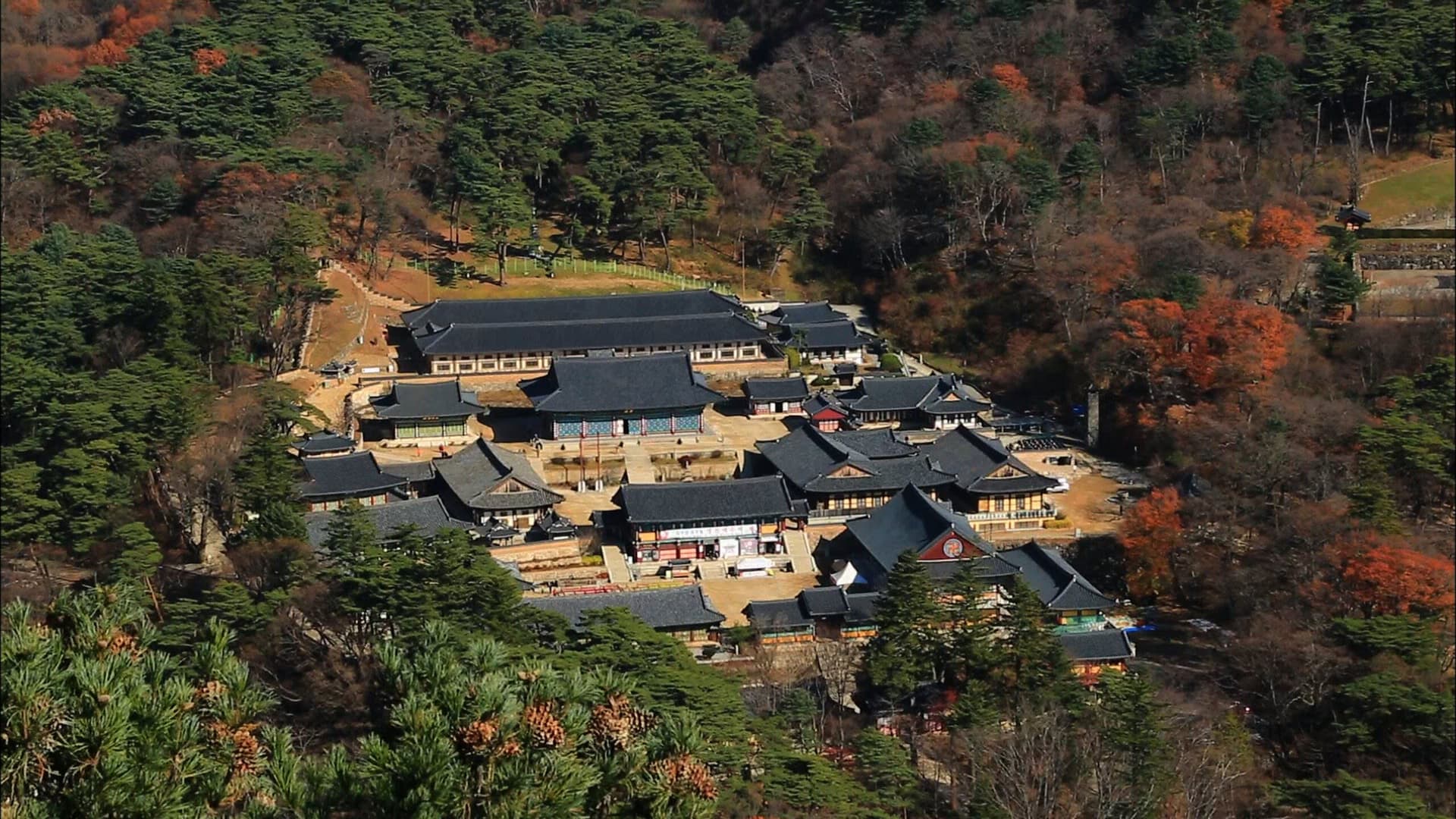
For nearly a millennium, Gyeongju served as the capital of the Silla kingdom and the center of Korean Buddhism's golden age. Today, the city exists as a vast open-air sanctuary where active Buddhist temples stand among royal tombs, ancient observatories, and mountain paths lined with stone Buddhas. The past here is not confined to museums; it permeates the living landscape.
The Silla called their capital Seorabeol, and they called their nation the Buddha-Land. For almost a thousand years, this was the center of a civilization that fused indigenous Korean traditions with the depths of Buddhist thought, creating temples of such refinement that they still draw pilgrims today.
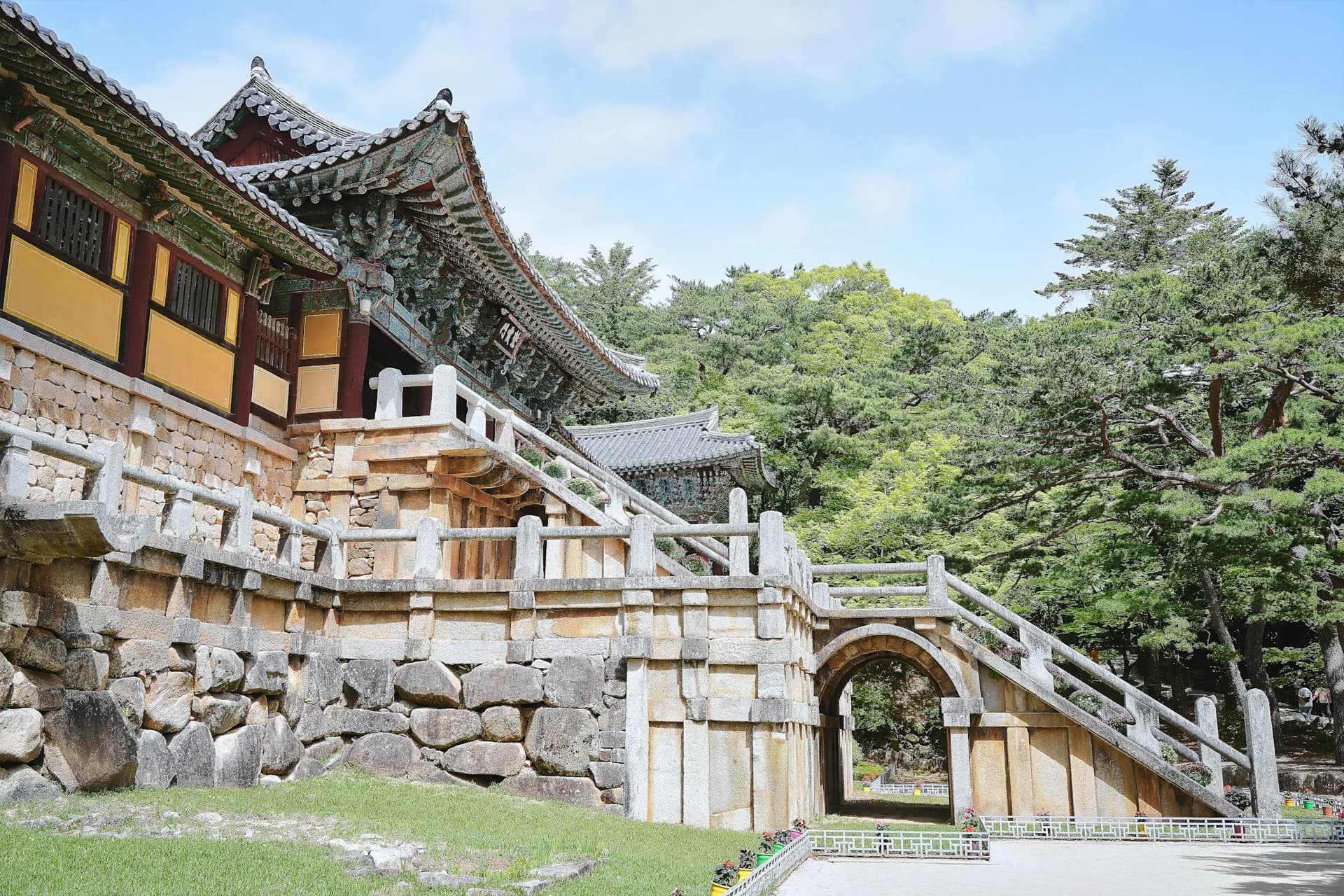
Gyeongju defies the usual distinction between heritage site and living sacred place. At Bulguksa Temple, monks chant the morning liturgy as they have for twelve centuries. On Mount Namsan, hikers discover rock-carved Buddhas emerging from boulders, placed there by devotees who understood the mountain itself as a mandala. And in Tumuli Park, the grass-covered burial mounds of Silla royalty rise like sleeping giants, their golden treasures long since moved to museums but their presence still commanding silence.
The Seokguram Grotto, carved into Mount Toham in the 8th century, houses a Buddha so perfectly conceived that visitors find themselves holding their breath in its presence. The journey from Bulguksa below to this grotto above was designed as a symbolic ascent toward enlightenment. That ascent remains possible.
What draws seekers to Gyeongju is not merely the density of sacred sites but their integration into daily life. The ancient observes the sun from the same ground where children play. The dead rest beneath mounds around which locals walk their dogs. The sacred and the ordinary have never fully separated here.
Context And Lineage
The Silla kingdom ruled from Gyeongju for nearly a millennium, creating a civilization that unified Korea and brought Buddhist culture to extraordinary heights. Key figures include the legendary founder Bak Hyeokgeose, the builders of the great temples, and Queen Seondeok, who ordered the Cheomseongdae observatory. The site carries the accumulated intention of centuries of rulers, monks, and pilgrims who understood this landscape as the meeting place of worlds.
According to the Samguk Sagi, Korea's oldest surviving history, Silla began in 57 BCE when a mysterious child named Hyeokgeose was found inside an egg laid by a white horse near a forest called Najeong. Leaders of six clans recognized him as divine and made him king at age thirteen. The kingdom he founded, initially called Saro, would eventually become Silla and rule Korea for nearly a thousand years.
The story carries markers of shamanistic belief: the miraculous birth, the white horse, the mandate recognized by tribal leaders. As Buddhism arrived and eventually became state religion in 528 CE, these indigenous elements did not disappear but transformed, creating a distinctly Korean Buddhism that honored both the new teaching and older ways of knowing.
The founding legend of Bulguksa Temple holds its own power. In the 8th century, Prime Minister Kim Dae-seong conceived of building two great works: Bulguksa Temple for his parents in his present life, and Seokguram Grotto for his parents from a previous existence. The legend encapsulates Korean Buddhist understanding of karma, rebirth, and filial devotion spanning multiple lifetimes. Both structures, completed after Kim's death, stand today as his offering across time.
For centuries after Buddhism's adoption, Silla monks traveled to Tang China and India, bringing back texts and teachings that transformed Korean practice. The Hwaeom school, emphasizing the interpenetration of all phenomena, flourished particularly at Gyeongju. The Seon (Zen) tradition arrived later, establishing mountain temples that continue today.
After Silla's fall in 935 CE, the Goryeo dynasty maintained many Buddhist traditions while shifting political power north. The Joseon dynasty (1392-1897) suppressed Buddhism in favor of Confucianism, yet the mountain temples survived, maintaining practice through centuries of official disfavor.
The 20th century brought revival. The Jogye Order, established in 1941 as Korean Buddhism's principal monastic organization, now administers most of Gyeongju's active temples, including Bulguksa as a head temple. Monks trained in the Seon tradition continue practices that the Silla brought from China over a thousand years ago. Lay practitioners participate in temple programs. The lineage has not broken.
Bak Hyeokgeose
legendary founder
Legendary founder of Silla, said to have hatched from an egg laid by a white horse. His name means 'bright world' or 'ruler of brightness.' The site of his legendary emergence, Najeong, lies within the Gyeongju Historic Areas.
King Beopheung
historical
The king who officially recognized Buddhism as the state religion in 528 CE, following the martyrdom of the monk Ichadon, whose blood is said to have run white, confirming the dharma's truth.
Queen Seondeok
historical
Korea's first reigning queen (632-647 CE), renowned for wisdom and cultural achievement. She ordered construction of the Cheomseongdae observatory and Bunhwangsa Temple, and supported Buddhism while maintaining indigenous practices.
King Munmu
historical
The king who unified Korea in 668 CE. Upon death, he requested cremation and underwater burial so he could become a sea dragon protecting the nation. His tomb in the East Sea is the world's only underwater royal burial.
Kim Dae-seong
historical
The prime minister who conceived and began Bulguksa Temple and Seokguram Grotto in 751 CE. According to tradition, he built Bulguksa for his parents in this life and Seokguram for his parents in a previous life.
Vairocana Buddha
deity
The cosmic Buddha of infinite light, central to Hwaeom (Avatamsaka) Buddhism which flourished in Silla. Representations at Bulguksa embody the teaching that all phenomena manifest the Buddha's wisdom.
Why This Place Is Sacred
Gyeongju's character as a thin place emerges from nearly a millennium of continuous sacred practice, the sheer concentration of Buddhist monuments, the accumulated intentions of countless devotees, and the remarkable preservation of both active temples and ancestral spaces. The Silla saw this landscape as where worlds could meet; visitors today often report that perception persists.
The Silla did not simply build temples at Gyeongju; they sought to manifest the Buddha-realm on earth. Their kings aspired to reign as dharma-protecting monarchs. Their architects positioned temples so that celestial alignments would sanctify human endeavor. Their sculptors carved Buddhas into living rock, understanding that the boundary between nature and devotion need not exist.
Mount Namsan, rising at the city's southern edge, contains what may be the densest concentration of Buddhist art in the world: over 120 temple sites, 53 stone Buddha images, 64 pagodas, and countless smaller carvings scattered across trails that wind through pine forests. Scholars call it an open-air museum; traditional understanding holds it as a great mandala, where each statue and stone holds its position in a cosmic arrangement that the whole mountain embodies.
Seokguram Grotto represents something rarer still: a sacred space engineered for transcendence. The artificial grotto was constructed to face the East Sea, oriented so that the seated Buddha within gazes toward the rising sun. The mathematics of its construction, with its precise geometry and sophisticated ventilation preventing moisture damage for twelve centuries, suggest builders who understood spiritual architecture as an exact science. Visitors allowed into the main chamber consistently report an unusual quality of stillness.
The royal tombs add another dimension. These grass-covered mounds, some over 20 meters high, hold kings and queens whose names are often unknown. The Silla buried their monarchs with gold crowns featuring tree-like projections, reflecting shamanic beliefs that predated Buddhism. The confluence of indigenous tradition with imported teaching created something distinctly Korean, and distinctly powerful.
Nineteen hundred years of accumulated human intention does something to a place. The temples where monks still chant, the stones where pilgrims still bow, the mountains where seekers still walk, all carry forward what the Silla began. Whether one interprets this as spiritual presence or psychological response to layered history, the effect is consistent enough across visitors to take seriously.
Gyeongju served as the political, cultural, and spiritual heart of the Silla kingdom from its founding (traditionally dated to 57 BCE) until its fall in 935 CE. The city was designed to reflect and reinforce Silla cosmology, with temples positioned according to geomantic principles, observatories tracking celestial movements, and burial mounds honoring the ancestral relationship between the living and the dead. After Buddhism became the state religion in 528 CE, the city became the center of Buddhist practice in Korea, with massive temple complexes like Hwangnyongsa symbolizing royal aspiration toward Buddhist rulership.
The fall of Silla to the Goryeo dynasty in 935 CE began Gyeongju's long sleep. No longer a capital, it became a provincial city preserving monuments that larger powers left largely undisturbed. The Mongol invasions of the 13th century destroyed Hwangnyongsa Temple and its legendary nine-story pagoda, yet most other sites survived. The Japanese invasions of the 16th century brought further damage, but Bulguksa was rebuilt.
Modern rediscovery came gradually: archaeological excavations in the 1970s revealed the treasures of the royal tombs, including the famous gold crowns now in the national museum. UNESCO inscription in 1995 (for Bulguksa and Seokguram) and 2000 (for the Historic Areas) brought international recognition. Today, over ten million visitors come annually, yet the temples remain active, the monks still practice, and pilgrims still walk paths that Silla devotees walked a thousand years ago.
Traditions And Practice
Gyeongju offers both opportunities to witness active Buddhist practice and paths for personal engagement through temple stays, meditation instruction, and sacred mountain hiking. The active temples maintain traditional Korean Buddhist liturgy while welcoming visitors; archaeological sites invite contemplative presence without formal religious requirements.
Korean Buddhist practice at Gyeongju follows rhythms established centuries ago. The day begins before dawn with yebul, the morning service, announced by the striking of the temple drum, bell, gong, and wooden fish, each sound awakening different beings from suffering. Monks and participating laypeople then chant sutras and prostrate before the Buddha images.
The 108 prostrations, or 108-bae, form a central practice: full-body bows performed 108 times, corresponding to the 108 defilements the Buddha identified. The practice is physical, devotional, and meditative simultaneously. Temple stay participants typically learn this practice and perform it during morning service.
Golgulsa Temple, built into caves northeast of central Gyeongju, is the center for Seonmudo, a moving meditation martial art combining elements of Zen practice with physical training. Monks and lay practitioners train in this unique form, which combines sitting meditation with dynamic movement.
Major celebrations include Buddha's Birthday in the fourth lunar month, when temples are adorned with thousands of lotus lanterns and the Buddha Bathing Ritual (gwanyokshik) is performed. The Gyeongju Lantern Festival transforms the entire city into a spectacle of light, with lanterns illuminating the Woljeonggyo Bridge and historic sites.
Temple stay programs at Bulguksa and Golgulsa offer immersive experience ranging from overnight to multiple days. Participants follow temple schedule: early rising, morning service, silent meals, meditation instruction, and rest. Many programs include tea ceremony with monks, calligraphy, and teaching on Buddhist principles. The programs require no prior experience or Buddhist affiliation.
Mount Namsan pilgrimage, walking the trails past ancient Buddhist carvings, functions as a form of moving meditation. No formal practice is required; the landscape itself provides structure. Some visitors walk in silence, pausing at each Buddha encountered. Others follow established pilgrimage routes that connect significant carvings and temple ruins.
At the archaeological sites, Tumuli Park and Cheomseongdae, no formal practice is expected, but many visitors develop personal rituals of attention: walking slowly among the tombs at dusk, sitting in silence at the observatory, allowing the accumulated history to speak without interpretation.
For those seeking meaningful engagement beyond tourism, consider these approaches:
Begin at Bulguksa before 8am, before tours arrive. Walk the temple grounds slowly, observing the architecture without photographing it initially. If morning service is occurring, observe from a respectful distance. The temple's design, with its stone bridges representing the passage from the mundane to the Buddha-realm, was created for contemplative entry.
Make the ascent to Seokguram on foot if possible. The path from Bulguksa was designed as spiritual journey; the shuttle bus is convenient but bypasses the intention. At the grotto, resist the urge to photograph immediately. The Buddha has waited twelve centuries; he can wait for your full attention.
On Mount Namsan, choose a single trail and walk it slowly. Let Buddhas emerge rather than hunting them. Bring water but not music. The mountain has its own sound.
For Tumuli Park, visit at dusk or early morning. Walk among the mounds in silence, allowing awareness of those who lie within. The Silla maintained relationship with ancestors; entering their presence with attention is a form of respect.
Korean Seon Buddhism (Jogye Order)
ActiveGyeongju was the center of Korean Buddhism's golden age during the Silla dynasty, when Buddhism became state religion in 528 CE. Bulguksa Temple remains a head temple of the Jogye Order, the principal monastic organization of Korean Buddhism. The city's Buddhist heritage represents the pinnacle of Korean Buddhist art and architecture. Seokguram Grotto symbolizes the spiritual journey to Nirvana and houses one of the most important Buddha statues in East Asia.
Temple stay programs at Bulguksa and Golgulsa offer immersive experience in Korean Buddhist practice. Daily practice includes early morning chanting service (yebul), meditation, 108 prostrations, and mindful meals. Golgulsa is the center for Seonmudo, a unique Buddhist martial art combining meditation with movement. Buddha's Birthday brings spectacular lotus lantern celebrations. Tea ceremonies with monks provide intimate teaching moments. Pilgrimage to Mount Namsan's Buddhist sites continues as a living practice.
Ancient Silla Shamanism
HistoricalBefore Buddhism became the state religion, Silla practiced indigenous Korean shamanism. The term 'chachaung' for early Silla kings may have meant 'shaman.' The distinctive gold crowns found in royal tombs, with their tree-like and antler-shaped projections, reflect shamanistic symbolism similar to Siberian traditions. This indigenous religion did not disappear with Buddhism's arrival but fused with it, creating a distinctly Korean spiritual synthesis.
Historical practices included royal shamanistic rituals connecting the king with cosmic and ancestral powers. The gold crown symbolism, representing the World Tree and shamanic flight, suggests rituals of spiritual journey. Ancestral veneration, still present in Korean culture, has roots in these pre-Buddhist traditions. Dragon god worship for agricultural protection appears in legends associated with King Munmu's underwater burial.
Royal Silla Ancestral Traditions
HistoricalThe massive tumuli across Gyeongju represent the sophisticated burial traditions of Silla royalty. Kings and queens were interred with elaborate gold regalia, jade ornaments, and precious artifacts, reflecting beliefs about the afterlife and the ongoing relationship between the living and the dead. The unique underwater tomb of King Munmu reflects Buddhist-influenced beliefs about transformation and continued spiritual protection of the nation.
Royal burials involved interment with gold crowns, jewelry, weapons, and daily necessities for the afterlife. The Poseokjeong floating cup rituals brought nobility together for poetry composition along an abalone-shaped water channel, combining refined culture with ritual purpose. Memorial services at Gameunsa Temple honored King Munmu's request to become a sea dragon protecting Korea.
Experience And Perspectives
Visitors to Gyeongju report experiences ranging from profound peace at active temples to a strange sense of time's compression among the royal tombs. The site's mixed nature, with active worship existing alongside archaeological heritage, produces a distinctive quality: the past feels not concluded but ongoing, not distant but near.
The first thing many visitors notice is the quality of silence. Not the absence of sound, but a particular kind of quiet that seems to absorb the modern world's noise. This is especially pronounced in early morning at Bulguksa, when the temple drums have just finished calling monks to practice, and in the groves of Tumuli Park, where the massive burial mounds seem to generate stillness.
Those who climb Mount Namsan often describe a shift in perception that arrives without announcement. The trail passes stone Buddhas half-hidden in forest, their serene faces worn by centuries of weather. Finding them feels less like discovery than encounter, as if the figures had been waiting. Visitors accustomed to art in museums report something different here: the Buddhas are not displayed but placed, not exhibited but present.
At Seokguram Grotto, the effect intensifies. The Buddha within, now protected behind glass, retains a quality that photographs cannot capture. The statue's expression seems to shift depending on the viewer's state, a phenomenon visitors describe with remarkable consistency. Some report feeling the Buddha's gaze as a question; others as an answer. Many find themselves unable to leave quickly.
The royal tombs produce a different register of experience. Walking among these grass-covered mounds, knowing that Silla kings lie within surrounded by golden grave goods, visitors often report a sense of the dead as present rather than past. The Silla understanding that the living maintain relationship with ancestors seems, in this landscape, less cultural belief than lived reality.
Those who stay overnight and return to sites multiple times frequently describe the experience as cumulative. Dreams become unusually vivid. The second visit reveals what the first missed. Temple stay participants, rising for 4am practice, often speak of the experience as pivotal, though they struggle to explain why.
Gyeongju rewards patience and intention. The city can be toured quickly, ticking off UNESCO sites like accomplishments. But those who report transformation consistently describe a different approach: slower movement, multiple visits to key sites, and willingness to sit without agenda.
Consider visiting Bulguksa and Seokguram early, before tour buses arrive. The climb from Bulguksa to the grotto was designed as spiritual ascent; making it on foot restores something the shuttle bus obscures. At Mount Namsan, resist the urge to find all the Buddhas; let some find you. In Tumuli Park, walk slowly among the mounds at dusk, when the fading light gives them a presence that midday obscures.
A temple stay at Bulguksa or Golgulsa transforms a visit from viewing into participation. The temple's rhythms, the early morning chanting, the silent meals, the prostrations, create conditions where something besides tourism becomes possible.
Gyeongju invites understanding from multiple angles: archaeological reconstruction of Silla civilization, living Buddhist tradition, indigenous Korean ancestral beliefs, and contemporary spiritual seeking. Each perspective illuminates something genuine; none exhausts the site's significance. Holding them together without forcing resolution honors the complexity the Silla themselves cultivated.
Archaeological consensus recognizes Gyeongju as one of the most significant ancient capitals in East Asia, comparable to Kyoto, Nara, and Xi'an. The UNESCO inscription notes outstanding universal value in demonstrating the extraordinary development of Silla culture, particularly Buddhist art and architecture.
The Bulguksa Temple and Seokguram Grotto are considered masterpieces of 8th-century Buddhist architecture and sculpture, representing the peak of Korean Buddhist artistic achievement. The Seokguram Buddha, with its precisely calculated geometry, sophisticated engineering, and naturalistic sculptural style, is among the most important Buddhist images in East Asia.
Scholars continue to debate specific questions: the exact function of the Cheomseongdae observatory, the identity of those buried in anonymous royal tombs, the precise meaning of the gold crown symbolism. But the broader consensus is clear: Gyeongju preserves exceptional evidence of a sophisticated civilization that created remarkable art, architecture, and religious culture.
Korean Buddhist understanding holds Gyeongju as a manifestation of the Buddha-realm on earth. The Silla aspired to create a land where dharma governance aligned the state with cosmic truth. Seokguram represents the journey from the suffering world to Nirvana, with the Buddha's gaze extending toward the rising sun and the infinite.
Mount Namsan is understood as a great mandala, where each Buddha image and temple site holds position in a cosmic arrangement. Walking the mountain's paths is pilgrimage, each encounter with a stone Buddha an opportunity for merit, reflection, and awakening.
The temples remain active precisely because the tradition understands them as living rather than historical. Bulguksa is not a museum of Silla Buddhism but a place where Silla Buddhism continues. The monks who practice there stand in unbroken lineage from those who first chanted in these halls.
Some contemporary seekers experience Gyeongju as an energy center, a place where accumulated centuries of spiritual practice have created conditions for transformation. New Age interpretations sometimes describe the city as holding particularly powerful 'energy' or functioning as a spiritual vortex.
The astronomical alignments of the Cheomseongdae observatory attract those interested in ancient wisdom traditions, with some suggesting it indicates knowledge systems more sophisticated than conventional history acknowledges. The shamanic symbolism of the gold crowns, with their tree and antler projections reminiscent of Siberian traditions, suggests to some a connection to broader Eurasian spiritual networks.
These interpretations lack scholarly support but often emerge from genuine experiences visitors have at the sites. The language of energy and vortex may be attempts to describe something real that resists conventional vocabulary.
Genuine mysteries remain at Gyeongju. The exact identity of those buried in many royal tombs is unknown; Cheonmachong, the Heavenly Horse Tomb, yielded 11,500 artifacts but no definitive identification of the occupant. The specific rituals and beliefs of pre-Buddhist Silla shamanism remain largely a matter of inference from material culture.
The original appearance of Hwangnyongsa Temple's nine-story wooden pagoda, described as the tallest structure in East Asia at 80 meters, can only be imagined; it was destroyed in the Mongol invasions of 1238 and never rebuilt. Why the Silla abandoned certain sites, and exactly when, often remains unclear.
Most intriguingly, the question of what visitors actually experience at Gyeongju, why so many report unusual peace, emotion, or insight, remains open. Whether this reflects accumulated spiritual intention, the psychological impact of beauty and history, or something beyond current understanding, the pattern is consistent enough to warrant attention.
Visit Planning
Gyeongju is accessible from Seoul or Busan by high-speed rail. The city can be toured in a day but rewards extended stays of two to four days. Spring (cherry blossoms) and autumn (fall foliage) offer the most beautiful conditions and most significant crowds. Temple stays should be booked in advance.
From Seoul, take the KTX from Seoul or Yongsan Station to Singyeongju Station (approximately 2 hours, 50,000-60,000 KRW). The SRT from Suseo Station is an alternative (approximately 2 hours). From Busan, KTX takes about 30 minutes from Busan Station to Singyeongju. From Singyeongju Station, buses 50-2, 51, 60, 61, 70, 203, 332, or 700 reach downtown Gyeongju in 20-30 minutes (1,200-1,500 KRW). Taxis take 10-15 minutes (15,000-20,000 KRW). Within Gyeongju, a T-Money transit card simplifies bus travel. Bicycles are available for rent and practical for flat areas between central sites. Taxis are readily available.
Gyeongju offers accommodation at all price points, from backpacker hostels near the bus terminal to luxury hotels near Bomun Lake. For spiritual context, temple stays at Bulguksa or Golgulsa provide overnight accommodation with monastic program (approximately 50,000-100,000 KRW). Book temple stays through the official Temple Stay program website (eng.templestay.com) in advance, especially for weekend or festival dates. Hotels near Bulguksa allow easy early access to the temple and grotto.
Gyeongju's mix of active temples and archaeological sites requires different etiquette in different spaces. Buddhist temples require modest dress, shoe removal, and respectful silence during services. Archaeological sites emphasize preservation. Across all sites, a contemplative demeanor honors both the living traditions and the historical significance.
The temples of Gyeongju are places of active worship. When entering temple grounds, walk calmly and speak softly. Upon entering temple buildings, remove shoes and place them neatly on provided racks. Use side gates rather than the center gate when passing through temple entrances, as the center is traditionally reserved for enlightened beings.
If you encounter monks, the appropriate greeting is hapjang: palms together at chest level with a slight bow. Monks may not always respond, as some maintain silence. If you observe prayers or meditation in progress, sit quietly at the back of the hall or outside. Avoid pointing feet toward Buddha statues when seated.
Temple meals, when offered, are consumed in silence and mindfully. Finish all food on your plate. No alcohol, meat, or tobacco is permitted on temple grounds.
At Seokguram Grotto, observe complete silence in the main chamber. Photography is prohibited without exception. The Buddha is now behind protective glass due to concerns about humidity and touch; previous damage from visitors has necessitated this distance.
At archaeological sites like Tumuli Park, Cheomseongdae, and Hwangnyongsa temple ruins, preservation is paramount. Do not touch ancient structures, climb on tomb mounds, or remove stones, soil, or artifacts. Stay on designated paths. While no religious observance is required, many visitors find that a contemplative approach, moving slowly and speaking quietly, enhances the experience.
Temples require modest dress: shoulders and knees should be covered, and clothing should not be revealing. Avoid sleeveless shirts, very short skirts, and shorts. Shoes should be easy to remove, as you will remove them frequently when entering buildings. Comfortable walking shoes with good traction are essential for temple grounds, Mount Namsan trails, and the path to Seokguram. Layers are recommended, as mountain areas can be significantly cooler than the valley, especially during early morning temple stays.
Photography is generally permitted in outdoor areas of temples and archaeological sites. However, restrictions apply inside many temple buildings, and signage should be observed. Photography is strictly prohibited inside Seokguram Grotto's main chamber. Flash photography should never be used near ancient artifacts or Buddha statues. During ceremonies, photography may be considered disruptive; observe and ask if uncertain. Consider spending initial time at each site without your camera, allowing direct experience before documentation.
Traditional Buddhist offerings include incense, candles, flowers, and fruit. These may be purchased at temple shops. When making offerings, follow any instructions posted or observe how others perform the act. Donation boxes are available at temples; contributions support temple maintenance. Monetary amounts are not specified; give what feels appropriate.
Some areas within temples are restricted to monastics or closed during certain hours. Observe posted signage and rope barriers. Some royal tombs are closed to public entry and viewable only from the exterior. The interior of Seokguram is accessible only through a glass barrier. Tripods and professional photography equipment require advance permits at most sites. Drones are prohibited.
Sacred Cluster
Nearby sacred places create the location cluster described in the growth plan. This block is intentionally crawlable and links into the wider regional graph.