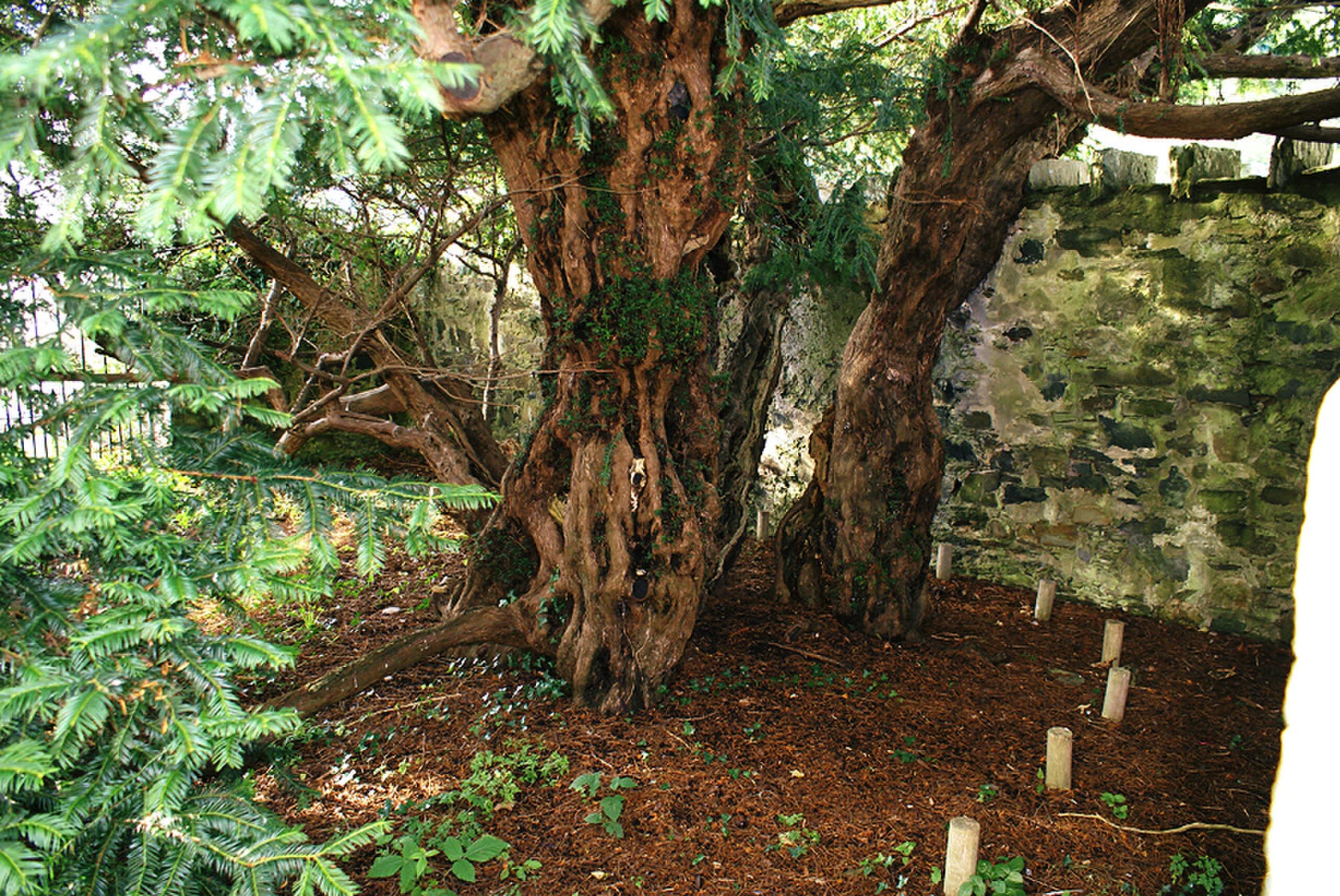
Fortingall Yew Tree and Church, Perthshire, Scotland
Where Europe's oldest living tree meets Celtic Christian sanctuary in the Scottish Highlands
Fortingall, Alba / Scotland, United Kingdom
At A Glance
- Coordinates
- 56.5983, -4.0507
- Suggested Duration
- 45 minutes to 1 hour including the church interior when open
Pilgrim Tips
- No formal requirements. Dress practically for Scottish Highland weather—layers, waterproofs, sturdy footwear. The churchyard ground can be wet and uneven.
- Photography is permitted in the churchyard and of the yew. The church interior may be photographed when open. Practice mindfulness about photographing graves. Drones may disturb the village's peace and should be avoided.
- Do not climb over the protective wall surrounding the yew. Do not tie ribbons, leave offerings, or remove any material from the tree. These practices have caused significant damage over the years. The tree's survival depends on visitors restraining impulses that might feel spiritually appropriate but cause physical harm.
Overview
In a small churchyard at the mouth of Scotland's longest glen stands a yew tree that may have been ancient when the pyramids were young. For perhaps five thousand years, this gnarled survivor has witnessed human ceremony—from Iron Age gatherings to Celtic Christian rites to contemporary pilgrimage. The church beside it holds Pictish carved stones and continues a tradition of worship stretching back thirteen centuries.
Something about deep time becomes graspable at Fortingall. Not as abstraction, but as presence—a living being that was already old when Bronze Age peoples raised their standing stones, already venerable when Celtic monks arrived from Iona to Christianize what was already holy ground.
The Fortingall Yew may be five thousand years old. Some estimates push older; none can be certain, for the heartwood that would reveal its age has long since rotted away, leaving only the outer shell that continues, improbably, to live. The tree has witnessed the full span of Scottish human history. It was here before the Celts, before the Picts, before the Romans briefly touched this northern edge of their world. It will likely be here long after the observers of today have returned to the earth it holds.
The church beside it, built in Arts and Crafts style at the turn of the twentieth century, sits on ground sacred for at least thirteen hundred years. Celtic missionaries from Iona established their presence here around 700 AD, likely drawn to a place already resonant with meaning. Fragments of Pictish cross-slabs with their intricate knotwork survive inside, speaking of that earlier Christianity that wove new faith into older patterns.
To stand before the yew is to encounter something that humbles human timescales. To enter the church is to feel the continuity of human seeking across those same immeasurable years.
Context And Lineage
Fortingall's documented history begins around 700 AD with the founding of a Celtic Christian monastery connected to Iona. The current church dates to 1900-02. But the yew predates all written records by millennia, and the site's sanctity likely stretches back to the Bronze Age or earlier. Local legend even connects Fortingall to Pontius Pilate, though scholars consider this a 19th-century invention.
The founding narrative of the Christian site traces to missionaries from Iona who came to convert the Picts of western Scotland. The monastery is traditionally dedicated to Coeddi, Bishop of Iona who died in 712, and was likely established as a daughter house during his lifetime. St Adamnan, Abbot of Iona and biographer of St Columba, is believed to have extended his missionary work to Glen Lyon. Place names throughout the glen preserve his memory.
But the Christians built on older ground. The yew was already ancient—perhaps three thousand years or more—when they arrived. Whatever the Iron Age inhabitants called this place, whatever rites they performed beneath the tree's branches, we cannot know. The Christians layered their meaning over earlier layers, as traditions do.
A persistent local legend claims Pontius Pilate was born at Fortingall and played beneath the yew as a child, his father a Roman ambassador to the Caledonian chieftain Metellanus. The chronology is impossible—Romans did not reach this part of Scotland until decades after Pilate's death. Some scholars suggest the legend was invented in the 19th century, perhaps by a classically-educated minister with a sense of humour. Yet it persists, connecting this remote Highland village through its most ancient tree to the defining event of Christian history.
The lineage at Fortingall is one of continuous transformation rather than unbroken transmission. Iron Age veneration gave way to Celtic Christianity, which survived through medieval changes and the Reformation into the Church of Scotland tradition that maintains the church today. Contemporary pagans and druids have added their own layer of meaning, seeing in the yew a connection to pre-Christian Celtic spirituality. The tree has seen all of this—and holds it without judgment.
St Adamnan (Eonan)
historical
Abbot of Iona from 679 to 704, author of the biography of St Columba. Believed to have conducted missionary work throughout Glen Lyon. Local place names preserve his memory.
Coeddi
historical
Bishop of Iona who died in 712. The church is traditionally dedicated to him. The site was probably founded from Iona during his lifetime.
Sir Donald Currie
historical
Shipping magnate who purchased the Glenlyon Estate in 1885 and commissioned the Arts and Crafts reconstruction of the village, including the current church built 1900-02.
Why This Place Is Sacred
Fortingall's sacredness emerges from the convergence of extreme antiquity, continuous veneration across millennia, and a landscape dense with prehistoric monuments. The yew embodies Celtic understandings of death and rebirth—a tree that regenerates endlessly, its branches rooting to form new trunks, appearing to conquer mortality itself. Christians reinterpreted this symbolism as pointing toward resurrection and eternal life.
The Celts and Druids held yews among the most sacred of trees. They were portals to the Otherworld, guardians of the boundary between realms. A tree that could regenerate—dropping branches that would root and grow as new trunks—seemed to have mastered the secret of death and rebirth. The Fortingall Yew, even in ancient times already impossibly old, would have concentrated this power to an extraordinary degree.
When Celtic Christians arrived from Iona around 700 AD, they built their monastery here precisely because the place was already sacred. This was standard practice—to sanctify what was already venerated, to redirect rather than erase. They reinterpreted the yew: its apparent immortality now pointed toward the resurrection of Christ, its evergreen persistence toward eternal life. The practice of passing funeral processions through an arch in the tree's split trunk—guiding the spirit to the afterlife—may have continued from pagan into Christian times, shifting in meaning while preserving the gesture.
The landscape surrounding Fortingall reinforces its sacred weight. Standing stones rise in fields nearby. A Bronze Age burial cairn sits within walking distance. The mountain Schiehallion—the 'Fairy Hill of the Caledonians'—guards the northern horizon. Some believe this area marks Scotland's sacred centre, its axis mundi. Whether or not such claims can be verified, the concentration of prehistoric monuments suggests sustained human recognition of something significant in this ground.
In 2015, scientists discovered that the ancient male tree had begun producing female berries on one small branch—a rare sex change that suggests the yew continues to transform even after millennia. Whatever the biological explanation, visitors sometimes interpret this as evidence that the tree remains spiritually vital, still capable of surprising those who think they understand it.
The site's earliest purpose lies beyond recovery. The yew was likely already ancient when Iron Age peoples gathered here—perhaps for seasonal festivals, ceremonies of death and renewal, or communications with ancestors and the Otherworld. By the time of Christian arrival, the location had accumulated centuries of sacred use. The Celtic monastery served missionary purposes, extending the reach of Iona's influence among the Picts while incorporating an irreplaceable living monument into its sacred geography.
From Iron Age cult centre to Celtic monastery to medieval parish to Victorian reconstruction to contemporary pilgrimage site, Fortingall has continuously served as ground where humans seek contact with something larger than themselves. The forms have changed—Druidic ritual giving way to Celtic Christian worship, that tradition surviving through the Reformation into Church of Scotland observance, and now joined by contemporary pagans, neo-druids, and secular seekers drawn to the yew's antiquity. The 1900 rebuilding of the church in Arts and Crafts style added another layer, preserving medieval fragments within a distinctly modern aesthetic. Throughout these transformations, the yew has remained—patient, enduring, alive.
Traditions And Practice
Regular Church of Scotland services continue at the church. The site also draws contemporary pagans and spiritual seekers for personal pilgrimage. Formal ceremonies do not occur at the yew itself, but quiet contemplation and meditation are common. Conservation concerns have led to strict guidelines about not touching or leaving offerings at the tree.
Historically, funeral processions passed through an arch in the yew's split trunk, guiding the spirit to the afterlife. This practice continued until the 20th century. Beltane fires were lit at the tree's roots—a practice that caused visible damage. Celtic Christians used handbells in worship and baptized converts at the ancient stone font that survives in the churchyard.
The Church of Scotland maintains regular worship services. The church opens to visitors in summer months, allowing quiet contemplation of its Arts and Crafts interior and Pictish fragments. At the yew, visitors practice personal meditation and pilgrimage throughout the year. Some contemporary pagans may conduct private observances, though leaving offerings or tying ribbons is strongly discouraged due to damage such practices have caused.
Arrive quietly and approach the yew without haste. Circle the enclosure, viewing the tree from different angles. Notice where new growth emerges from ancient wood. Sit on one of the benches and simply be present with whatever arises.
If the church is open, enter in a spirit of receptivity. The Pictish stones reward slow attention—their patterns reveal themselves over time. Consider lighting a candle if that practice holds meaning for you.
If you wish to honour the site, make a donation to the church or to a tree conservation organisation. This offering causes no harm and supports what you have received.
Celtic Christianity (Iona tradition)
HistoricalFortingall was founded around 700 AD as a daughter monastery of Iona, extending Celtic Christian influence among the Picts. The site preserves one of Scotland's finest collections of early medieval sculpture, combining Christian and Pictish imagery. The connection to St Adamnan and the practice of passing the dead beneath the yew linked Christian hope for resurrection with the tree's apparent conquest of death.
Early medieval practices included monastic worship, baptism at the ancient font, use of Celtic handbells (one survives—or survived—from the 7th century), and funeral rites incorporating the yew.
Church of Scotland
ActiveThe current church, built 1900-02 in Arts and Crafts style, continues thirteen centuries of Christian worship on this site. The congregation maintains services and welcomes visitors to experience both the fine interior and the historic churchyard.
Regular Church of Scotland services. Summer opening for visitors allows contemplation of the medieval artifacts and the Pictish carved fragments.
Contemporary Paganism and Neo-Druidry
ActiveFor contemporary pagans and druids, the Fortingall Yew represents connection to Celtic spirituality before Christian overlay. The tree's immense age links to pre-Christian understandings of death, rebirth, and the Otherworld. The yew is seen as a portal, a living elder, perhaps the most powerful tree in Scotland.
Personal pilgrimage, meditation, and quiet observance. Some may time visits to Beltane, Samhain, or solstices. Formal ceremony is not conducted at the site. Practitioners are urged not to tie ribbons or leave offerings due to conservation concerns.
Experience And Perspectives
Visitors commonly report a profound sense of connection to deep time, feelings of peace and presence, and an awe that resists easy articulation. The yew's fragmented, gnarled form speaks of survival through incomprehensible spans. The quiet churchyard, surrounded by Highland landscape, supports contemplation undisturbed by commercial intrusion.
The first response is often silence. Standing before something five thousand years old silences the running commentary of ordinary consciousness. The yew does not look majestic in any conventional sense—it is twisted, hollow, fragmented, reduced to a shell of its former girth. But this brokenness carries its own power. Here is a being that has survived ice ages, witnessed civilizations rise and collapse, watched religions form and transform—and continues to produce new growth, still green at the tips of its ancient branches.
Visitors frequently describe feeling small against such vast timescales, yet paradoxically connected to something eternal. The tree makes tangible what normally remains abstract: that life persists, that transformation is not destruction, that what appears dead may harbour new growth. Those in life transitions—grief, questioning, ending or beginning—often find these truths particularly resonant.
The churchyard's peace enhances the encounter. Unlike many famous sacred sites, Fortingall remains uncommercialised. There is no gift shop, no entrance fee, no timed tickets. The village is tiny. On quiet days, you may have the space largely to yourself. The surrounding landscape—Glen Lyon stretching westward, green hills rising in all directions—provides a container of beauty that feels intentional, as though the tree chose its setting with care.
Those who enter the church when it is open find a different quality of experience: the fine wooden interior, the carved Pictish fragments, the Bell of Fortingall's empty case (the ancient handbell was stolen in 2017 and never recovered). Sadness at human carelessness mingles with appreciation for what endures despite it.
Approach slowly. The yew is enclosed within a stone wall—you cannot touch it, and conservationists ask that you not try. View it through the windows cut into the wall, circling to see all its surviving parts. Notice the small shoots of new growth emerging from ancient wood. Let the scale of time work on you without rushing to name what you feel.
If the church is open, spend time with the Pictish stones. Their interlacing patterns were carved over a thousand years ago by people whose names are lost but whose craft survives. Consider what you might create that would endure so long.
Before leaving, sit somewhere quiet in the churchyard and simply be present. You need not believe anything in particular about the site's power. Attention itself is a form of offering.
Fortingall invites multiple ways of understanding. Scholars study its archaeology and history. Traditional practitioners, both Christian and pagan, experience it as sacred ground. The site is capacious enough to hold these perspectives without requiring resolution—and honest enough to acknowledge what remains genuinely unknown.
Archaeological and historical consensus places the Celtic Christian foundation around 700 AD, connected to the Iona monastery. The Pictish cross-slabs date to approximately 800 AD and represent one of Scotland's finest collections of early medieval sculpture. The yew's age remains debated—most estimates centre on five thousand years, though proposals range from two thousand to nine thousand. Precise dating is impossible as the heartwood has rotted away. The Pontius Pilate legend is generally considered a 19th-century invention with no historical basis.
For Christian practitioners, Fortingall represents thirteen centuries of continuous worship and witness. The church continues as a living congregation, not merely a heritage site. For contemporary pagans and druids, the yew offers connection to Celtic spirituality before Christianization—a living portal to ancestral ways of understanding death, rebirth, and the Otherworld. Both traditions can be held simultaneously; the site has always layered meaning upon meaning.
Some interpret Fortingall as Scotland's axis mundi—its sacred centre, a node of earth energy. The yew's location near Schiehallion (itself considered a fairy mountain of great power) reinforces this interpretation for those who perceive such patterns. The 2015 sex change is sometimes seen as evidence of the tree's continuing spiritual vitality. These perspectives lack scientific verification but emerge from genuine experiences people have at the site.
The tree's true age cannot be precisely determined. The nature of Iron Age practices here remains beyond recovery. Why this specific location accumulated such sustained sacred investment is unclear. The whereabouts of the stolen Celtic handbell are unknown. Whether the yew's 2015 sex change signals environmental stress or natural variation is debated. The tree's long-term survival, given ongoing visitor impact, remains uncertain.
Visit Planning
Fortingall is a small village in the Scottish Highlands, accessible only by car. The churchyard is free and open year-round. The church opens in summer. The Fortingall Hotel adjacent to the site offers accommodation and refreshment.
The Fortingall Hotel (4-star) is immediately adjacent to the churchyard—10 rooms with restaurant and bar. Aberfeldy and Kenmore offer additional options. Pitlochry (20 miles) has extensive accommodation.
The site requires restraint and reverence. Do not touch or climb on the yew's protective enclosure. Maintain quiet appropriate to a churchyard. If the church is open, behave as you would in any house of worship.
This is a place of death as well as life—a working churchyard where families have buried their loved ones for centuries. Move through the space with awareness of its memorial function. Keep voices low. If you bring children, help them understand the setting's seriousness without dampening their wonder.
The yew is protected for good reason. Visitors removing branches as souvenirs, climbing over barriers for photographs, and tying ribbons have measurably damaged this irreplaceable living monument. The 7th-century Celtic handbell was stolen in 2017 and never recovered—a reminder that carelessness and worse can harm what centuries have preserved. Be the kind of visitor who leaves no trace.
No formal requirements. Dress practically for Scottish Highland weather—layers, waterproofs, sturdy footwear. The churchyard ground can be wet and uneven.
Photography is permitted in the churchyard and of the yew. The church interior may be photographed when open. Practice mindfulness about photographing graves. Drones may disturb the village's peace and should be avoided.
Do not leave physical offerings at the yew or in the churchyard. If you wish to give something, make a monetary donation to the church or a conservation organisation. Internal offerings—prayers, intentions, gratitude—require no physical expression.
Do not climb the wall enclosing the yew. Do not touch the tree. Do not remove any material. Respect the churchyard as a burial ground. Dogs should be kept under close control.
Sacred Cluster
Nearby sacred places create the location cluster described in the growth plan. This block is intentionally crawlable and links into the wider regional graph.
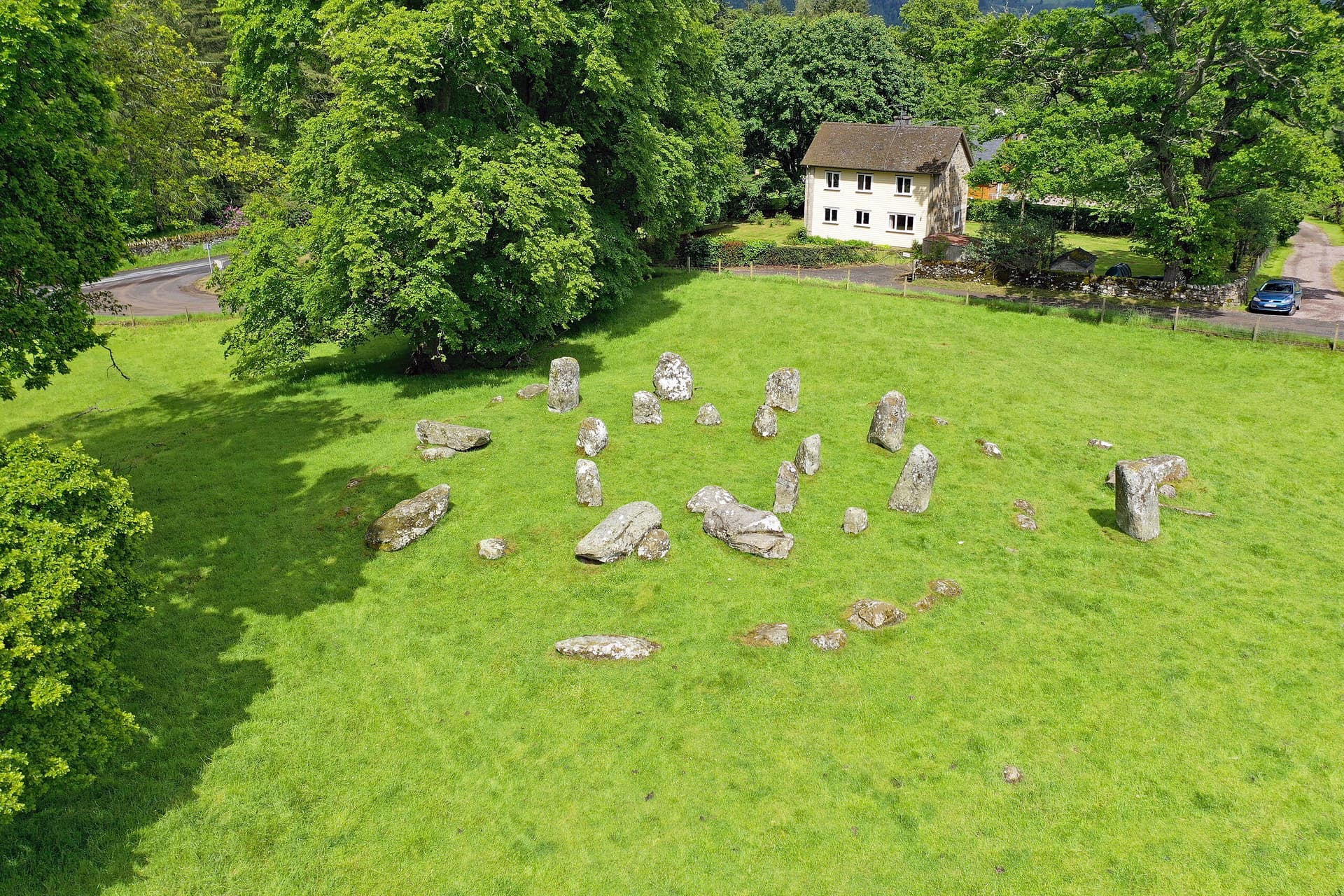
Croft Moraig Stone Circle, Aberfeldy
Aberfeldy, Alba / Scotland, United Kingdom
5.5 km away
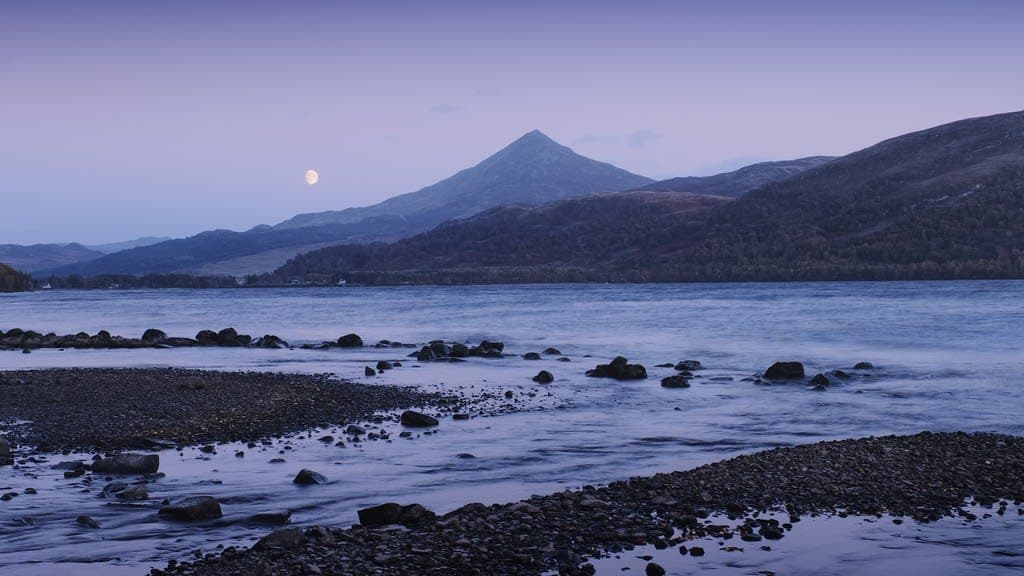
Mount Schiehallion, Scotland
Aberfeldy, Alba / Scotland, United Kingdom
8.2 km away
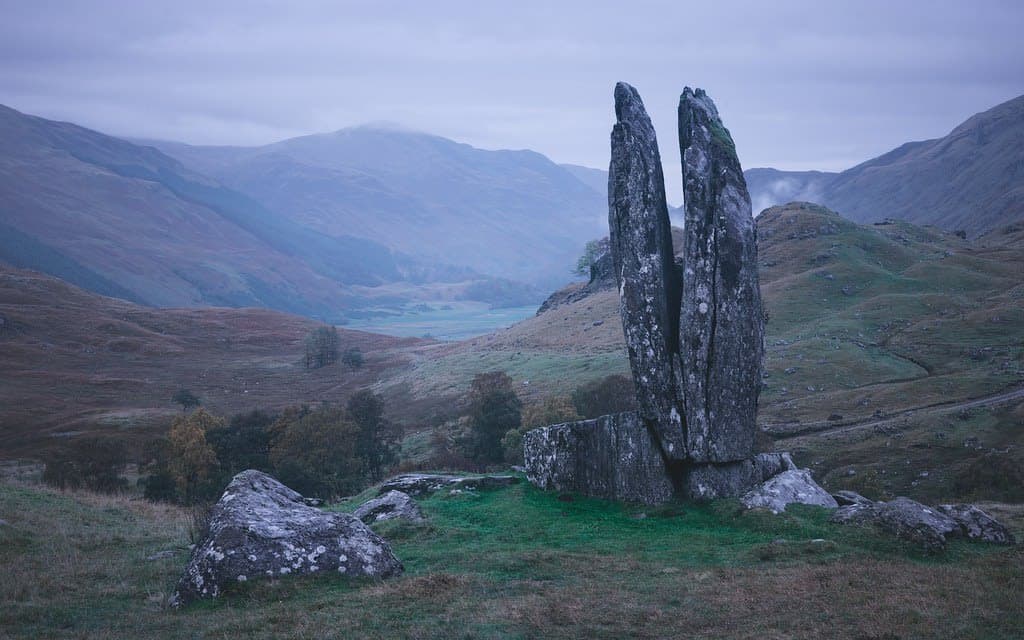
Praying Hands of Mary
Fortingall, Alba / Scotland, United Kingdom
13.2 km away
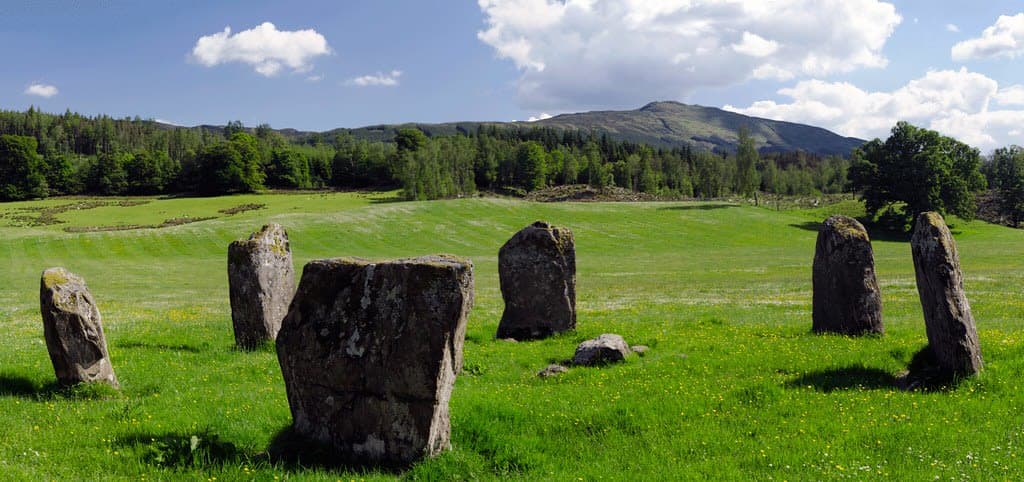
Kinnell stone circle, Killin
Killin, Alba / Scotland, United Kingdom
21.7 km away