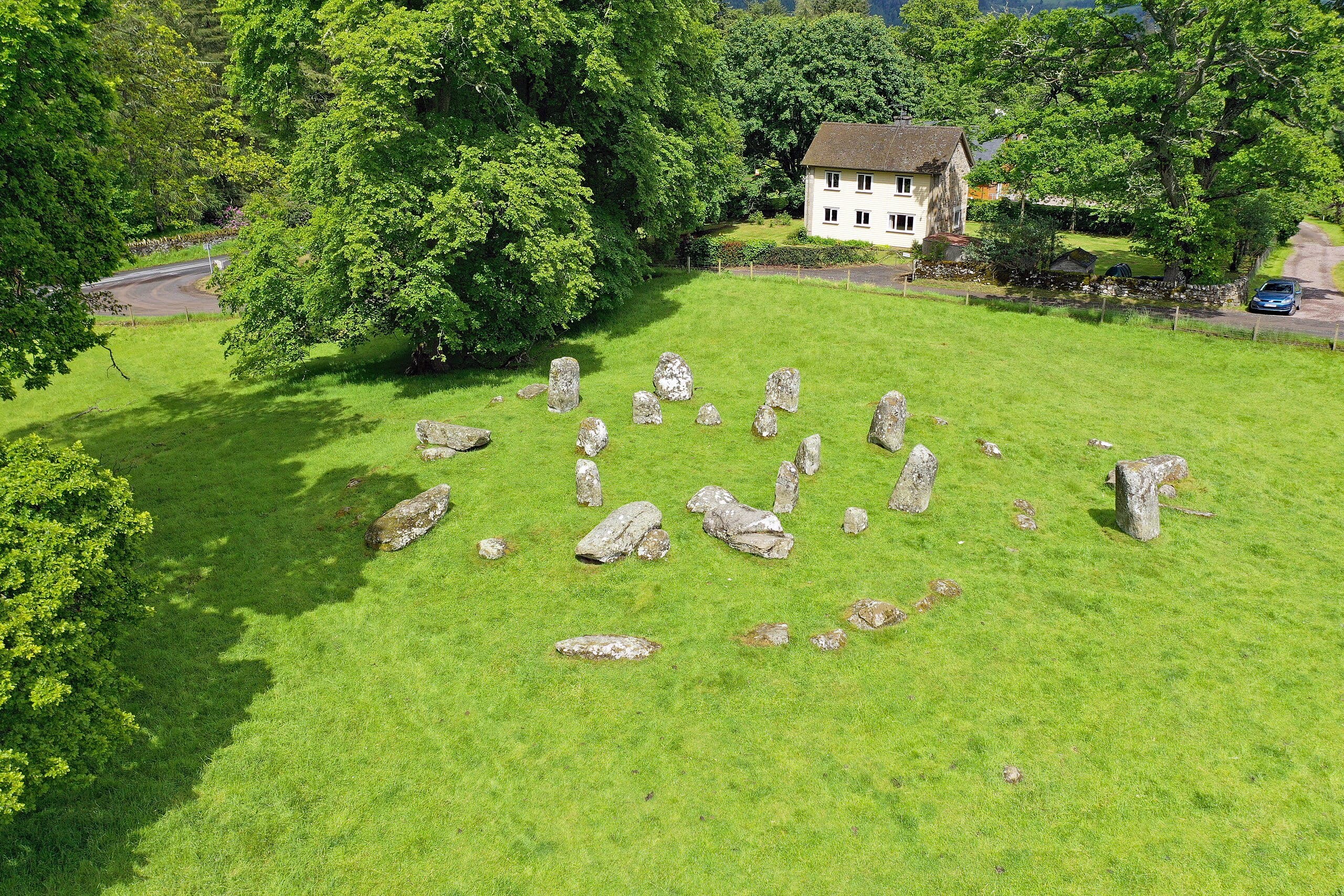
Croft Moraig Stone Circle, Aberfeldy
A Scottish stone circle that grew for a thousand years, where seekers still find the veil thin
Aberfeldy, Alba / Scotland, United Kingdom
At A Glance
- Coordinates
- 56.6018, -3.9603
- Suggested Duration
- Forty-five minutes to an hour to properly examine all three rings, study the cup marks, and allow the place to work on you.
Pilgrim Tips
- No requirements, but dress for Scottish Highland weather, which changes quickly. Sturdy footwear is essential as the field may be muddy and uneven. Waterproof layers are advisable in all seasons.
- Photography is welcome and the site photographs beautifully, especially at dawn and dusk when the stones catch low light. Consider being present before being productive. No special permits are required for personal photography.
- Croft Moraig is a scheduled monument of national importance. Do not dig, disturb the ground, or remove anything. If leaving offerings, use only natural, biodegradable items and consider the impact on the site and grazing sheep. The field is working farmland; close all gates and give sheep wide berth.
Overview
On the shores of Loch Tay, three concentric rings of stone mark a place held sacred for five millennia. Croft Moraig began as timber posts around 3000 BCE and slowly transformed into the stone circle standing today, each phase reflecting generations who returned to this same ground. Unlike crowded monuments, visitors here can touch the stones, trace cup marks carved by unknown hands, and sit in the silence that Robert Burns himself sought over two centuries ago.
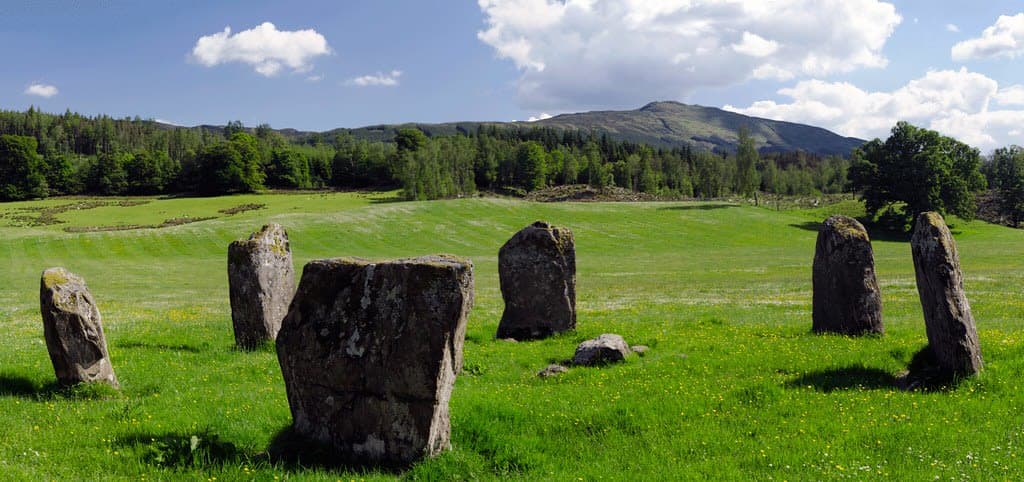
Some places reveal their sacredness immediately. Croft Moraig works differently. At first glance, you see weathered grey stones in a sheep field, mountains rising behind. Then, as you walk among the circles, the scale of time becomes visible. This is not one monument but three, nested inside each other, each built centuries apart by people who kept returning to the same ground.
The 1965 excavation revealed what the eye cannot see: first came timber posts arranged in a horseshoe, perhaps the dwelling of a priest or the framework of ceremony. Generations later, stones replaced wood. Generations after that, the outer ring rose with its massive portal entrance. A thousand years of construction. A thousand years of people finding this particular hillside essential.
Today, Croft Moraig offers what larger monuments cannot. There are no crowds, no timed tickets, no barriers keeping you from the stones. You can place your hand on schist that Bronze Age builders lifted into place. You can sit where the midsummer sun rises exactly as it did when the alignments were set. Whether you feel what visitors describe as profound peace or ancestral presence, you will certainly feel the weight of time made tangible.
Context And Lineage
Construction began around 3000 BCE with timber posts and continued through the Bronze Age, spanning approximately a thousand years. The landmark 1965 excavation by Stuart Piggott and Derek Simpson established the three-phase construction sequence that became the model for understanding Scottish stone circles, though a 2005 reanalysis by Bradley and Sheridan revised the dating, sparking ongoing scholarly debate.
The first builders came to this hillside around five thousand years ago. They dug post holes in a horseshoe pattern, erected fourteen timber posts, and surrounded them with a shallow ditch. At the center, they placed a boulder, and nearby burnt bone suggests fire and perhaps cremation. What ceremonies they performed, what they believed, what they called this place, we cannot know. We only know they began something that would continue for generations.
Their descendants, or perhaps the people who replaced them, returned centuries later to transform timber into stone. Eight standing stones in a horseshoe, graded in height, rose inside a stone bank seventeen meters across. A recumbent stone, covered with cup marks, was placed to align with the moon at its southernmost setting. Then, later still, the outer ring rose: nine to twelve stones reaching over two meters tall, with massive portal stones marking the entrance to the southeast.
A thousand years of construction. A thousand years of returning to the same ground. Whatever changed in language, diet, or technology across those centuries, the importance of this place persisted.
From Neolithic builders through Bronze Age communities, Croft Moraig was maintained and developed. After abandonment, local memory preserved knowledge of the circles even as their original meaning was lost. The possible Christianization of the site's name suggests medieval recognition of its sanctity. Modern understanding began with MacVean's 1796 documentation and deepened dramatically with the 1965 excavation. Today, the site draws seekers of prehistory, practitioners of contemporary paganism, and pilgrims simply looking for quiet connection with ancient ground.
Stuart Piggott
archaeologist
Derek Simpson
archaeologist
Richard Bradley and Alison Sheridan
archaeologists
Robert Burns
poet
Why This Place Is Sacred
Croft Moraig's sacredness emerges from its sustained importance across a millennium of prehistoric construction, its precise astronomical alignments with solstices and lunar cycles, the presence of burial pits and burnt bone suggesting ancestral connection, and the dense concentration of monuments in the Tay valley that marks this as a landscape of exceptional ceremonial significance.
The question with ancient sites is always: why here? What drew people to this particular hillside for a thousand years of building, and what draws them still?
The archaeological record offers clues. Croft Moraig's alignments are precise: the portal stones frame the midsummer sunrise; a cup-marked recumbent stone aligns with the southern moonset. The builders understood celestial rhythms and marked them in stone, likely for ceremonial timing. The burial pits near the entrance, the burnt bone at the center, the scattered quartz pebbles throughout, all suggest this was a place where the living maintained relationship with the dead and with forces larger than themselves.
The Tay valley surrounding Croft Moraig holds one of Scotland's densest concentrations of prehistoric monuments. Nearby stand the Fortingall Stone Circles, the ancient Fortingall Yew, the Killin Stone Circle at Loch Tay's western end. This was not an isolated sacred site but part of a ceremonial landscape, each monument in conversation with others across miles of valley.
Visitors today report a quality harder to measure but consistent enough to note: a sense of deep peace, of timelessness, of connection across millennia. Whether this reflects the accumulated weight of human intention, the landscape's inherent properties, or something beyond conventional explanation, the pattern is remarkably stable across accounts.
Archaeological evidence suggests Croft Moraig served as a ceremonial center where communities marked astronomical events, honored ancestors, and performed rituals whose specific nature remains unknown. The three phases of construction, from timber posts to inner and outer stone rings, may reflect changing religious practices even as the site's fundamental importance persisted. Some scholars propose the original timber horseshoe was the dwelling of a priest or shaman; others see it as a ceremonial structure in its own right.
The site passed from active use into the long silence of abandonment. Yet it was not forgotten. The possible derivation of 'Croft Moraig' from Gaelic for 'Field of Mary' suggests medieval Christians recognized the place as sacred and reinterpreted it through their own framework, a common pattern across Scotland. In 1796, Colin MacVean documented the three concentric circles, recording local knowledge that had persisted for centuries. Robert Burns visited during his Highland tour, drawn by the same quality that brings seekers today. The 1965 excavation transformed understanding of how Scottish stone circles developed, making Croft Moraig significant not only as a sacred site but as a key to interpreting others across Britain.
Traditions And Practice
No formal religious ceremonies are documented at Croft Moraig today, but the site supports personal pilgrimage, meditation, and quiet contemplation. Contemporary pagans and druids visit for solstice observations, finding meaning in alignments set thousands of years ago. The freedom to touch the stones and spend unhurried time distinguishes Croft Moraig from more restricted monuments.
The original practices remain unknown in their specifics, though evidence allows inference. Ceremonies likely coincided with midsummer sunrise, midwinter sunset, and the moon's southern standstill. The burnt bone at the center and burial pits near the portal stones suggest ancestral rites. Quartz pebbles scattered through the site may have been offerings, perhaps understood as holding light or otherworldly properties. The cup marks on the recumbent stone may have received liquid offerings or served symbolic purposes lost to time.
Modern visitors approach Croft Moraig in varied ways. Some come as heritage tourists, drawn by archaeological interest. Others come as seekers, understanding the site within frameworks of earth energy, thin places, or pagan tradition. Solstice and equinox visits allow witnessing the alignments in action. The site's openness permits practices impossible at protected monuments: sitting against stones, walking freely among circles, touching what the builders touched.
Consider arriving at dawn, particularly near solstice, to witness how light moves through the portal stones. Spend time with the cup-marked recumbent stone, letting its mystery remain mystery. Sit where the central timber posts once stood, where the burnt bone was found. If you bring an intention or question, hold it lightly; the site does not answer in words. Leave nothing but gratitude.
Neolithic and Bronze Age Ceremonial Practice
HistoricalCroft Moraig was constructed over approximately a thousand years as a complex ceremonial site. The evolution from timber posts to stone circles reflects changing religious practices across generations. Evidence of burnt bone and burial pits near the portal stones indicates the site served funerary and ancestral functions. The astronomical alignments suggest it functioned as a ceremonial calendar, marking solstices and lunar cycles for ritual timing.
Specific practices are unknown, but evidence suggests ceremonies aligned with midsummer sunrise, midwinter sunset, and southern moonset; cremation or burial of the dead near the monument; deposition of quartz pebbles as offerings; and ritual use of cup-marked stones.
Contemporary Paganism and Neo-Druidry
ActiveModern pagans and druids are drawn to Croft Moraig as one of Scotland's most complete and accessible stone circles. The astronomical alignments make solstice visits particularly meaningful. Unlike more restricted sites, Croft Moraig allows intimate, personal encounter with the stones.
Personal pilgrimage and meditation at the stones. Solstice and equinox visits to witness the astronomical alignments. The freedom to touch the stones and spend time in quiet contemplation is valued by practitioners who find more famous monuments inaccessible or crowded.
Experience And Perspectives
Visitors consistently describe Croft Moraig as producing effects beyond typical heritage tourism: a sense of peace and timelessness, feeling of connection to ancestors and ancient peoples, and appreciation for the intimate, uncrowded encounter the site allows. Many express gratitude for being able to touch the stones and move freely among them.
The first thing visitors notice is the quiet. Not merely absence of noise but presence of stillness, a listening quality the mountains behind seem to amplify. Then comes awareness of the stones themselves, darker grey schist rising from the grass, graded in height as the builders intended.
Those who have visited more famous circles often remark on the intimacy here. At Stonehenge, barriers keep you at distance; at Croft Moraig, you can walk among the stones, touch them, sit against them. This freedom creates a different quality of encounter. One visitor described being 'left speechless' by the 'feeling of closeness to the spirits.' Another called it 'one of the best stone circles to visit' precisely because 'you can actually get amongst and touch the stones.'
The cup-marked recumbent stone draws particular attention. Over twenty cup marks, carved by hands whose owners remain unknown, invite examination and wonder. What did they mean? Why this stone? The questions have no answers, and something valuable lives in that openness.
Those who time their visits to solstice find an additional dimension. When the midsummer sun rises through the portal stones or the winter sun sets in alignment with the ancient sightlines, visitors witness what the builders intended thousands of years ago. The experience is less spectacular than at larger monuments but perhaps more profound for its quietness.
Croft Moraig rewards those who approach it as encounter rather than destination. Consider arriving early, before other visitors appear. Walk the field slowly. Notice how the inner rings differ from the outer, each representing centuries of separate intention. Spend time with the cup-marked stone; let its mystery be mystery. If possible, sit in the center where the timber posts once stood, where burnt bone was found, where ceremony once happened. The site asks little except presence.
Understanding Croft Moraig requires holding multiple perspectives in balance. Archaeological investigation reveals construction sequences and material culture but cannot recover the beliefs that motivated them. Traditional knowledge was lost millennia ago, leaving inference rather than continuity. Contemporary spiritual experience is real but interpreted through frameworks the builders would not recognize. The site contains all these truths at once.
Croft Moraig holds exceptional importance in the study of stone circles. The 1965 excavation by Piggott and Simpson established a three-phase construction model, timber to stone to outer ring, that shaped interpretation of monuments across Britain. The 2005 reanalysis by Bradley and Sheridan challenged the original Neolithic dating, demonstrating that ceramics at the site are Middle or Late Bronze Age and sparking ongoing debate about chronology. The astronomical alignments, well-documented with midsummer sunrise, midwinter sunset, and southern lunar positions, indicate sophisticated celestial observation. The concentration of prehistoric monuments in the Tay valley confirms this was a landscape of sustained ceremonial importance.
No continuous indigenous tradition connects to Croft Moraig. The original builders' descendants lost direct knowledge of the site's meaning millennia ago. However, the possible derivation of the name from Gaelic for 'Field of Mary' suggests medieval Christians recognized the place as sacred, reinterpreting it through their framework. This pattern of Christianizing older sacred sites appears throughout Scotland and Europe.
Some visitors perceive Croft Moraig as a place of earth energy, noting feelings of peace, power, or spiritual presence among the stones. The cup marks are sometimes interpreted as part of a wider Neolithic symbolic system connected to life force, fertility, or cosmic mapping. The quartz deposits found at the site may have been understood as possessing otherworldly properties. These interpretations lack archaeological confirmation but often emerge from genuine experiences that resist conventional vocabulary.
Genuine mysteries persist. What specific ceremonies took place here? Why was this location chosen for such sustained investment? What did the cup marks mean to those who carved them? How did the timber phase function, and did it precede or overlap with the earliest stones? The relationship between Croft Moraig and other monuments in the Tay valley remains unclear. The precise dating of each construction phase continues to be debated. These uncertainties are not failures of knowledge but honest acknowledgment that some things, after five thousand years, may remain genuinely unknowable.
Visit Planning
Croft Moraig is freely accessible year-round beside the A827 between Aberfeldy and Kenmore. The site has no facilities; bring what you need and expect a short walk across a sheep field to reach the stones.
Kenmore and Aberfeldy offer hotels, bed and breakfasts, and self-catering cottages. The area is popular for outdoor tourism with good accommodation options. Pitlochry, twelve miles away, offers more extensive facilities.
Croft Moraig welcomes visitors but requires respect for both the monument and the working farm around it. Close gates behind you, do not climb on stones, and maintain the quiet atmosphere that makes the site meaningful.
The site lies in a sheep field on a working farm. Access is free and year-round, but visitors must close gates behind them to prevent sheep from straying. The farm track is not for visitor parking; use the small lay-by beside the road and walk up through the iron gate.
Unlike more famous monuments, Croft Moraig permits direct contact with the stones. This privilege asks something in return: touch with care, not force. Do not climb on the stones or sit atop them. The schist has survived five millennia but remains vulnerable to concentrated pressure and wear.
The atmosphere of the site is part of its value. Visitors who report transformative experiences consistently describe arriving in quiet and staying in quiet. Loud conversation, music, or performative behavior diminishes what others came to find. The mountains behind the circle seem to listen; consider what you want them to hear.
No requirements, but dress for Scottish Highland weather, which changes quickly. Sturdy footwear is essential as the field may be muddy and uneven. Waterproof layers are advisable in all seasons.
Photography is welcome and the site photographs beautifully, especially at dawn and dusk when the stones catch low light. Consider being present before being productive. No special permits are required for personal photography.
No specific tradition governs offerings here. If you wish to leave something, use only natural materials that will decompose and not harm sheep. Many visitors offer nothing visible, instead bringing internal gratitude or silent prayer.
Do not dig or disturb the ground. Do not remove stones or other materials. Keep dogs under control at all times. Do not block the farm track when parking. Clean your footwear before returning to your vehicle to avoid spreading sheep disease.
Sacred Cluster
Nearby sacred places create the location cluster described in the growth plan. This block is intentionally crawlable and links into the wider regional graph.
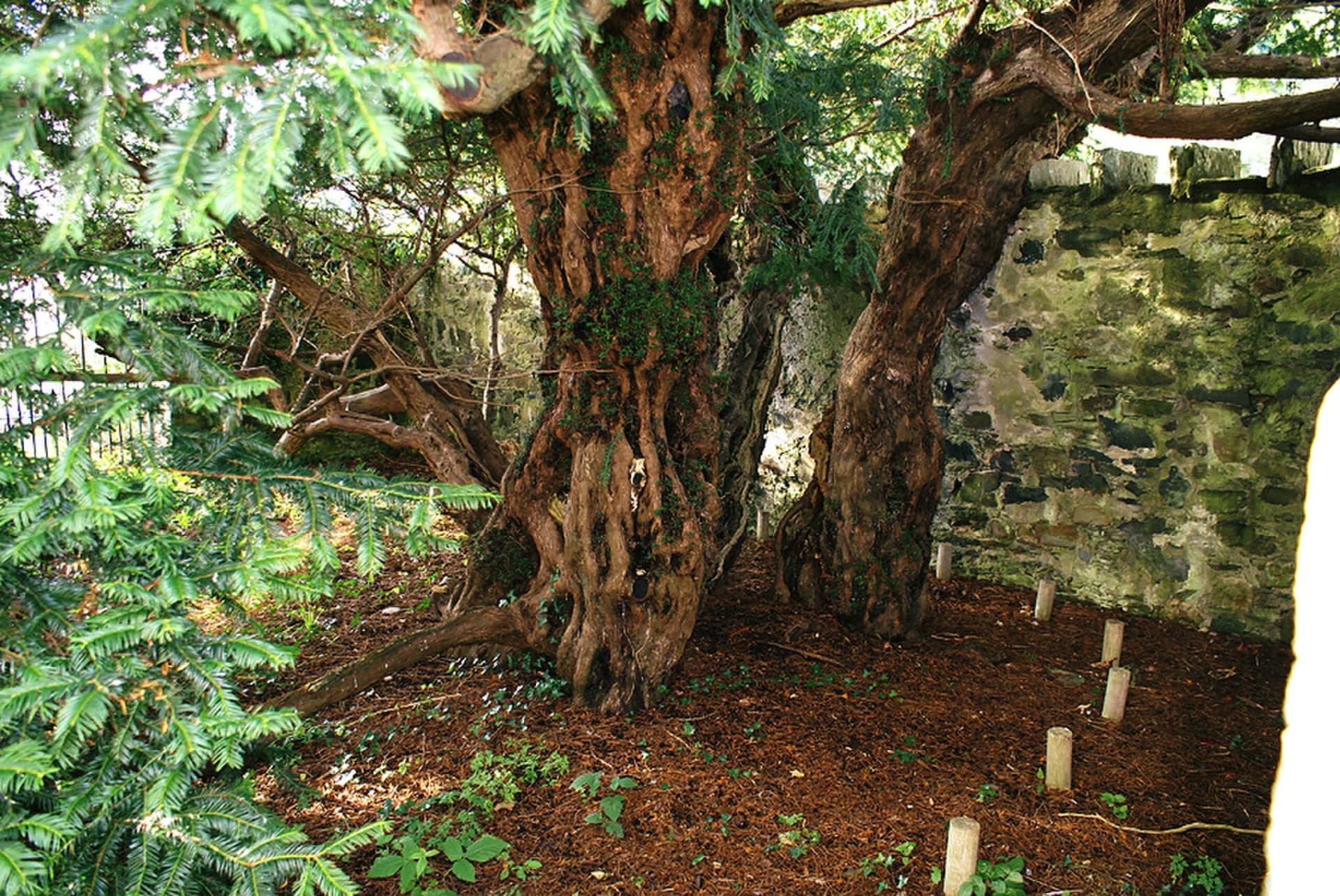
Fortingall Yew Tree and Church, Perthshire, Scotland
Fortingall, Alba / Scotland, United Kingdom
5.5 km away
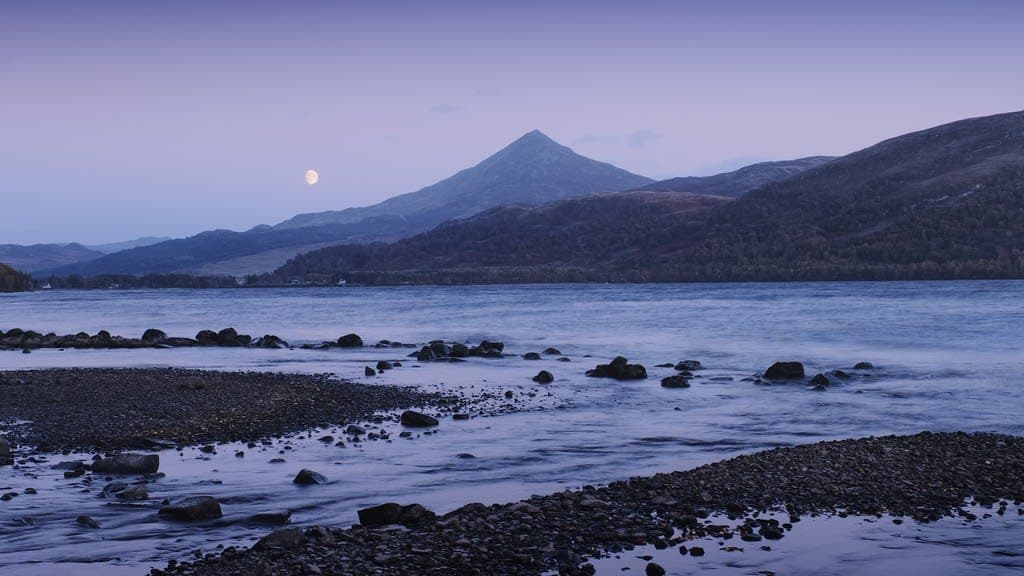
Mount Schiehallion, Scotland
Aberfeldy, Alba / Scotland, United Kingdom
11.2 km away
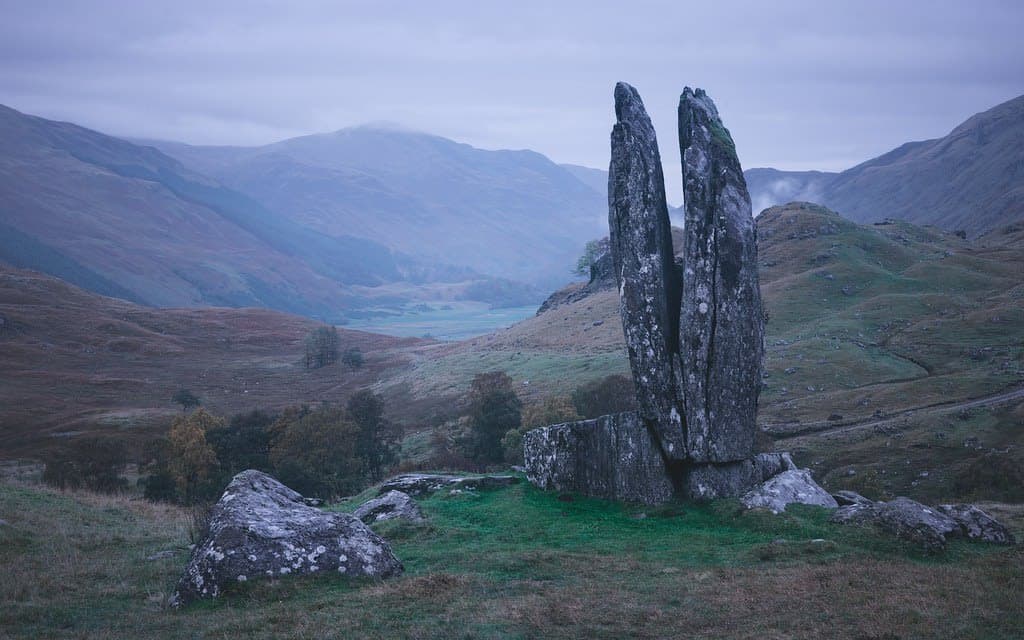
Praying Hands of Mary
Fortingall, Alba / Scotland, United Kingdom
18.7 km away
Kinnell stone circle, Killin
Killin, Alba / Scotland, United Kingdom
26.3 km away