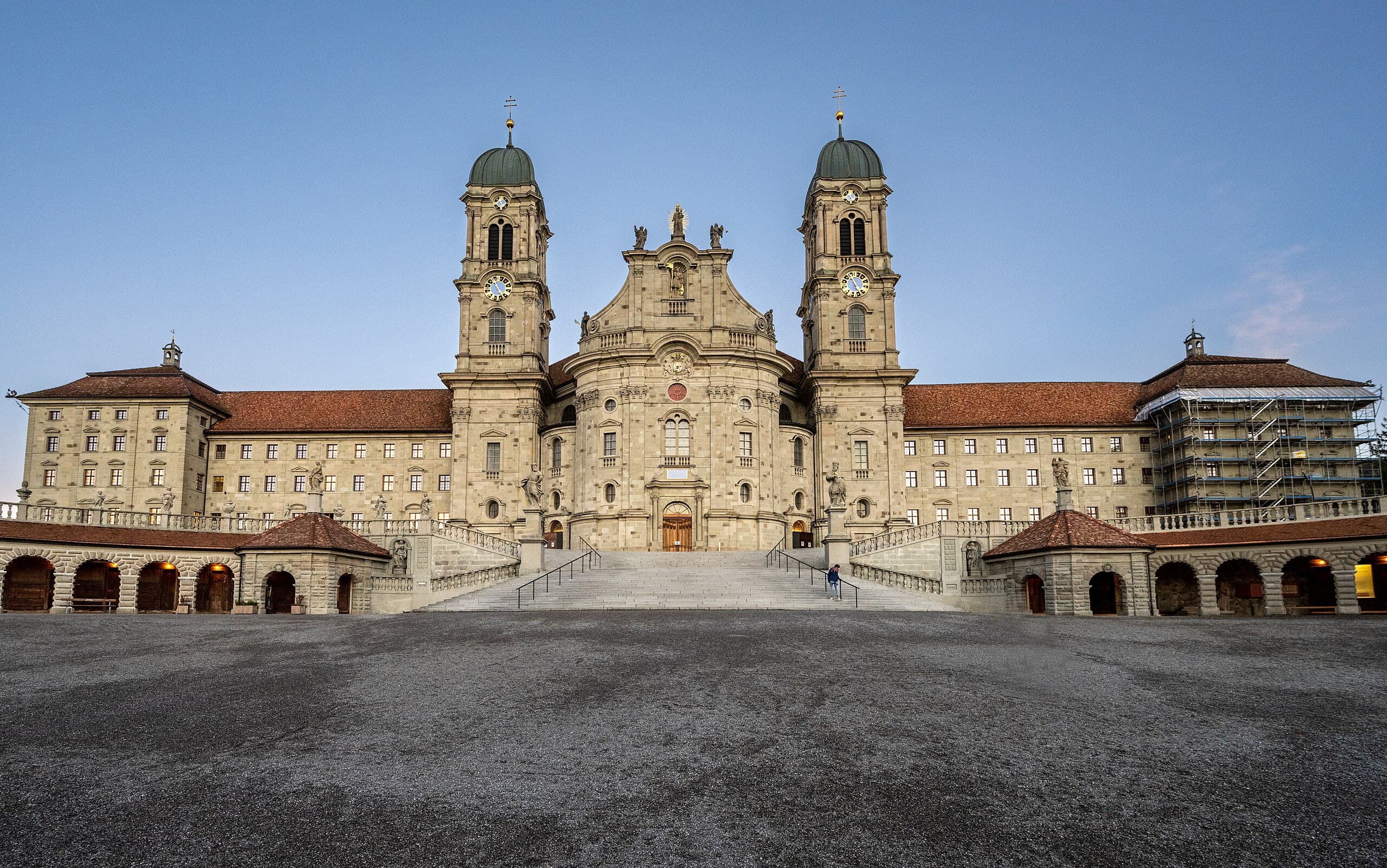
Einsiedeln Abbey
Where a thousand years of Benedictine prayer meets the Dark Lady who draws pilgrims still
Einsiedeln, Schwyz, Switzerland
At A Glance
- Coordinates
- 47.1268, 8.7526
- Suggested Duration
- A rushed visit takes 1.5 hours: the church, the Chapel of Grace, the monastery square. A meaningful visit requires 2-3 hours, including time to sit in silence and perhaps attend a service. Adding the library tour extends this to 3-4 hours. Those walking the Via Jacobi or seeking deep engagement often stay overnight in Einsiedeln, allowing multiple visits at different times of day.
- Access
- Trains run from Zurich to Einsiedeln approximately hourly, taking about 50 minutes. From the Einsiedeln station, the monastery is a 15-minute walk through the town. Trains from Lucerne take about an hour. By car, parking is available nearby though not on monastery grounds. The complex is wheelchair accessible.
Pilgrim Tips
- Trains run from Zurich to Einsiedeln approximately hourly, taking about 50 minutes. From the Einsiedeln station, the monastery is a 15-minute walk through the town. Trains from Lucerne take about an hour. By car, parking is available nearby though not on monastery grounds. The complex is wheelchair accessible.
- Modest dress is required: shoulders must be covered, and shorts or short skirts are not appropriate. This is a simple request that reflects both Catholic tradition and basic respect for a place of worship. Comfortable shoes are practical for the large complex.
- Sources conflict on whether photography is permitted inside the church. Some indicate prohibition; others say it is allowed with respect. The safest approach is to confirm current rules on arrival and, regardless of rules, to refrain from photography during services or when it would disturb those praying. The Chapel of Grace, in particular, calls for discretion: the pilgrims kneeling before the Madonna are not background for your photos. If you do photograph, do so quietly and without flash. Consider whether the photograph is necessary: sometimes the effort to capture an experience prevents having it.
- This is an active place of worship, not primarily a tourist attraction. The monks and pilgrims kneeling in the Chapel of Grace are praying, not posing. Your presence is a privilege extended by a community whose primary purpose is prayer. Do not photograph during services. Do not speak loudly. Do not treat the Black Madonna as a photo opportunity while others are seeking her intercession. The usual courtesies of sacred space apply with particular force here, where worship is continuous. If you visit during the Engelweihe festival or other major feast days, expect crowds and be patient. The monastery has managed pilgrimage for over a millennium; they know what they are doing. Trust the rhythm rather than fighting for position.
Overview
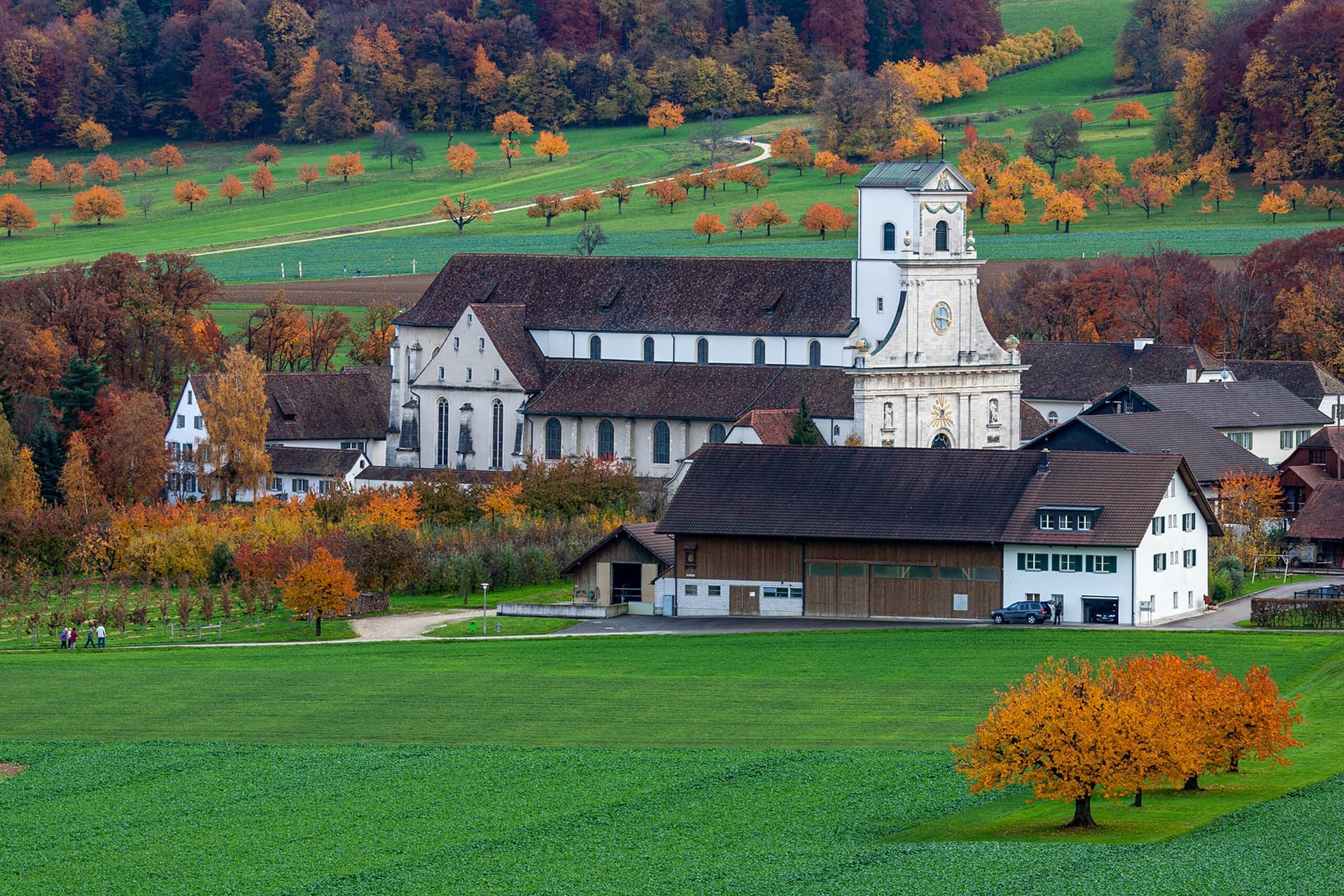
Rising above a Swiss Alpine valley, Einsiedeln Abbey has welcomed pilgrims for over a millennium. The Black Madonna in the Chapel of Grace remains the destination for hundreds of thousands each year, drawn by something that centuries of Gregorian chant, accumulated prayers, and reported healings have made palpable in the stones and air.
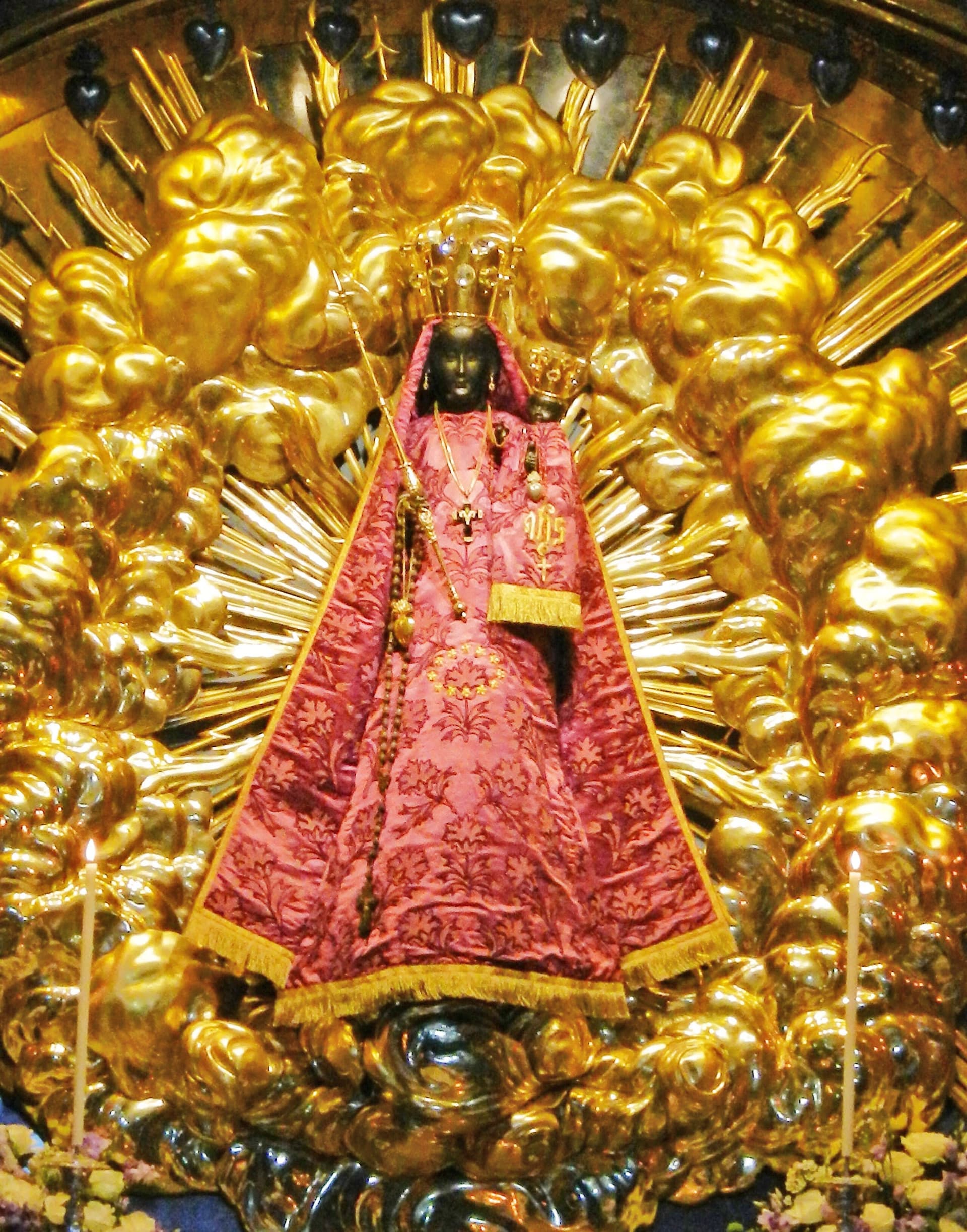
At 4:30 each afternoon, the monks gather in the Chapel of Grace to sing the Salve Regina. The ancient Marian hymn rises in polyphony before a statue darkened by time and candle smoke, her face serene beneath robes of embroidered gold. Pilgrims kneel on worn stone, adding their prayers to those of countless seekers who have come before.
This ritual has continued, unbroken, for centuries. The Benedictine monks who founded their monastery here in the 10th century were themselves continuing something older still: a hermit named Meinrad had sought solitude in this Dark Forest a hundred years earlier, building a small chapel, welcoming pilgrims until his murder in 861. The place was already marked as sacred when the monastery rose.
According to tradition, on the night before Bishop Konrad of Constance was to consecrate the new church in 948, Christ himself descended with angels and performed the consecration. A voice stopped the bishop the next morning: the chapel has been consecrated by God. This legend of the Angel's Consecration gave Einsiedeln unique status in medieval Christendom, confirmed by papal authority within decades.
Today, pilgrims come from across Europe and beyond. Some walk for days along the Via Jacobi, the Swiss section of the Camino de Santiago. Others arrive by train from Zurich, an hour away. Hindu Tamil immigrants have begun venerating the Black Madonna alongside Catholic faithful, seeing in her face echoes of the divine feminine they know from their own tradition. What draws them is harder to name than to experience: a quality of presence in this Baroque church, this living monastery, this place where prayer has never stopped.
Context And Lineage
Einsiedeln's history spans over twelve centuries, from Saint Meinrad's 9th-century hermitage through the monastery's founding in 934, the legendary Angel's Consecration in 948, centuries as one of Europe's great pilgrimage sites, near-destruction during the French Revolutionary invasion, and continuing vitality today. Throughout, the thread of Benedictine prayer has never broken.
Meinrad was born around 797 into the family of the Counts of Hohenzollern. He entered monastic life young, gaining reputation as a holy man whose prayers brought healing. The attention became too much. Around 828, he withdrew into the Finsterwald—the Dark Forest—seeking solitude so deep that even seekers might not find him.
They found him anyway. For twenty-six years, Meinrad received pilgrims in his hermitage, offering counsel and blessing despite his longing for solitude. He built a small chapel, reportedly housing a statue of the Virgin given by Abbess Hildegard of Zurich. Two ravens became his companions, the only community he allowed himself.
On January 21, 861, two men came to his door. According to tradition, they were robbers seeking the treasure they assumed a holy man must have. Meinrad welcomed them, shared his simple meal, and was murdered for his hospitality. The ravens pursued the killers to Zurich, circling and crying until they were captured and brought to justice. The ravens remain part of the abbey's coat of arms.
For seventy years, the hermitage stood empty but visited. Then Eberhard, former Provost of Strasbourg, gathered Benedictine monks and established a monastery at the site around 934. The patronage of Otto I and Duchess Regelinda of Swabia provided resources; the Rule of Saint Benedict provided structure. What Meinrad had begun alone would continue in community.
The Angel's Consecration came in 948. Bishop Konrad of Constance had arrived to consecrate the new church when, according to tradition, Christ descended from heaven with the Virgin Mary, the four Evangelists, St. Peter, St. Gregory, and a host of angels. Christ himself performed the consecration. The next morning, as Konrad prepared to begin the formal rite, an angel stopped him: 'Desist, brother, the chapel has been consecrated by God.' The story spread rapidly; a papal bull confirmed its authenticity in 964. Einsiedeln became one of the most important pilgrimage sites in medieval Europe.
The Benedictine monks of Einsiedeln have maintained unbroken continuity since 934. Through reformation turmoil that dissolved monasteries across Europe, through the French Revolution that temporarily scattered the community, through two world wars, the monks returned and continued. Today approximately forty monks maintain the daily round of prayer.
The abbey is a territorial abbey, meaning it is not under the jurisdiction of any diocese. The abbot holds quasi-episcopal authority, a relic of medieval arrangements that reflects the site's historical importance. This independence has perhaps helped preserve continuity through centuries of political change.
In 1854, monks from Einsiedeln established Saint Meinrad Archabbey in Indiana, USA, spreading the lineage across the Atlantic. Other foundations followed. The tradition that Meinrad began alone in the Dark Forest now spans continents.
Saint Meinrad
founder
Hermit and martyr who established the original hermitage around 828. His murder in 861 by robbers, and the legend of his ravens pursuing the killers to justice, made the site a place of pilgrimage. Known as the 'Martyr of Hospitality' for receiving the men who would kill him.
Eberhard of Strasbourg
founder
Former Provost of Strasbourg Cathedral who gathered Benedictine monks and founded the monastery in 934-935. First Abbot of Einsiedeln, establishing the Rule of Saint Benedict that continues to govern monastic life.
The Black Madonna
sacred object
The late Gothic statue (c. 1450-1466) housed in the Chapel of Grace, center of pilgrimage devotion. The original statue, reputedly given to Meinrad by Abbess Hildegard, was lost to fire in 1465. The darkness is likely from centuries of candle smoke, but has become theologically significant to devotees.
Caspar Moosbrugger
historical
Lay brother and architect who designed the present Baroque church (1704-1735), creating one of the finest examples of Baroque architecture in Switzerland.
The Asam Brothers
historical
Bavarian artists who decorated the church interior with frescoes and stucco work, transforming the space into a total artwork designed to lift the spirit heavenward.
Why This Place Is Sacred
Einsiedeln's sacredness emerges from multiple converging factors: the accumulated weight of over a thousand years of continuous monastic prayer, the legend of divine consecration, the Black Madonna as focus of devotion and reported miracles, and the site's location in what was once called the Dark Forest. Something has gathered here that visitors consistently recognize, regardless of their beliefs.
The Benedictine tradition speaks of lectio divina, opus Dei, the work of God conducted through daily prayer. At Einsiedeln, this work has continued without interruption for more than a thousand years. The monks rise before dawn for Vigils; they gather again for Lauds, then throughout the day for the canonical hours, finally for Compline as darkness falls. This rhythm has shaped the space as surely as the Baroque architecture.
Pilgrims speak of feeling the accumulated weight of prayer when they enter. It is not a metaphor but something almost physical: a density to the silence, a quality of attention in the air. The great nave draws the eye upward through elaborate frescoes toward heaven, but it is in the smaller Chapel of Grace, dark and enclosed, where many report the strongest sense of presence.
The Black Madonna herself has been venerated for miracles throughout the centuries. The abbey maintains records of healings attributed to her intercession. Whether one believes in such things or not, the belief of millions of pilgrims has left its mark. The stone floor before her is worn from knees; the air carries the residue of countless candles lit with desperate hope.
The Angel's Consecration legend adds another dimension. According to tradition, this is one of the only churches in Christendom consecrated not by human hands but by Christ himself. The unique Sanctus still sung here preserves that claim: 'Holy, holy, holy God before the face of the glorious Virgin.' Whether the legend records a genuine mystical event or emerged to explain something earlier pilgrims already sensed, it marks this place as different.
Perhaps there is something older still. The name 'Finsterwald'—Dark Forest—suggests the primordial, the place where light does not fully reach. Some researchers speculate about pre-Christian sacred associations, though no archaeological evidence confirms this. What is certain is that Meinrad chose this particular valley for his hermitage, and something in that choice has proven enduring.
Saint Meinrad established his hermitage in the Dark Forest around 828, seeking deeper solitude after his reputation for holiness drew too many visitors to his previous cell. He built a small chapel, reportedly housing a statue of the Virgin Mary given by Abbess Hildegard of Zurich. For twenty-six years he lived here with only two ravens as companions, welcoming pilgrims who sought his counsel despite his desire for solitude. When robbers murdered him in 861, the site became a place of pilgrimage in his memory.
The monastery that rose a century later was founded to institutionalize what had already become sacred ground. Eberhard of Strasbourg gathered Benedictine monks and established the Rule that would govern daily life, embedding contemplation in structure. The Angel's Consecration in 948 confirmed what founders and pilgrims alike already sensed: God had marked this place.
What began as one hermit's cell has grown into Switzerland's largest pilgrimage destination and one of Europe's most significant Marian shrines. The physical structures have transformed utterly: the present Baroque church, completed in 1735, replaced medieval buildings that themselves succeeded earlier ones. The original Black Madonna was lost to fire in 1465; the current statue dates to that same era, carved in late Gothic style.
Yet the essential character persists. Monks still follow the Rule of Saint Benedict. Pilgrims still kneel before the Madonna. The daily Salve Regina still marks the boundary between afternoon and evening. In 1798, when French Revolutionary troops invaded and the Madonna was spirited away for safety, the monastery survived. When a restorer briefly lightened her face, public outcry forced him to repaint it black. The devotion runs deeper than any particular expression.
In recent decades, new pilgrims have arrived. The Via Jacobi has seen a revival, part of the broader Camino renaissance. Hindu Tamil immigrants, recognizing in the Black Madonna something familiar from their goddess traditions, have begun adding their prayers to the Catholic faithful's. The meanings multiply, but the place holds them.
Traditions And Practice
Einsiedeln offers multiple pathways for spiritual engagement: the daily Mass and Liturgy of the Hours, the 4:30pm Salve Regina before the Black Madonna, personal devotion in the Chapel of Grace, and pilgrimage along the Via Jacobi. The monastery welcomes visitors of all faiths to participate in its living tradition.
The Benedictine monks maintain the full Liturgy of the Hours, gathering multiple times daily to chant the Divine Office in Gregorian chant. This practice, following Saint Benedict's injunction that nothing should be preferred to the work of God, has shaped the monastery's days for over a millennium. The chant is not performance but prayer: the monks are not singing for visitors but with them, inviting all present into the rhythm of sacred time.
The daily Salve Regina at 4:30pm in the Chapel of Grace represents the culmination of Marian devotion. This ancient hymn to the Virgin, sung in polyphony before the Black Madonna, draws pilgrims specifically to this moment. For many, it is the heart of the Einsiedeln experience.
Mass is celebrated multiple times daily, with the principal Mass typically mid-morning. The sacrament of confession is available, a traditional element of pilgrimage: arriving with burdens, leaving lighter. Pilgrims walking the Via Jacobi may request a pilgrim blessing from the monks.
The Engelweihe—the Angel's Consecration Festival on September 14—remains the abbey's principal feast. For centuries this was a multi-day celebration drawing enormous crowds; today it retains special liturgical solemnity commemorating the legendary divine consecration of 948.
Contemporary pilgrims engage with Einsiedeln in ways both traditional and adapted. Walking the Via Jacobi—the Swiss section of the Camino de Santiago—connects the site to the broader European pilgrimage revival. Many arrive on foot, having walked for days; the monastery has offered hospitality to pilgrims for over a thousand years.
Hindu Tamil immigrants have begun venerating the Black Madonna, seeing in her dark face and regal bearing echoes of Hindu goddess traditions. They light candles and offer prayers in forms familiar from their own practice, creating an unexpected but apparently welcomed interfaith dimension.
The abbey library, home to over 1,200 medieval manuscripts including some dating to Carolingian times, draws scholars and bibliophiles. Guided tours offer access to this treasure house of Western intellectual history. The manuscripts are themselves artifacts of medieval contemplative practice: copied by monks in prayerful attention, illuminated as acts of devotion.
The Einsiedler Welttheater—World Theatre—represents a different kind of spiritual engagement. Since 1924, the village has periodically performed Calderon de la Barca's 'The Great Theatre of the World' in the monastery square, with over 500 local residents participating. The play, exploring themes of life, death, and divine judgment against the Baroque facade, transforms the space into outdoor liturgy.
Arrive in time for the 4:30pm Salve Regina if possible. This fifteen-minute ceremony distills Einsiedeln's essence: the Black Madonna, the monks' voices, the accumulated prayers of centuries, all gathered in the intimate space of the Chapel of Grace. Even those without Christian faith often describe being moved.
Attend Mass or one of the Hours if your schedule allows. The monks welcome visitors who come with respect, regardless of belief. Being present while they pray offers something different from visiting between services. The Liturgy of the Hours, in particular, reveals the rhythm that has shaped this place: not a single event but a daily pattern stretching back a thousand years.
Spend time in the Chapel of Grace outside of services. Kneel if you are comfortable doing so; the worn stone will receive you as it has received millions. Light a candle if the gesture has meaning for you. Bring a question, an intention, a grief: pilgrimage has always carried such weights.
Walk the monastery square. Sit in the great church and let the Baroque architecture work. The Asam brothers designed every element to lift the eye and spirit upward; the design knows its business. Notice how light falls, how sound carries, how even crowded spaces can hold quiet.
Roman Catholic (Benedictine)
ActiveEinsiedeln Abbey is one of the most important Benedictine monasteries in the world and Switzerland's largest pilgrimage site. As a territorial abbey, it holds quasi-episcopal status, independent of any diocese. The monastery has maintained continuous Benedictine presence since 934, making it one of the oldest functioning monasteries in Europe. Approximately forty monks currently maintain the full round of monastic prayer.
The monks gather multiple times daily for the Liturgy of the Hours, chanting the Divine Office in Gregorian chant. Mass is celebrated multiple times daily. The Salve Regina is sung in polyphony at the Chapel of Grace each day at 4:30pm. The sacrament of confession is available. The Engelweihe festival on September 14 commemorates the legendary Angel's Consecration with special liturgical solemnity.
Marian Pilgrimage
ActiveEinsiedeln is the most important Marian pilgrimage site in Switzerland and one of the major Black Madonna shrines in Europe. The tradition began with the legend that Saint Meinrad brought a miraculous statue of the Virgin to his hermitage. Though the original statue was lost to fire, the present Black Madonna (c. 1450-1466) continues to draw hundreds of thousands of pilgrims annually seeking intercession and healing.
Pilgrims kneel before the Black Madonna in the Chapel of Grace, lighting candles, praying the Rosary, and seeking the Virgin's intercession for healing and spiritual needs. Many attend the daily 4:30pm Salve Regina. The pilgrimage season runs from Easter to Rosary Sunday (first Sunday of October). The September 14 Engelweihe festival draws especially large numbers.
Way of St. James (Via Jacobi)
ActiveEinsiedeln is a major waypoint on the Via Jacobi, the Swiss section of the Camino de Santiago pilgrimage route. Since the early Middle Ages, pilgrims from Northern and Eastern Europe have passed through Einsiedeln on their way to Santiago de Compostela in Spain. The abbey has offered hospitality to pilgrims for over a thousand years.
Pilgrims walk from Rorschach via Rapperswil to Einsiedeln, then continue toward Geneva and France. At the abbey, they may receive a pilgrim blessing, attend services, and rest before continuing their journey. The Via Jacobi has seen revival in recent decades as part of the broader Camino renaissance.
Interfaith Veneration (Hindu Tamil)
ActiveIn recent decades, Hindu Tamil immigrants living in Switzerland have begun venerating the Black Madonna, seeing parallels with Hindu goddess traditions. This represents an interesting case of interfaith sacred site sharing, where devotees from different traditions recognize something compatible in a sacred image.
Hindu Tamil devotees offer prayers and reverence to the Black Madonna, lighting candles and making pilgrimage visits to the Chapel of Grace. Their practices blend Hindu devotional forms with the Catholic context.
Experience And Perspectives
Visitors to Einsiedeln consistently report profound experiences of peace, emotional response to the Black Madonna, and being moved by Gregorian chant and the daily Salve Regina. The combination of active monastic life, centuries of accumulated prayer, and Baroque beauty creates conditions many describe as transformative.
The first impression is scale. The monastery square—Europe's second-largest church forecourt after St. Peter's in Rome—opens before you, the Baroque facade rising with its twin towers against Alpine sky. But it is what happens inside that pilgrims remember.
Entering the church, the eye is drawn upward through layer upon layer of ornamentation: frescoes by the Asam brothers covering the ceiling, golden stucco work, light falling through high windows. The effect is not merely decorative but kinetic, pulling consciousness toward something beyond the walls. This is Baroque spirituality made visible: the temporal world as gateway to the eternal.
Then comes the Chapel of Grace. Enclosed in black marble, lit by candles, it forms a space apart within the larger church. The Black Madonna sits enthroned above the altar, her dark face serene beneath an elaborate canopy. Pilgrims kneel on stone worn smooth by centuries of knees. The shift in atmosphere is immediate: from grandeur to intimacy, from movement to stillness.
Many report being moved to tears without quite knowing why. The sensation is less emotion than recognition, as though encountering something long sought without knowing it was sought. The Madonna's dark face, the countless prayers that have risen here, the awareness of monks chanting somewhere nearby: these elements create a density of presence that opens some visitors in ways they struggle to articulate.
The daily Salve Regina at 4:30pm is frequently cited as the journey's heart. The ancient hymn sung in polyphony before the Madonna, the monks' voices rising in a tradition unbroken for centuries, the other pilgrims gathered in that small space: it brings together all the threads that make Einsiedeln what it is. Even visitors with no Christian faith often describe being moved. The aesthetic and the sacred merge.
Those who attend Mass or the Liturgy of the Hours describe a different quality of experience: being welcomed into the monks' own practice rather than observing from outside. The Gregorian chant is not performance but prayer; joining it, even in silence, shifts something. Time behaves differently in those offices. An hour may pass like minutes.
Perhaps most remarkable is how the site maintains contemplative atmosphere despite crowds. Half a million visitors come each year, yet pilgrims consistently describe finding quiet, finding space for their own encounter. The monastery has learned over a millennium how to welcome seekers without becoming spectacle.
Come with time. An hour allows the church and chapel; half a day allows the rhythm of the place to work on you. If possible, stay for the 4:30pm Salve Regina, which distills the site's essence into fifteen minutes.
Consider what question you carry. Pilgrimage is rarely arbitrary: something draws the pilgrim, even if they cannot name it clearly. Letting that question be present, without demanding answers, creates conditions for whatever Einsiedeln might offer.
If you can, attend Mass or one of the Hours. You need not be Catholic; you need not even be Christian. The monastery welcomes all who come with respect. Being present while the monks pray is different from visiting when they are absent. The living tradition is the point.
Walk the monastery square. Sit in the church, not just the Chapel of Grace. Let the Baroque architecture work: it was designed to lift the spirit, and it knows its business. Notice the quality of silence here, which is not empty but full.
Einsiedeln invites multiple interpretations: the traditional Catholic understanding of miracles and divine presence, the scholarly view of medieval religious culture, and alternative perspectives that explore the site's place in broader patterns of goddess veneration and sacred geography. Honest engagement holds these perspectives together without forcing resolution.
Historians recognize Einsiedeln as one of the most important pilgrimage sites in medieval and early modern Europe, crucial for understanding the development of Marian devotion in the Alpine region. The Engelweihe legend, whatever its origins, played a significant role in establishing the site's spiritual authority and attracting pilgrims from across Europe.
Art historians note the abbey church as one of the finest examples of Baroque architecture in Switzerland, its total artistic program designed to create immersive spiritual experience. The library holdings are of major scholarly importance for medieval studies, with manuscripts digitized through the Virtual Manuscript Library of Switzerland allowing global access.
The Black Madonna's color is likely due to centuries of candle smoke rather than original design. Research at the Frick Collection and elsewhere has documented how many Black Madonnas were not intentionally darkened. Yet this 'accidental' blackening became theologically significant to devotees, who found in the dark face echoes of the wisdom literature describing the Beloved as 'black but beautiful' or connections to earth goddesses.
Catholic tradition understands Einsiedeln as a site of genuine divine intervention. The Engelweihe is not merely legend but recorded miracle, confirmed by papal authority in 964. The Black Madonna continues to intercede for those who seek her help; the abbey maintains records of reported healings and favors attributed to her intercession.
The monastery represents over a millennium of unbroken Benedictine life: the Rule of Saint Benedict lived continuously, the Opus Dei maintained through war, invasion, and cultural transformation. This continuity is itself understood as grace, a sign of divine protection for a place God marked as sacred.
The unique Sanctus still sung at Einsiedeln preserves the angelic song heard at the miraculous consecration: 'Holy, holy, holy God before the face of the glorious Virgin... blessed is the son of Mary who comes in the name of the Lord.' For believers, participating in this liturgy is to join voices with angels.
Some researchers explore connections between the Black Madonna of Einsiedeln and broader patterns of goddess veneration. The Theosophical Society has published scholarly articles examining how the darkened Madonna may represent an older archetype: the Dark Goddess, earth mother, or divine feminine that Christianity absorbed and transformed.
The site's original name—the Dark Forest—suggests something primordial. Why did Meinrad choose this particular valley? Some speculate about pre-Christian sacred associations, though no archaeological evidence confirms this. The pattern of hermit-saints establishing themselves at sites that later become major churches is common enough to suggest they may have recognized sacredness already present.
The recent veneration by Hindu Tamil immigrants adds another dimension. Their recognition of the Black Madonna as compatible with goddess traditions they carry from South India suggests cross-cultural patterns in how humans encounter and image the sacred feminine.
Genuine mysteries remain. What experiences gave rise to the Engelweihe legend? Mass religious visions were reported throughout the medieval period; what actually happened on that night in 948? The nature of the original Madonna statue, destroyed in 1465, is unknown: was it brought by Meinrad as tradition claims, and if so, from where?
Whether the site had pre-Christian sacred significance cannot be determined from current evidence. The name 'Dark Forest' proves nothing, though it evokes something. Why Meinrad chose this valley, what he sensed here, remains his secret.
Perhaps most interesting is why the site continues to work on visitors, including those with no Christian faith. The consistency of reported experiences across belief systems suggests something real operating here, whether we have vocabulary for it or not.
Visit Planning
Einsiedeln is easily accessible from Zurich (one hour by train) and welcomes visitors daily. The church is open from 6:00am to 8:30pm. The 4:30pm Salve Regina is the day's spiritual highlight. Plan at least two hours for a meaningful visit; half a day allows participation in services.
Trains run from Zurich to Einsiedeln approximately hourly, taking about 50 minutes. From the Einsiedeln station, the monastery is a 15-minute walk through the town. Trains from Lucerne take about an hour. By car, parking is available nearby though not on monastery grounds. The complex is wheelchair accessible.
Einsiedeln town offers various hotels and guesthouses. The tourist office can assist with bookings. Pilgrims walking the Via Jacobi have traditional accommodation options. The monastery does not offer overnight stays for general visitors, though pilgrimage groups may make arrangements through the abbey.
Einsiedeln is an active pilgrimage site where worship continues daily. Visitors should dress modestly (shoulders covered, no shorts or short skirts), maintain reverent silence especially in the Chapel of Grace, and recognize that their presence is secondary to the community's primary purpose of prayer.
The fundamental principle is respect for living worship. This is not a museum of historical spirituality but a monastery where forty monks pray the full Liturgy of the Hours daily, where pilgrims kneel before the Black Madonna seeking intercession, where the Mass has been celebrated continuously for over a thousand years. Visitors are guests in a house whose primary occupants are engaged in sacred work.
Silence matters. Not because there is a rule against speaking, but because silence creates the conditions for encounter. The Chapel of Grace in particular asks for quiet: others are praying, perhaps with desperate hope, and their prayer deserves protection.
Behave as you would in any place of worship where people are actively worshipping. Do not walk in front of those praying. Do not block access to the Madonna. Do not rush through with camera clicking while others kneel. The simple courtesies that sacred space requires are well understood by most pilgrims; tourists sometimes need reminding.
The best way to experience Einsiedeln is to participate rather than observe. Attend the Salve Regina at 4:30pm; join Mass if you are comfortable doing so; sit in the church during the Hours and let the chant work on you. The monastery welcomes participation by visitors of all faiths and none, asking only for respect.
Modest dress is required: shoulders must be covered, and shorts or short skirts are not appropriate. This is a simple request that reflects both Catholic tradition and basic respect for a place of worship. Comfortable shoes are practical for the large complex.
Sources conflict on whether photography is permitted inside the church. Some indicate prohibition; others say it is allowed with respect. The safest approach is to confirm current rules on arrival and, regardless of rules, to refrain from photography during services or when it would disturb those praying. The Chapel of Grace, in particular, calls for discretion: the pilgrims kneeling before the Madonna are not background for your photos.
If you do photograph, do so quietly and without flash. Consider whether the photograph is necessary: sometimes the effort to capture an experience prevents having it.
Candles can be lit in the church, a traditional form of offering. Donations are welcomed but not required. The most meaningful offering may be attention: being present, being still, adding your own prayers or intentions to those that have accumulated here for centuries.
The abbey church is open to all visitors daily from early morning (6:00am) until evening (8:30pm, later in summer). Private areas of the monastery are restricted to monks; do not attempt to enter closed doors. The abbey library requires guided tours, which can be booked through the tourist office. During services, remain seated or standing appropriately rather than moving about.
Sacred Cluster
Nearby sacred places create the location cluster described in the growth plan. This block is intentionally crawlable and links into the wider regional graph.