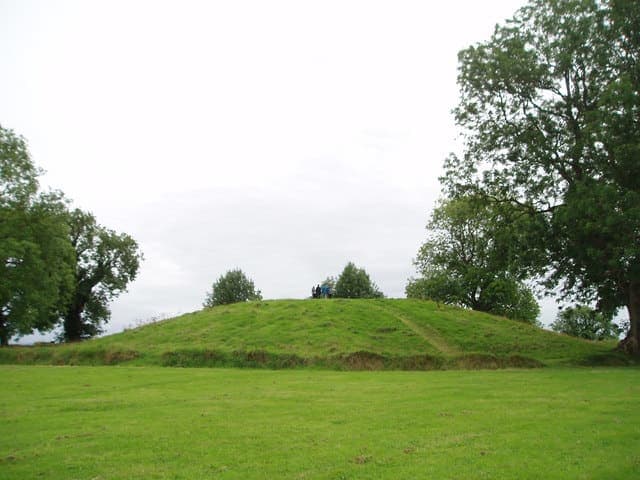
Eamhain Mhacha
The sacred mound where Ulster's kings drew power from the goddess Macha
Armagh, Northern Ireland, United Kingdom
At A Glance
- Coordinates
- 54.3480, -6.6980
- Suggested Duration
- Allow two to three hours for the full experience, including the visitor centre exhibitions, guided tour of the fort, and time on the mound itself. Those seeking a more contemplative experience may wish to linger longer.
Pilgrim Tips
- No formal dress code applies. Wear comfortable walking shoes suitable for grassy slopes that may be wet. The hilltop is exposed to wind, so layers are advisable.
- Photography is generally permitted for personal use. Confirm specific policies with the Navan Centre if planning professional or commercial photography.
- Do not attempt to perform rituals involving physical offerings, fire, or significant alteration of the site. This is a protected heritage monument. Respect the boundaries and guidance of staff. Be cautious of anyone claiming to offer 'authentic druidic ceremonies' at the site, as no unbroken druidic tradition exists, and legitimate practitioners of Celtic spirituality do not typically make such claims. Personal spiritual practice is one thing; commercial exploitation of sacred heritage is another.
Overview
Rising above the Armagh countryside, this ceremonial hilltop was the spiritual and mythological heart of ancient Ulster. Though the druids who once performed rituals here fell silent millennia ago, the mound retains a quality of presence that draws those seeking connection with Ireland's pre-Christian past and the goddess whose name it still carries.
Something was understood about this hill long before writing arrived in Ireland. Neolithic peoples left their tools here six thousand years ago. Bronze Age settlers built their homes on its slopes. And around 95 BC, in an act of deliberate and extraordinary construction, a massive timber structure was raised, filled with stones, and ritually burned.
This was Emain Macha, seat of the legendary kings of Ulster, training ground of Cuchulainn, and dwelling place of the Red Branch Knights. Or so the myths tell us. Archaeology confirms something perhaps more profound: that this hilltop was, in the words of researchers, 'an incredibly important religious center and a place of paramount sacral and cultural authority in later prehistory.'
The name itself may derive from Proto-Celtic words meaning 'holy mound.' The goddess Macha, in whose honor the site was named, embodied sovereignty, the land, fertility, and war. She was not worshipped here in any simple sense. She was the land, and the land was her. Kings who received their crowns on this mound were marrying themselves to the goddess, to Ulster itself.
The ceremonies have ended. The druids dispersed. But the mound remains, rising gently from the surrounding fields, watching as it has watched for millennia. Those who climb it today often speak of an unusual stillness, a quality of attention in the land itself.
Context And Lineage
Eamhain Mhacha served as the legendary capital of the Ulaid, the people who gave Ulster its name, and features prominently in the Ulster Cycle of Irish mythology. Archaeological evidence confirms its function as a major ceremonial center from the Bronze Age through the Iron Age. The site's name derives from the goddess Macha, a powerful deity associated with sovereignty, land, fertility, and horses.
Two origin stories entwine around this site, both bearing the goddess Macha's name.
In one telling, Macha was wife to a farmer named Crunnchu. When he boasted that she could outrun the king's horses, she was forced to race them, though heavily pregnant. She won, but collapsed at the finish line, giving birth to twins. With her dying breath she cursed the men of Ulster to experience the pains of childbirth at their moment of greatest need, a curse that would later leave them helpless when the armies of Connacht invaded. The name Emain Macha, 'Macha's twins,' remembers this tragedy.
In another telling, Macha was a warrior queen who claimed her right to rule Ireland upon her father's death. After defeating her rivals and enslaving their sons, she forced them to build her a great fortress, marking out its boundaries with her brooch, the eo-muin. This Emain Macha was power made visible, a queen's will inscribed on the land.
Both stories point toward the same truth: this place belonged to Macha. She was not merely worshipped here. She was the ground, the sovereignty, the authority that made kings legitimate. To be inaugurated here was to marry the goddess.
The site carries the weight of continuous use across millennia, from Neolithic farmers to Iron Age ritualists to the mythmakers who wove its stories into the fabric of Irish identity. After the site's abandonment, likely in the early centuries of the Common Era, the stories remained, copied by Christian monks who preserved the Ulster Cycle even as they transformed the culture that created it.
Through the centuries of English rule, through famine and emigration, Emain Macha persisted in Irish memory as a symbol of a sovereignty older than conquest. The 20th century brought archaeology, revealing that the myths rested on genuine foundations. The 21st century has brought Eamhain Mhacha into consideration for UNESCO World Heritage status as part of the Royal Sites of Ireland.
Today, seekers of Celtic spirituality, historians, tourists, and those simply curious about Ireland's deep past make the pilgrimage to this hilltop. The tradition continues, transformed but not broken.
Macha
deity
A goddess of sovereignty, land, fertility, war, and horses, sometimes described as a triple goddess. She appears in multiple Irish myths in different guises, but always associated with power over the land and those who rule it. The site bears her name and her presence.
Conchobar mac Nessa
legendary
The king of Ulster in the Ulster Cycle myths, who held court at Emain Macha. Father figure to Cuchulainn, he presided over the Red Branch Knights and was king during the great cattle raid of Cooley.
Cuchulainn
legendary
Ireland's greatest mythological hero, who trained with the boy-warriors at Emain Macha before becoming the defender of Ulster against Queen Medb's armies. His story is central to the Tain Bo Cuailnge.
The Red Branch Knights
legendary
The elite warrior band of Ulster who gathered at Emain Macha in the hall called Craebruad. Their stories form much of the Ulster Cycle's narrative.
Why This Place Is Sacred
Eamhain Mhacha's sacredness emerges from multiple converging factors: its association with the goddess Macha, its function as a ceremonial center where kings were inaugurated, the ritual architecture deliberately constructed and destroyed in acts of profound symbolic significance, and its position within a sacred landscape complex including ritual pools and votive lakes. The site's very name may mean 'holy mound.'
The Celts who shaped this site understood something about the relationship between earth and sky, between the living and the dead, that expressed itself in stone, timber, and fire.
At the heart of the mound once stood an enormous timber structure, forty meters across, with a central oak pillar that some scholars interpret as a world tree connecting the realms of sky, earth, and underworld. This pillar formed the axis of a building whose entrance faced west, toward the setting sun and, in Celtic understanding, toward the Otherworld. The structure was not built to last. It was built to be destroyed, deliberately filled with limestone boulders and set ablaze around 95 BC. One interpretation holds that this act united the three main classes of Celtic society: druids represented by the wooden frame, warriors by the stones, farmers by the soil that covered the burning remains.
Surrounding the main mound, recent geophysical surveys have revealed what researchers describe as temple complexes, figure-of-eight shaped enclosures that may have served as processing areas for approaching the sacred center. The landscape itself was shaped by intention, not merely inhabited.
Nearby, the King's Stables, an artificial pool created around 1000 BC, received votive offerings: bronze swords, a fragment of human skull, clay molds for bronze casting. Eight hundred meters beyond, the natural lake of Loughnashade yielded four magnificent Iron Age ceremonial trumpets. Water and mound, offering and fire, the living and the dead, all wove together in a sacred geography that extended far beyond the hilltop itself.
For the people who used this site, the boundary between worlds was thin here. The goddess Macha, whose name the place carries, was associated with horses, with sovereignty, with the land itself. To stand where druids once stood, where kings received their power from forces greater than themselves, is to stand at a threshold that time has not entirely closed.
Archaeological evidence suggests Eamhain Mhacha functioned as a major ceremonial center rather than a permanent settlement or functioning political capital. No domestic structures have been found. Instead, the site appears to have hosted episodic ritual gatherings, royal inaugurations, and ceremonies connecting the king with cosmic and chthonic powers. In Irish tradition, this was where the druids crowned Ulster's kings, drawing authority from the gods and ancestors buried beneath the mound.
The site's use spans millennia. Neolithic peoples left flint tools and pottery here between 4000 and 2500 BC. Bronze Age settlers established the first structures around 700 BC, while the nearby King's Stables was already receiving votive offerings. The monumental timber structure dates precisely to 95-94 BC, thanks to dendrochronological analysis of the charred timbers.
Traditional accounts place Emain Macha's destruction in 331 AD, when the Three Collas burned the royal capital. Historians regard this date as potentially artificial, and some suggest the abandonment came later, perhaps in the 5th century during the upheavals that attended the end of Roman Britain. What is certain is that by the time Christianity arrived in force, the mound had fallen silent.
For centuries it lay in farmland, known to locals, largely forgotten by the wider world. Modern archaeological investigation began with the Harvard Archaeological Mission in 1961-1971. The 2020 geophysical surveys by Queen's University Belfast and partners revealed the temple complexes that transform our understanding of the site's scale and significance. Today it is managed as a heritage attraction, but for some visitors, it remains a place of living connection with Ireland's pre-Christian past.
Traditions And Practice
No formal religious ceremonies take place at Eamhain Mhacha today. The site functions as a heritage attraction with educational programming. However, some visitors with Celtic spiritual interests engage in personal practices of meditation and connection with the land.
Historical practices at Eamhain Mhacha would have included royal inaugurations where kings received their sovereignty from the goddess through ritual action. Druids performed ceremonies whose specifics are lost, though archaeological evidence suggests offerings, perhaps including animal sacrifice, and the ritual construction and destruction of sacred buildings.
Votive offerings were made at nearby water sites, the King's Stables and Loughnashade yielding bronze weapons, ceremonial objects, and fragments of human remains. Large-scale feasting is evidenced by multi-isotope analysis of animal bones, which reveals that livestock was brought from across Ireland and perhaps beyond for communal consumption.
These practices ended with the site's abandonment and the eventual arrival of Christianity. What remains is inference from archaeology, comparison with documented Celtic practice elsewhere, and the narratives preserved in myth.
The Navan Centre offers guided tours, audiovisual presentations, and, during summer months, interactive experiences in a recreated Iron Age area where costumed interpreters portray aspects of Celtic daily life. These educational programs offer engagement with the site's history without claiming to recreate its spiritual practices.
Some visitors with Celtic Reconstructionist, modern Druid, or Neo-Pagan orientations visit the site for personal spiritual purposes. No organized ceremonies are held, but individual meditation, quiet reflection, and private acknowledgment of the land and its presiding goddess occur informally. The site management neither encourages nor discourages such practices, as long as visitors respect the heritage guidelines.
If you come seeking more than historical information, consider approaching the mound with intention. Before ascending, pause at the base. Acknowledge where you are about to walk, who walked here before you.
On the summit, find a place to sit in silence. Let the landscape speak before you fill it with your own thoughts. Notice the direction of the wind, the quality of the light, the distant shapes of the Armagh hills.
If it feels appropriate, offer silent acknowledgment to Macha, to the land, to those whose names are lost but whose hands built what lies beneath you. You need not believe in anything specific. Attention itself is a form of offering.
Before leaving, consider what question brought you here, whether you knew it or not. The site has hosted seekers for millennia. You are not the first to stand uncertain on sacred ground.
Pre-Christian Celtic Religion
HistoricalEmain Macha was a major ceremonial and sacred center in Iron Age Ireland, associated with the goddess Macha and serving as the legendary capital of Ulster. Archaeological evidence confirms it was 'an incredibly important religious center and a place of paramount sacral and cultural authority in later prehistory.' The site likely functioned as a place where druids performed ceremonies and where kings were inaugurated, drawing power from the gods and ancestors.
Historical practices included royal inauguration ceremonies, druidic rituals whose specifics are unknown, votive offerings at nearby water sites, the ceremonial construction and ritual destruction of sacred buildings, and large-scale feasting gatherings that drew participants from across Ireland.
Irish Mythology (Ulster Cycle)
HistoricalIn the Ulster Cycle of Irish mythology, Emain Macha is the royal capital of the Ulaid, the seat of King Conchobar mac Nessa, and home of the legendary Red Branch Knights. The site features prominently in the Tain Bo Cuailnge and numerous other tales. The hero Cuchulainn trained here among the boy-warriors before becoming Ulster's greatest defender.
Mythological accounts describe warrior training, royal court gatherings, and heroic feasting in the hall called Craebruad (the Red Branch). These narratives, preserved by Christian monks centuries after the site's abandonment, reflect and perhaps transform earlier traditions of sacred kingship.
Modern Celtic Spirituality
ActiveAs one of Ireland's most significant pre-Christian sacred sites, Eamhain Mhacha attracts those interested in Celtic spirituality, reconstruction of ancient practices, and connection with Irish mythological heritage. While no formal ceremonies are organized, the site holds spiritual significance for modern practitioners seeking connection with Ireland's ancient past.
Contemporary practices are personal rather than organized: meditation, quiet reflection, acknowledgment of the goddess Macha and the ancestors, and attentive presence on the mound. Some visitors time their visits to Celtic festival dates. These practices are informal and private, not endorsed or organized by site management.
Experience And Perspectives
Visitors to Eamhain Mhacha consistently describe a sense of stepping back in time, a connection to Ireland's mythological heritage, and an appreciation for the dramatic hilltop setting. The combination of archaeological significance, mythological resonance, and evocative landscape facilitates experiences of cultural connection, historical contemplation, and personal reflection.
The walk up the mound takes only minutes, but something shifts along the way. Perhaps it is the views opening across the Armagh countryside, perhaps the knowledge of what lies beneath. Visitors frequently describe a sense of presence, as though the hill itself were paying attention.
The most common responses involve time, or the dissolution of it. Standing where kings once stood, where druids once invoked powers older than memory, the centuries seem to thin. For those steeped in Irish mythology, the experience carries additional weight: here Cuchulainn trained with the boy-warriors, here Conchobar mac Nessa held court, here the Red Branch Knights gathered in the hall called Craebruad.
The site does not overwhelm. It is not Stonehenge or the pyramids. Its power is subtler, requiring attention and perhaps knowledge. Those who arrive with some understanding of the mythology and archaeology consistently report deeper experiences than those who encounter it cold. The Navan Centre, at the base of the hill, provides this context through exhibitions and guided tours that help visitors understand what they are seeing.
The guides themselves are often mentioned in visitor accounts, their passion and knowledge serving as bridges between the present moment and the storied past. For those who arrive with questions about their own lives, about ancestry, about connection to land and tradition, the site can serve as a space for reflection that goes beyond heritage tourism.
Dreams and unusual emotional responses are reported less frequently than at some sacred sites, but the quality of stillness, of being held by something larger and older, emerges consistently in visitor accounts.
Eamhain Mhacha rewards preparation. Read something of the Ulster Cycle before you come, even a summary of the Tain Bo Cuailnge. Know who Macha was, at least in outline. The site speaks more clearly to those who arrive with some vocabulary for listening.
Take your time ascending the mound. Notice how the landscape opens as you climb, how the hilltop commands views in every direction. Consider that this visibility was likely part of the point. Those being inaugurated here were seen by the land, witnessed by the goddess whose body the land was.
If you come seeking more than information, allow yourself to sit on the mound in silence. Let the wind carry what it carries. You need not believe in anything, only attend. The site has waited millennia; it can wait for you to finish checking your phone.
Eamhain Mhacha invites interpretation from multiple directions, and honest engagement requires holding these perspectives together. Archaeological evidence, mythological tradition, and contemporary spiritual interest each illuminate aspects of the site that the others cannot reach. The tension between them is not a problem to be resolved but a complexity to be honored.
Archaeological consensus holds that Eamhain Mhacha functioned as a major ceremonial center rather than a permanent settlement or administrative capital. Excavations by the Harvard Archaeological Mission (1961-1971) and geophysical surveys by Queen's University Belfast and partners (2020) reveal no domestic structures or evidence of sustained habitation. Instead, the site appears to have hosted episodic ritual gatherings.
The precisely dated (95-94 BC) timber structure is interpreted as a major ceremonial act: a forty-meter-diameter building constructed only to be filled with stones and burned. Scholars debate whether this represented an inauguration ceremony, a funerary rite, or some other ritual purpose. The radial stone pattern and central pillar suggest cosmological symbolism, possibly representing the sun wheel or world tree.
Researchers describe the site as 'an incredibly important religious center and a place of paramount sacral and cultural authority in later prehistory.' Multi-isotope analysis of animal remains demonstrates that livestock was brought from across Ireland for feasting events, suggesting the site's significance extended far beyond Ulster.
In Irish mythological tradition, Emain Macha was the royal capital of Ulster, the seat of King Conchobar mac Nessa, and the home of the Red Branch Knights. The Ulster Cycle of myths, particularly the Tain Bo Cuailnge, centers on this site as the heart of Ulster's power and identity.
The goddess Macha, whose name the site bears, appears in multiple guises across Irish tradition: as racing queen who cursed the men of Ulster, as warrior who forced her enemies to build her fortress, and as sovereign goddess whose favor made kings legitimate. These stories preserve an understanding of sacred kingship in which rulers derived their authority not from heredity alone but from ritual marriage to the land itself.
Traditional accounts place the destruction of Emain Macha in 331 AD by the Three Collas, though some sources attribute this to Niall of the Nine Hostages or his sons in the 5th century. Historians regard these chronologies as potentially artificial, part of later attempts to construct a coherent Irish history.
Some interpret the central timber pillar as representing the world tree, the axis mundi connecting sky, earth, and underworld in a cosmology shared across many Indo-European traditions. The radial stone pattern has been read as a sun wheel associating the site with solar worship.
Modern Celtic Reconstructionists and Neo-Pagan practitioners sometimes understand Eamhain Mhacha as a 'thin place' where the boundary between ordinary and Otherworld reality is permeable. While no formal spiritual practices occur at the site, some visitors report experiences consistent with this interpretation.
The site's possible identification with Ptolemy's 2nd-century 'Isamnion' suggests it may have been known across the Roman world, though scholars debate this identification given the site's distance from the east coast where Ptolemy locates the name.
Genuine mysteries remain. The exact purpose and meaning of the 95 BC ritual destruction is debated among scholars. Why the timber structure was oriented with its entrance facing west, toward the setting sun and symbolically the Otherworld, is not fully understood.
The presence of a Barbary ape skull, dated to approximately 390-20 BC, indicates Mediterranean trade connections whose circumstances remain unexplained. How and why an exotic primate reached an Irish ceremonial site is a question without answer.
The relationship between the archaeological evidence and the mythological traditions remains a subject of ongoing investigation. Were the myths memories of actual events, or were they later compositions that attached themselves to a site already ancient and mysterious? The question may not admit of resolution.
Visit Planning
Eamhain Mhacha is managed by the Navan Centre & Fort, located 3 km from Armagh City in Northern Ireland. The site is open year-round except Mondays, with interactive Iron Age experiences available April through September. Allow two to three hours for a full visit including the centre and the mound.
Armagh City, 3 km distant, offers a range of hotels and guesthouses. The city itself holds historical and ecclesiastical interest, including the twin cathedrals of St. Patrick. For those wishing to explore the wider sacred landscape of Ulster, accommodations throughout County Armagh and the surrounding region provide bases for multi-day exploration.
Eamhain Mhacha requires respectful behavior appropriate to a protected heritage site of profound cultural significance. Stay on designated paths, do not remove any objects, and maintain an atmosphere that allows others to experience the site contemplatively.
The primary principle is respect, both for the site's physical preservation and for its cultural significance. This mound has survived two thousand years since its last major ritual use. Every footstep contributes to erosion. Stay on paths where they exist, and tread lightly where they do not.
The site holds significance for those interested in Irish mythology, Celtic spirituality, and the pre-Christian heritage of these islands. Even if you approach as a casual visitor, awareness that others may be seeking something deeper should inform your behavior. Loud conversation, music, and performative social media content diminish the experience for those seeking contemplation.
Follow all instructions from site staff and guides. They are stewards of a heritage that belongs to no individual but to all who value Ireland's past. Pre-booking is recommended, and unaccompanied children under 16 are not permitted for safety and preservation reasons.
No formal dress code applies. Wear comfortable walking shoes suitable for grassy slopes that may be wet. The hilltop is exposed to wind, so layers are advisable.
Photography is generally permitted for personal use. Confirm specific policies with the Navan Centre if planning professional or commercial photography.
Physical offerings are not appropriate at the site and would be removed as litter. Historical offerings were made at water sites, not on the mound itself. If you wish to offer something, make it internal: attention, acknowledgment, silence.
Pre-booking is recommended. The fort's grassy slopes are unsuitable for wheelchair users or those with significant mobility difficulties, though the woodland walk at the base is accessible. Dogs must be kept on leads. Last entry is at 3:00 PM.
Sacred Cluster
Nearby sacred places create the location cluster described in the growth plan. This block is intentionally crawlable and links into the wider regional graph.
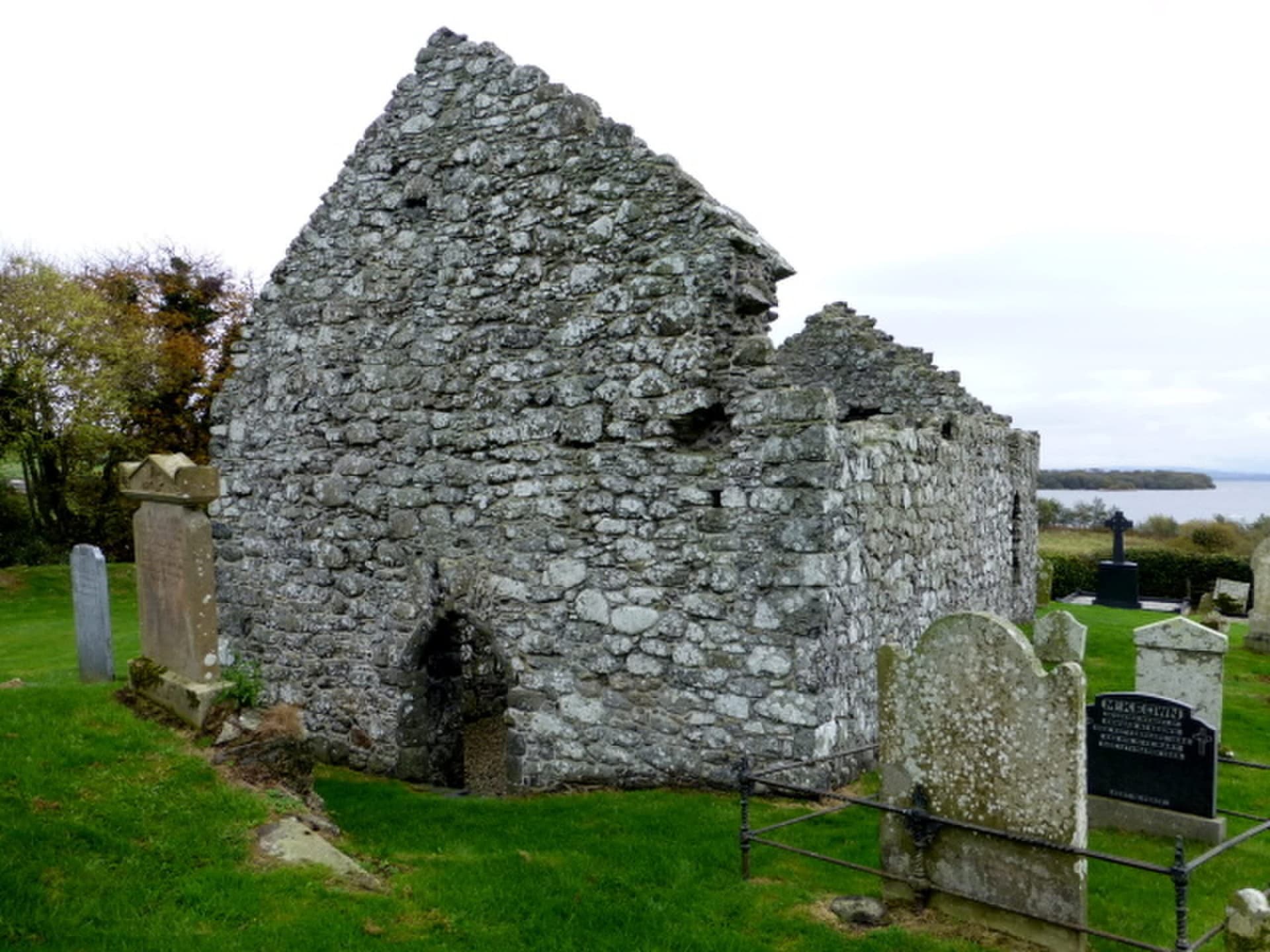
Cranfield Church, Antrim, Northern Ireland
Antrim and Newtownabbey District, Northern Ireland, United Kingdom
39.9 km away
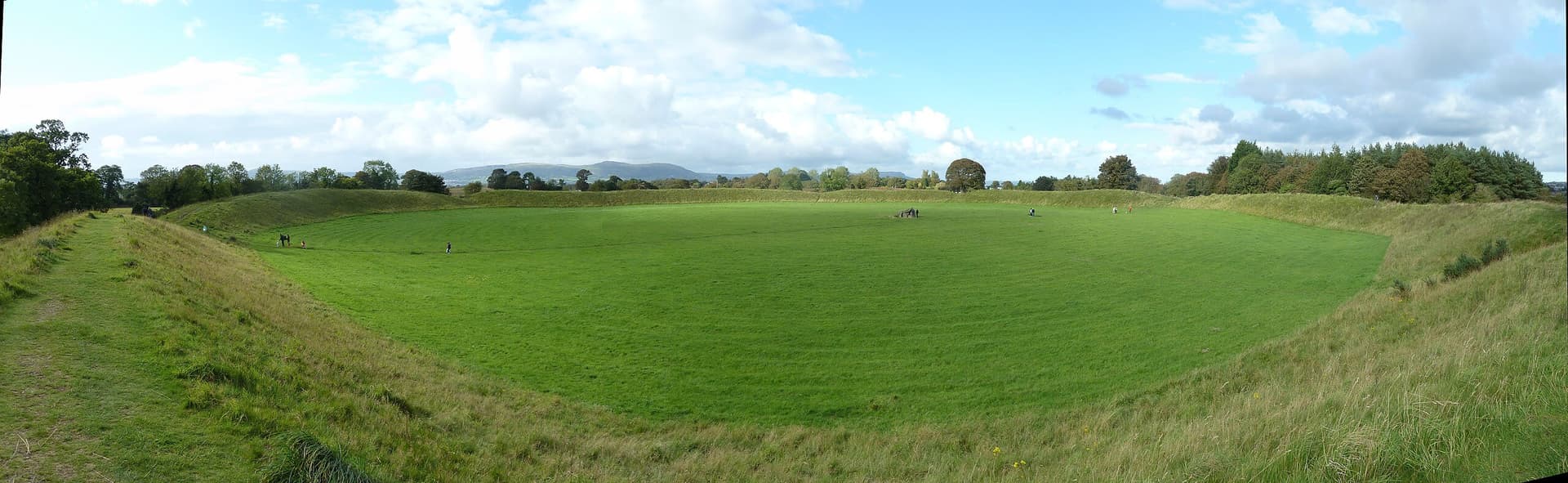
Giant’s Ring, Belfast, Northern Ireland
Belfast, Northern Ireland, United Kingdom
52.0 km away
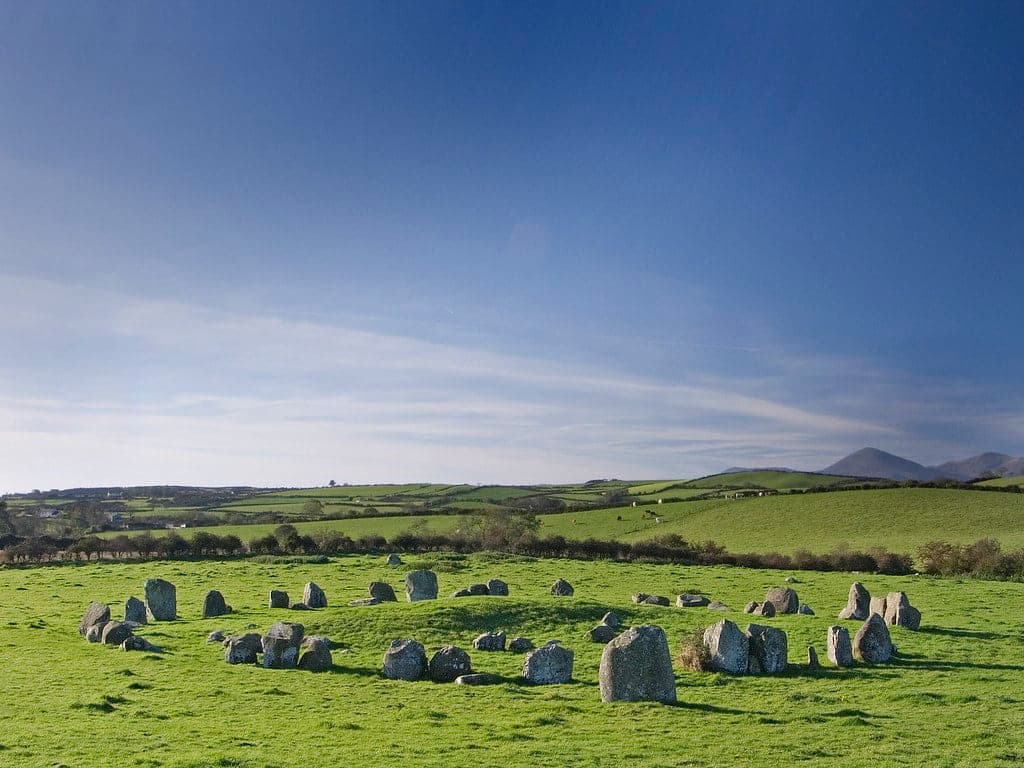
Ballynoe Stone Circle, Downpatrick, Ireland
Downpatrick, Northern Ireland, United Kingdom
63.4 km away
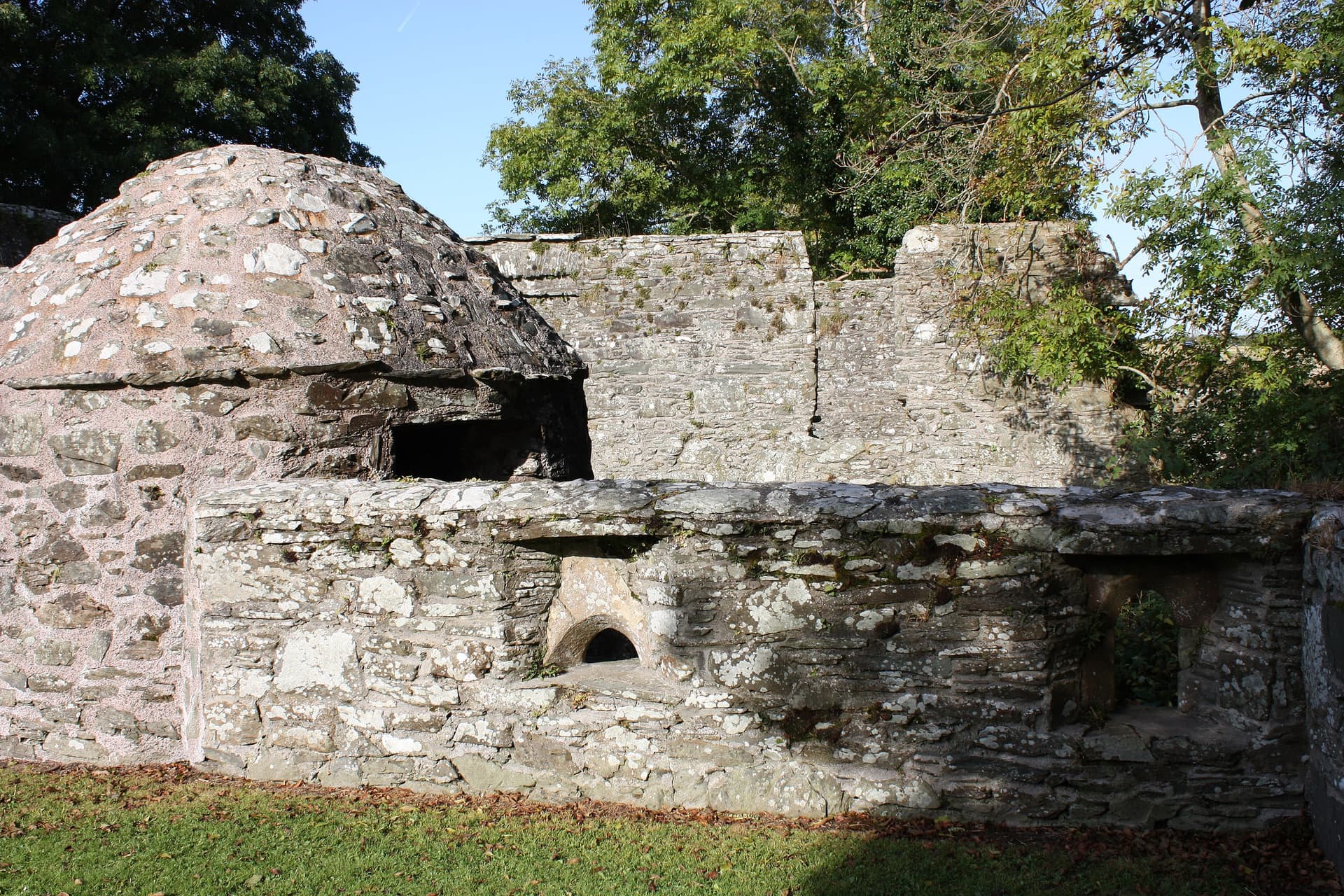
Struell Wells, Downpatrick, Northern Ireland
Downpatrick, Northern Ireland, United Kingdom
66.1 km away