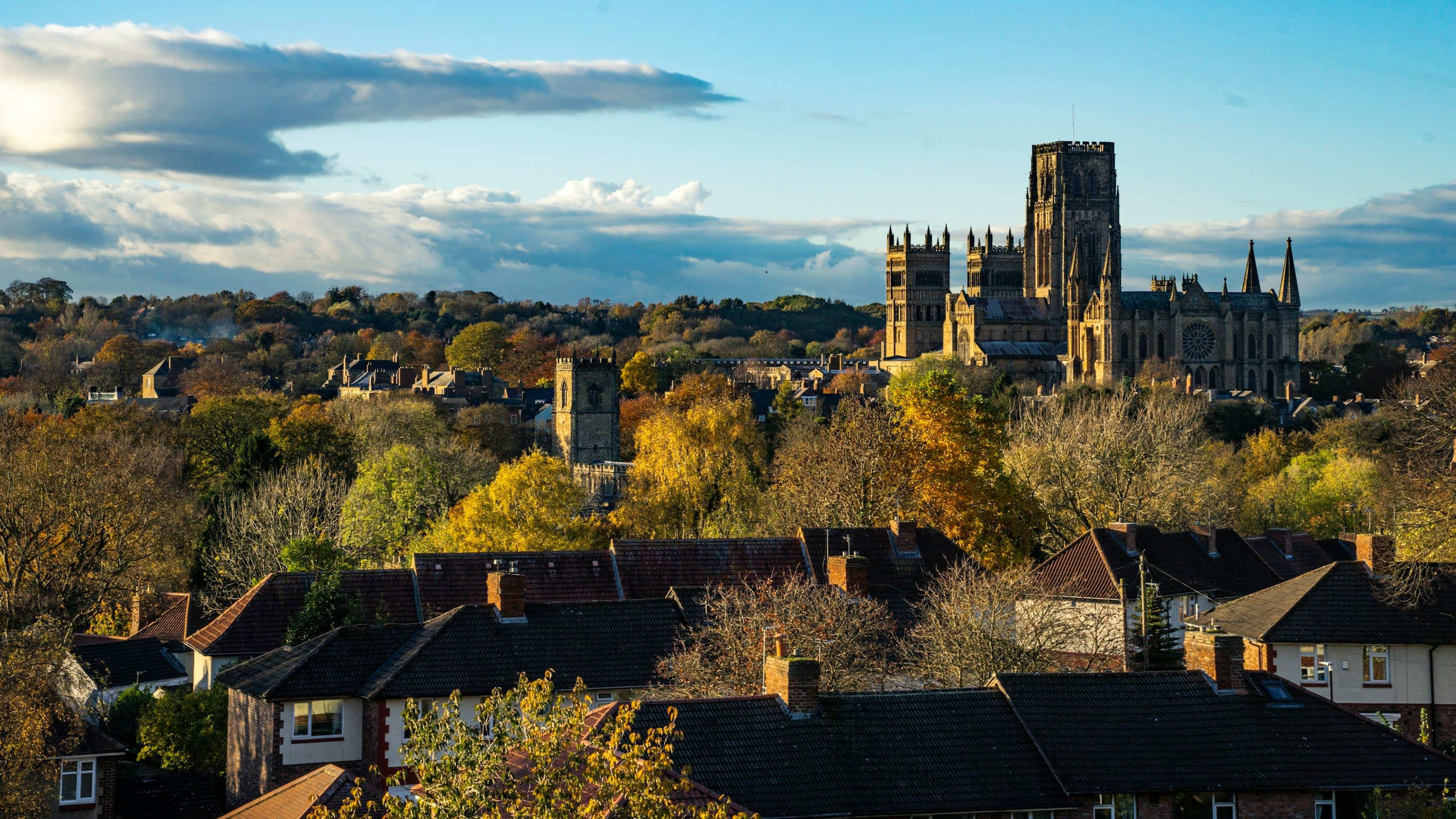
Durham Cathedral
Where a saint's wandering ended and stone vaults first learned to soar
Durham, England, United Kingdom
At A Glance
- Coordinates
- 54.7732, -1.5764
- Suggested Duration
- Allow 1-2 hours for a basic visit including nave, choir, both shrines, cloisters. Add 1 hour for tower climb (325 steps). Add time for museum, shop, café. Add 45 minutes for Evensong if attending.
- Access
- Durham Cathedral is on the Durham peninsula in the city center, above the River Wear. Durham train station is 10-15 minutes on foot (uphill). Trains run from London King's Cross (3 hours), Edinburgh (2 hours), and Newcastle (15 minutes). Limited city parking; park-and-ride recommended. The cathedral has level access to most areas; lifts serve some upper levels.
Pilgrim Tips
- Durham Cathedral is on the Durham peninsula in the city center, above the River Wear. Durham train station is 10-15 minutes on foot (uphill). Trains run from London King's Cross (3 hours), Edinburgh (2 hours), and Newcastle (15 minutes). Limited city parking; park-and-ride recommended. The cathedral has level access to most areas; lifts serve some upper levels.
- No formal dress code. Respectful casual attire is appropriate. The cathedral is cold; bring layers regardless of season.
- Photography permitted for personal use. No tripods, monopods, or selfie sticks. Avoid flash. Do not photograph during services.
- The cathedral is an active place of worship. Services take priority; visitor access may be limited during worship times. Check the calendar before visiting. Be quiet during services even if you are viewing rather than worshipping. Flash photography can disturb worship and damage historic fabric.
Overview
For 120 years, monks fleeing Vikings carried the body of St. Cuthbert across northern England. When the cart carrying his coffin became miraculously stuck on a wooded peninsula above the River Wear, they built a church. The Norman cathedral that replaced it is the finest of its kind in England—its vaulted ceiling the first of its scale, a revolutionary experiment in stone that changed architecture forever.
In 875, Viking raids forced the monks of Lindisfarne to flee their island monastery. They carried with them the body of St. Cuthbert, who had died there in 687 and been found incorrupt when exhumed eleven years later—a sign of exceptional holiness. For 120 years the monks wandered, seeking safety. In 995, according to legend, the cart bearing Cuthbert's coffin became stuck at a place called Dun Holm. A monk received a vision: Cuthbert wished to rest here.
The cathedral built over his shrine beginning in 1093 was designed to honor a saint whose body had finally found peace. What the Norman builders achieved was something unprecedented: the first large-scale stone vaulted ceiling using pointed rib construction. This technique—developed here, in this building, for this purpose—would transform European architecture. The Gothic cathedrals that followed across England and France owe their soaring heights to the experiments conducted at Durham.
But the cathedral is not merely an architectural milestone. It remains what it was built to be: a place of pilgrimage and prayer. St. Cuthbert's shrine stands behind the high altar, his relics interred beneath a simple stone slab. In the Galilee Chapel at the western end lies the tomb of the Venerable Bede, the only Englishman among the Doctors of the Church, known as the Father of English History. Two of England's most revered saints rest here, in a building that changed the trajectory of Western architecture.
Context And Lineage
The cathedral was built beginning in 1093 to house St. Cuthbert's relics, carried from Lindisfarne during 120 years of wandering. It replaced a Saxon church built in 995 when the monks finally settled at Durham. The building is the finest Norman architecture in England, with revolutionary rib vaulting that influenced all subsequent Gothic construction.
The story begins on Lindisfarne, a tidal island off the Northumbrian coast, where Irish monks founded a monastery around 635. Cuthbert served there as prior and bishop before retreating to a hermit's cell on Inner Farne, where he died in 687. Eleven years later, his monks exhumed his body to move it to a more prominent shrine—and found it incorrupt, undecayed, as if newly dead. This was understood as proof of exceptional sanctity. The cult of St. Cuthbert began.
In 875, Viking raids forced the monks to flee. They could not leave Cuthbert's body to the invaders, so they carried it with them—along with other relics and treasures, including the Lindisfarne Gospels. For 120 years they wandered, settling for periods at Norham, then at Chester-le-Street (882-995), but never finding permanent safety.
In 995, renewed Viking threats prompted another flight. According to legend, the cart carrying Cuthbert's coffin became miraculously stuck as the monks passed a wooded peninsula above the River Wear. A monk named Eadmer received a vision: Cuthbert wished to rest at Dun Holm (the hill in the clearing). The cart's wheels became free. A small church was built.
In 1093, Bishop William of St. Calais demolished this church and began the great Norman cathedral that stands today. Construction proceeded rapidly; the choir was finished by 1096, the nave by around 1130. Cuthbert's body was moved into the new building in 1104. The Venerable Bede's bones were brought from Jarrow around 1022 and eventually moved to their own tomb in the Galilee Chapel in 1370.
The cathedral was a Benedictine monastery from its foundation until the Dissolution of the Monasteries in 1541. It then became an Anglican cathedral governed by a Dean and Chapter, the form it retains today. The cathedral is the seat of the Bishop of Durham, historically one of the most powerful episcopal offices in England. The Prince-Bishops of Durham held both religious and secular authority, ruling the County Palatine of Durham with near-royal powers until 1836.
St. Cuthbert of Lindisfarne
Saint whose relics the cathedral was built to house
The Venerable Bede
Scholar and Doctor of the Church
Bishop William of St. Calais
Founder of the Norman cathedral
Why This Place Is Sacred
Durham Cathedral is thin because it gathers multiple sources of sacred power: the relics of two revered saints, centuries of accumulated prayer, architectural achievement that seemed to transcend what stone could do, and the endpoint of a 120-year journey that gave the wandering monks—and Cuthbert himself—rest.
What makes a place thin? At Durham Cathedral, the answer begins with the bodies buried beneath its stones. St. Cuthbert of Lindisfarne is among the most beloved saints in English Christianity. When he died in 687, his monks buried him on their holy island. Eleven years later, they exhumed his body to place it in a more prominent shrine—and found it incorrupt, as fresh as if newly dead. This was understood as a sign of exceptional sanctity, and pilgrims began to come.
When Viking raids made Lindisfarne untenable in 875, the monks fled with Cuthbert's body rather than leave it to desecration. For 120 years they wandered—settling briefly at Chester-le-Street, fleeing again when threats returned. The legend of the cart becoming stuck at Dun Holm and the vision revealing Cuthbert's wish to rest there suggests that even the saint was weary of wandering. The thinness of Durham begins in this ending—a place where something came to rest after long searching.
The building itself amplifies the thinness. The Norman architects who began construction in 1093 created the finest Romanesque cathedral in England. But they did something more: they invented a new way of building. The pointed rib vaults of the nave ceiling were revolutionary—the first of their scale, a structural innovation that would make Gothic architecture possible. Standing beneath these vaults, you are in the presence of a turning point. What happened here changed what buildings could be.
Then there is Bede. The Venerable Bede lived and died at the monastery of Jarrow, fifteen miles away, writing his histories and commentaries in the early 700s. A monk brought his bones to Durham around 1022, seeking to join his remains with Cuthbert's. In 1370, Bede was moved to his own tomb in the Galilee Chapel, where he rests today beneath a simple black stone inscribed in Latin: 'In this grave are the bones of the Venerable Bede.' Bede is the only Englishman among the 33 Doctors of the Church—figures whose writings the Church considers foundational. He shares his cathedral with Cuthbert, two pillars of English Christianity side by side.
The accumulation of prayer adds another layer. For over 900 years, worship has continued here—first the Benedictine monks, then, after the Dissolution of the Monasteries in 1541, the Dean and Chapter of the Anglican cathedral. The daily offices continue: Morning Prayer, Holy Communion, Evensong, Compline. At 5:30 on most evenings, the choir sings Evensong in a tradition that connects this moment to centuries of choral worship. Participation in this service is participation in something larger than oneself.
The cathedral's position contributes to its power. It rises on a peninsula above the River Wear, its towers dominating the skyline. The approach from any direction reveals the building gradually, its Norman mass asserting itself against the sky. This is architecture designed to awe—and it succeeds.
The cathedral was built beginning in 1093 to house the shrine of St. Cuthbert, whose body had been carried to this site by monks fleeing Viking raids. It replaced an earlier Saxon church (the White Church) built in 995. The cathedral was a Benedictine monastery until 1541.
The original Norman construction (1093-1133) established the nave, choir, and transepts with their revolutionary rib vaulting. Bishop Hugh de Puiset added the Galilee Chapel in the late 12th century. The Chapel of Nine Altars was added in the 13th century. The central tower was rebuilt in the 15th century. After the Dissolution of the Monasteries (1541), the cathedral became Anglican, governed by a Dean and Chapter. It was inscribed as a UNESCO World Heritage Site in 1986. Daily worship continues.
Traditions And Practice
Daily worship continues the medieval pattern: Morning Prayer, Holy Communion, Evening Prayer or Evensong, and Compline. Evensong, sung by the cathedral choir, draws visitors seeking participation in the choral tradition. Pilgrimage to the shrines of Cuthbert and Bede continues. St. Cuthbert's Day (March 20) features special services.
The daily office—the set pattern of prayer at fixed hours—has continued at Durham since the monks began it in the 11th century. Morning Prayer, Holy Communion at midday, Evening Prayer or Evensong, and Compline structure the day. Evensong, sung by the cathedral choir, is the service most visitors attend. The choral tradition at Durham dates to the cathedral's medieval monasticism, though the current choir is mixed (boys, girls, and adult singers).
Pilgrimage to St. Cuthbert's shrine was the cathedral's primary purpose for centuries. Medieval pilgrims came seeking healing and blessing from the saint whose incorrupt body testified to his holiness. After the Reformation, the elaborate shrine was destroyed and Cuthbert was reburied under a simple slab—but pilgrimage never entirely ceased. Today, visitors still come to stand at his shrine.
St. Cuthbert's Day is celebrated annually around March 20 with special services and events honoring the cathedral's patron saint.
Daily services follow the Anglican pattern: Morning Prayer at 8:30am, Holy Communion at 12:30pm, Evensong or Evening Prayer at 5:30pm, and Compline at 8:45pm (online on Mondays). Sunday worship centers on the Sung Eucharist at 10am. At the start of every hour during visitor hours, a chaplain says a short prayer from the pulpit; visitors are encouraged to pause in stillness.
The cathedral offers guided tours, educational programs, and special exhibitions. The museum houses the Treasures of St. Cuthbert, including his 7th-century pectoral cross. The central tower can be climbed for views across Durham and the surrounding countryside.
Attend Evensong if possible. The combination of choral music, candlelight, and the cathedral's acoustics creates an experience that transcends denominational boundaries. Arrive early to find a seat in the choir stalls. The service lasts approximately 45 minutes.
Visit both shrines: Cuthbert's behind the high altar, Bede's in the Galilee Chapel at the western end. The contrast between them—Cuthbert's in the heart of the building, Bede's in the intimate side chapel—reflects their different characters.
Walk the cloisters in silence. The Harry Potter associations are real (several scenes were filmed here), but the space also offers medieval quietude.
Church of England (Anglican Communion)
ActiveDurham Cathedral is one of the most significant cathedrals in the Church of England and the seat of the Bishop of Durham. It houses the shrines of St. Cuthbert, one of England's most beloved saints, and the Venerable Bede, the only Englishman among the Doctors of the Church. The cathedral has been a site of continuous Christian worship since 1093—first Benedictine, then Anglican after the Dissolution of the Monasteries in 1541. UNESCO recognized it as one of the first UK World Heritage Sites in 1986.
Daily services include Morning Prayer (8:30am), Holy Communion (12:30pm), Evening Prayer or Evensong (5:30pm), and Compline (8:45pm, online Mondays). Sunday Sung Eucharist at 10am. Evensong is sung by the cathedral choir, continuing a centuries-old choral tradition. Hourly prayers from the pulpit during visitor hours. Special services for Christmas, Easter, and other Christian festivals. St. Cuthbert's Day is celebrated annually around March 20 with special events.
Experience And Perspectives
You approach across Palace Green, the west front rising before you. Inside, massive carved pillars march down the nave, their geometric patterns catching the light. The vaulted ceiling soars above—the first of its kind at this scale. Behind the high altar, St. Cuthbert's shrine. At the far western end, in the Galilee Chapel, the simple tomb of the Venerable Bede. If you stay for Evensong, the choir's voices fill the space.
The approach to Durham Cathedral is part of the experience. From the train station, you climb through the medieval city, catching glimpses of the towers between buildings. From Palace Green, the west front rises in Norman solidity, the door beneath layers of carved stone arches.
Inside, the scale asserts itself immediately. The nave stretches ahead, its massive pillars carved with distinctive geometric patterns—zigzags, spirals, fluting—that seem almost playful given their enormous size. These are the largest columns of any English cathedral, and their decoration sets Durham apart from more severe Norman buildings. Above, the vaulted ceiling demonstrates what made this building revolutionary: the pointed rib vaults, the first at this scale, rising effortlessly above the heavy stone below.
Move eastward through the nave toward the choir and the high altar. Behind it, St. Cuthbert's shrine occupies the Feretory—a space designed for pilgrimage. Cuthbert's relics rest beneath a simple stone slab, unadorned in the post-Reformation manner. But the space retains its power. People still come here, as they have for a thousand years, drawn by the saint who found rest after wandering.
The Chapel of Nine Altars extends east from the Feretory, its large Rose Window casting colored light across the stone. This 13th-century addition brought Gothic elements to the Norman structure.
Return westward and enter the Galilee Chapel at the cathedral's far end. This is Bishop Hugh de Puiset's 12th-century addition, its slender columns and rounded arches creating a lighter atmosphere than the massive nave. Here lies Bede's tomb—a simple chest of black stone bearing the Latin inscription 'Hac sunt in fossa Baedae venerabilis ossa' ('In this grave are the bones of the Venerable Bede'). The simplicity suits a monk who spent his life in scholarship and prayer.
The medieval cloisters on the south side offer quieter contemplation—and may be familiar from the Harry Potter films, where they served as Hogwarts corridors. From here, the 325 steps of the central tower climb to views across Durham and the surrounding countryside.
If timing allows, attend Evensong. The choir's voices, the candlelight, the architecture designed to carry sound—all combine into an experience that transcends the merely aesthetic. This is what the building was made for.
Durham Cathedral is located in the center of Durham City, on a peninsula above the River Wear. Enter through the west door off Palace Green. The nave leads east to the choir and high altar; St. Cuthbert's shrine is behind the altar in the Feretory. The Chapel of Nine Altars with its Rose Window is at the eastern end. The Galilee Chapel with Bede's tomb is at the western end. The cloisters are on the south side. The tower entrance (325 steps, separate charge) is in the north transept. The museum is in the former monks' dormitory. Allow 1-2 hours for a basic visit; add time for tower, museum, or services. Evensong is typically at 5:30pm (check schedule). No entry fee; £5 donation encouraged.
Durham Cathedral invites interpretation from multiple angles: as architectural revolution, as pilgrimage destination, as living place of worship, and as monument to the Norman Conquest's reshaping of England.
Architectural historians consider Durham Cathedral the finest and most complete example of Norman (Romanesque) architecture in England, and among the most significant in Europe. The pointed rib vaulting of the nave ceiling, completed by around 1130, is the earliest surviving example of this technique at such a scale. This innovation—distributing weight through ribs to specific points rather than across entire walls—made thinner walls and larger windows possible. The Gothic cathedrals that followed throughout Europe built on Durham's experiments.
Historians also emphasize the cathedral's political significance. It was built to consolidate Norman power in a region resistant to conquest. The Prince-Bishops of Durham wielded unusual power, ruling their County Palatine with near-royal authority. Cathedral and castle together represented both spiritual and secular dominion.
UNESCO recognized both dimensions in the 1986 World Heritage inscription, citing architectural innovation, historical significance, and the association with Cuthbert and Bede.
For Christians, particularly Anglicans, Durham Cathedral is a living place of worship housing the relics of two of England's most important saints. St. Cuthbert's incorrupt body, discovered in 698, made him one of the most venerated figures in medieval English Christianity. His cult spread across Europe; even today, pilgrims come to his shrine seeking connection to his sanctity.
Bede's significance is different but equally profound. As a Doctor of the Church—the only Englishman among the 33—his writings are considered foundational to Christian thought. His Ecclesiastical History shaped how the English understood their own Christianity. His tomb in the Galilee Chapel draws scholars and pilgrims alike.
The daily round of services continues what the Benedictine monks began: a rhythm of prayer that sanctifies time. Evensong, the sung evening office, represents one of the finest expressions of Anglican choral tradition.
Some visitors experience the cathedral's massive Norman pillars and soaring vaults as creating a particular quality of sacred space—a sense of being held within something vast and protective. The geometric carvings on the pillars (zigzags, spirals, fluting) have attracted interest from those who see sacred geometry embedded in medieval architecture.
The legend of Cuthbert's cart becoming stuck at Dun Holm, and the monk's vision revealing the saint's wish to rest there, suggests that this peninsula may have been recognized as significant before the cathedral was built. Whether there was pre-Christian sacredness to this site remains unknown, but the pattern—Christian sacred sites built on earlier significant places—is common enough that the question merits asking.
Why did the cart carrying Cuthbert's body become stuck at this particular spot? The legend explains it as divine intervention, but whether the monks perceived something already sacred about the peninsula is unknown. Pre-Christian religious significance at the site has not been established archaeologically.
What happened to all of Cuthbert's relics during the Reformation is not entirely clear. His body was buried under a simple slab; some of his treasures survive and are displayed in the cathedral museum. But the complete disposition of medieval relics remains partly obscure.
Visit Planning
Free entry (£5 donation encouraged). Open Monday-Saturday 9:30am-4:30pm, Sunday 12 noon-3pm. Evensong typically 5:30pm. Durham station is 10-15 minutes on foot. Allow 1-2 hours; more for tower, museum, or services.
Durham Cathedral is on the Durham peninsula in the city center, above the River Wear. Durham train station is 10-15 minutes on foot (uphill). Trains run from London King's Cross (3 hours), Edinburgh (2 hours), and Newcastle (15 minutes). Limited city parking; park-and-ride recommended. The cathedral has level access to most areas; lifts serve some upper levels.
Durham city center offers hotels and guesthouses within walking distance of the cathedral. The university colleges sometimes offer accommodation during vacations. Newcastle (15 minutes by train) has more extensive options.
The cathedral welcomes all visitors. Entry is free (donations encouraged). Photography is permitted without tripods. Be quiet during services. Dogs on short leads are welcome.
Durham Cathedral welcomes visitors of all faiths and none. It functions both as an active place of worship and as a heritage attraction, and these roles coexist with relatively little friction.
There is no entry fee. As a charitable organization without regular government funding, the cathedral relies on donations to maintain its fabric and mission. A contribution of £5 per person is suggested. Donations can be made at collection points throughout the building or via contactless payment.
Photography is permitted in most areas for personal, non-commercial use. Tripods, monopods, and selfie sticks are not allowed. Flash photography should be avoided. During services, photography should cease.
The cathedral is a working church, and worship takes priority. Services are open to all; you need not be Christian or even religious to attend. But during services, quiet is essential—whether you are participating or simply observing.
Dogs on short leads are welcome throughout the cathedral, including at services. This is unusual and reflects the cathedral's commitment to accessibility.
The building can be cold, even in summer. Bring layers. Seating is limited outside service times; much of the visit involves standing or walking.
No formal dress code. Respectful casual attire is appropriate. The cathedral is cold; bring layers regardless of season.
Photography permitted for personal use. No tripods, monopods, or selfie sticks. Avoid flash. Do not photograph during services.
No entry fee. Donations of £5 per person are encouraged. Candles can be lit in designated prayer areas.
Some areas may be closed during services or events. Check the calendar. Tower climb and museum require separate tickets. Be quiet during services.
Sacred Cluster
Nearby sacred places create the location cluster described in the growth plan. This block is intentionally crawlable and links into the wider regional graph.
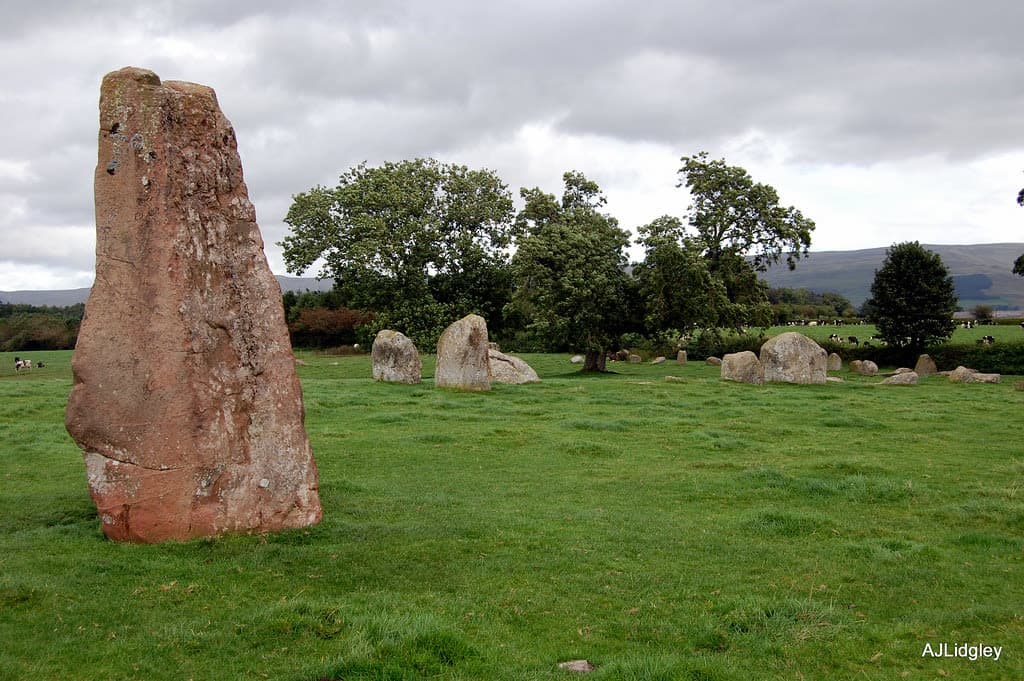
Long Meg and Her Daughters stone ring
Little Salkeld, England, United Kingdom
70.2 km away
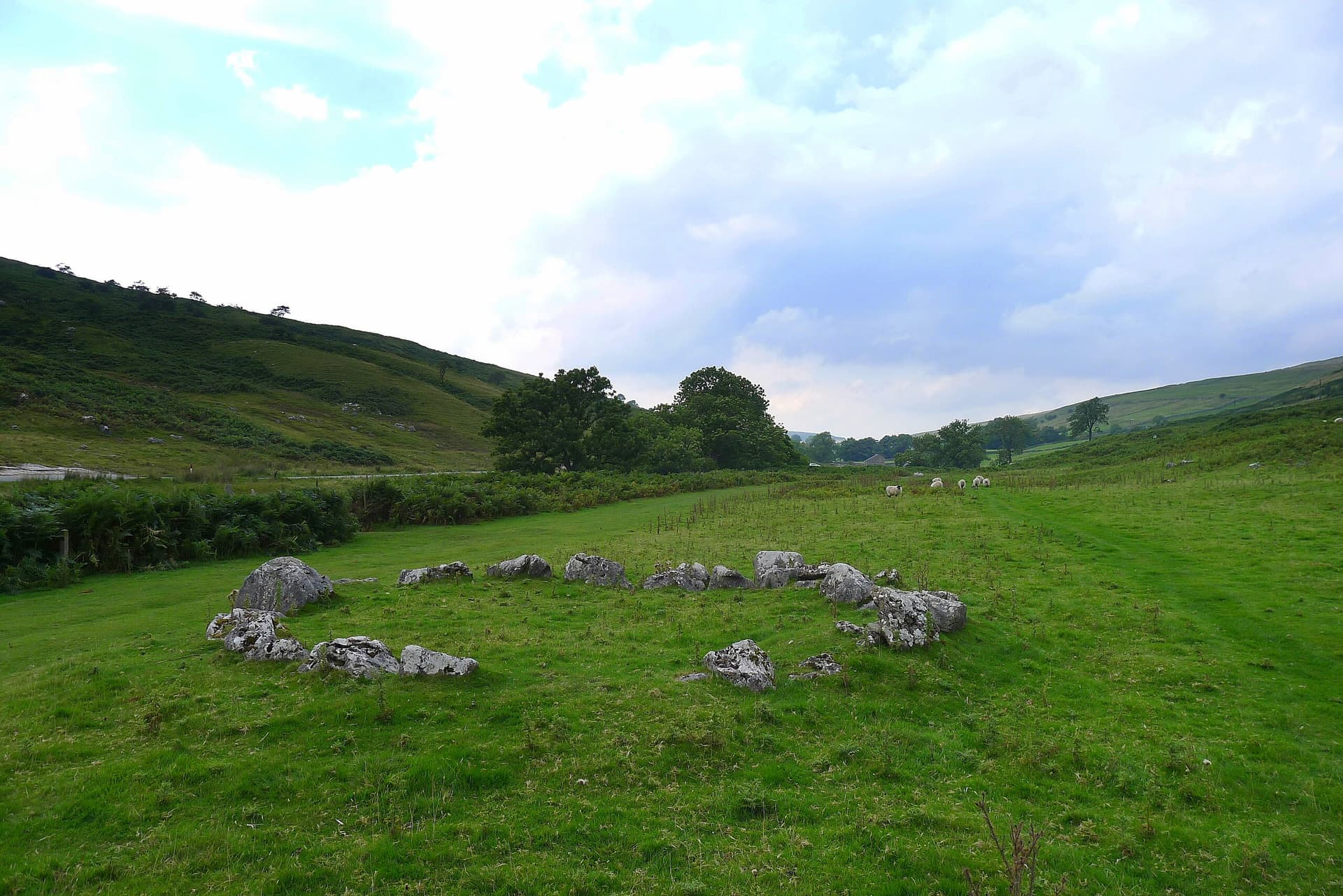
Yockenthwaite stone circle
Buckden, England, United Kingdom
71.2 km away
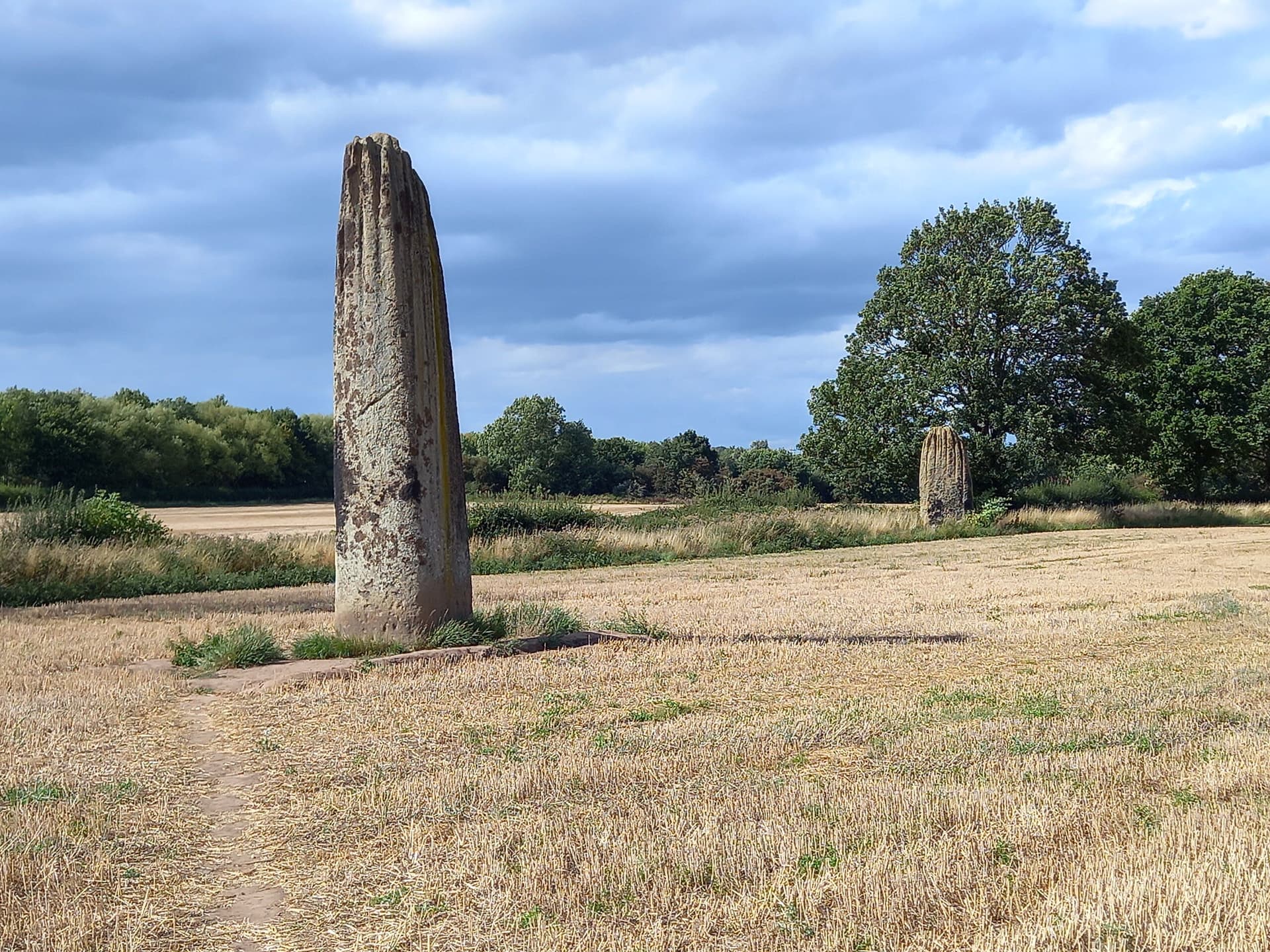
The Devils Arrows
Boroughbridge, England, United Kingdom
76.5 km away
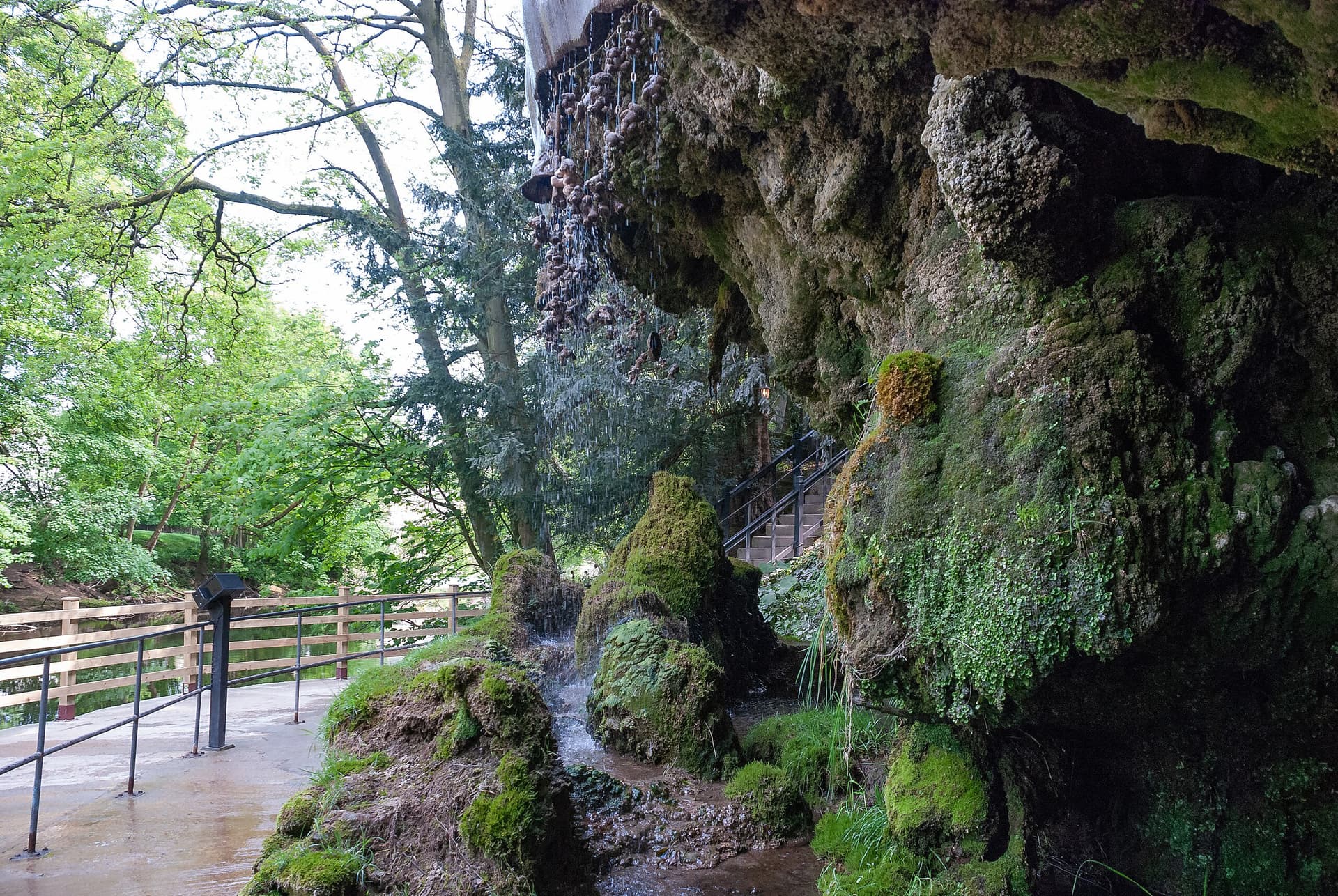
Mother Shipton’s Cave, Knaresborough, England
Knaresborough, England, United Kingdom
85.3 km away