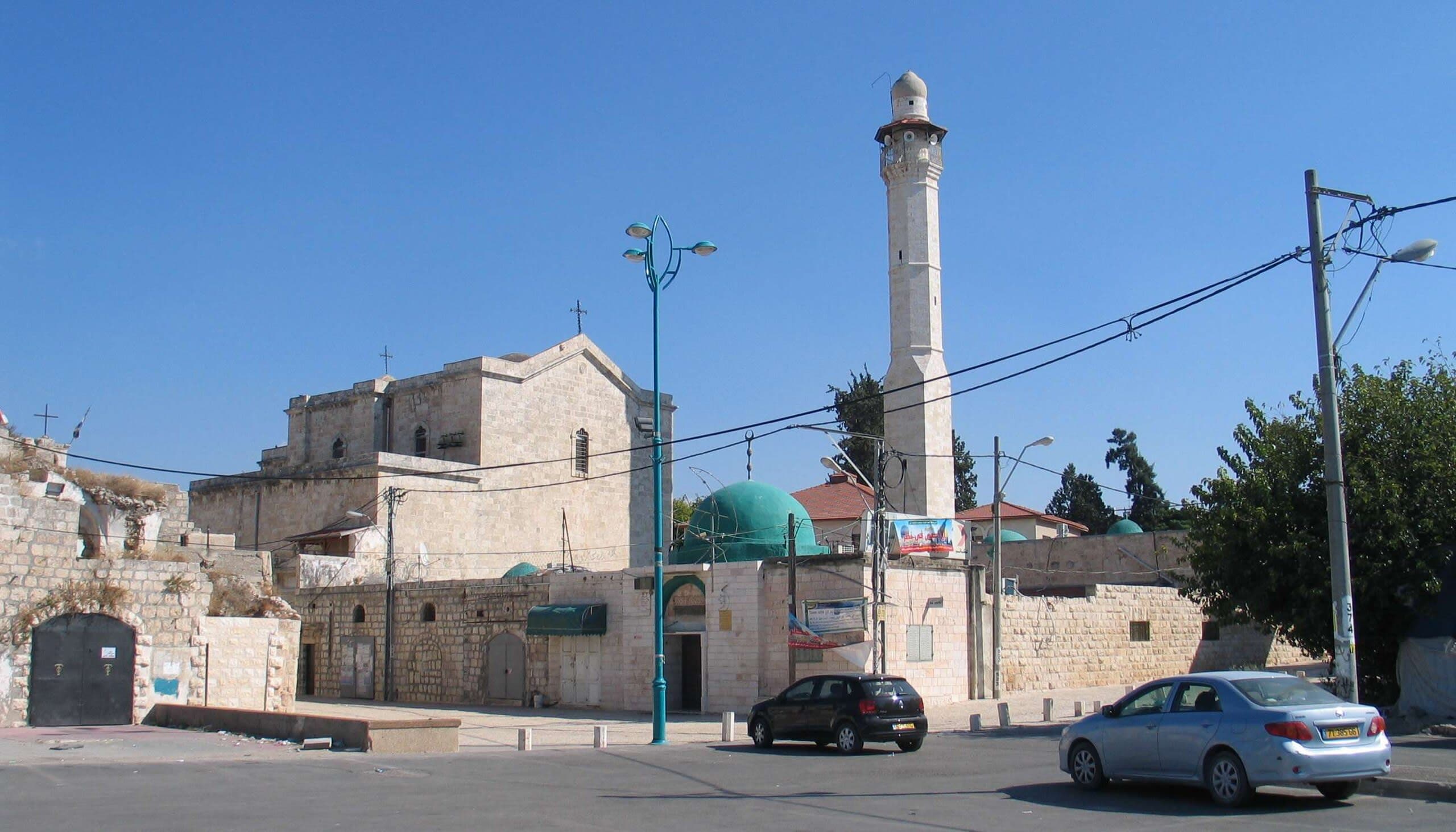
Church of St. George and mosque of El Khidr, Lod (Lynda), Israel
Where a Christian saint and an Islamic prophet share one tomb and one name
Lod, Center District, Israel
At A Glance
- Coordinates
- 31.9531, 34.8994
- Suggested Duration
- Allow 45 minutes to 1.5 hours for a thorough visit. This includes time to explore the church interior, descend to the crypt, visit the courtyard between the structures, and observe the mosque's minaret and architectural relationship with the church.
- Access
- Located in the old city center of Lod, approximately 15 km southeast of Tel Aviv. Accessible by train to Lod station on Israel Railways, then a short walk or taxi. By car, take Highway 40 or Highway 44 to Lod. Parking is limited in the old city. Lod is very close to Ben Gurion International Airport. Mobile phone signal is strong throughout the area.
Pilgrim Tips
- Located in the old city center of Lod, approximately 15 km southeast of Tel Aviv. Accessible by train to Lod station on Israel Railways, then a short walk or taxi. By car, take Highway 40 or Highway 44 to Lod. Parking is limited in the old city. Lod is very close to Ben Gurion International Airport. Mobile phone signal is strong throughout the area.
- Modest dress is required: shoulders and knees should be covered. Women may be asked to cover their heads in the church. Comfortable shoes are recommended, and shoes that can be easily removed are essential for visiting the mosque area.
- Photography is generally permitted in the church exterior and courtyard. Photography inside the church and crypt may be restricted during services. Ask permission before photographing worshippers or the sarcophagus. Do not use flash in the crypt.
- The site carries deep significance for Palestinian Christian and Muslim communities, as well as for Greek Orthodox pilgrims. Lod experienced significant upheaval during the 1948 Arab-Israeli War, and the city's history is sensitive. Approach with awareness and respect for the complexity of the place.
Overview
In Lod, the ancient Lydda, a Greek Orthodox church and an Islamic mosque stand wall-to-wall over the venerated tomb of St. George and Al-Khidr. Christians, Muslims, Druze, and Sufis have converged on this site for seventeen centuries, honoring the same figure under different names. Each November, they celebrate together, lighting candles at the same sarcophagus and pouring oil over the same stone.
Some sacred sites become shared through tolerance. This one became shared through convergence. In the old city of Lod, a Greek Orthodox church and a mosque occupy the same ancient foundations, separated by courtyard walls that feel more like connective tissue than boundaries. Beneath the church floor, a crypt holds a sarcophagus venerated as the tomb of St. George, the Roman soldier from Lydda who was martyred in 303 CE and became one of Christianity's most beloved saints. For Muslims, this same site honors Al-Khidr, the Green One, the mysterious Quranic figure who guided Moses through divine paradoxes and who, in Islamic tradition, possesses immortality and appears to seekers in times of spiritual need.
The overlap is not merely geographic. It is theological. Druze tradition identifies St. George, Al-Khidr, Elijah, and John the Baptist as manifestations of the same reincarnated soul. Sufi mystics venerate Al-Khidr as the hidden initiator who bestows illumination without human mediation. The dragon legend that attached to George may echo the older myth of Perseus slaying a sea monster at nearby Joppa. Layers upon layers, reaching back before any single tradition claimed this ground.
The physical site carries this convergence in its stones. Byzantine masonry sits beneath Crusader arches. A Mamluk-era minaret rises beside a nineteenth-century Orthodox bell tower. Every November 16, the Feast of the Translation of Relics draws the Orthodox Patriarch of Jerusalem, who leads the Divine Liturgy while Muslim and Christian scouts parade together through the streets of Lod with drums and horns. Muslim families still bring their sons to be bathed in the church's baptismal water. Oil poured over the sarcophagus by hands of every faith collects in the same vessel.
What persists here is not coexistence as a political project. It is something older and more organic: the recognition, carried in ritual and stone, that the sacred does not always divide along the lines theology would predict.
Context And Lineage
The site traces its sacred history to the fifth century, built over the traditional birthplace and tomb of St. George, a Roman soldier martyred in 303 CE who became one of the most widely venerated saints in Christianity and, under the name Al-Khidr, a revered figure in Islam.
According to Christian tradition, George was born in Lydda to a noble Christian family. During Emperor Diocletian's persecution of Christians, George, a Roman officer, refused to renounce his faith. He was subjected to prolonged torture and beheaded in 303 CE. His remains were returned to Lydda for burial, and a church was built over the site within two centuries.
The dragon legend that became inseparable from St. George's identity is a later addition, popularized by the thirteenth-century Golden Legend. Scholars have noted that the myth may have roots in the story of Perseus slaying a sea monster at nearby Joppa, with the pagan hero's narrative transferring to the Christian saint as the cultural landscape shifted.
In Islamic tradition, Al-Khidr appears in Surah Al-Kahf (18:65-82) as a servant of God endowed with divine knowledge who guides the prophet Musa through a series of perplexing acts that ultimately reveal hidden divine purposes. His name means the Green One, because barren land turned verdant wherever he sat. Unlike most prophetic figures, Al-Khidr is understood in many Islamic traditions as immortal, still present in the world, appearing to spiritual seekers in moments of need.
How these two figures came to share a single sacred site remains partly mysterious. The convergence appears organic rather than imposed, growing from centuries of proximity between Christian and Muslim communities in Lydda who found in their respective traditions a figure of parallel significance.
The site belongs to the tradition of Christian martyria, structures built over the remains of martyrs to mark their sacrifice and enable devotion. It also belongs to the broader Levantine tradition of shared sacred sites, where Muslim and Christian communities have venerated overlapping figures for centuries. The identification of Al-Khidr with St. George is part of a wider pattern across Palestine, Syria, and Turkey, where Islamic and Christian sacred geographies intersect.
St. George of Lydda (Georgius)
Roman soldier and Christian martyr (died 303 CE), venerated as one of the most important military saints in Christianity. Patron saint of England, Georgia, Ethiopia, Palestine, and numerous other nations. His tomb beneath the church is the focal point of Christian devotion at this site.
Al-Khidr (the Green One)
Quranic figure who guided Moses through divine mysteries, revered in Islam and particularly in Sufism as the hidden initiator who bestows spiritual illumination directly from God. In Druze theology, identified with the same soul as Elijah, St. George, and John the Baptist.
Sultan Baibars
Mamluk Sultan who ordered the conversion of the western portion of the Crusader cathedral into a mosque in 1269 CE, as recorded by an inscription that survives on the site. His intervention established the dual-faith character of the complex in its current form.
Greek Orthodox Patriarchate of Jerusalem
Has administered the church since the nineteenth century. Built the current church (1870-1872) with Ottoman permission and continues to lead the annual feast day celebrations, including the Patriarchal Divine Liturgy on November 16.
Why This Place Is Sacred
Over 1,700 years of continuous veneration by multiple faiths, concentrated on a single burial site, creates a spiritual density that transcends any one tradition's framework.
The quality that distinguishes this site from other shared sacred spaces is the depth of its convergence. This is not a place where different traditions worship side by side in polite separation. Here, they worship the same figure, at the same tomb, sometimes in the same gesture.
The crypt beneath the church holds the oldest layer of this convergence. Descending the stairs, the temperature drops, the light narrows, and the sarcophagus appears in its stone enclosure. Pilgrims from all traditions pour oil over it, press their palms against its surface, and take away oil-soaked cloth for healing. The physical act is identical across faiths. The interpretive framework differs, but the body's response to the cold stone, the dim light, and the weight of accumulated prayer does not.
Above ground, the architectural layering makes the convergence visible. The current Greek Orthodox church, completed in 1872, incorporates Crusader-era masonry and sits on Byzantine foundations. The adjacent mosque, marked by a Mamluk-era inscription dated to 1269 under Sultan Baibars, occupies what was once the western portion of the Crusader cathedral. The structures share walls. They share history. The courtyard between them is not neutral ground but common ground.
The thin-place quality here arises from this radical entanglement. Each tradition brings its own understanding: Christians see the martyr who chose death over apostasy, Muslims see the immortal guide who leads seekers beyond ordinary knowledge, Sufis see the patron of direct divine encounter, and Druze see a soul that has returned through the prophets across millennia. None of these readings cancels the others. Held together in one physical space, they create something greater than any single tradition could produce alone.
The earliest structure on this site was a fifth-century Byzantine church built to mark the venerated birthplace and burial site of St. George of Lydda, martyred in 303 CE. The city was named Georgiopolis by the Byzantines in his honor, reflecting the saint's centrality to the community's identity.
The Byzantine church was rebuilt and expanded during the Crusader period in the twelfth century into a large cathedral. Following the Crusader defeat, Sultan Baibars converted the western portion into a mosque in 1269, while the eastern portion continued as a Christian worship space. The Crusader structures eventually fell into ruin. The current Greek Orthodox church was built between 1870 and 1872 with Ottoman permission, under the administration of the Greek Orthodox Patriarchate of Jerusalem. The mosque's minaret survived and remains the most visible architectural remnant of the Islamic portions. Throughout these transformations, the tomb in the crypt maintained its dual identity as the resting place of both St. George and Al-Khidr, with veneration from both traditions continuing without interruption.
Traditions And Practice
Active worship includes Greek Orthodox liturgy, oil anointing of the sarcophagus by both Christians and Muslims, iron chain blessings, and a major annual interfaith feast day with joint processions.
The oldest practices at this site center on the sarcophagus in the crypt. Pilgrims pour oil, often mixed with myrrh, over the stone surface and collect it in small vessels. This oil is understood to carry healing properties, and the practice crosses religious boundaries: Christians and Muslims perform the same anointing gesture, gather the same oil, and carry it home for the same purpose.
Iron chains, traditionally said to have bound St. George during his imprisonment, are kept near the crypt entrance. In Orthodox practice, these chains are placed on the sick as a blessing. A more intensive form of this tradition involves the overnight chaining of mentally ill persons in the crypt, a practice rooted in centuries of folk healing belief.
Muslim families have maintained the tradition of bringing their sons to the church to be bathed in baptismal water, seeking strength and blessing. This cross-confessional practice reflects the depth of shared veneration at the site. Farmers have poured olive oil over the tomb in thanksgiving for the harvest, and pilgrims dip fabric into the oil that gathers around the sarcophagus to carry its blessing home.
The annual Feast of the Translation of Relics on November 16 is the site's most significant celebration. The Orthodox Patriarch of Jerusalem leads the Divine Liturgy with concelebrating bishops and priests. Byzantine chanting fills the church in both Greek and Arabic. After the liturgy, a procession through the streets of Lod features both Muslim and Christian youth scout groups marching with drums and horns, a living demonstration of shared celebration.
The feast of St. George's Martyrdom is also observed on April 23. Regular Greek Orthodox services are held throughout the year. Muslim visitors come independently to seek blessings from Al-Khidr, lighting candles alongside Christian pilgrims at the tomb.
Visitors of any background can descend to the crypt, where the atmosphere itself suggests a slower pace. Spend time in the presence of the sarcophagus, observing the traces of oil that have accumulated over centuries. Consider lighting a candle, a practice shared across the site's traditions.
If visiting near November 16, attending the feast day offers the fullest experience of the site's interfaith character. The scout parade, the intermingling of families, and the communal spirit are not curated performances but organic expressions of a centuries-old tradition of shared celebration.
Greek Orthodox Christianity
ActiveThe church houses what is venerated as the tomb of St. George, one of the most important military saints in Christianity. George was born in Lydda and martyred in 303 CE under Diocletian. The city was renamed Georgiopolis by the Byzantines in the sixth century. The Greek Orthodox Patriarchate of Jerusalem has administered the site since the nineteenth century, and the annual feast on November 16 draws the Patriarch for Liturgy.
Annual feast on November 16 with Patriarchal Divine Liturgy. Pilgrims descend to the crypt to venerate the sarcophagus, pour oil over it, and collect the oil for healing. Iron chains are placed on the sick as a blessing. The April 23 martyrdom feast is also observed. Regular Orthodox services throughout the year.
Islam
ActiveAl-Khidr, the Green One, is identified with this site. He is a Quranic figure who served as a spiritual guide to Moses and possesses divine knowledge. The mosque portion dates to a 1269 CE inscription under Sultan Baibars, built within the Crusader cathedral ruins. Muslim veneration continues alongside Christian worship.
Muslim pilgrims visit to seek blessings from Al-Khidr. Some Muslim families maintain the tradition of bringing sons to be bathed in the church's baptismal water. Muslims light candles at the tomb and pour oil on the sarcophagus. The November 16 shared feast includes Muslim scout parades alongside Christian ones.
Sufism
ActiveAl-Khidr holds particular importance in Sufi mysticism as the hidden initiator who receives illumination directly from God without human mediation. He is central to the Uwaisi path, the tradition of receiving spiritual guidance from a source beyond the living teacher. Sufi orders venerate Al-Khidr as a living saint who still appears to those ready for inner transformation.
Sufi practitioners visit for personal prayer and meditation, seeking Al-Khidr's guidance on the mystical path. The site is understood as a place where the veil between the visible and invisible is especially thin.
Druze
ActiveIn Druze theology, Al-Khidr possesses the same reincarnated soul as Elijah, Saint George, and John the Baptist. He is venerated as a prophet with the ability to heal the sick and grant fertility. The historical Christian influence on Druze spirituality makes St. George and St. Elias among the most revered figures in the tradition.
Druze pilgrims visit the site to venerate St. George and Al-Khidr, particularly seeking healing and fertility blessings.
Experience And Perspectives
The experience moves from the bright streets of Lod into a layered complex of church and mosque, then descends into the crypt where the sarcophagus waits in silence, anointed with oil by pilgrims of every faith.
Lod sits southeast of Tel Aviv, close enough to the airport to feel the vibration of low-flying aircraft. The approach from the modern city gives little warning of what waits in the old quarter. Then the bell tower appears, and beside it the minaret, and the two structures together announce something unusual before you reach the entrance.
The church interior is modest and warm. Icons line the walls in the Orthodox fashion. Light enters through narrow windows and falls across stone that carries the memory of earlier buildings. The atmosphere is not grand but intimate, a community worship space that happens to hold one of Christianity's most significant tombs.
The descent to the crypt changes everything. The stairs are narrow. The air cools. Below, the sarcophagus sits in a low-ceilinged chamber whose very compression amplifies the sense of proximity to the sacred. Pilgrims pour olive oil over the stone and collect it in small bottles, carrying away what they understand as a medium of healing. Iron chains, traditionally associated with St. George's imprisonment, hang near the entrance. In Orthodox tradition, these chains are placed on the sick as a blessing. The sensory experience is specific and physical: the scent of oil and incense, the feel of cool stone, the sound of whispered prayers in Greek, Arabic, and other languages layered over one another.
Returning to daylight, the courtyard between church and mosque offers a moment of transition. The minaret rises overhead. The architectural seam between the two structures is visible in the stonework, two buildings sharing a single history. Muslim visitors who have entered through the mosque side may be visible through the arched passages. On feast days, the courtyard fills with families from both communities, and the boundary dissolves entirely.
The most profound experiences here are reported on November 16, when the Feast of the Translation of Relics brings the Orthodox Patriarch, concelebrating bishops, Byzantine chanting, and a joint Muslim-Christian procession through the streets. On this day, the site's character as a shared sacred space becomes fully visible.
Enter through the church entrance on the eastern side. Spend time in the upper church before descending to the crypt. After the crypt, explore the courtyard and observe the architectural relationship between church and mosque. If visiting near November 16, plan to attend the feast day celebrations for the fullest experience of the site's interfaith character.
The Church of St. George and Mosque of Al-Khidr occupy a singular position in the study of shared sacred spaces, drawing scholarly attention for the depth and durability of their interfaith convergence.
Scholars of comparative religion regard this site as one of the most significant examples of a shared sacred site in the Levant. The convergence of St. George and Al-Khidr is understood not as a historical accident but as a product of centuries of communal proximity, where the Christian cult of the warrior-martyr and the Islamic veneration of the immortal guide found sufficient overlap to inhabit the same physical and spiritual space. The dragon legend is widely understood by scholars as a later hagiographic addition, likely absorbing the myth of Perseus at nearby Joppa. Archaeological evidence confirms continuous occupation and worship from the Byzantine period, and the architectural layering of Byzantine, Crusader, Mamluk, and Ottoman phases reflects the city's complex political and religious history.
For Palestinian Christians, St. George (Mar Jiryis) is the patron saint of Palestine, and Lydda is the heart of his cult. Arab Christian devotion to the saint has persisted through Byzantine, Islamic, Crusader, Ottoman, and modern periods without interruption. For Palestinian Muslims, Al-Khidr represents divine wisdom and healing, and the shared veneration at Lod symbolizes centuries of communal coexistence that preceded modern political divisions. In Druze theology, St. George, Al-Khidr, Elijah, and John the Baptist share the same sacred soul, making this site a node in a network of incarnations that spans traditions. In Sufi understanding, Al-Khidr is the patron of the Uwaisi path, the mystical current that flows directly from God to the seeker without human mediation.
Some comparative mythologists and esoteric scholars see the convergence of Perseus, George, and Khidr at this geographic point as evidence of a deeper pattern: a sacred node in the landscape where the archetype of the divine warrior against chaos has been expressed across millennia and across traditions. The Green Man connection has been explored by those who link Al-Khidr to vegetation deities and the eternal renewal of life. The interchangeability of the saint's identity across religious boundaries is sometimes interpreted as pointing toward a universal sacred figure that precedes and transcends the categories of organized religion.
The exact mechanism by which two distinct religious traditions converged on the same figure and site remains incompletely understood. Whether the Crusader identification of Lydda as George's burial site reflects genuine early tradition or medieval invention is debated. The origins of the Al-Khidr figure, whether pre-Islamic, Quranic, or connected to Alexander Romance traditions, remain scholarly contested. The relationship between the historical George of Lydda and the legendary dragon slayer has never been fully resolved.
Visit Planning
Located in the old city of Lod, 15 km southeast of Tel Aviv. Accessible by train and road. Allow 45 minutes to 1.5 hours. The November 16 feast day is the most significant annual event.
Located in the old city center of Lod, approximately 15 km southeast of Tel Aviv. Accessible by train to Lod station on Israel Railways, then a short walk or taxi. By car, take Highway 40 or Highway 44 to Lod. Parking is limited in the old city. Lod is very close to Ben Gurion International Airport. Mobile phone signal is strong throughout the area.
Tel Aviv, 15 km northwest, offers the widest range of accommodations. Lod itself has limited tourist infrastructure. Visitors based in Tel Aviv or Jerusalem can reach the site within 30-45 minutes by car or train.
Modest dress is required in both church and mosque areas. Remove shoes before entering the mosque. Photography may be restricted during services. Respectful silence in the crypt.
The site encompasses both an active church and a mosque, and visitors should be prepared for the expectations of both spaces. In the church, Orthodox custom prevails: quiet behavior, reverence near the icons and the sarcophagus, and deference to any worship in progress. In the mosque area, shoes must be removed. Throughout, an awareness that this is a place where multiple communities actively worship will guide appropriate behavior.
The crypt demands particular respect. This is not a museum display but a living devotional space where pilgrims pray, weep, and seek healing. If others are present in prayer, maintain distance and silence. Do not rush through. The space rewards patience.
On feast days, the atmosphere shifts from contemplative to communal. The streets fill with families, music, and celebration. Visitors are generally welcomed into the festivities, but respectful observation is appropriate until invited to participate more actively.
Modest dress is required: shoulders and knees should be covered. Women may be asked to cover their heads in the church. Comfortable shoes are recommended, and shoes that can be easily removed are essential for visiting the mosque area.
Photography is generally permitted in the church exterior and courtyard. Photography inside the church and crypt may be restricted during services. Ask permission before photographing worshippers or the sarcophagus. Do not use flash in the crypt.
Candle lighting is the most common offering and is available at the church entrance. Pilgrims may bring olive oil to pour over the sarcophagus, a practice shared by both Christian and Muslim visitors. Oil can be collected from the tomb.
Modest dress required throughout. Church may close during private Orthodox services. Shoes must be removed in mosque areas. Respectful silence in the crypt. Do not disturb worshippers during prayer.
Sacred Cluster
Nearby sacred places create the location cluster described in the growth plan. This block is intentionally crawlable and links into the wider regional graph.
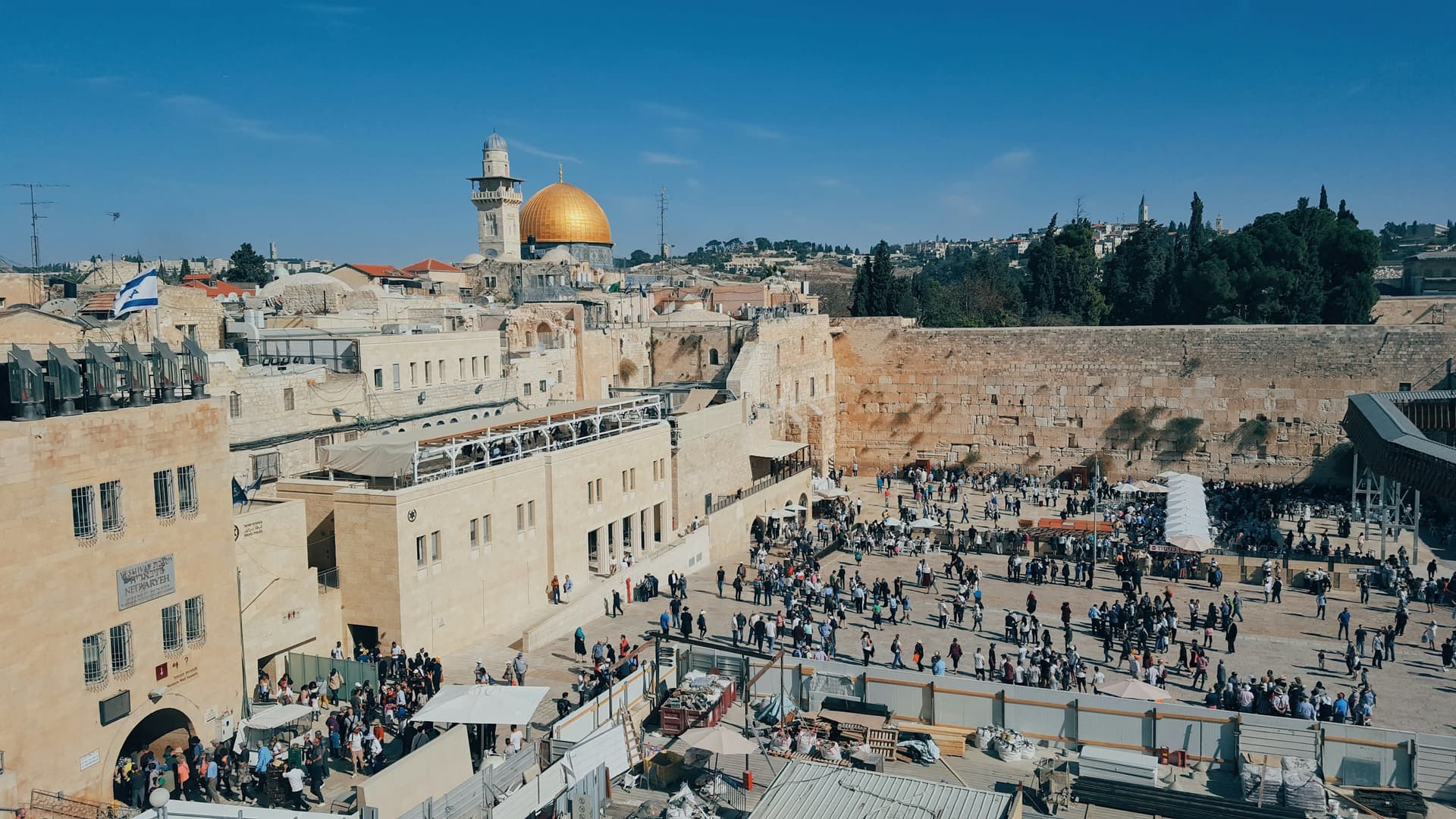
Western Wall
Jerusalem, Jerusalem, Israel
37.2 km away
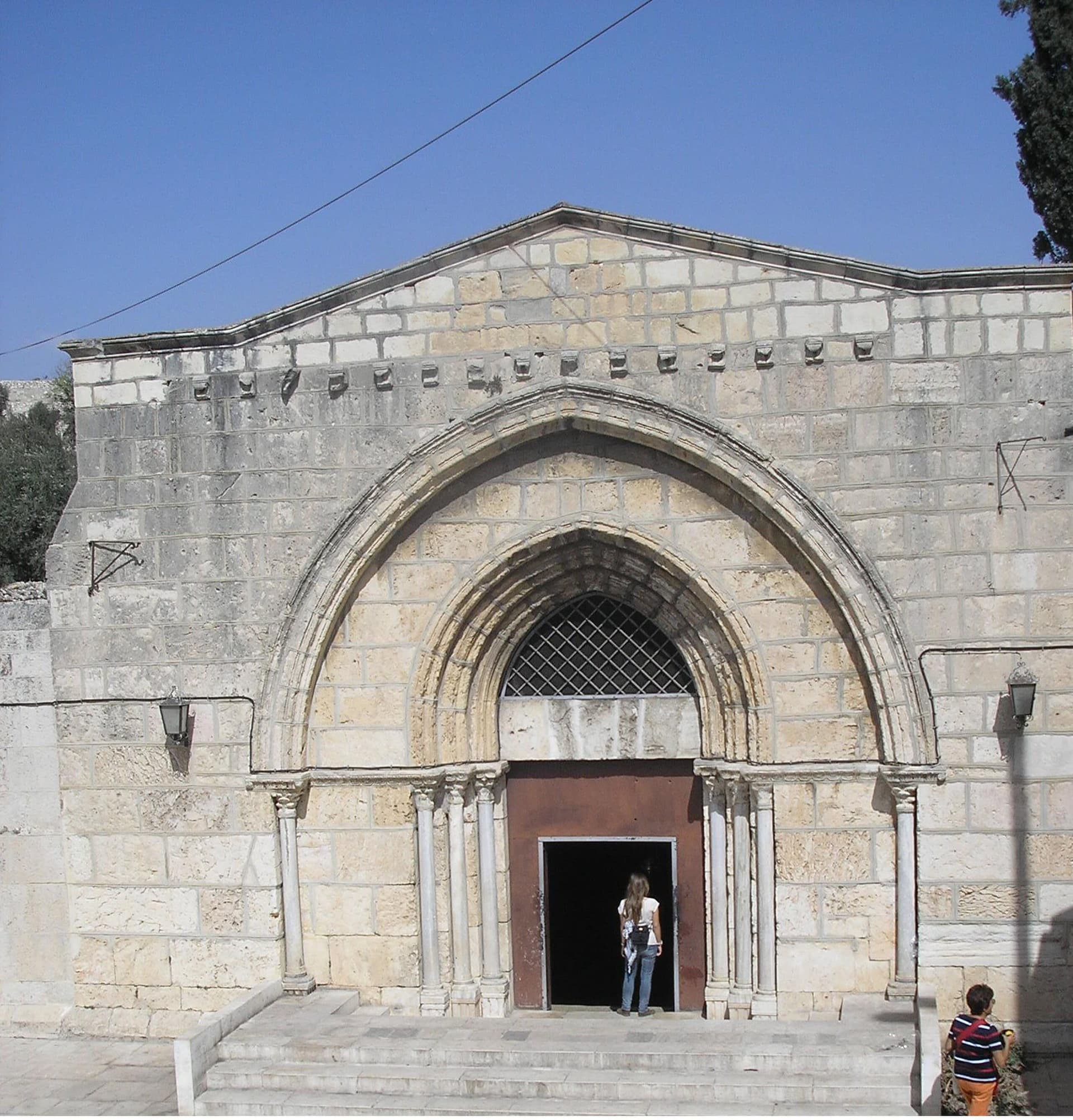
Tomb of the Virgin
Jerusalem, Jerusalem District, Israel
37.4 km away
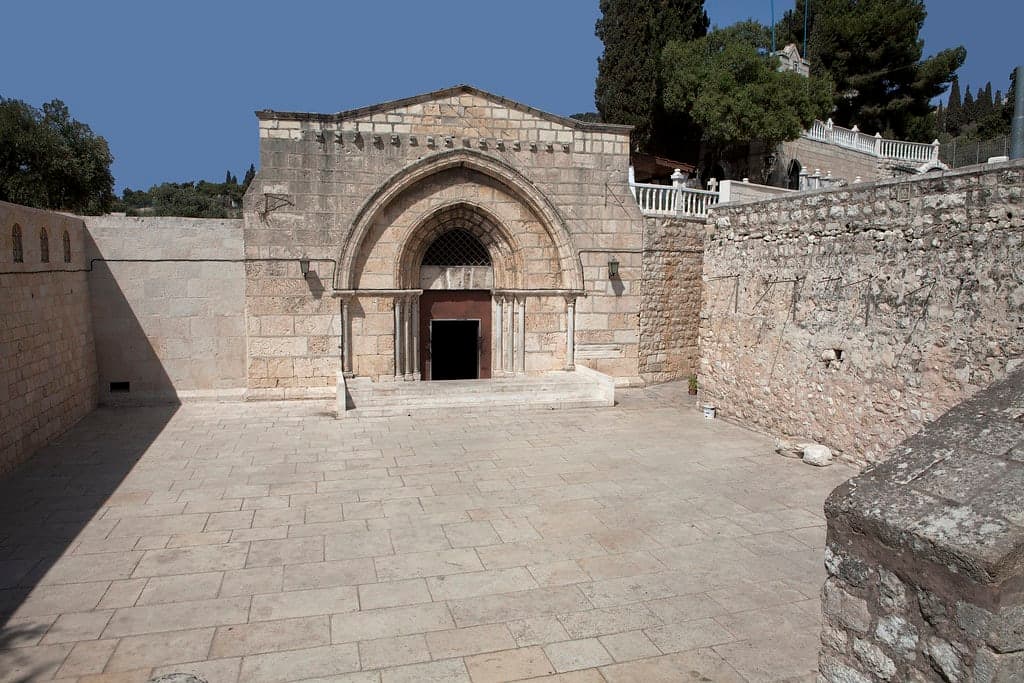
Tomb of Mary, Valley of Cedron, Jerusalem, Israel
Jerusalem, Jerusalem District, Israel
37.4 km away
Hebron/Al-Khalil Old Town
Hebron, Judea and Samaria, Palestinian Territories
51.7 km away