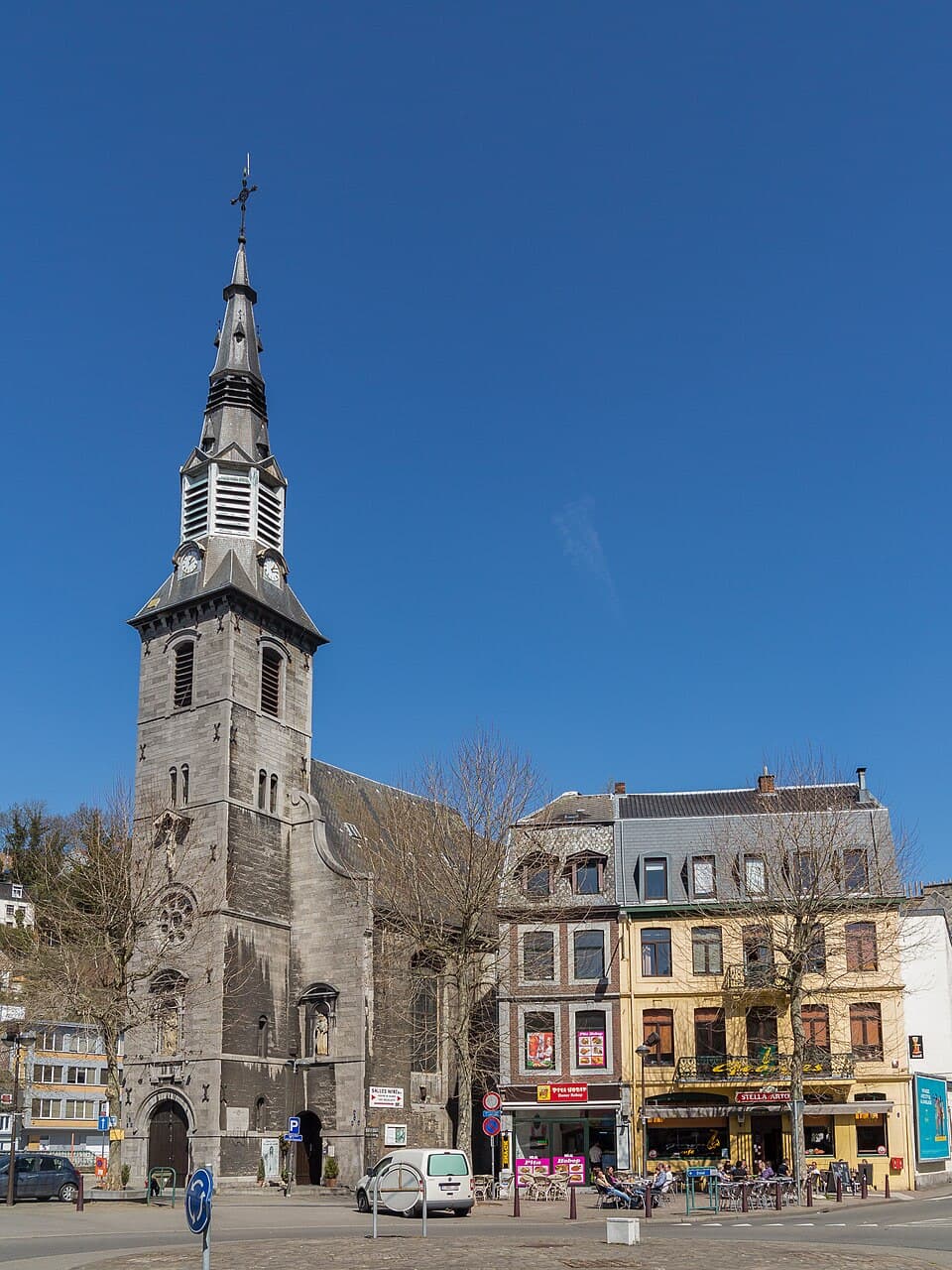
Church of Our Lady of the Recollects
Where a Black Virgin moved during an earthquake, and Walloon devotion continues unbroken
Verviers, Liège, Belgium
At A Glance
- Coordinates
- 50.5890, 5.8667
- Suggested Duration
- A contemplative visit takes thirty to sixty minutes. Those wishing to attend mass or spend extended time in prayer before the Black Virgin may stay longer. Septennale events unfold over a full month and reward extended engagement.
Pilgrim Tips
- Modest attire is expected, as in any Catholic church. Covered shoulders and knees for all visitors. Avoid clothing with provocative text or images. No hats for men during services.
- Photography is generally permitted but should be practiced with discretion. Do not photograph individuals at prayer. Turn off flash. Avoid positioning that disrupts others' experience. During masses and special services, put cameras away entirely.
- This is an active parish church, not a museum. Time your visit to avoid disrupting masses or private devotions. If a service is in progress, either participate reverently or return later. The Black Virgin is a sacred object to those who venerate her. Approach with the respect you would hope others would show to what you hold sacred.
Overview
The Church of Our Lady of the Recollects in Verviers guards one of Belgium's most venerated Black Virgins. On September 18, 1692, during a devastating earthquake, the faithful gathered before her image and later discovered the statue had changed position—a sign, they believed, that their prayers had been heard. Nearly four centuries of devotion continue in this 17th-century limestone church.
Some statues are merely beautiful. Others carry weight. The Black Virgin of Verviers belongs to the latter category.
In 1692, when the earth shook and buildings crumbled across the Walloon region, the terrified people of Verviers gathered before a statue installed above the entrance of the Recollect church. They prayed through aftershocks. When the trembling finally stopped and they looked up again, something had changed. The Christ Child had turned toward his mother's heart. Her hand now held his. The statue had not broken—it had moved.
Whether one interprets this as miracle or mystery, the response was unambiguous. Pope Clement XII granted a plenary indulgence for visits on September 18. Pope Leo XIII crowned the Virgin on the bicentenary. The faithful kept coming.
They still do. The church has burned and been rebuilt. The founding order has dissolved. But through fire and revolution and the dissolution of religious houses, the Black Virgin remains, and the devotion continues. In a single-nave limestone church with Corinthian capitals and marble floors, seekers still light candles and bow their heads before an image that, according to those who hold it sacred, once moved to answer prayer.
Context And Lineage
The Church of Our Lady of the Recollects originated as a monastery chapel built by the Franciscan Recollects between 1646 and 1650. The 1692 earthquake and the miracle of the moving Virgin transformed it into a pilgrimage site. Surviving the fire of 1810 and the dissolution of its founding order, it became Verviers' parish church in 1833 and was classified as protected heritage in 1934.
The Recollects came to Verviers in 1627, part of the Counter-Reformation's spread of reformed Franciscan orders across the Spanish Netherlands. Prince-Bishop Ferdinand of Bavaria granted authorization, and by 1631, construction had begun on a convent, a college for humanities education, and a chapel. The chapel, completed between 1646 and 1650, was dedicated to the Most Holy Sacrament.
In 1664, the sculptor Robert Henrard of Liège created a sandstone statue of the Virgin and Child, installed in an external niche above the entrance. This placement—facing the street, accessible to passersby—would prove fateful. When the earthquake struck on September 18, 1692, the faithful gathered here rather than inside the church. What they witnessed when they returned from evening prayers entered local legend and eventually gained papal recognition.
The community understood the event through their tradition. Earthquakes in Catholic teaching could be divine punishment; their cessation could be divine mercy. Mary, as intercessor, could appeal to her Son. The movement of the statue—Jesus turning toward his mother's heart, her hand coming to hold his—enacted this theology in sculpture. Whether one accepts this interpretation, the response was concrete: Pope Clement XII granted a plenary indulgence in 1739, and the devotion has never ceased.
The Recollects maintained the church from its founding until revolutionary forces dissolved religious orders at the end of the 18th century. The statue and the devotion, however, outlasted the order. When the church became Verviers' parish church in 1833, it did so with the miracle as its foundational narrative.
The community that gathers here today inherits that narrative. Each September 18 recalls the earthquake and the response. Each Septennale—the seven-year festival that celebrates the Virgin—renews the connection between present devotion and the moment when, according to local faith, a statue moved to answer prayer.
The Black Virgin of Verviers
sacred_object
A sandstone statue of Mary and the Christ Child created by Robert Henrard in 1664. Reputed to have miraculously changed position during the 1692 earthquake, it was crowned by Pope Leo XIII in 1892 and remains the devotional center of the church. The uniform black painting dates to 1855.
Robert Henrard
historical
A sculptor from Liège who created the Virgin and Child statue in 1664. His work became the vehicle for the miracle that transformed a monastery chapel into a pilgrimage destination.
Prince-Bishop Ferdinand of Bavaria
historical
The Prince-Bishop of Liège who authorized the Recollects' establishment in Verviers in 1627, setting in motion the chain of events that would lead to the church's construction and the miracle.
Pope Clement XII
historical
Granted a plenary indulgence in 1739 for visits to the church on September 18, institutionally validating the local miracle tradition.
Pope Leo XIII
historical
Crowned the Black Virgin on October 16, 1892, on the bicentenary of the miracle, elevating the statue's status within the Church's hierarchy of Marian images.
Why This Place Is Sacred
The Church of Our Lady of the Recollects holds sacred significance as the site of the 1692 miracle, when the Black Virgin statue reportedly changed position during an earthquake. This event transformed a monastery chapel into a pilgrimage destination, validated by papal recognition. The survival of the devotion through fire, revolution, and institutional change speaks to the persistence of the sacred in the face of disruption.
The concept of thin places—locations where the boundary between ordinary experience and something greater becomes permeable—finds expression differently across traditions. For the Walloon Catholics of Verviers, thinness manifested not gradually but suddenly, on a September afternoon when the ground itself became unstable.
The earthquake of September 18, 1692, struck with two strong aftershocks. The faithful gathered before the Virgin's niche above the church entrance, as people do when the world shakes—seeking intercession, begging for the terror to end. When they returned from evening prayers, they noticed what had changed: Jesus had turned toward his mother's heart, and her hand now held his.
In Catholic understanding, such movements carry meaning. The faithful interpreted the change as a sign that Mary had interceded with her Son to end the divine punishment. The earthquake's cessation became evidence of answered prayer. Within decades, Rome had recognized the miracle with a plenary indulgence.
This interpretation remains contested by those who note that earthquakes can shift sandstone sculptures in ways that appear meaningful. But for the community that has maintained devotion here for over three centuries, the question of mechanism matters less than the fact of response. They prayed. Something changed. The shaking stopped.
The site carries additional weight from its survival. In 1810, fire destroyed the church and convent during armed conflict. The statue was rescued. The church was rebuilt. Pope Leo XIII crowned the Virgin in 1892, on the bicentenary of the miracle. Each crisis overcome has added another layer to the devotion, another reason to believe that this Virgin protects her people.
The church began as the chapel of a Recollect monastery. The Recollects—a reformed branch of the Franciscan order emphasizing strict observance of the original rule—established themselves in Verviers in 1627 with authorization from Prince-Bishop Ferdinand of Bavaria. Between 1646 and 1650, they built this chapel, dedicated to the Most Holy Sacrament. The Black Virgin statue, created by Liège sculptor Robert Henrard in 1664, was installed in an external niche facing the street, allowing the public to pray before it without entering the monastery.
The miracle of 1692 transformed the chapel's significance. What had been a monastery church became a pilgrimage destination, drawing devotees seeking the Virgin's intercession. When revolutionary forces dissolved the religious orders at the end of the 18th century, the Recollects departed, but the church remained. In 1833, it became the parish church of Verviers—a promotion that acknowledged the devotional importance the miracle had established.
The fire of 1810 could have ended the story. Instead, reconstruction began almost immediately. The chapel was restored in 1852, and between 1892 and 1893, a new facade and bell tower were added. In 1934, the church was classified as protected heritage. Through each transformation, the Black Virgin has remained the devotional center, and the memory of September 18, 1692, has remained alive in the community's practice.
Traditions And Practice
The Church of Our Lady of the Recollects maintains active Catholic worship with special emphasis on Marian devotion. The anniversary of the miracle on September 18 draws particular attention, while the Septennale festival, held every seven years, transforms the entire city into a month-long celebration of faith and community.
The devotional practices here are continuous with centuries of Catholic Marian tradition. The faithful pray before the Black Virgin, lighting candles and offering intentions. The plenary indulgence attached to September 18 visits—granted by Pope Clement XII in 1739—encourages pilgrimage on the anniversary of the miracle. Masses are celebrated regularly, with Marian feast days receiving particular emphasis.
The Septennale, a tradition unique to Verviers, offers a more elaborate expression of communal devotion. Every seven years in September, the city hosts a month-long celebration combining religious ceremonies, cultural events, and social gatherings. The Black Virgin is carried in procession, and the community renews its relationship with the image that, according to tradition, once responded to their ancestors' prayers.
Regular masses continue to anchor the church's life as an active parish. Marian devotions occur throughout the year, with candles burning before the Virgin at all times. The church welcomes visitors seeking quiet prayer or simply wishing to encounter a space shaped by centuries of petition and gratitude.
The Septennale remains the highlight of the devotional calendar. Though held only every seven years, its approach generates anticipation, and its occurrence draws participants from across the region. For the parish community, it represents a moment when private devotion becomes public celebration, when the miracle story is retold and renewed.
If you come seeking encounter rather than observation, consider these approaches:
Light a candle before the Black Virgin. The gesture is simple, the practice ancient. Add your intention to centuries of others who have done the same.
If possible, time your visit for September 18. The anniversary of the miracle carries particular weight, and the church fills with those who come specifically to mark what their tradition holds as a moment of divine response.
Should your visit coincide with a Septennale year, give yourself time to experience the full festival. The procession of the Virgin through city streets, the convergence of religious ceremony and community celebration, offers an immersion in living Walloon Catholic culture that solitary visits cannot replicate.
Roman Catholicism
ActiveThe church is the parish church of Verviers, housing the miraculous Black Virgin that survived the 1692 earthquake and the 1810 fire. Pope Clement XII granted a plenary indulgence for September 18 visits in 1739, and Pope Leo XIII crowned the Virgin on the bicentenary of the miracle in 1892. The site represents authenticated Marian devotion within the Church's institutional framework.
Regular masses, Marian devotions, candle lighting before the Black Virgin, commemoration of the miracle on September 18, and the Septennale festival every seven years. The faithful bring petitions to the Virgin and understand the statue as a channel for her intercession.
Franciscan Recollect Heritage
HistoricalThe church originated as the chapel of a Recollect monastery established in 1627. The Recollects—a reformed Franciscan order emphasizing strict adherence to St. Francis's rule—built the chapel between 1646 and 1650. Though the order dissolved with the religious suppressions of the revolutionary period, the church preserves their name and embodies their Counter-Reformation spirituality.
Historical practices included the regular prayer offices of the Franciscan order, education through the attached college, and the pastoral care of Verviers' population. The external placement of the Virgin statue, accessible to passersby, reflects the order's mission to the laity.
Experience And Perspectives
Visitors to the Church of Our Lady of the Recollects encounter a 17th-century limestone church whose quiet interior stands in contrast to its dramatic history. The Black Virgin draws those seeking intercession, healing, or simply connection with centuries of devotion. The church's resurrection after fire and dissolution speaks to a community's tenacity in preserving what it holds sacred.
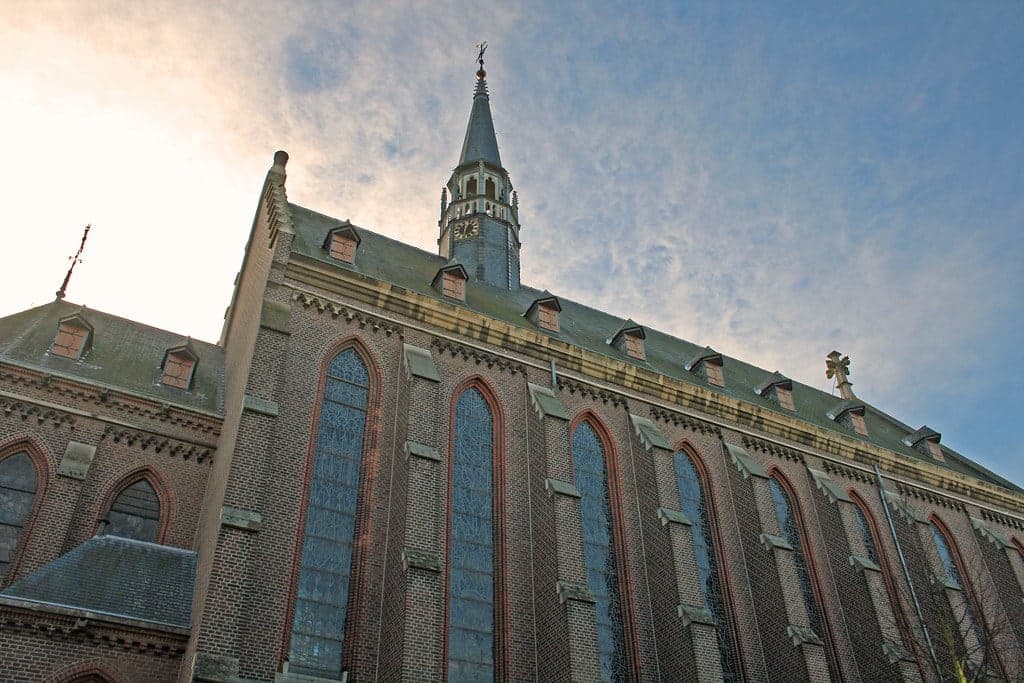
The church does not announce itself with grandeur. Verviers is a working city in the Walloon industrial belt, and the Church of Our Lady of the Recollects sits within its urban fabric without the prominence of a cathedral or the isolation of a pilgrimage shrine. Visitors enter a single-nave space with Corinthian capitals and stucco decoration from 1857, the floor laid in white and grey-black marble. The scale is human rather than imposing.
What draws seekers is the Black Virgin. The statue, uniformly painted black in 1855 by Father Meunier who had it cleaned, depicts Mary holding the Christ Child. Knowing the miracle story changes how one sees it. These figures, according to believers, moved of their own accord during an earthquake. Jesus turned toward his mother's heart. Her hand came to hold his. The statue that did not break instead responded.
For those who come with intentions—prayer for healing, gratitude for deliverance, petitions for protection—the Black Virgin represents a long chain of answered calls. The papal coronation of 1892 validated what the community already knew: this Virgin responds to her people. The plenary indulgence attached to September 18 visits makes that date particularly charged, though devotees come year-round.
The church's physical resilience mirrors the resilience of the devotion. Fire destroyed this building in 1810. It was rebuilt. The founding order dissolved. The devotion continued. Each survival has deepened the conviction that something about this place persists against disruption.
Come with reverence rather than curiosity alone. This is an active parish church where people pray, not a museum of curiosities. The Black Virgin has heard centuries of petitions; adding yours requires no special permission, only sincerity.
If you arrive on September 18, expect heightened activity. The anniversary of the miracle draws devotees marking what their tradition holds as a moment when heaven responded to earth. During the Septennale festival—a month-long celebration held every seven years—the church becomes the center of religious, cultural, and social events that transform the city.
Between these peaks, the church offers what many seekers need: a quiet space saturated with prayer, a reminder that communities can preserve what matters through fire and revolution, and a statue that invites the question of what it might mean for sacred images to respond.
The Church of Our Lady of the Recollects invites interpretation through multiple lenses: as a Counter-Reformation monument, as a site of Marian devotion authenticated by Rome, as an expression of Walloon folk Catholicism, and as a case study in how sacred images function within communities. Each perspective illuminates something genuine; none exhausts the site's meaning.
From a historical perspective, the church represents the Counter-Reformation's spread of reformed Franciscan orders through the Spanish Netherlands. The Recollects established themselves across the region in the 17th century, building networks of monasteries and colleges that transmitted stricter interpretations of Franciscan spirituality.
The 1692 miracle and subsequent papal recognitions demonstrate how local devotions were authenticated and institutionalized within the Catholic Church. The process—from popular report to indulgence to papal coronation—follows patterns seen at Marian sites across Europe. The Septennale tradition reflects Belgian folk Catholicism's integration of Marian devotion with community celebration, a pattern found in other Walloon and Flemish towns with significant Marian images.
The church's survival through fire and revolutionary dissolution illustrates the resilience of local sacred sites when communities determine to preserve them.
For the Catholic faithful of Verviers, the church's meaning centers on the Black Virgin and the miracle of 1692. Mary heard their ancestors' prayers during the earthquake and interceded with her Son. The statue's movement enacted this intercession visibly. The earthquake stopped. Rome validated what they had experienced.
This understanding does not rest on proof but on faith and tradition. The faithful do not need to explain the mechanism by which a stone statue moved; they need only receive the invitation to bring their own petitions to a Virgin who has responded before. The papal coronation confirms what the community knows: this image is powerful, and approaching it with genuine need is appropriate.
The Septennale expresses this relationship in communal form, a public affirmation that the devotion remains alive and the connection between Virgin and city unbroken.
The Black Virgin tradition has been connected by some scholars and enthusiasts to pre-Christian goddess veneration. Black Madonnas across Europe have been interpreted as Christianized forms of earlier earth goddess figures, their dark coloring linking them to fertility, the underworld, or ancient Isis worship.
For the Verviers Virgin specifically, this interpretation lacks strong evidence. The statue was painted uniformly black in 1855 by Father Meunier, suggesting the coloring may be more recent than devotees assume. Whether earlier appearance or accumulated soot contributed to earlier darkness remains unclear.
The change in position during the earthquake has been interpreted both as miracle and as natural movement of a damaged sculpture. Skeptics note that earthquakes can shift sandstone in ways that appear meaningful. Believers respond that meaning is precisely the point: the how matters less than the what.
Genuine questions remain. How exactly did the statue's position change? Was it purely miraculous, or did the earthquake's physical force cause the sandstone figures to shift in a way that appeared meaningful? The question divides not only believers from skeptics but also those who hold that natural and supernatural explanations are not mutually exclusive.
Why did this particular miracle, among the many reported across Catholic Europe, gain such persistent local devotion? Other earthquake miracles have faded from memory; this one anchors a seven-year festival cycle that continues into the 21st century. What made the difference?
The church preserves more questions than it answers, and perhaps that is appropriate for a space defined by the mystery of a statue that moved.
Visit Planning
The Church of Our Lady of the Recollects stands in central Verviers, accessible by train from Liège and other Belgian cities. A visit requires thirty to sixty minutes, though those seeking deeper engagement with the space may stay longer. September 18 marks the miracle anniversary; Septennale years (every seven) bring month-long festivities.
Verviers offers modest hotel and guesthouse options in the city center. Those seeking a wider selection often base themselves in Liège, a short train ride away, which offers accommodations at all price points. No specific pilgrimage accommodations exist, as the church functions primarily as a parish rather than a destination shrine.
Visitors should observe standard Catholic church etiquette: modest dress, quiet behavior, and respect for those at prayer. The church welcomes seekers but asks that they remember this is a space of active worship where the Black Virgin is venerated, not merely displayed.
The church exists first for the faithful of Verviers, then for pilgrims seeking the Virgin's intercession, and finally for visitors curious about its history and art. Understanding this hierarchy helps determine appropriate behavior.
Enter quietly. If mass or another service is in progress, either take a seat and participate respectfully or return at another time. The church's rhythm is set by worship, not tourism.
The Black Virgin is not a museum piece but a focus of ongoing devotion. Those who kneel before her, who light candles and bow their heads, are engaged in prayer. Give them the space and silence their practice requires.
Move through the church without drawing attention to yourself. Speak in lowered voices if at all. Turn off phones or silence them. The baseline expectation is the quiet attention appropriate to a place where people come to pray.
Modest attire is expected, as in any Catholic church. Covered shoulders and knees for all visitors. Avoid clothing with provocative text or images. No hats for men during services.
Photography is generally permitted but should be practiced with discretion. Do not photograph individuals at prayer. Turn off flash. Avoid positioning that disrupts others' experience. During masses and special services, put cameras away entirely.
Candles are available for purchase, and lighting one before the Virgin is the traditional form of offering. Monetary donations support the church's maintenance. No physical offerings should be left at the statue—flowers and similar items belong to formal occasions organized by the parish.
Standard church etiquette applies. No food or drink inside. Keep bags small and close. During services, remain seated or standing as the congregation does; if unfamiliar with Catholic practice, follow those around you or remain seated quietly in the back.
Sacred Cluster
Nearby sacred places create the location cluster described in the growth plan. This block is intentionally crawlable and links into the wider regional graph.
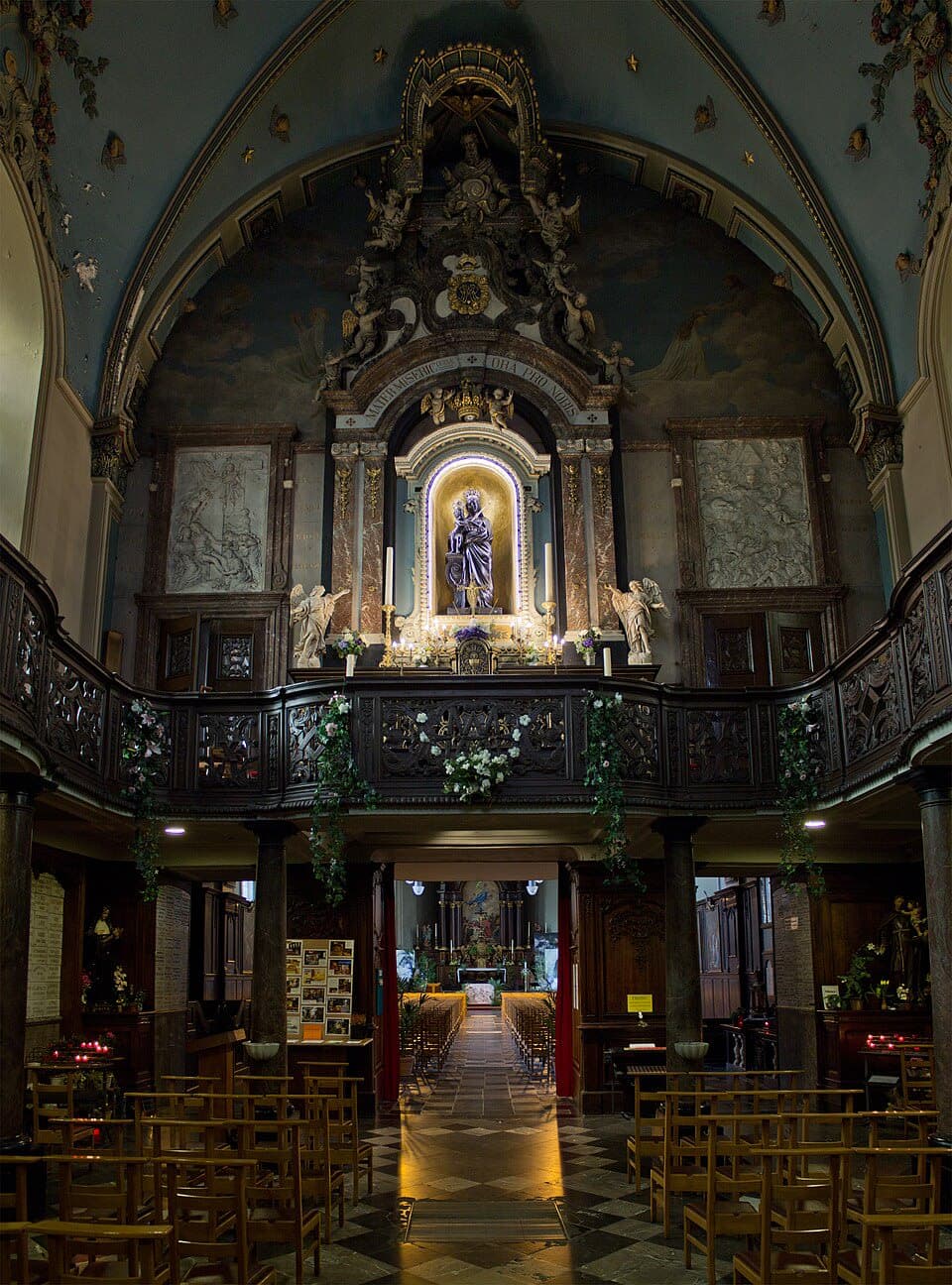
Black Virgin of the Recollects
Verviers, Liège, Belgium
0.5 km away
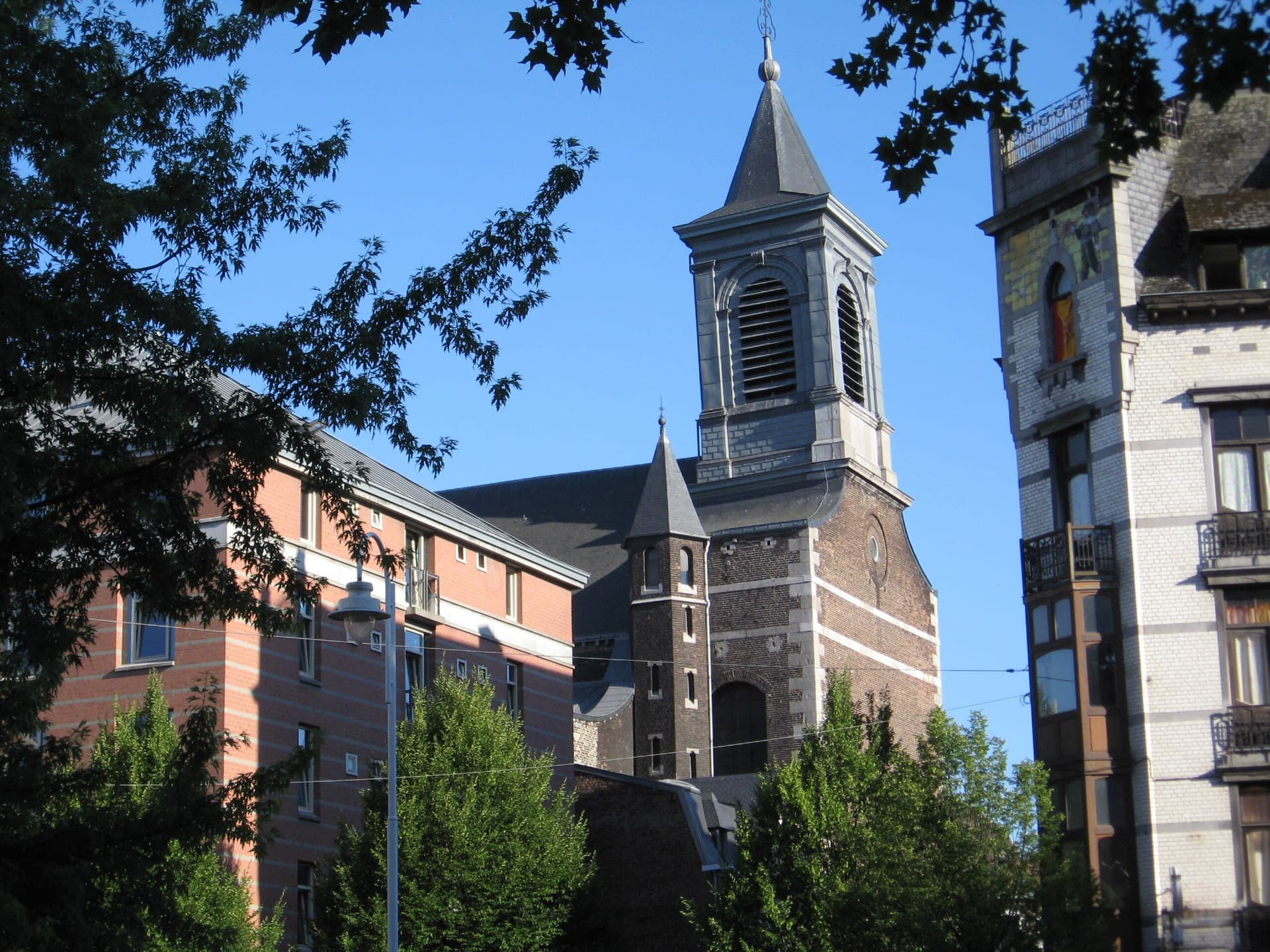
Church of St. Nicholas of Outremeuse (Black Virgin)
Liège, Wallonia, Belgium
21.0 km away
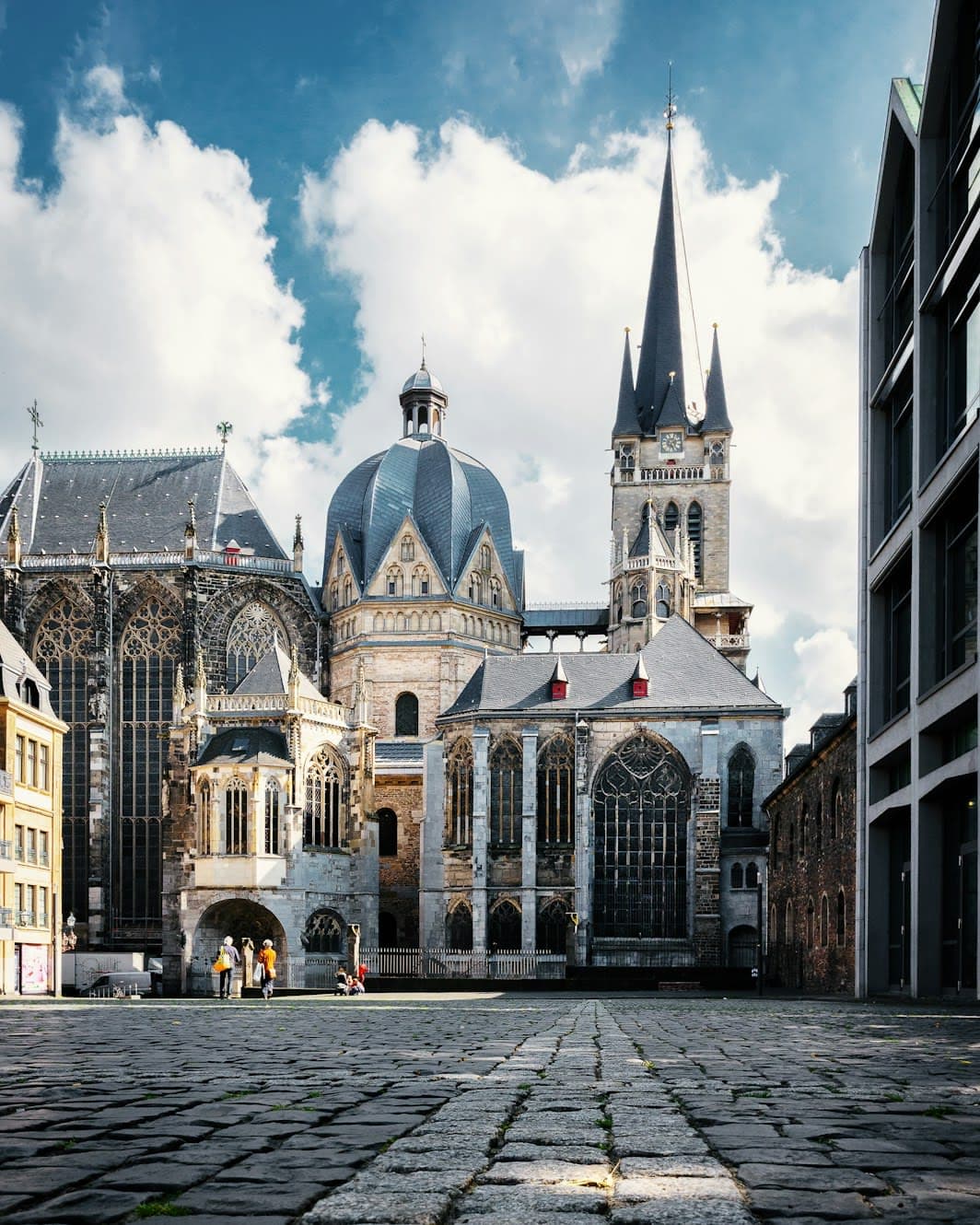
Aachen Cathedral
Aachen, North Rhine-Westphalia, Germany
25.7 km away
Kapel in 't Zand Church, Roermond, Netherlands
Roermond, Limburg, Netherlands
66.5 km away