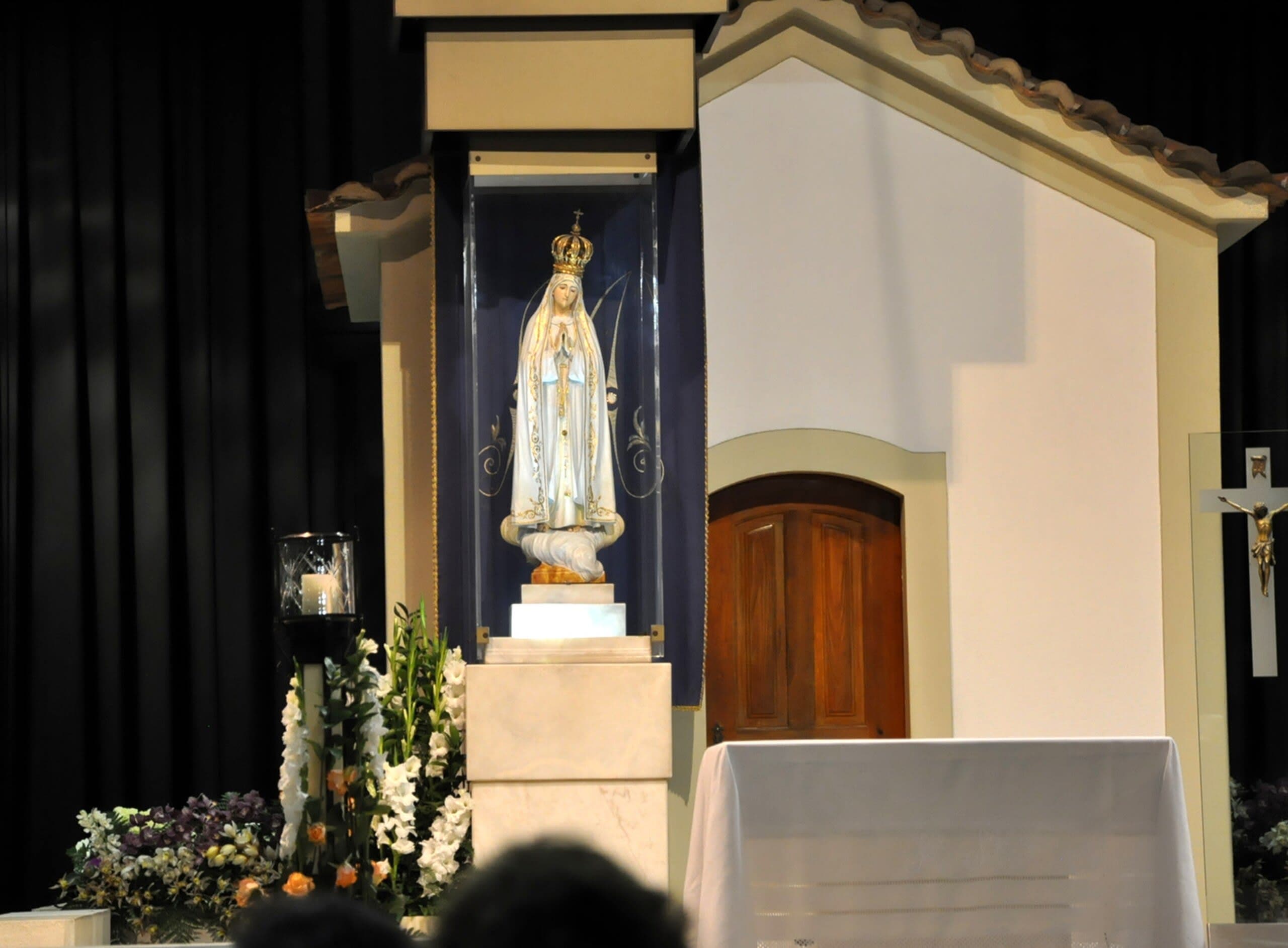
Chapel of the Apparitions (Our Lady of Fátima)
Where Mary appeared to three shepherd children, and pilgrims still gather at the exact spot she stood
Fátima, Santarém, Portugal
At A Glance
- Coordinates
- 39.6316, -8.6743
- Suggested Duration
- Time at the chapel itself may be brief, from moments to extended contemplation, depending on your practice and the crowds present. A meaningful visit to the sanctuary as a whole requires at least half a day, allowing time for the chapel, the basilicas, and the tombs of the visionaries. Those who wish to experience the candlelight procession should plan to stay through the evening.
Pilgrim Tips
- Dress modestly. Shoulders and knees should be covered. This applies regardless of gender. Revealing or casual beachwear is inappropriate. If in doubt, err on the side of covering more. The chapel is not the place to test boundaries.
- Photography should be extremely discreet. The chapel is primarily a place of prayer, not documentation. If you must photograph, do so quickly, silently, and without flash. Never photograph individual pilgrims at prayer without their explicit permission, which you should not seek in this space of silence. Consider whether photography is truly necessary or whether it is a way of avoiding genuine encounter.
- The chapel is a place of profound prayer. Do not treat it as merely a tourist site or a photographic subject. Enter with reverence and maintain absolute silence. If you cannot enter without photography or conversation, wait until you can. The chapel's small size means space is limited. Be conscious of others waiting to enter. Do not occupy the space so long that others cannot have their time there. Do not touch or climb on structures within or around the chapel. The site is preserved for future generations of pilgrims.
Overview
The Chapel of the Apparitions stands at the precise location where the Virgin Mary appeared to three Portuguese shepherd children in 1917. This small, humble chapel remains the spiritual heart of the Fatima sanctuary, drawing millions of pilgrims who come to pray where heaven is believed to have touched earth.
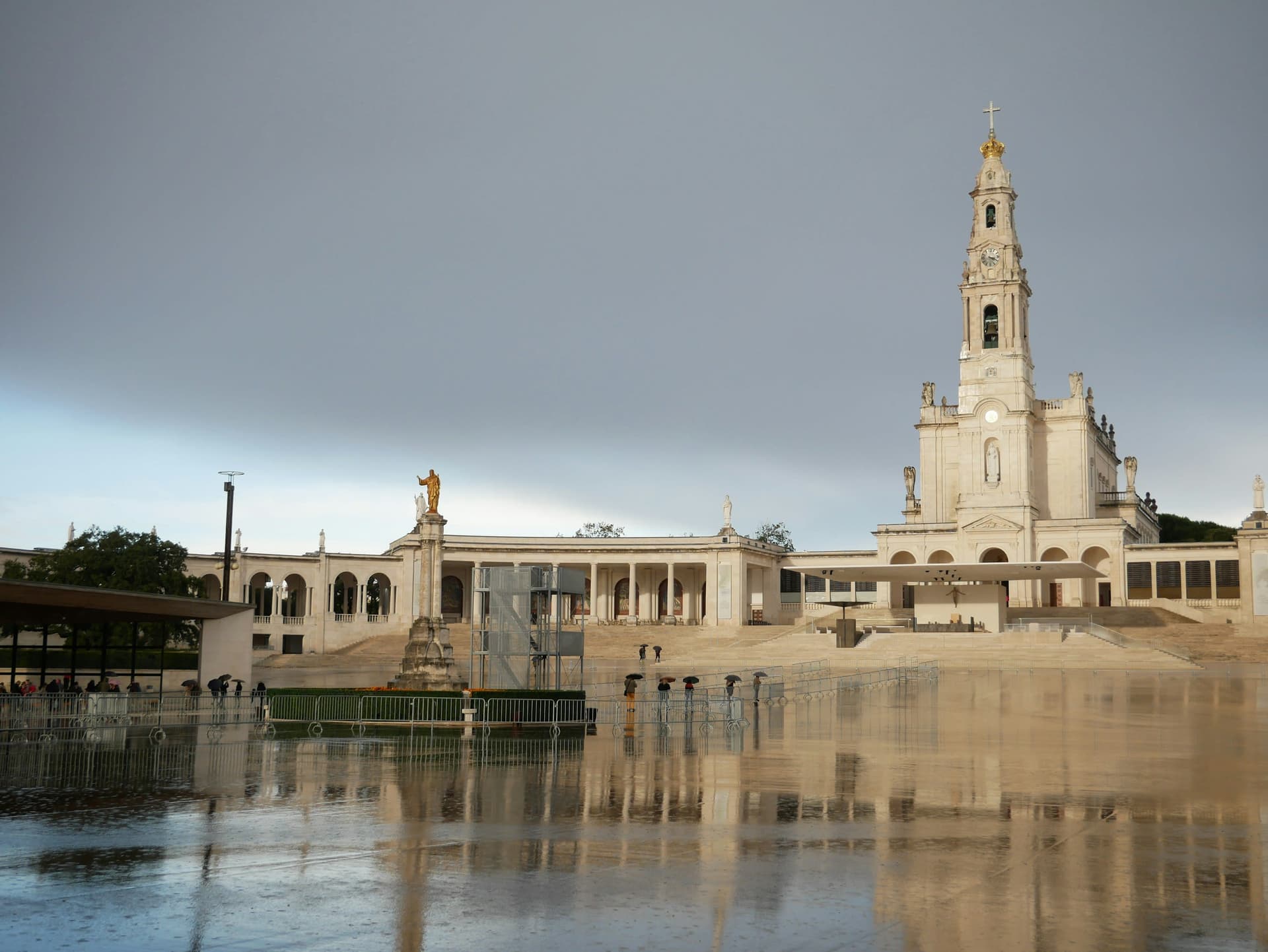
The grand basilicas of Fatima surround it, but pilgrims know where to go. Past the marble, past the towers, to the small white chapel at the center of the esplanade where Mary appeared to Lucia, Francisco, and Jacinta six times in 1917.
The chapel exists because she asked for it. During the fourth apparition, on August 19, Our Lady told the children she wanted a chapel built in her honor at this place. The faithful complied, constructing a humble structure where a holm oak tree once stood. That tree no longer exists. Devotees stripped it of every branch, every leaf, seeking relics of the encounter. Now a statue of Our Lady of Fatima stands on the exact spot, preserving the sacred geography while acknowledging that pilgrims' fervor consumed the original marker.
In 1922, anticlerical forces dynamited the chapel. It did not stay destroyed. The faithful rebuilt it, and it reopened on January 13, 1923. This survival has become part of its meaning. Faith persists. The chapel persists. Something about this small white building refuses to yield.
Each night, thousands gather for the candlelight procession that circles this chapel. Each day, pilgrims kneel in silence before the statue. The surrounding sanctuary has grown into a complex accommodating millions. But the essence remains here, in this small space built at Mary's request, marking the point where, according to Catholic teaching, the veil between heaven and earth grew thin enough for a mother to speak to her children.
Context And Lineage
The Chapel of the Apparitions was built between April and June 1919 in response to the Virgin Mary's request during the 1917 Fatima apparitions. After anticlerical bombing in 1922, it was rebuilt and reopened in 1923. The chapel marks the exact site where Mary appeared to Lucia dos Santos and her cousins Francisco and Jacinta Marto six times between May and October 1917.
The story begins in the Cova da Iria, a rural hollow outside the Portuguese village of Fatima. On May 13, 1917, three shepherd children, Lucia dos Santos (age 10) and her younger cousins Francisco (age 9) and Jacinta Marto (age 7), were tending sheep when they saw a lady dressed in white, standing above a holm oak tree. She was 'brighter than the sun,' Lucia would later report.
The lady appeared five more times, always on the 13th of the month, always at the same location. Word spread. Crowds grew. By the final apparition on October 13, 1917, perhaps 70,000 people had gathered, many witnessing what became known as the Miracle of the Sun, when the solar disc appeared to dance, spin, and plunge toward the earth.
During the August 19 apparition, the lady made a specific request: she wanted a chapel built at this location in her honor. During the October 13 apparition, when asked her identity, she replied: 'I am the Lady of the Rosary.' The children now knew who had been speaking to them.
The faithful responded to Mary's request. Between April 28 and June 15, 1919, a humble chapel was constructed by mason Joaquim Barbeiro of Santa Catarina da Serra. On October 13, 1921, the first Mass was celebrated there. The chapel stood where the holm oak had grown, preserving the sacred geography of the apparitions.
But Portugal in the early 1920s was hostile to religious expression. On March 6, 1922, anticlerical forces dynamited the chapel. The attack caused severe damage but did not destroy the faith that had gathered around the site. The chapel was rebuilt and reopened on January 13, 1923. It has stood ever since, surviving everything Portugal's turbulent 20th century could bring.
The Chapel of the Apparitions sits at the center of what has become one of the most visited Marian shrines in the world. From the humble 1919 structure, the Sanctuary of Fatima has grown into a complex that includes the Basilica of Our Lady of the Rosary (completed 1953), the Church of the Most Holy Trinity (completed 2007), and facilities for millions of annual pilgrims.
Yet the chapel remains the heart. Everything else grew around it. The great basilicas orient toward it. The candlelight processions circle it. When popes visit Fatima, they come to the chapel. Its position at the center of the sanctuary reflects its position at the center of the Fatima story: this is where it happened, and the faithful have never let that specificity be obscured by the grandeur that surrounds it.
The visionaries themselves have become part of the lineage. Francisco and Jacinta, canonized in 2017, are buried in the Basilica of Our Lady of the Rosary. Lucia, who died in 2005 after a long life as a Carmelite nun, is buried there as well. Their tombs draw pilgrims who want to pay respects to the children who first knelt at this spot, who first heard Mary's voice, who carried her message into a world that was not always ready to receive it.
Our Lady of Fatima
apparition
The Virgin Mary, who appeared to three shepherd children at Fatima in 1917. She identified herself as 'Our Lady of the Rosary' during the final apparition and requested that a chapel be built in her honor at the apparition site.
Lucia dos Santos
visionary
The eldest of the three visionaries, age 10 at the time of the apparitions. Lucia alone could hear Mary speak. She became a Carmelite nun and lived until 2005, serving as the primary witness to the Fatima events.
Francisco Marto
visionary
Lucia's younger cousin, age 9 during the apparitions. He could see the lady but not hear her voice. Francisco died in 1919 during the influenza pandemic and was canonized as a saint in 2017.
Jacinta Marto
visionary
Francisco's younger sister, age 7 during the apparitions. She could see and hear the lady. Jacinta died in 1920 during the influenza pandemic and was canonized alongside her brother in 2017.
Why This Place Is Sacred
The Chapel of the Apparitions marks the exact location where, according to Catholic tradition, the Virgin Mary appeared six times in 1917. Built at her explicit request, it stands on the precise spot where the holm oak tree once grew. The chapel's survival through anticlerical bombing and its role as the focal point for over a century of continuous pilgrimage have deepened its significance as a thin place where heaven and earth draw near.
The sacredness of this site derives from specificity. Not a general area, not a region, but this exact spot. The statue of Our Lady stands on a pedestal positioned precisely where the holm oak tree grew, above which Mary appeared to the three shepherd children. The chapel surrounds this point like a vessel holding something too important to leave unprotected.
Mary's request was explicit. During the August 19 apparition, she told the children: 'I want you to make a chapel here in my honour.' She indicated that money left by pilgrims at the Cova da Iria should fund its construction. The final apparition on October 13, 1917, when Mary identified herself as 'Our Lady of the Rosary,' confirmed this request. Within two years, local believers had built the chapel she asked for.
The holm oak tree above which Mary appeared no longer exists. Pilgrims' devotion consumed it. As word of the apparitions spread, the faithful came seeking relics, taking branches, stripping bark, until nothing remained. This destruction-through-devotion speaks to the intensity of what people believed had occurred here. Now the statue stands as a permanent marker, less vulnerable to fervent hands than a living tree.
The chapel's survival through persecution adds another dimension. On March 6, 1922, anticlerical elements dynamited the structure. The attack was meant to destroy what it represented, to sever the connection between this place and the faith that had gathered around it. Instead, the bombing became another chapter in the story. The faithful rebuilt. The chapel reopened less than a year later. Persecution had only deepened its significance.
Over a century of continuous pilgrimage has accumulated here. Millions of prayers, intentions, tears, and thanksgivings have been offered at this spot. Whether one understands this as spiritual reality or human psychology, the weight of all that focused attention is palpable. Something has been deposited here, layer upon layer, until the chapel carries more than its stones.
The chapel was built for a single purpose: to honor Mary's explicit request. During the 1917 apparitions, she asked the children to have a chapel constructed at this location. The faithful fulfilled this request, building a humble structure that would mark the apparition site and provide a focal point for devotion. From the beginning, its purpose was not architectural but commemorative and devotional, a physical response to a perceived divine instruction.
The chapel has remained remarkably consistent in purpose and form since 1919. The original structure, built by mason Joaquim Barbeiro of Santa Catarina da Serra, was humble by design. After the 1922 bombing, the rebuilt chapel preserved essentially the same character. While the surrounding sanctuary has grown into a massive complex with grand basilicas and facilities for millions, the chapel itself has resisted grandeur. Its simplicity contrasts with everything around it, returning pilgrims to the essence of what happened here: a divine encounter in a rural Portuguese field, received by three illiterate shepherd children.
What has evolved is the chapel's role within the larger sanctuary. It has become the gravitational center around which everything else orbits. The nightly candlelight procession circles it. Major liturgies orient toward it. Pilgrims who come for any reason eventually find their way here, to the small white chapel that holds the spot where heaven is believed to have touched earth.
Traditions And Practice
The Chapel of the Apparitions is a place of continuous prayer. Pilgrims come for silent contemplation, rosary, and veneration of the statue of Our Lady. The chapel serves as the focal point for the nightly candlelight procession, and special devotions are held on the 13th of each month from May through October.
The fundamental practice at the Chapel of the Apparitions is simple: prayer before the statue of Our Lady, at the exact location where she appeared. This has remained constant since the chapel's construction. Pilgrims kneel in silence or pray the rosary, which Mary specifically encouraged during the apparitions when she identified herself as 'Our Lady of the Rosary.'
The rosary carries particular significance here. During the apparitions, Mary called for daily rosary recitation as a means of obtaining peace for the world and the end of war. Pilgrims who pray the rosary at the chapel are continuing a practice explicitly requested by the lady who appeared at this spot.
The chapel remains in continuous use for prayer. Pilgrims enter throughout the day and night, maintaining a presence of prayer at the apparition site. There is no formal schedule within the chapel itself, only the ongoing presence of the faithful.
The nightly candlelight procession is the most visible contemporary practice. Beginning at the chapel, thousands of pilgrims process around the sanctuary carrying candles, praying the rosary and singing hymns. This procession occurs year-round and is particularly significant on the anniversary dates of the apparitions.
On the 13th of each month from May through October, commemorating the dates of the original apparitions, special devotions draw larger crowds. May 13 and October 13 are the most significant dates, marking the first and last apparitions. Major ceremonies may be held at the larger basilicas, but pilgrims inevitably return to the chapel, to the specific location where the encounters occurred.
If you come seeking more than observation, consider these invitations:
Arrive early in the morning, before crowds gather, when the chapel is quietest. Kneel before the statue and allow the silence to settle. You need not pray formally if that is not your practice. Simply be present at the place where, according to the faithful, heaven opened.
Pray the rosary here if it is part of your tradition. The practice carries particular weight at this location, where Mary specifically requested it. Let the repetition create space, let the beads mark time, let the mysteries unfold in the specific context of where you kneel.
If you are present in the evening, join the candlelight procession. Carry your candle around the sanctuary, joining thousands of others in a practice that has continued since pilgrims first gathered here. Let yourself be part of something larger than your individual prayer.
Before leaving, pause at the place where the holm oak stood, now marked by the statue's pedestal. This is the most sacred ground, the point where heaven is believed to have touched earth. Bring what weighs on you. Bring what you hope for. Leave it here, in this small space built because a lady asked for it.
Roman Catholicism
ActiveThe Chapel of the Apparitions marks the exact location where the Virgin Mary appeared to three shepherd children six times in 1917. Built at Mary's explicit request, it stands at the spiritual heart of one of the most visited Marian shrines in the world. The statue of Our Lady of Fatima is positioned on the precise spot where the holm oak tree stood, above which Mary appeared. The chapel's survival through anticlerical bombing and its role as focal point for over a century of continuous pilgrimage have established it as a place of profound significance for Catholic devotion to Mary.
Prayer, veneration of the statue of Our Lady of Fatima, rosary recitation, silent contemplation, participation in the nightly candlelight procession, special devotions on the 13th of each month from May through October.
Marian Devotion (Broader)
ActiveBeyond formal Catholic practice, the chapel draws those with devotion to Mary that may not be contained within institutional boundaries. Some come from Orthodox traditions that honor the Theotokos. Others come from cultural Catholic backgrounds where Marian devotion persists even when formal practice has lapsed. Still others are drawn by Mary as a feminine aspect of the divine, regardless of doctrinal specifics. The chapel accommodates all who come seeking encounter with the Mother.
Prayer, meditation, offerings of intention rather than physical objects, participation in processions, and pilgrimage understood broadly as sacred journey.
Experience And Perspectives
Pilgrims describe the Chapel of the Apparitions as the spiritual heart of Fatima. Despite the surrounding grandeur, this small, humble chapel draws the deepest devotion. The atmosphere is one of intense, quiet prayer. Many report feeling an overwhelming sense of Mary's presence when standing where she is believed to have appeared.
The chapel's power lies partly in its contrast. After walking across the vast esplanade, past basilicas capable of holding thousands, pilgrims arrive at this small, unassuming structure. The scale shift is disorienting in a useful way. Something that could accommodate so few people somehow matters more than the grand structures that dwarf it.
Inside, the atmosphere is one of concentrated stillness. Pilgrims kneel in silence, their attention focused on the statue of Our Lady positioned exactly where she is believed to have appeared. The silence is not empty but full, charged with the prayer of those present and perhaps with something accumulated over a century of pilgrimage. Even those who arrive skeptical often find themselves moved by the intensity of faith visible in the faces around them.
Many pilgrims report a sense of Mary's presence here that they do not experience elsewhere in the sanctuary. The specific location seems to matter. Knowing that this is the exact spot, that the statue stands where the tree once stood, creates a connection that more beautiful or elaborate spaces do not achieve. The holy is encountered not through grandeur but through specificity.
The candlelight procession that circles the chapel each evening creates a different but equally powerful experience. Thousands of pilgrims walk with candles, their flames flickering in the darkness, while prayers and hymns fill the air. The chapel becomes the axis around which this river of light flows. Those who have participated describe it as one of the most moving experiences of their lives, a visible manifestation of faith that transcends language and culture.
Pilgrims who come during life transitions, carrying grief or seeking guidance, often find the chapel particularly meaningful. The simple act of kneeling where Mary is believed to have stood, of placing one's burdens at the feet of her statue, offers something that words and theology cannot provide. The specificity of place creates a container for the specificity of pain.
The Chapel of the Apparitions rewards approach on foot across the esplanade rather than arrival by vehicle near the entrance. The walk creates space for transition, for leaving behind the noise of travel and entering a different mode of attention. Let the vast basilicas orient you, but let the chapel be your destination.
When you arrive, take a moment before entering. The chapel is small, and space is limited. If it is crowded, wait. There is value in patience here, in approaching the space when you can give it full attention rather than squeezing in among others.
Inside, let silence do its work. This is not a place for requests or agendas but for presence. Sit or kneel with the statue before you and allow whatever arises to arise. Many find that their carefully prepared prayers dissolve into something simpler: presence before presence, an encounter that does not require words.
If you are present for the evening candlelight procession, participate rather than observe. The experience of walking with thousands of others, flame in hand, around this chapel that holds the center, is different from watching. Let yourself be part of the river of light.
The Chapel of the Apparitions holds different meanings depending on one's framework. For the Catholic faithful, this is the exact location of genuine Marian apparitions, a place where heaven touched earth. Scholars examine the events through historical, sociological, and psychological lenses. Others bring frameworks that neither accept nor reject the supernatural claims but seek to understand what draws millions to this small white chapel.
Historians and scholars of religion approach the Fatima events within their cultural and political context. Portugal in 1917 was a republic hostile to the Catholic Church. The apparitions and the subsequent Miracle of the Sun occurred during World War I, a time of crisis and yearning for divine intervention. Some scholars emphasize how the events functioned socially, providing consolation to a suffering population and eventually becoming a symbol of Portuguese Catholic identity against anticlerical government.
Psychological and sociological analyses examine the dynamics of crowds, suggestion, and collective religious experience. The Miracle of the Sun, witnessed by tens of thousands, has been variously explained as mass hallucination, atmospheric phenomena, or genuine miracle, depending on the scholar's presuppositions.
What scholarly consensus confirms is the historical impact: the apparitions transformed Fatima from an obscure village into one of the world's most significant pilgrimage sites. The chapel's survival through bombing, the church's eventual approval of the apparitions as worthy of belief, and the canonization of two visionaries demonstrate how the events have been integrated into official Catholic narrative.
For Catholic tradition, the Chapel of the Apparitions marks a genuine encounter between heaven and earth. The Virgin Mary appeared to three shepherd children to deliver a message: pray the rosary daily, make sacrifices for the conversion of sinners, and consecrate Russia to her Immaculate Heart. She revealed three secrets, two of which were disclosed by the Vatican and one that remains a matter of interpretation.
The church has declared the apparitions worthy of belief, meaning Catholics may accept them as genuine private revelation, though assent is not required. The canonization of Francisco and Jacinta Marto in 2017 further affirmed the church's acceptance of the Fatima events. For the faithful, kneeling in the chapel is kneeling at the place where heaven opened, where Mary herself stood and spoke.
Some interpret the chapel as a thin place where the barrier between dimensions became permeable, using language drawn from Celtic spirituality or contemporary spiritual seeking rather than Catholic theology. From this perspective, what happened at Fatima may represent a genuine non-ordinary encounter without requiring acceptance of specifically Catholic theological claims about the Virgin Mary.
Others raise questions about how sacred sites are constructed and maintained. The transformation of the natural marker (holm oak tree) into a human-made structure (chapel and statue) invites reflection on the relationship between place, memory, and the built environment. What does it mean to preserve sacred geography when the original geography has been consumed by devotion?
Critics, meanwhile, point to the political uses of Fatima, its role in legitimizing Franco's Spain and Salazar's Portugal, and questions about the content and interpretation of the secrets. These critiques need not deny genuine religious experience among pilgrims but ask how such experience becomes embedded in institutional and political structures.
Genuine mysteries remain. What exactly happened at the Cova da Iria in 1917? The church's approval of the apparitions as worthy of belief does not constitute proof of supernatural occurrence. The nature of religious experience, the possibility of authentic encounter with the divine, the relationship between subjective experience and objective reality—these questions exceed what history or theology can definitively resolve.
The third secret of Fatima, revealed by the Vatican in 2000 as a vision of a bishop in white being killed, has generated ongoing debate about interpretation and whether the full content has been disclosed. What Mary intended to communicate, and whether humans have rightly understood it, remains a matter of faith and interpretation.
Perhaps the deepest mystery is the simplest: why here? Why these children? Why this remote Portuguese hollow? The chapel marks the spot but does not explain the choice. That mystery stands at the center of the sanctuary, unanswered and perhaps unanswerable, inviting pilgrims to approach without demanding resolution.
Visit Planning
The Chapel of the Apparitions is at the center of the Sanctuary of Fatima, about 130 kilometers north of Lisbon. The chapel is open continuously for prayer. The most significant times are the 13th of each month from May through October, with May 13 and October 13 drawing the largest crowds.
Fatima has extensive accommodations for pilgrims, ranging from simple hostels to hotels. Many options are operated by religious organizations and cater specifically to pilgrims. The town is geared toward pilgrimage, with most services within walking distance of the sanctuary. During major anniversary dates, accommodations fill far in advance; book months ahead if visiting around May 13 or October 13.
The Chapel of the Apparitions requires absolute silence and reverent behavior. This is an active place of intense prayer, not a tourist attraction. Dress modestly, maintain silence, and be extremely discreet if photographing. Your presence is a privilege extended by those who are here to pray.
The most important principle is silence. Absolute, interior silence. This is not a place for whispered conversation, not a place for explaining the site to companions, not even a place for audible prayer. The silence here is not empty but full. It holds the prayers of millions who have knelt at this spot. Do not break it.
Your presence at the chapel is a privilege. The faithful who gather here are not performing faith for your observation. They are praying, often with an intensity that casual visitors may find unfamiliar. Approach with the awareness that you are entering sacred space that belongs first to those who have come for genuine encounter.
Move slowly and quietly. Genuflect or bow if that is your tradition. If it is not, simply enter with respect. Find a place to kneel or sit and remain still. Watch how regular pilgrims behave and follow their example.
Do not approach the altar or statue area unless you are there to pray. This is not a viewing platform. If you have come only to see, see from the back. If you have come to pray, approach and kneel.
Be conscious of how long you remain. Others wait to enter. A meaningful encounter does not require extended time. Allow others their opportunity as you take yours.
Dress modestly. Shoulders and knees should be covered. This applies regardless of gender. Revealing or casual beachwear is inappropriate. If in doubt, err on the side of covering more. The chapel is not the place to test boundaries.
Photography should be extremely discreet. The chapel is primarily a place of prayer, not documentation. If you must photograph, do so quickly, silently, and without flash. Never photograph individual pilgrims at prayer without their explicit permission, which you should not seek in this space of silence. Consider whether photography is truly necessary or whether it is a way of avoiding genuine encounter.
Candles are traditionally lit in the area near the chapel, not inside it. Do not leave physical offerings inside the chapel. The offering appropriate to this space is prayer itself.
Maintain absolute silence. Do not enter during formal liturgies unless participating. Do not touch the statue or altar. Do not bring food or drink. Turn off mobile phones or set them to silent and do not use them inside the chapel. Large bags may be restricted; check current sanctuary guidelines.
Sacred Cluster
Nearby sacred places create the location cluster described in the growth plan. This block is intentionally crawlable and links into the wider regional graph.