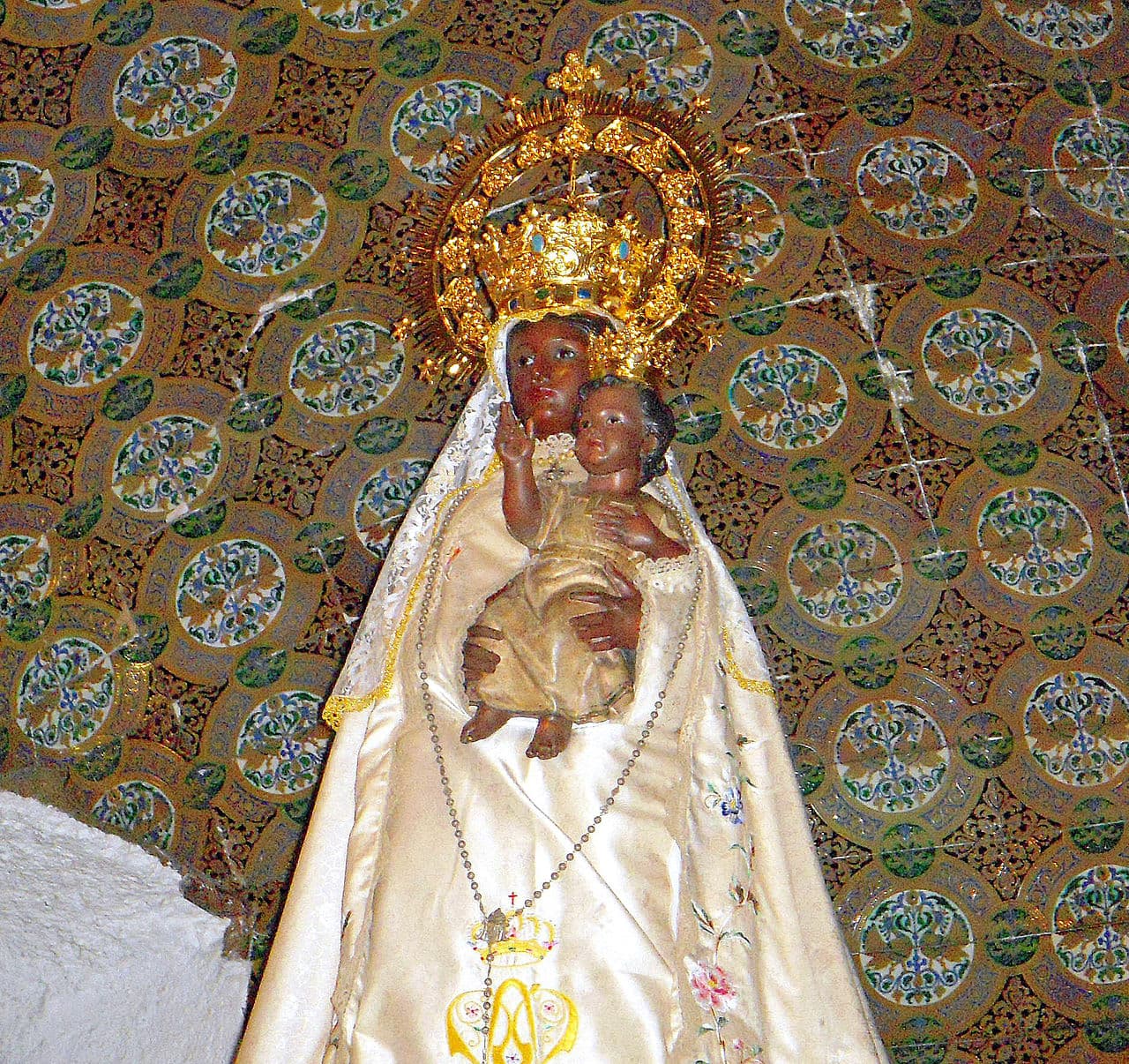
Our Lady of Pena de Francia
Where a hidden Madonna emerged from centuries of silence atop Spain's sacred mountain
El Cabaco, Castile and León, Spain
At A Glance
- Coordinates
- 40.5125, -6.1692
- Suggested Duration
- Two to three hours allows for exploring the sanctuary, attending to the Virgin, and taking in the views. A full day permits hiking from nearby villages or combining the sanctuary with visits to La Alberca and other Sierra de Francia destinations. Those seeking deeper engagement should stay overnight, allowing time for evening and morning presence when day visitors have departed.
Pilgrim Tips
- Modest clothing appropriate for a Catholic church. Cover shoulders and knees. Comfortable shoes suitable for uneven terrain and potentially climbing stairs. Layers to accommodate mountain weather, which can shift quickly and differs significantly from valley temperatures.
- A photography exhibition area has been established in the monastery. General photography is permitted in public areas with appropriate discretion. Check current rules before photographing inside the church. Photographing during Mass or other services is inappropriate. No tripods without permission.
- This is an active Catholic sanctuary, not a museum or tourist attraction. The friars who live here are not staff hired to service visitors but religious dedicating their lives to prayer. Approach with corresponding respect. The road to the summit demands careful driving: narrow, with steep drops, often single-lane with limited visibility around curves. In winter, check conditions before attempting the journey. Snow and ice close the road regularly. Do not attempt to access restricted areas of the monastery. Only the chapels, cloister, and photography exhibition are open to visitors. The friars' residential and prayer spaces are private.
Overview
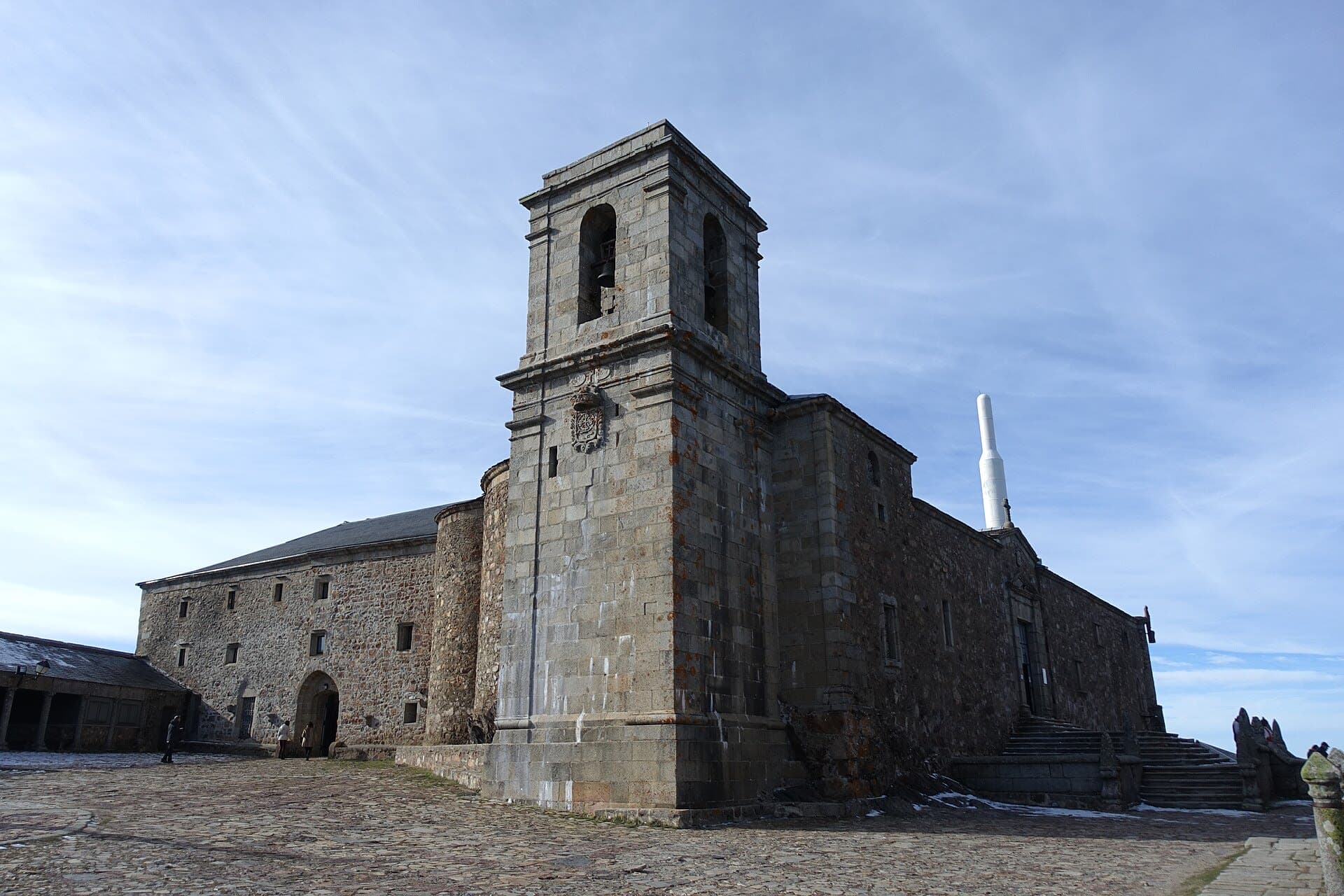
Rising 1,723 meters above the plains of Castilla y Leon, this mountain sanctuary guards an image of the Virgin hidden from invaders for centuries and rediscovered through divine vision. For nearly six hundred years, pilgrims have climbed toward the Black Madonna of Pena de Francia, seeking intercession at one of the world's highest Marian shrines. The Dominican friars who tend the sanctuary continue a tradition unbroken since 1437.
There are pilgrimages that end at their destination, and there are those that feel like arrival before you reach the summit. The winding road to Pena de Francia belongs to the second category. Each switchback lifts you higher above the ordinary world. Each turn reveals another valley dropping away below. By the time the sanctuary appears, perched impossibly on the granite peak, the journey has already begun its work.
The Virgin who waits here was not always waiting. For centuries she lay hidden in this mountain, buried by Christians fleeing Moorish conquest. When Simeon Vela unearthed her in 1434, guided by dreams and a voice that told him to stay awake, he found not just an image but a continuity reaching back to Charlemagne's time. The discovery drew immediate crowds. Healings were reported at once. Within years, a Dominican monastery rose around the find.
That monastery still stands. The friars still pray. Pilgrims still arrive, some by foot along ancient trails, others by the narrow mountain road that tests nerves and rewards persistence. What they find is a church stripped to essentials by weather and altitude, a Black Madonna whose origins remain partly mysterious, and views that stretch to Portugal. They also find something harder to photograph: a thinness in the mountain air that goes beyond meteorology.
The Virgin of Pena de Francia has spread far from this peak, particularly to the Philippines, where she became one of the most beloved Marian images. But here, at the source, she remains what she was when Simeon Vela first lifted her from the earth: a presence that draws those who seek her.
Context And Lineage
The sanctuary's history begins with mystery: a statue hidden from Moorish invaders and lost for centuries. Its discovery in 1434 by a French mystic named Simon Vela initiated six centuries of pilgrimage. The Dominican Order has tended the site since 1437, surviving expulsion and returning to continue their vigil. The Virgin's patronage now extends over the province of Salamanca and the autonomous community of Castilla y Leon.
The earliest chapter remains veiled in tradition rather than documentation. According to accounts passed down through centuries, the statue of the Virgin existed during Charlemagne's reign in the eighth century. French knights fighting against Muslim forces found the image on the mountain, won their battle with her help, and a French bishop consecrated the peak as Monte Sacro. When Christian territories fell to Muslim conquest, the faithful buried their Madonna to save her from destruction.
For centuries, she slept in the mountain. Then Simon Vela was born in Paris to pious parents who taught him devotion. Renouncing his inheritance, he became a Franciscan lay brother. One night, praying in an empty church, he heard a voice: wake up, go to Pena de Francia, find a shrine of the Blessed Virgin Mary. The voice added words that became his name: Simon, vela y no duermas. Simon, stay awake and do not sleep.
He searched for five years. Across France, along the Camino de Santiago, asking every pilgrim he met for a place called Pena de Francia. None knew it. Finally, in Salamanca's marketplace, a coal vendor called out about his merchandise from Mount Pena de Francia. Simon had his direction at last.
On May 19, 1434, guided to the exact spot by apparitions and light, Simon and four companions began to dig. Beneath a massive rock, they found the Virgin along with other images and church bells hidden from the Moors centuries before. At the moment of discovery, witnesses reported, healings occurred immediately.
The Dominican friars who arrived on June 11, 1437, five in number, inaugurated a presence that has survived revolution, disentailment, and theft. The formal establishment of the Dominican cult on October 10, 1437, marks the beginning of continuous religious life on the summit.
The nineteenth century brought disruption. The Mendizabal disentailment of 1836 expelled religious orders across Spain, leaving Pena de Francia abandoned. The Virgin's image moved between rival villages until 1859, when she returned to the summit. Theft in 1872 removed the original statue for seventeen years. When fragments were recovered, the current image was created to house them.
The Dominicans returned in 1900 and have remained since. The solemn coronation of the image in 1952 and Pope Paul VI's designation of the Virgin as patron of Salamanca province in 1966 have strengthened her official status. But the essential reality remains unchanged since 1437: friars on a mountain, tending a Madonna, receiving pilgrims who climb toward her.
Simon Vela
founder
A French Franciscan lay brother who spent five years searching for the mountain the Virgin revealed to him in a vision. His surname, Vela, comes from the voice's command to stay awake. After discovering the buried image in 1434, he built the first chapel on the summit and lived out his days in devotion to the Virgin he had unearthed.
Juana Hernandez
prophet
A holy woman who prophesied on her deathbed, before Simon Vela's discovery, that an image of the Virgin lay hidden on Pena de Francia and would soon come to light. She told listeners that Our Lord would work many miracles through it.
King Juan II of Castile
patron
The monarch who granted royal authorization for the Dominican convent on November 19, 1436, establishing the institutional framework that has sustained the sanctuary for nearly six centuries.
Pope Martin V
patron
The pope who gave blessing to the Dominican foundation, adding papal authority to royal patronage and confirming the sanctuary's significance within the universal Church.
Why This Place Is Sacred
Pena de Francia's sacredness emerges from the convergence of extreme altitude, centuries of continuous pilgrimage, the mysterious origins of its buried Madonna, and the dramatic encounter between heaven and earth that its summit provides. The Virgin's hidden survival through centuries of invasion and her miraculous rediscovery charge the site with a quality of preserved holiness, as though something was protected here that the world needed.
What makes a mountain holy? Sometimes the answer is human designation, arbitrary as a line on a map. Sometimes something in the land itself seems to summon recognition. Pena de Francia appears to be the second kind.
The granite peak rises to 1,723 meters, the highest point in the Sierra de Francia. On clear days, three provinces spread below: Salamanca, Caceres, and the Portuguese border beyond. The summit stands isolated, visible for miles, the kind of landmark that gathers meaning simply by commanding attention. Early Christians called it Monte Sacro, the sacred mountain. They may have been the first to name it so. They may not have been.
The image discovered here adds layers of significance. According to tradition, the statue dates to Charlemagne's era, brought by French knights who won a battle with the Virgin's help. When the Moors advanced, Christians buried her rather than let her be destroyed. For perhaps six hundred years, she waited in the darkness of the mountain.
Simeon Vela's discovery reunited the Madonna with light. The immediate healings reported at the moment of unearthing suggest something had been stored, accumulated, waiting for release. Whether one understands this through Catholic theology or more diffuse intuition, the pattern is recognizable: a sacred object hidden, protected, revealed at the proper time. The site becomes charged not just with holiness but with patience, with the long faithfulness of things buried.
The altitude intensifies all of this. At nearly two kilometers above sea level, the air is thinner, literally. Visitors report lightheadedness that blurs into something else, a permeability. The boundary between inside and outside, between personal and cosmic, seems to soften. Some attribute this to oxygen levels. Others to accumulated prayer. The effect does not depend on explanation.
Before Simon Vela's discovery, the mountain itself may have held sacred significance. The French knights who named it Mont de France already understood it as a place where battles could be blessed and won. But the present sanctuary exists because of the Virgin's presence, unearthed and immediately venerated. From 1434 onward, the purpose was clear: to honor the Madonna who had chosen this peak to reveal herself, to provide a place for pilgrims to seek her intercession, and to maintain the prayers that keep sacred attention focused here.
The sanctuary's history has not been unbroken. The Mendizabal disentailment of 1836 expelled the Dominicans and left the buildings to decay. Villages below competed for the Virgin's image, moving her between Sequeros, Mogarraz, and La Alberca. When the original statue was stolen in 1872, it remained lost for seventeen years, damaged when finally recovered. The current image, created in 1890, encases fragments of the original visible through a small window.
These ruptures have become part of the sanctuary's meaning. The Virgin who survived burial, who survived abandonment, who survived theft, continues to survive. Each return strengthens the sense of something persistent here, something that will not be extinguished. The Dominicans who returned in 1900 tend a site that has proven its endurance.
Traditions And Practice
The sanctuary maintains active Catholic worship with daily Mass, annual pilgrimages, and continuous Dominican presence. Pilgrims can participate in liturgy, venerate the Black Madonna, and stay in the monastery guesthouse. Traditional practices connect contemporary seekers with centuries of accumulated devotion.
The discovery anniversary on May 19 commemorates the day Simon Vela unearthed the Virgin. The annual romeria from Ciudad Rodrigo, occurring the last weekend of June, sees devotees carry the Virgin's image to the city and back, maintaining a tradition of reciprocal visits between the Madonna and the town she protects. September 8, the Feast of the Nativity of Mary, serves as the principal feast day, drawing crowds to the mountaintop.
Veneration of the Black Madonna follows traditional Catholic form: approaching the image with reverence, offering prayers for intercession, lighting candles. The mystery of her dark skin and ancient origins adds dimensions beyond standard Marian devotion. She is one of the Black Madonnas of Europe, images whose darkness has inspired centuries of interpretation, from soot accumulation to deliberate choice to connections with pre-Christian earth goddesses.
Daily Mass grounds the sanctuary in liturgical rhythm. Monday through Saturday, Mass is offered at noon and 6:00 PM (5:00 PM in winter). Sundays and holy days add an 11:00 AM and 1:00 PM celebration. Arriving at the sanctuary as Mass concludes allows for prayerful entry as the friars complete their offering.
Pilgrimage on foot remains a living practice. The trails from La Alberca and Camping Sierra de Francia follow paths walked for centuries. Routes PR-SA 8 and PR-SA 9 from El Cabaco offer structured hiking options. The GR-10 long-distance trail passes through the area. Walking to the sanctuary, rather than driving, transforms a visit into pilgrimage in the traditional sense: the body's effort becomes prayer.
In winter months, when snow closes the summit, the Virgin descends to the Convent of Poor Clares in Zarzoso. This seasonal movement maintains accessibility while honoring the mountain's seasons. She returns to her peak when spring reopens the roads.
Begin at the church itself. Whether or not you attend Mass, spend time in the sanctuary's stillness. Approach the Black Madonna without agenda, simply being present to her presence. The centuries of prayer offered here have left their residue. Let it settle on you.
After the interior, walk the grounds. The Mirador and Balcon de Santiago offer views that extend the interior experience outward. Standing where pilgrims have stood for six centuries, looking across landscapes that remain largely unchanged, creates continuity with those who came before.
If you stay overnight at the monastery guesthouse, attend the friars' prayers if possible. The monastic hours structure their days as they have since 1437. Witnessing this rhythm, even briefly, connects you to the institutional continuity that preserves this place.
Before leaving, offer something internal. A prayer of gratitude, a naming of what you received, an intention to carry forward what shifted here. The sanctuary asks nothing of visitors but attention. Give that, at least.
Roman Catholic Marian Devotion
ActiveThe Virgin of Pena de Francia stands among Spain's most important Marian images. As patron saint of Ciudad Rodrigo, the province of Salamanca, and the autonomous community of Castilla y Leon, her reach extends far beyond the mountain. The devotion has spread globally, most significantly to the Philippines, where Our Lady of Penafrancia became one of the nation's most beloved Marian titles. At the source, pilgrims continue to climb seeking her intercession.
Daily Mass maintains liturgical continuity: Monday through Saturday at noon and 6:00 PM (5:00 PM winter), with additional celebrations on Sundays and holy days. The annual romeria from Ciudad Rodrigo on the last weekend of June represents the most significant pilgrimage. The Feast of the Nativity of Mary on September 8 draws crowds to the summit. Individual pilgrims venerate the Black Madonna, light candles, and offer prayers throughout the year.
Dominican Monastic Tradition
ActiveThe Dominican Order has been custodians of the sanctuary since 1436-1437, when King Juan II of Castile granted them authority with papal blessing from Pope Martin V. After the disruption of the Mendizabal disentailment forced their departure in 1836, they returned in 1900 and have maintained continuous presence since. The friars' daily rhythm of prayer creates the spiritual infrastructure that sustains the sanctuary.
The Dominican community maintains monastic hospitality through the guesthouse, offering pilgrims the opportunity to share in religious life. Their daily celebration of Mass and the Divine Office establishes the prayer that gives the site its character. They serve as guardians and preservers of the sacred image, continuing the charge given to their predecessors nearly six centuries ago.
Experience And Perspectives
Visitors to Pena de Francia consistently report a sense of spiritual elevation that goes beyond the physical altitude. The combination of the demanding approach, the austere mountaintop setting, and the intimate encounter with the Black Madonna creates conditions for transformation. Many describe arriving with burdens and departing lightened, though they struggle to articulate what exactly shifted.
The approach shapes everything. Whether you climb the narrow road, gripping the wheel through hairpin turns above steep drops, or hike the traditional trails from La Alberca, you earn your arrival. This is not a sanctuary you stumble upon. By the time you reach the summit, ordinary life has receded. The villages below look like toys. The horizon curves.
Visitors speak first of the views, which are genuinely vast, but quickly move to something less visual. The sanctuary's architecture is severe, built to withstand mountain weather rather than impress with ornamentation. The Gothic church has been stripped by centuries of wind to something essential. This austerity clarifies. There is nothing here to distract from the question that pilgrimage poses: what are you seeking?
The Black Madonna herself occupies a small space within the larger church. Approaching her involves the traditional Catholic rituals of veneration, but something happens even for those outside that framework. The image is dark-skinned, mysterious, her origins reaching back further than documentation can confirm. Meeting her gaze, visitors often report an unexpected emotional response, tears arriving without obvious cause, a sense of being known.
Those who stay overnight, whether in the monastery guesthouse or the hotel near the summit, describe a particular quality to their sleep. Dreams become unusually vivid. The transition between waking and sleeping softens. Some wake at odd hours and look out at stars that seem closer here, more insistent. The altitude keeps the world at bay.
The most profound reports come from those in transition: grieving, questioning their path, facing decisions that have resisted resolution. The sanctuary does not provide answers so much as create conditions for them to emerge. Something about the height, the silence, the centuries of accumulated intention, seems to thin the walls between the mind's compartments. What was stuck begins to move.
Pena de Francia rewards those who treat it as more than a viewpoint with a church attached. If you come seeking something specific, name it before you arrive. Not aloud necessarily, but clearly to yourself. The tradition of pilgrimage involves intention: you do not simply travel to a sacred place; you bring a petition, a question, a gratitude.
Consider timing your visit to include Mass, even if you are not Catholic. The liturgy has been performed here continuously since the fifteenth century. Participating, or simply witnessing, connects you to that lineage. The friars who celebrate Mass are not actors in a historical recreation; they are continuators of something living.
After any formal observance, find time to sit with the views. The Mirador and Balcon de Santiago offer expansive vistas. But the views are not merely scenic. They are part of the experience, reminding you of your smallness within vastness, your temporary presence within deep time. Let that proportion work on you.
If you are able, approach on foot at least for part of the journey. The trails from La Alberca and surrounding villages follow routes pilgrims have walked for centuries. Feet on this path connect you to those who came before. The exertion earns the arrival.
The sanctuary of Pena de Francia invites interpretation from multiple angles. Historians trace documented facts while acknowledging traditional accounts. Catholic faithful understand the site through the lens of Marian devotion and Dominican spirituality. Scholars of Black Madonnas place the image within broader European patterns. Each perspective illuminates something genuine; none exhausts the site's meaning.
Historians generally accept the basic chronology: discovery in 1434, Dominican custody from 1436-1437, continuous veneration with interruptions in the nineteenth century. The claim of eighth-century origins for the original statue rests on tradition rather than archaeological evidence. No documentation survives to confirm or deny the story of French knights, Charlemagne-era creation, or burial during Moorish times.
The sanctuary's importance as a center of Marian devotion in Castile is well established. The spread of the devotion to the Philippines through colonial-era connections created one of the most significant Marian cults in that nation, demonstrating the image's power to travel and take root in new contexts. Art historians note the Black Madonna as part of a European-wide phenomenon, though specific explanations for such images remain debated.
Within Catholic understanding, the Virgin's discovery represents divine providence working through Simon Vela's faithfulness. The voice he heard, the years of searching, the guidance to the exact spot, the immediate healings upon discovery, the subsequent miracles attributed to her intercession all confirm her special presence and power. The Virgin of Pena de Francia actively protects those devoted to her, answering prayers and working wonders.
The Black Madonna tradition adds depth to this understanding. Whether the darkness represents age, material, or mysterious intention, it connects this image to others throughout Europe and to older layers of veneration whose precise origins remain unknown. Traditional practitioners do not require explanation for the holiness they experience; they encounter it directly.
Some researchers, including Ean Begg in his comprehensive study of Black Madonnas, connect the Virgin of Pena de Francia to broader patterns in European sacred geography. The Black Madonnas of Europe are often associated with pre-Christian sacred sites, earth-goddess veneration, or alchemical and esoteric symbolism. The mountain's designation as Monte Sacro and its dramatic isolated peak suggest it may have held significance before the Christian era.
From this perspective, Simon Vela's discovery represents not the creation of sacredness but its Christianization: a place already powerful, given new form and story. Whether the original image was intentionally darkened, whether it represents Mary or an older figure, whether the mountain's power exists independent of any image, remain questions this perspective holds open rather than answers.
Genuine mysteries persist despite centuries of devotion and study. The true origins of the original statue, now visible only as fragments through a window in the 1890 replacement, remain uncertain. Whether the mountain held sacred significance before Christian times cannot be confirmed. The circumstances of the statue's burial and the identity of those who hid it are lost to history. What happened to the original during its seventeen years of theft (1872-1889) is unknown.
These uncertainties are not failures of the historical record but part of the site's meaning. A mystery preserved is a mystery still available to engagement. The faithful encounter a Virgin whose origins exceed documentation. Seekers find a mountain whose power predates any story told about it.
Visit Planning
The sanctuary is accessible by car via winding mountain roads, or on foot via traditional pilgrimage trails. Late spring through early autumn offers the most reliable access; winter snow frequently closes the summit. Accommodation is available at both a hotel near the sanctuary and a monastery guesthouse for pilgrims.
A hotel with bar and restaurant operates at the sanctuary, allowing visitors to experience dawn and dusk on the summit when day visitors have departed. The monastery guesthouse offers more austere accommodation for those seeking spiritual retreat in proximity to the friars' life. La Alberca, 20 minutes by car, provides a range of accommodations in a beautifully preserved village.
Visitors should dress modestly, maintain reverent silence in sacred spaces, and follow the guidance of the Dominican friars. Photography is permitted in designated areas. The site is an active place of worship, and behavior should reflect that reality.
The sanctuary exists because of faith. Every stone was placed by believers; every day begins with prayer. Visitors enter as guests of a living tradition, not consumers of a heritage product. This distinction should shape behavior.
Modest dress is expected in the church: shoulders and knees covered. This is not arbitrary restriction but participation in a culture of reverence that has sustained the sanctuary for centuries. Coming prepared demonstrates respect.
Silence in sacred spaces allows the accumulated quiet to do its work. Conversation, phone calls, and unnecessary noise diminish the experience for others and violate the atmosphere the friars maintain. If you must speak, whisper.
Follow the flows of worship. If you arrive during Mass, remain at the back of the church or wait in the cloister. The liturgy is not a performance but a prayer. Your presence is welcome; your disruption is not.
Photography is permitted in the exhibition area and, with care, in less sensitive spaces. Inside the church, especially near the Virgin, exercise restraint. The impulse to capture can interfere with the presence that makes capturing worthwhile. Consider experiencing first, documenting second.
Modest clothing appropriate for a Catholic church. Cover shoulders and knees. Comfortable shoes suitable for uneven terrain and potentially climbing stairs. Layers to accommodate mountain weather, which can shift quickly and differs significantly from valley temperatures.
A photography exhibition area has been established in the monastery. General photography is permitted in public areas with appropriate discretion. Check current rules before photographing inside the church. Photographing during Mass or other services is inappropriate. No tripods without permission.
Traditional Catholic offerings are appropriate: candles, flowers offered to the Virgin. Donations support the sanctuary's maintenance and the friars' community. If you wish to request a Mass intention, speak with the friars.
Only chapels, cloister, and photography exhibition areas are open to visitors. Monastic residential areas are private and not accessible. The sanctuary is closed December 25, January 1 and 6, and the afternoons of December 24 and 31.
Sacred Cluster
Nearby sacred places create the location cluster described in the growth plan. This block is intentionally crawlable and links into the wider regional graph.