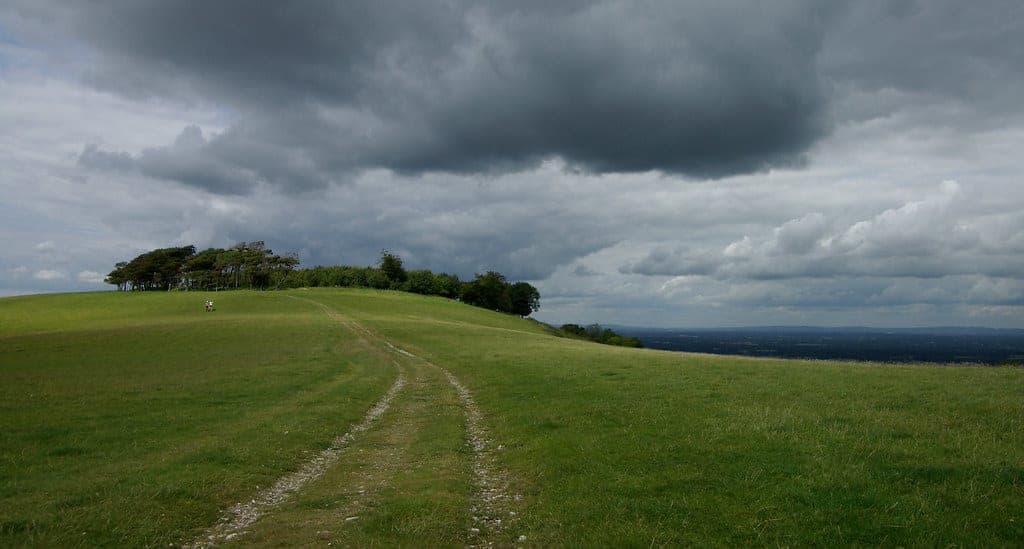
Chanctonbury Rings, Findon, West Sussex, England
Where Iron Age earthworks and beech-crowned hills harbor three millennia of folklore and strange encounters
Horsham, England, United Kingdom
At A Glance
- Coordinates
- 50.8968, -0.3813
- Suggested Duration
- The walk from the National Trust car park to Chanctonbury Ring takes approximately forty-five minutes to an hour, depending on pace and fitness. The circular route via Cissbury Ring adds significant distance and time. Allow thirty to sixty minutes at the Ring itself for meaningful engagement. A focused visit requires two to four hours total.
Pilgrim Tips
- Sturdy walking shoes are essential. The approach from any direction involves steep chalk paths that can be slippery when wet. The hilltop is exposed to wind, so layers are advisable even on warm days. There is no formal dress code.
- Photography is permitted throughout the site. The ring of trees against sky creates images that have been captured for over a century. Be considerate of others, particularly those who may have come seeking quiet or solitude.
- The site's folklore consistently warns against certain actions: anti-clockwise circumambulation, attempting to count the trees, spending the night alone within the ring. These warnings may be superstition, folk memory of genuine danger, or simply traditions accumulated over centuries. Visitors must decide for themselves how to relate to them. More practically, the climb is steep and the hilltop exposed. Weather can change quickly on the Downs. The beech roots create uneven footing within the ring. And the site's reputation for producing strong emotional responses suggests approaching with awareness. If you begin to feel unwell or strongly urged to leave, honor that response. Chanctonbury Ring will be here another day.
Overview
Rising from the South Downs like a crown of trees visible for miles, Chanctonbury Ring has drawn seekers for over three thousand years. Bronze Age peoples buried their dead here. Roman priests made offerings. Today, walkers on the South Downs Way feel the pull of a place where folklore speaks of the Devil himself, and where visitors still report experiences that resist easy explanation.
Some places announce their strangeness immediately. Chanctonbury Ring is one of them.
The approach takes you up a steep chalk escarpment, breath coming harder with each step, until suddenly you crest the ridge and encounter it: a ring of beech trees crowning an ancient hill fort, their branches interlacing overhead like the ribs of some vast, overturned vessel. The Weald stretches north toward the distant North Downs. On clear days, the Isle of Wight shimmers to the south. You are standing at one of the most prominent points on the South Downs, visible for miles in every direction.
The trees are not ancient, though they feel that way. Charles Goring planted them in 1760, tending them for decades, and the Great Storm of 1987 destroyed most of the original grove. What you see now are largely replantings from 1990. Yet something older persists beneath the beech roots. The earthworks encircling this hilltop date to the Iron Age. The burial of a young woman with a bronze dagger pushes human presence here back to around 1500 BCE. And the foundations of two Romano-Celtic temples, discovered during post-storm excavations, speak to a sacred recognition that outlasted empires.
The folklore is as dense as the undergrowth. Walk seven times anti-clockwise around the ring, tradition warns, and the Devil will appear with an offer of soup in exchange for your soul. Try to count the trees, and you will never get the same number twice. Spend the night beneath the beeches, and you may gain fertility, encounter ghosts, or simply lie awake listening to footsteps that have no visible source.
People still come here seeking something. Morris dancers greet May Day on the hilltop. Modern pagans recognize the site's power, though many approach with caution, sensing something unsettled in the atmosphere. And ordinary walkers, expecting nothing more than a pleasant hike, find themselves pausing within the ring, held by a quality they cannot quite name.
Context And Lineage
Chanctonbury Ring's history spans over three millennia, from Bronze Age burial through Iron Age earthwork construction, Romano-British temple worship, medieval folklore accumulation, Georgian tree planting, and the traumatic destruction and renewal of the Great Storm. Each era has added layers to the site's significance, creating a palimpsest of sacred recognition that continues into the present day.
According to Sussex folklore, the Devil created Chanctonbury Ring while digging a trench to the sea from Poynings, intending to drown the newly Christianized population of Sussex. The vast quantities of earth he flung in all directions formed the hills of the South Downs, with Chanctonbury the most prominent. The story preserves a folk memory of the site's otherworldly reputation while explaining its striking prominence on the landscape.
Alternative legends speak of fairies using the ring as a dancing ground, though these traditions appear less established than the Devil associations. What seems clear from the folklore is a consistent recognition that Chanctonbury Ring is not ordinary ground, a place where the normal rules do not quite apply, where encounters with forces beyond the everyday become possible.
The lineage of sacred recognition at Chanctonbury Ring does not flow through a single tradition but through the recurring human response to this particular place. Bronze Age peoples buried their dead here, presumably believing the elevated position significant for the journey beyond death. Iron Age communities built earthworks, claiming the hilltop for purposes we can only partially understand. Romano-British worshippers constructed temples, adapting the existing sacred precinct for their own gods.
After the Roman departure, formal religious use seems to have ceased, but the folklore that accumulated suggests the site was never forgotten. The Devil associations may preserve distant memory of pre-Christian worship, transformed into cautionary tale by subsequent generations. The counting traditions, the fertility beliefs, the ghost stories all speak to a continuous awareness that this hilltop was somehow set apart.
Charles Goring's tree planting was not explicitly religious, but it created the conditions for a new kind of sacred encounter. The enclosed grove, visible from miles around, became a destination for those seeking something beyond the ordinary. The Chanctonbury Ring Morris Men, the modern pagans who gather at solstices, the seekers who simply feel drawn to climb the escarpment all continue this lineage of recognition, adding their own layer to what the site holds.
Charles Goring
historical
The young gentleman who planted the ring of beech trees around 1760, transforming the site's character. He tended the saplings daily, riding up from the valley to water them throughout his long life. The grove he created defined Chanctonbury Ring's identity for over two centuries.
Arthur Beckett
historical
Author of 'The Spirit of the Downs' (1909), which contains the first recorded version of the Devil summoning legend. Beckett's work helped codify the folklore traditions that had accumulated around the Ring.
Aleister Crowley
historical
The notorious occultist who, along with Victor Neuburg, identified Chanctonbury Ring as a place of power suitable for magical work. Their recognition contributed to the site's reputation among twentieth-century esoteric practitioners.
Why This Place Is Sacred
Chanctonbury Ring's reputation as a thin place emerges from the convergence of continuous sacred use spanning three millennia, its dramatic hilltop position commanding views across Sussex, the liminal atmosphere created by the encircling beech trees, and a folklore tradition rich with supernatural encounters. Something about this place has consistently drawn humans to recognize it as significant, from Bronze Age burial to Romano-British temple worship to contemporary reports of unexplained phenomena.
The prominence explains part of it. At 242 meters, Chanctonbury Ring rises as one of the most visible landmarks on the South Downs ridgeway. Before modern light pollution, this would have been a place where sky felt closer, where the boundary between earth and heavens seemed permeable. People have long been drawn to such heights for ritual and burial, recognizing something in the elevated vantage that speaks to matters beyond the everyday.
But prominence alone does not explain what visitors report. The ring of trees creates an enclosure that feels distinctly apart from the surrounding downland. Step through the gap in the earthworks and the quality of attention shifts. Sound behaves differently within the ring. The light filters through the canopy in ways that feel deliberate, almost architectural. Even on busy days, visitors describe a sense of having crossed a threshold into somewhere else.
The Romano-British population recognized this quality. Their temples were not built here by accident. The excavations of 1987-91 revealed that they had reused the Iron Age bank and ditch as a temenos, a sacred precinct, placing two temples within. The larger yielded large quantities of pig teeth and jaw bones, suggesting a boar cult with ritual sacrifice. Whatever they named the deity they worshipped here, they knew this was a place where offerings could reach through.
Aleister Crowley and Victor Neuburg, the early twentieth century's most infamous ceremonial magicians, considered Chanctonbury Ring a place of power. Contemporary practitioners continue to recognize the site, though many avoid ritual work here. The reputation is not merely one of sacredness but of something harder to categorize: an atmosphere that can feel exhilarating or deeply unsettling depending on the visitor, the time, or factors no one can identify.
The consistency of reports across centuries and belief systems suggests something worth taking seriously, even if we lack vocabulary for it. Whether the thin quality derives from geology, from accumulated human intention, or from something beyond conventional explanation, visitors continue to describe an encounter that transcends ordinary experience.
The earliest known use of Chanctonbury Ring was funerary. Around 1500 BCE, a young woman was buried here with a bronze dagger, her grave marking this hilltop as significant long before the earthworks existed. By the seventh century BCE, an Iron Age community had constructed the slight univallate hill fort that gives the site its name, though whether primarily for defense, agriculture, or ceremony remains debated.
The Romano-British temples that followed indicate the site's sacred character was recognized across cultural transitions. When Roman influence reached Sussex, the existing earthworks were adapted for religious use rather than defensive purpose. The temples were modest structures by Roman standards, but their placement here, on a hilltop miles from major settlements, speaks to a continuity of sacred recognition that outlasted the cultures that built them.
The Romano-British temples fell into ruin after the legions departed. For centuries, the hilltop seems to have lain largely unregarded, though the folklore that accumulated suggests continuous awareness of its uncanny quality. By 1760, when Charles Goring planted his ring of beeches, the earthworks had become a local curiosity rather than active sacred site.
Goring's planting transformed the site's character. The trees created the enclosed, otherworldly atmosphere that defines Chanctonbury Ring today. He tended them for decades, riding up from the valley each day to water the saplings. The grove he raised became famous, attracting visitors from across Sussex and beyond.
The Great Storm of October 1987 destroyed over three-quarters of the trees in a single night, exposing the site to archaeological investigation but devastating its visual identity. The storms revealed the Romano-British temples, previously unknown, but they also revealed how much the Ring's contemporary power derived from those Victorian beeches. Replanting began in 1990, overseen by a descendant of Charles Goring. The trees you walk among today are not yet forty years old, but they have already reclaimed something of the site's atmosphere.
Traditions And Practice
Chanctonbury Ring hosts both traditional folk practices, such as May Day Morris dancing, and informal spiritual engagement from contemporary pagans and seekers. The folklore prescribes various rituals, though most are framed as warnings rather than invitations. Visitors seeking meaningful engagement typically approach through simple presence and attention rather than formal ceremony.
The folklore traditions of Chanctonbury Ring tend toward the cautionary. Walking seven times anti-clockwise around the ring summons the Devil, who offers a bowl of soup in exchange for your soul. Some versions require running around the ring; the number varies between three, seven, and nine depending on the source. Counting the trees is said to be impossible, with each attempt yielding a different number, or alternatively, successfully counting them summons the ghost of Julius Caesar. Sleeping under the trees brings fertility, or possibly encounters with ghosts, or both.
These traditions likely preserve transformed memories of pre-Christian ritual. The anti-clockwise circumambulation echoes practices found at sacred sites throughout Britain. The emphasis on counting may relate to the uncanny atmosphere visitors report within the ring. Whatever their origins, these traditions shaped how generations of Sussex people understood and approached the site.
The Chanctonbury Ring Morris Men maintain the tradition of dancing at the site on May Day morning, greeting the sunrise with steps that connect to folk practices centuries old. This is the most visible contemporary practice at the Ring, drawing both participants and observers to the hilltop at dawn.
Modern pagans recognize Chanctonbury Ring as a place of power, though approaches vary widely. Some conduct solstice observances or personal ritual within the ring. Others come for meditation and communion with the site's energy, approaching without formal ceremony. A significant number of contemporary practitioners avoid ritual work here altogether, finding the site's reputation for darkness or unsettled energy a reason for caution rather than engagement.
For most visitors, practice at Chanctonbury Ring takes informal forms: walking slowly through the site, sitting in silence within the tree circle, simply being present with attention and openness. The site does not require ritual elaboration to produce its effects.
If you come seeking more than exercise, consider these invitations. Enter the ring slowly, pausing at the threshold where the earthworks gap. Notice what shifts as you cross from open downland into the enclosed space. This transition is the site's most consistent teaching.
Find a place to sit where you can observe without obstructing the path. The roots of the beech trees offer natural seats. Close your eyes and simply listen. The sound environment within the ring differs from outside it. What do you notice?
If you feel moved to circumambulate, walking the perimeter within the tree line, consider doing so clockwise rather than anti-clockwise. The folklore warns against the widdershins direction. Whether or not you believe the warnings, there is something to be said for approaching unfamiliar places with respect for local tradition.
Before leaving, offer silent acknowledgment of the place and those who came before you. This need not be religious. Simple gratitude for what the site holds is sufficient.
Pre-Roman British
HistoricalThe site served as a Bronze Age burial ground around 1500 BCE and later an Iron Age hill fort from the seventh century BCE. The construction of barrows on this prominent hilltop suggests early peoples recognized it as a place of sacred importance, suitable for the journey between worlds. The earthworks that still encircle the hilltop were their contribution to marking this ground as set apart.
Bronze Age burial ceremonies placed at least one young woman here with a bronze dagger, suggesting practices that honored the dead through hilltop interment. Iron Age activities at the site remain more speculative, with possible ritual uses alongside any defensive or agricultural function the earthworks served.
Romano-British Paganism
HistoricalTwo Romano-Celtic temples were constructed within the hill fort from the mid-first century CE, with the existing bank and ditch adapted as a temenos or sacred precinct. The temples indicate that Romano-British communities recognized the site's sacred character and chose to continue rather than displace earlier traditions of worship.
Evidence suggests a boar or pig cult, with large quantities of pig teeth and jaw bones found in the larger temple indicating ritual sacrifice and offering. The specific deity worshipped remains unknown, though the emphasis on pig sacrifice connects to broader patterns of Celtic and Romano-Celtic religious practice.
English Folklore
ActiveA rich body of legend surrounds Chanctonbury Ring, including the Devil summoning ritual, ghost encounters, fertility beliefs, and the uncountable trees. This folklore may preserve transformed memory of pre-Christian ritual practices, reframed within a Christian cosmology that rendered them dangerous rather than sacred.
The traditions prescribe walking seven times anti-clockwise around the ring to summon the Devil, who offers soup in exchange for one's soul. Attempting to count the trees is said to be impossible or to summon Julius Caesar's ghost. Sleeping under the trees brings fertility or ghostly encounters. These practices are generally framed as warnings rather than invitations.
Neo-Paganism
ActiveModern pagans recognize Chanctonbury Ring as a place of power with pre-Christian significance. Aleister Crowley and Victor Neuburg identified it as suitable for magical work in the early twentieth century. Contemporary practitioners continue to engage with the site, though many approach with caution due to its reputation for dark or unsettled energy.
Some practitioners observe solstices at the site or conduct personal ritual within the ring. Others come for meditation and communion with the land without formal ceremony. A significant number avoid ritual work at Chanctonbury Ring altogether, preferring to acknowledge its power from a distance.
Morris Dancing
ActiveThe Chanctonbury Ring Morris Men maintain the tradition of dancing at the site on May Day morning, continuing folk customs associated with the turning of the seasons. Their practice represents living engagement with both the site and the broader tradition of English folk observance.
May Day morning Morris dancing at the hilltop, greeting the sunrise with traditional steps and music. The practice connects to customs of great antiquity while maintaining contemporary community and continuity.
Experience And Perspectives
Visitors to Chanctonbury Ring report a distinctive range of experiences: a sense of crossing a threshold upon entering the tree circle, feelings of being watched or not alone, unusual sounds without apparent source, and a quality of stillness that can feel either peaceful or unsettling. The site seems to produce strong responses in either direction, rarely leaving visitors neutral.
The most common description is of stepping into another world. The transition happens within a few paces, crossing from open downland into the encircling beeches, and visitors consistently note a shift in atmosphere that feels almost physical. The light changes. Sound behaves differently. Something about the quality of attention alters.
Many report a sense of being watched or not alone, even when no other visitors are present. This is not always unpleasant. Some describe it as the feeling of entering someone's home, a presence that observes but does not necessarily threaten. Others find it deeply unsettling, an oppressive awareness that prompts them to leave more quickly than they had planned.
Unexplained sounds feature prominently in accounts: footsteps where no one walks, the sound of horses' hooves, voices just below the threshold of comprehension. Temperature changes within the ring are often mentioned, cold spots that seem unrelated to wind or shade. The folklore about uncountable trees finds expression in visitors' genuine difficulty keeping count, though whether this reflects the irregular planting, psychological expectation, or something stranger remains open to interpretation.
The most profound experiences often come to those who arrive without expectation. Hikers on the South Downs Way, stopping simply because the Ring is there, report being held by a quality they struggle to describe. Some speak of connection to deep time, a visceral sense of the millennia of human presence embedded in this place. Others describe clarity about personal questions they were not consciously carrying, as though the site had read something in them they had not acknowledged.
The site produces strong responses in both directions. Some find Chanctonbury Ring transformative, returning year after year. Others feel an urgent desire to leave, a wrongness they cannot explain. Few report neutral experiences. Whatever is here seems to ask for engagement, and visitors find themselves responding whether they intended to or not.
Approach Chanctonbury Ring with openness rather than expectation. The folklore is dense with instruction and warning, but the site does not require you to perform any ritual or hold any belief. Simple presence, maintained with attention, seems to be what the place asks.
Consider arriving early or late, when the crowds thin. The South Downs Way brings many walkers through during midday hours, but dawn and dusk offer a different quality of encounter. If you are drawn to spend time within the ring rather than simply passing through, find a place to sit where you can observe without being in the main path. The site rewards stillness.
The climb is steep, and the hilltop is exposed. Bring water and appropriate layers. Give yourself time to recover your breath before entering the ring, so that the shift in atmosphere is not confused with exertion. And pay attention to your own responses. Chanctonbury Ring has a reputation for producing strong reactions. Your felt experience here is information worth heeding.
Chanctonbury Ring invites interpretation from multiple angles, and honest engagement requires holding these perspectives together. Archaeological evidence, folk tradition, contemporary spiritual experience, and enduring mystery each offer genuine insight while acknowledging different aspects of what the site holds. No single perspective captures the whole.
Archaeological consensus classifies Chanctonbury Ring as a slight univallate hill fort of Late Bronze Age or Early Iron Age construction, likely dating to the seventh century BCE. The excavations of 1987-91, conducted after the Great Storm exposed previously hidden features, revised earlier dating and confirmed the presence of two Romano-Celtic temples within the earthworks.
The temples appear to date from the mid-first century CE, with evidence of a boar or pig cult suggested by the concentration of pig teeth and jaw bones in the larger structure. The reuse of the Iron Age bank and ditch as a temenos indicates continuity of sacred recognition across the cultural transition from Celtic to Romano-British society.
Scholars debate the hill fort's original purpose. The defenses are too slight for serious military function, leading some to suggest pastoral, agricultural, or ceremonial uses. The site's prominent visibility along the South Downs ridgeway supports multiple interpretations. What remains clear is that this hilltop has attracted significant human investment across many centuries, for purposes that archaeology can identify but not fully explain.
Sussex folklore holds that the Devil created Chanctonbury Ring, flinging earth as he dug a trench intended to drown the Christian population of the region. The legends that accumulated around the site consistently frame it as a place of supernatural power and potential danger. Walking anti-clockwise summons the Devil. Counting the trees is impossible. Spending the night invites encounters with ghosts.
Some scholars interpret this folklore as transformed memory of pre-Christian ritual. The anti-clockwise circumambulation echoes practices at sacred sites throughout Britain. The emphasis on darkness and danger may reflect Christian reframing of earlier pagan worship. The traditions preserve, in cautionary form, a recognition of the site's power that predates the framework in which they are told.
The Chanctonbury Ring Morris Men continue folk traditions at the site, dancing on May Day morning in a practice that connects to customs of great antiquity. Their observance represents living folk engagement with a place the tradition has marked as significant.
Modern esoteric practitioners, following Aleister Crowley and Victor Neuburg's identification of Chanctonbury Ring as a place of power, recognize the site within frameworks of earth energy, ley lines, and numinous geography. Some describe the Ring as an energetic node, a location where forces concentrate in ways suitable for magical work or spiritual transformation.
The site's reputation within contemporary paganism is mixed. Many practitioners feel drawn to work here, responding to the same quality that attracted Romano-British temple builders. Others avoid the Ring, describing its energy as dark, unsettled, or actively hostile. This ambivalence may reflect different sensitivities to whatever the site holds, or it may indicate something genuinely complex about the place, something that resists simple categorization as either benevolent or malevolent.
Paranormal investigators have documented Chanctonbury Ring as a location of unusual activity, with reports of unexplained sounds, apparitions, and equipment malfunctions. Whatever one makes of such claims, the consistency of unusual reports across different observers and frameworks suggests something worth attending to.
Genuine mysteries persist at Chanctonbury Ring. The exact nature of worship at the Romano-British temples remains uncertain beyond the evidence of pig sacrifice. Whether the Iron Age earthwork served primarily defensive, agricultural, or ceremonial purposes cannot be determined from available evidence. The origins of the Devil summoning tradition and its relationship to earlier practice remain speculative.
Most persistently mysterious is the site's effect on visitors. The consistency of reports across centuries and belief systems, the way the place seems to produce strong responses in both positive and negative directions, the difficulty visitors have in articulating what they encounter within the ring, all point toward something real that resists conventional vocabulary.
Whether this reflects accumulated human intention, geological factors, psychological response to the landscape, or something beyond current explanation, the question remains genuinely open. Chanctonbury Ring has not yielded its full meaning to any of the frameworks that have attempted to contain it.
Visit Planning
Chanctonbury Ring is accessible via the South Downs Way long-distance path, with car parking available off the A283. The climb is moderately strenuous, taking roughly an hour from the car park. Allow two to four hours for a circular walk that includes time at the Ring itself. The site is free and open at all times.
Steyning offers the nearest accommodation, with several bed and breakfasts and small hotels. Findon and Washington also have options. For more extensive choices, Worthing lies approximately seven miles to the south. There is no accommodation at the site itself.
Chanctonbury Ring requires no formal etiquette beyond standard countryside courtesy. As an open access site on the South Downs Way, it welcomes visitors freely. Respect for the trees, the earthworks, and other visitors constitutes appropriate behavior. Those who come for spiritual engagement should be mindful of the site's mixed reputation and the comfort of others present.
The Ring sits on open access land, part of the South Downs National Park, and visitors may move freely throughout the site. No formal protocols govern entry or behavior beyond the standard countryside code: leave no trace, respect other visitors, protect the environment.
The trees, though relatively young, deserve care. Do not carve into bark, break branches, or disturb the root systems. The earthworks are protected archaeological features. Do not dig, remove soil, or damage the bank and ditch that encircle the hilltop.
If you encounter the Morris Men on May Day or other visitors engaged in what appears to be spiritual practice, offer them space and privacy. Observe if you wish, but do not interrupt or photograph without permission. The hilltop is large enough for multiple uses to coexist.
Those who come for spiritual engagement should be aware that Chanctonbury Ring is not exclusively a sacred site. Walkers, runners, dog walkers, and families all use the South Downs Way. Visible ritual practice may attract attention or discomfort. Many practitioners who work with the site do so in the early morning or evening hours when the hilltop is quieter.
Sturdy walking shoes are essential. The approach from any direction involves steep chalk paths that can be slippery when wet. The hilltop is exposed to wind, so layers are advisable even on warm days. There is no formal dress code.
Photography is permitted throughout the site. The ring of trees against sky creates images that have been captured for over a century. Be considerate of others, particularly those who may have come seeking quiet or solitude.
There is no tradition of physical offerings at Chanctonbury Ring. Please do not leave objects, food, or other items within the site. The appropriate offering here is attention, not material goods.
None beyond standard countryside code. The site is freely accessible at all times. No fees or permits are required.
Sacred Cluster
Nearby sacred places create the location cluster described in the growth plan. This block is intentionally crawlable and links into the wider regional graph.
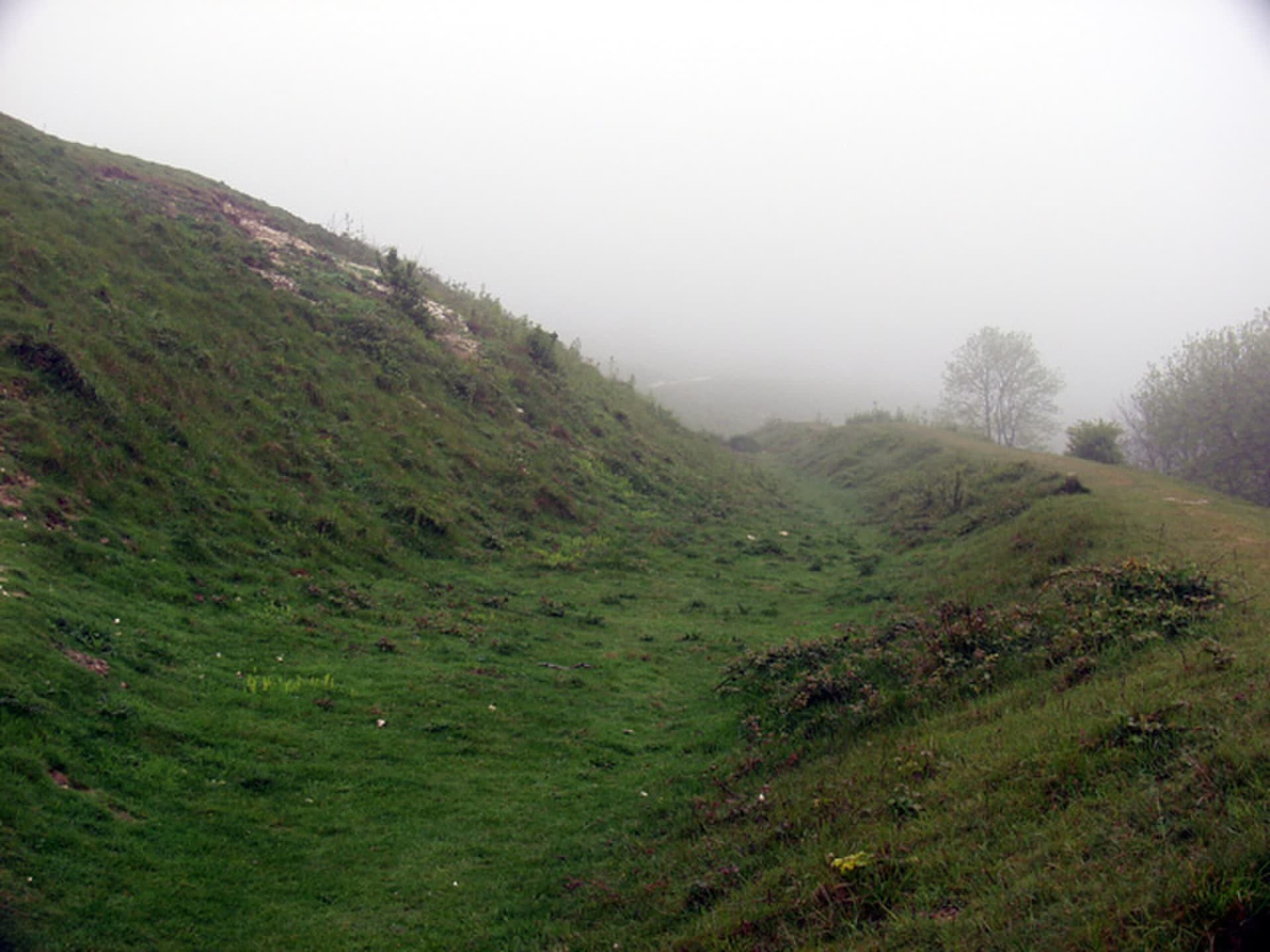
Cissbury Ring, Findon, West Sussex, England
Worthing, England, United Kingdom
4.0 km away
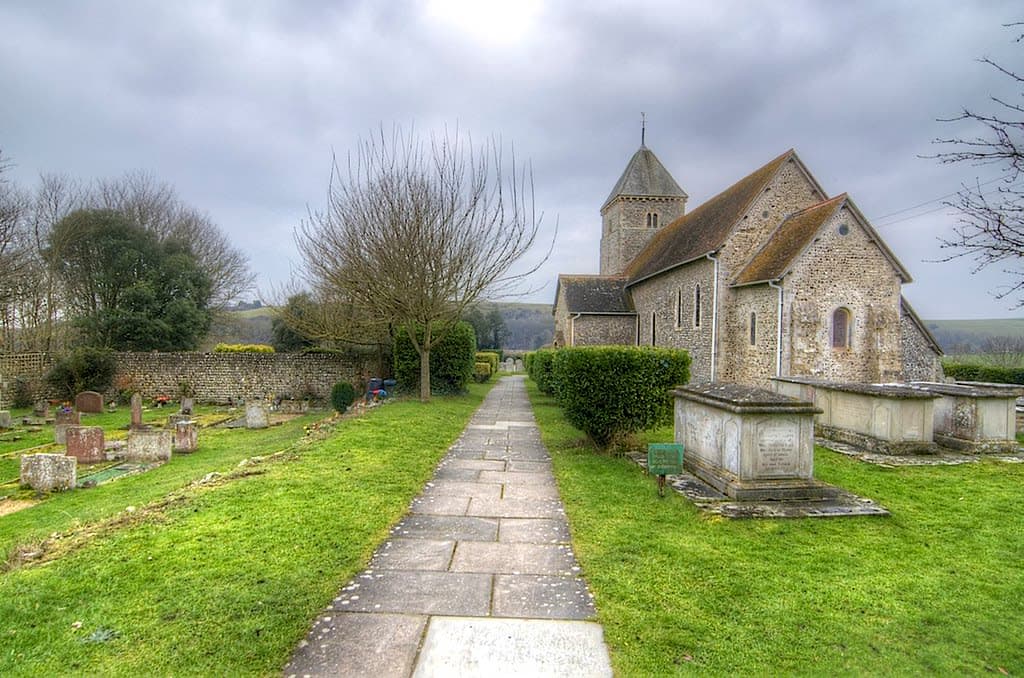
St. Andrew’s Church, Bishopstone, England
Seaford, England, United Kingdom
35.1 km away
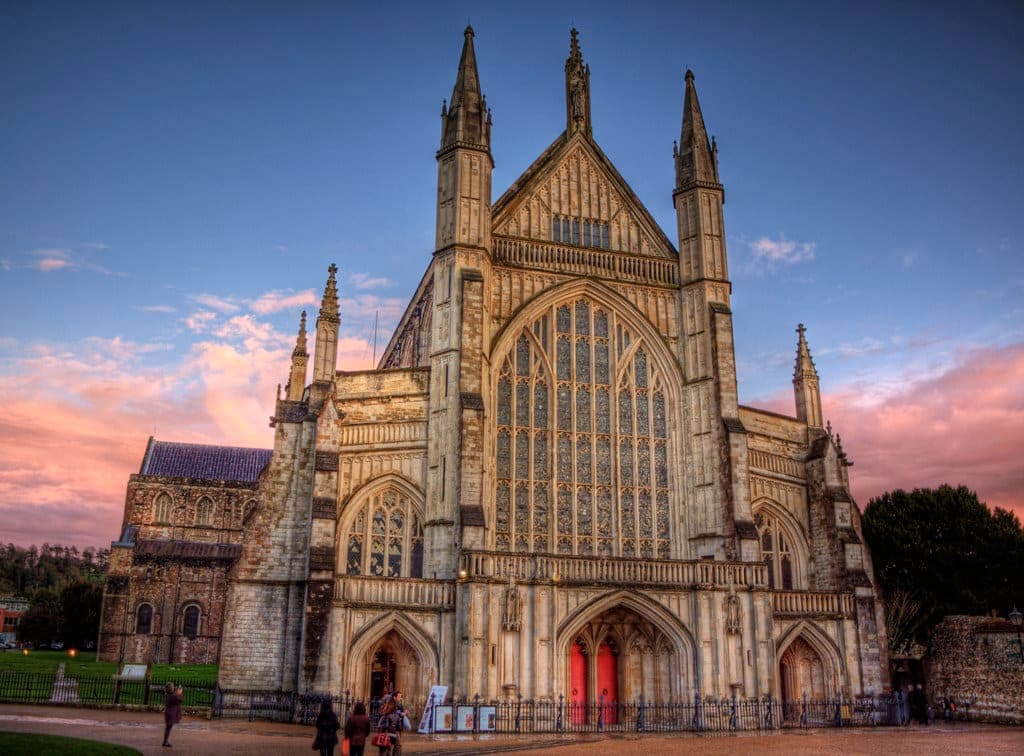
Winchester Cathedral
Winchester, England, United Kingdom
67.7 km away
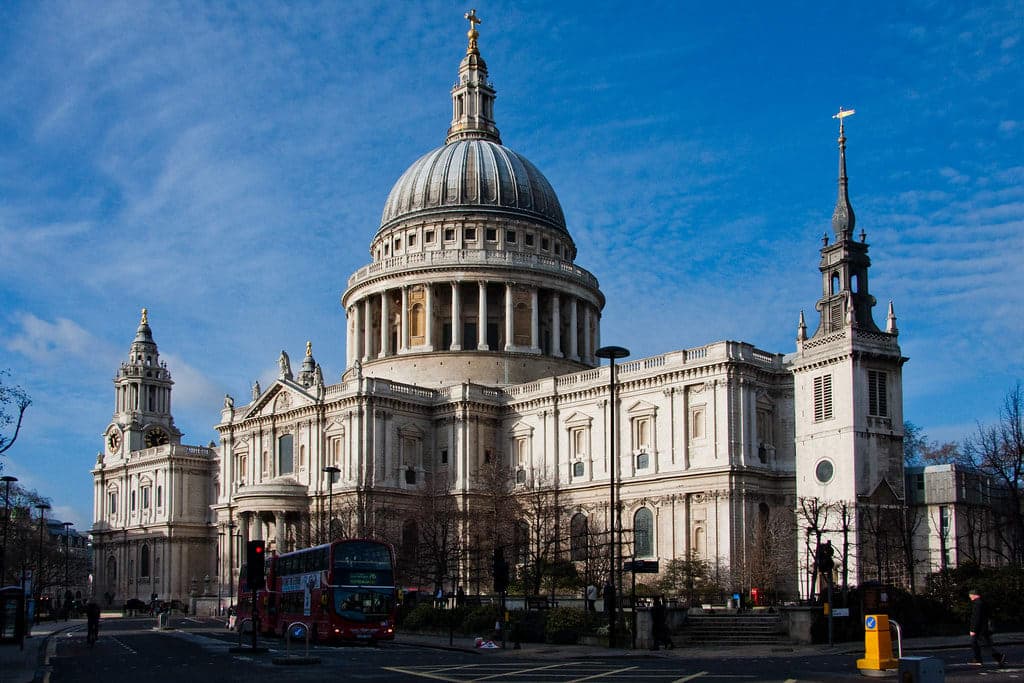
St. Paul’s Cathedral, London, England
City of London, England, United Kingdom
71.4 km away