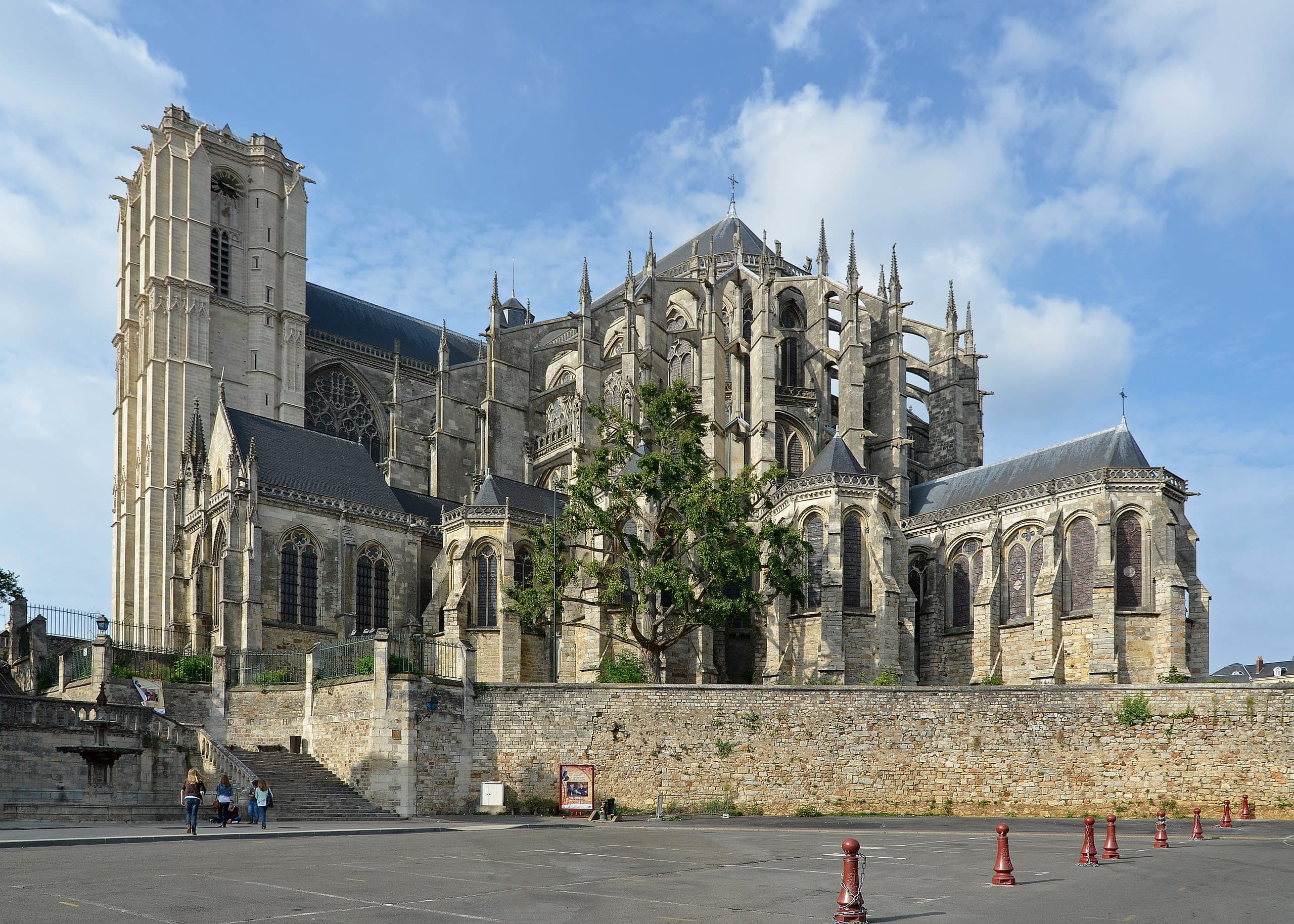
Cathedral of St. Julian, Le Mans
Gothic light through medieval glass, where Plantagenet kings knelt
Le Mans, Pays de la Loire, France
At A Glance
- Coordinates
- 48.0094, 0.1972
- Suggested Duration
- 1-2 hours for a meaningful visit.
Pilgrim Tips
- Modest dress appropriate for a cathedral.
- Permitted but never use flash, especially near stained glass.
- The cathedral is an active place of worship; be respectful of services. Flash photography can damage medieval glass.
Overview
Before Le Mans was a racing city, it was a cathedral city. The Cathedral of Saint Julian possesses some of France's finest medieval stained glass—windows that have transformed light into color since the twelfth century. At its western facade stands a prehistoric menhir older than Christianity itself. Geoffrey Plantagenet married here; Henry II was baptized here. The light has been falling the same way for 900 years.
The Cathedral of Saint-Julien rises at the heart of Le Mans' medieval quarter, a building that speaks in two architectural languages. The Romanesque nave, heavy and grounded, gives way to a Gothic choir that seems to dissolve stone into light. Between them lies over a thousand years of continuous Christian worship.
What draws pilgrims and art lovers alike is the stained glass. The Ascension window, dated to 1134-1158, is one of the oldest still in its original setting in France. The collection as a whole rivals Chartres—a claim that might seem excessive until you stand in the nave on a sunny morning and watch the light pour through.
The Plantagenets left their mark here. Geoffrey of Anjou married Matilda of England in this cathedral in 1128. Their son, the future Henry II of England, was baptized here in 1133 and funded restoration work as king. Geoffrey himself was buried here in 1151, his effigy one of the earliest surviving examples of medieval portraiture.
At the western entrance stands something older than any of this: a 4.5-meter menhir called the Pierre Saint-Julien, a prehistoric standing stone that predates Christianity by millennia. Local tradition connects the stone to the cathedral's patron saint, but the conjunction speaks to something deeper—the human impulse to mark sacred ground, persisting across ages.
In the Lady Chapel, forty-seven musician angels painted on the vault seem to play an eternal concert. The medieval world believed in the music of the spheres; here, they painted what they could not hear.
Context And Lineage
Continuous worship since the fourth century, Romanesque and Gothic construction, Plantagenet royal patronage, and extraordinary medieval stained glass make this one of France's most significant cathedrals.
Saint Julian of Le Mans was the first bishop of the region, establishing Christianity around the fourth century. A church has stood on this site since his time. The current building began with the Romanesque nave under Bishop Guillaume de Passavant (1142-1186), funded partly by donations from the Plantagenet family.
Geoffrey Plantagenet, Count of Anjou, married Matilda of England in this cathedral in 1128—a marriage that would create the Plantagenet dynasty and unite England with Anjou. Their son, born 1133 and baptized here, became Henry II of England. Geoffrey was buried here in 1151.
The Gothic choir was added in the thirteenth century, replacing an earlier structure. The stained glass windows date from the twelfth to fifteenth centuries, representing an almost complete medieval glazing program. The Lady Chapel was built by Queen Berengaria, widow of Richard the Lionheart.
The cathedral is the seat of the Bishop of Le Mans, maintaining continuous episcopal presence since the fourth century.
Saint Julian of Le Mans
First bishop and patron
Geoffrey Plantagenet
Royal patron
Henry II of England
Royal benefactor
Why This Place Is Sacred
Over 1,600 years of Christian worship, extraordinary medieval stained glass, Plantagenet royal connections, and a prehistoric menhir create layered sacredness. The light falling through ancient glass makes transcendence visible.
The Cathedral of Saint-Julien is thin in the way that light through colored glass is thin—a transformation of the ordinary into something other. Gothic architecture intended this: the dissolution of wall into window, the replacement of stone's weight with radiance. At Le Mans, the intention achieved its purpose.
The stained glass is the cathedral's most powerful element. Dating from the twelfth to fifteenth centuries, the windows represent one of France's finest collections. The Ascension window, among the oldest in its original setting in the country, shows the risen Christ ascending while apostles watch below. For nearly 900 years, pilgrims have stood where you stand and watched the same light fall.
The Plantagenet connection adds historical weight. This was not a provincial church but a center of European power. The royal family that would rule England for centuries left its mark here—wedding, baptism, burial. To stand in this space is to stand where kings knelt.
The prehistoric menhir at the western entrance invites deeper contemplation. Why was this stone placed here, millennia before Christ? The question has no answer, but the conjunction is suggestive. Sacred ground has a way of remaining sacred across changing beliefs. Whatever the menhir's builders intended, their choice of this location was confirmed by all who followed.
The forty-seven musician angels in the Lady Chapel vault represent a different kind of thinness: the medieval conviction that heaven was real, musical, eternal. The painters who created these images were not decorating; they were witnessing. The angels they painted were as real to them as the stone beneath their feet.
A church has stood on this site since the fourth century, dedicated to Saint Julian, the first bishop of Le Mans. The current building combines Romanesque (11th-12th century) and Gothic (13th century) construction.
The cathedral served as a center of Plantagenet power in the twelfth century. It has maintained continuous worship for over 1,600 years and remains the seat of the Bishop of Le Mans.
Traditions And Practice
Regular Catholic worship continues. Visitors come for the extraordinary stained glass, the Plantagenet history, and the accumulated sanctity of 1,600 years of prayer.
The cathedral has been a center of Christian worship since the fourth century. The Plantagenets used it for royal ceremonies; medieval pilgrims venerated Saint Julian.
Regular masses continue. The cathedral draws visitors seeking medieval stained glass, architectural history, and spiritual encounter. Tours explain the windows' iconography.
Visit on a sunny day for the best stained glass experience. Allow time for the light to change; return at different hours if possible. Pause at the menhir and consider what sacred ground meant before Christianity. Find the Lady Chapel and spend time with the forty-seven angels.
Roman Catholicism
ActiveThe cathedral has been the seat of the Bishop of Le Mans since the fourth century, maintaining continuous episcopal presence and worship for over 1,600 years.
Regular masses, veneration of Saint Julian, contemplation of medieval stained glass as windows to the divine.
Experience And Perspectives
Enter through the Romanesque west end, where a prehistoric menhir stands guard. Pass into the Gothic choir and let the light through medieval glass transform the space. The Lady Chapel's forty-seven angels play silently above. Allow time for the light to change.
The Cathedral of Saint-Julien stands in the medieval quarter of Le Mans, an area called the Cité Plantagenêt that preserves the narrow streets and timber-framed houses of the old city. The approach through these ancient lanes prepares you for the cathedral's antiquity.
At the western entrance, pause at the Pierre Saint-Julien—the prehistoric menhir that has marked this spot for millennia. Its presence here, incorporated into the cathedral precinct, speaks to continuities deeper than any single tradition.
Enter the Romanesque nave and feel the weight of stone, the density of early medieval faith. The proportions are human-scaled, grounding. Then proceed east toward the Gothic choir and experience the transformation: stone dissolves into glass; weight becomes light.
The stained glass demands time. Visit on a sunny day if possible. The windows facing you as you stand in the choir date from the twelfth and thirteenth centuries. The colors are medieval pigments; the leading is medieval craft. The light falling on you is transformed by the same glass that transformed it for Philip Augustus and Richard the Lionheart.
Find the Lady Chapel and look up. Forty-seven musician angels painted on the vault play an eternal concert. The medieval painter believed these angels were real, that heaven was filled with such music. Whether or not you share the belief, the painting communicates devotion.
Geoffrey Plantagenet's tomb, or what remains of it, may be found in the nave. The effigy that once topped it is now in the museum; what remains is the location where a dynasty's founder was laid to rest.
The cathedral is in the Cité Plantagenêt, Le Mans' medieval quarter. Enter from the west; the menhir is near the western entrance. The Gothic choir with its stained glass is to the east. The Lady Chapel with its angel vault is accessible from the choir.
The cathedral can be understood as a treasury of medieval stained glass, as a monument to Plantagenet power, as evidence of the Christianization of prehistoric sacred sites, or as a space where 1,600 years of prayer have accumulated.
Art historians recognize the stained glass collection as among France's finest. The Ascension window is one of the oldest in its original setting in the country. The architectural combination of Romanesque and Gothic demonstrates stylistic evolution.
Within Catholic tradition, the cathedral honors Saint Julian as apostle of the region and maintains episcopal continuity since the fourth century.
The prehistoric menhir has attracted interest from those exploring pre-Christian sacred sites and the continuity of sacred geography.
The full significance of the prehistoric menhir. The original positions of some medieval windows. The complete iconographic program of the glazing.
Visit Planning
Central Le Mans location in the Cité Plantagenêt medieval quarter. Open daily and free to enter. TGV service from Paris makes day trips feasible.
Full range in Le Mans. The medieval quarter offers atmospheric options.
Standard cathedral etiquette. Respect ongoing worship. Photography generally permitted but never use flash near the medieval glass.
The cathedral maintains regular worship; be aware of mass schedules and approach with appropriate reverence. The medieval stained glass is irreplaceable; never use flash photography.
Modest dress appropriate for a cathedral.
Permitted but never use flash, especially near stained glass.
Candles available.
Do not disturb worshippers during services.
Sacred Cluster
Nearby sacred places create the location cluster described in the growth plan. This block is intentionally crawlable and links into the wider regional graph.
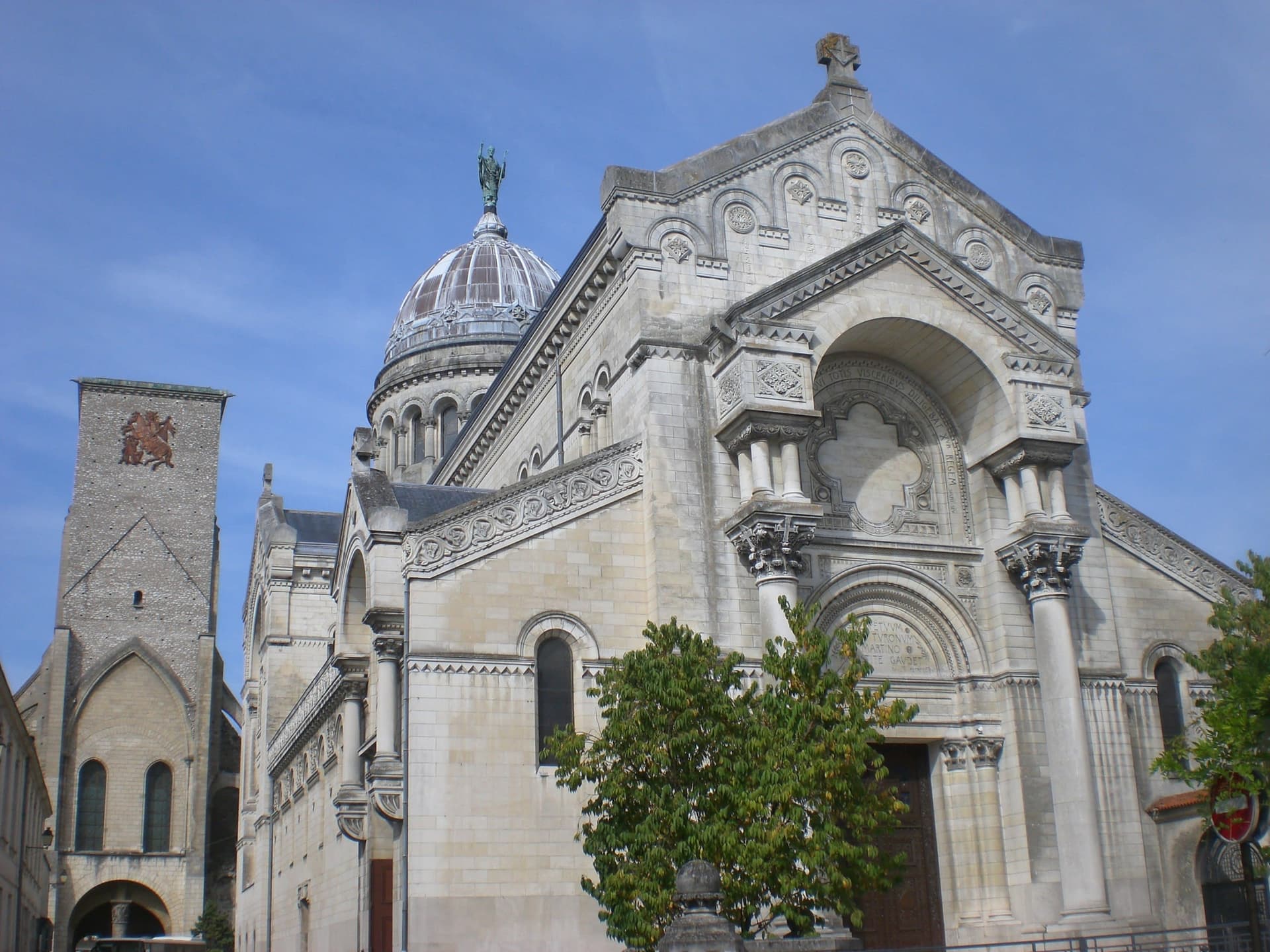
Basilica of Saint Martin
Tours, Centre-Val de Loire, France
77.5 km away
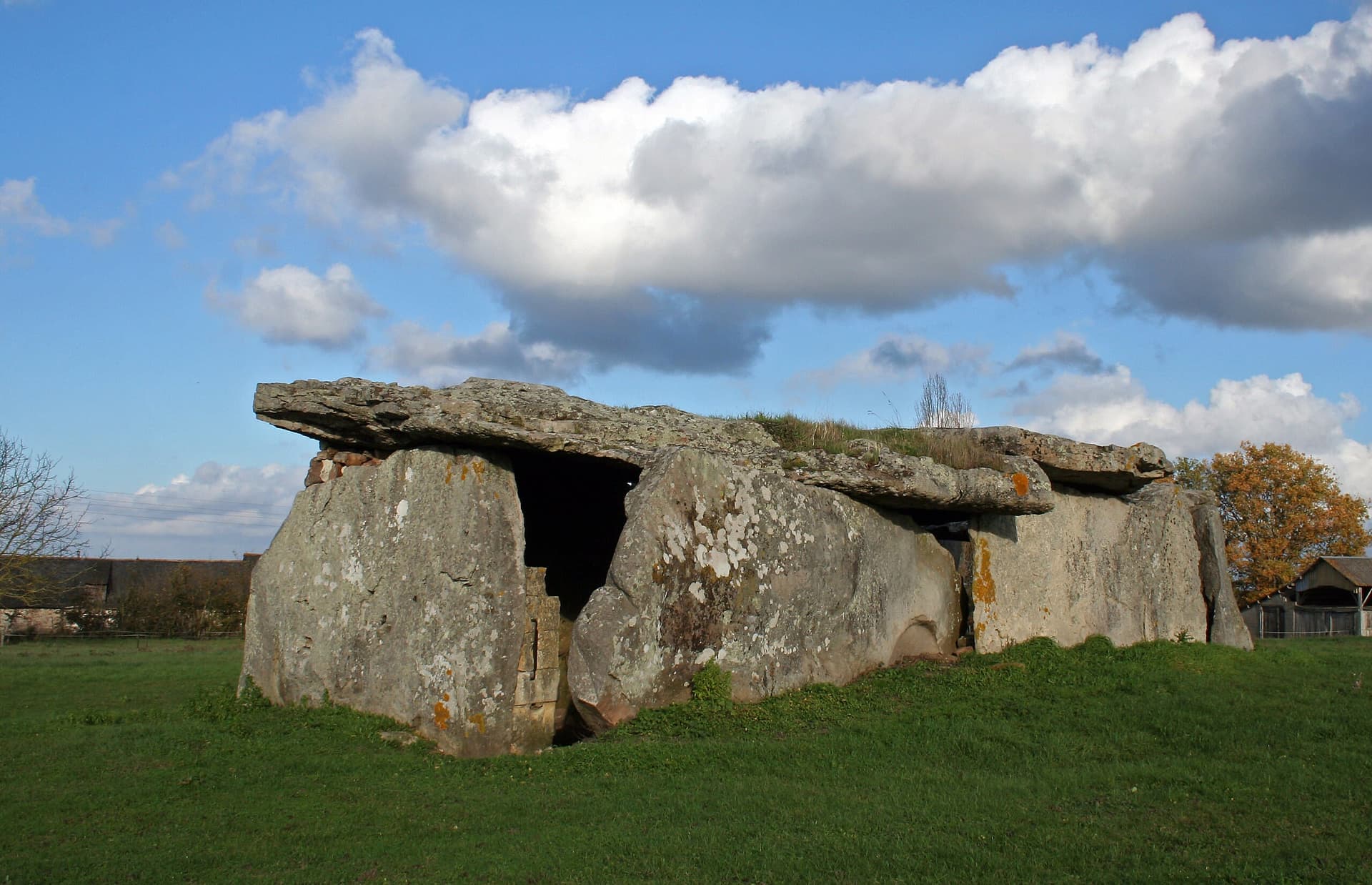
Dolmen de la Madeleine
Gennes, Pays de la Loire, France
80.8 km away
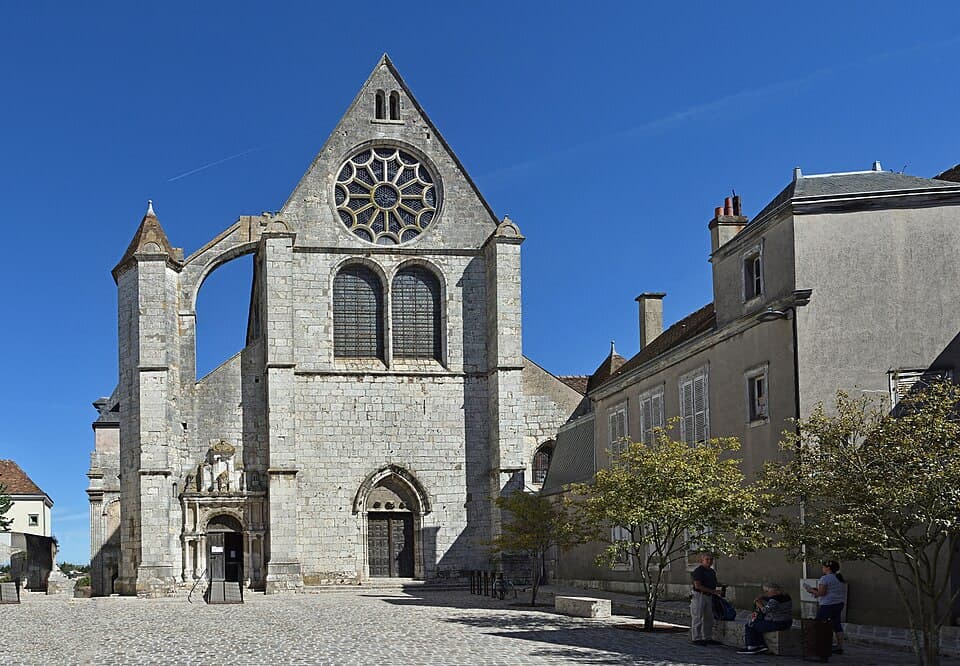
Church of St. Aignan, Chartres
Chartres, Centre-Val de Loire, France
107.2 km away
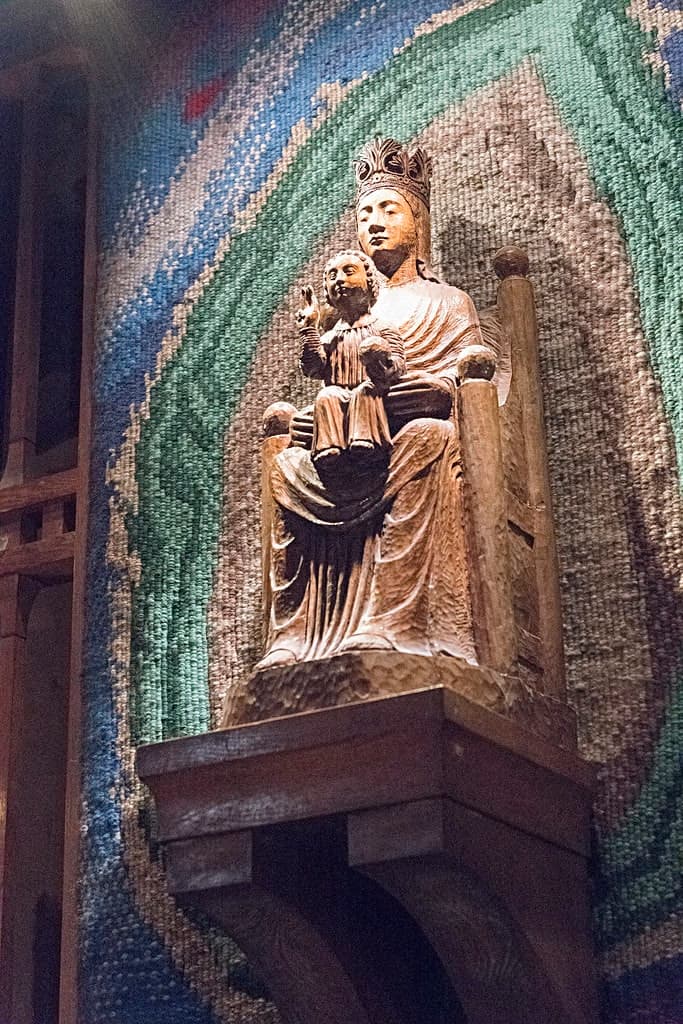
Notre-Dame de Sous-Terre (Our Lady Under the Earth)
Chartres, Centre-Val de Loire, France
107.3 km away