Carcassonne
Where medieval walls witnessed crusade against Christian dissent, and the stones still remember
Carcassonne, Occitania, France
At A Glance
- Coordinates
- 43.2051, 2.3632
- Suggested Duration
- Half-day minimum to walk the walls and visit the Basilica. Full day recommended to include Chateau Comtal. Can be combined with day trips to other Cathar sites.
- Access
- Train service from Toulouse (1 hour), Montpellier, Narbonne, and Barcelona. The cite is 25 minutes' walk or short taxi from the station across the Aude River. Well-connected by road. Parking outside the walls; the cite is pedestrian.
Pilgrim Tips
- Train service from Toulouse (1 hour), Montpellier, Narbonne, and Barcelona. The cite is 25 minutes' walk or short taxi from the station across the Aude River. Well-connected by road. Parking outside the walls; the cite is pedestrian.
- Casual clothing appropriate for walking is fine throughout the cite. Modest dress expected in the Basilica.
- Photography permitted throughout except during church services. Flash prohibited in the Basilica. Be considerate of residents.
- Carcassonne is heavily touristed in summer. The Cathar history is complex—avoid simplified narratives of good heretics versus evil church. The Cathars were not proto-Protestants or New Age precursors; they held specific theological positions that most modern people would find as strange as Catholic orthodoxy. Engage with the actual history rather than projections upon it.
Overview
Carcassonne rises above the Aude River as Europe's largest surviving medieval fortified city. Its double walls and 52 towers speak of military might, but the stones also remember the Albigensian Crusade—when Christians killed Christians over theological differences. Here, in 1209, the Cathar stronghold fell to papal crusaders. The cite today preserves that contested history within walls that have stood for 800 years.
From across the Aude River, Carcassonne appears as a vision from a medieval illumination: turrets and towers, double walls bristling with defenses, the Basilica of Saint-Nazaire rising within. It is Europe's largest surviving fortified city, a textbook of medieval military architecture. But Carcassonne is more than a military monument. It is a place where the history of religious conflict is written in stone.
In the early 13th century, the Languedoc region harbored a different Christianity. The Cathars, also called Albigensians, believed the material world was created by an evil god, that souls were trapped in flesh, that the Catholic Church had strayed from true faith. Their perfecti lived as ascetics, rejecting meat and property and violence. Their credentes lived normal lives but sought the consolamentum—a laying on of hands that would free their souls from the cycle of incarnation.
The Church called them heretics. Pope Innocent III proclaimed crusade.
Carcassonne fell in August 1209 after a brief siege. The Viscount was arrested under truce and died in his own dungeon. Citizens fled with nothing but their sins. The Inquisition followed, its investigations conducted from a tower that still stands. By the mid-14th century, Catharism was extinct.
Today, tourists walk the same walls that watched this history unfold. The cite has been carefully restored—some say too carefully, with Viollet-le-Duc adding conical towers the medieval originals may have lacked. But the power of the place remains: stone testimony to what happens when orthodoxy meets dissent.
Context And Lineage
Carcassonne served the Trencavel viscounts as their seat of power and a Cathar stronghold until the Albigensian Crusade of 1209. After falling to crusaders, it became a French royal fortress. 19th-century restoration by Viollet-le-Duc saved it from demolition and established modern conservation practice.
The legend of Lady Carcas provides Carcassonne's mythic origin. When Charlemagne besieged the city for five years, the Muslim commander Ballak was killed. His wife Carcas took command of the defense. As food ran out, she fed the last grain to a pig and threw it over the walls. The crusaders, seeing the grain spill from the burst pig, despaired of starving the city. Lady Carcas rang the city bells to signal parlay. 'Carcas sonne!'—Carcas rings—cried the people, naming their city forever.
The legend is historically impossible—the city was called Carcassonne before Charlemagne's time—but it captures something about the place: resistance, cunning, survival against siege.
Carcassonne's religious history spans Roman paganism, Visigothic Arianism, medieval Catholicism, Catharism, crusade-era Catholicism, and modern secular heritage tourism with an active Catholic church. The site demonstrates both the persistence and the contestability of religious tradition.
Raymond-Roger Trencavel
Viscount of Carcassonne
Simon de Montfort
Crusade leader
Eugene Viollet-le-Duc
Architect and restorer
Why This Place Is Sacred
Carcassonne's thinness emerges from its role as a site of religious persecution. Here, an alternative Christianity was crushed by crusade and inquisition. The preserved medieval walls create a contained space where this history remains palpable. For those who sense the sacred in places of martyrdom and contested faith, the stones hold memory.
The thinness of Carcassonne is the thinness of unresolved conflict. Walk through the Narbonne Gate, past the bust of legendary Lady Carcas, and enter a space where one Christianity destroyed another. The Cathars believed the world itself was a prison. The crusaders believed the Cathars damned souls by denying true sacraments. Both were certain. Both were willing to die—or kill—for their certainty.
This is thin in the way that battlegrounds are thin, that places of martyrdom are thin. Something was decided here that remains contested. The official narrative—heresy suppressed, orthodoxy preserved—coexists with an alternative reading: spiritual dissent crushed, a gentler Christianity eliminated by violence. Visitors bring their own perspectives. The stones offer no resolution.
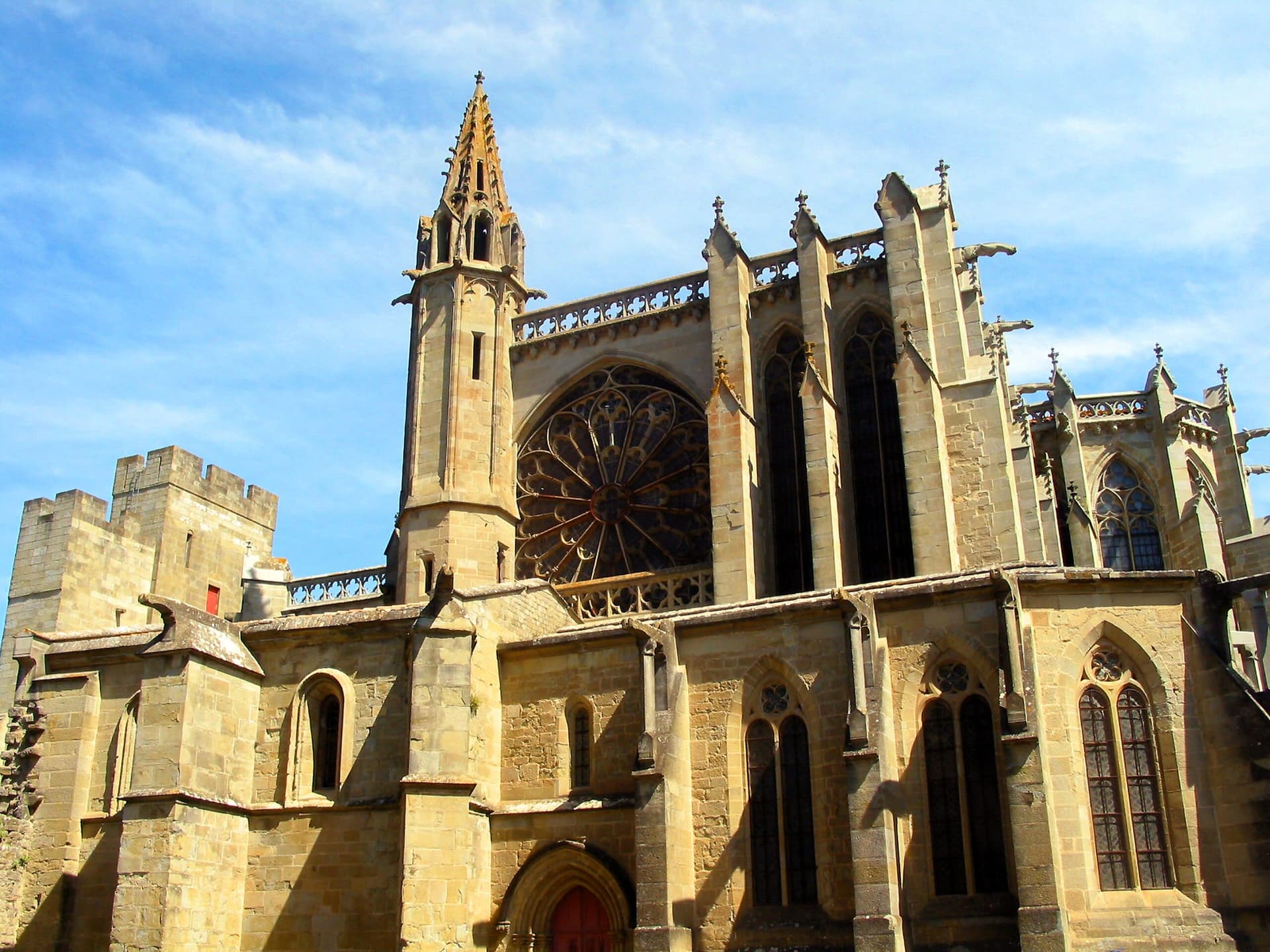
The Basilique Saint-Nazaire provides a different kind of thinness: the accumulated sanctity of 1,400 years of continuous worship. Pope Urban II blessed its building materials in 1096 while preaching the First Crusade. Gothic light pours through some of the finest stained glass in southern France. Here, Catholic faith persisted before, during, and after the Cathar interlude.
Between these two thinnesses—persecution and persistence—Carcassonne offers encounter with religious history in its full complexity.
Carcassonne was a strategic fortress controlling routes between the Atlantic and Mediterranean, between the Pyrenees and the Massif Central. The Trencavel viscounts made it their seat of power and supported Cathar believers. After the Albigensian Crusade, the French crown transformed it into a border fortress against Aragon.
Roman settlement gave way to Visigothic fortress, then to Trencavel castle, then to French royal stronghold. By the 17th century, the border moved south and Carcassonne lost military significance. The cite fell into disrepair, nearly demolished in the 19th century. Viollet-le-Duc's restoration (1853-1879) saved and reimagined the medieval fabric. UNESCO inscription in 1997 recognized both the medieval achievement and the restoration's pioneering importance for conservation.
Traditions And Practice
Regular Catholic Mass is celebrated at the Basilique Saint-Nazaire. The cite hosts medieval festivals and cultural events. No Cathar practices continue, as the tradition was eliminated in the 13th-14th centuries, though Cathar history is commemorated through tourism and scholarship.
Medieval Carcassonne saw Catholic Mass at Saint-Nazaire, Cathar consolamentum ceremonies in private spaces, and after 1209, Inquisition proceedings in the tower that still bears its name. The religious life of the city was contested terrain between orthodox and dissident Christianity.
Regular Catholic Mass at the Basilique Saint-Nazaire continues the tradition predating the Cathars. The cite hosts cultural events including a medieval festival in August. 'Cathar Country' tourism frames the region as a landscape of alternative spirituality, though no living Cathar tradition exists.
Visit the Basilica of Saint-Nazaire for its beauty and its witness to religious continuity. Walk the walls contemplating the history of religious conflict. If drawn to the Cathar dimension, plan a wider journey through Cathar Country—Montsegur, where 200 Cathars chose burning over recantation, offers the most intense encounter with this suppressed tradition.
Catharism
HistoricalCarcassonne was a major Cathar stronghold until the Albigensian Crusade of 1209. The Cathars represented a dualistic Christianity that rejected the material world as evil and sought liberation of the soul from flesh. Their presence in Languedoc, supported by local lords, challenged Catholic authority and led to the only crusade against European Christians. Carcassonne's fall marked a turning point in the crusade.
The consolamentum, a laying on of hands, was the central Cathar ritual. Perfecti lived ascetically, avoiding meat, eggs, and violence. Credentes lived normal lives but sought the consolamentum on their deathbeds to ensure their souls' escape from the material world. No Cathar practices survive.
Roman Catholicism
ActiveThe Basilique Saint-Nazaire has served Catholic worship since the 6th century. Pope Urban II blessed its building materials in 1096. After the Albigensian Crusade, Carcassonne was firmly Catholic. The Inquisition operated from within the cite. Regular Mass continues today.
Regular Catholic Mass and sacraments at the Basilique Saint-Nazaire. The church serves the local Catholic community.
Experience And Perspectives
Visitors enter through massive gates into a preserved medieval world of narrow streets, stone houses, and walls walkable in their entirety. The Basilique Saint-Nazaire offers Gothic beauty. The Chateau Comtal provides historical context. The view from across the river at sunset reveals why this image has captivated imagination for centuries.
Approach Carcassonne from across the Aude River, especially as afternoon light gilds the towers. The silhouette is unmistakable—fairy-tale turrets rising above double walls, the stuff of illustrated histories and medieval romance. This first impression, however touristic, prepares for what the cite delivers: entry into a preserved medieval world.
Two gates provide access. The Narbonne Gate, with its drawbridge and machiolations, is the most dramatic. The bust of Lady Carcas—legendary defender against Charlemagne—greets visitors with the legend that gave the city its name. Beyond, narrow streets wind between stone buildings, now occupied by shops and restaurants but retaining medieval scale.
The outer walls can be walked nearly in their entirety. This circumnavigation—between the inner and outer rings of fortification—provides both perspective on medieval military architecture and contemplative space away from the tourist crowds concentrated in the center. The views over Occitania are expansive.
The Basilique Saint-Nazaire rewards careful attention. The Romanesque nave dates from the 12th century; the Gothic choir and transept from the 13th. The stained glass, among the finest in the Midi, fills the space with colored light. The carved capitals and statuary require slow looking. As an active church, it maintains the sacred function that predates all the military history.
The Chateau Comtal, the castle within the cite, houses archaeological exhibits and provides access to the ramparts. Guided tours explain the site's complex history. The Inquisition Tower, part of the fortifications, stands as tangible reminder of what followed the crusade.
For those seeking the Cathar dimension, Carcassonne is best understood as part of 'Cathar Country'—a landscape of fortress sites including Montsegur, Peyrepertuse, and Queribus, each marking a moment in the crusade's bloody progress.
Enter through the Narbonne Gate and orient yourself in the main square. Walk the outer walls between the inner and outer ramparts for perspective and solitude. Visit the Basilica for its Gothic beauty. Tour the Chateau Comtal for historical context. Consider combining Carcassonne with other Cathar sites—especially Montsegur—for the full picture. Sunset from across the river is worth planning for.
Carcassonne invites interpretation through multiple lenses: as an architectural achievement, as a site of religious persecution, as a monument to 19th-century restoration, and as contested ground between orthodox and alternative readings of Christian history.
Historians recognize Carcassonne as an outstanding example of medieval military architecture and a key site in the Albigensian Crusade. Recent scholarship has nuanced the image of Cathars as gentle martyrs versus violent crusaders, revealing a more complex social and religious situation. The Viollet-le-Duc restoration is now studied as an important moment in conservation history, whatever its anachronisms. UNESCO inscription acknowledged both the medieval achievement and the restoration's significance.
For Catholics, the Albigensian Crusade, however violent, defended orthodox Christianity against heresy that would have imperiled souls. The Basilique Saint-Nazaire represents continuity of true faith. The Church's presence predates and outlasts the Cathar interlude.
For those drawn to Catharism and alternative Christianity, Carcassonne represents persecution and martyrdom. The Cathars' rejection of the material world, their gentle perfecti, their consolamentum offering liberation from flesh—these attract seekers dissatisfied with mainstream Christianity. Some connect Cathar sites to legends of Mary Magdalene, hidden gospels, and suppressed wisdom. While these connections often lack historical support, they reflect genuine spiritual interest.
Much about medieval Carcassonne remains unclear. How integrated were Catholic and Cathar communities before the crusade? What was daily religious life like? How much original medieval fabric survives versus Viollet-le-Duc's additions? What happened to Cathar communities after official persecution ended—did secret believers persist?
Visit Planning
Train to Carcassonne station from Toulouse (1 hour), then 25-minute walk or taxi to the cite. Free entry to the cite itself; Chateau Comtal requires paid ticket. Half-day minimum; combine with other Cathar sites for deeper engagement.
Train service from Toulouse (1 hour), Montpellier, Narbonne, and Barcelona. The cite is 25 minutes' walk or short taxi from the station across the Aude River. Well-connected by road. Parking outside the walls; the cite is pedestrian.
Hotels within the cite offer the most atmospheric stay but at premium prices. The modern town (Ville Basse) across the river has more affordable options. Book ahead for summer and festival periods.
The cite is an open tourist site. The Basilica is an active church where appropriate respect is expected. Dress modestly when visiting the Basilica. Photography is permitted except during services.
Carcassonne operates primarily as a heritage tourism site. The streets, walls, and most spaces are open for casual exploration. Standard tourist behavior is appropriate.
The Basilique Saint-Nazaire is an active church. When visiting, dress modestly (shoulders and knees covered), maintain appropriate quiet, and do not photograph during services. The church is a place of worship first and a tourist attraction second.
The cite retains some permanent residents. Respect private property. Not every door is a shop entrance.
Casual clothing appropriate for walking is fine throughout the cite. Modest dress expected in the Basilica.
Photography permitted throughout except during church services. Flash prohibited in the Basilica. Be considerate of residents.
Not applicable except for donations at the Basilica.
Chateau Comtal requires paid entry. Some areas may close during events. Basilica may be closed during services.
Sacred Cluster
Nearby sacred places create the location cluster described in the growth plan. This block is intentionally crawlable and links into the wider regional graph.