Basilica of Saints Nazarius and Celsus
A medieval jewel within Carcassonne's walls, witness to crusade and conversion
Carcassonne, Occitania, France
At A Glance
- Coordinates
- 43.2069, 2.3644
- Suggested Duration
- Thirty to sixty minutes.
Pilgrim Tips
- Modest dress appropriate for a church.
- Generally permitted; be respectful and avoid flash.
- The basilica is within a heavily touristed citadel; timing affects the quality of experience.
Overview
Within the fortified citadel of Carcassonne stands a basilica blessed by a pope who preached the Crusades. The Basilica of Saints Nazarius and Celsus has witnessed 1,400 years of worship, including the brutal Albigensian Crusade against the Cathars. Its medieval stained glass transforms the interior into pools of colored light.
The Basilica of Saints Nazarius and Celsus rises within the walls of Carcassonne's medieval citadel—a church that has seen emperors and heretics, crusaders and converted, across fourteen centuries of turbulent history.
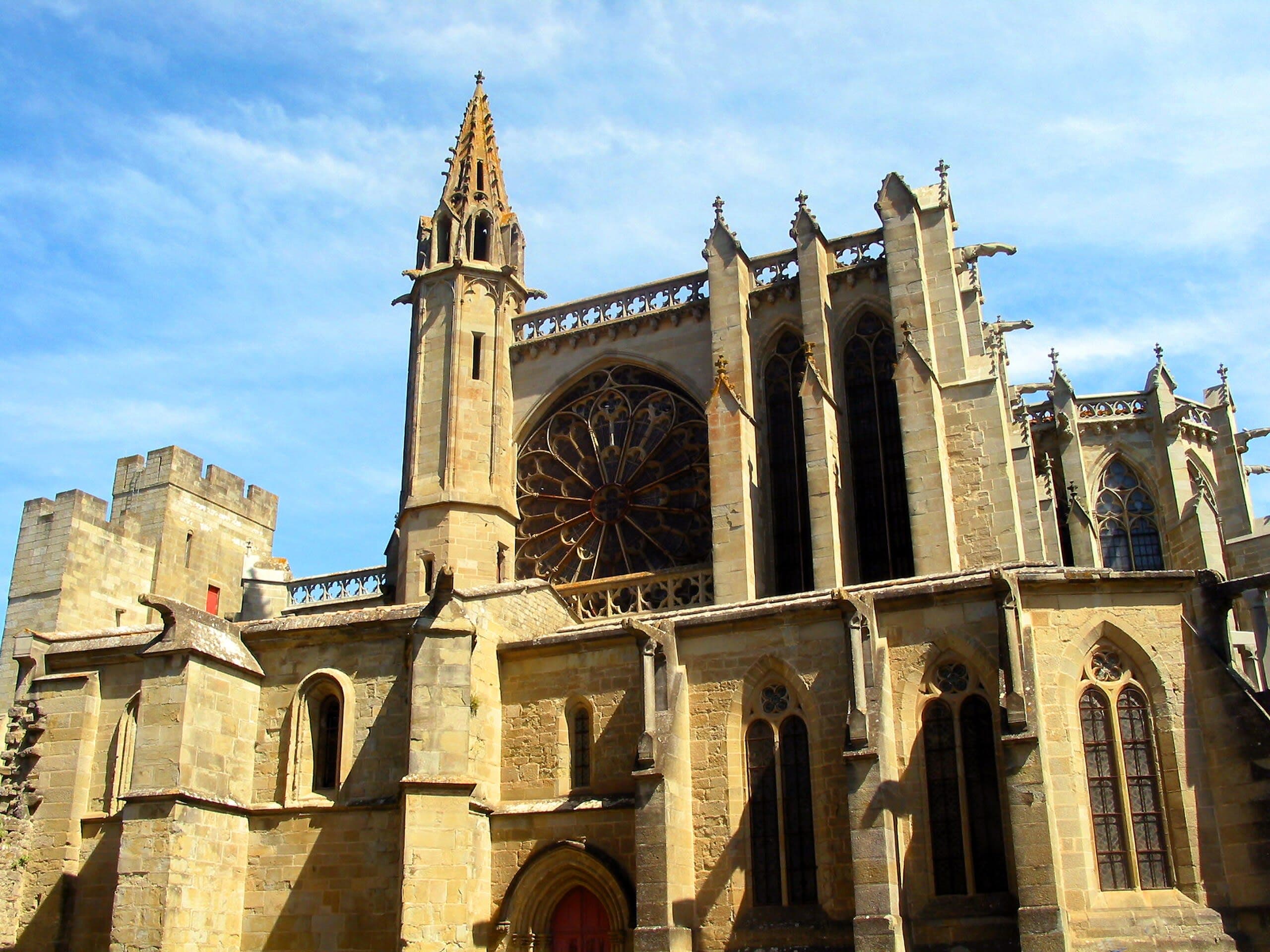
The building itself is a dialogue between Romanesque and Gothic. The older nave, heavy and dark in the Romanesque manner, gives way to a Gothic choir and transept flooded with light through some of the finest medieval stained glass in southern France. The windows date from the thirteenth and fourteenth centuries, contemporary with the cathedral they illuminate.
In 1096, Pope Urban II himself blessed the building materials—the same year he preached the First Crusade at Clermont. A century later, the citadel would witness another crusade: the Albigensian Crusade against the Cathars, a spiritual movement the Church condemned as heresy. Simon de Montfort, the crusade's merciless leader, was originally buried within these walls.
The basilica was Carcassonne's cathedral until 1803. Now it serves as a parish church and pilgrimage site, a place where the complex history of Christian faith—its heights and its violence—is inscribed in stone. Visitors seeking only the famous citadel's towers and ramparts often stumble into this interior and find themselves held by something deeper: the accumulated weight of centuries, the terrible light through ancient glass, the silence that settles between tour groups.
Context And Lineage
From Visigothic foundation to papal blessing to Cathar crusade to restoration, the basilica has witnessed the shifting tides of power and faith in medieval France. Its survival through war and revolution is itself a testament.
A church stood on this site from the sixth century, when Visigoths ruled the region. The Romanesque rebuilding was blessed by Pope Urban II in 1096, the same year he preached the First Crusade at Clermont. In the thirteenth century, under French royal patronage following the Albigensian Crusade, Gothic additions transformed the building into its current hybrid form.
The Albigensian Crusade (1209-1229) brought devastation to the region. The Cathars, a Christian movement that rejected Catholic hierarchy and material sacraments, were declared heretics. Simon de Montfort led the crusading forces with brutal efficiency. He died besieging Toulouse in 1218 and was initially buried in this church. His vestiges remain, a reminder of the violence that shaped these stones.
The church served as cathedral until 1803. In the nineteenth century, Eugène Viollet-le-Duc, the great restorer of medieval monuments, worked on the building. In 1898, Pope Leo XIII elevated it to minor basilica.
The basilica is now part of the Diocese of Carcassonne and Narbonne. It maintains regular parish worship while serving as a major tourist attraction within the UNESCO World Heritage citadel.
Pope Urban II
Blessed the building
Simon de Montfort
Crusade leader buried here
Why This Place Is Sacred
Over 1,400 years of continuous worship, a papal blessing, and the accumulated grief and triumph of the Cathar persecution give this space its particular quality. The medieval stained glass creates an atmosphere of light transformed—appropriate for a place where faith has been tested and transmitted across generations.
The thin quality at Saints Nazarius and Celsus emerges from layers of history compressed into a single space. The Romanesque portions carry the weight of early medieval devotion; the Gothic additions lift toward light and aspiration. Between them lies the violence of the Crusade, the burning of Cathars who believed differently and died for it.
Pope Urban II's blessing of the building materials in 1096 placed this church at the center of a turning point in Christian history. The same pope who blessed these stones preached the crusade that would reshape the relationship between East and West for centuries. Something of that pivotal moment persists.
The stained glass is the basilica's most transformative element. Dating from the thirteenth and fourteenth centuries, the windows are among the oldest in the Midi. When morning light strikes them, the interior becomes a space where ordinary illumination has been alchemized into something other. This is what Gothic architecture intended: the dematerialization of stone into radiant color, the creation of a foretaste of heaven.
The connection to Cathar history adds a shadow note. Simon de Montfort's vestiges remain here—the man who prosecuted the crusade with terrible efficiency. To pray in this space is to pray in a place that witnessed persecution. The faith that survives here has blood on its hands. That honesty is part of what makes the site thin: not triumphalist certainty but faith that has absorbed its own failures.
The original church was constructed in the sixth century during Visigothic rule. Pope Urban II blessed the Romanesque rebuilding in 1096. Gothic additions followed in the thirteenth century.
The church served as Carcassonne's cathedral until 1803, when the bishop's seat moved to the lower town. In 1898, it was elevated to minor basilica. Viollet-le-Duc's nineteenth-century restoration preserved and stabilized the medieval structure.
Traditions And Practice
Regular masses continue the tradition of worship; visitors can join or simply observe. The medieval stained glass invites contemplation. The citadel context offers reflection on faith's role in power and conflict.
The church served as cathedral for centuries, hosting the full range of Catholic liturgy. Its connection to the Crusades and the suppression of Catharism placed it at the center of medieval religious conflict.
Regular masses continue. Most visitors come as tourists, but the basilica's atmosphere often transforms sightseeing into something more reflective. The historical context invites consideration of religious violence and reconciliation.
Visit in the morning when the stained glass is best illuminated. Stay for Mass if timing allows. Sit in the transition zone between Romanesque and Gothic, where two visions of sacred space meet. Reflect on what it means to worship in a place that has witnessed both faith's heights and its violence.
Roman Catholicism
ActiveFormer cathedral of Carcassonne, blessed by Pope Urban II in 1096, witness to the Albigensian Crusade, and elevated to minor basilica in 1898. The church has been a center of Catholic worship for over 1,400 years.
Regular masses, veneration of saints, contemplation of medieval sacred art, pilgrimage to a papally-blessed church.
Experience And Perspectives
Enter from the citadel's busy streets and discover an interior that asks for slowness. The transition from Romanesque to Gothic is immediate and striking. The stained glass requires contemplation; the history requires reflection. Allow the citadel's crowds to dissolve in the basilica's quiet.
The citadel of Carcassonne draws tourists by the million—ramparts to walk, towers to climb, gift shops to browse. The basilica sits within this commercial bustle but apart from it. Step through its doors and the atmosphere changes.
The Romanesque nave receives you first: heavy columns, rounded arches, the solidity of eleventh-century stone. Then the eye is drawn forward to where the architecture lifts into Gothic aspiration. The transition is not subtle but dramatic—two visions of sacred space in conversation.
The stained glass dominates the experience. If you visit on a sunny morning, the north windows will be backlit, the figures and stories coming alive in blue and red and gold. The windows depict Christ's life, saints' martyrdoms, the stories that structured medieval faith. To read them is to enter a visual theology older than print.
Somewhere in this space, Simon de Montfort was buried—the crusader who broke Cathar resistance through siege and flame. His remains have been moved, but something of that complex history persists. This is not a simple place of triumphant faith but a witness to what faith has both created and destroyed.
Sit in a pew. Let the tour groups pass. The basilica has absorbed centuries of prayer; it can absorb an hour of yours.
The basilica is located within the medieval citadel (Cité de Carcassonne). Enter from the Place Saint-Nazaire. The Romanesque nave is to the west; the Gothic transept and choir to the east. The finest stained glass is in the transept and choir.
The basilica can be understood as architectural masterpiece, as witness to crusade violence, as surviving center of medieval faith, or as contemplative refuge within a touristed fortress.
Art historians recognize the basilica as an exceptional example of Romanesque-Gothic transition architecture. The stained glass is among the finest medieval glass in southern France.
Within Catholic tradition, the basilica honors early martyrs (Nazarius and Celsus) and represents the Church's triumph over heresy (Catharism). The papal blessing connects it to the authority of the universal Church.
The Cathar history of the region attracts those interested in alternative Christian spirituality. For those sympathetic to Cathar beliefs, the basilica represents the institution that destroyed them—a complex site requiring moral and historical navigation.
The full extent of Cathar presence in the citadel is not known. The original sixth-century Visigothic church layout is lost. The complete symbolism of the medieval stained glass continues to be studied.
Visit Planning
The basilica is located within the UNESCO World Heritage citadel of Carcassonne, freely accessible during citadel hours. Morning visits offer the best light for the stained glass.
Full range of accommodations in Carcassonne and the citadel itself.
Standard church etiquette applies: modest dress, quiet behavior, respect for worshippers. The basilica is both tourist attraction and active church.
The citadel draws crowds; the basilica offers refuge from them. Help maintain this quality by approaching with appropriate reverence, whether or not you share the faith it embodies.
Modest dress appropriate for a church.
Generally permitted; be respectful and avoid flash.
Candles available for lighting.
Do not disturb worshippers during services.
Sacred Cluster
Nearby sacred places create the location cluster described in the growth plan. This block is intentionally crawlable and links into the wider regional graph.