Callanish
Where Neolithic builders tracked the moon across millennia, and the Shining One still walks at midsummer dawn
Callanish, Isle of Lewis, United Kingdom
At A Glance
- Coordinates
- 58.1981, -6.7449
- Suggested Duration
- 2-3 hours for full experience
Pilgrim Tips
- Dress for Hebridean weather. Waterproofs essential. Layers advisable. The exposed location means wind.
- Photography permitted. The stones photograph dramatically at dawn, dusk, and in stormy weather.
- The visitor centre is closed until 2026; no facilities during construction. Hebridean weather is unpredictable; dress in layers with waterproofs. The exposed location means wind even on calm days.
Overview
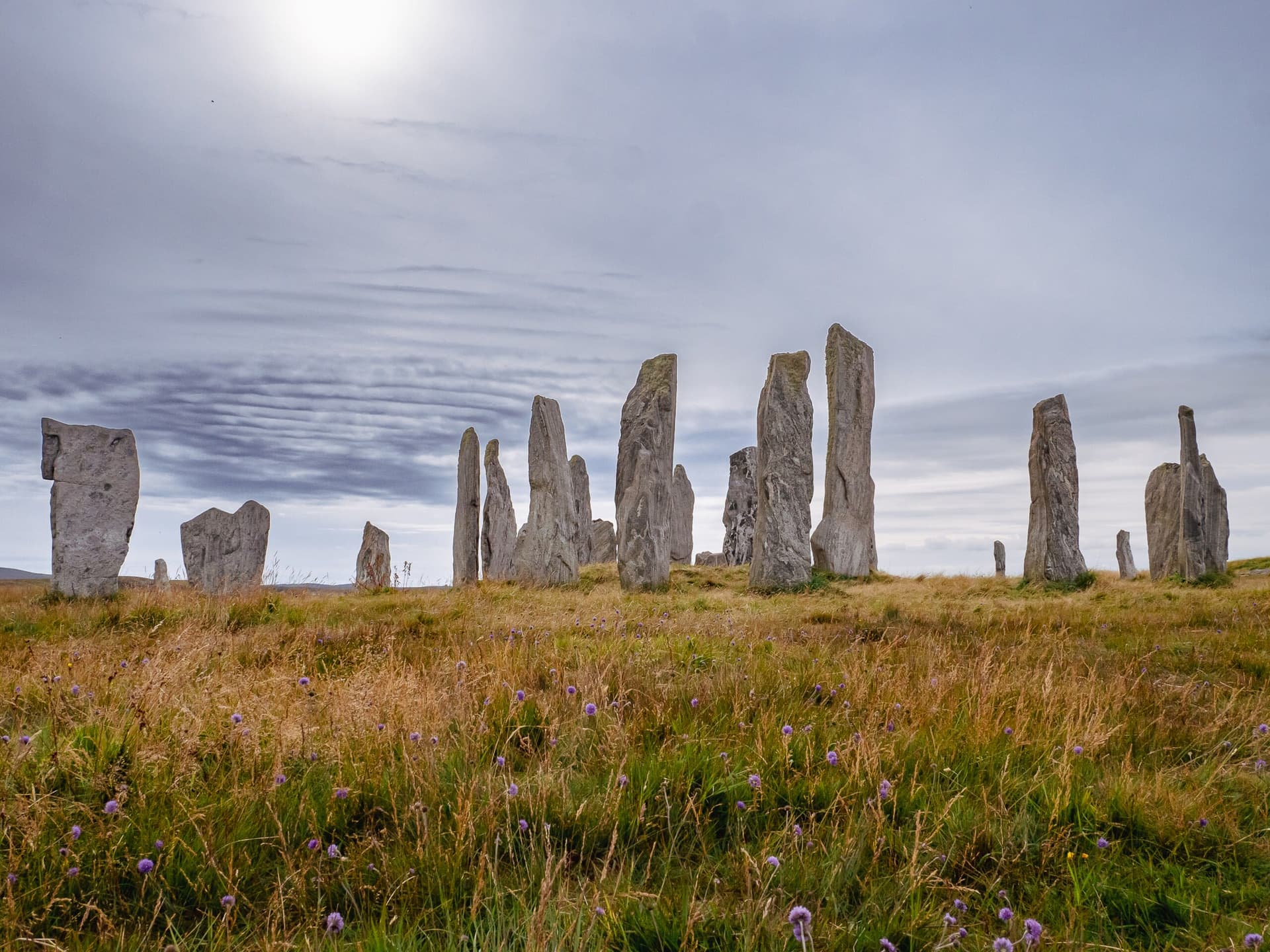
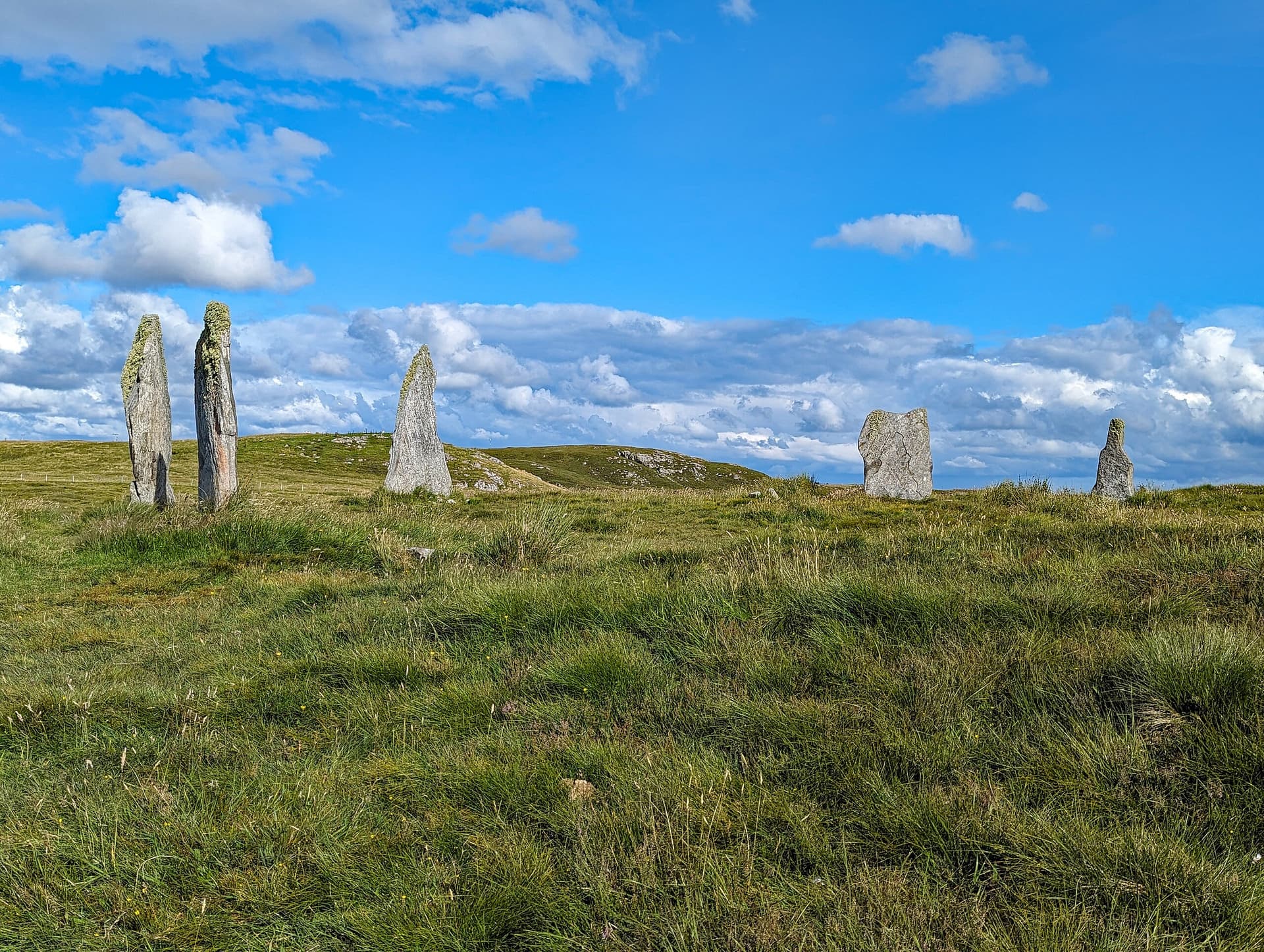
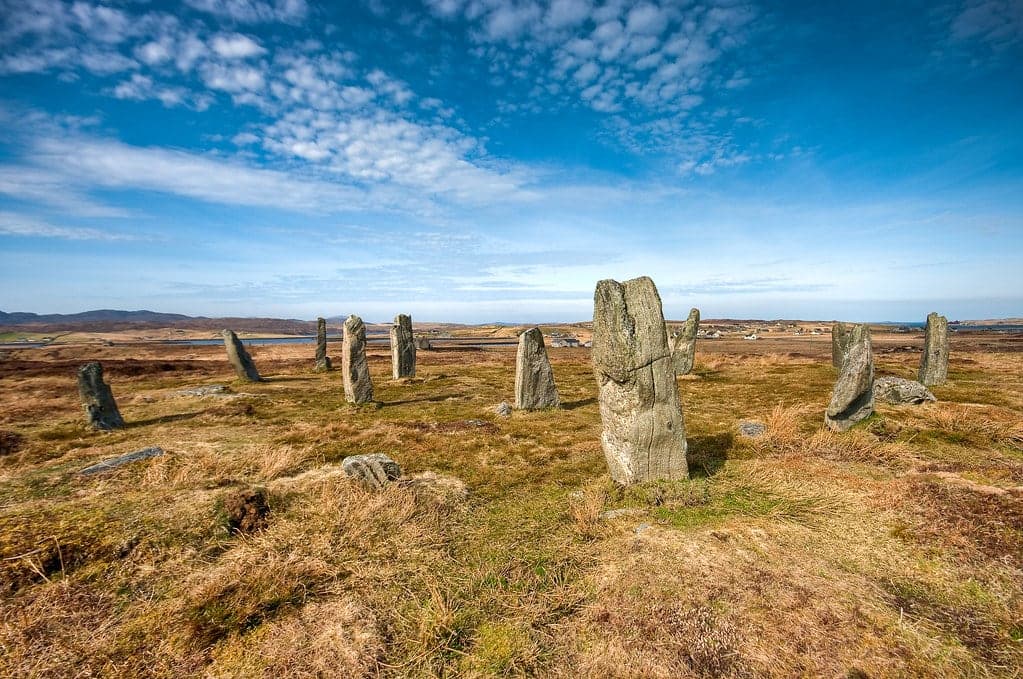
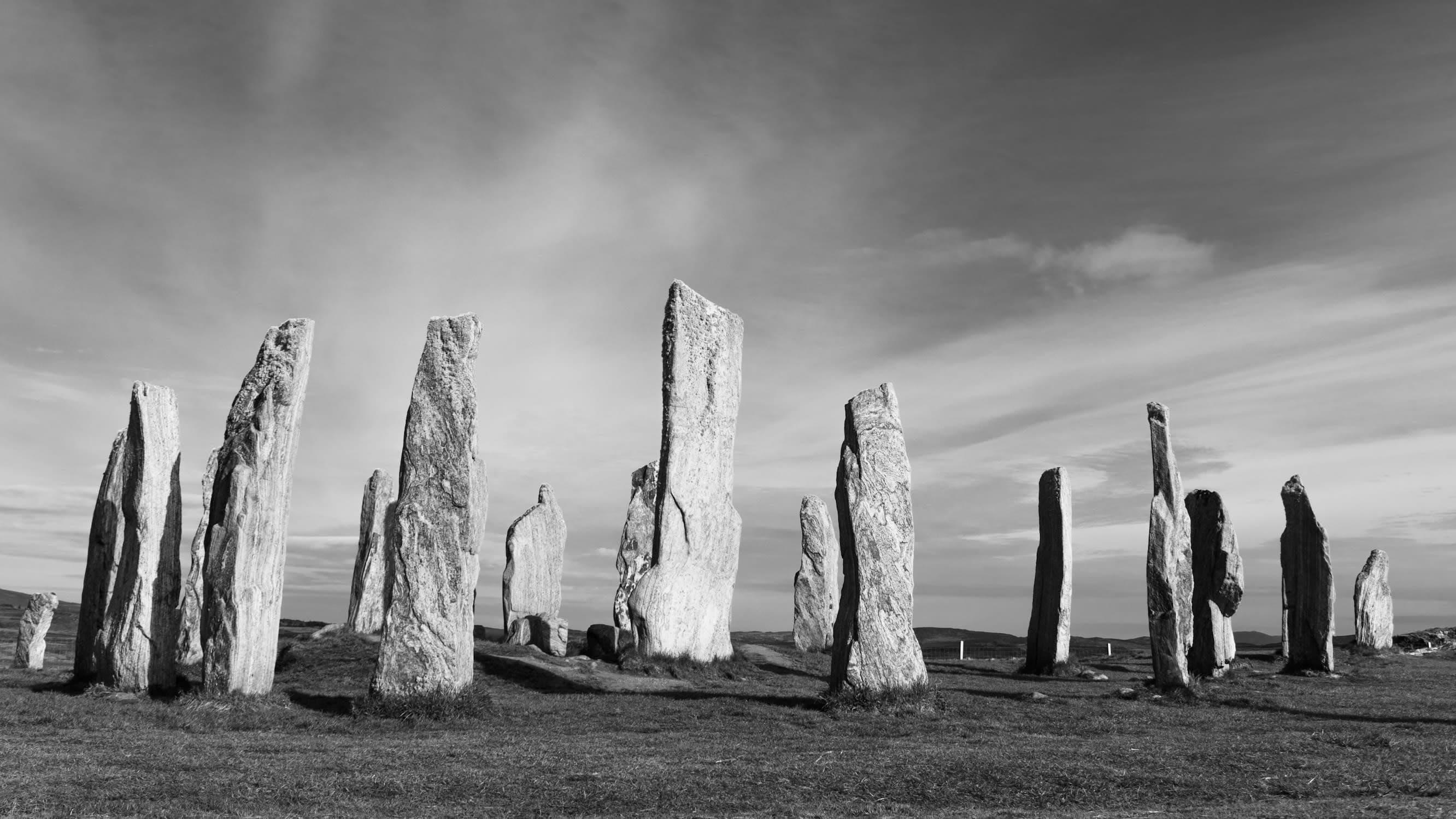
On the western edge of Lewis, where the Atlantic meets the Outer Hebrides, the Callanish Stones rise from a ridge above Loch Roag. A cruciform arrangement of standing stones—central circle, radiating rows, and an 83-metre avenue leading from the north—this is one of the most remarkable Neolithic monuments in Britain. The builders oriented their creation to track the moon's 18.6-year standstill cycle, when the full moon appears to skim along the southern hills before rising through the heart of the circle. They built with Lewisian gneiss, three billion years old—the oldest rock in western Europe. The stones have stood here for nearly 5,000 years. They will stand here after you leave.
The first glimpse of the Callanish Stones comes from a distance—tall shapes against the Hebridean sky, arranged with an order that speaks of intention beyond the practical. As you approach, the layout becomes clear: a central stone circle with a monolith at its heart, stone rows extending to east, west, and south, and a long avenue of paired stones running 83 metres to the north. This is not random scattering but deliberate design, oriented to the landscape and the sky. The stones themselves are Lewisian gneiss, banded with pale and dark minerals, weathered by millennia of Atlantic wind. At three billion years old, this is the oldest rock in western Europe. The Neolithic builders who raised these stones 5,000 years ago were working with material unimaginably ancient even then. Whatever they sought to create, they chose their medium well. The monument's purpose becomes clearer when you understand the astronomical alignment. Every 18.6 years, the moon reaches its major standstill—the extreme points of its cycle. At Callanish, the setting full moon at this time appears to trace the profile of a mountain range to the south, known in Gaelic as 'Cailleach na Mointeach'—the Old Woman of the Moors. The moon skims along the reclining figure before rising through the center of the stone circle. The builders designed a monument to track events spanning nearly two decades. Gaelic tradition added other layers. The Shining One is said to walk the avenue on midsummer morning, heralded by the cuckoo's call. The stones are called 'Fir Bhreig'—False Men—said to be giants frozen by St Kieran for refusing Christianity. A white cow with red ears once emerged from the sea to feed the starving islanders until a witch's greed drove her away. Each story represents a culture's attempt to make sense of something already ancient when that culture arrived.
Context And Lineage
Built nearly 5,000 years ago to track a celestial cycle spanning decades, covered by peat for millennia, rediscovered in 1857, and still drawing pilgrims today.
Around 2900 BCE, Neolithic communities on Lewis began constructing a monument of unprecedented ambition. They selected Lewisian gneiss—the oldest rock in western Europe, three billion years formed—and raised it into the sky. They created a central circle of thirteen stones with a monolith at the heart. They extended stone rows to the east, west, and south. They built an avenue of paired stones running 83 metres to the north. The layout was cruciform, oriented to the landscape and the sky. Why? The answer lies in the moon. Every 18.6 years, the moon reaches its major standstill—the extreme points of its cycle. At Callanish, the monument aligns with this event. The setting full moon traces the profile of Cailleach na Mointeach (the Old Woman of the Moors) before rising through the center of the circle. Someone observed this. Someone designed a monument to mark it. Someone built for the ages. The site remained in use for at least 1,500 years. A chambered cairn was added in the Bronze Age. Eventually, activity ceased. Peat grew around the stones, covering their lower portions, making them appear smaller than they were. Gaelic traditions accumulated: the Shining One, the False Men, the white cow from the sea. In 1857, Sir James Matheson ordered the peat removed, revealing the stones' true height and the chambered cairn at their base. Patrick Ashmore's excavations in the 1980s uncovered the astronomical alignment. Today the stones stand as they have for 5,000 years, waiting for the next lunar standstill.
The Callanish Stones belong to the great tradition of Neolithic monument-building in the Atlantic fringe of Europe, contemporary with Orkney's Ring of Brodgar and Stenness, predating Stonehenge. The cruciform layout with radiating stone rows is unique. At least 11 smaller stone circles in the surrounding area indicate this was a major ceremonial complex serving communities across Lewis.
Sir James Matheson
Patrick Ashmore
Why This Place Is Sacred
Where three-billion-year-old stone, five-thousand-year-old design, and the moon's 18.6-year cycle converge on the edge of the Atlantic world.
The thinness of Callanish operates through time. The Lewisian gneiss that forms the stones is three billion years old—half the age of Earth itself. The Neolithic builders who raised these stones worked here 5,000 years ago. The moon they tracked follows a cycle spanning 18.6 years. You stand in this convergence of times: geological, archaeological, astronomical. The island location intensifies the experience. Lewis lies on the edge of the Atlantic world, the last land before the ocean stretches to North America. The weather changes constantly; sun, rain, and wind can all arrive within the same hour. The light shifts, and the stones shift with it, their banded gneiss catching different aspects as clouds race overhead. This is thin not because it is comfortable but because it is exposed—to the elements, to time, to something larger than human scale. The processional approach matters. Walking the northern avenue toward the central circle, you follow a path traced for millennia. The stones rise on either side. The central monolith grows larger as you approach. This is how Neolithic peoples moved through their sacred landscape—not arriving instantly but approaching gradually, letting the monument work on them. The avenue taught them something; it can teach you too.
The Callanish Stones were erected around 2900-2750 BCE and remained a focus for ritual activity into the Bronze Age—at least 1,500 years of use. The astronomical alignment with the lunar standstill suggests the monument functioned as a ceremonial observatory, tracking celestial events across decades. A chambered cairn was added later, indicating the site accumulated funerary significance.
Peat covered the lower portions of the stones until Sir James Matheson ordered its removal in 1857, revealing the stones' true height. Patrick Ashmore's excavations (1979-1988) revealed the construction sequence and proposed the astronomical interpretation. The visitor centre (undergoing redevelopment until 2026) will enhance interpretation. The stones themselves remain unchanged, tracking the moon as they have for millennia.
Traditions And Practice
Walk the avenue. Stand at the center. Track the moon if you have decades to spare. Visit at midsummer dawn if you seek the Shining One.
Original Neolithic practices unknown but likely included processional movement along the avenue, observation of celestial events (especially the lunar standstill), and ceremonies at the central circle. Gaelic tradition maintained midsummer and May Day visits. The Shining One was said to walk the avenue on midsummer morning.
Contemporary visitors experience the stones at all hours. Some time visits to astronomical events or Celtic festivals. Walking the avenue as processional approach is common. Dawn and dusk visits offer atmospheric experiences. The 24/7 access creates possibilities unavailable at most monuments.
Approach from the north, walking the avenue as processional path. Let the stones rise around you. Stand at the central circle and orient yourself: north to the avenue, south toward Cailleach na Mointeach. Visit at dawn or dusk if possible. If you can time your visit to a lunar standstill year, do so. Otherwise, simply be present with three billion years of stone and five thousand years of human intention.
Neolithic ceremonial practice
HistoricalThe monument was designed and built around 2900-2750 BCE to track the 18.6-year lunar standstill cycle.
Original practices unknown. Likely included processional movement, astronomical observation, and ceremonies at the central circle.
Gaelic folklore traditions
ActiveGaelic-speaking communities developed rich traditions explaining the stones' presence and power.
May Day and midsummer visits. Stories of the Shining One, the False Men, the white cow. Ongoing Gaelic cultural connection to the site.
Lunar standstill observation
ActiveEvery 18.6 years, the monument's original purpose becomes visible as the moon traces Cailleach na Mointeach.
Gathering to observe the lunar standstill. The phenomenon continues to work as designed.
Contemporary spiritual practice
ActiveModern seekers recognize Callanish as a major site for encounter with ancient wisdom.
Visits at dawn, dusk, midsummer, full moon. Walking the avenue. Contemplation at the central circle.
Experience And Perspectives
Walk the northern avenue toward the circle. Let the stones rise around you. Stand at the center where the monolith marks the point of convergence. Look south toward Cailleach na Mointeach.
The ferry from Ullapool delivers you to Stornoway, the main town of Lewis. From there, the drive west takes perhaps thirty minutes, the landscape becoming increasingly treeless and exposed as you approach the Atlantic coast. The Callanish Stones appear on a ridge above Loch Roag—unmistakable, dramatic, waiting. The visitor centre is closed for major redevelopment until 2026, but the stones themselves are open 24 hours a day, 7 days a week. This is significant: you can visit at dawn, at dusk, in the middle of the night. Many of the most powerful experiences of Callanish come at these liminal times, when the light catches the banded gneiss and the monument stands against sky and water. Begin at the northern end of the avenue, where the paired stones extend 83 metres toward the central circle. Walk slowly. The stones stand on either side like a guard of honor—or a procession of pilgrims frozen in stone. Neolithic peoples walked this path; the Shining One is said to walk it still at midsummer dawn. Let the approach shape your experience. Arriving at the central circle, you find thirteen stones arranged around a single massive monolith 4.8 metres tall. This is the heart of the monument, the point where all the radiating rows converge. A chambered cairn lies at the base of the central stone, added centuries after the circle was built. Look south from here. The hills form a profile known as Cailleach na Mointeach—the Old Woman of the Moors—a reclining figure visible from the circle. During the major lunar standstill, the full moon traces this profile before rising through the center of the stones. The next standstill will draw observers from around the world.
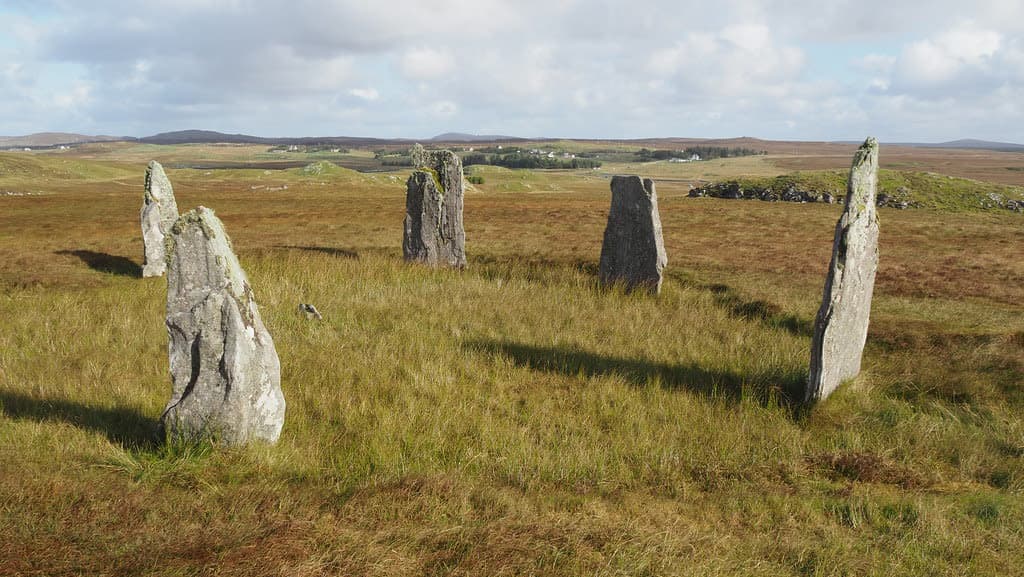
The Callanish Stones stand on a ridge above Loch Roag, 12 miles west of Stornoway on Lewis. The northern avenue is the traditional processional approach. The central circle contains the main monolith. Shorter stone rows extend east, west, and south. At least 11 smaller stone circles exist in the surrounding area.
The Callanish Stones invite interpretation through astronomy, archaeology, Gaelic tradition, and personal encounter. Each perspective illuminates something of what the builders achieved.
Archaeologists date the main stone circle to approximately 2900-2750 BCE. Patrick Ashmore's excavations (1979-1988) proposed the lunar standstill alignment, suggesting the monument functioned as a ceremonial observatory tracking events across an 18.6-year cycle. The cruciform layout with radiating stone rows is unique among British monuments. At least 11 smaller stone circles in the surrounding area indicate this was a major ceremonial complex. The Lewisian gneiss is three billion years old.
Gaelic tradition calls the stones 'Fir Bhreig' (False Men), giants frozen by St Kieran for refusing Christianity. The Shining One is said to walk the avenue on midsummer morning, heralded by the cuckoo's call. May Day and midsummer visits maintained connection to the site's seasonal significance. The white cow legend speaks to the land's ability to sustain its people—and the consequences of greed.
Contemporary spiritual seekers recognize Callanish as one of Europe's most significant megalithic sites. The astronomical alignment, lunar symbolism, and integration with the landscape profile of Cailleach na Mointeach support interpretations focusing on goddess worship and celestial spirituality. Some identify the site as a node in ley line networks or earth energy grids.
The precise meaning of the cruciform layout remains uncertain. Whether the Shining One legend preserves genuine memory of Neolithic ritual cannot be determined. The ceremonies that took place during the lunar standstill observations are lost. What the builders believed about the moon, the landscape, and their place within them we can only guess.
Visit Planning
On Lewis, reached by ferry to Stornoway. 24/7 access to the stones. Visitor centre closed until 2026. Admission charge planned for 2026.
Limited accommodation in Callanish village. More options in Stornoway. Book in advance, especially summer.
The stones have stood for 5,000 years. Treat them accordingly. Do not climb. Do not damage. Let others have their encounters.
The Callanish Stones are among the most significant Neolithic monuments in Europe. They have survived five millennia and deserve continued care. Do not climb on the stones—the gneiss, despite its age, can be damaged by modern feet. Do not remove anything from the site. Respect other visitors' experiences; if someone is clearly seeking silence, provide it. The 24/7 access is a privilege; use it responsibly.
Dress for Hebridean weather. Waterproofs essential. Layers advisable. The exposed location means wind.
Photography permitted. The stones photograph dramatically at dawn, dusk, and in stormy weather.
Not traditionally associated with offerings. Presence and attention are sufficient.
Do not climb on the stones. Do not damage the monument. Leave no trace.
Sacred Cluster
Nearby sacred places create the location cluster described in the growth plan. This block is intentionally crawlable and links into the wider regional graph.