Blarney Stone
Where thousands lean backward over a medieval parapet each year to kiss a stone for the gift of eloquence
Cork, Munster, Ireland
At A Glance
- Coordinates
- 51.9291, -8.5709
- Suggested Duration
- 2 to 3 hours including the Rock Close, Wishing Steps, and broader gardens
Pilgrim Tips
- Comfortable walking shoes are essential for the castle stairs and garden paths. Weather-appropriate clothing, as most of the visit is outdoors. No specific dress requirements.
- Photography is permitted throughout the castle and grounds. Official photographers capture the stone kiss for purchase. Personal photographs at the stone are also permitted.
- The climb to the stone requires ascending one hundred and twenty-seven steep, narrow, uneven steps. This is not accessible for visitors with mobility limitations. The lean-back position at the top requires reasonable upper body strength and is not suitable for those with back problems, vertigo, or extreme fear of heights. The Rock Close paths can be uneven and slippery in wet weather. Sturdy footwear recommended throughout.
Overview
At the top of a fifteenth-century castle tower in County Cork, visitors lie on their back, lean over the edge of the parapet, and kiss the underside of a limestone block. The ritual is said to bestow the gift of eloquent speech. Below the castle, in the Rock Close, ancient yew trees shade stone formations attributed to druids, and the Wishing Steps offer a walking meditation for those who can concentrate on a single wish with their eyes closed.
Blarney Castle stands eight kilometres northwest of Cork city, a fifteenth-century tower house built by Cormac Laidir MacCarthy, King of Munster, on a site occupied by fortifications since before 1200. The castle is well preserved and visually imposing, but it is not the architecture that draws over three hundred thousand visitors each year. It is a single block of local Carboniferous limestone set into the parapet at the top of the tower, and the tradition that kissing this stone confers the gift of persuasive speech.
The origin of the tradition is lost in competing legends. In one account, the goddess Cliodhna told Cormac MacCarthy to kiss the first stone he found before a lawsuit, and his subsequent eloquence won the case. In another, Robert the Bruce gifted a piece of the Stone of Scone to the MacCarthys for Irish support at the Battle of Bannockburn. Other traditions connect the stone to Jacob's Pillow, to the prophet Moses, or to the Tuatha De Danann, the divine race of Irish mythology, who caused it to fall from the sky. A 2014 geological analysis by the University of Glasgow settled the material question: the stone is local limestone, approximately 330 million years old. The legends remain unsettled.
The word 'blarney' has entered the English language as a synonym for eloquent, flattering speech, testimony to the tradition's cultural reach. But the castle grounds hold layers of significance beyond the stone. The Rock Close, a garden threaded among genuine ancient stone formations and features arranged by the Jefferyes family in the 1750s, includes a sacrificial altar, stone circles, and sacred yew trees dating back centuries. The Witch's Yew, over six hundred years old, was voted Ireland's Tree of the Year in 2019. The Wishing Steps, where visitors walk down and back up with their eyes closed while concentrating on a single wish, offer a quiet counterpoint to the theatrical ritual at the top of the tower.
Blarney is many things simultaneously: a medieval stronghold, a folk-sacred site, a commercial tourist attraction, and a place where hundreds of thousands of people each year perform an ancient ritual of physical trust and symbolic opening. The seriousness with which visitors approach the kiss, the nervousness visible in the queue, the laughter and relief afterward, suggest that something genuine persists beneath the commerce.
Context And Lineage
A fifteenth-century MacCarthy stronghold with folk-sacred traditions layered over a much older druidic landscape, now one of Ireland's most visited sites.
The legends that attach to the Blarney Stone are multiple and contradictory. The most widely told involves the goddess Cliodhna, Queen of the Munster Fairies and Celtic goddess of love and beauty. Cormac Laidir MacCarthy, facing a lawsuit, appealed to Cliodhna for help. She instructed him to kiss the first stone he found on his way to court. He obeyed, and his sudden eloquence won the case. In gratitude, he incorporated the stone into his castle.
A second legend connects the stone to Scotland: Robert the Bruce, grateful for Irish support at the Battle of Bannockburn in 1314, gifted a portion of the Stone of Scone to the MacCarthys. More extravagant traditions trace the stone to Jacob's Pillow, brought from the Holy Land by the prophet Jeremiah, or to Moses striking a rock in the desert, or to the Tuatha De Danann, the mythological divine race of Ireland, who caused the stone to fall from the sky during a battle with the invading Milesians.
Geological analysis conducted by Dr. John Faithfull at the University of Glasgow in 2014 determined that the stone is local Carboniferous limestone, approximately 330 million years old. It did not come from Scotland, the Holy Land, or the sky. The legends, untroubled by this finding, continue.
Blarney sits at the intersection of multiple traditions: the MacCarthy clan's Gaelic lordship, the Celtic mythology of Cliodhna and the Tuatha De Danann, the druidic associations of the Rock Close, and the broader European tradition of sacred stones believed to confer power upon those who touch or kiss them. The word 'blarney' itself, meaning eloquent or flattering speech, entered the English language as a direct consequence of the tradition, giving the site a linguistic legacy that extends far beyond Ireland.
Cormac Laidir MacCarthy
Cliodhna
Dr. John Faithfull
The Jefferyes Family
Why This Place Is Sacred
Layers of legend, landscape, and ritual converge at a place where the line between tourism and genuine folk-sacred practice has never quite resolved.
The thinness at Blarney does not announce itself in the way it does at quieter, more remote sacred sites. The car park is large. The admission queue can be long. The gift shop is extensive. And yet something operates here that is not entirely explained by marketing.
Start with the Rock Close. Below the castle, a path winds through woodland and among stone formations that are genuinely ancient, estimated at over two thousand years old. Some were rearranged in the 1750s by the Jefferyes family, making it difficult to distinguish original features from later picturesque improvements. But the sacrificial altar, the stone circles, and the ancient yew trees create an atmosphere that visitors consistently describe in terms of presence, of a quality in the air beneath the canopy that the open grounds above do not share. The Witch's Yew, its trunk split and hollow, has been growing here for over six hundred years. Beneath its branches, the light changes. The tourist chatter from above fades. Whether the druids actually gathered here is uncertain, but something about the space holds a different quality of attention.
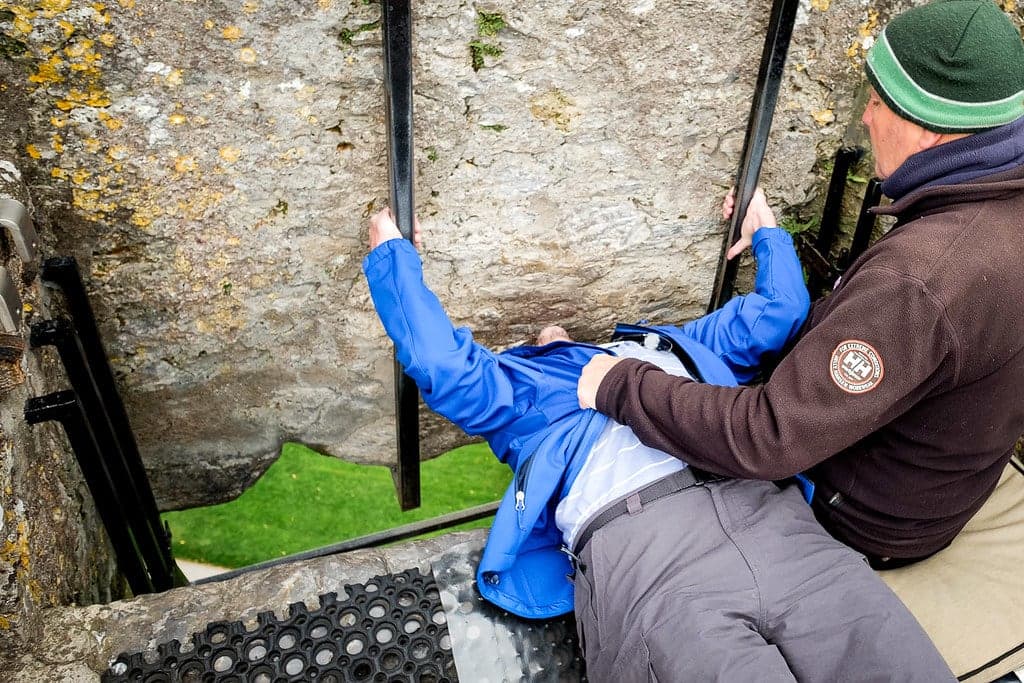
Then consider the stone itself. The ritual of kissing it is physically demanding and mildly frightening. You climb one hundred and twenty-seven steps to the top of the tower. You lie on your back. You lean backward over the edge of the parapet, gripping iron bars, your head hanging over empty air, and you kiss the underside of a stone set into the wall. An attendant holds you. The drop is manageable but real enough to quicken the pulse. This is not a casual gesture. It requires trust, the willingness to surrender control of your body to a stranger and to gravity, and it requires a physical posture of openness, lying back with your face turned upward, your throat exposed. Whatever the stone's geological identity, the ritual itself enacts something meaningful: the surrender of self-protection in pursuit of a gift.
The gift itself is eloquence, the ability to speak well, to persuade, to charm. In Irish culture, the word carries particular weight. Language has been a survival tool, a political weapon, and a source of identity in Ireland for centuries. To seek the gift of speech is not trivial in a tradition where poets held the status of priests and the right word at the right moment could avert war.
The castle was built as a fortress and seat of the MacCarthy clan. The Rock Close features are attributed to druidic ritual use, though their exact original purpose is uncertain. The kissing tradition's origins are undocumented.
The castle passed from the MacCarthys through various owners. The kissing tradition is first documented in the eighteenth or nineteenth century, though oral tradition places it earlier. The Jefferyes family rearranged some Rock Close features in the 1750s. The site became a major commercial tourist attraction in the modern era, drawing over three hundred thousand visitors annually. The Wishing Steps and Rock Close maintain their folk-spiritual associations alongside the commercial operation.
Traditions And Practice
Kiss the stone for eloquence. Walk the Wishing Steps with eyes closed. Explore the Rock Close as a contemplative walk through layers of ancient landscape.
The primary ritual is kissing the Blarney Stone to receive the gift of eloquent speech. The Wishing Steps require walking down and back up with eyes closed while concentrating solely on a single wish, which tradition says will be granted within a year. Coins and small offerings were traditionally left at the Fairy Glade for the fairy folk. The druidic altar in the Rock Close is attributed to pre-Christian ritual use, though specific practices cannot be reconstructed.
Stone-kissing continues year-round with the assistance of castle staff, who guide visitors into the lean-back position and ensure their safety. The Wishing Steps remain actively used. Visitors explore the Rock Close as a contemplative walk, and many report the woodland atmosphere as the most affecting part of the visit. Coins are still left at the Fairy Glade. The estate holds seasonal events including garden illuminations.
Arrive early, ideally at opening time, to minimize queue times for the stone. Make the climb to the top deliberately: the narrow spiral staircase is the original medieval passage, and ascending it slowly connects you to the physical experience of everyone who has climbed these steps since the fifteenth century.
At the top, when your turn comes, give yourself to the ritual. The lean-back is genuinely unsettling for a moment, and that unsettlement is part of the meaning. You are placing your body in a position of vulnerability and trust in order to receive something. Whether the gift is real or symbolic, the physical act of surrender is genuine.
After descending, go directly to the Rock Close rather than the gift shop. The transition from the open, sunlit castle top to the shaded woodland below is a shift in atmosphere that deserves attention. Walk slowly beneath the yew canopy. Find the sacrificial altar and sit near it. The Rock Close rewards quiet observation more than rapid touring.
At the Wishing Steps, take the exercise seriously. Close your eyes. Choose your wish before you begin and hold it. The steps are uneven, which forces concentration. The practice is brief but surprisingly absorbing.
Leave the Fairy Glade for last. It is a quiet corner of the garden, and a coin left there connects you to a folk tradition that predates the tourist industry by centuries.
Irish Folk Tradition
ActiveThe Blarney Stone is the most famous folk-sacred stone in Ireland, believed to grant the gift of eloquent, persuasive speech to those who kiss it. The tradition is deeply embedded in Irish cultural identity, and the word 'blarney' itself has become part of the English language.
Visitors climb to the top of the castle, lie on their back, lean backward over the parapet while gripping iron bars, and kiss the underside of the stone. Over three hundred thousand people perform this ritual annually. The Wishing Steps offer a complementary walking ritual for wish-granting.
Celtic Paganism / Druidism
HistoricalThe Rock Close within the castle grounds is believed to be an ancient druidic settlement over two thousand years old, containing a sacrificial altar, stone formations, and sacred yew trees. The goddess Cliodhna and the Tuatha De Danann provide the mythological framework.
Historical druidic rituals at the altar and stone formations cannot be reconstructed. Today visitors walk the Rock Close as a contemplative garden, and some practitioners regard it as an active spiritual site for meditation and earth-based practice.
Heritage Tourism
ActiveBlarney Castle is one of Ireland's most visited heritage attractions, drawing over three hundred thousand visitors annually. The stone-kissing ritual, the gardens, and the castle's medieval architecture combine to create a major cultural tourism destination.
Guided and self-guided visits, official photography at the stone, seasonal garden events, and retail operations. The site maintains the stone-kissing tradition while presenting the castle and grounds as a heritage experience.
Experience And Perspectives
Climb the castle tower and kiss the stone for eloquence. Descend and walk the Rock Close beneath ancient yew trees. Try the Wishing Steps with closed eyes.
The approach to the Blarney Stone begins with a climb. One hundred and twenty-seven steps spiral upward through the interior of the fifteenth-century tower. The stairs are narrow, worn, and authentically medieval: this is not a reconstructed staircase but the original passage built for the MacCarthys over five centuries ago. The walls are close. The treads are uneven. Each step takes you higher above the surrounding gardens and countryside.
At the top, the parapet offers wide views across the Blarney estate and the Lee Valley. The stone is set into the wall at the top of the tower, on the outer face just below the battlements. To kiss it, you sit on the parapet wall, lean backward until you are nearly horizontal, grip two iron bars for support, and lower your head to the stone's surface. A castle attendant stands at your side, steadying you. An official photographer captures the moment. The position is awkward and briefly alarming: your body is arched backward over the castle wall, your face turned to the sky, the ground far below visible at the edge of your peripheral vision. The kiss itself lasts a second. The return to upright feels like relief.
Many visitors describe a sense of having done something significant, even if they laugh about it immediately afterward. The physical vulnerability of the position, the ancient setting, and the weight of centuries of tradition combine to create a ritual moment that transcends its tourist context.
After descending, walk the Rock Close. The transition from the open, wind-blown castle top to the shaded woodland below is abrupt. Ancient yew trees, including the six-hundred-year-old Witch's Yew, form a canopy that filters the light to a green-gold twilight. Stone formations emerge from the undergrowth: a sacrificial altar, a dolmen, stone circles. Some are genuinely ancient, others arranged in the eighteenth century, and the uncertainty itself adds to the atmosphere. A witch's kitchen, a cave-like overhang, sits at one end. The Fairy Glade, where coins are traditionally left as offerings to the fairy folk, occupies a quiet corner.
The Wishing Steps are nearby. Walk down the steps with your eyes closed, concentrating solely on a single wish, then walk back up, still with eyes closed and still concentrating. If you manage this without losing focus, the wish is said to be granted within a year. The exercise is more meditative than it sounds: closing your eyes on uneven stone steps and holding a single thought requires genuine concentration, a brief practice in mindfulness wrapped in folk tradition.
The broader gardens, including the Fern Garden and the Poison Garden, extend the visit. Allow two to three hours for the full experience.
Blarney Castle is eight kilometres northwest of Cork city centre in the village of Blarney. The stone is at the top of the castle tower, reached by climbing one hundred and twenty-seven steps. The Rock Close gardens are below the castle, accessed through the wider grounds. The Wishing Steps are in the Rock Close area.
Blarney exists at the intersection of folklore, geology, tourism, and genuine folk-sacred tradition. Each perspective reveals a different layer, and the site's power lies partly in the refusal of these layers to collapse into a single narrative.
Geologists at the University of Glasgow confirmed in 2014 that the stone is local Carboniferous limestone, approximately 330 million years old, ruling out Scottish, Holy Land, or other exotic origins. Historians date the kissing tradition to no earlier than the eighteenth or nineteenth century, though the castle itself dates to 1446. The Rock Close contains genuine ancient stone formations estimated at over two thousand years old, but some were rearranged by the Jefferyes family in the 1750s, making it difficult to distinguish original features from later improvements. The word 'blarney' entered the English language, probably in the eighteenth century, as a term for persuasive, flattering speech.
Irish folk tradition holds that the stone possesses genuine power to grant eloquence, tied to the goddess Cliodhna and the fairy folk. The MacCarthy clan connection and Gaelic oral tradition emphasize the stone as a conduit of divine wisdom and poetic speech. The fairy folk of the Rock Close and the druidic associations of the stone formations place Blarney within the broader landscape of Irish folk-sacred belief.
Some spiritual practitioners view the Rock Close as a significant energy site and thin place, with the ancient yew trees, stone formations, and underground water courses creating what they describe as a concentration of earth energy. The multiple origin legends, spanning biblical, Celtic, and mythological traditions, are sometimes interpreted as evidence that the site's power has been recognized across traditions and millennia.
The precise origin of the kissing tradition remains undocumented. When and why people first began kissing this particular stone is not recorded. The exact nature and extent of the druidic settlement at Rock Close is poorly understood archaeologically, partly because of the eighteenth-century rearrangement. The relationship between the stone's alleged power and the pre-Christian sacred landscape of the Rock Close has not been thoroughly investigated.
Visit Planning
Eight kilometres from Cork city centre. Accessible by bus. Large car park. Allow two to three hours. Admission fee required.
Accommodation available in Blarney village and extensively in Cork city, 8 km away. Mobile phone signal is reliable at the site. No specific contact details for spiritual guidance; the site operates as a commercial attraction.
Standard tourist site etiquette. Comfortable clothing and walking shoes essential. No climbing on the Rock Close formations.
Blarney Castle is a commercial tourist attraction and the atmosphere is relaxed and welcoming. There are no dress codes, no restrictions on photography, and no formal protocols. The castle attendant at the stone will guide you through the kissing process. Official photographers are stationed to capture the moment, with prints available for purchase, though personal photography is also permitted.
The Rock Close, despite its ancient features, is treated as a garden rather than a sacred site in the estate's presentation. Visitors should nonetheless respect the stone formations by not climbing on them. The Fairy Glade accepts coin offerings but should not be used for leaving other objects.
Comfortable walking shoes are essential for the castle stairs and garden paths. Weather-appropriate clothing, as most of the visit is outdoors. No specific dress requirements.
Photography is permitted throughout the castle and grounds. Official photographers capture the stone kiss for purchase. Personal photographs at the stone are also permitted.
Coins may be left at the Fairy Glade as offerings to the fairy folk. No formal offering tradition exists at the stone itself.
The stone kiss requires climbing steep narrow stairs and is not accessible for those with mobility limitations. Standard admission fee required. The grounds close at posted times, varying seasonally. No climbing on Rock Close stone formations.
Sacred Cluster
Nearby sacred places create the location cluster described in the growth plan. This block is intentionally crawlable and links into the wider regional graph.
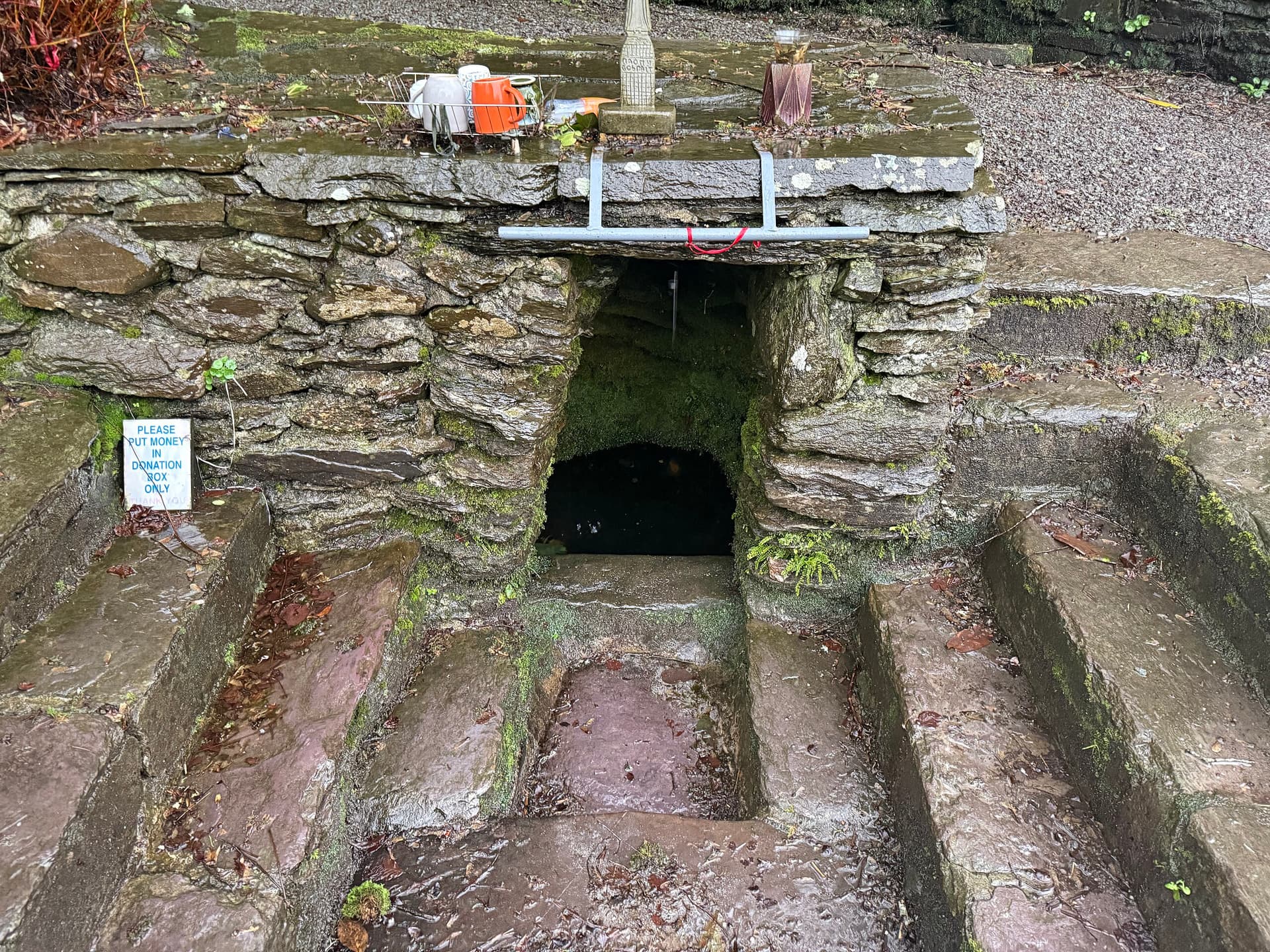
St Gobnait's well (Ballyvourney)
Ballyvourney, County Cork, Ireland
41.0 km away
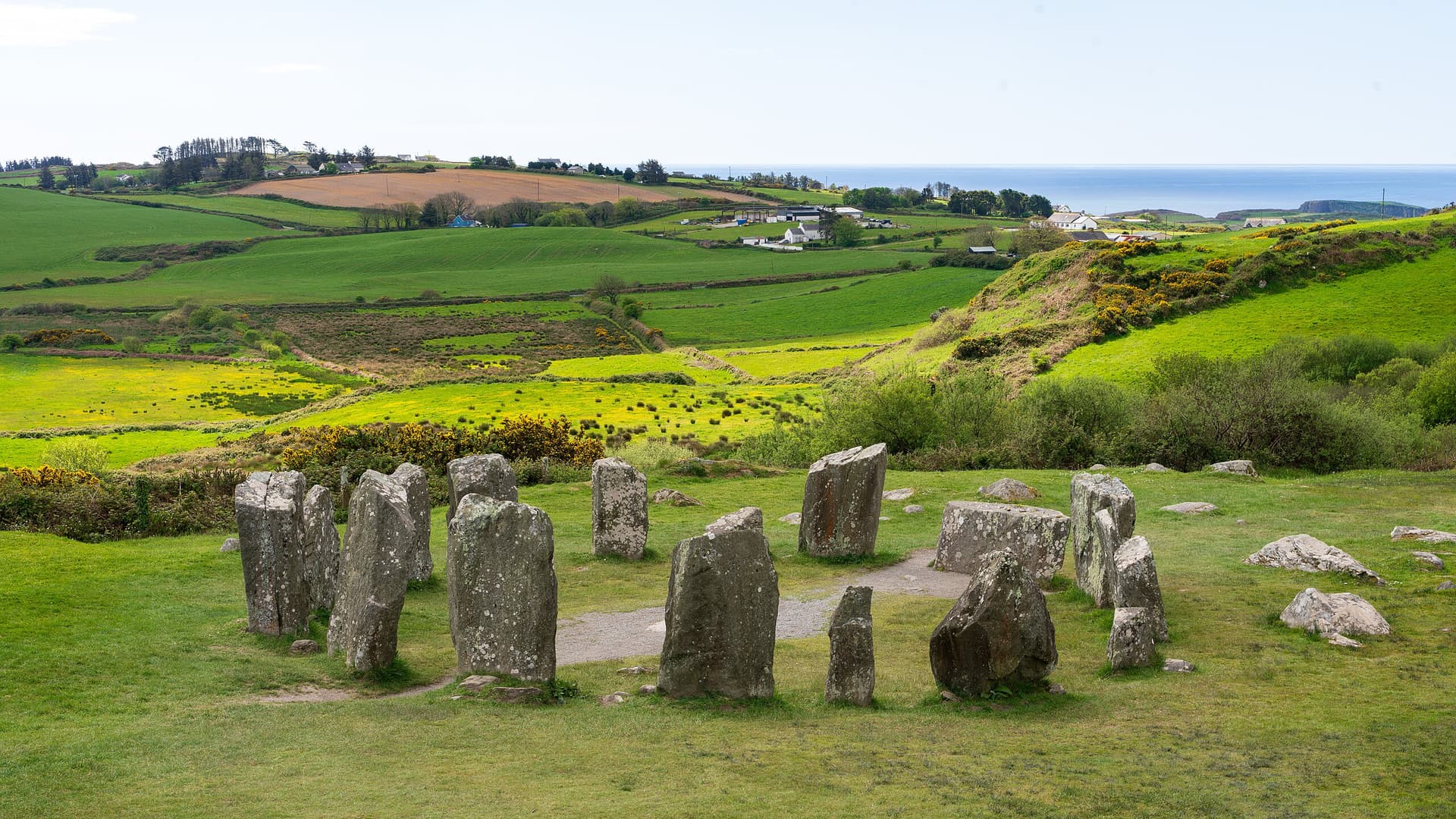
Drombeg Stone Circle, Glandore, Ireland
County Cork, West Cork, Ireland
53.9 km away
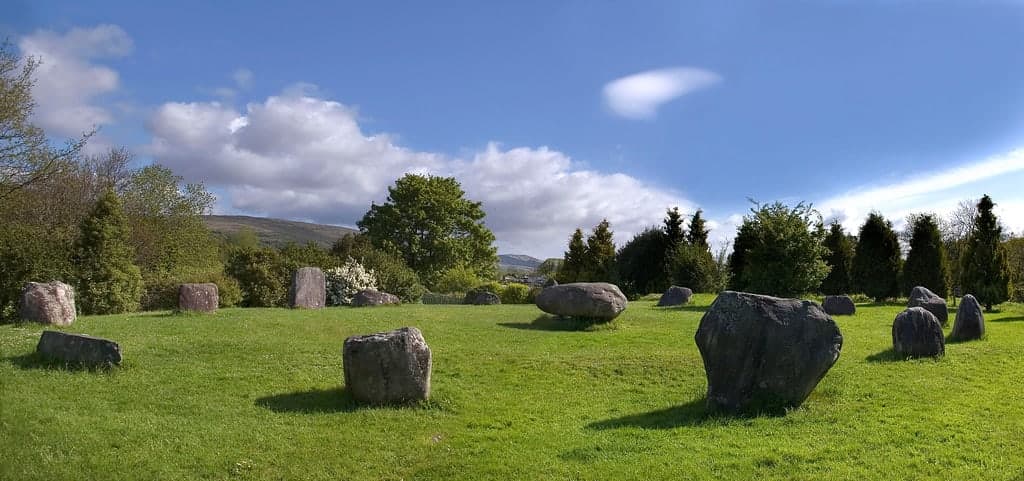
Kenmare Stone Circle, Kenmare, Ireland
Kenmare, Kenmare Municipal District, Ireland
70.0 km away
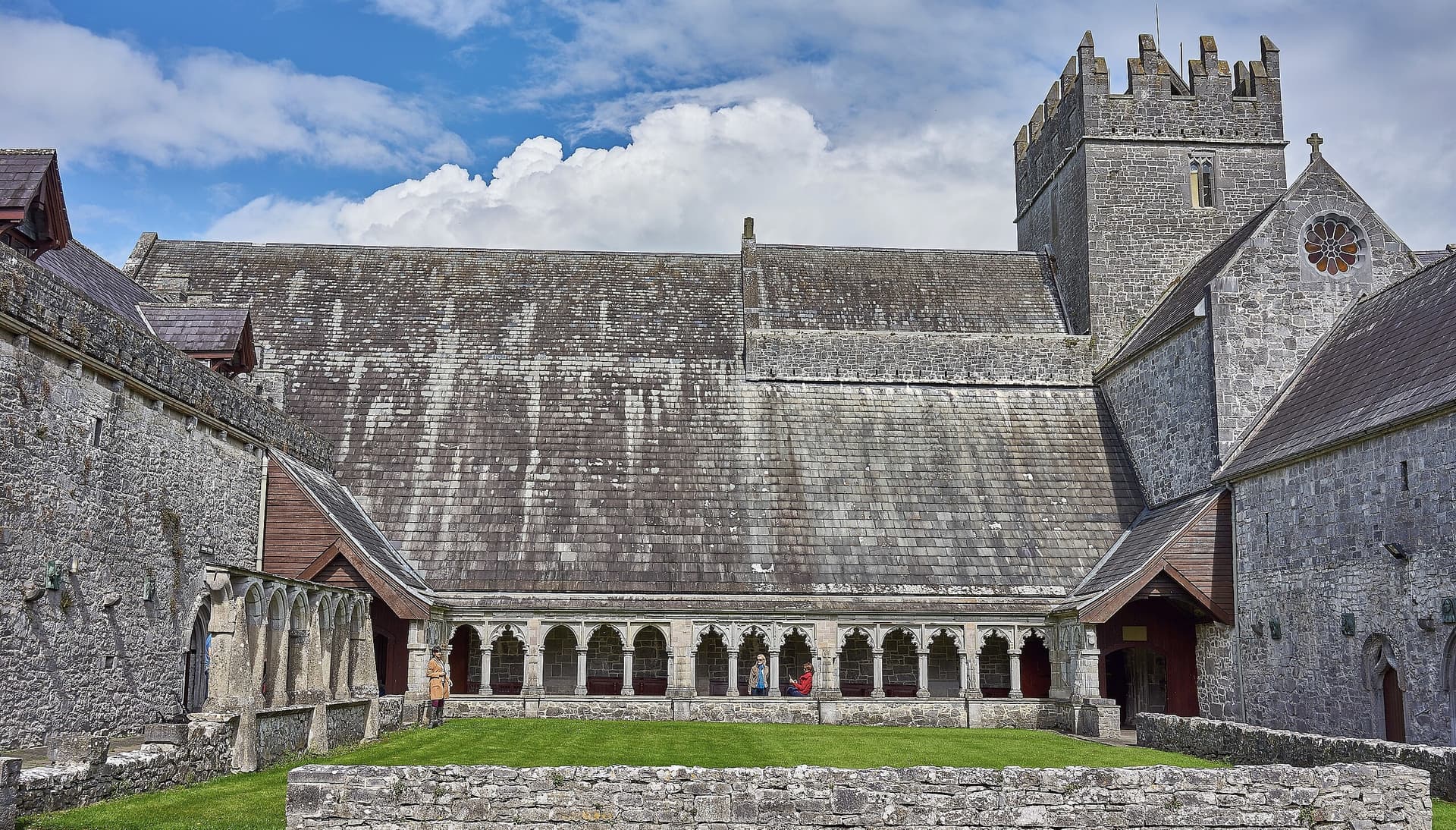
Holy Cross Abbey
County Tipperary, The Municipal District of Thurles, Ireland
92.3 km away