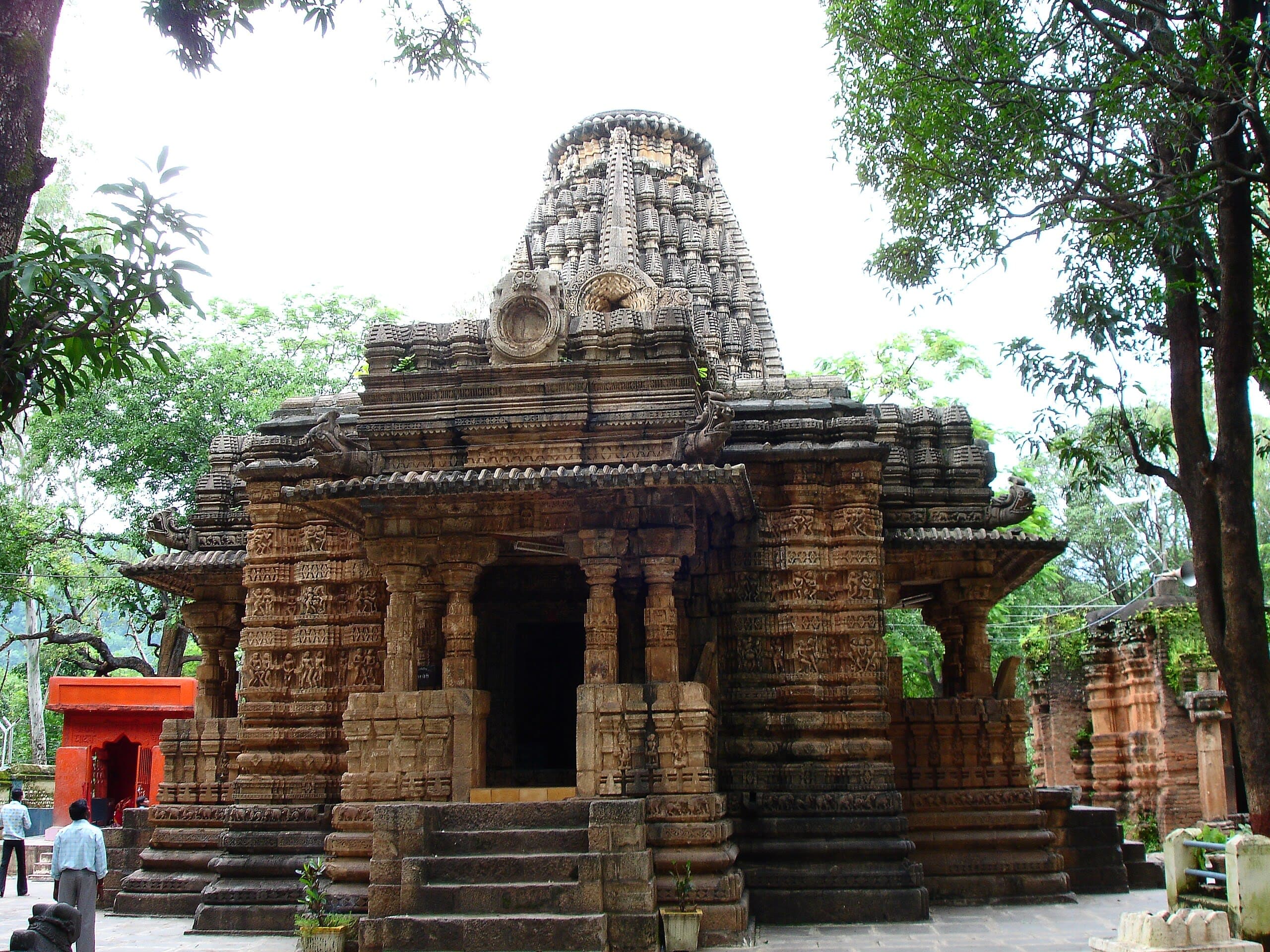
Bhoramdev Temple, Kabirdham district, Chhattisgarh
Where tribal reverence and Brahmanical devotion merged in stone, and Shiva dwells in forested stillness
Bodla Tahsil, Chhattisgarh, India
At A Glance
- Coordinates
- 22.1151, 81.1482
- Suggested Duration
- Allow two to three hours to fully appreciate the temple complex, exterior sculptures, and on-site archaeological museum. A half-day visit permits inclusion of the Madwa Mahal and Cherki Mahal, the nearby structures that extend the heritage complex. Those seeking deeper engagement may wish to stay overnight in Kawardha and return for morning aarti.
Pilgrim Tips
- Dress modestly, covering shoulders and knees. Men should wear shirts with sleeves and long trousers or clean shorts reaching below the knee. Women should wear long skirts, salwar-kameez, churidar pants, or full-length dresses, avoiding sleeveless tops and shorts. Traditional Indian attire such as kurta-pajama or saree is appreciated but not required. Avoid revealing clothing, shorts, or sleeveless tops. This is not merely custom but a mark of respect for the devotees who are present to worship.
- Photography is generally permitted in the temple complex and courtyard areas. The famous sculptures on the exterior may be photographed respectfully. However, photography should cease during active ceremonies. Do not photograph devotees at prayer without their permission. Inside the sanctum, check with priests before photographing the Linga or ritual activity. Avoid using flash, tripods, or professional equipment without permission. Drones are not permitted. Some visitors find that putting the camera away entirely allows for deeper engagement with the site.
- Bhoramdeo is an active temple with living protocols. Some areas are restricted to priests only, and rope barriers and signage should be respected. Photography during active ceremonies is discouraged; put the camera away when devotees are at prayer. Do not touch the sculptures, however much the stone seems to invite it. Centuries of hands have already caused erosion. Do not climb on structures or sit on sacred surfaces. If you wish to participate in deeper rituals, such as extended puja or ceremonies for specific intentions, speak with the temple priests beforehand. They can guide appropriate engagement.
Overview
Rising from the forested foothills of the Maikal range, Bhoramdeo Temple has held Shiva in an embrace of stone for nearly a millennium. Known as the Khajuraho of Chhattisgarh, its walls bear intricate carvings including fifty-four erotic sculptures that speak to tantric origins. Here, tribal Gond and Baiga traditions wove together with Brahmanical Shaivism, creating a site where forest, devotion, and sensuality coexist.
Something happens when you leave the main road and follow the smaller path toward Bhoramdeo. The forest closes in. The Maikal hills rise ahead. By the time the temple appears, you have already entered a different quality of space.
The Nagvanshi kings who built this temple in the 11th century understood placement. They chose a site where sal trees create natural enclosure, where a small lake reflects the stone shikhara, where the hum of the highway falls away into birdsong and temple bells. This was not accidental. They were tantric practitioners who understood that sacred sites require proper setting as much as proper construction.
The temple's fame rests partly on its fifty-four erotic sculptures, comparisons to Khajuraho being inevitable. But to focus only on these carvings misses what the temple actually is: an active Shiva sanctuary where devotees still arrive each dawn for abhishekam, where the Shiva Linga inside the garbhagriha has received milk and prayers for centuries, where the rhythms of the Hindu calendar pulse through festivals that draw thousands.
Bhoramdeo is where tribal reverence met classical Hinduism and found common ground. The Gond and Baiga people who have lived in these forests for millennia understood Shiva by their own name. The brahmins who came later recognized what was already here. The result is a temple that belongs to multiple traditions at once, a syncretic monument to the many ways humans reach toward the sacred.
Context And Lineage
Bhoramdeo Temple was constructed in the 11th century by the Nagvanshi dynasty, tantric practitioners ruling under Kalachuri overlords in what is now Chhattisgarh. However, the site's sacredness predates this temple by centuries, with evidence of worship from the 2nd-3rd century CE. The temple represents a synthesis of tribal and Brahmanical traditions that characterizes this region of central India.
Multiple narratives compete to explain Bhoramdeo's name and origin. One tradition holds that the Gond tribal communities of this region worshipped Shiva under the name Bhoramdeo or Bhoram, and the temple took its name from this indigenous form of the god. Another tradition suggests a Gond king named Bhoram Dev, whose statue supposedly rests within the sanctum, though historians note no king by this name appears in epigraphs or coins.
Modern Baiga, Gond, and Ahir communities dispute direct connection to an Adivasi deity, suggesting the syncretic narrative may be a later interpretation imposed on a more complex history. The truth likely involves layers of meaning accumulated over centuries, names shifting in significance as different traditions encountered and reinterpreted the site.
What remains certain is that the Nagvanshi kings, particularly those named in inscriptions as Laxman Dev Rai and Gopal Dev, commissioned the stone temple that stands today. An inscription dated 1098 CE establishes King Gopaladev as a patron. The dynasty ruled this region of Daksina Kosala under the overlordship of the Kalachuri kings, a political arrangement that allowed local rulers significant autonomy in cultural and religious matters.
The Madwa Mahal, meaning marriage hall, commemorates the 14th-century union of Nagvanshi king Ramachandra Dev and Haihaya queen Ambika Devi. Built in 1349 CE, it extends the site's significance into dynastic history, a monument to alliance sealed in the presence of Lord Shiva.
The Nagvanshi or Phaninagavanshi dynasty ruled the Chakrakota region as feudatories of the Kalachuri kings. Their practice of tantrism shaped the temple's distinctive iconography, distinguishing it from more conventional Shaiva temples of the period. The dynasty's patronage extended from at least the 11th century through the 14th century, producing both the main temple and the Madwa Mahal.
The priestly lineages who have maintained worship across the centuries are less documented than the royal patrons, but their continuity is evident in the unbroken tradition of daily ritual. Today's priests stand in a succession that has passed the care of the Shiva Linga from generation to generation, maintaining the temple's identity as a living sacred site rather than an archaeological relic.
The Archaeological Survey of India now protects the physical structures while worship continues within them, an arrangement that preserves both heritage and living tradition.
Shiva (as Bhoramdeo)
deity
The presiding deity of the temple, understood as Lord Shiva in his form as Bhoramdeo, lord of healing, fertility, and transformation. The name may derive from Gond tribal worship or may represent a regional epithet for Shiva.
Gopaladev
historical
The Naga king named in a 1098 CE inscription found at the temple. His patronage established firm dating for the main stone temple and confirms royal investment in the site's development.
Ramachandra Dev
historical
The 14th-century king who built the Madwa Mahal in 1349 CE to commemorate his marriage to Ambika Devi, creating the temple complex's second major structure.
Vishnu (in Dashavatar form)
deity
Though Bhoramdeo is primarily a Shiva temple, all ten avatars of Vishnu appear in sculpture at the sanctum entrance, reflecting the non-sectarian approach of the builders.
Why This Place Is Sacred
Bhoramdeo's sacredness emerges from the convergence of ancient tribal veneration, tantric architectural intention, continuous worship spanning nearly two millennia, and its placement within a forested landscape that amplifies contemplative stillness. The site sits at the intersection of Gond, Baiga, and Brahmanical Shaiva traditions, each recognizing something sacred in this particular location.
The earliest structure here dates not to the 11th century but to the 2nd or 3rd century CE, when builders constructed a brick temple whose foundations still exist. Artifacts from this period rest in the on-site museum, evidence that this spot was recognized as sacred long before the stone temple rose. Something about this location drew human devotion before the dynasties that historians remember.
The Maikal hills form a natural sanctuary. Dense sal forest creates acoustic and visual separation from the ordinary world. The small lake at the temple's edge mirrors sky and stone, doubling the sacred architecture. Springs emerge from the hillside, their water channeled with evident care. The geological and hydrological particulars may explain why successive cultures kept returning here.
The Nagvanshi kings who commissioned the stone temple were tantric practitioners who understood the union of opposites as the path to liberation. The fifty-four erotic sculptures adorning the exterior walls are not decorative accidents but deliberate iconography, representing the fusion of Shiva-Shakti, the cosmic masculine and feminine whose union generates and sustains the world. To build such a temple was itself a spiritual act.
Continuous worship amplifies a site's presence. For perhaps 1,800 years, humans have come here with prayers, offerings, and intentions. The Shiva Linga has been bathed in milk every dawn for centuries. Thousands have circumambulated these walls. Such accumulated devotion creates a quality that new temples cannot possess, a thickness of human attention layered on a location already sacred.
Visitors who come seeking more than architecture often describe an unusual stillness here, a sense of the forest and temple cooperating to create a container for inner work. Whether this reflects the landscape, the history, or something more elusive, the effect is consistent enough to take seriously.
Archaeological and inscriptional evidence suggests the main Bhoramdeo temple served as a royal Shaiva sanctuary built by the Nagvanshi dynasty under Kalachuri overlordship. The temple's architecture follows the saptaratha (seven-sided) plan in what scholars call the Gurur style, distinctive from standard Nagara temples. Its original purpose combined devotional worship of Shiva with tantric spiritual practices, as evidenced by the iconographic program that integrates both Shaiva and Vaishnava imagery alongside the erotic sculptures.
The site's placement suggests the kings understood it as a power spot worthy of exceptional construction. The 1098 CE inscription naming King Gopaladev establishes firm dating and confirms royal patronage. The nearby Madwa Mahal, built in 1349 CE as a marriage hall, extends the site's function to include dynastic ritual, suggesting Bhoramdeo served as a regional center for both spiritual and political legitimization.
The earliest brick temple from the 2nd-3rd century CE established the location's sanctity. What practices occurred here during those early centuries remains uncertain, though the site's continued use suggests recognition of special qualities that transcended particular traditions.
The 11th century brought the main stone temple, constructed by Nagvanshi kings who practiced tantrism while governing under Kalachuri overlords. This period produced the distinctive architecture and sculpture that draws visitors today. The erotic carvings reflect the tantric culture of their builders rather than a general Hindu practice.
The 14th century added the Madwa Mahal, commemorating the marriage of King Ramachandra Deo to queen Ambika Devi. This structure's unique Shiva Linga erected over sixteen pillars speaks to continued innovation and royal investment.
Through changes of dynasty and the passage of centuries, worship continued. The Archaeological Survey of India now maintains the structures while the temple functions as an active pilgrimage site. In January 2026, the Chhattisgarh government announced the Bhoramdev Corridor development, a significant investment that will reshape the site's context while hopefully preserving its contemplative qualities.
Traditions And Practice
Bhoramdeo Temple maintains daily Shaiva worship including morning and evening aarti, special Monday rituals, and elaborate ceremonies during festivals. Visitors can participate in darshan, offerings, and circumambulation while respecting the protocols of an active Hindu temple.
Traditional rituals at Bhoramdeo center on the worship of Shiva through the Linga. Abhishekam, the ritual bathing of the Linga with milk, water, honey, and other sacred substances, has occurred each dawn for centuries. Priests chant Vedic mantras while devotees offer flowers, incense, and bilva leaves, the trifoliate leaf sacred to Shiva.
The temple follows the rhythms of the Hindu calendar with particular intensity during Mondays, the day dedicated to Shiva, and during the month of Shravan, when devotees observe special fasts and prayers. Pradakshina, clockwise circumambulation of the sanctum, allows devotees to move their prayers through their bodies as well as their minds.
Modern worship at Bhoramdeo maintains traditional forms while accommodating contemporary pilgrims. Morning aarti begins at 5 AM, drawing devotees who seek the most auspicious time for darshan. Evening aarti at dusk closes the day's worship with oil lamps and bells. Between these ceremonies, the temple welcomes visitors for personal prayer and offerings.
The temple sells basic puja items near the entrance for those who arrive unprepared. Devotees purchase coconuts, flowers, incense, and sweets to offer at the sanctum. The priests may perform brief pujas on behalf of individuals or families, chanting blessings and accepting donations.
Festivals transform the temple grounds. Maha Shivratri brings thousands for night-long vigils, the entire complex illuminated and alive with devotional music. The Bhoramdeo Mahotsav showcases regional arts and tribal performances, drawing cultural tourists alongside pilgrims. Navratri sees special Durga puja alongside local festivities. These festivals offer immersion in living tradition for those who time their visits accordingly.
If you come seeking engagement beyond observation, consider these invitations.
Arrive for morning aarti. The 5 AM ceremony, when the temple is still cool and quiet, the light still soft, offers the most contemplative experience. You need not be Hindu to witness; simply stand respectfully at the back and observe.
Make an offering. Purchase flowers or a coconut from the vendors near the entrance. Join the line of devotees waiting for darshan. When you reach the garbhagriha, offer what you have brought to the priest. The gesture of giving, even without understanding every detail of the ritual, creates connection.
Circumambulate the temple slowly. Traditional pradakshina moves clockwise around the sanctum, but even walking around the exterior mindfully, noting the sculptures and the forest and the lake, functions as a form of moving meditation.
Sit by the lake afterward. The temple sits within a larger landscape of forest and water. Allow time for integration. What arose during your visit may need silence to settle.
Hinduism - Shaivism
ActiveBhoramdeo Temple serves as an active Shaiva sanctuary where Lord Shiva is worshipped in his form as Bhoramdeo, understood as lord of healing, fertility, and transformation. The temple houses a revered Shiva Linga as the primary deity and functions as a major pilgrimage site for Shaivites in Chhattisgarh. Daily rituals maintain an unbroken tradition of worship extending back centuries.
Daily abhishekam bathes the Shiva Linga with milk, water, and sacred substances each dawn. Devotees offer flowers, incense, and bilva leaves. Vedic mantras echo through the mandapa during morning and evening aarti. Mondays bring special rituals for the day sacred to Shiva. Maha Shivratri transforms the temple into a center of night-long vigils, fasting, and intensive prayer. The month of Shravan sees heightened devotional activity.
Hinduism - Vaishnavism
ActiveThough Bhoramdeo is fundamentally a Shiva temple, significant Vaishnava iconography adorns the structure. All ten avatars of Vishnu, the Dashavatar, appear in sculpture at the sanctum entrance. This integration reflects the non-sectarian approach of the Nagvanshi builders, welcoming devotees of both major Hindu traditions.
Devotees of Vishnu venerate the avatar sculptures at the sanctum entrance as part of their temple visit. The iconographic presence allows Vaishnavas to find their tradition represented even at this primarily Shaiva site.
Gond and Baiga Tribal Traditions
ActiveThe temple represents a syncretic blending of tribal Gond and Baiga veneration with Brahmanical Hinduism. The name Bhoramdeo may derive from Gond tribal names for Shiva, though contemporary tribal communities dispute some aspects of this narrative. The integration is evident in festivals that incorporate tribal music, dance, and agricultural symbolism alongside Hindu ceremony.
Tribal communities participate in the Madai harvest festival at and around the temple, celebrating agricultural cycles with traditional forms. The Hareli monsoon festival incorporates tribal traditions. Traditional Baiga and Gond dance performances occur during major temple festivals, creating celebrations that blend multiple cultural streams.
Tantric Tradition (Historical)
HistoricalThe Nagvanshi kings who built the temple were tantric practitioners, and the fifty-four erotic sculptures on the exterior walls reflect tantric cultural practices of this dynasty. This tradition shaped the temple's distinctive iconographic program and distinguishes it from more conventional Shaiva temples of the period.
The specific tantric rituals performed at Bhoramdeo in its early centuries are not documented and cannot be reconstructed. The sculptures suggest practices integrating sexuality and spirituality, the union of Shiva-Shakti as path to liberation, but details remain speculative.
Experience And Perspectives
Visitors to Bhoramdeo report a distinctive quality of peace enhanced by the forest setting, a sense of temporal depth enhanced by the ancient stones, and during festivals, immersion in a syncretic celebration that blends tribal and Brahmanical traditions. The site rewards those who come with attention rather than cameras.
The approach matters. Arriving by the winding road through sal forest, the modern world recedes gradually. By the time the temple becomes visible, rising beside its small lake, visitors have already crossed a threshold of a sort. This is not Khajuraho with its bus lots and vendor lanes. Bhoramdeo maintains an intimacy that larger sites have lost.
The stone carvings demand attention. The fifty-four erotic figures draw the eye, inevitably, but surrounding them are hundreds of other sculptures: Ganesha at the entrance, all ten avatars of Vishnu flanking the sanctum door, dancing apsaras and mythological scenes cascading across the exterior walls. Scholars note the unusual integration of Shaiva and Vaishnava imagery, suggesting a non-sectarian approach that welcomed devotees of either tradition.
Inside, the garbhagriha holds a Shiva Linga that has received worship for centuries. During darshan, the atmosphere shifts from art appreciation to devotion. The smell of incense, the sound of mantras, the cool darkness of the inner sanctum, the presence of the priests who maintain an unbroken chain of service, these create an experience that transcends tourism.
Festival visits offer a different quality entirely. During Maha Shivratri, thousands of devotees arrive for night-long vigils. The temple grounds become a sea of pilgrims, traditional music echoes through the forest, the boundary between spectator and participant dissolves. The Bhoramdeo Mahotsav brings tribal dance and regional arts, a celebration of the cultural synthesis the temple represents.
Those who come during quieter periods report the clearest sense of the site's contemplative power. Early morning, before tourist buses arrive, the temple belongs to the birds, the morning light, and the few devotees who have come for darshan. These are the hours when the site's accumulated stillness becomes most available.
Bhoramdeo rewards slowness and silence. The temple can be photographed in twenty minutes and checked off a list, but those who report the deepest experiences describe spending hours, returning for a second visit, allowing the place to work on its own terms.
Consider arriving early, before the heat and the crowds. Spend time with the exterior sculptures before entering, letting your eye move from the famous erotic images to the surrounding mythology, the divine figures, the narrative panels that tell stories lost to most modern visitors. Notice what draws your attention. Notice what repels it.
Inside, join the devotees if you are comfortable doing so, or simply stand at the threshold of the garbhagriha and observe. You need not share the faith to respect its expression. The Shiva Linga has received centuries of human longing and gratitude. Standing in its presence, even as an observer, connects you to that lineage.
Walk around the lake afterward. Let the temple recede into its setting. The forest and water are part of what makes this site what it is. The Nagvanshi kings understood this. A temple is not only a building but a relationship between structure and setting, human work and natural presence.
Bhoramdeo Temple invites multiple interpretations that resist easy synthesis. Scholars see architectural and historical evidence; tribal communities recognize layers of their own tradition; devotees experience a living sanctuary of Lord Shiva; and questions remain about the site's tantric origins that the sculptures suggest but inscriptions do not explain. Honest engagement holds these perspectives together without forcing resolution.
Scholarly consensus places the main Bhoramdeo temple's construction in the 11th century, with the inscription naming King Gopaladev dated 1098 CE providing firm evidence. The Nagvanshi dynasty, ruling under Kalachuri overlordship in the Daksina Kosala region, commissioned the temple in what scholars call the Gurur architectural style, featuring a distinctive saptaratha plan that differs from standard Nagara temples.
The fifty-four erotic sculptures reflect the tantric practices of the Nagavanshi rulers rather than general Hindu temple decoration of the period. This iconography connects Bhoramdeo to Khajuraho and similar sites where tantric culture influenced temple art. The integration of both Shaiva and Vaishnava imagery, including all ten Vishnu avatars at the sanctum entrance, suggests a non-sectarian approach unusual for temples of this era.
The archaeological museum's artifacts establish the site's antiquity well beyond the main temple, with evidence from the 2nd-3rd century CE indicating earlier worship at this location. The brick temple foundations from this period suggest continuous sacred use spanning nearly two millennia.
Within Hindu devotional understanding, Bhoramdeo Temple houses Lord Shiva in his form as Bhoramdeo, lord of healing, fertility, and transformation. The Shiva Linga in the garbhagriha has received worship for centuries and continues to answer prayers today. Devotees come seeking blessings for marriage, children, health, and spiritual liberation. The temple's power derives from this accumulated devotion as much as from its origins.
Local traditions connecting the site to Gond tribal worship of Bhoram point to deeper roots than the stone temple reveals. The forest setting, the springs, the particular location, these elements may have drawn human reverence before any dynasty claimed patronage. In this understanding, the temple formalized and elaborated what was already present.
Contemporary Baiga, Gond, and Ahir communities maintain complex relationships with the site. Some dispute the narrative of Adivasi origins, suggesting that scholarly emphasis on tribal connections may impose external interpretations. Others participate in festivals that blend tribal music and dance with Brahmanical ceremony, living the synthesis the temple represents.
The tantric origins suggested by the erotic sculptures point to esoteric practices that the historical record does not fully explain. The fifty-four images depicting Kama Sutra positions may represent the union of Shiva-Shakti, the cosmic masculine and feminine principles whose integration generates spiritual liberation. Some interpret the temple as an initiation site where physical and spiritual transformation were understood as unified.
The site's placement in the forested foothills, away from major population centers, may have facilitated practices unsuitable for public view. The combination of natural setting, tantric iconography, and continuous worship suggests layers of spiritual activity that conventional scholarship cannot fully recover.
Genuine mysteries persist at Bhoramdeo. The precise meaning and ritual context of the fifty-four erotic sculptures remains debated. The identity of the yogi figure sculpted with the Gopaladev inscription inside the mandapa is uncertain. The exact nature of tantric practices historically performed at the site is lost.
The true relationship between tribal and Brahmanical religious layers continues to generate conflicting interpretations. Contemporary tribal communities dispute some scholarly claims about Adivasi origins, suggesting the story is more complex than either simple synthesis or simple appropriation.
Why this particular location drew sacred attention from the 2nd century onward, before any structure that survives, remains a question the evidence cannot fully answer. Something about this spot spoke to people across very different traditions and periods. That something still speaks to visitors today.
Visit Planning
Bhoramdeo Temple is located 18 km from Kawardha town in Kabirdham district, Chhattisgarh. The nearest major transportation hub is Raipur, 134 km away. The temple is open daily from 5 AM to 12 PM and 4 PM to 9 PM. Entry is free. October through February offers the most pleasant visiting weather, while Maha Shivratri provides the most spiritually immersive experience.
Basic guesthouses are available in Kawardha town, 18 km from the temple. A wider range of hotels can be found in Raipur, 134 km away. Some dharamshalas, traditional pilgrim rest houses, may be available near the temple, particularly during festival periods. Contact local tourism offices for current options.
Bhoramdeo requires the respectful behavior appropriate to an active Hindu temple. Remove shoes before entering the sanctum, dress modestly, maintain quiet during ceremonies, and move clockwise around the temple. Photography is permitted outside but should cease during active worship.
The temple is open to visitors of all backgrounds, but this openness comes with the expectation of respectful behavior. You are entering a place where people are engaged in genuine devotion, not a museum preserved for secular appreciation.
Remove your shoes before entering the sanctum area. Shoe racks and attendants are available near the entrance. Some visitors also remove leather items such as belts and bags, though this is not strictly required.
Maintain silence or speak softly within the temple precincts. Mobile phones should be silenced and ideally put away. If you must take calls, step well away from the temple.
Move clockwise when circumambulating the sanctum. This pradakshina direction has ritual significance and maintains orderly flow. When inside the mandapa, follow the movement of other devotees rather than cutting across the space.
During aarti and other ceremonies, remain still and quiet if you are present. These are not performances staged for visitors but acts of worship. Your role is witness, not participant, unless you have been invited to join.
Avoid pointing your feet toward the deity or sacred images. When sitting, fold your legs or point them away from the sanctum. This gesture of respect is universal across Hindu temples.
Bow or offer namaskar as a sign of respect when appropriate. You need not share the faith to make this gesture. It signals recognition that you have entered a sacred space.
Dress modestly, covering shoulders and knees. Men should wear shirts with sleeves and long trousers or clean shorts reaching below the knee. Women should wear long skirts, salwar-kameez, churidar pants, or full-length dresses, avoiding sleeveless tops and shorts. Traditional Indian attire such as kurta-pajama or saree is appreciated but not required.
Avoid revealing clothing, shorts, or sleeveless tops. This is not merely custom but a mark of respect for the devotees who are present to worship.
Photography is generally permitted in the temple complex and courtyard areas. The famous sculptures on the exterior may be photographed respectfully. However, photography should cease during active ceremonies. Do not photograph devotees at prayer without their permission. Inside the sanctum, check with priests before photographing the Linga or ritual activity.
Avoid using flash, tripods, or professional equipment without permission. Drones are not permitted. Some visitors find that putting the camera away entirely allows for deeper engagement with the site.
Traditional offerings include flowers, coconut, incense, sweets, and milk for the Shiva Linga. Bilva leaves, the sacred trifoliate leaf of Shiva, are particularly auspicious. All of these can be purchased from vendors near the temple entrance.
Offerings are given to the priests at the sanctum entrance, who will present them to the deity on your behalf. You may receive prasad, blessed offerings, in return. Accepting prasad with your right hand is customary.
Shoes must be removed before entering the sanctum area. Leather items are traditionally left outside, though enforcement varies. Do not eat or drink inside the temple premises. Speak softly and avoid phone calls.
Some areas are restricted to priests only. Respect rope barriers and signage. Do not touch sculptures or carvings. Do not sit on or lean against temple structures. During ceremonies, remain at the periphery unless invited closer.
Sacred Cluster
Nearby sacred places create the location cluster described in the growth plan. This block is intentionally crawlable and links into the wider regional graph.
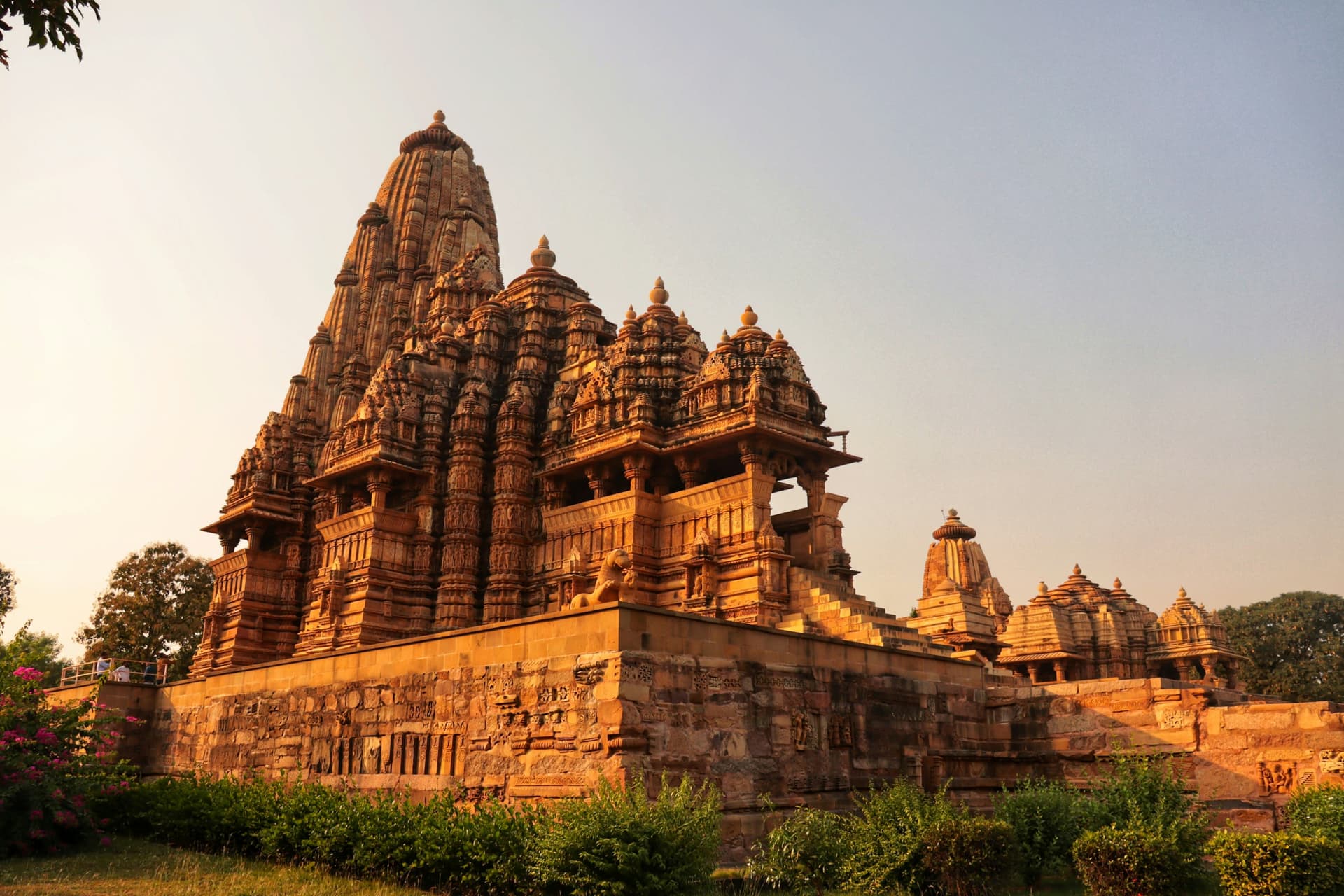
Jain temples of Khajuraho
Jatkra, Madhya Pradesh, India
326.8 km away
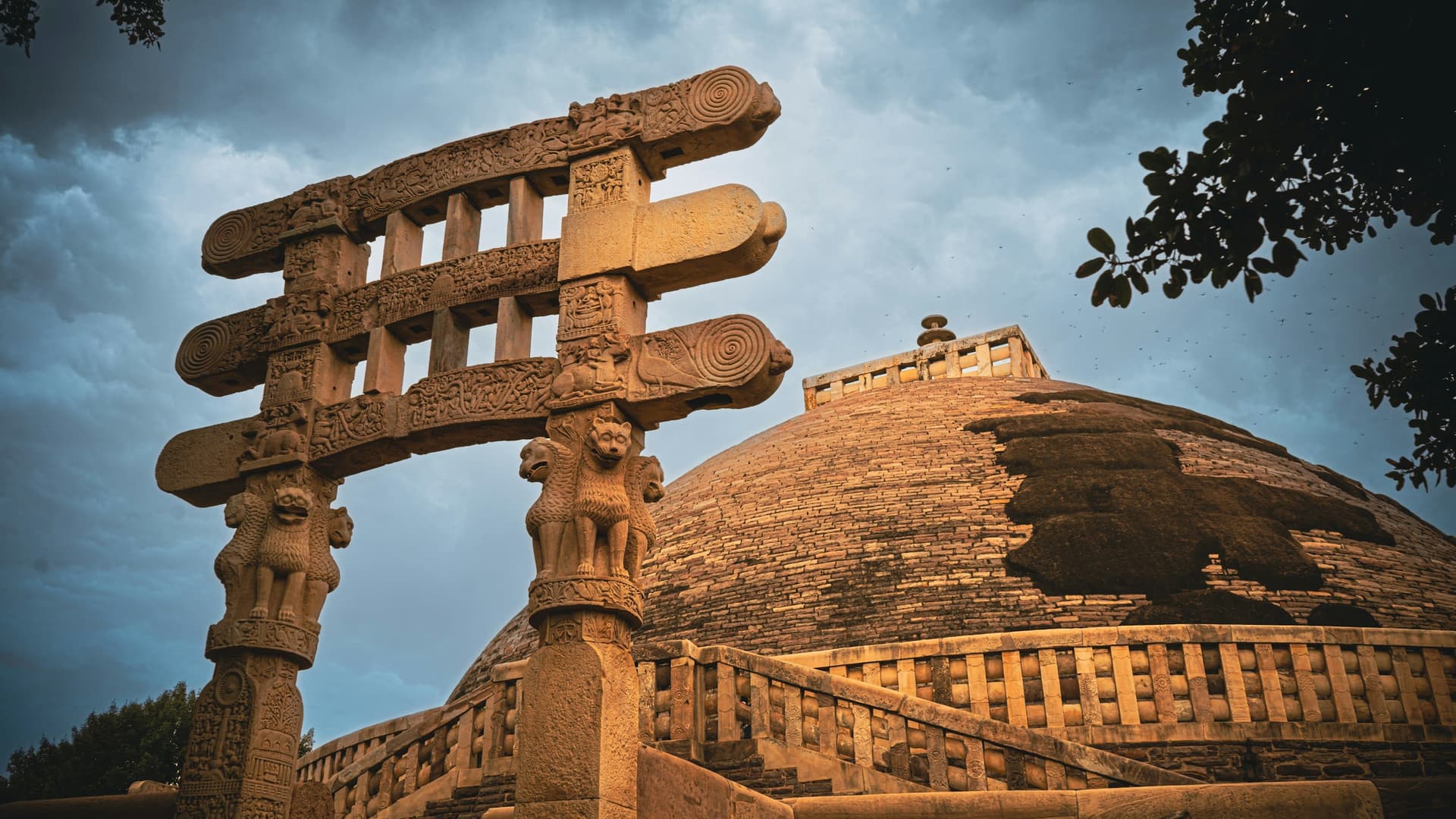
Buddhist Monuments at Sanchi
Amkhera, Madhya Pradesh, India
380.9 km away
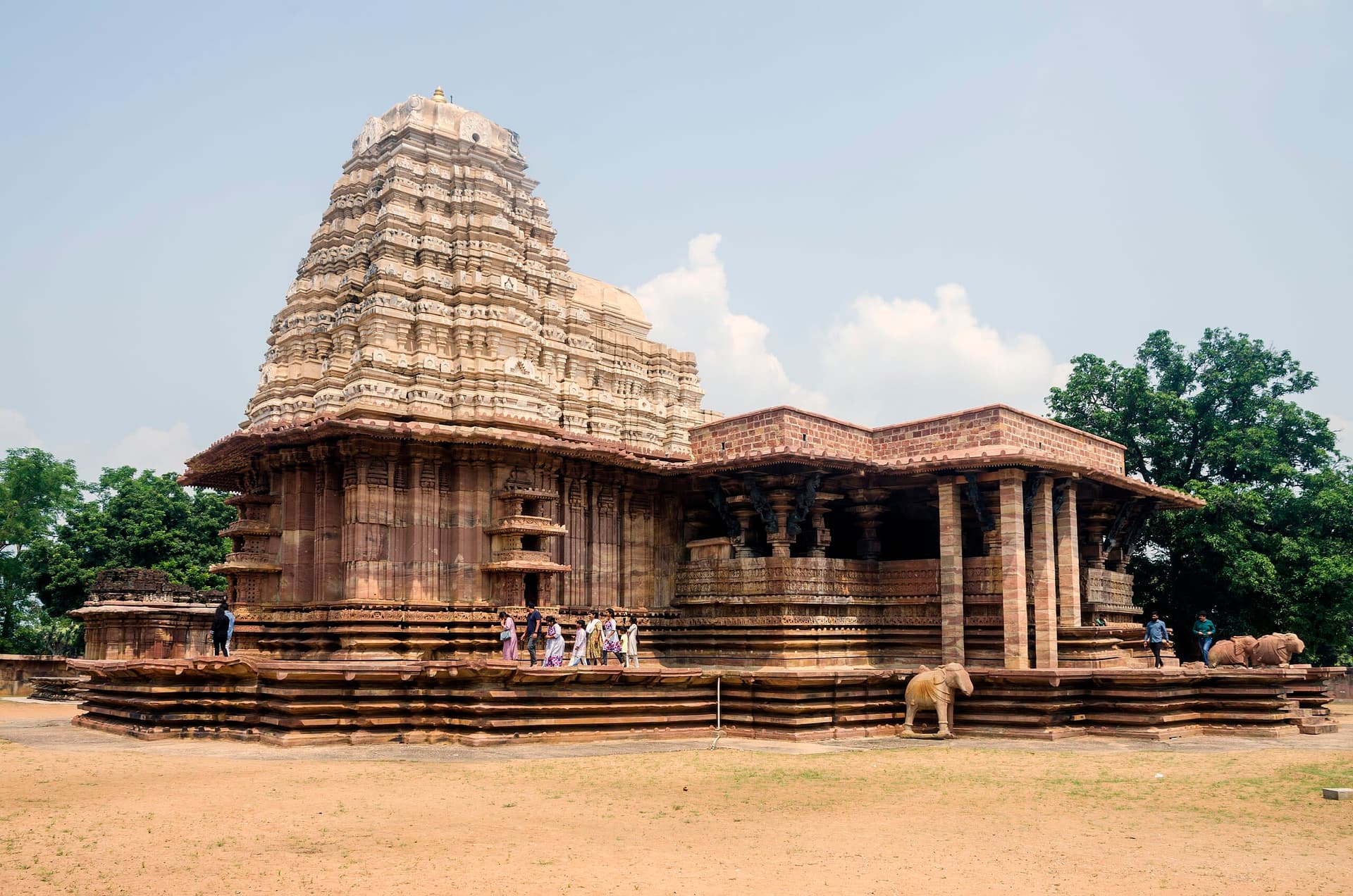
Kakatiya Rudreshwara Ramappa Temple, Telangana
Palampet, Telangana, India
446.8 km away
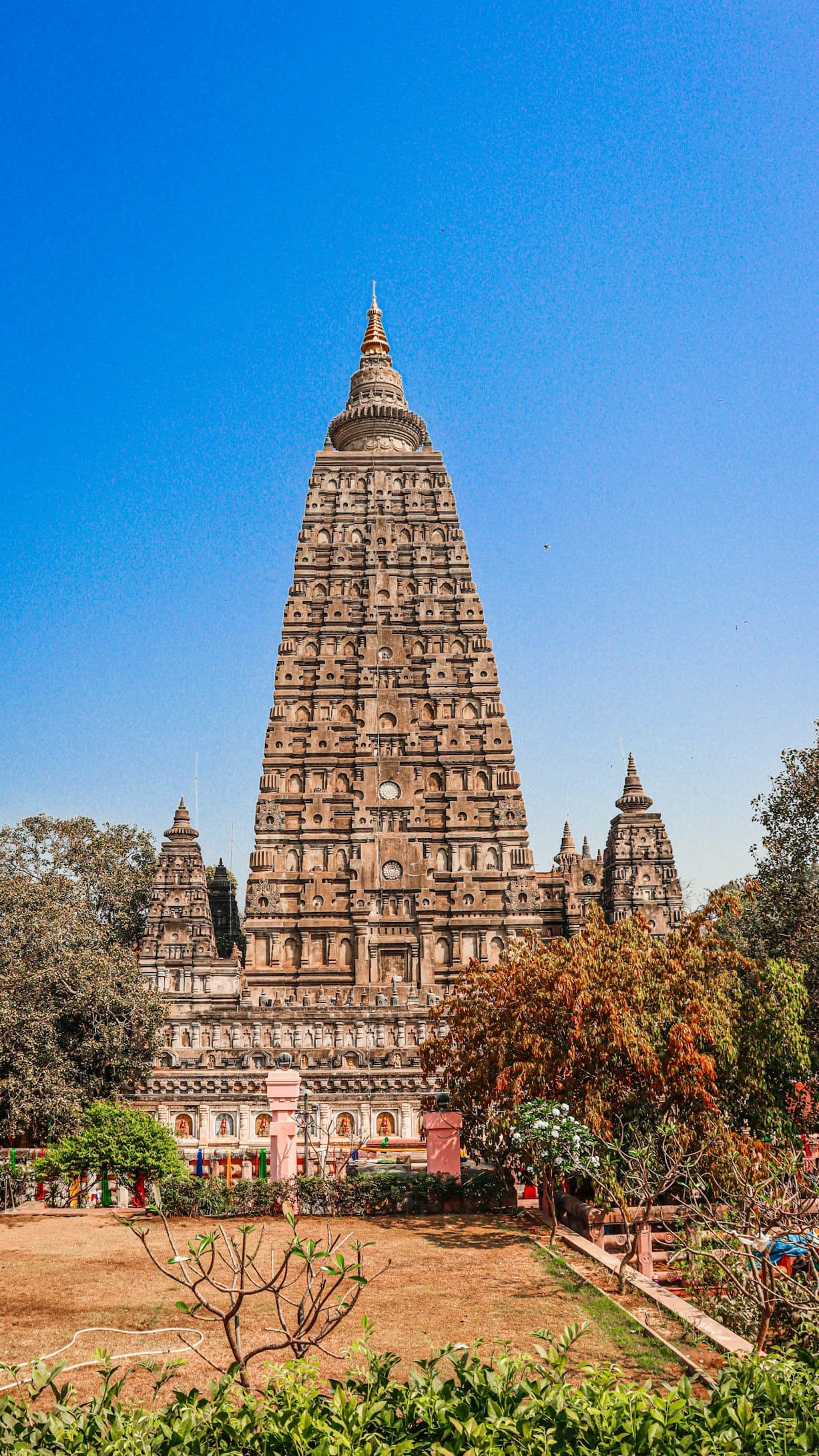
Mahabodhi Temple and Bodhi Tree, Bodh Gaya, Bihar
Bodh Gaya, Bihar, India
485.9 km away