Buddhist Monuments at Sanchi
Where Emperor Ashoka built the oldest Buddhist sanctuary and disciples' relics returned after a century in exile
Amkhera, Madhya Pradesh, India
At A Glance
- Coordinates
- 23.4794, 77.7397
- Suggested Duration
- 2-3 hours for the main complex and museum. Longer if visiting nearby sites (Udayagiri Caves, Vidisha).
Pilgrim Tips
- Modest dress covering shoulders and knees is appropriate. No specific requirements but respectful attire appreciated.
- Permitted at the archaeological site. Ask permission at the Chetiyagiri Vihara and when photographing pilgrims.
- The site is exposed with little shade—bring water and sun protection, especially in summer. The climb to the hilltop requires moderate fitness. Respect any religious observances you encounter.
Overview
The Great Stupa at Sanchi rises from a hilltop in central India—a hemisphere of stone that has held sacred meaning for over 2,300 years. Emperor Ashoka commissioned it in the 3rd century BCE to spread the Dharma. Though Buddha never walked here, the relics of his two chief disciples rest nearby. Removed by the British in 1851 and returned in 1952, they make Sanchi one of the most significant pilgrimage sites in Theravada Buddhism.
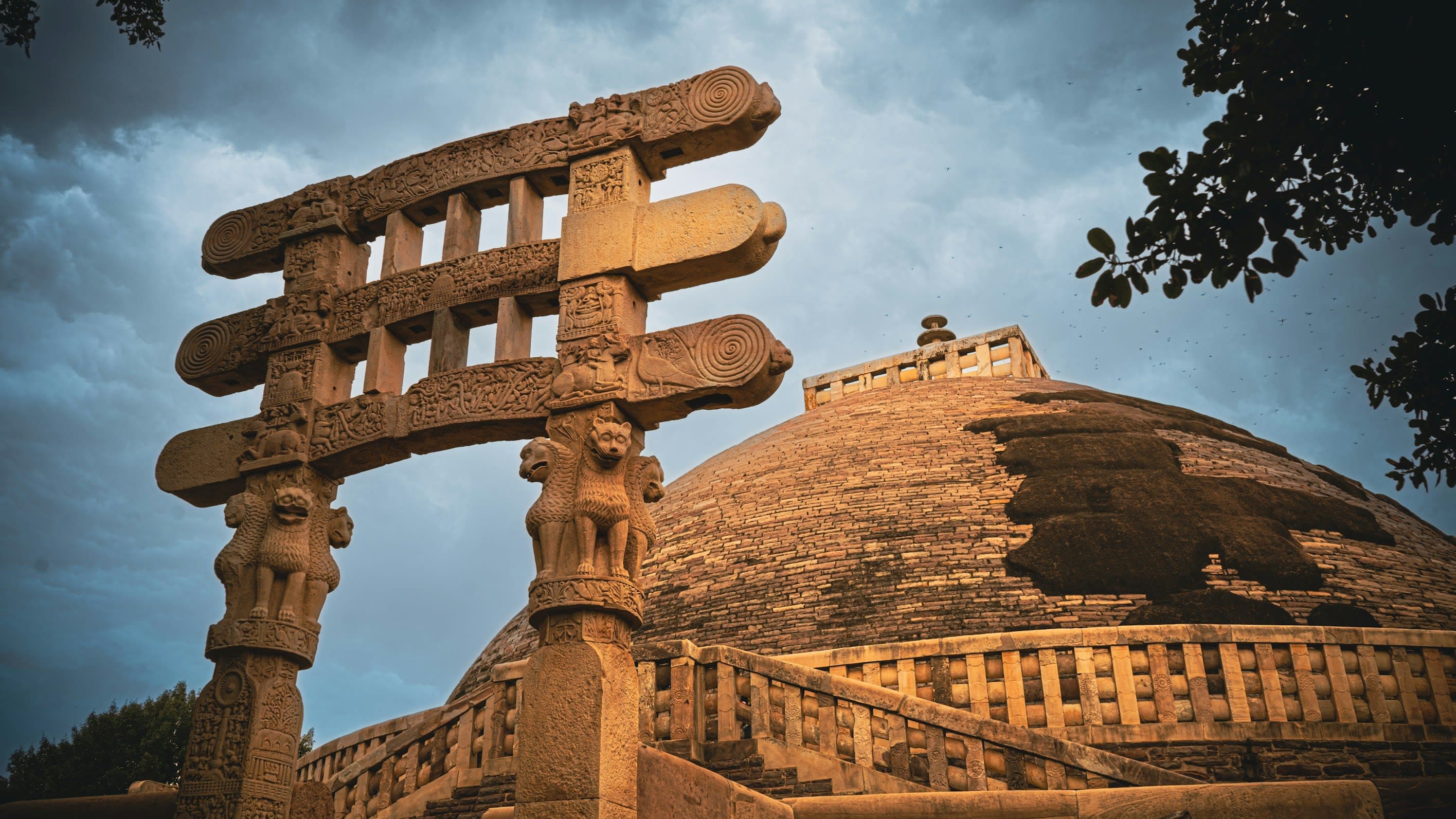
The Great Stupa at Sanchi presents as a perfect hemisphere against the sky—a form so simple that its meaning emerges only gradually. The dome represents the womb of enlightenment. The square railing above represents the realm of the gods. The three umbrellas at the summit represent the Buddha, the Dharma, and the Sangha—the Three Jewels around which Buddhist life revolves. To circumambulate this structure is to enact the path from ignorance to liberation. Emperor Ashoka commissioned the original brick stupa here in the 3rd century BCE, establishing what would become the oldest Buddhist sanctuary in existence. Ashoka had personal connections to this region—he married a woman from nearby Vidisha—but his purpose was larger: to create centers that would spread the Buddhist teaching across his empire and beyond. His son Mahindra departed from this hilltop to bring Buddhism to Sri Lanka. Though the Buddha himself never visited Sanchi, something perhaps more significant rests here: the relics of Sariputra and Maudgalyayana, his two foremost disciples. Discovered in 1851, taken to England, these fragments of bone were finally returned in 1952 and now rest in a modern vihara beside the ancient stupas. The pilgrims who circumambulate the Great Stupa today walk the same path as pilgrims two millennia ago, enacting the same journey toward liberation. The form endures. The teaching continues. What Ashoka built to spread the Dharma still serves that purpose.
Context And Lineage
Emperor Ashoka established Sanchi in the 3rd century BCE to spread Buddhism. His son departed from here for the mission to Sri Lanka. The site contains the relics of Buddha's chief disciples.
Emperor Ashoka of the Maurya Empire—the ruler who united most of the Indian subcontinent and then, horrified by the violence of his conquests, embraced Buddhism and dedicated his reign to spreading the Dharma—had personal connections to this region. Traveling as a young prince to Ujjain, he stopped at Vidisha, 10 kilometers from Sanchi, and married the daughter of a local merchant. This connection drew him back. In the 3rd century BCE, he commissioned a brick stupa on this hilltop, establishing what would become the oldest Buddhist sanctuary in existence. The site grew in significance. According to Sri Lankan Buddhist chronicles, Ashoka's son Mahindra stopped at Sanchi—then called Cetiyagiri, the hill of stupas—before departing on his mission to bring Buddhism to Sri Lanka. This connection to the southward spread of Buddhism made Sanchi sacred in Theravada tradition. Subsequent dynasties expanded the site: the Sungas encased Ashoka's brick stupa in stone and added the balustrade; the Satavahanas donated the magnificent toranas with their carved narratives. The site remained an active Buddhist center until the 12th century CE, when Buddhism declined in India and Sanchi was abandoned. For six centuries, the stupas stood forgotten. In 1818, British General Henry Taylor discovered the site. In 1851, Alexander Cunningham opened Stupa 3 and found within it the relics of Sariputra and Maudgalyayana, the Buddha's chief disciples. These relics were taken to England, displayed in the Victoria and Albert Museum, and finally—after negotiations between the British government, the state of Bhopal, and the Maha Bodhi Society—returned to Sanchi in 1952, enshrined in a newly built vihara. The Dharma had traveled far and returned home.
Mauryan Buddhism under Emperor Ashoka. Expansion under Sunga and Satavahana dynasties. Continuous activity through Gupta period and beyond until 12th century. Rediscovery 1818. Archaeological restoration 1881-1919. Relics returned 1952. UNESCO inscription 1989.
Emperor Ashoka
Founder and patron
Sariputra
Buddha's foremost disciple in wisdom
Maudgalyayana (Moggallana)
Buddha's foremost disciple in supernatural powers
Why This Place Is Sacred
Sanchi is thin because its form is itself a teaching—the hemisphere representing the path to enlightenment—and because the relics of Buddha's chief disciples connect pilgrims to the earliest days of the Sangha.
What makes Sanchi thin is the convergence of form and presence. The stupa is not a building in the ordinary sense—it is a mandala in three dimensions, a teaching made in stone. The hemispherical dome represents the womb from which enlightenment emerges. The square harmika above represents the realm of the gods. The central pillar is the axis mundi connecting earth to heaven. The three umbrellas are the Three Jewels. To understand the stupa is to understand the Buddhist path; to circumambulate it is to enact that path. But form alone does not make a place thin. What distinguishes Sanchi is presence. The relics of Sariputra and Maudgalyayana—the Buddha's two chief disciples, one who represented wisdom and one who represented supernatural powers—rest here in Stupa 3. These are not abstract symbols but actual remains of people who knew the Buddha, who walked with him, who received his teaching directly. Sariputra died six months before the Buddha; his relics connect pilgrims to the very beginning of the Sangha. That these relics were removed, carried to England, held there for a century, and finally returned adds another dimension. The Dharma, like the relics, endures exile and returns. What Ashoka established in the 3rd century BCE still functions as a place where humans seek liberation. The teaching persists across the abandonment and rediscovery of sites, across the rise and fall of empires, across the transportation of bones halfway around the world and back.
Buddhist stupa commissioned by Emperor Ashoka to spread the Dharma and commemorate the Buddhist teaching. Center for monastic community and pilgrimage.
Ashokan brick stupa (3rd century BCE). Sunga stone expansion (2nd century BCE). Satavahana toranas (1st century BCE). Active center through 12th century. Abandoned. Rediscovered 1818. Restored 1881-1919. Relics returned from England 1952. UNESCO 1989. Revival of pilgrimage.
Traditions And Practice
Clockwise circumambulation of the stupas enacts the Buddhist path. Pilgrims worship at the Chetiyagiri Vihara where the disciples' relics rest. Annual festival in November displays the relics.
The primary practice at stupas is pradakshina—clockwise circumambulation, keeping the sacred structure on one's right. This walking meditation enacts the Buddhist path: each circuit represents progress toward liberation. The circumambulatory path (pradakshinapatha) around the Great Stupa, enclosed by a stone railing, has been walked by pilgrims for over two thousand years. Traditionally, worshippers would also make offerings of flowers, incense, and prostrations, and enter into meditation in the presence of the relics.
The site functions primarily as an archaeological monument, but pilgrimage has revived, particularly from Sri Lanka and Southeast Asian Buddhist countries. Pilgrims circumambulate the stupas, perform prostrations, and offer prayers. The Chetiyagiri Vihara, the modern monastery housing the returned relics of Sariputra and Maudgalyayana, is an active worship site. The annual Chetiyagiri Vihara festival in November displays the relics and attracts Buddhist pilgrims from across the world.
Approach Sanchi as a pilgrimage rather than mere sightseeing. Climb the hill in contemplative silence, letting the ascent mark the transition from ordinary to sacred space. At the Great Stupa, walk clockwise around the circumambulatory path, keeping the stupa on your right, as pilgrims have done for millennia. Let the form teach: the hemisphere containing enlightenment, the path circling toward understanding. Examine the toranas' carvings slowly—find the Bodhi tree, the footprints, the empty throne—the Buddha present in absence. Visit Stupa 3 where the disciples' relics were found, and then the Chetiyagiri Vihara where they now rest. Consider that these bones belonged to people who knew the Buddha personally, who received his teaching directly, whose remains have now traveled around the world and returned.
Theravada Buddhism
ActiveSanchi is one of the most important pilgrimage sites for Theravada Buddhists due to the relics of Sariputra and Maudgalyayana, the Buddha's chief disciples. Known as Cetiyagiri in Sri Lankan chronicles, it marks the departure point for the mission that brought Buddhism to Sri Lanka. The site represents the earliest phase of Buddhism's spread under Emperor Ashoka's patronage.
Clockwise circumambulation of stupas (pradakshina). Worship at the Chetiyagiri Vihara where the disciples' relics rest. Meditation and prayer. Offerings of flowers and incense. Attendance at the November festival for the annual display of relics.
Experience And Perspectives
Visitors climb the hill from the plain below, pass through the carved toranas, and circumambulate the Great Stupa whose form represents the Buddhist path. The nearby Chetiyagiri Vihara houses the relics of Buddha's disciples.
The experience of Sanchi begins with ascent. The stupas stand on a hilltop above the plain—a separation of the sacred from the mundane that requires physical effort to cross. Climb the path from the village below and the world recedes; the sky opens; the Great Stupa emerges. Four toranas—elaborately carved stone gateways—mark the cardinal points around the Great Stupa. These gateways, added in the 1st century BCE, are among the earliest surviving stone sculptures in India. Each consists of two posts topped by sculptured capitals, surmounted by three architraves densely carved with narratives. The stories depicted include scenes from the Buddha's lives—but the Buddha himself does not appear in human form. He is represented by symbols: the Bodhi tree under which he achieved enlightenment, the dharma wheel he set in motion, his footprints, an empty throne. This aniconic representation reminds visitors that the Buddha is a presence, not an image—that what matters is the teaching, not the teacher's face. Pass through a torana and enter the circumambulatory path. Walk clockwise, keeping the stupa on your right, as pilgrims have walked for over two thousand years. The dome rises above—solid, complete, a perfect hemisphere representing the containing wholeness of enlightenment. The harmika (square railing) above represents the heaven of the gods. The yashti (central pillar) is the axis connecting worlds. The three chattras (umbrellas) descending in size represent the Three Jewels. After circumambulating the Great Stupa, visit Stupa 3, smaller but significant: it is here that Alexander Cunningham discovered in 1851 the relics of Sariputra and Maudgalyayana, the Buddha's foremost disciples. Those relics, taken to England and returned after a century, now rest in the Chetiyagiri Vihara nearby—a modern monastery where pilgrims come to worship what remains of those who walked with the Buddha himself.
Sanchi is 46 km northeast of Bhopal, Madhya Pradesh. The archaeological site is on a hilltop above the village. Enter through the main gate after purchasing tickets. The Great Stupa (Stupa 1) is the main monument. Stupa 3 contained the disciples' relics. The Chetiyagiri Vihara (modern monastery with relics) is near the archaeological site. Archaeological museum at the base. Allow 2-3 hours.
Sanchi invites engagement with Buddhist teaching made manifest in stone—with a form that represents the path to enlightenment and relics that connect pilgrims to those who walked with the Buddha himself.
Art historians and archaeologists recognize Sanchi as the oldest Buddhist sanctuary in existence and among the finest examples of early Buddhist architecture. The toranas are considered masterpieces of early Indian sculpture, influencing gateway architecture across Asia. The site documents the evolution of Buddhist art from the Mauryan through Gupta periods. UNESCO inscription acknowledges its outstanding universal value as testimony to Emperor Ashoka's role in spreading Buddhism and the development of Indian artistic traditions.
For Theravada Buddhists, Sanchi is Cetiyagiri—the sacred hill mentioned in Sri Lankan chronicles as the place where Ashoka's son Mahindra stopped before bringing Buddhism to Lanka. The relics of Sariputra and Maudgalyayana make it one of the most important pilgrimage destinations. Circumambulation enacts the path to liberation. The stupa form itself is a teaching: the hemisphere representing the containing wholeness of enlightenment, the umbrellas representing the Three Jewels, the entire structure a mandala in stone.
Some visitors are drawn by the stupa's symbolic architecture—its representation of the cosmic mountain, the axis mundi, the womb of enlightenment. The mandala form invites contemplation of cosmic structure and the relationship between material form and spiritual meaning.
Why did Ashoka choose Sanchi when the Buddha never visited? What specific practices were performed during the site's active centuries? How did the stupas survive relatively intact through six centuries of abandonment? What was the full extent of the monastic community at its peak?
Visit Planning
Located 46 km northeast of Bhopal. Open 8:30 AM–5:30 PM. Entry fee ₹40 (Indian), ₹600 (foreign). Best visited October-March. Allow 2-3 hours.
Limited accommodation in Sanchi village. Bhopal offers wider range of hotels and is a convenient base. MP Tourism operates a guest house at Sanchi.
Walk clockwise around stupas. Dress modestly. Respect the Chetiyagiri Vihara as an active worship site. Do not climb on or touch ancient structures.
Sanchi combines archaeological monument and active pilgrimage site. At the ancient stupas, do not climb on structures or touch the carved surfaces. Walk clockwise when circumambulating—this is traditional Buddhist practice. At the Chetiyagiri Vihara, the modern monastery, observe the behavior appropriate to an active Buddhist shrine: remove shoes before entering, maintain respectful silence, and do not disrupt worship. Photography is generally permitted at the archaeological site but ask permission at the vihara. Dress modestly—this is a sacred site for Buddhists even if it also functions as a tourist attraction.
Modest dress covering shoulders and knees is appropriate. No specific requirements but respectful attire appreciated.
Permitted at the archaeological site. Ask permission at the Chetiyagiri Vihara and when photographing pilgrims.
May be made at the Chetiyagiri Vihara. Flowers and incense appropriate.
Do not climb on or touch ancient structures. Walk clockwise when circumambulating. Remove shoes at the vihara.
Sacred Cluster
Nearby sacred places create the location cluster described in the growth plan. This block is intentionally crawlable and links into the wider regional graph.
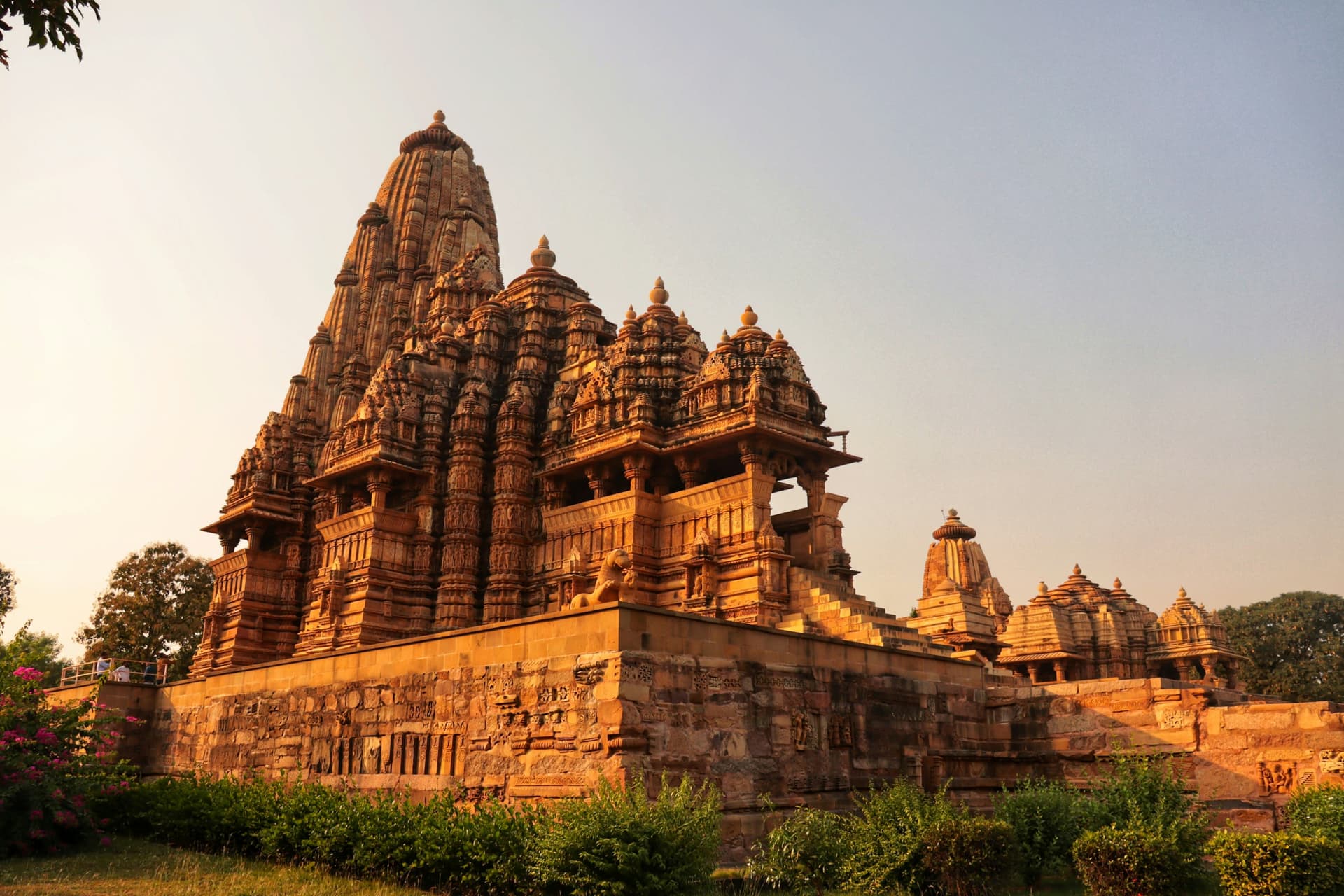
Jain temples of Khajuraho
Jatkra, Madhya Pradesh, India
267.4 km away
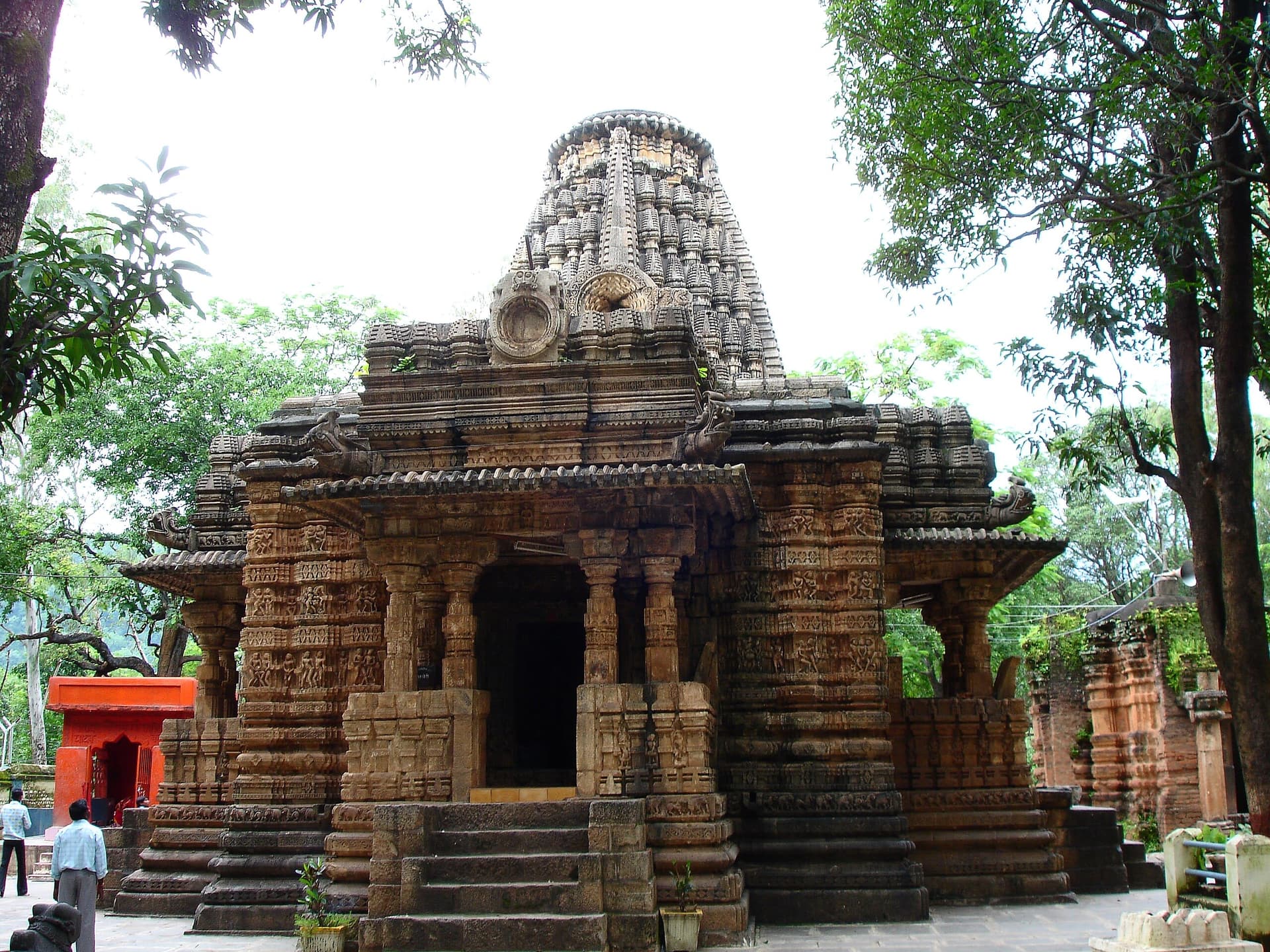
Bhoramdev Temple, Kabirdham district, Chhattisgarh
Bodla Tahsil, Chhattisgarh, India
380.9 km away
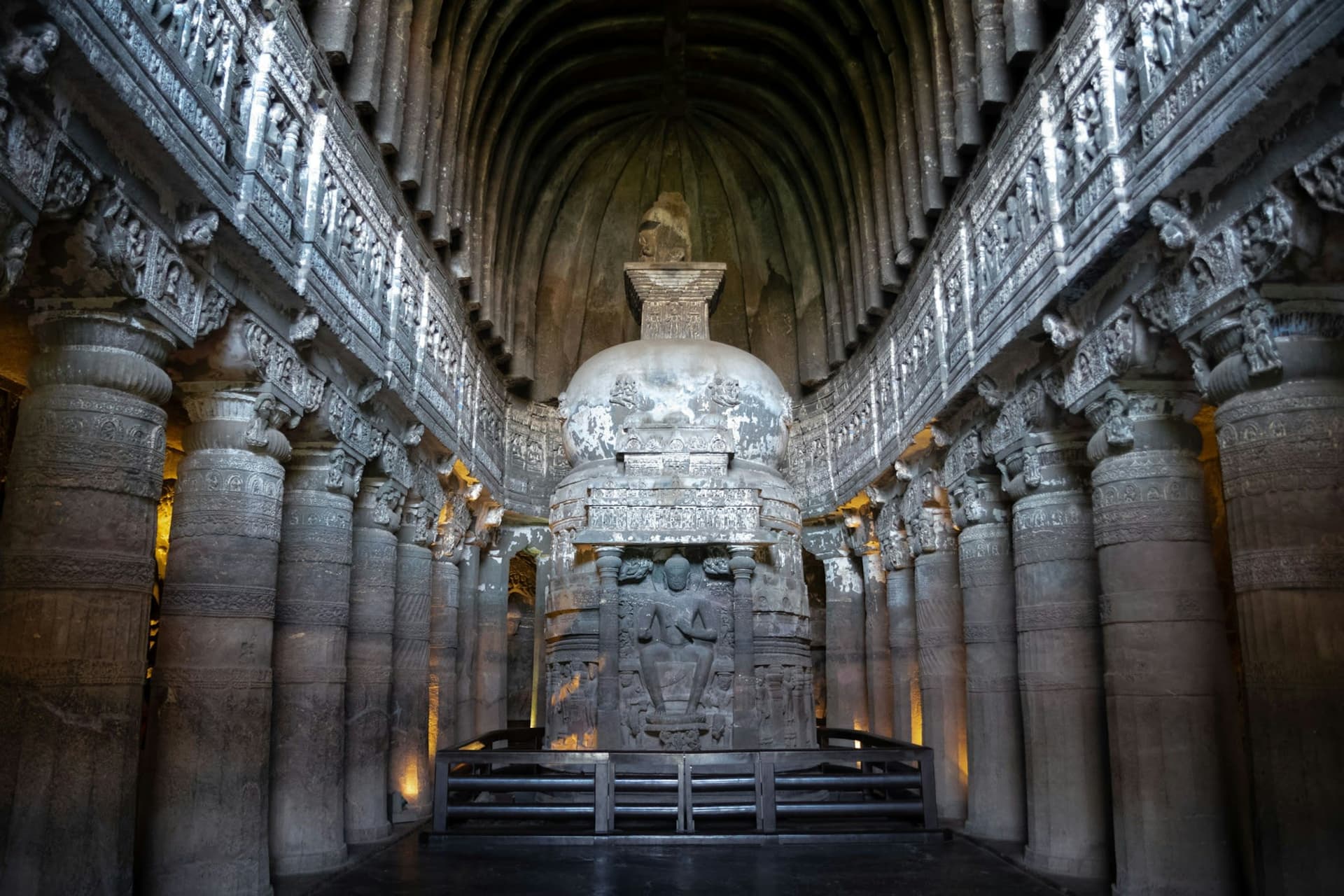
Ajanta caves, Maharashtra
Phardapur, Maharashtra, India
387.3 km away
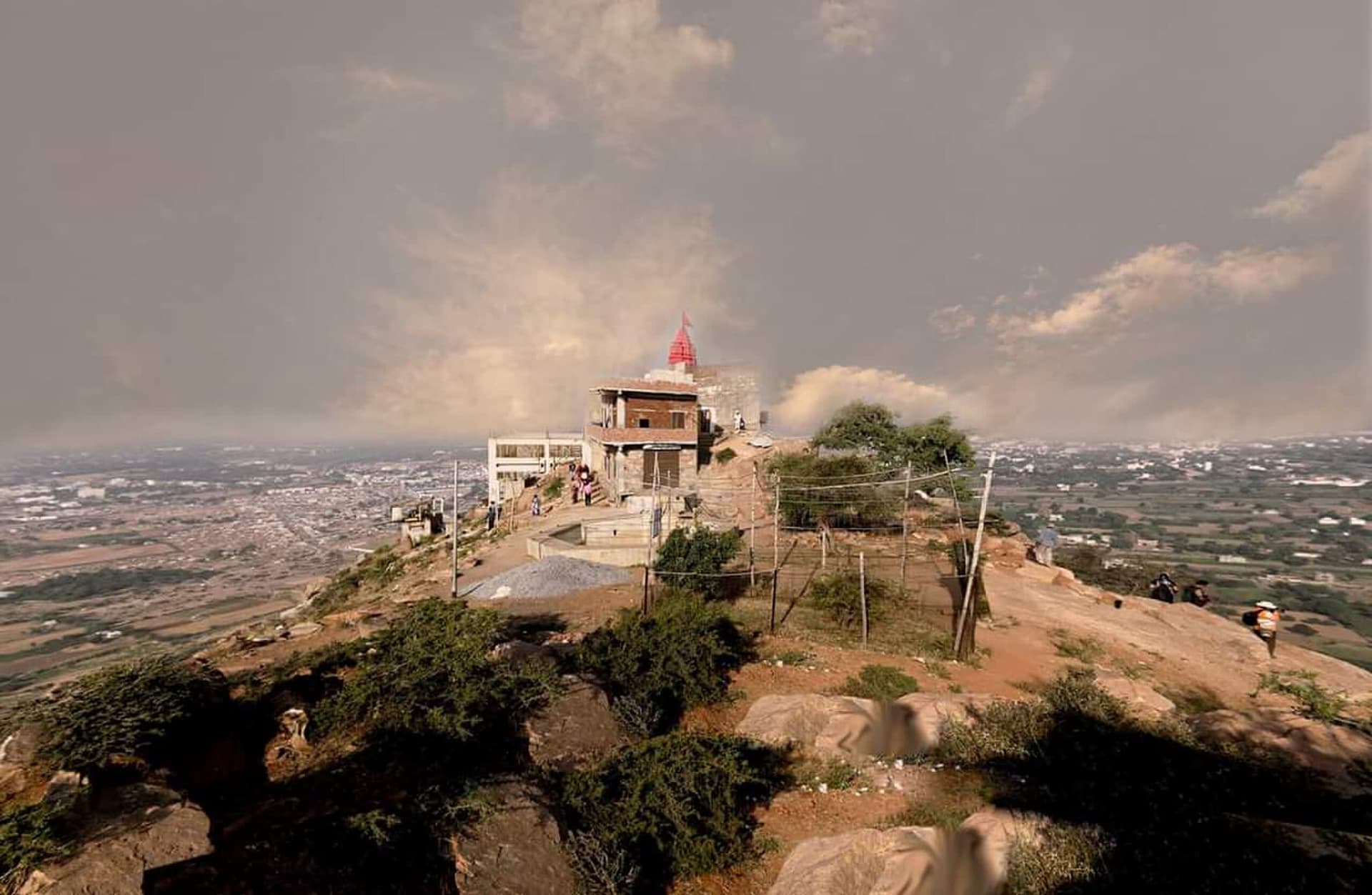
Savitri Mata Mandi (Savitri Temple)
Pushkar, Rajasthan, India
464.3 km away