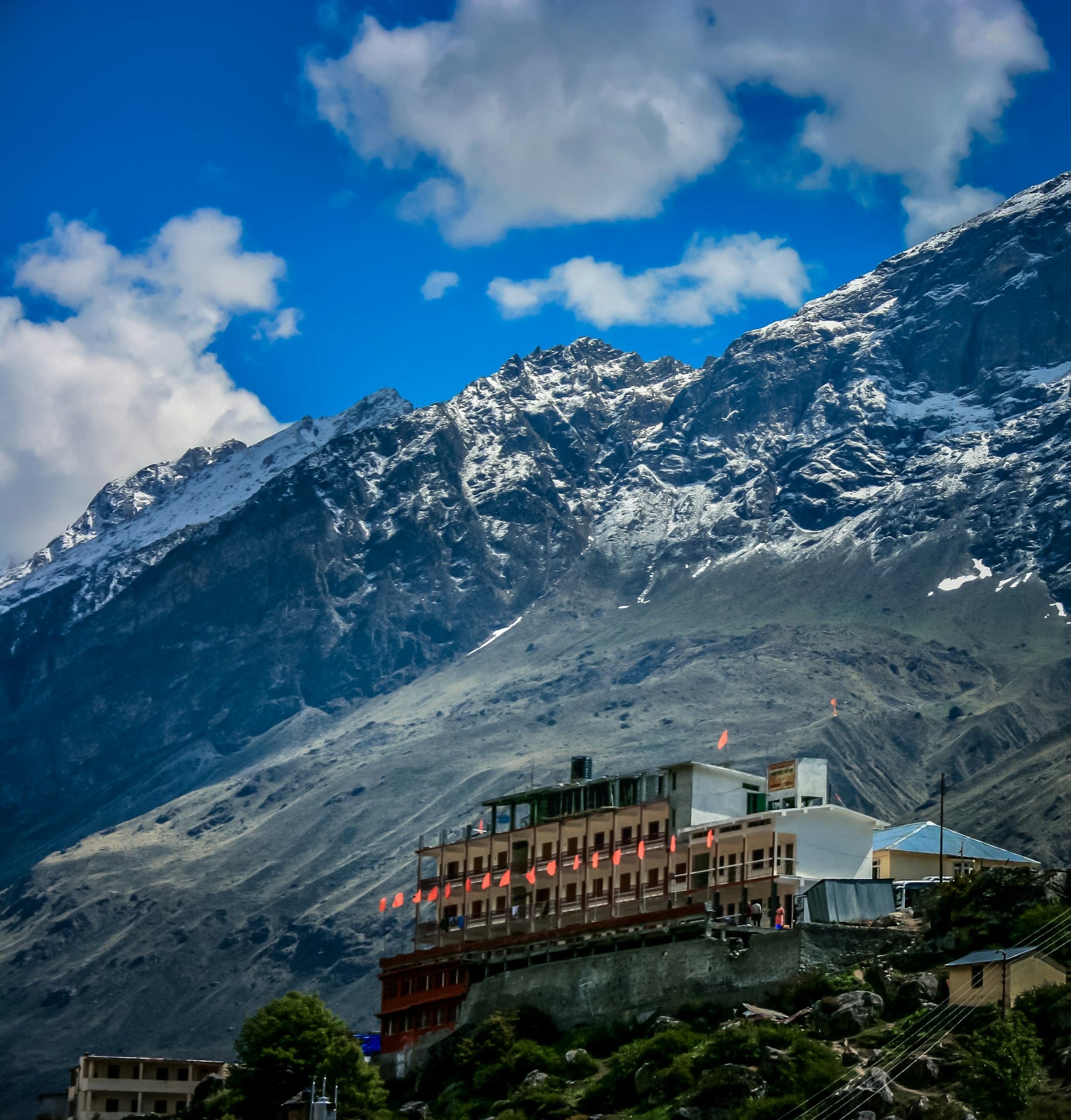
Badrinath
Where Vishnu meditates eternally beneath Himalayan snows, and pilgrims find liberation's threshold
Badrinath, Uttarakhand, India
At A Glance
- Coordinates
- 30.7448, 79.4913
- Suggested Duration
- Plan a minimum of one full day at Badrinath, though two days allow for deeper engagement. The first day can accommodate arrival, Tapt Kund, and initial darshan. The second allows for early morning aarti attendance, additional darshan, and exploration of nearby sacred sites like Mana Village and Vyas Gufa. Those undertaking the full Char Dham yatra (Badrinath, Kedarnath, Gangotri, Yamunotri) should plan 10-12 days for the complete circuit, with additional buffer for weather delays.
Pilgrim Tips
- Dress modestly and traditionally. For men, pants or dhoti and covered shoulders are appropriate. For women, salwar kameez, saree, or long skirts with covered shoulders. Western casual wear is increasingly seen but less appropriate. Avoid shorts, sleeveless tops, and tight or revealing clothing. Shoes must be removed before entering the temple compound. Bring socks if the cold stone floor concerns you, or go barefoot as most pilgrims do. A head covering is appropriate for certain ceremonies though not strictly required. No leather items should be brought inside the temple.
- Photography is strictly prohibited inside the sanctum sanctorum. Attempts to photograph the deity are disrespectful and will be stopped by temple staff. The prohibition is not bureaucratic but spiritual—the darshan is meant to be experienced, not captured. Photography is permitted in the outer temple areas and the surrounding compound. Use discretion. Other pilgrims did not come to be in your photographs. Ask before photographing individuals.
- Altitude sickness is a genuine risk at 3,133 meters. Symptoms include headache, nausea, and dizziness. Acclimatize if possible by spending a day at intermediate elevation. Drink water. Move slowly. If symptoms worsen, descend. The Tapt Kund waters are genuinely hot—hot enough to cause burns if you enter abruptly or stay too long. Enter gradually. Time your immersion. The temple complex can become intensely crowded during peak season and festival periods. This crowd energy can overwhelm sensitive visitors. If you feel overwhelmed, step outside the main flow, find a quieter corner, and let your system settle before re-engaging. Be cautious of unofficial guides and priests who approach pilgrims offering special services at elevated prices. The official temple administration handles pujas and offerings through proper channels.
Overview
Rising at 3,133 meters in the Garhwal Himalayas, Badrinath Temple stands as one of Hinduism's four Char Dham—the pilgrimage circuit that promises liberation to those who complete it. For over two millennia, seekers have made the arduous mountain passage to stand before Lord Badri, whose black stone form is believed to be self-manifested. The temple opens only six months each year, when the snows recede enough for approach.
The road to Badrinath teaches before the temple does. Kilometers of switchbacks climb through the Himalayas, the air thinning as the Alaknanda River churns below. Landslides and altitude conspire to make the journey difficult. This is not incidental. Pilgrimage in the Hindu understanding is not transportation to a destination—it is transformation through passage. By the time you arrive, you are no longer who you left.
At 3,133 meters, the temple emerges from mountain and mist. Its colorful facade—reds, golds, blues—seems almost implausible against the austerity of snow and stone surrounding it. Inside, Lord Badrinath sits in meditation posture, a black stone figure adorned with gold. According to tradition, this is not a human creation but a self-manifested murti—Vishnu himself, revealed. The deity's expression is difficult to read, neither welcoming nor forbidding, simply present. Millennia of devotion have accumulated here.
Badrinath is one of four Char Dham established by Adi Shankaracharya in the 8th century to purify the soul and mark the sacred geography of the subcontinent. It represents Satya Yuga, the first and most golden of cosmic ages. To stand here is, in some sense, to stand at the beginning of time. The Puranas tell that this is where Nara-Narayana performed tapas so intense that berries grew to shade them—giving Badri its name. Whether you come as believer or seeker or simply one drawn by something you cannot articulate, the place holds you with an attention that feels mutual.
Context And Lineage
Badrinath Temple sits at the intersection of mythology, history, and living practice spanning over 2,500 years. Mentioned in ancient epics, established as a major pilgrimage by Adi Shankaracharya, and continuously renovated by Garhwal kings and modern administrators, the site embodies Hinduism's understanding of sacred geography—where certain places serve as crossing points between worlds.
The Puranas tell that Lord Vishnu descended to the Badrinath area in human form as the twin sages Nara-Narayana to perform tapas—intense spiritual practice. The sages meditated with such focus that their heat transformed the surroundings. Seeing their dedication, badari (berry) trees grew to shelter them from the elements, giving the place its name: Badarikashrama, the hermitage of the berries.
In another telling, Lakshmi herself took the form of a berry tree to shade her Lord during his austerities. The stories vary, but the essence remains: this is a place where divine practice occurred, where the threshold between human and divine was established not by construction but by concentrated intention. The temple that stands here does not create the sacredness—it marks and serves it.
Adi Shankaracharya, the great 8th-century reformer who traveled the subcontinent establishing temples and monasteries, is said to have found the self-manifested murti of Lord Badrinath in the Alaknanda River. He installed it in a cave near Tapt Kund, where worship began. Later, the Garhwal kings moved the murti to its current location in a proper temple structure, adding the architecture that visitors see today. The image's origin in water—discovered rather than carved—adds to its power in Hindu understanding.
The priests who serve Badrinath Temple are not local to the Himalayas. By tradition established by Adi Shankaracharya, they come from the Nambudiri Brahmin community of Kerala, in India's far south. This arrangement links the northern pilgrimage to the southern tip of the subcontinent, emphasizing the Char Dham's vision of a unified sacred geography.
The Rawal (chief priest) is appointed by the Badrinath-Kedarnath Temple Committee and serves for life. The ritual calendar, maintained for centuries, continues daily during the six months the temple is open. When winter closes the shrine, the deity is ceremonially moved to the village of Pandukeshwar, where worship continues until the snows permit return. The tradition has survived earthquakes, political changes, and the transformation of pilgrimage from arduous trek to paved road. Through it all, the practice continues: offerings, aartis, darshans, the same prayers that have echoed here for generations beyond counting.
Vishnu
deity
The Preserver in the Hindu trinity, worshipped at Badrinath as Lord Badrinath or Badarinarayana. The temple's murti shows him in meditative posture, the form he took as Nara-Narayana when performing tapas at this site.
Nara-Narayana
mythological
An avatar of Vishnu as twin sages who performed intense austerities at Badrinath. Their tapas is the origin of the site's sacredness. Nara represents the human seeker; Narayana represents the divine sought.
Adi Shankaracharya
historical
The 8th-century philosopher-saint who established Badrinath as part of the Char Dham circuit. He is said to have discovered the murti in the Alaknanda River and installed it for worship, transforming the site from local shrine to subcontinental pilgrimage.
Lakshmi
deity
Consort of Vishnu, goddess of prosperity and grace. Some traditions hold that she took the form of the badari tree to shelter her Lord during his meditation. A murti of Lakshmi accompanies Lord Badri in the temple.
Why This Place Is Sacred
Badrinath's sacredness converges from multiple sources: its mention in texts over 2,500 years old, its place as one of four Char Dham, its inclusion among the 108 Divya Desams, the self-manifested murti tradition, and its positioning at the edge of human accessibility where mountains touch sky. The seasonal closure creates a rhythm of presence and absence that heightens the preciousness of encounter.
In Hindu cosmology, certain places are tirthas—fords or crossing points where the distance between the human and divine becomes navigable. Badrinath is among the most powerful of these. The thinness here derives not from one quality but from the convergence of many.
First, there is sheer antiquity. References to Badrinath appear in the Mahabharata and Skanda Purana—texts reaching back over two millennia. Generations beyond counting have understood this ground as sacred. This accumulated intention creates a weight that even skeptics notice. Whatever one believes about metaphysics, the concentration of human seeking in one place over such duration leaves residue.
Second, there is the murti itself. According to tradition, Adi Shankaracharya discovered the image of Lord Badrinath in the Alaknanda River—not carved by human hands but self-manifested (svayambhu). Such images hold particular power in Hindu understanding. Whether one interprets this as divine intervention or medieval legend, the devotion the image inspires is palpable. Standing before it, pilgrims weep, prostrate, offer flowers and prayers. The emotional intensity in the sanctum sanctorum creates its own kind of thinness.
Third, there is the landscape. At 3,133 meters, surrounded by peaks that reach higher still, you stand at the edge of human habitation. The air is thin in the physical sense. The Alaknanda River, a tributary of the Ganges, carries glacial waters past the temple. Snow closes the site for half the year, and even when open, weather can turn lethal. This is not a comfortable pilgrimage. The difficulty is part of the point—what must be earned holds more value.
Finally, there is Badrinath's position within India's sacred geography. As one of four Char Dham, it participates in a circuit designed to orient the seeker toward the cosmos. It is also one of 108 Divya Desams—sacred sites for Vaishnavas. These overlapping designations intensify its significance. To come here is to enter a web of connections linking this spot to temples across the subcontinent, to scriptures spanning millennia, to a cosmology that understands time itself in cycles beyond human comprehension.
According to Hindu tradition, this is the place where Nara and Narayana—an incarnation of Vishnu as twin sages—performed intense austerities. The name Badrinath derives from the badari (berry) trees that grew to shade them as they meditated. The site thus carries the energy of tapas: sustained spiritual practice that generates heat and transformation. What was originally a place of retreat and penance became, over centuries, a temple complex supporting the ongoing worship of the deity who performed tapas here. The purpose has always been encounter with the divine—first through the sages' practice, then through pilgrimage to the place where that practice occurred.
The temple's history layers like geological strata. Ancient texts suggest worship here for over 2,500 years, though the forms have evolved. Some scholars note Buddhist architectural elements in the temple structure, suggesting possible Buddhist presence during certain periods—though Hindu tradition maintains continuous Vaishnava worship. Adi Shankaracharya's arrival in the 8th or 9th century marks a turning point: he established Badrinath as part of the Char Dham circuit, creating an infrastructure of pilgrimage that persists today. The murti was later moved from a cave to its present location by the kings of Garhwal, who also undertook renovations.
The 1803 earthquake damaged the temple significantly; rebuilding followed. Modern infrastructure—roads, helicopters, guesthouses—has made access easier than ever, even as the journey remains substantial. Over 2.8 million pilgrims visited in 2022 alone. The Badrinath-Kedarnath Temple Committee now manages the site, balancing the demands of mass pilgrimage with the preservation of sacred atmosphere. Through all changes, the core remains: a place where the veil thins, where seeking is honored, where something answers.
Traditions And Practice
Badrinath hosts continuous worship during its six-month open season. Traditional practices include bathing in Tapt Kund for purification, darshan of Lord Badri, participation in morning and evening aarti, and circumambulation of the temple. Special pujas can be arranged through the temple administration.
The traditional approach to Badrinath involves preparation that begins before arrival. Pilgrims traveling the Char Dham circuit will have visited other sites first, building spiritual momentum. The journey itself is understood as purification—each difficulty encountered and endured removes layers of accumulated karma.
Upon arrival, the prescribed sequence begins with bathing in Tapt Kund. These natural hot springs, whose waters emerge at temperatures between 45-55 degrees Celsius, serve dual purposes: physical cleansing after the arduous journey and ritual preparation for entering divine presence. The heat is both penance and relief.
Following bathing, pilgrims proceed to the temple for darshan. This is the moment of encounter—standing before Lord Badri, being seen as much as seeing. Devotees offer flowers, fruits, sweets, and prayers. The priests may apply tilak (sacred mark) to foreheads and distribute prasad (blessed food).
Aarti ceremonies occur multiple times daily, with the morning abhisheka (ritual bathing of the deity) at 4:30 AM marking the start of the temple day. Evening aarti, performed with lamps, fire, and chanting, draws crowds of pilgrims. Participation in aarti creates communal experience—individual pilgrims become part of something larger.
Circumambulation of the temple (pradakshina) is traditional, as is visiting associated shrines in the complex. Many pilgrims carry brass vessels to fill with Ganges water, which they will take home and preserve for auspicious occasions.
Modern pilgrims engage with Badrinath in ways both continuous with tradition and adapted to contemporary circumstances. The essence remains unchanged: journey, purification, darshan, blessing. The forms accommodate logistics the ancients never imagined.
Helicopter services now offer one-day pilgrimage packages, bypassing the mountain road. This raises questions that pilgrims answer differently: Does the ease diminish the experience? Or does accessibility honor the intent of those who could never otherwise come? The temple welcomes all, however they arrive.
Special pujas can be arranged through the temple administration for various intentions: health, prosperity, family welfare, spiritual progress. These range from simple offerings to elaborate ceremonies performed on behalf of the devotee and their family.
Spiritual seekers who are not Hindu often visit Badrinath as part of broader Himalayan journeys. While the specific theological framework may not be theirs, many report profound experiences nonetheless. The site seems to respond to sincerity regardless of tradition.
If you come seeking more than tourism, consider these invitations for deepening your engagement.
Arrive with an intention—not a demand, but a genuine question you hold. This frames the journey and creates receptivity. The tradition holds that Badrinath grants blessings; what blessing do you seek? What would transformation look like for you?
Do not skip Tapt Kund. The temptation to proceed directly to the temple is strong, especially if the water's heat seems daunting or the immersion culturally unfamiliar. But the practice exists for reasons accumulated over centuries. The shock of hot water in cold air interrupts normal consciousness. It makes the subsequent darshan different than it would otherwise be.
During darshan, resist the photographer's reflex. Yes, photography is prohibited in the sanctum anyway—but even preparing to photograph changes how you see. Look at Lord Badri without mediation. Let your eyes rest. Ask your question silently. Notice what arises in response, even if it is nothing you can name.
If time permits, stay for evening aarti. The flames, the chanting, the gathered pilgrims—the experience is collective in a way that private darshan is not. There is something to be learned from being one among many seekers rather than a singular visitor.
Consider walking the area around the temple. Mana Village, the last Indian settlement before the Tibetan border, is nearby. Vyas Gufa (the cave where Vyasa is said to have composed the Mahabharata) and other sacred spots invite exploration. The landscape itself teaches.
Hinduism - Vaishnavism
ActiveBadrinath Temple is among the most sacred sites in Vaishnava Hinduism. It is one of the 108 Divya Desams—shrines sung by the Alvars, Tamil poet-saints whose devotional hymns form the core of Sri Vaishnava tradition. It is also one of four Char Dham—the pilgrimage circuit established by Adi Shankaracharya that orients Hindu sacred geography toward the four directions. Badrinath represents the northern point and is associated with Satya Yuga, the first cosmic age. The temple is dedicated to Vishnu in his aspect as Badrinath or Badarinarayana, shown in meditative posture as he appeared when performing tapas as Nara-Narayana.
Daily worship follows a ritual calendar maintained for centuries. The temple day begins with the 4:30 AM abhisheka (ritual bathing of the deity). Public darshan follows, continuing through the day with breaks. Evening aarti brings pilgrims together for communal worship with lamps, fire, and chanting. Special ceremonies mark festivals and full moon days. Pilgrims traditionally bathe in Tapt Kund before darshan, offer flowers and prayers, circumambulate the temple, and receive prasad.
Experience And Perspectives
Pilgrims describe the journey to Badrinath as transformative before the temple is reached—the mountain passage itself purifies and prepares. The darshan of Lord Badri, in his black stone form, is often described as the culmination of a lifetime's aspiration. The cold, clear air and dramatic landscape create a sense of approaching the divine that transcends specific belief.
The experience of Badrinath begins long before arrival. The road from Rishikesh or Haridwar climbs through increasingly dramatic terrain—forests giving way to bare mountains, the river narrowing as altitude increases. For many pilgrims, this is their first encounter with the high Himalayas. The scale is humbling. The journey, often twenty hours or more by road, creates space for reflection that modern life rarely permits.
By the time the temple appears, pilgrims have already been transformed by passage. Altitude has thinned the air and thought. Discomfort has stripped away pretense. What remains is essential: why have I come? What am I seeking? The mountains do not permit distraction.
The Tapt Kund, a natural hot spring near the temple, offers physical and symbolic purification. Its waters emerge from the earth at a temperature that makes bathing both relief and ordeal. Pilgrims immerse themselves before proceeding to darshan, as tradition prescribes. The contrast between glacial air and heated water shocks the body into presence.
The darshan itself—the moment of seeing and being seen by the deity—is intensely personal. The sanctum is small, the crowd often pressing. Priests chant. Incense thickens the air. And there, in the flickering lamplight, sits Lord Badri: black stone, gold adornment, eyes that seem to see. Pilgrims bring lifetimes of accumulated longing to this moment. Many weep. Some stand frozen, unable to move until gently guided out. The encounter resists description because it happens below the level of language.
Those who stay multiple days often describe deepening experiences with each visit. The first darshan is overwhelming. The second allows details to emerge. By the third, something subtler begins to communicate—a quality of presence that persists beyond the temple walls, into the surrounding mountains, into sleep. Dreams at Badrinath are frequently reported as unusually vivid, populated by figures and messages that feel significant.
Badrinath rewards those who come with genuine questions rather than tourist expectations. Consider what draws you. Is it faith? Curiosity? Something unsettled that seeks resolution? The site responds differently depending on what you bring.
Arriving with the attitude of pilgrimage—even if you do not share the tradition—opens dimensions that remain closed to the merely curious. This means approaching the journey as practice, not just transit. Notice what arises as altitude increases, as comfort decreases. Let the landscape work on you before the temple does.
In the sanctum, resist the urge to hurry. Yes, others are waiting. Yes, the priests keep things moving. But within that constraint, let your eyes rest on the murti. Ask your question silently. Listen for what comes—not in words, necessarily, but in whatever form presents itself. The encounter is not theatrical but intimate. It happens in the moment between looking and being looked at.
Badrinath invites multiple ways of understanding, and honest engagement requires holding them without forcing resolution. The devotee sees divine presence literally embodied. The historian sees continuous religious practice across millennia. The seeker may find something that resists both frameworks. The site is capacious enough for all.
Scholars agree that Badrinath has been a pilgrimage site for at least 2,500 years, based on references in the Mahabharata and Puranic literature. The temple's architectural style has led some historians to note Buddhist influences, with the structure resembling a vihara (monastery) more than typical Hindu temple architecture. This has sparked debate about possible Buddhist occupation during certain medieval periods—though Hindu tradition maintains continuous Vaishnava worship from ancient times.
Adi Shankaracharya's role in the 8th century represents a documented inflection point. His establishment of the Char Dham circuit created one of history's most successful pilgrimage infrastructures, integrating the four corners of the subcontinent into a unified sacred geography. The appointment of Nambudiri Brahmin priests from Kerala to serve a Himalayan temple exemplifies his vision of pan-Indian religious unity.
Archaeological and epigraphic evidence for specific historical events remains limited, partly due to the site's continued use as an active temple rather than excavated ruin. The 1803 earthquake and subsequent rebuilding further complicate historical reconstruction. What is clear is the remarkable continuity of practice at a site where conditions are among the most challenging of any major Hindu temple.
From the traditional Vaishnava perspective, Badrinath is not merely a site where worship occurs but a place where the divine is present. The murti is not a representation of Vishnu but Vishnu himself, self-manifested rather than carved, literally inhabiting the stone. Darshan is therefore not symbolic but actual—an encounter between devotee and deity.
The site's association with Nara-Narayana's tapas establishes it as a place where the boundary between human and divine was repeatedly crossed. Nara represents the human seeker; Narayana represents the divine sought. Their presence here as twin aspects of one reality—simultaneously practicing tapas and receiving its fruits—makes Badrinath a place where that union is accessible to all who come.
Pilgrimage to the Char Dham is understood to grant moksha (liberation from the cycle of rebirth) or significant progress toward it. This is not metaphor but doctrine. The difficulty of the journey is not obstacle but feature—each hardship endured purifies karma. The seasonal closure is interpreted by some as the deity's need for winter rest, a reminder that even divine presence operates within cosmic rhythms.
Some contemporary interpreters understand Badrinath as one of the earth's chakras or energy centers—a node on planetary energy lines where spiritual power concentrates. The Himalayan setting, the geological fault lines, the natural hot springs, and the convergence of sacred rivers are seen as markers of telluric forces that traditions worldwide have recognized.
The seasonal closure, from this perspective, creates a breathing rhythm—the site's energy accumulating during the dormant months, then releasing when pilgrims return. The millions of seekers who have visited over millennia have added their intentions to this energetic reservoir.
These interpretations lack support from traditional Hindu sources or academic scholarship. However, they often arise from genuine experiences visitors have. The language of energy and chakras may be attempts to describe something real using available contemporary vocabulary—something that traditional frameworks describe differently but perhaps no more accurately.
Genuine uncertainties persist. The precise origins of worship at Badrinath remain unclear—was the site continuously Hindu, or did Buddhist practice intervene during certain periods? The architectural evidence pointing toward Buddhist influence has never been definitively explained.
The self-manifested nature of the murti—whether genuinely ancient or a medieval discovery—remains a matter of faith rather than historical certainty. The specific rituals performed in ancient times, before textual documentation, can only be inferred.
Perhaps most significantly, the mechanism by which the site affects visitors remains unexplained. Why do people weep here? Why do so many report transformation? Is it psychology, accumulated intention, geological force, divine presence, or something our categories cannot capture? These questions have no answers—only experiences that continue to accumulate, adding to the mystery rather than resolving it.
Visit Planning
Badrinath Temple is open only from late April/May to November, closing for winter snows. Access is by mountain road from Rishikesh/Haridwar (300+ km) or helicopter. September-October offers clearer weather and manageable crowds. Plan 1-2 days at Badrinath, or 10-12 days for the full Char Dham circuit.
Badrinath offers a range of accommodations from basic dharamshalas (pilgrim rest houses) to GMVN (state tourism) guesthouses to private hotels. During peak season, advance booking is essential. The Badrinath-Kedarnath Temple Committee operates several facilities.
For those seeking more comfortable options, Joshimath (24 km away, at lower elevation) offers additional hotels and can serve as a base, though this adds travel time to temple visits.
There are no luxury accommodations in Badrinath itself—the setting does not support them, and the pilgrim nature of the destination makes them somewhat incongruous. Simplicity is part of the experience.
Badrinath is an active site of worship where your presence is a privilege. Dress modestly, remove shoes before entering, follow the guidance of temple staff, and maintain an atmosphere of reverence. Photography is prohibited in the sanctum sanctorum.
The most important principle is remembering that you are entering a living temple, not a monument. Worship is happening. Pilgrims around you may be fulfilling vows they have held for decades. Priests are performing rituals whose forms have been maintained for centuries. Your presence is welcomed but not neutral—it either supports or disturbs the sacred atmosphere.
The temple compound requires appropriate behavior from the moment you enter. Maintain quiet conversation or silence. Move slowly. Avoid pointing feet toward the temple or deity. Keep your attention on your purpose rather than on other visitors.
In the sanctum sanctorum, the darshan line moves continuously. You will have limited time before the deity. Use it fully. Do not linger so long that you block others, but do not rush so quickly that the moment passes without registration. The priests will guide the flow; follow their instructions gracefully.
If you wish to make offerings, purchase them from authorized vendors near the temple. Flowers, fruits, and sweets are traditional. These will be presented to the deity by priests and returned as prasad.
Mobile phones should be silenced. Better still, leave them behind. The temple experience deserves your undivided attention.
Dress modestly and traditionally. For men, pants or dhoti and covered shoulders are appropriate. For women, salwar kameez, saree, or long skirts with covered shoulders. Western casual wear is increasingly seen but less appropriate. Avoid shorts, sleeveless tops, and tight or revealing clothing.
Shoes must be removed before entering the temple compound. Bring socks if the cold stone floor concerns you, or go barefoot as most pilgrims do. A head covering is appropriate for certain ceremonies though not strictly required.
No leather items should be brought inside the temple.
Photography is strictly prohibited inside the sanctum sanctorum. Attempts to photograph the deity are disrespectful and will be stopped by temple staff. The prohibition is not bureaucratic but spiritual—the darshan is meant to be experienced, not captured.
Photography is permitted in the outer temple areas and the surrounding compound. Use discretion. Other pilgrims did not come to be in your photographs. Ask before photographing individuals.
Traditional offerings include flowers (marigolds are common), fruits, sweets, and coconuts. These can be purchased from vendors near the temple. Offerings are presented to the deity through the priests and a portion returned as prasad (blessed food).
Special pujas with more elaborate offerings can be arranged through the temple administration. Cash donations support temple maintenance and charitable activities.
The temple is open only from late April or early May until November, closing when snows make access impossible. Exact opening and closing dates vary by year based on the Hindu calendar.
During open season, daily timings are strictly observed. The temple opens for morning darshan after the 4:30 AM abhisheka. It closes briefly during afternoon hours. Evening aarti occurs before final closure.
There are no specific restrictions based on gender or background—all are welcome. However, entry to certain inner areas may be limited during specific ceremonies.
Sacred Cluster
Nearby sacred places create the location cluster described in the growth plan. This block is intentionally crawlable and links into the wider regional graph.