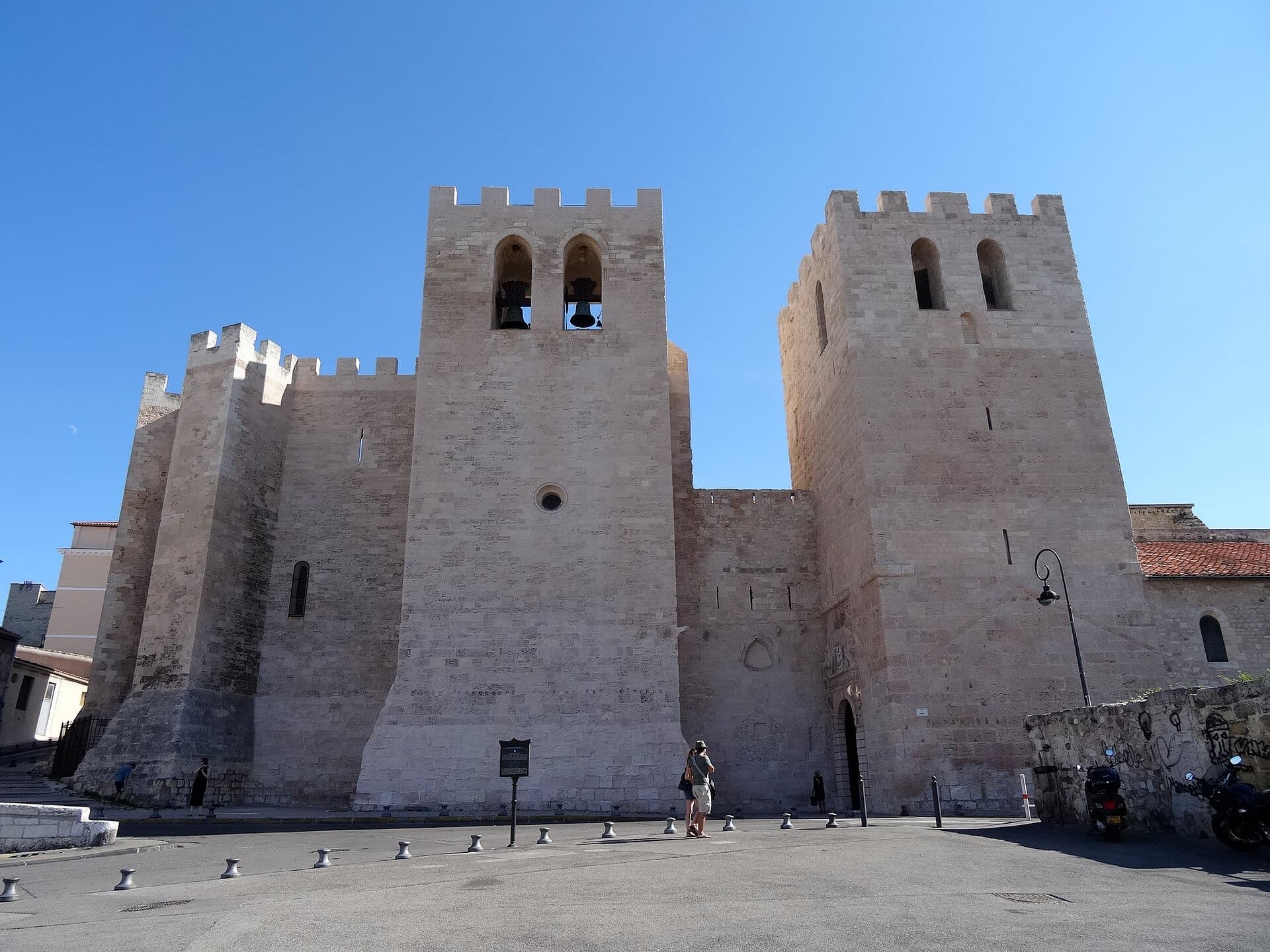
Abbey of Saint-Victor
Where martyrs' bones and Desert wisdom rest beneath Marseille's oldest sanctuary
Marseille, Provence-Alpes-Côte d'Azur, France
At A Glance
- Coordinates
- 43.2901, 5.3654
- Suggested Duration
- A quick visit takes 45 minutes to an hour. A meaningful visit, including time for silent contemplation in the crypt, requires one to two hours. Those attending Mass should add the liturgy's duration. Candlemas participation, including the dawn procession, requires a full morning.
Pilgrim Tips
- Modest dress is expected throughout the abbey. Cover shoulders and knees. Comfortable shoes are advisable for the uneven crypt floors. During Candlemas, dress warmly for the pre-dawn procession.
- Photography is permitted in both the church and crypt. Flash is not appropriate in the crypt—use available light or a high-ISO setting. Tripods and professional equipment may require permission. Do not photograph people at prayer without their consent.
- This is an active place of worship. Visitors who come only for tourism should maintain appropriate reverence. Photography in the crypt is possible but should be done quietly and without flash. During Mass, remain in the church unless participating. Candlemas draws large crowds, and the abbey can become very crowded. If you seek quiet contemplation, February 2nd is not the day—but if you seek to experience the tradition at its fullest expression, the crowds are part of it.
Overview
Rising fortress-like above Marseille's ancient harbor, the Abbey of Saint-Victor descends through sixteen centuries of unbroken prayer. The crypt holds one of France's richest collections of early Christian sarcophagi—and a Black Madonna whose February procession draws thousands to receive blessed candles and boat-shaped biscuits, continuing traditions older than anyone can remember.
Before the cathedrals, before the great monasteries of medieval Europe, there was this place. A rocky outcrop above the harbor where Romans buried their dead, where Christians gathered at martyrs' tombs, where a traveler from the Egyptian desert planted seeds of contemplation that would shape Western monasticism itself.
The Abbey of Saint-Victor has watched Marseille for over 1,600 years. It has burned twice under Saracen flames and risen again. It has been stripped by revolution and restored by devotion. Throughout it all, the crypts have kept their dead—layer upon layer of sarcophagi reaching seven deep in places, a geology of faith.
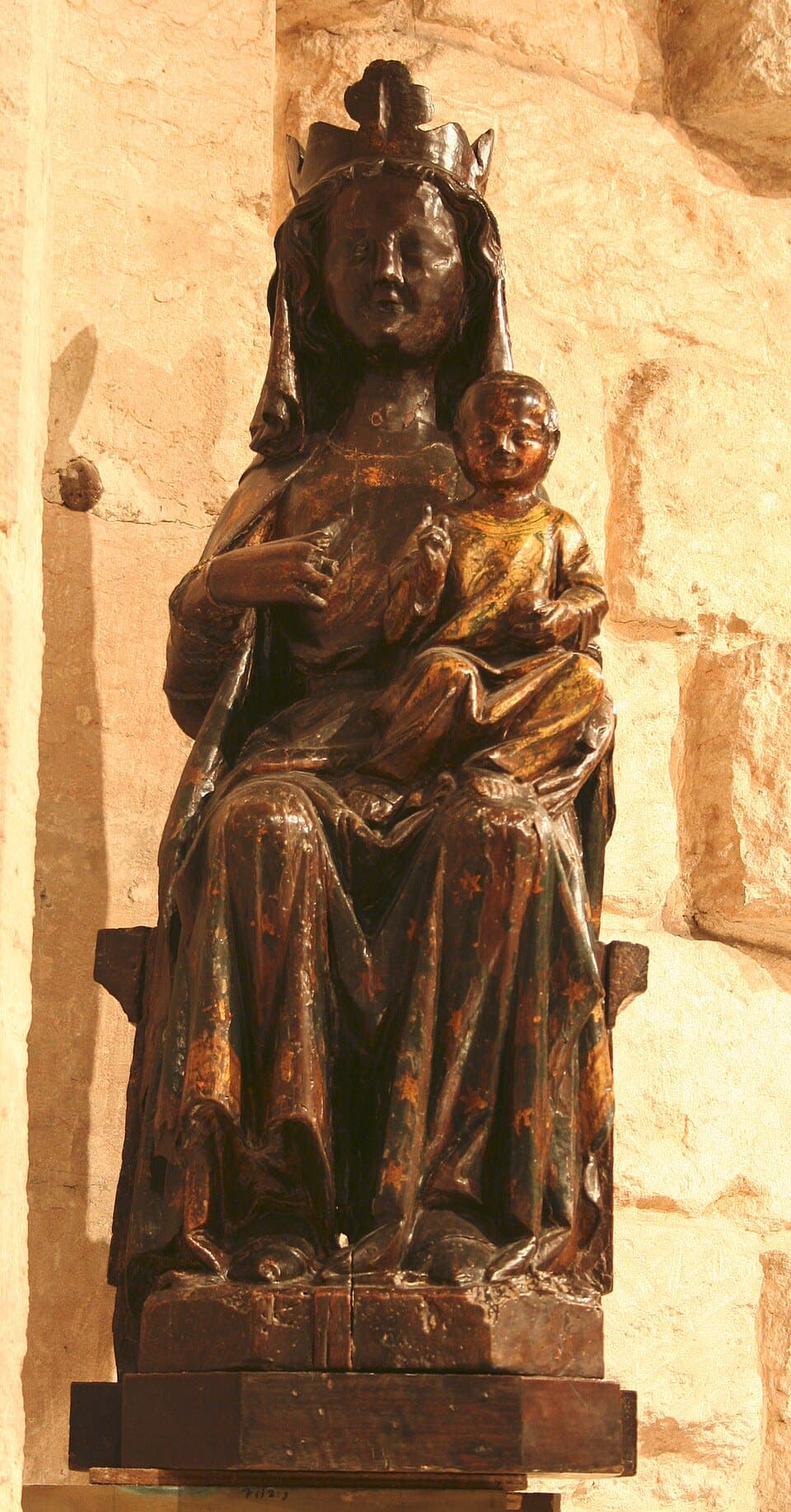
Descending into these crypts is to move backward through time. The air changes. Light from the upper church gives way to the cool permanence of stone. Here, in the half-darkness, the Black Madonna waits in her chapel—Notre-Dame de Confession, named for the martyrs who confessed their faith unto death. On Candlemas, she is dressed in green and carried upward, blessing candles that will protect households for the coming year.
This is not a museum of the sacred. Mass is celebrated daily. Pilgrims come not to observe but to participate in something that has never stopped.
Context And Lineage
Saint-Victor's story interweaves the death of a Roman soldier who refused to worship pagan gods, the arrival of a monk who had trained with the Desert Fathers, the accumulation of medieval monastic power, devastating raids, revolutionary destruction, and continuous restoration. Through it all, the crypts have remained—a repository of early Christian faith and a physical connection to Marseille's oldest sanctities.
Victor was a Roman officer in Marseille's garrison around the turn of the 4th century. According to tradition, he openly declared his Christian faith and encouraged others to resist worship of the Roman gods. Imprisoned and tortured, he converted three fellow soldiers—Longinus, Alexander, and Felician—who were promptly beheaded. When Victor himself was commanded to offer incense to a statue of Jupiter, he instead kicked the idol over. His sentence: death by millstone.
The millstone, tradition holds, broke while Victor still lived. He was then beheaded. The faithful recovered his remains and buried them on this rocky outcrop outside the city. Other Christians sought burial nearby, hoping proximity to the martyr would benefit their souls.
A century later, John Cassian arrived. Born in the Balkans, trained in Bethlehem, and formed by years living among the Egyptian desert monks, Cassian brought to Marseille a complete system of contemplative practice. The eight principal vices he identified, the remedies he prescribed, the balance he struck between community life and solitary prayer—all of this would flow into Western monasticism through his writings. He chose this site of martyrdom to establish his foundations, linking the contemplative tradition to the blood of witness.
Medieval tradition adds another layer: Lazarus, whom Jesus raised from the dead, was said to be Marseille's first bishop, buried in the grotto that became the crypt. This connection to Christ's own circle, though historically unlikely, expressed a truth about how the medieval faithful understood this place—as directly connected to the founding events of Christianity itself.
The monastery Cassian founded survived, with interruptions, for over a thousand years. Twice destroyed by Saracens, twice rebuilt. Reformed in the 11th century and made a center of Benedictine influence. Fortified in the 14th century by a pope who knew its value. Suppressed by the Revolution, its monks scattered, its treasures burned.
Yet the physical continuity of the crypts preserved something essential. When worship resumed in the 19th century, it resumed in the same space where Christians had prayed since the late Roman Empire. The sarcophagi had not been moved. The atmosphere had not dissipated. The Black Madonna had survived.
Today the abbey is staffed by diocesan priests rather than monks. The Candlemas tradition continues, drawing pilgrims who may or may not understand its layers of meaning. The lineage is not unbroken—but it is continuous enough that standing in the crypt, you participate in something very old.
Saint Victor of Marseilles
martyr
Roman soldier martyred around 290-304 CE for refusing to worship pagan gods. His tomb became the nucleus around which the abbey developed, and his courage in 'confessing' his faith gave the Black Madonna her title: Notre-Dame de Confession.
John Cassian
founder
Monk and theologian who brought the spiritual practices of the Egyptian Desert Fathers to the West. Founded Saint-Victor's monastery around 415 CE. His Institutes and Conferences shaped Western monasticism for centuries and remain required reading in many contemplative communities.
Notre-Dame de Confession
sacred image
A 12th-13th century Black Madonna housed in the crypt chapel. Named for the martyrs who 'confessed' their faith, she is the center of the Candlemas devotion and draws pilgrims year-round. Her dark wood and mysterious presence connect to broader European Black Madonna traditions.
Abbot Isarn
reformer
11th-century abbot who reformed Saint-Victor and expanded its influence across Provence and beyond. Under his leadership, the abbey became one of the most important monastic centers in the region, with dozens of dependent priories.
Pope Urban V
patron
Pope from 1362 to 1370, formerly an abbot of Saint-Victor. He fortified the abbey with its distinctive crenellated towers and thick walls, giving it the fortress appearance it retains today.
Why This Place Is Sacred
Saint-Victor's sacred quality emerges from an extraordinary confluence: continuous ritual use spanning two millennia, the physical presence of martyr remains and centuries of burial, the transmission of Desert Fathers wisdom to the West, and the mysterious devotion to the Black Madonna whose origins precede written records. The crypt's dense layering of death and prayer creates an atmosphere that visitors consistently describe as unlike anywhere else.
The first burials here predated Christianity. When Greek colonists founded Marseille around 600 BCE, this hill across the harbor became a necropolis—a city of the dead. Romans continued the practice. By the time Christians arrived, seeking to bury their own near martyrs' remains, the ground was already thick with bones.
This layering matters. Seven strata of burial in some areas. Sarcophagi placed atop sarcophagi, each generation adding its dead to those who came before, creating a geological record of faith. The practice of ad sanctos burial—being interred near holy remains in hope of their intercession—drew Christians here for centuries. Their belief in the thin boundary between living and dead, their confidence that the martyrs could hear and respond, saturated this earth with intention.
John Cassian understood something about such places. He had spent years in the Egyptian desert, learning from monks who withdrew from the world to encounter the divine more directly. When he came to Marseille around 415 CE, he chose this site—already thick with sanctity—to establish monasteries for both men and women. The practices he brought, compiled in his Institutes and Conferences, would become foundational to Western monasticism, influencing Benedict's Rule and shaping contemplative life for fifteen centuries.
And then there is the Black Madonna. Notre-Dame de Confession appears in the 12th or 13th century, though her cult may be older. She is small—carved of walnut, blackened by centuries of candle smoke and veneration. Some researchers note her green associations (green candles, green vestments at Candlemas) and wonder about connections to pre-Christian goddess traditions. The truth is uncertain. What is certain is her draw: year after year, generation after generation, people descend to her chapel and find something they needed.
The site's sacred use began as a necropolis and evolved into a center of martyr veneration after Christians began burying their dead near Saint Victor and his companions, Roman soldiers martyred for refusing to worship pagan gods. When Cassian arrived, he transformed this place of death and remembrance into a living school of contemplation—bringing the wisdom of the Desert Fathers to the Western edge of the Mediterranean, creating a bridge between Eastern mysticism and Latin Christianity.
Saracen raids destroyed the abbey twice—in 838 and 923—each time scattering monks and demolishing buildings. Yet each time, the site was rebuilt. The early 11th century brought Abbot Isarn, whose reforms made Saint-Victor a center of influence across Provence and beyond. The current fortress-like structure, with its crenellated towers and massive walls, dates largely to the 14th century, when Pope Urban V (himself once an abbot here) fortified the complex.
The French Revolution nearly ended the continuity. In 1794, relics were burned, furnishings destroyed, the buildings converted to warehouse and prison. But the crypts endured. The sarcophagi could not easily be moved, and so they remained—waiting through decades of secular use until restoration began and worship resumed.
Today Saint-Victor serves as a minor basilica, elevated to that status by Pope Pius XI in 1934. The Candlemas tradition continues unbroken, drawing thousands each February. The abbey remains what it has been since Cassian's time: a place where the dead and the living share space, where prayer has accumulated across millennia, where something waits in the crypt's darkness.
Traditions And Practice
Saint-Victor offers both structured liturgical participation and opportunities for personal contemplation. Daily Mass connects visitors to the living tradition, while the crypt invites quiet prayer. The Candlemas celebration on February 2nd represents the fullest expression of the site's devotional life, with processions, blessings, and rituals linking present to past.
The original Cassianite practices emphasized contemplative prayer, struggle against destructive thoughts, and the reading of Scripture with the heart rather than merely the mind. Cassian's eight principal vices—precursors to the seven deadly sins—required specific remedies: fasting for gluttony, manual labor for sloth, solitude for anger, and so on. The monastic day was structured around the Liturgy of the Hours, punctuating work and rest with communal prayer.
Medieval additions included devotion to the martyrs' relics, prayers for the dead (given the extensive burials), and veneration of the Black Madonna. The Candlemas celebration, possibly predating the arrival of Christianity in its use of candles and light symbolism, was given Christian meaning: the Presentation of Jesus in the Temple, forty days after Christmas. Green—the color of life emerging from winter—became associated with the ceremony, dyeing the candles and dressing the Madonna.
Visitors seeking meaningful engagement might consider: arriving early in the day when the crypt is quieter and spending time in silent sitting near the Black Madonna. Light a candle not as tourist gesture but as genuine offering. If your visit coincides with Mass, attend at least part of the liturgy—participation in the living tradition transforms the experience of the crypts.
For Candlemas, arrive the day before to find accommodation in Marseille. Join the pre-dawn procession from the Old Port. Purchase a navette from Four des Navettes after the blessing. Keep both the blessed candle and the navette through the year—a small act that connects daily life to this tradition.
Roman Catholic
ActiveSaint-Victor has been a center of Catholic worship for over 1,600 years, one of the oldest continuously used Christian sites in France. Its elevation to minor basilica status in 1934 recognized this extraordinary continuity. The site is associated with Saint Victor (an early Christian martyr), John Cassian (founder of Western monasticism), and the Black Madonna venerated as Notre-Dame de Confession.
Daily Mass in the upper church, veneration of the Black Madonna in the crypt, the annual Candlemas celebration with its procession, blessing of green candles, and blessing of navettes. Sacraments are available. The basilica serves both as parish church and pilgrimage destination.
Early Christian / Paleo-Christian
HistoricalThe site served as a Christian necropolis from the 3rd-4th centuries, becoming a center of martyr veneration and ad sanctos burial—the practice of interring the faithful near holy remains. The crypt preserves one of France's most important collections of early Christian sarcophagi, documenting the transition from pagan to Christian burial practices and the visual language of emerging Christianity.
Burial near martyrs for spiritual benefit, pilgrimage to martyr tombs, commemoration of the faithful departed. These practices laid the foundation for medieval pilgrimage traditions.
Cassianite / Desert Fathers Monasticism
HistoricalJohn Cassian founded monasteries for both men and women at Saint-Victor around 415 CE, introducing the spiritual practices of the Egyptian Desert Fathers to Western Christianity. His writings—the Institutes and Conferences—became foundational texts for Western monasticism, influencing Saint Benedict and shaping contemplative life for fifteen centuries.
Contemplative prayer, the Liturgy of the Hours, struggle against the eight principal vices (gluttony, lust, avarice, anger, sadness, acedia, vainglory, pride), balance of communal life and solitary prayer, lectio divina (sacred reading). These practices formed monks and shaped Western spirituality.
Black Madonna Veneration
ActiveThe crypt houses Notre-Dame de Confession, a 12th-13th century Black Madonna. Her dark walnut wood, mysterious presence, and association with the Candlemas traditions connect to broader European Black Madonna devotion. She draws pilgrims year-round and is the center of the February celebrations, when she is dressed in green and processed from the crypt.
Candlemas procession on February 2nd, where the Black Madonna is carried from the crypt accompanied by blessed green candles. Year-round veneration in her chapel, where pilgrims light candles and offer prayers. Keeping blessed candles and navettes through the year for household protection.
Experience And Perspectives
Visitors consistently describe an atmosphere of profound antiquity and accumulated presence in Saint-Victor's crypt. Despite tourist traffic, the space maintains a contemplative quality. The encounter with the Black Madonna affects visitors across belief systems, while the sheer density of burial creates a palpable sense of standing among centuries of the dead.
The descent changes everything. Above, the church is impressive but familiar—Romanesque stone, vaulted ceilings, the expected elements of an old French church. Below, you enter a different order of time.
The crypt's darkness is not complete but partial, leaving edges uncertain, inviting the eye to search. Sarcophagi emerge from the dimness—massive stone coffins carved with early Christian symbols, some plain, some elaborate, all holding remains that have rested here for over a thousand years. The scale of burial becomes apparent gradually. This is not a few tombs but an entire subterranean necropolis, extending further than first appears.
Visitors report a particular quality of silence here. Not the silence of absence but of presence—as though the accumulated prayers of centuries have left something tangible in the stone. The medieval distinction between the living and the dead feels thinner here. You are surrounded by the faithful departed, and the boundary between observer and observed seems less firm than usual.
The Black Madonna's chapel draws visitors into its own atmosphere. She is small—you must approach closely to see her face. The walnut wood, darkened by age and devotion, has a quality that photographs cannot capture. Many pause here longer than expected, uncertain why they do not want to leave.
The experience differs for Candlemas pilgrims, who arrive before dawn on February 2nd. The procession from the Old Port, candles lit in winter darkness, creates a sense of participating in something ancient and living. The blessing of navettes—boat-shaped biscuits from the nearby Four des Navettes bakery, operating since 1781—connects this moment to legends of Saint Mary Magdalene's arrival by sea. To keep a blessed candle and navette until the following year is to carry something of this place into daily life.
Saint-Victor rewards those who come with patience. The upper church can be seen quickly; the crypt reveals itself slowly, as eyes adjust and the mind quiets. Allow at least an hour, and consider visiting twice if time permits—once for orientation, once for contemplation.
The Black Madonna's chapel offers space for sitting. You need not be Catholic, need not pray in any formal sense. Simply being present with her, letting the accumulated centuries do their work, opens something for many visitors.
If possible, attend Mass in the upper church. The liturgy connects you to the living tradition, making the crypt's dead feel less like museum exhibits and more like members of a congregation that spans centuries. Candlemas is the most powerful time to visit, but any day offers access to what persists here.
Saint-Victor invites interpretation from multiple angles. Archaeologists see one of France's most important paleo-Christian sites. Catholic tradition sees continuous worship and martyr devotion. Those drawn to the Black Madonna encounter mysteries that resist full explanation. Holding these perspectives together, without forcing resolution, honors the complexity of a site that has meant different things to different seekers for nearly two millennia.
Archaeological and historical consensus places Saint-Victor among the most significant early Christian sites in Gaul. The crypt contains one of the largest collections of paleo-Christian sarcophagi in France, second only to Arles. Excavations confirm continuous use from at least the late Roman period, with burial practices indicating the transition from pagan to Christian traditions.
Scholars generally date Cassian's founding to around 415 CE, though some archaeological evidence suggests the main structures emerged slightly later in the 5th century. The discrepancy may reflect the difference between establishing a community and constructing permanent buildings. Cassian's role in transmitting Desert Fathers spirituality to the West is well-documented and historically significant beyond the site itself.
The Black Madonna presents more interpretive challenges. Art historians date the statue to the 12th-13th century, but this dates only the current object, not the devotion. The unusual green symbolism and associations with purification have drawn comparisons to pre-Christian goddess worship, though direct continuity is speculative rather than demonstrated.
Catholic tradition emphasizes the unbroken continuity of worship and the power of martyr intercession. Saint Victor's courage in confessing his faith remains a model for believers. Cassian's teaching—the struggle against disordered thoughts, the integration of prayer and daily life, the possibility of transformation through discipline and grace—still shapes contemplative practice.
The Black Madonna is venerated as a powerful intercessor, particularly for families seeking protection and blessing. The Candlemas tradition connects to the biblical account of Mary presenting Jesus at the Temple—Christ as the 'light to lighten the Gentiles'—while the green candles speak of purification and renewal. For the faithful, these are not historical curiosities but living realities, channels of grace that have blessed Marseille for centuries.
Some researchers and seekers note the possible pre-Christian dimensions of the site. The necropolis predates Christianity, raising questions about whether early Christians simply adopted an already-sacred location. The Black Madonna's dark color, green associations, and connection to fertility and family have drawn comparisons to earth goddess figures and pre-Christian maternal divinities.
The boat-shaped navettes connect to Provençal legends of Mary Magdalene, Martha, Lazarus, and other followers of Jesus arriving by sea at Saintes-Maries-de-la-Mer. Whether this reflects historical memory or medieval myth-making, the symbolism of vessels and sea passage resonates with Mediterranean religious traditions far older than Christianity.
These perspectives are not hostile to the Catholic understanding but sit alongside it, suggesting layers of meaning that formal doctrine does not fully capture.
Genuine mysteries persist. What was the exact nature of the pre-Christian cult activity at this necropolis? How did the Candlemas traditions with their green symbolism develop, and what, if anything, did they preserve from earlier practices?
The Black Madonna's origins remain obscure. Why this specific representation? Why the association with confession and martyrdom? The formal explanations do not fully satisfy; something remains unexplained about her pull on visitors.
Some sarcophagi in the crypt have never been opened. Whose remains lie within, and what might they tell us about the earliest Christian community in Marseille? The historical record is silent on much of what happened here between the martyrdoms and Cassian's arrival—a century of buried history beneath these stones.
Visit Planning
Saint-Victor is easily accessible from central Marseille, located near the Old Port. Visit in the morning for fewer crowds. February 2nd (Candlemas) offers the fullest experience of the site's living tradition, though it draws large crowds. Allow one to two hours to properly explore the church and crypts.
Marseille offers lodging at all price points. For Candlemas, book well in advance—hotels near the Old Port allow easy access to the dawn procession. Budget options exist in the neighborhood of Saint-Victor. Luxury hotels cluster around the Old Port and the city center.
Saint-Victor is first a place of worship, second a historical monument. Dress modestly, maintain quiet in the crypt, and respect the rhythm of liturgical life. Photography is permitted but should not dominate your attention or disturb others.
The upper church functions as an active parish. Mass is celebrated daily, and you may encounter parishioners in private prayer at any hour. If entering during a service, remain at the back unless you intend to participate fully. If entering between services, maintain the quiet appropriate to a sacred space.
The crypt requires additional sensitivity. You are walking among the dead—over a thousand years of the faithful departed. Move slowly. Speak in whispers if at all. The atmosphere of the place can only be encountered in silence; conversation shatters it.
The Black Madonna's chapel invites personal devotion. Catholic visitors may wish to light a candle and offer prayer. Others are welcome to simply sit in her presence. Do not touch the statue. Do not photograph excessively—one or two images to remember her is appropriate; ten is not.
The small admission fee for the crypt supports maintenance of the site. It is not a museum admission but a contribution to an active place of worship.
Modest dress is expected throughout the abbey. Cover shoulders and knees. Comfortable shoes are advisable for the uneven crypt floors. During Candlemas, dress warmly for the pre-dawn procession.
Photography is permitted in both the church and crypt. Flash is not appropriate in the crypt—use available light or a high-ISO setting. Tripods and professional equipment may require permission. Do not photograph people at prayer without their consent.
Candles may be lit at designated areas in the church and crypt. Contributions to the church are appreciated. During Candlemas, green candles are available for blessing; throughout the year, ordinary candles may be lit as offering.
A small fee (approximately €2) is charged for crypt access. Hours are daily 9am-7pm but may vary for liturgical events. During Mass, the crypt may be inaccessible. The abbey is not fully wheelchair accessible, particularly in the crypt with its uneven stone floors and narrow passages.
Sacred Cluster
Nearby sacred places create the location cluster described in the growth plan. This block is intentionally crawlable and links into the wider regional graph.
Notre-Dame de Confession (Our Lady of Confession)
Marseille, Provence-Alpes-Côte d'Azur, France
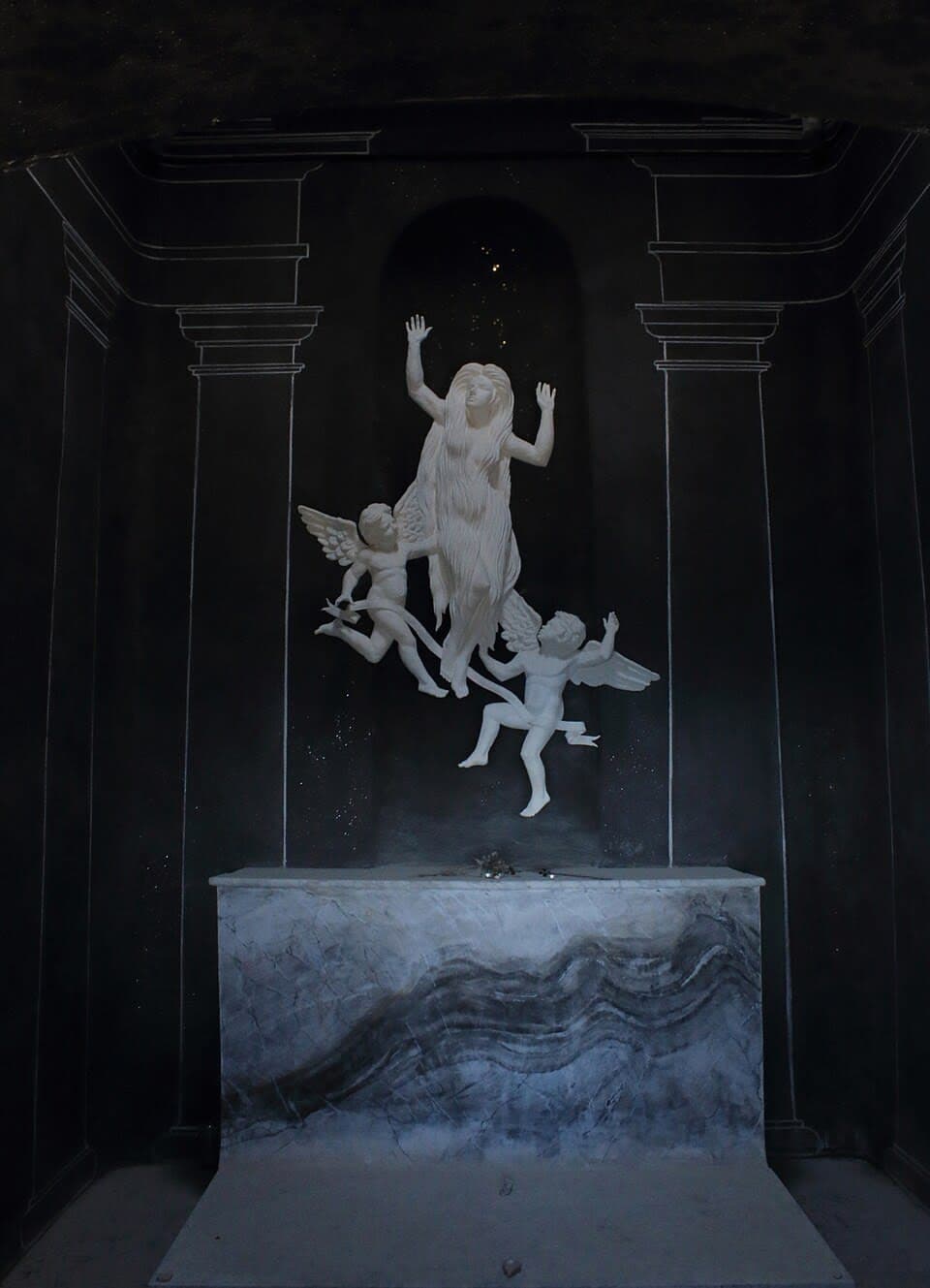
Chapelle du Saint-Pilon
Plan-d'Aups-Sainte-Baume, Provence-Alpes-Côte d'Azur, France
32.6 km away
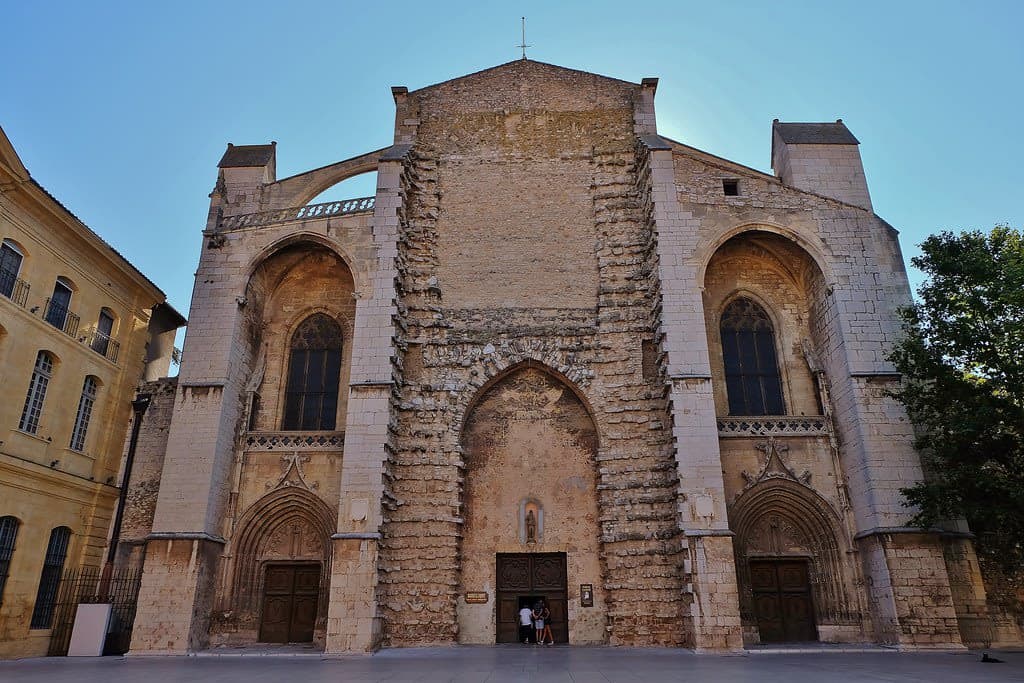
Saint-Maximin-la-Sainte-Baume, Basilica of Mary Magdalene
Saint-Maximin-la-Sainte-Baume, Provence-Alpes-Côte d'Azur, France
44.1 km away
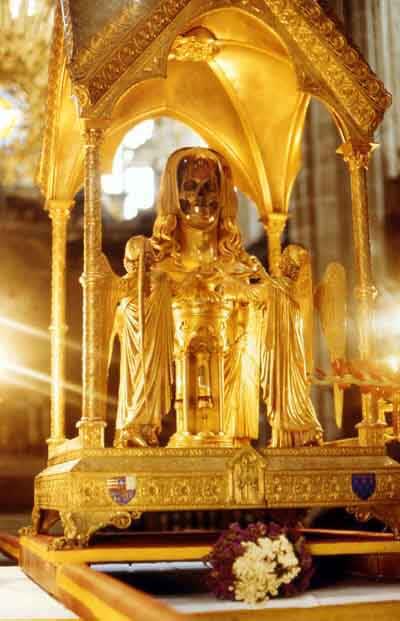
Skelton of Mary Magdalene at Saint Maximin la Sainte-Baume
Saint-Maximin-la-Sainte-Baume, Provence-Alpes-Côte d'Azur, France
44.2 km away