Germany
Baden-Württemberg
2 sites
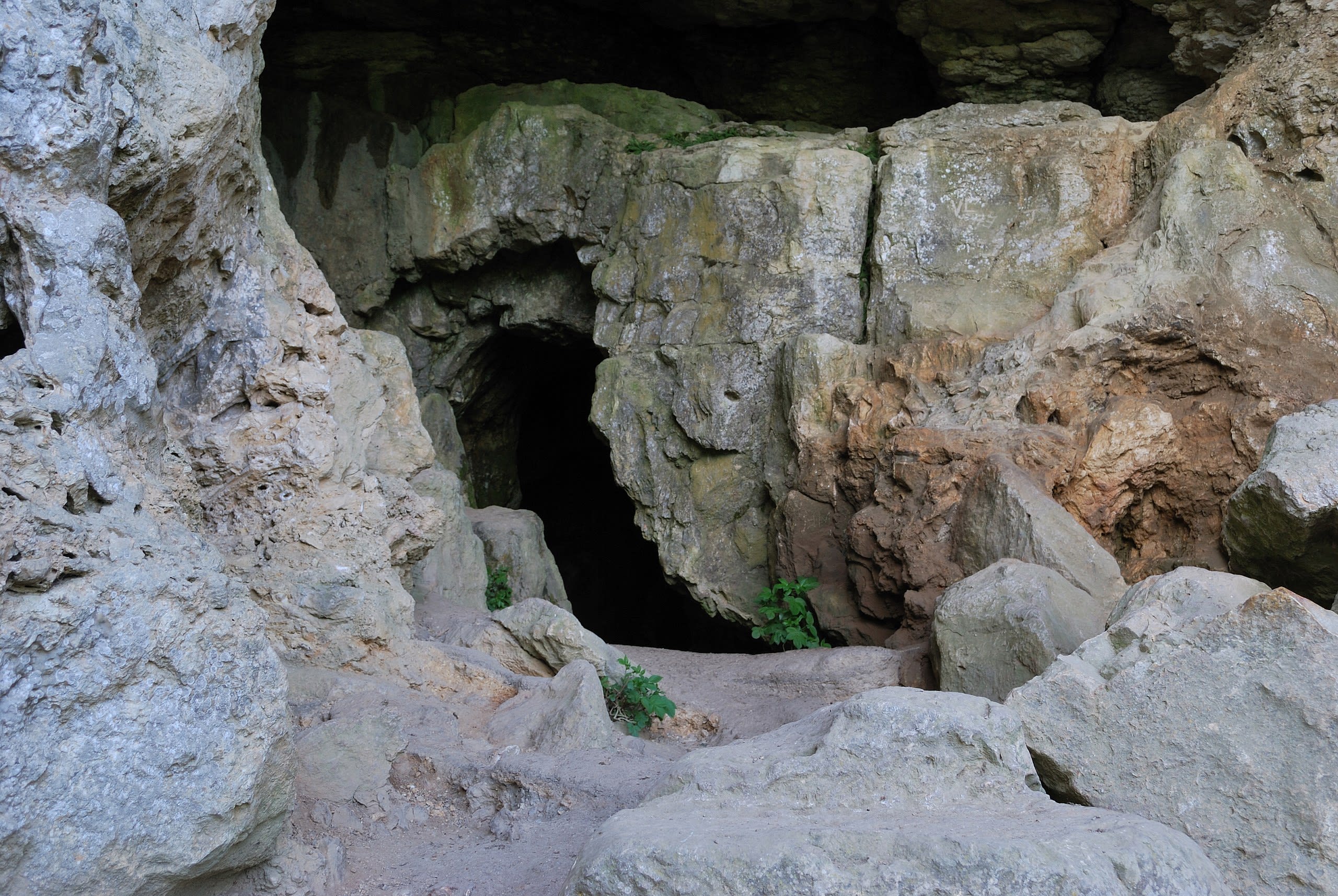
Burg Teck, Cave of Sybillenloch
Burg Teck, Cave of Sybillenloch is a cave of sacred significance. Approximate coordinates: 48.58885, 9.46987. Attributes: natural, cultural. Located in Owen, Baden-Württemberg, Germany.
Murrhardt
Murrhardt, Stadtkirche is a site of sacred significance. Approximate coordinates: 48.97889, 9.57825. Located in Murrhardt, Baden-Württemberg, Germany.
Bavaria
7 sites
Altotting
Altotting is a marian shrine of sacred significance. Approximate coordinates: 48.22624, 12.67654. Attributes: built, cultural, pilgrimage. Tradition: Christianity. Associated figure: Virgin Mary. Located in Altötting, Bayern, Germany.
Basilica of the Fourteen Holy Helpers, Bad Staffelstein
Basilica of the Fourteen Holy Helpers, Bad Staffelstein, Germany is a basilica of sacred significance. Approximate coordinates: 50.11565, 11.05415. Attributes: built, cultural, pilgrimage. Tradition: Christianity. Associated figure: Fourteen Holy Helpers. Located in Bad Staffelstein, Bayern, Germany.
Black Madonna of Munich
Black Madonna shrine known for Patrona Bavariae, Marian Column protection
Black Madonna of Regensburg
Black Madonna shrine known for Alte Kapelle (Old Chapel) Madonna, royal devotion
Ettal
Ettal is a German municipality and a village in the district of Garmisch-Partenkirchen in Bavaria.

Our Lady of Altötting
The Shrine of Our Lady of Altötting, also known as the Chapel of Grace (German: Gnadenkapelle), is the national shrine of Bavaria dedicated to the Blessed Virgin Mary. It is known for the many healings which are said to have taken place there, and is commonly called the Lourdes of Germany. The octagonal chapel which now houses the image of Our Lady was built around 660 A.D., and is the oldest Marian shrine in Germany. This image of Mary is what is known as a Black Madonna. It was created possib

St. Bartholomew's Church
St. Bartholomew's Church, Berchtesgaden is a site of sacred significance. Approximate coordinates: 47.54470, 12.97221. Located in Schönau am Königssee, Bayern, Germany.
Nordrhein-Westfalen
1 site
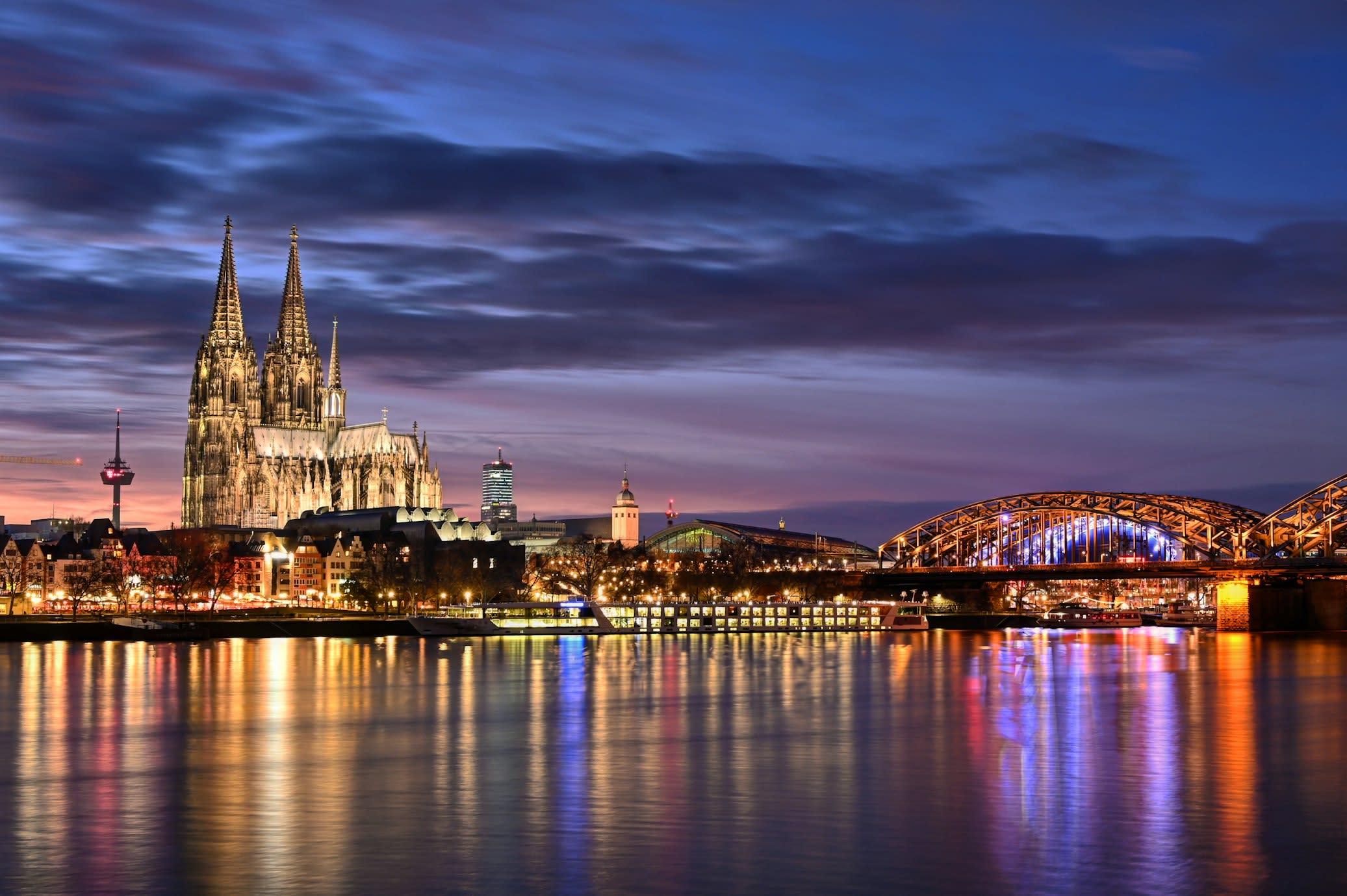
Cologne Cathedral
Cologne ( kə-LOHN; German: Köln [kœln] ; Kölsch: Kölle [ˈkœlə] ) is the largest city of the German state of North Rhine-Westphalia and the fourth-most populous city of Germany with nearly 1.1 million inhabitants in the city proper and over 3.1 million people in the Cologne Bonn urban region. Cologne is also part of the Rhine-Ruhr metropolitan region, the second biggest metropolitan region by GDP in the European Union. Centered on the left (west) bank of the Rhine, Cologne is located on the River Rhine (Lower Rhine), about 35 km (22 mi) southeast of the North Rhine-Westphalia state capital Düsseldorf and 25 km (16 mi) northwest of Bonn, the former capital of West Germany. The city's medieval Cologne Cathedral (Kölner Dom) was the world's tallest building from 1880 to 1890 and is today the third-tallest church and tallest cathedral in the world. It was constructed to house the Shrine of the Three Kings and is a globally recognized landmark and one of the most visited sights and pilgrimage destinations in Europe. The cityscape is further shaped by the Twelve Romanesque churches of Cologne. Cologne is famous for Eau de Cologne, which has been produced in the city since 1709; "cologne" has since come to be a generic term. Cologne was founded and established in Germanic Ubii territory in the 1st century CE as the Roman Colonia Agrippina, hence its name. Agrippina was later dropped (except in Latin), and Colonia became the name of the city in its own right, which developed into modern German as Köln. Cologne, the French version of the city's name, has become standard in English as well. Cologne functioned as the capital of the Roman province of Germania Inferior and as the headquarters of the Roman military in the region until occupied by the Franks in 462. During the Middle Ages the city flourished as being located on one of the most important major trade routes between eastern and western Europe (including the Brabant Road, Via Regia and Publica). Cologne was a free imperial city of the Holy Roman Empire and one of the major members of the trade union Hanseatic League. It was one of the largest European cities in medieval and renaissance times. Prior to World War II, the city had undergone occupations by the French (1794–1815) and the British (1918–1926), and was part of Prussia beginning in 1815. Cologne was one of the most heavily bombed cities in Germany during World War II. The bombing reduced the population by 93% mainly due to evacuation, and destroyed around 80% of the millennia-old city center. The post-war rebuilding has resulted in a mixed cityscape, restoring most major historic landmarks like city gates and churches (31 of them being Romanesque). The city nowadays consists of around 25% pre World War II buildings and boasts around 9,000 historic buildings. Cologne is a major cultural center for the Rhineland; it hosts more than 30 museums and hundreds of galleries. There are many institutions of higher education, most notably the University of Cologne, one of Europe's oldest and largest universities; the Technical University of Cologne, Germany's largest university of applied sciences; and the German Sport University Cologne. It hosts three Max Planck science institutes and is a major research hub for the aerospace industry, with the German Aerospace Center and the European Astronaut Centre headquarters. Lufthansa, Europe's largest airline, have their main corporate headquarters in Cologne. It also has a significant chemical and automobile industry. Cologne Bonn Airport is a regional hub, the main airport for the region being Düsseldorf Airport. The Cologne Trade Fair hosts a number of trade shows.
North Rhine-Westphalia
4 sites
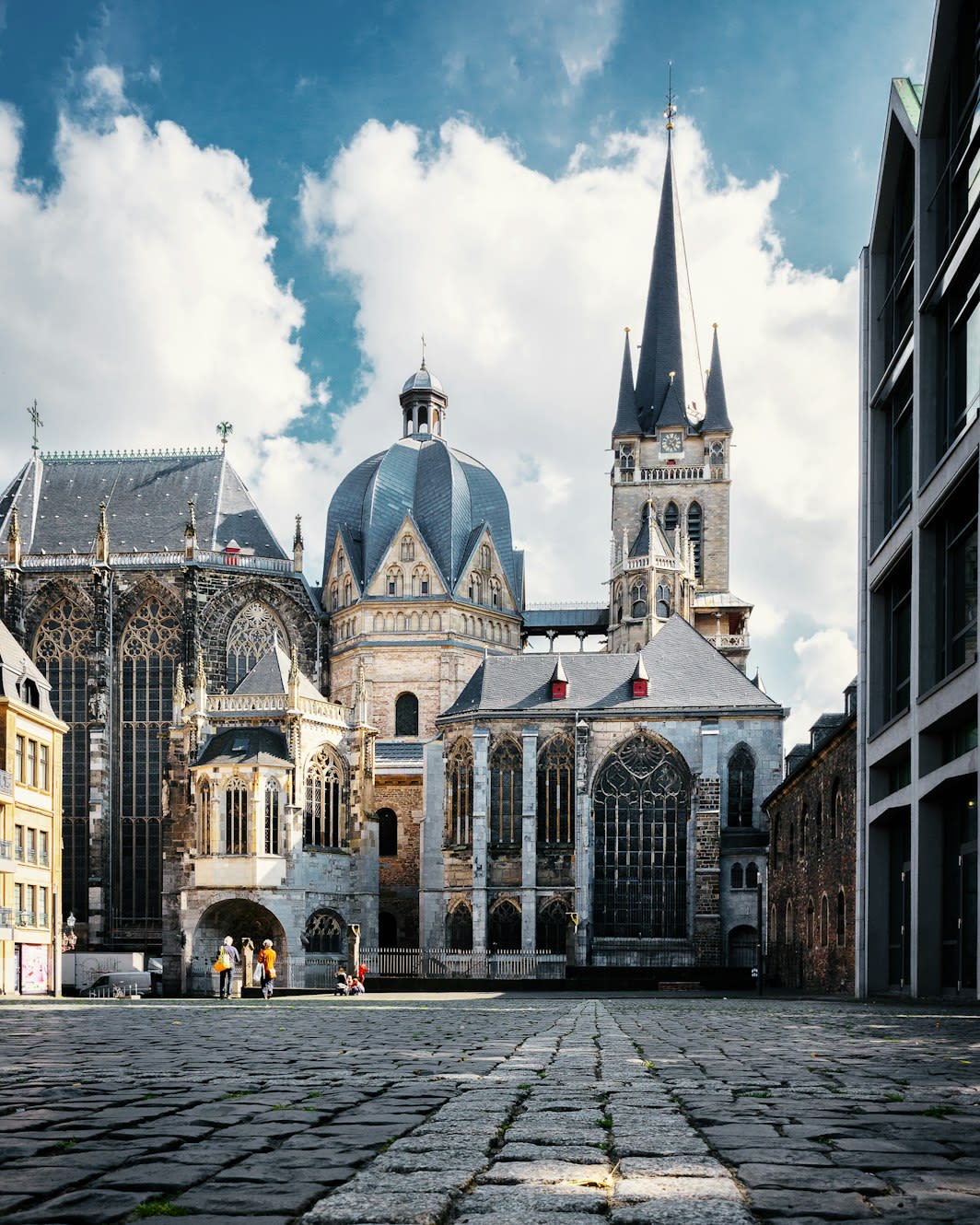
Aachen Cathedral
Aachen is the 13th-largest city in North Rhine-Westphalia and the 27th-largest city of Germany, with around 261,000 inhabitants. Aachen is located at the northern foothills of the High Fens and the Eifel Mountains. It sits on the Wurm River, a tributary of the Rur, and together with Mönchengladbach, it is the only larger German city in the drainage basin of the Meuse. It is the westernmost larger city in Germany, lying approximately 61 km (38 mi) west of Cologne and Bonn, directly bordering Belgium in the southwest, and the Netherlands in the northwest. The city lies in the Meuse–Rhine Euroregion and is the seat of the district of Aachen (Städteregion Aachen). The once Celtic settlement was equipped with several thermae in the course of colonization by Roman pioneers settling at the warm Aachen thermal springs around the 1st century. After the withdrawal of the Roman troops, the vicus Aquae Granni was Frankized around the 5th century. This was followed by a period of sedentism under first Merovingian and then Carolingian rule. With the completion of the Carolingian Palace of Aachen at the transition to the 9th century, Aachen was constituted as the main royal residence of the Frankish Empire ruled by Charlemagne. Because of that the city is sometimes called "cradle of Europe". After the Treaty of Verdun, the city was within the borders of Middle Francia, until it became part of East Francia after the Treaty of Meerssen (870). It subsequently was part of the Holy Roman Empire and was granted city rights in 1166 by Emperor Frederick Barbarossa, becoming an imperial city. It served as the coronation site where 31 Holy Roman Emperors were crowned Kings of the Germans from 936 to 1531, until Frankfurt am Main became the preferred place of coronation. One of Germany's leading institutes of higher education in technology, the RWTH Aachen University (Rheinisch-Westfälisch Technische Hochschule Aachen), is located in the city. Its university hospital Uniklinikum Aachen is Europe's largest single-building hospital. Aachen's industries include science, engineering and information technology. In 2009, Aachen was ranked eighth among cities in Germany for innovation. The regional dialect spoken in the city is a Central Franconian, Ripuarian variant with strong Limburgish influences from the dialects in the neighbouring Netherlands. As a Rhenish city, Aachen is one of the main centres of carnival celebrations in Germany, along with Cologne and Mainz. The culinary specialty for which the city is best known is Aachener Printen, a type of gingerbread.
Basilica of the Virgin Mary, Kevelaer
Basilica of the Virgin Mary, Kevelaer, Germany is a basilica of sacred significance. Approximate coordinates: 51.58441, 6.24440. Attributes: built, cultural, pilgrimage. Tradition: Christianity. Associated figure: Virgin Mary. Located in Kevelaer, Nordrhein-Westfalen, Germany.

Externsteine
Externsteine, Germany is a pagan and christian of sacred significance. Approximate coordinates: 51.86903, 8.91748. Attributes: natural, cultural. Tradition: Pagan and Christian; also recognized in Interfaith contexts. Located in Horn-Bad Meinberg, Nordrhein-Westfalen, Germany.
Madonna in the Garland
Black Madonna shrine known for Medieval pilgrimage site, healing miracles, protection of city
Rhineland-Palatinate
1 site

Speyer
Speyer (German: [ˈʃpaɪɐ] , older spelling Speier; Palatine German: Schbaija; French: Spire), historically known in English as Spires, is a city in Rhineland-Palatinate in the western part of the Federal Republic of Germany with approximately 50,000 inhabitants. Located on the left bank of the river Rhine, Speyer lies 25 km (16 miles) south of Ludwigshafen and Mannheim, and 21 km (13 miles) south-west of Heidelberg. Founded by the ancient Romans as a fortified town on the northeast frontiers of their Roman Empire, it is one of Germany's oldest cities. Speyer Cathedral, a number of other churches, and the Altpörtel ("old gate") dominate the Speyer landscape. In the cathedral, beneath the high altar, are the tombs of eight Holy Roman Emperors and German kings. The city is famous for the 1529 Protestation at Speyer. One of the ShUM-cities which formed the cultural center of Jewish life in Europe during the Medieval / Middle Ages, Speyer and its Jewish courtyard was inscribed on the UNESCO (United Nations Educational, Scientific and Cultural Organization) World Heritage List in 2021.
Saarland
1 site
Marpingen
Marpingen, Germany is a pilgrimage site of sacred significance. Approximate coordinates: 49.45110, 7.05849. Attributes: built, cultural, pilgrimage. Tradition: Christianity. Associated figure: Virgin Mary. Located in Marpingen, Saarland, Germany.
Saxony-Anhalt
1 site
Neolithic circular enclosure of Goseck
Neolithic circular enclosure of Goseck, Germany is a site of sacred significance. Approximate coordinates: 51.19820, 11.86466. Located in Goseck, Sachsen-Anhalt, Germany.