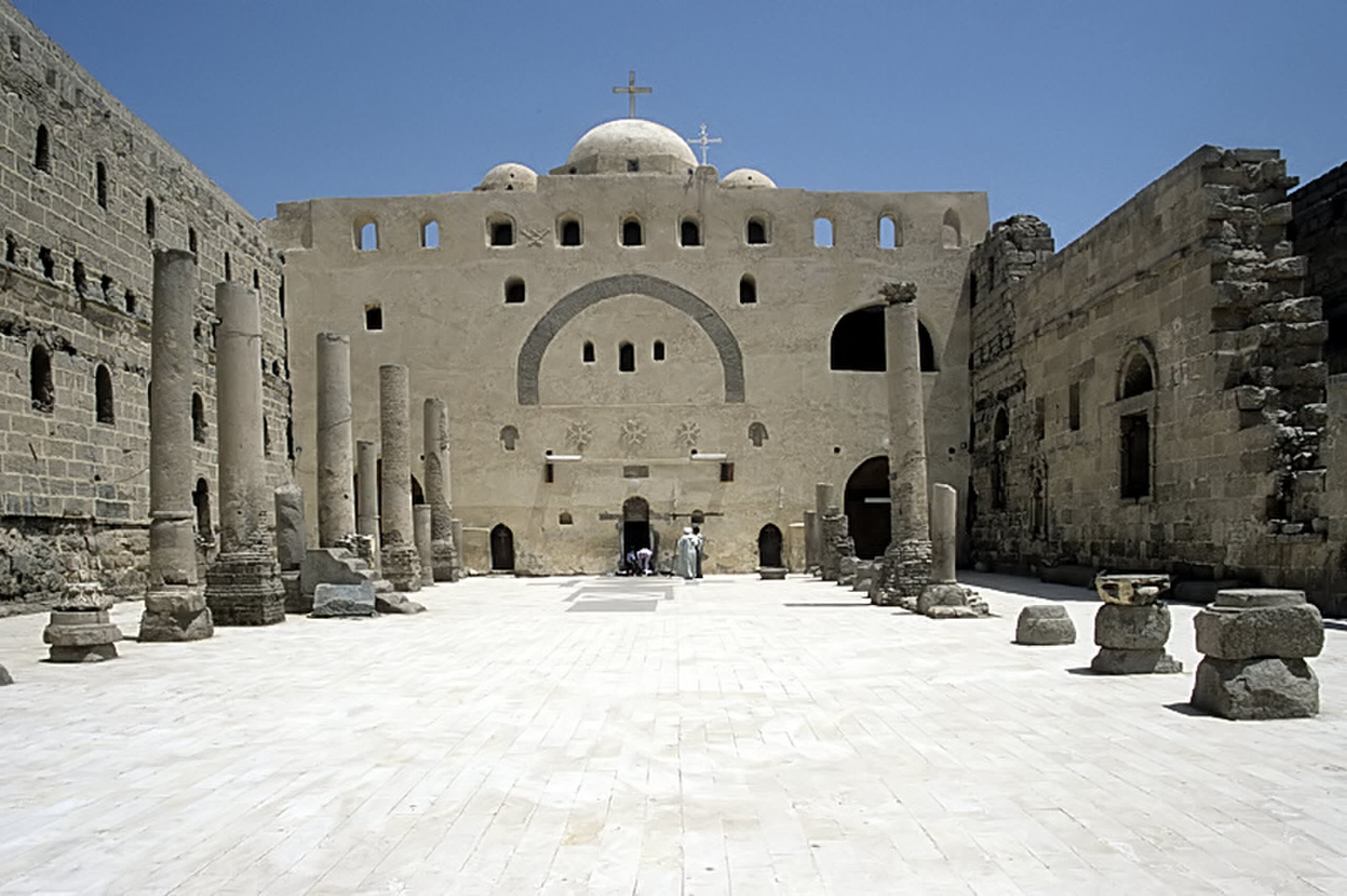
White Monastery, Sohag, Egypt
Where Saint Shenouda built a city of monks and shaped the soul of Coptic Christianity
Suhaj, Suhaj, Egypt
At A Glance
- Coordinates
- 26.5346, 31.6457
- Suggested Duration
- 1-2 hours to explore the church and monastery grounds. Allow more time during the mulid or if attending services. Combined visit with the nearby Red Monastery requires 3-4 hours total.
Pilgrim Tips
- Modest dress is required. Women should wear loose pants or dresses covering at least to the knees, with tops covering shoulders and elbows. Women should cover their heads in the church. Men should avoid shorts, tank tops, and overly casual clothing.
- Photography is generally permitted in outdoor areas and the monastery grounds. Flash photography may be restricted inside the church. During services, photography may be prohibited or limited. Always ask permission and be respectful of worshippers.
- As an active monastery, the White Monastery requires respectful behavior appropriate to a religious site. Some areas may have restricted access. Photography during services is generally not appropriate. The mulid draws large crowds and requires patience and flexibility.
Overview
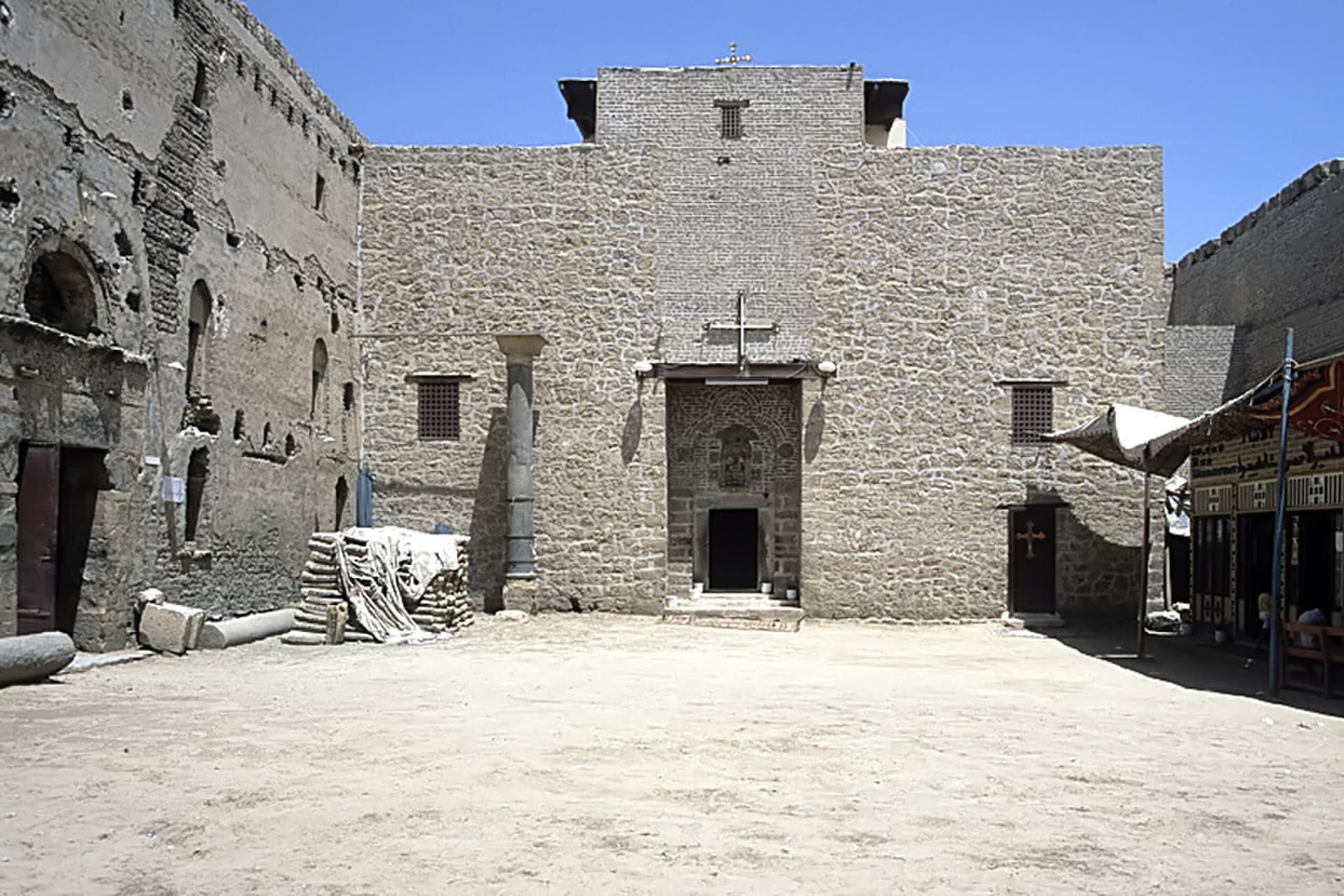
The White Monastery stands as the spiritual heart of Coptic Christianity, founded by Saint Shenouda the Archimandrite whose 66-year leadership created one of history's largest monastic communities. Its massive white limestone walls, incorporating blocks from ancient Egyptian temples, rise from the desert west of Sohag as they have for sixteen centuries. Each July, thousands of pilgrims gather for the mulid that celebrates a saint who championed Egyptian Christian identity.
You see the white limestone walls from a distance, rising from the green fields at the desert's edge. They look almost pharaonic, those walls, and in a sense they are. The builders quarried stone from ancient temples, recycling blocks still carved with hieroglyphs into the fabric of a Christian monastery. The synthesis is visible everywhere: Roman basilica plan, Egyptian columns transported from ruins, Byzantine liturgy, and the Coptic language Shenouda perfected for sacred literature.
Saint Shenouda the Archimandrite inherited a small monastery of thirty monks from his uncle Pigol in 385 CE. By the time of his death around 465, he had built a federation of over four thousand monastics spread across nearly thirteen thousand acres. Men's monasteries and women's monasteries, all under his fierce and loving discipline. A library of over a thousand codices, most in the Sahidic Coptic dialect he championed. A tradition of caring for the poor and refugees that drew tens of thousands to the monastery gates during times of crisis.
The surviving church, built during Shenouda's lifetime, is one of the great monuments of Christian antiquity. Its three-apsed sanctuary follows the triconch plan that defines Upper Egyptian monasticism. Ancient columns line the nave, their capitals carved with acanthus leaves in the classical style. The scale suggests what this place once was: not a quiet retreat but a bustling center of Christian civilization, its influence reaching from Ethiopia to Nubia to the broader Byzantine world.
The federation fell long ago. Muslims conquered Egypt in 641, and centuries of taxation drained the monastery's resources. By 1798, when Mamluks burned what remained, only the stone church survived. But the White Monastery did not die. In 1975, monks from the Monastery of Saint Antony at the Red Sea came to rebuild. Today, the community has revived, and each July, thousands of pilgrims gather for the mulid of Saint Shenouda, continuing a tradition of devotion that has persisted, interrupted but never broken, for sixteen centuries.
Context And Lineage
The White Monastery was founded in the late 4th century by Saint Pigol and transformed by his nephew Saint Shenouda the Archimandrite (c. 347-465 CE) into one of history's largest monastic federations. Its surviving basilica was built during Shenouda's lifetime. The monastery has been resettled since 1975 after centuries of decline.
Saint Pigol, an ascetic monk, founded a small settlement on approximately five acres in the late 4th century. His nephew Shenouda entered the monastery as a boy and eventually succeeded him as abbot around 385 CE. At that time, only about thirty monks lived there. Under Shenouda's 66-year leadership, the community expanded to over two thousand monks with eighteen hundred nuns in affiliated houses, spread across nearly thirteen thousand acres.
Shenouda built the monumental basilica that survives today, using white limestone that gives the monastery its name. Much of the stone came from nearby pharaonic temples, their hieroglyphs still visible in the walls. The construction technique alternated stone and wood layers for earthquake resistance. Ancient Egyptian columns were transported to the site and erected in the nave.
The monastery library grew to over a thousand codices, mostly in Sahidic Coptic. Shenouda championed this dialect for literary use, perfecting it as a vehicle for theology, hagiography, and scripture. Many manuscripts later dispersed to European collections preserve works that would otherwise be lost.
The monastery's lineage runs through Shenouda's immediate successors, Saints Wissa (Besa) and Zenobius, through centuries of declining population under Islamic rule, through the Armenian monks who resided here in the 11th-12th centuries, through near-abandonment, through the Mamluk burning of 1798, to the modern resettlement by monks from Saint Antony's at the Red Sea in 1975. The current community represents renewal after near-extinction.
Saint Shenouda the Archimandrite
founder
The legendary abbot who led the monastery for 66 years, expanded it into a federation of thousands, championed the Coptic language, defended orthodoxy at the Council of Ephesus, and cared for the poor with legendary generosity. Died around 465 CE at approximately 118 years of age.
Saint Pigol
founder
Shenouda's uncle, who founded the original small monastery in the late 4th century. His vision initiated what his nephew would transform.
Patriarch Cyril of Alexandria
ecclesiastical leader
The patriarch who invited Shenouda to accompany him to the Council of Ephesus in 431 CE, where they successfully opposed Nestorian Christology.
Why This Place Is Sacred
The White Monastery's thinness emerges from sixteen centuries of continuous worship, the presence of Saint Shenouda's burial place, its role as the birthplace of Coptic literary culture, and the accumulated devotion of countless pilgrims. The site concentrates the meaning of Egyptian Christian identity.
Certain places become sacred through long accumulation. The White Monastery has been prayed in without interruption for over sixteen hundred years. Even during the worst periods of decline, someone maintained the worship. The walls absorbed centuries of incense, liturgy, and pilgrimage before the Mamluks burned what could be burned. They absorbed more centuries after, as the church stood empty or nearly so. Then the monks returned, and now the walls absorb devotion again.
Shenouda's body rests somewhere within this complex. His burial place marks the site as holy in a way that architecture alone cannot. For Coptic Christians, the saints are present at their tombs, not absent. To pray at the White Monastery is to pray in Shenouda's presence, to seek the intercession of a saint who championed Egyptian Christianity when it needed champions.
The library that once existed here adds another dimension. Over a thousand codices, mostly in Sahidic Coptic, many copied by monks working under Shenouda's direction. The words of scripture, the theology of the fathers, the canons that governed monastic life, all written in a language Shenouda perfected for exactly this purpose. The manuscripts are scattered now, dispersed to libraries across the world, but they originated here, in a community that understood literacy as essential to faith.
The annual mulid concentrates these elements. For several days in July, thousands of pilgrims transform the monastery into what it was in Shenouda's time: a gathering place for Egyptian Christians, a celebration of their distinctive heritage, a demonstration that the tradition continues. The site comes alive in a way that ordinary visits cannot capture.
Even without the mulid, the White Monastery holds something. The scale of the church, the ancient columns, the hieroglyphic blocks visible in the walls, the desert edge visible beyond the green, the monks maintaining what monks have maintained here since the Roman Empire, these elements combine to create an atmosphere that exceeds their sum.
The White Monastery served as the headquarters of a vast monastic federation, housing over two thousand monks while coordinating the work of additional thousands in satellite monasteries. The church was built for liturgical worship on a monumental scale. The library preserved and transmitted Christian literature in Coptic. The agricultural lands supported both the monastic community and extensive charitable work with the poor.
After Shenouda's death, the monastery continued under his successors, Saints Wissa and Zenobius. Armenian monks resided here in the 11th-12th centuries. The Islamic conquest brought gradual decline through taxation. The Mamluk burning in 1798 reduced the monastery to its church. In 1975, monks from Saint Antony's at the Red Sea resettled the site, beginning its modern revival. Today the monastery functions as an active place of worship and pilgrimage.
Traditions And Practice
The White Monastery functions as an active Coptic Orthodox monastery with daily prayers and regular liturgical services. The annual mulid of Saint Shenouda in July draws thousands of pilgrims. The monks maintain traditional patterns of worship while welcoming visitors.
The monastery developed the patterns of cenobitic (communal) monasticism that Shenouda established in his Canons. These emphasized organized community life, mandatory literacy, strict discipline, and care for the poor. The Divine Liturgy followed the ancient Coptic rite. The library supported study of scripture and theological texts. The monastic hours structured daily life around prayer.
Daily Coptic Orthodox prayers and regular liturgical services continue in the Church of Saint Shenoute. The Divine Liturgy follows the ancient forms, conducted in Coptic and Arabic. Monks maintain the cycle of daily offices. Visitors are welcome to observe or, if Orthodox, to participate. The mulid of Saint Shenouda on 7 Abib (July 14) draws thousands of pilgrims for several days of celebration including special liturgies, processions, and communal festivities.
For meaningful engagement with the White Monastery, consider these approaches:
Visit during the mulid if at all possible. The pilgrimage atmosphere transforms understanding of what the monastery is and what it means to those who cherish it.
Attend a liturgical service if your schedule permits. The Coptic liturgy, sung in ancient languages in this ancient space, reveals dimensions that silent tourism cannot capture.
Combine with a visit to the nearby Red Monastery. The two sites together demonstrate the breadth of the Shenoutean federation and the range of early Coptic artistic achievement.
Read about Saint Shenouda before you come. His personality, his achievements, his place in Coptic Christianity, all of this context enriches the encounter.
Coptic Orthodox Christianity
ActiveThe White Monastery is one of the most important monastic sites in Coptic Christianity, founded in the late 4th century and brought to its zenith by Saint Shenouda the Archimandrite. Under Shenouda's 66-year leadership, it became one of the largest monastic federations in Egypt. Saint Shenouda perfected the Sahidic Coptic literary dialect, defended orthodoxy at the Council of Ephesus, and opposed paganism. The monastery's library once held over a thousand codices. Today, the site remains a living testament to Coptic spiritual and cultural heritage.
Daily Coptic Orthodox liturgy in the Church of St. Shenoute. Annual mulid of Saint Shenouda on 7 Abib (July 14) draws thousands of pilgrims. Pilgrimage and veneration of Saint Shenouda throughout the year. Coptic prayers and devotions. Monastic life continues with resident monks.
Desert Monasticism (Cenobitic)
ActiveThe White Monastery represents a crucial development in Christian cenobitic (communal) monasticism. Unlike the solitary anchorites of earlier Egyptian Christianity, Shenouda's federation emphasized organized community life with strict rules, communal labor, mandatory literacy, and centralized discipline across multiple monasteries. This model influenced monastic organization throughout the Christian world.
Communal living under strict monastic rule. Mandatory literacy and scriptural study. Agricultural labor and crafts. Ascetic discipline including fasting and prayer. Care for the poor and refugees.
Experience And Perspectives
Visitors report awe at the massive limestone walls resembling an ancient Egyptian temple, a deep sense of historical continuity connecting pharaonic and Christian Egypt, appreciation for the architectural fusion of Roman, Byzantine, and pharaonic elements, and powerful experiences during the annual mulid festival.
The walls take you first. They rise white and massive from the green fields, their form somehow Egyptian despite being a Christian monastery. Then you notice the blocks with hieroglyphs, the ancient columns, the pharaonic cavetto molding at the roofline. The builders did not erase Egypt's past but incorporated it. The White Monastery stands as a synthesis, visibly constructed from the materials of what came before.
Inside the church, the scale reinforces the sense of entering history. This is not a chapel but a basilica, built for a community that numbered in thousands. The ancient columns march toward the triple-apsed sanctuary, their stone transported from temples that had already stood for millennia when Shenouda's monks hauled them here. The space echoes with the accumulated worship of sixteen centuries.
Visitors often speak of feeling the weight of continuity. The liturgy celebrated here today descends directly from the liturgy Shenouda celebrated in the 5th century. The Coptic language used in prayers is the language he perfected. The patterns of monastic life follow canons he wrote. Few places on earth offer such tangible connection to Christianity's ancient forms.
The mulid transforms the experience entirely. For several days in July, the monastery fills with thousands of pilgrims, many camping on the grounds. Special liturgies, processions, communal celebration, the whole apparatus of Coptic festival life springs up around the ancient church. This is what Shenouda built: a community that gathers, a tradition that continues. During the mulid, you do not merely visit history but participate in it.
The White Monastery rewards context. Reading about Saint Shenouda before your visit, understanding his role in Coptic Christianity, knowing that the hieroglyphic blocks came from temples and the columns from ruins, all of this deepens what you encounter. Consider combining the visit with the nearby Red Monastery, which preserves extraordinary painted decorations from the same period.
If possible, attend during the mulid in July. The ordinary experience of the monastery, significant though it is, cannot compare to the pilgrimage atmosphere when thousands gather to honor Saint Shenouda. The heat will be intense, but the experience is irreplaceable.
The White Monastery invites interpretation from multiple angles. Scholars recognize it as one of the most important sites for understanding late ancient Christianity and Egyptian monasticism. Coptic Christians understand it as the living heritage of their tradition. Visitors encounter both dimensions simultaneously.
Scholars recognize the White Monastery as one of the most important sites for understanding late ancient Christianity and Egyptian monasticism. Shenouda's extensive writings provide unparalleled insight into cenobitic community life, ascetic discipline, and theological controversies of the 5th century. The monastery's architecture demonstrates the transition from paganism to Christianity in Egypt, with pharaonic temple stones incorporated into the basilica. Archaeological work has revealed multiple building phases and confirmed the site's significance for art history, epigraphy, and material culture. Shenouda is recognized as the greatest native writer in the Coptic language and a crucial figure in shaping both Egyptian Christian identity and the Coptic linguistic tradition.
In Coptic Orthodox understanding, Saint Shenouda is among the greatest of the church's saints, a desert father whose ascetic rigor, theological wisdom, and pastoral care set the standard for Egyptian monasticism. His 118-year life and 66-year abbacy demonstrate divine blessing. The White Monastery remains a holy place animated by his spiritual presence, where pilgrims seek his intercession and blessing. The annual mulid celebrates not just a historical figure but a living saint who continues to guide and protect the faithful.
Genuine mysteries remain. The exact date and circumstances of the monastery's founding by Saint Pigol are uncertain. The full extent of the original monastic complex and its organization across nearly thirteen thousand acres is not fully mapped. The dispersal and current locations of the monastery's thousand-plus codices across world libraries and collections remain incompletely documented. The precise nature of the relationship between the White Monastery, Red Monastery, and women's monastery at Atripe under Shenouda's federation is not fully understood.
Visit Planning
The White Monastery is located about 8 km northwest of Sohag on the west bank of the Nile. It is open daily from 9 AM to 8 PM with free admission. The annual mulid of Saint Shenouda in July draws the largest crowds. Combine with a visit to the nearby Red Monastery.
Sohag offers basic accommodation options. The city is accessible by train from Cairo and Luxor. The Boyne Valley area provides context for Egyptian sacred geography spanning pharaonic and Christian eras.
As an active Coptic monastery, modest dress and respectful behavior are required. Women should cover their heads in the church. Photography is generally permitted in outdoor areas but may be restricted inside and during services.
The White Monastery welcomes visitors but welcomes them as guests of a religious community. This distinction shapes appropriate behavior. You are not touring a museum but entering a place where monks pray, where pilgrims seek blessing, where the continuity of sixteen centuries of worship manifests in living practice.
Dress modestly. Women should wear loose pants or dresses covering at least to the knees, with tops covering shoulders and elbows. Head coverings for women are expected when entering the church. Men should avoid shorts, tank tops, and overly casual clothing. The requirement is not merely formal but reflects the community's understanding of appropriate reverence.
Maintain quiet and respectful behavior. The church is a place of worship, not a performance space. If you photograph, do so discreetly and without flash. During services, photography is generally prohibited.
During the mulid, different dynamics apply. The atmosphere is festive as well as sacred. But the underlying respect for the saint and the tradition should inform your participation.
Modest dress is required. Women should wear loose pants or dresses covering at least to the knees, with tops covering shoulders and elbows. Women should cover their heads in the church. Men should avoid shorts, tank tops, and overly casual clothing.
Photography is generally permitted in outdoor areas and the monastery grounds. Flash photography may be restricted inside the church. During services, photography may be prohibited or limited. Always ask permission and be respectful of worshippers.
Donations to support the monastery are appreciated. Candles may be available for purchase and lighting as devotional offerings.
Remove shoes if asked before entering certain areas. Turn off or silence mobile phones inside the church. Maintain quiet, respectful behavior during services. Do not touch or sit on ancient stonework or wall paintings. Men and women may be asked to stand on separate sides during services. Smoking is prohibited on monastery grounds.
Sacred Cluster
Nearby sacred places create the location cluster described in the growth plan. This block is intentionally crawlable and links into the wider regional graph.