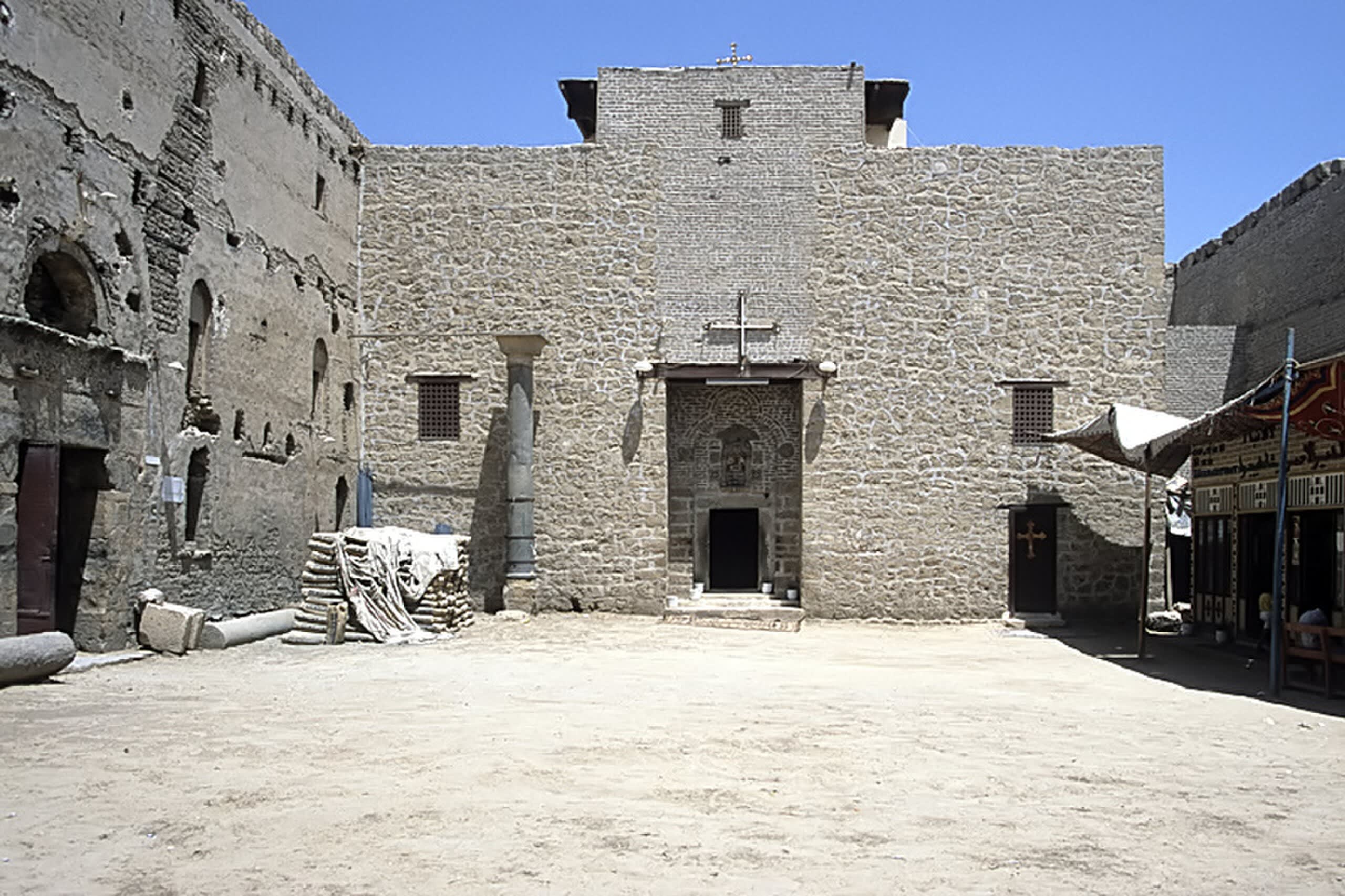
Red Monastery, Sohag, Egypt
Byzantine splendor revealed after centuries, in a monastery where ancient faith still lives
Jouhayna City, New Valley, Egypt
At A Glance
- Coordinates
- 26.5547, 31.6199
- Suggested Duration
- 1-2 hours to explore the monastery and appreciate the restored paintings. Can be combined with a visit to the White Monastery (4 km away) for a half-day excursion.
Pilgrim Tips
- Dress modestly as befitting a religious site. Women may want to bring a scarf for head covering. Loose-fitting clothing covering arms and legs is appropriate for both women and men. Avoid overly casual or revealing clothing.
- Ask permission before taking photographs, especially inside the chapel with ancient frescoes. Photography of religious ceremonies or monks should be done only with explicit permission. Flash photography may be restricted or prohibited to protect the paintings.
- The painted chapel requires asking the priest for the keys. Do not assume it will be open on arrival. Opening hours may be affected by services and Coptic holidays. Photography restrictions may apply inside the chapel to protect the recently conserved paintings.
Overview
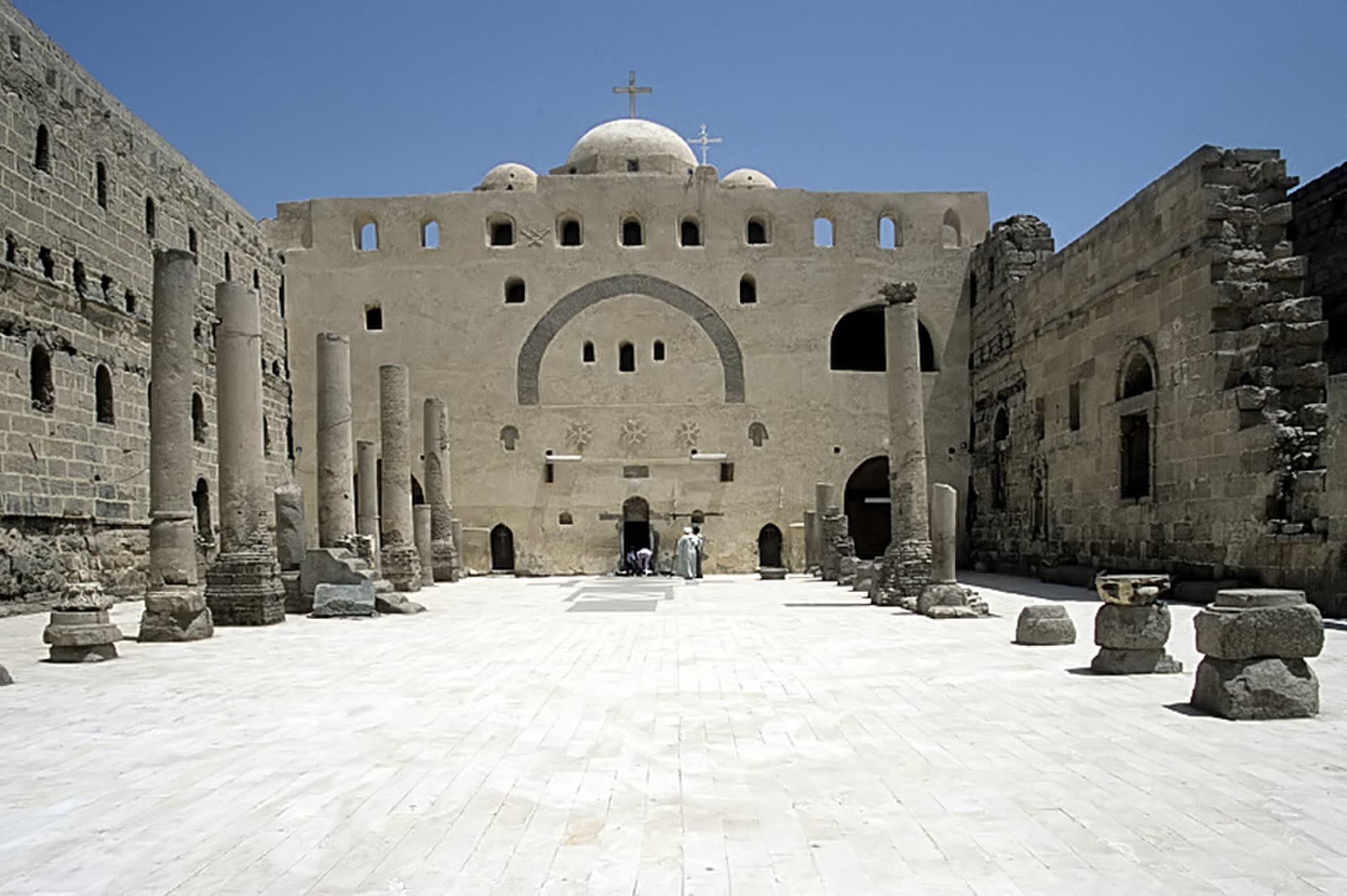
The Red Monastery near Sohag preserves the most complete program of late antique Christian wall paintings in the Mediterranean world. Built in the 5th century with distinctive red brick walls, its recently restored sanctuary glows with Byzantine color and light as it did when first created. This is not a museum but a living monastery where monks continue the worship begun sixteen centuries ago.
For centuries, the paintings in the Red Monastery's sanctuary lay hidden beneath layers of soot and grime. Visitors who made the journey to Upper Egypt encountered walls so darkened that even the outlines of figures had disappeared. What remained was atmosphere, the sense that something powerful had once inhabited this space.
Then the conservators came. Over fifteen years of painstaking work, they revealed what no one had seen in centuries: an explosion of color covering every surface. Christ enthroned in majesty. The nursing Virgin, milk flowing from her breast. Saints gazing from painted columns. Geometric patterns so intricate they seem to vibrate. The sanctuary emerged as one of the great survivors of Byzantine art, ranking alongside San Vitale in Ravenna and the mosaics of Constantinople.
The Red Monastery stands about four kilometers from its better-known sister, the White Monastery where Saint Shenouda built his famous federation. The two monasteries formed part of a network that shaped Coptic Christianity during its golden age. While the White Monastery claims Shenouda's fame, the Red Monastery holds something perhaps more rare: an almost complete survival of the aesthetic theology that early Christians created to make heaven visible on earth.
This is not a dead site preserved for tourists. Monks live here. Pilgrims come during the great feasts of the Coptic year. Father Antonius draws increasing numbers through his spiritual teaching. The paintings that once seemed merely historical now frame living worship, their colors restored to speak again of the glory they were made to proclaim.
Context And Lineage
The Red Monastery was founded in the 4th-5th century as part of the Shenoutean monastic federation centered on the nearby White Monastery. Its church, built in the second half of the 5th century, preserves the most complete program of late antique Christian painting in the Mediterranean. Recent conservation by ARCE has revealed its extraordinary Byzantine decoration.
The monastery emerged within the network of ascetic communities that transformed Upper Egypt during late antiquity. According to tradition, it was founded by Apa Psoi (Saint Bishoi), a contemporary of Apa Pigol who founded the White Monastery. The Life of Shenute mentions Apa Psoi walking with Shenoute and Pigol, connecting the three figures in the formative era of Shenoutean monasticism.
The red brick construction that gives the monastery its name distinguishes it from the White Monastery's limestone walls. Both monasteries share architectural features: triconch sanctuaries, the use of ancient Egyptian columns, walls built with earthquake-resistant alternating layers of stone and wood. Both reflect a community wealthy enough and organized enough to undertake monumental construction.
The Red Monastery's history traces through the great arc of Egyptian Christianity: from the Shenoutean golden age through the Islamic conquest, the medieval decline, the Mamluk destruction, and the modern revival. The monastery survived when many others did not, its church protected even as its community diminished. The resettlement and growth of recent decades represents a new chapter, one in which the revealed paintings accompany renewed monastic life.
Apa Psoi (Saint Bishoi)
founder
The 4th-century Egyptian monk traditionally credited with founding the Red Monastery. A contemporary of Apa Pigol and associated with the early Shenoutean movement.
Saint Shenouda the Archimandrite
federation leader
The legendary abbot who led the White Monastery federation for 66 years and shaped Coptic monasticism. The Red Monastery functioned within his federation's network.
Elizabeth Bolman
conservation director
The art historian who led the 15-year conservation project that revealed the monastery's hidden paintings. Her work transformed understanding of Byzantine art in Egypt.
Father Antonius
spiritual leader
The monk whose spiritual teaching has drawn increasing numbers of worshippers to the Red Monastery in recent years, contributing to the monastery's revival.
Why This Place Is Sacred
The Red Monastery's thinness emerges from sixteen centuries of continuous worship, its position within the Shenoutean monastic federation that shaped Coptic Christianity, and the extraordinary survival of paintings designed to make heaven visible. The recent revelation of these paintings creates a sense of recovered mystery.
Something persists at the Red Monastery that goes beyond art history. The paintings matter, certainly, but they matter because they were never merely decorative. The 'jeweled style' that covers the sanctuary was intended to do spiritual work, to create an environment where worshippers could experience something of heavenly glory while still on earth.
Early Christians believed that sacred beauty could function as a doorway. The gold, the vivid colors, the faces of saints gazing from every surface, these were not ornaments but windows. To pray surrounded by such images was to pray in the company of the cloud of witnesses, to stand already at the threshold of the kingdom.
For centuries, this theology was invisible at the Red Monastery. The paintings had darkened so completely that their content was lost. Visitors encountered only the sense that something powerful had once been here. Now the conservation has restored not just colors but the original intention: to create a space where earth and heaven meet.
The monastery's history adds its own weight. Founded in the 4th or 5th century as part of the Shenoutean federation, it participated in the flowering of Coptic Christianity that produced some of the most rigorous and creative monasticism the world has known. The federation at its height included thousands of monks and nuns across multiple monasteries, all united under a vision of Christian community that emphasized discipline, literacy, and the care of the poor.
The monks who maintain the Red Monastery today stand in this lineage. The growing community suggests renewal rather than mere preservation. When pilgrims gather for the great feasts, they participate in a tradition that has adapted and survived for sixteen centuries. The paintings on the walls watch, as they were made to watch, over worship that continues.
The Red Monastery served as part of the Shenoutean monastic federation, a network of men's and women's monasteries that defined Upper Egyptian Christianity in late antiquity. The church was built as a place of liturgical worship, its painted sanctuary designed to support contemplation and create an atmosphere of heavenly beauty.
Like most Coptic sites, the Red Monastery suffered during the Islamic period, declining in population and resources. The Mamluk attack in 1798 ransacked and burned the monastery shortly before Napoleon's expedition arrived. The church survived but the paintings became invisible under accumulated damage. Conservation work beginning in 2003 and intensifying from 2000-2015 revealed the paintings' original splendor. Today the monastery has revived, with a growing community of monks and increasing pilgrimage.
Traditions And Practice
The Red Monastery functions as an active Coptic Orthodox monastery with regular liturgical services. Pilgrims visit during major feasts of the Coptic liturgical year. The growing monastic community welcomes visitors and maintains the tradition of hospitality that has characterized Egyptian monasticism for centuries.
The monastery developed within the Shenoutean tradition that emphasized cenobitic discipline, mandatory literacy, and rigorous asceticism. The painted sanctuary was designed to support the Coptic liturgy, with its distinctive iconographic program creating an environment of sacred beauty for worship. Multiple phases of Byzantine painting suggest ongoing investment in the sacred space over centuries.
Regular Coptic Orthodox liturgies are celebrated in the monastery churches. Pilgrims visit during major feasts of the Coptic liturgical year. Father Antonius has become known for his spiritual teaching, drawing increasing numbers of worshippers from surrounding areas. The growing monastic community maintains traditional patterns of prayer and hospitality while welcoming visitors to experience the restored paintings.
If you seek more than a visual experience, consider these approaches:
Arrange to attend a liturgical service. The painted sanctuary was made for liturgy, and experiencing the space with worship gives the paintings their intended context.
Ask the monks about the iconographic program. They are described as eager to explain details, and their interpretation adds depth that guidebooks cannot provide.
Sit in the sanctuary after the initial circuit. Let the faces on the walls become presences rather than images. The paintings were made to accompany prayer, and they respond to prayerful attention.
Coptic Orthodox Christianity
ActiveThe Red Monastery is one of the most important surviving monuments of early Coptic Christianity, preserving the most complete program of late antique Christian wall paintings in the Mediterranean. It developed within the Shenoutean monastic federation that defined Coptic Christianity during its golden age. The monastery continues as a living place of worship, with a growing monastic community and regular pilgrimage during liturgical feasts.
Regular Coptic Orthodox liturgies are celebrated in the monastery churches. Pilgrims visit during major feasts of the Coptic liturgical year. The monks maintain the ancient sanctuary and welcome visitors to experience the restored paintings. Father Antonius has become known for his spiritual teaching, drawing increasing numbers from surrounding areas.
Experience And Perspectives
Visitors consistently report astonishment at the vivid colors revealed by conservation, deep appreciation for the architectural blend of Egyptian, Roman, and Christian elements, and a spiritual atmosphere enhanced by the monastery's continuing function as a place of worship. The experience of seeing what was hidden for centuries creates a sense of rediscovery.
The first shock is color. If you have seen photographs, you may think you are prepared, but the actual experience of standing in the sanctuary overwhelms. Every surface glows with pigments that look fresh because they were protected for centuries by the very grime that obscured them. Reds and blues that seem impossible for 5th-century paint. Gold that catches the light. Faces that emerge from every angle.
The second shock is completeness. In most ancient churches, fragments survive. Here, perhaps eighty percent of the original painting remains. You can trace entire iconographic programs. You can see how the artists thought about the space as a whole, how each element relates to the others, how the sanctuary was designed to function as a unified environment of sacred beauty.
Then you notice that this is not a museum. Candles burn before icons. The smell of incense lingers. The monks who receive you are not tour guides but monks, men living the life that has been lived here for sixteen centuries. The paintings frame ongoing worship, not historical curiosity.
Visitors often speak of feeling the accumulated weight of devotion. The space has been prayed in continuously since the Roman Empire. Whatever you believe about the efficacy of prayer, sixteen centuries of it have left their mark. The silence in the sanctuary has a quality that secular buildings lack.
For those who can attend during the great feasts, the experience deepens further. The Coptic liturgy, sung in ancient languages, fills the space the paintings were made to accompany. Then you understand: this is what it was for. This is what it still is for.
The Red Monastery rewards those who take time. A quick visit captures the visual impact of the paintings but misses the spiritual dimension. Consider sitting in the sanctuary after the initial circuit, letting your eyes adjust not just to the light but to the presence of the images. Ask the monks about liturgical schedules if you want to experience the space as it was designed to be used.
The Red Monastery invites interpretation from multiple angles. Art historians recognize it as one of the most significant surviving examples of Byzantine church decoration. Coptic Christians understand it as a living monastery in a lineage stretching back to the golden age of Egyptian Christianity. The recent conservation adds another dimension: the experience of seeing what was hidden for centuries.
Art historians recognize the Red Monastery church as one of the three most important surviving examples of early Byzantine architecture, alongside San Vitale in Ravenna and Hagia Sophia in Istanbul. Elizabeth Bolman's conservation project has been compared to the discovery of the Great Palace mosaics of Constantinople in its significance for Late Antique art history. Scholars emphasize that the paintings challenge prior narratives that placed Egypt on the periphery of Byzantine culture, demonstrating instead that Upper Egypt was thoroughly integrated into the early Byzantine world and was a 'serious player and contributor' to Christian art.
For Coptic Orthodox Christians, the Red Monastery represents the living heritage of Egyptian Christianity stretching back to the apostolic era. The monastery developed within the Shenoutean tradition that gave Coptic Christianity its distinctive character. The recent revelation of the paintings' original splendor confirms what tradition always knew: that the ancient Copts created works of extraordinary beauty as offerings to God. The growing monastic community represents renewal rather than mere preservation.
Some observers note the monastery's construction on the ruins of a pharaonic temple and the incorporation of ancient Egyptian architectural elements, suggesting continuity between pharaonic and Christian sacred geography. The use of ancient columns and the Egyptian-style cavetto moldings represent a physical synthesis of religious traditions. The 'jeweled style' of decoration, with its emphasis on color and light, connects to broader traditions of sacred aesthetics found across contemplative traditions.
Genuine mysteries remain. The precise founding date and relationship between Apa Psoi and the Shenoutean community are uncertain. The full extent of the original monastic complex before later modifications is unknown. The reasons for the multiple phases of Byzantine repainting within a relatively short period have not been explained. The identity and training of the artists who created the paintings remain matters of speculation.
Visit Planning
The Red Monastery is located approximately 4 km northwest of the White Monastery, about 21 km west of Sohag in Upper Egypt. Visiting is best during the cooler months (October-April). Allow 1-2 hours for exploration. The monastery can be combined with a visit to the White Monastery.
Sohag offers basic accommodation options. The city is accessible by train from Cairo and Luxor. Combine the monasteries with other Upper Egypt sites for a comprehensive sacred geography tour.
As an active Coptic monastery, the Red Monastery requires modest dress, respectful behavior, and sensitivity to ongoing religious observances. The monks are hospitable but this is not a museum. Photography inside the painted chapel should be done only with permission.
The Red Monastery welcomes visitors, but it welcomes them as guests of a religious community, not as consumers of heritage tourism. The monks are described as hospitable and eager to share information about their monastery, but they are monks first, continuing a way of life that has existed here for sixteen centuries.
Modest dress is expected. Women may want to bring a scarf for head covering. Both men and women should wear loose-fitting clothing that covers arms and legs. This is not a formal requirement enforced at the door but an expression of respect for the community you are entering.
The painted chapel requires permission from the priest who holds the keys. This is not bureaucracy but an expression of the fact that this is a sacred space, not a museum gallery. When you enter, you enter as the monks' guest into their most sacred place.
Photography inside the chapel should be approached with care. Ask permission. The conservation team worked for fifteen years to save these paintings; flash photography and the accumulated damage of tourism are real concerns. Some areas may have restrictions posted.
Dress modestly as befitting a religious site. Women may want to bring a scarf for head covering. Loose-fitting clothing covering arms and legs is appropriate for both women and men. Avoid overly casual or revealing clothing.
Ask permission before taking photographs, especially inside the chapel with ancient frescoes. Photography of religious ceremonies or monks should be done only with explicit permission. Flash photography may be restricted or prohibited to protect the paintings.
Donations to support the monastery and its conservation are appreciated. Inquire with monks about appropriate contributions.
Opening hours may be affected by services and Coptic holidays. The painted chapel requires permission from the priest who holds the keys. Respect ongoing religious observances and monastic routines. Some areas may have restricted access.
Sacred Cluster
Nearby sacred places create the location cluster described in the growth plan. This block is intentionally crawlable and links into the wider regional graph.