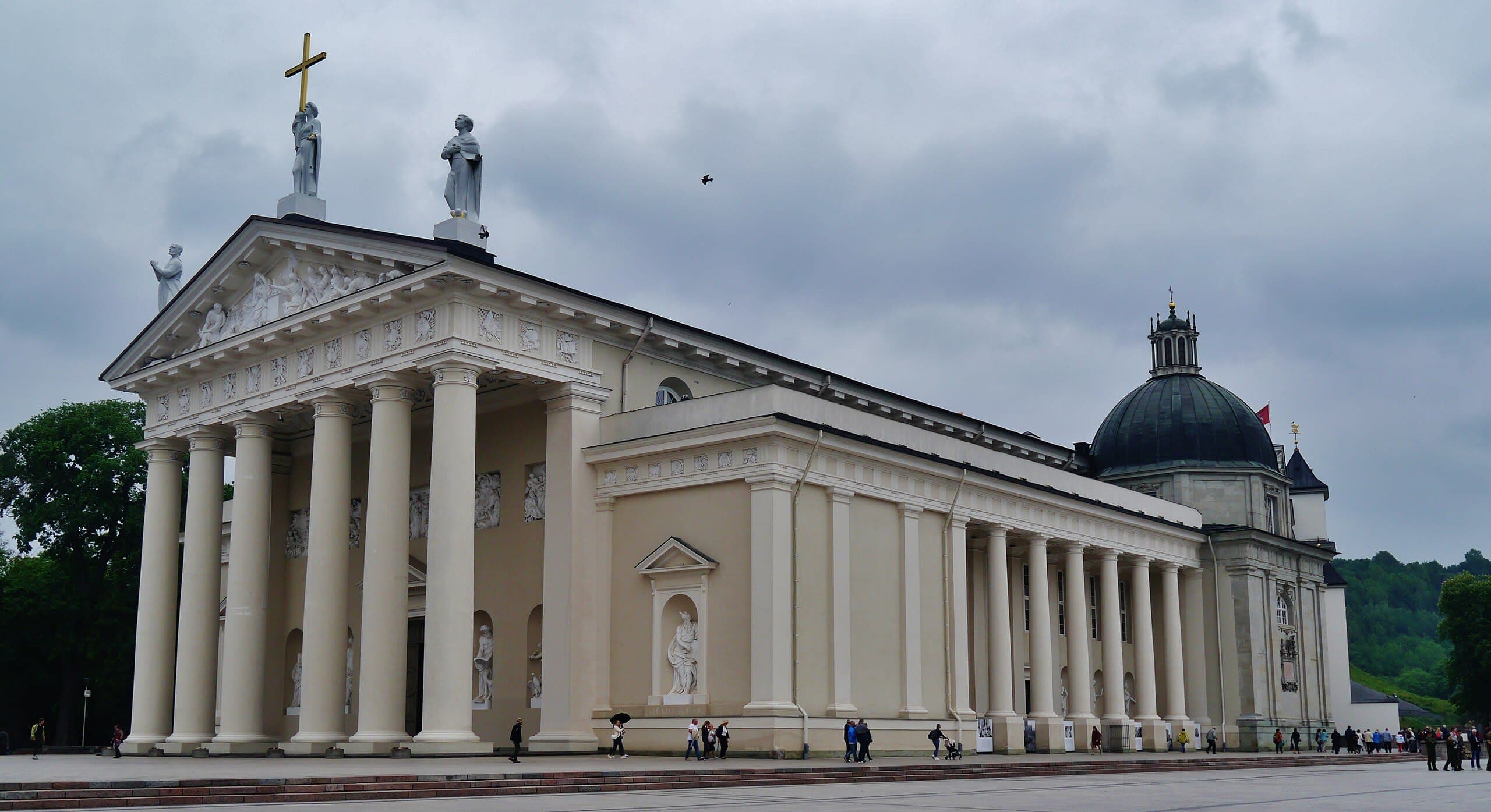
Vilnius Cathedral and Chapel of St Casimir, Lithuania
Lithuania's spiritual foundation, where a pagan temple became a cathedral and a prince became a saint
Vilnius, Vilnius County, Lithuania
At A Glance
- Coordinates
- 54.6858, 25.2877
- Suggested Duration
- 30 minutes to 1 hour for the cathedral and Chapel of St. Casimir. An additional 1 hour for the crypt tour. Allow 2 to 3 hours to experience the full site including Cathedral Square, the bell tower, and the Stebuklas tile.
- Access
- Located in Cathedral Square (Katedros aikste) at the northern end of Vilnius Old Town, at the foot of Gediminas Hill. Easily accessible on foot from anywhere in the Old Town. Public transport serves the area. Free admission to the cathedral. Crypt tour tickets approximately 3 to 7 EUR, available in English (Tuesday, Thursday, Saturday at 4 PM), Polish (Monday and Friday at 4 PM), and Russian (Wednesday and Friday at 4 PM). Address: Sventaragio g. 1, Vilnius. Mobile phone signal is fully available. No advance booking required for general cathedral visits.
Pilgrim Tips
- Located in Cathedral Square (Katedros aikste) at the northern end of Vilnius Old Town, at the foot of Gediminas Hill. Easily accessible on foot from anywhere in the Old Town. Public transport serves the area. Free admission to the cathedral. Crypt tour tickets approximately 3 to 7 EUR, available in English (Tuesday, Thursday, Saturday at 4 PM), Polish (Monday and Friday at 4 PM), and Russian (Wednesday and Friday at 4 PM). Address: Sventaragio g. 1, Vilnius. Mobile phone signal is fully available. No advance booking required for general cathedral visits.
- Modest dress appropriate for a Catholic cathedral. Shoulders and knees should be covered. No hats for men inside.
- Photography is allowed inside the cathedral but no flash or tripods. Do not photograph people at prayer or during services without permission. Respectful photography only near the sarcophagus and relics.
- The crypt is accessible only with guided tours at set times and must be booked in advance. Photography is allowed but flash and tripods are prohibited. The Chapel of St. Casimir may have limited access during certain services.
Overview
Vilnius Cathedral stands on a site sacred for at least eight centuries, possibly longer if the tradition of a pagan temple to Perkunas is accurate. As the seat of the Archbishop of Vilnius and the spiritual heart of Lithuanian Catholicism, it houses the relics of St. Casimir, Lithuania's patron saint, in a Baroque chapel of polychrome marble. The cathedral's survival through paganism, fire, foreign occupation, and Soviet repression makes it the physical embodiment of Lithuanian spiritual identity.
The ground beneath Vilnius Cathedral has been sacred for so long that its origins dissolve into contested memory. According to 16th-century accounts, a stone temple dedicated to Perkunas, the Baltic thunder god, once stood here. When Grand Duke Mindaugas converted to Christianity around 1251, he built the first cathedral on this pagan site. When he was assassinated twelve years later, the building reportedly reverted to pagan use. The permanent Christianization of Lithuania in 1387 finally established the cathedral's identity, but the palimpsest of belief runs deep.
The building visitors see today is Neoclassical, its columned facade the work of architect Laurynas Gucevicius in the late 18th century. But Neoclassicism is merely the most recent layer. Gothic foundations remain beneath, and Baroque spaces flourish within, including the Chapel of St. Casimir, one of the most ornate sacred interiors in northern Europe.
St. Casimir, the prince who chose prayer and poverty over royal power, died at twenty-five and was canonized in 1602. His relics rest in a silver sarcophagus weighing nearly 1,100 kilograms, set within a chapel of polychrome marble built by Italian masters between 1623 and 1636. Beneath his sarcophagus hangs the mysterious three-handed painting, depicting the saint with two right hands, each holding a lily. Modern analysis confirmed that both hands were painted simultaneously, suggesting deliberate symbolism rather than the miraculous correction described in popular tradition.
Outside in Cathedral Square, a tile marked 'Stebuklas' (miracle) sits embedded in the paving. On August 23, 1989, this spot served as one of the anchoring points of the Baltic Way, when two million people joined hands across Lithuania, Latvia, and Estonia demanding freedom from the Soviet Union. The secular miracle and the sacred miracle coexist here, as they do throughout this cathedral's long, layered history.
Context And Lineage
Vilnius Cathedral has been the spiritual center of Lithuania since the 13th century, rebuilt multiple times over a site that may have held a pagan temple. The Chapel of St. Casimir, built 1623-1636 by Italian masters, houses the relics of Lithuania's patron saint. The cathedral served as a coronation hall, royal mausoleum, Soviet warehouse, and, since 1989, the restored heart of Lithuanian Catholicism.
According to tradition, a stone temple dedicated to the Baltic thunder god Perkunas stood on this site before Grand Duke Mindaugas built the first cathedral upon his conversion to Christianity around 1251. After Mindaugas's assassination in 1263, the site reportedly reverted to paganism until Lithuania's permanent Christianization in 1387, when a new Gothic cathedral rose here.
The cathedral was rebuilt by Grand Duke Vytautas around 1419-1429, establishing the tradition of royal patronage. It served as the coronation site where the ceremonial Gediminas' Cap was placed on the monarch's head by the Bishop of Vilnius. Fires devastated the building repeatedly, and each reconstruction reflected the architectural sensibility of its era. The Chapel of St. Casimir was added between 1623 and 1636, commissioned by Sigismund III Vasa and built by Italian architects Matteo Castello and Costante Tencalla at the extraordinary cost of 500,000 gold coins.
The current Neoclassical form is the work of architect Laurynas Gucevicius, who rebuilt the cathedral between 1779 and 1801, influenced by Palladio and possibly his teacher Ledoux. His design gave the cathedral its distinctive temple-like facade while preserving the Baroque chapels within.
The cathedral's lineage traces the full arc of Lithuanian spiritual history: from pagan worship through the first tentative Christianization under Mindaugas, through the permanent conversion of 1387, through the golden age of the Grand Duchy, through centuries of foreign rule, through Soviet desecration, to restoration after independence. Each phase left its mark in the fabric of the building.
The royal burials in the crypt establish the cathedral as a national pantheon. The bishops who served here administered Lithuanian Catholicism through its most turbulent centuries. The reconsecration after independence in 1989 marked not merely the restoration of a building but the restoration of Lithuanian spiritual sovereignty. The Stebuklas tile, connecting the cathedral to the Baltic Way, ensures that this history remains present in the daily life of the square.
Grand Duke Mindaugas
historical
Founded the original cathedral around 1251 upon his conversion, making it the first Christian church in Lithuania. His assassination in 1263 led to a temporary reversion to paganism.
St. Casimir
saint
Lithuanian prince (1458-1484) who renounced royal luxury for a life of prayer, fasting, and charity. Canonized in 1602 and proclaimed heavenly patron of Lithuania in 1636. His relics rest in the chapel's silver sarcophagus, and the mysterious three-handed painting hangs beneath.
Laurynas Gucevicius
artistic
Architect who designed the current Neoclassical cathedral between 1779 and 1801. His design is considered a masterpiece of Lithuanian architecture, influenced by Palladio.
Grand Duke Vytautas the Great
historical
Rebuilt the cathedral around 1419-1429 and was himself interred in the crypt in 1430. His remains connect the cathedral to the golden age of the Grand Duchy of Lithuania.
Perkunas
deity
Baltic thunder god whose stone temple reportedly stood on this site before the cathedral. Archaeological excavations have uncovered what may be altars of a pre-Christian structure, though the identification remains debated.
Why This Place Is Sacred
The cathedral's extraordinary spiritual density derives from its layered sacred history, from pagan temple through medieval coronation hall to Neoclassical church. The Chapel of St. Casimir concentrates devotional energy in a small, intensely ornate space, while the crypts below hold royal burials dating back six centuries. The Stebuklas tile outside links the spiritual and the political, faith and freedom.
Few sites in Europe can claim continuous sacred use across such a span of religious transformation. The transition from pagan temple to Christian cathedral, from coronation hall to Soviet-era warehouse and art gallery, and from secular space back to consecrated church creates a site where the concept of sacred ground takes on unusual depth.
The Chapel of St. Casimir is the devotional heart. Built between 1623 and 1636 at the enormous cost of 500,000 gold coins, it was the first building in the Grand Duchy of Lithuania to be primarily decorated with marble. The polychrome surfaces, the silver sarcophagus gleaming under Baroque ornamentation, and the three-handed painting create a concentrated space of veneration. Daily Mass is celebrated here at 8 AM and 6:30 PM, and couples come to pray after receiving the Sacrament of Matrimony. The chapel is small enough that a single candle changes the atmosphere, intimate enough that the presence of the saint's relics feels immediate rather than abstract.
Below the cathedral floor, the crypts add a dimension that can only be described as ancestral. The remains of Grand Duke Vytautas the Great, his wife Anna, his brother Sigismund, King Alexander Jagiellon, and others rest in chambers that visitors can explore through guided tours. Walking among the tombs of medieval rulers connects the living to a lineage that stretches back to the founding of the Lithuanian state.
The Stebuklas tile in Cathedral Square adds the most recent layer. Created by artist Gitenis Umbrasas, it marks the point from which the Baltic Way radiated outward. Visitors step on it, make a wish, and spin three times, a folk-spiritual practice that coexists easily with the formal Catholicism inside. The tile's placement near the cathedral creates a bridge between civic miracle and sacred space that feels distinctly Lithuanian.
The first cathedral, attributed to Grand Duke Mindaugas around 1251, marked Lithuania's initial encounter with Christianity. The site's possible pre-Christian use as a temple to Perkunas suggests that its sacred quality predates any single religion. The cathedral served simultaneously as house of worship, coronation hall, and royal mausoleum, functions that in medieval Lithuanian understanding were not separate but unified.
The cathedral has been destroyed and rebuilt at least four times: after fires in 1419, 1530, 1610, and 1655, with major reconstructions following each disaster. The current Neoclassical form dates to Laurynas Gucevicius's reconstruction of 1779-1801. During the Soviet occupation, the cathedral was deconsecrated and converted to a warehouse and art gallery, a period that paradoxically may have helped preserve some of its fabric. Reconsecration after independence in 1989 restored the cathedral to its sacred function, adding yet another layer of transformation to a site that has been shaped by every upheaval in Lithuanian history.
Traditions And Practice
The cathedral hosts daily Masses in the Chapel of St. Casimir, major liturgical celebrations, and serves as the starting point for the Corpus Christi procession. The Feast of St. Casimir (March 4) coincides with the centuries-old Kaziukas Fair. Crypt tours, pilgrimage visits, and the Stebuklas tile wishing tradition all draw visitors year-round.
The cathedral's liturgical life centers on the eucharistic celebration and the veneration of St. Casimir's relics. Royal coronations, state funerals, and solemn processions marked its historical function. The Corpus Christi procession, departing from the cathedral to the Gate of Dawn, remains one of Vilnius's most significant religious observances. The Feast of St. Casimir on March 4 has been celebrated with special solemnity since his canonization in 1602, and the Kaziukas Fair, a tradition dating to 1604, fills Cathedral Square with craftspeople and farmers.
Daily Masses are celebrated at 8:00 AM and 6:30 PM in the Chapel of St. Casimir. Sunday and holy day liturgies draw congregations from across the city. The Feast of St. Casimir (March 4) brings special Masses and connects to the Kaziukas Fair, which fills Cathedral Square, Gediminas Avenue, and surrounding streets on the first weekend of March. The Corpus Christi procession in late May or June traverses the Old Town. Pilgrimage groups celebrate Mass at St. Casimir's tomb in various languages. Guided crypt tours run Tuesday through Saturday.
The Stebuklas tile tradition has developed a life of its own. Visitors step on the tile, make a wish, and spin three times. Whether this is folk practice, secular ritual, or something between, it draws daily participation from visitors and locals alike.
Attend Mass in the Chapel of St. Casimir. The intimate scale of the chapel, the proximity of the silver sarcophagus, and the three-handed painting overhead create an atmosphere of concentrated devotion that larger services in the main nave cannot replicate.
Book a crypt tour. The guided descent beneath the cathedral reveals the foundations of earlier structures and the tombs of Lithuanian rulers. Walking among the remains of Vytautas the Great, who died in 1430, connects the visitor to six centuries of Lithuanian history in a way that surface-level tourism cannot.
Find the Stebuklas tile in Cathedral Square. Stand on it. Whether you wish for something, remember the two million people who linked hands across the Baltic states on August 23, 1989, or simply mark the point where sacred and civic space overlap, the tile rewards attention.
If your visit coincides with the Kaziukas Fair on the first weekend of March, allow time to experience the interweaving of religious observance and folk celebration that has characterized this feast for over four centuries.
Roman Catholicism — Archdiocese of Vilnius
ActiveVilnius Cathedral is the principal Catholic church of Lithuania, the seat of the Archbishop, and the spiritual heart of Lithuanian Catholicism. Established by Grand Duke Mindaugas around 1251 and permanently secured by the Christianization of 1387, the cathedral has served as the site of royal coronations, state funerals, and the most important religious celebrations in Lithuanian history.
Daily Masses at 8:00 AM and 6:30 PM in the Chapel of St. Casimir. Sunday and holy day liturgies. The Feast of St. Casimir (March 4) with connection to the Kaziukas Fair. Corpus Christi procession from the cathedral to the Gate of Dawn. Baptisms, confirmations, marriages, and funerals of national significance.
Veneration of St. Casimir
ActiveSt. Casimir (1458-1484), Lithuanian prince who chose faith over power, is Lithuania's patron saint. His relics rest in a silver sarcophagus weighing nearly 1,100 kg within the Baroque chapel. The three-handed painting, depicting the saint with two right hands each holding a lily, is considered miraculous in traditional understanding.
Veneration of the relics in the silver sarcophagus. Prayer before the three-handed painting. Daily Mass in the chapel. Couples pray here after receiving the Sacrament of Matrimony. Baptisms in the chapel. The feast day of March 4 draws special celebrations. Pilgrims from many countries visit the relics.
Royal Coronation and Burial Site
HistoricalThe cathedral served as the coronation site for Grand Dukes of Lithuania and houses their remains. The crypts contain Vytautas the Great (d. 1430), his wife Anna, his brother Sigismund, King Alexander Jagiellon, and others. The cathedral functions as the national pantheon of Lithuanian statehood.
The crypts are now accessible through guided tours offered by the Church Heritage Museum, presenting funerary traditions, archaeological finds, and the Royal Mausoleum.
Pre-Christian Baltic Sacred Site
HistoricalAccording to 16th-century sources, a stone temple dedicated to the Baltic thunder god Perkunas stood on the site before the cathedral. Archaeological excavations uncovered what are interpreted as altars of a pre-Christian structure and the original floor from the Mindaugas era. The site represents a deep palimpsest of sacred use spanning at least eight centuries.
The pagan temple served rituals dedicated to Perkunas. The conversion of this site from pagan to Christian worship mirrors the broader Christianization of Lithuania.
Experience And Perspectives
Visitors describe the Neoclassical exterior as imposing and the interior as surprisingly rich, with the Chapel of St. Casimir consistently singled out as the highlight. The crypt tours provide moving encounters with Lithuanian history. Cathedral Square, with its bell tower and Stebuklas tile, creates an expansive public space that contextualizes the cathedral within Lithuanian national identity.
The first encounter is with scale. Vilnius Cathedral's Neoclassical facade, with its six Doric columns supporting a classical pediment, looks more like a Greek temple than a church. The approach across the vast expanse of Cathedral Square, with the separate bell tower standing nearby, emphasizes the building's civic as much as its religious significance.
Inside, the surprise is not grandeur but layering. The Neoclassical shell contains eleven chapels, each with its own character and history. The eye is drawn inevitably to the Chapel of St. Casimir, set into the south wall. The shift from the restrained Neoclassical nave into this explosion of Baroque colour and ornamentation is dramatic. Polychrome marble from Galicia and the Carpathians covers the walls. The silver sarcophagus, gleaming under frescoed vaults, holds the remains of a prince who died at twenty-five. Below it hangs the three-handed painting, which provokes immediate curiosity. Two right hands, each holding a lily. The painting appears to have been deliberately composed this way, though generations of storytelling have attributed the double hand to miraculous intervention.
The crypt tours descend beneath the cathedral into chambers holding the remains of Lithuanian rulers. Walking among tombs that date to the 15th century, hearing the names of grand dukes and queens, creates an encounter with Lithuanian history that textbooks cannot replicate. The archaeological remains of earlier structures, including what may have been the foundation of Mindaugas's original cathedral, add further temporal depth.
Outside, Cathedral Square holds its own significance. The bell tower, originally a defensive tower of the Vilnius castle fortifications, now serves as one of the city's most recognizable landmarks. The Stebuklas tile, often marked by visitors' flowers or coins, invites participation in a folk tradition that bridges the sacred and the secular. Standing on the tile, facing the cathedral, with Gediminas Hill and its castle rising behind, the visitor occupies a point where Lithuanian spiritual, political, and cultural identity converge.
Enter the cathedral and orient yourself before heading to the Chapel of St. Casimir. The nave's relative restraint makes the Baroque chapel all the more striking by contrast. Spend time with the three-handed painting, noting the two right hands, each holding a lily. If you can attend the 8 AM or 6:30 PM Mass in the chapel, the experience of worship in proximity to the saint's relics adds a dimension that visiting alone cannot.
Book a crypt tour in advance if possible, as they run at set times in limited languages. After the interior, stand in Cathedral Square and find the Stebuklas tile. Whether you spin and make a wish or simply stand on the spot where the Baltic Way began, the tile connects the cathedral to the most transformative moment in recent Lithuanian history.
Vilnius Cathedral invites engagement from multiple directions: as architectural palimpsest, as national symbol, as active house of worship, and as a site where Christian, pagan, and civic dimensions of Lithuanian identity converge. No single perspective captures its full significance.
Historians recognize Vilnius Cathedral as a site of continuous sacred use from at least the 13th century. Archaeological evidence supports the existence of a pre-Christian structure, though its precise nature is debated. The cathedral's multiple reconstructions document the evolution of Lithuanian architecture from Gothic through Baroque to Neoclassicism. Laurynas Gucevicius's 1779-1801 reconstruction is considered a masterpiece of Lithuanian Neoclassical architecture, influenced by Palladio. The Chapel of St. Casimir, built 1623-1636 by Italian architects, was the first building in the Grand Duchy to be primarily decorated with marble.
The three-handed painting of St. Casimir, analyzed during the 1982-1985 restoration, was found to have both hands painted simultaneously, suggesting deliberate iconographic symbolism rather than miraculous intervention. The double right hand may symbolize St. Casimir's exceptional generosity or intercessory power, drawing on iconographic traditions that are not fully understood.
Lithuanian Catholic tradition holds the cathedral as the spiritual foundation of the nation's Christianity, marking the transition from paganism to the faith. St. Casimir is venerated as the ideal of Christian princely virtue, a man who chose prayer, fasting, and charity over the power and wealth of his royal birth. His incorrupt relics, discovered 120 years after death, are understood as divine confirmation of his sanctity. The three-handed painting is considered miraculous, and the cathedral's survival through centuries of destruction is itself seen as providential.
The cathedral's position on a former pagan sacred site creates a layered spiritual geography, with the thunder god Perkunas giving way to the Christian God while the energy of the place persists across religious transitions. The Stebuklas tile and its wishing tradition represent a folk-spiritual layer that coexists with formal Catholicism. Some observers note that the cathedral's alignment at the foot of Gediminas Hill and at the head of the Old Town creates a powerful geomantic situation. The three-handed painting, regardless of its origin, has accrued centuries of devotional attention that some describe as creating a concentrated spiritual presence.
The exact nature of the pre-Christian structure on the site remains archaeologically unresolved. The reason the three-handed St. Casimir painting was deliberately composed with two right hands is not fully understood, and may draw on now-obscure iconographic traditions. The precise condition and extent of the royal remains in the crypts is not publicly detailed. The cathedral's underground structures may contain undiscovered archaeological material. The Stebuklas tile's origin as a folk tradition versus a modern invention is debated, as the tile itself was created by artist Gitenis Umbrasas, but the wishing custom developed organically.
Visit Planning
Vilnius Cathedral is located in Cathedral Square at the northern end of the Old Town, easily accessible on foot. Free admission to the cathedral; tickets required for crypt tours. Open daily approximately 9 AM to 7 PM.
Located in Cathedral Square (Katedros aikste) at the northern end of Vilnius Old Town, at the foot of Gediminas Hill. Easily accessible on foot from anywhere in the Old Town. Public transport serves the area. Free admission to the cathedral. Crypt tour tickets approximately 3 to 7 EUR, available in English (Tuesday, Thursday, Saturday at 4 PM), Polish (Monday and Friday at 4 PM), and Russian (Wednesday and Friday at 4 PM). Address: Sventaragio g. 1, Vilnius. Mobile phone signal is fully available. No advance booking required for general cathedral visits.
Vilnius Old Town offers extensive accommodation at all price points, from hostels to luxury hotels. Many options are within walking distance of Cathedral Square. For visitors seeking spiritual context, the Vilnius pilgrimage route passes through the Old Town connecting the cathedral to the Gate of Dawn and other sacred sites.
Vilnius Cathedral is the most important Catholic church in Lithuania. Respectful dress and behavior are essential, with particular awareness during services and in the Chapel of St. Casimir near the relics.
The cathedral's significance to Lithuanian national and religious identity means that behavior here carries weight beyond ordinary tourism etiquette. This is not simply a historic building open to visitors but the living spiritual center of a nation. Services take place daily, and worshippers should not be treated as scenery.
The Chapel of St. Casimir, housing the relics of Lithuania's patron saint, demands particular reverence. Couples come here to pray after receiving the Sacrament of Matrimony. Baptisms are held in the chapel. Pilgrims from many countries visit the relics. The atmosphere should remain one of devotion, not curiosity alone.
Modest dress appropriate for a Catholic cathedral. Shoulders and knees should be covered. No hats for men inside.
Photography is allowed inside the cathedral but no flash or tripods. Do not photograph people at prayer or during services without permission. Respectful photography only near the sarcophagus and relics.
Candles can be lit. Monetary offerings accepted. Donations support the cathedral's maintenance and restoration.
Silence during services. No eating or drinking inside. Crypt access only with guided tours at scheduled times. The Chapel of St. Casimir may have limited access during certain services. Respectful behavior near the sarcophagus and relics.
Sacred Cluster
Nearby sacred places create the location cluster described in the growth plan. This block is intentionally crawlable and links into the wider regional graph.
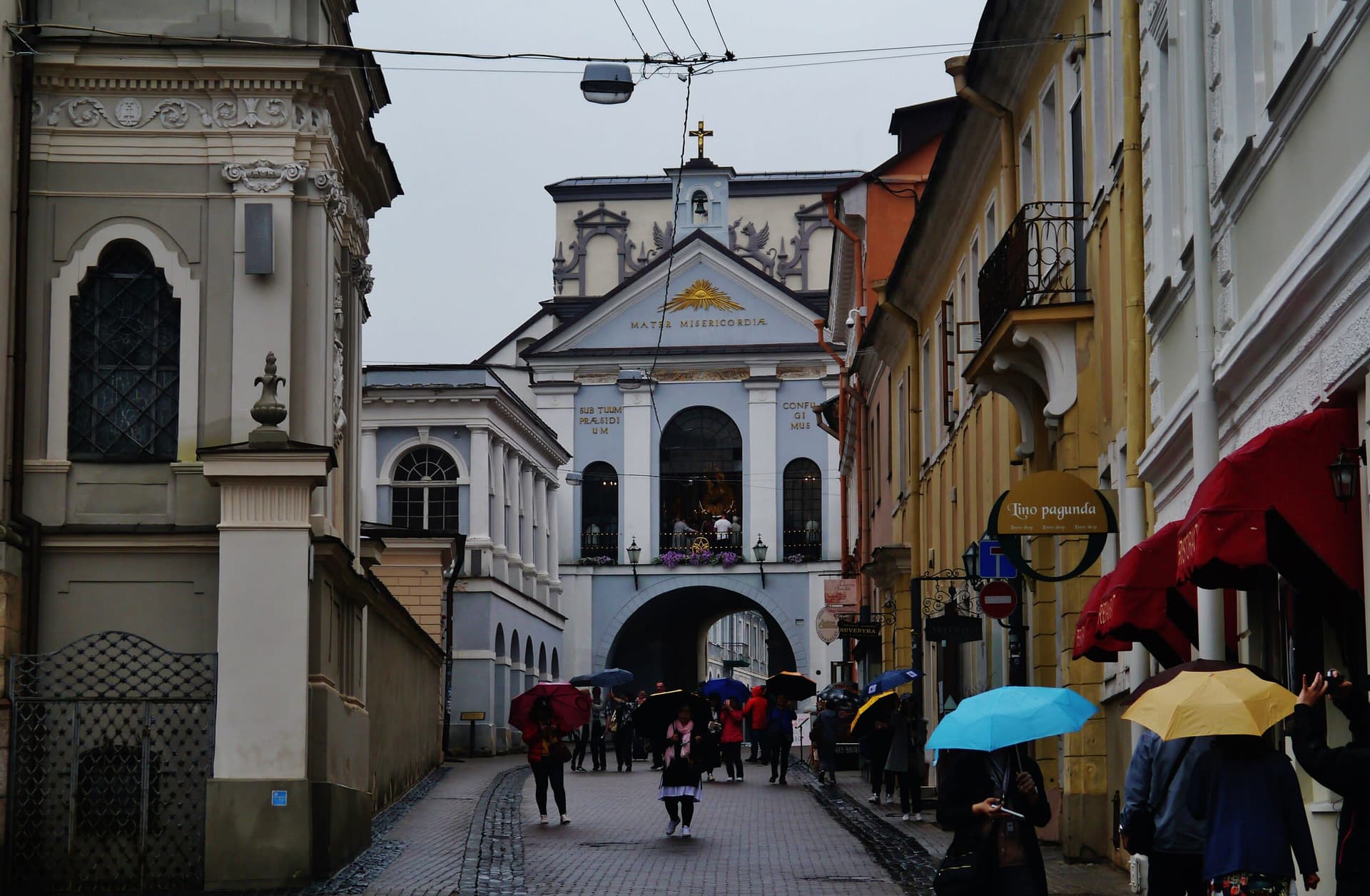
Our Lady of the Gate of Dawn
Vilnius, Vilnius County, Lithuania
0.3 km away
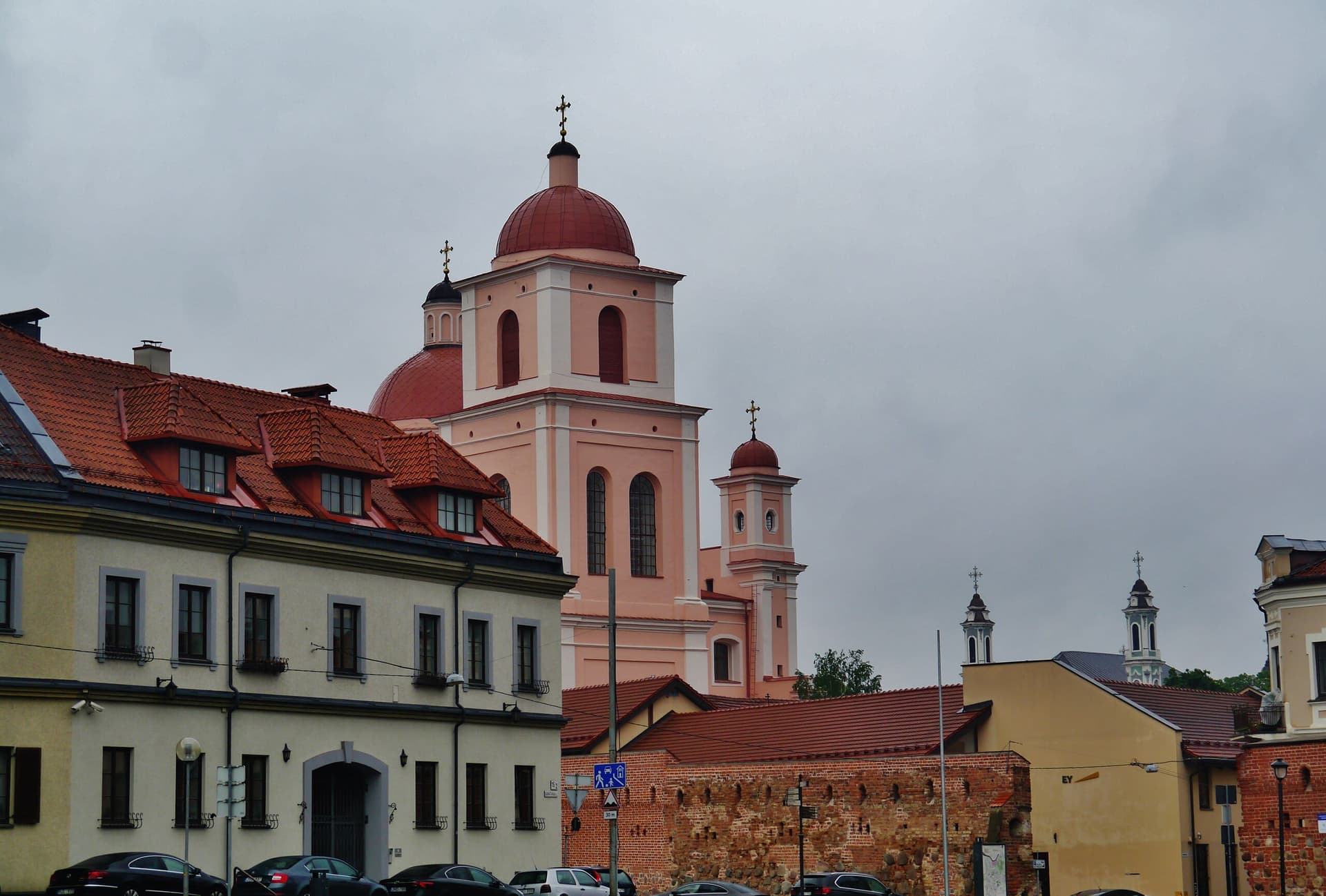
Orthodox Church of the Holy Spirit, Vilnius
Vilnius, Vilnius County, Lithuania
1.2 km away
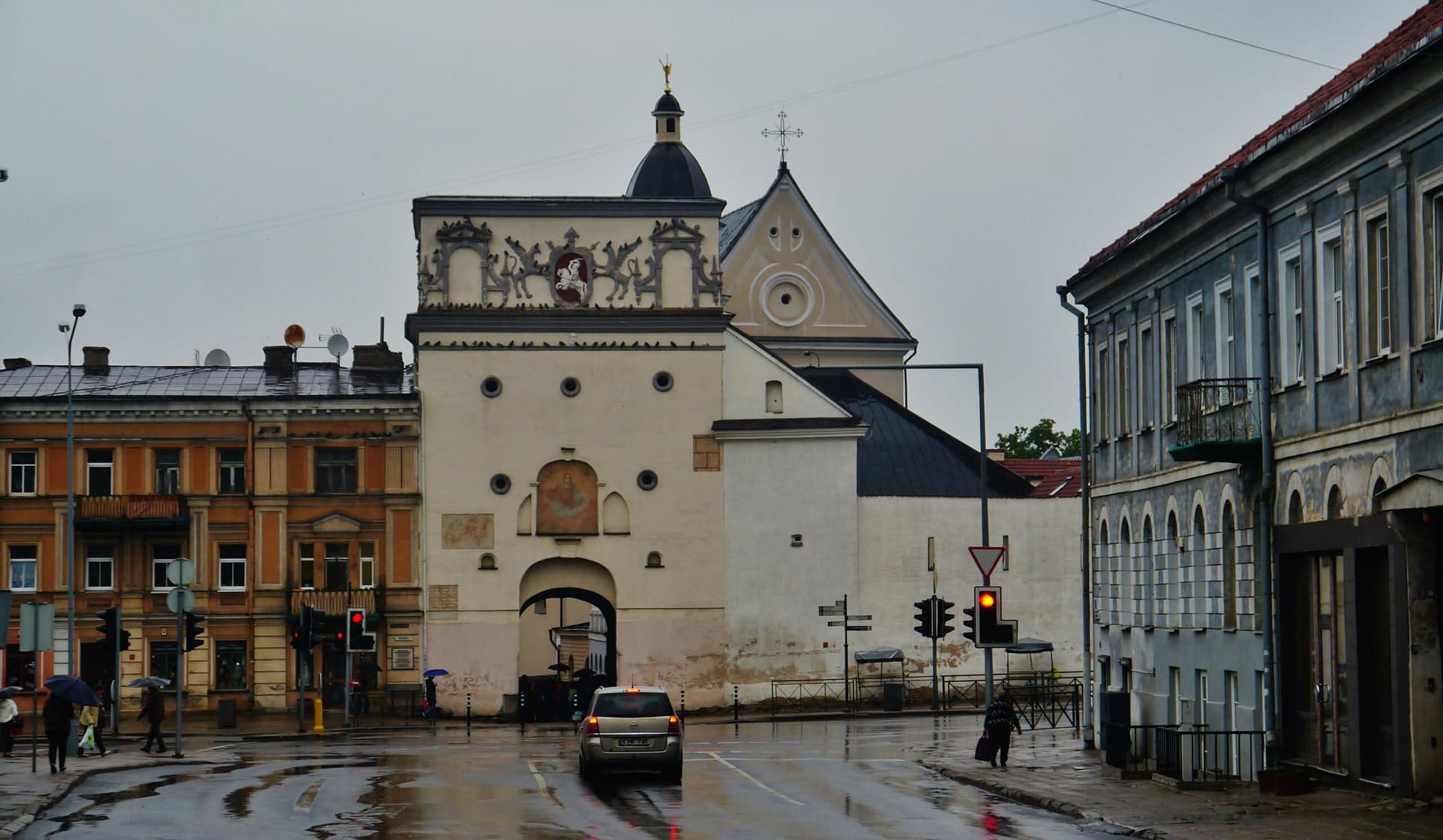
Gates of Dawn, Vilniaus
Vilnius, Vilnius County, Lithuania
1.3 km away
St. Mary Church, Trakai, Lithuania
Trakai, Vilnius County, Lithuania
23.2 km away