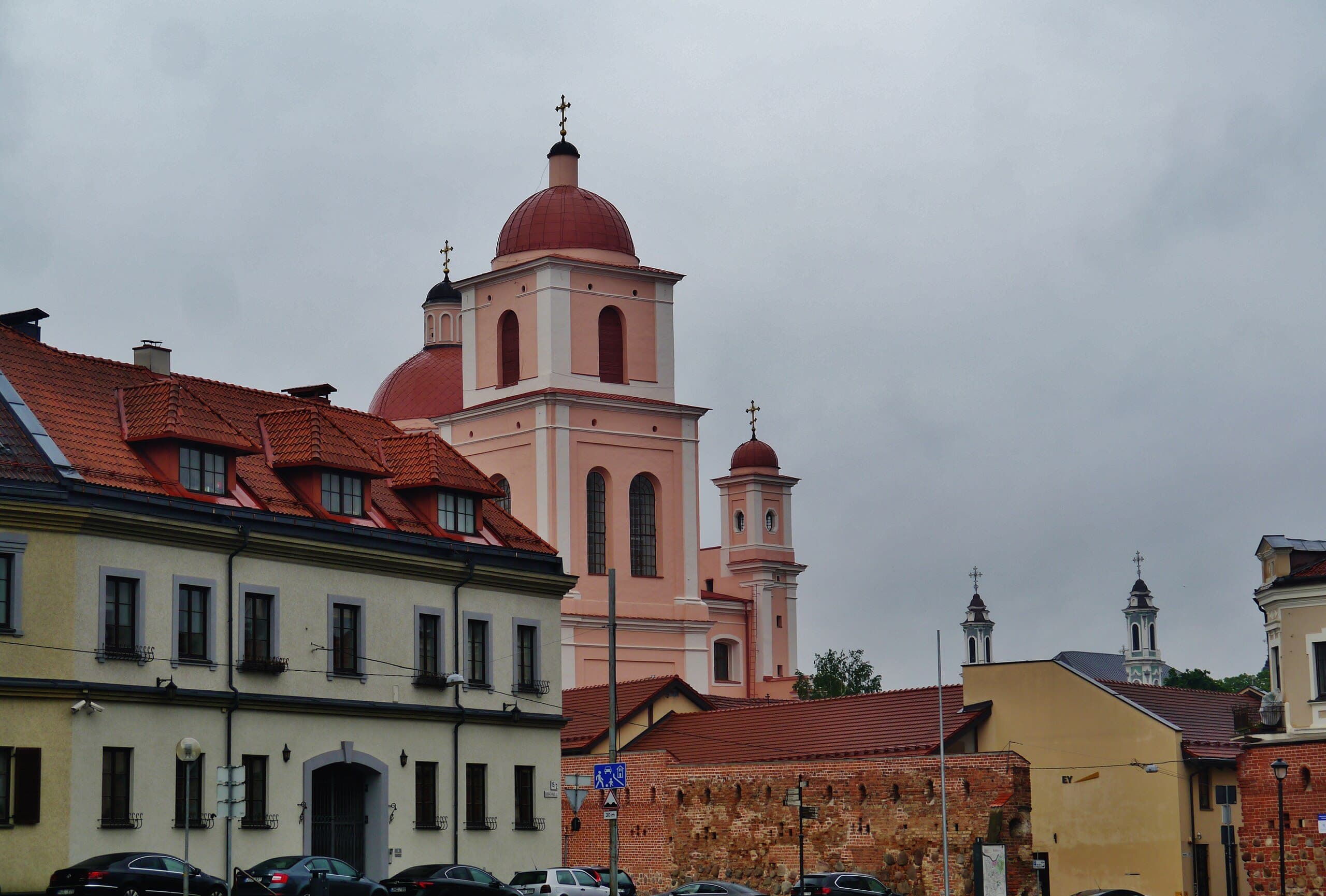
Orthodox Church of the Holy Spirit, Vilnius
The principal Orthodox church in Lithuania, holding the incorrupt relics of three brothers martyred in 1347
Vilnius, Vilnius County, Lithuania
At A Glance
- Coordinates
- 54.6755, 25.2892
- Suggested Duration
- 30 minutes to 1 hour for a visit including the interior and reliquary. Orthodox liturgical services can last 1.5 to 3 hours; visitors need not stay for the entire service.
Pilgrim Tips
- Women: head covering (scarves may be available at entrance), skirts or dresses below the knee. Men: remove hats, long trousers. Both: shoulders covered. No shorts or revealing clothing.
- Photography policies vary. Ask permission before photographing inside the church, especially during services and near the reliquary. Flash photography is generally not permitted.
- Orthodox services can last 1.5 to 3 hours. Visitors need not stay for the entire service. Standing is the norm during services; limited seating is available for elderly or disabled visitors. Services are conducted in Church Slavonic and Russian. Photography policies should be checked upon arrival.
Overview
In the heart of Vilnius' Old Town, two hundred meters north of the Gate of Dawn, stands the most important Orthodox church in Lithuania. Behind its Baroque exterior, designed by Johann Christoph Glaubitz in the 1750s, lies a jewel-toned interior of green and gold housing the incorrupt relics of three brothers martyred in 1347 for refusing to renounce their faith. This is where Orthodoxy in Lithuania began, watered by the blood of its first saints.
The story of the Orthodox Church of the Holy Spirit begins with a death. Three deaths, in fact. In 1347, three brothers serving at the court of Grand Duke Algirdas were hanged on a sacred oak for refusing to eat meat on a fast day and participate in pagan sacrifices to Perkunas, the Lithuanian thunder god. Their names before baptism were Nežilo, Nežilo, and Kruglec. In the faith for which they died, they became Anthony, John, and Eustathius.
Their martyrdom transformed a pagan sacred site into a Christian one. A church was built where the oak had stood, its altar table placed on the stump of the tree that had served as their gallows. In Orthodox understanding, the blood of martyrs is the seed of the Church. In Lithuania, these three brothers are that seed.
The relics, declared incorrupt, have survived nearly seven centuries of upheaval. They were taken to Moscow in 1915 as World War I threatened Vilnius. They returned in 1946. Today they rest in a carved wooden reliquary at the center of the nave, cloaked in fabrics that change with the liturgical season: black for Lent, white for Christmas, red for other major feasts.
The current Baroque church, rebuilt by Johann Christoph Glaubitz after a devastating fire in 1749, is the only Orthodox Baroque church in Lithuania. Its green iconostasis and deep blue walls create an atmosphere unlike any other church in this predominantly Catholic city. The monastery attached to the church has operated continuously since 1609 and served as the only permitted Orthodox monastery in Lithuania during Soviet rule.
To enter this church is to encounter a tradition that has survived paganism, the Union of Brest, Russian imperial ambition, and Soviet atheism. What endures is the liturgy, the relics, and the conviction that what happened beneath that oak in 1347 matters still.
Context And Lineage
Three brothers were martyred in 1347 for refusing to renounce their Orthodox faith under Grand Duke Algirdas. A church was built on the site of their execution. The monastery has operated continuously since 1609. The current Baroque church was designed by Johann Christoph Glaubitz and rebuilt 1749-1753.
The three brothers, courtiers of Grand Duke Algirdas, had converted to Orthodox Christianity. When Algirdas reverted to paganism, he demanded they participate in pagan sacrifices to Perkunas and eat meat on a fast day. They refused.
Anthony, originally named Nežilo or Kumec, was the first to die, hanged from a sacred oak on April 14, 1347. John, also originally Nežilo, followed on April 24. Eustathius, originally Kruglec, was martyred on December 13 of the same year. All three died on the same tree.
The oak became a site of veneration. A church was built with its altar on the stump. In 1364, Patriarch Philotheus of Constantinople sent a cross containing their relics to Saint Sergius of Radonezh, indicating the pan-Orthodox significance of the Vilnius martyrs even within decades of their death.
The current Holy Spirit church and monastery complex developed on a site near the original martyrdom location. The monastery has operated continuously since 1609, serving as a center of Orthodox resistance to the Union of Brest (1596), which attempted to bring Orthodox communities under Roman authority.
The church represents the oldest continuous Orthodox presence in Lithuania, tracing its origins to the 1347 martyrdom. The monastery's resistance to the Union of Brest (1596) places it within the broader history of Orthodox-Catholic relations in the Polish-Lithuanian Commonwealth. The church's survival through Russian imperial control, Soviet atheism, and Lithuanian independence reflects the resilience of Orthodox community life in a predominantly Catholic country.
Saints Anthony, John, and Eustathius
The three Vilnius martyrs
Grand Duke Algirdas
Ruler who ordered the martyrdom
Johann Christoph Glaubitz
Architect
Patriarch Philotheus of Constantinople
Early patron of the martyrs' veneration
Why This Place Is Sacred
The thinness here is grounded in the presence of incorrupt relics nearly 700 years old, in the continuity of monastic life since 1609, and in the layered aesthetic of Baroque architecture serving Orthodox liturgy. The church concentrates centuries of survival into a single, deeply charged interior.
The relics are the center. Everything else in this church orbits around the carved wooden reliquary that holds the remains of Anthony, John, and Eustathius. In Orthodox theology, incorrupt relics are not merely preserved bodies but channels of grace, material evidence that holiness transforms even flesh. Whether or not one shares this understanding, the presence of 700-year-old remains at the center of an active church creates an atmosphere of temporal depth that is palpable.
The reliquary is cloaked according to the liturgical season. Black fabric during Lent transforms the church's emotional register. White at Christmas lightens it. Red for other major feasts warms it. This cyclical cloaking makes the relics responsive to the calendar, participants in the ongoing liturgical life rather than static objects of display.
The interior itself contributes to the thinness. The Baroque architecture, with its curves and gilding, serves a liturgical tradition that predates the Baroque by centuries. The green iconostasis, separating the nave from the sanctuary, performs the Orthodox function of veiling the altar while the Western Baroque decorative vocabulary provides the visual language. The synthesis is found nowhere else in Lithuania.
The monastery's continuous operation since 1609 adds another dimension. During the resistance to the Union of Brest, which attempted to bring Orthodox communities under papal authority in 1596, this monastery was a stronghold of Orthodox independence. During Soviet rule, it was the only Orthodox monastery permitted to operate in Lithuania. The community that worships here today carries the weight of these survivals.
The interplay of pagan and Christian at the site's origin adds a final layer. The martyrs were killed for refusing pagan rites. They were killed on a pagan sacred oak. The Christian church was built on pagan ground, its altar on the stump of the pagan tree. The transformation is complete but the memory persists, giving the site a depth that reaches below Christianity to the older spiritual landscape of Lithuania.
The original Holy Trinity church was built on the site where the three martyrs were hanged on a sacred oak in 1347, with its altar table constructed on the oak's stump. The church was established to honor the martyrs and to transform a pagan sacred site into a Christian one.
The site evolved from a martyrdom site to a church to a monastery complex. The monastery has operated continuously since 1609, serving as a center of Orthodox resistance to the Union of Brest. The current Baroque church was rebuilt 1749-1753 by Johann Christoph Glaubitz after fire. Byzantine Revival elements were added in the nineteenth century. The monastery served as the Russian Orthodox Diocese of Lithuania headquarters from 1845. It was the only Orthodox monastery permitted during Soviet rule.
Traditions And Practice
Regular Orthodox Divine Liturgy and services are held throughout the week. The primary feast of the Vilnius martyrs falls on April 14, with additional commemoration on July 13. The reliquary is cloaked in different colors according to the liturgical season.
Orthodox Divine Liturgy, Vespers, and Matins according to the Russian Orthodox liturgical calendar. Veneration of the relics through kissing the reliquary or prostration before it. The liturgical hymns specific to the Vilnius martyrs, including the Troparion in the 4th Tone and Kontakion in the 3rd Tone, are sung on their feast days. The seasonal cloaking of the reliquary follows a specific pattern: black during Lent, white at Christmas, red for other major feasts.
Regular Orthodox services throughout the week conducted in Church Slavonic with elements in Russian. The monastery continues to function as an active monastic community. The church participates in the Vilnius pilgrimage route identified by the city tourism authority. April 14 and July 13 are the primary feast celebrations. Pope John Paul II's visit in 1993 added an ecumenical dimension to the site's significance.
Attend a Sunday Divine Liturgy to experience the fullness of Orthodox worship in this space: the chanting, incense, standing congregation, and the reverence directed toward the relics and icons. If visiting outside of service times, spend time before the reliquary in quiet reflection. Light a candle before one of the icons. Allow the visual contrast between this Orthodox interior and the Catholic churches you may have just visited to register. If you are walking the Vilnius pilgrimage route from south to north, the Holy Spirit church provides a profound counterpoint to the Gate of Dawn.
Russian Orthodox Christianity
ActiveThe church is the cathedral of the Russian Orthodox Diocese of Lithuania and the most important Orthodox church in the country. The monastery has operated continuously since 1609, making it one of the most enduring Orthodox institutions in the former Polish-Lithuanian Commonwealth. It was the only Orthodox monastery permitted during Soviet rule, and it has served as the seat of the Bishops of Vilnius and Lithuania since 1845.
Regular Orthodox Divine Liturgy and services conducted in Church Slavonic with Russian elements. Veneration of the relics of the three Vilnius martyrs. Seasonal cloaking of the reliquary. Feast celebrations on April 14 and July 13. Monastic daily office.
Veneration of the Vilnius Martyrs
ActiveSaints Anthony, John, and Eustathius are the first Orthodox martyrs of Lithuania, killed in 1347 for refusing to renounce their faith. Their relics, declared incorrupt, have been venerated continuously. Their pan-Orthodox significance was recognized as early as 1364 when Patriarch Philotheus of Constantinople sent a cross with their relics to Saint Sergius of Radonezh.
Pilgrimage to venerate the incorrupt relics. Kissing or prostrating before the reliquary. Feast celebrations with special liturgical services on April 14 and July 13. The singing of the martyrs' specific Troparion and Kontakion on feast days.
Experience And Perspectives
The modest exterior gives no warning of what lies within. Pass through the doors and enter a world of deep blue walls, green and gold iconostasis, and the carved reliquary at the center of the nave. The contrast between Vilnius' Catholic streetscape and this Orthodox interior is immediate and disorienting in the best sense.
Walking north along Ausros Vartu Street from the Gate of Dawn, you pass through the heart of Catholic Vilnius: the Church of St. Teresa, the Gate of Dawn chapel, centuries of Marian devotion. Two hundred meters north, the streetscape shifts. The Orthodox Church of the Holy Spirit presents a Baroque facade that could, from the outside, be another Catholic church. It is not.
Enter through the doors and the transformation is immediate. The deep blue and green color scheme, the gold filigree, the distinctive green iconostasis: you have crossed from Catholic to Orthodox space in a single threshold. The aesthetic register changes entirely. Where Catholic Baroque tends toward warm golds and creams, this Orthodox Baroque interior uses cooler tones that create an atmosphere of otherworldly depth.
The reliquary dominates the center of the nave. Carved wood, ceremonially cloaked, it holds the incorrupt remains of the three martyrs. Approach with reverence. Orthodox pilgrims venerate the relics by kissing the reliquary or prostrating before it. Non-Orthodox visitors should observe with respect, maintaining distance unless invited closer.
If you arrive during a service, the experience deepens. Orthodox chanting fills the space with layered harmonics that the Baroque acoustics amplify. Incense rises. Candles flicker before icons. The congregation stands, as is the Orthodox custom, creating a very different physical relationship to worship than the Catholic practice of sitting and kneeling. There are no pews. The body is engaged differently here.
Take time to examine the iconostasis. Its green and gold surfaces carry Orthodox sacred imagery within a Baroque decorative framework. The icons follow Orthodox artistic conventions, with their distinctive proportions and gold backgrounds, while the surrounding ornament speaks the visual language of mid-eighteenth-century Europe. The synthesis is architecturally rare and theologically resonant.
Before leaving, consider the geography. You are two hundred meters from the Gate of Dawn, the most important Catholic shrine in Lithuania. The proximity is not coincidental. Ausros Vartu Street holds Catholic and Orthodox sacred spaces in close relationship, reflecting the complex, sometimes painful history of Christian division in this city.
The church is located at Ausros Vartu g. 10, on the east side of Ausros Vartu Street. Enter through the main doors into the nave. The reliquary is at the center. The iconostasis separates the nave from the sanctuary to the east. The church is generally open daily from 8:00 AM to 6:00 PM.
The Orthodox Church of the Holy Spirit holds together multiple histories: the story of three martyred brothers, the survival of Orthodox Christianity in a Catholic-majority country, the architectural synthesis of Western Baroque and Eastern liturgy, and the ongoing life of Lithuania's only male Orthodox monastery.
Historians recognize the church and monastery as one of the most important centers of Orthodoxy in the former Polish-Lithuanian Commonwealth. The three martyrs of 1347 are well-documented historical figures recorded in contemporary chronicles. The church's Baroque architecture by Glaubitz represents a singular synthesis of Western Baroque and Eastern Orthodox liturgical requirements. The monastery's role as a center of resistance to the Union of Brest and its survival as the only permitted monastery during Soviet rule are historically significant milestones in the history of Orthodoxy in the region.
In Orthodox understanding, the three martyrs are the 'seeds of the Church' in Lithuania. Their blood sanctified the ground and established Orthodox Christianity in pagan territory. The incorruptibility of their relics is understood as divine confirmation of their sanctity. The oak on which they were hanged, a pagan sacred tree, was transformed by their martyrdom into a tree of Christian witness. The relics' survival through centuries of upheaval, including their removal to Moscow in 1915 and return in 1946, is interpreted as providential.
The interplay of pagan and Christian symbolism at the site's origin has drawn attention from those interested in sacred transformation. The martyrs were killed for refusing rites to Perkunas, the thunder god, and their martyrdom site was itself a pagan holy place. The transformation of a pagan sacred site into a Christian one reflects deep patterns of spiritual geography found across cultures. The Baroque-Orthodox aesthetic synthesis of the interior has been described as creating a devotional space that operates outside conventional categories.
The precise mechanism of the relics' preservation remains unexplained in naturalistic terms. The full extent of the monastery's activities during Soviet rule is not well documented in publicly accessible sources. The exact location of the original sacred oak and Holy Trinity church relative to the current Holy Spirit church is not definitively established. Some details of the 1347 martyrdom accounts may reflect hagiographic elaboration, though the historical core is well attested.
Visit Planning
Located on Ausros Vartu Street in Vilnius Old Town, 200 meters north of the Gate of Dawn. Free admission. Generally open daily 8:00 AM to 6:00 PM. The feast of the Vilnius Martyrs on April 14 is the most significant annual celebration.
Vilnius Old Town offers extensive accommodation within walking distance. The church's central location makes it accessible from any Old Town hotel or guesthouse.
Orthodox dress standards apply. Women should cover their heads. Both genders should cover shoulders and knees. Standing is customary during services. Do not touch the reliquary without guidance.
The Orthodox Church of the Holy Spirit is the most important Orthodox church in Lithuania and a place of deep veneration. Visitors of all backgrounds are welcome, but Orthodox customs should be observed.
Women should cover their heads upon entering. Scarves may be available at the entrance. Skirts or dresses below the knee are expected. Men should remove hats and wear long trousers. Shoulders should be covered for both genders. No shorts or revealing clothing.
During services, the congregation stands. This is the Orthodox norm, not an oversight. Limited seating is available for those who need it. If you attend a service, stand quietly and observe. If you wish to participate, cross yourself right-to-left in the Orthodox manner.
Do not touch the reliquary without guidance from a member of the community. Do not cross in front of the iconostasis. These boundaries are liturgically significant in Orthodox worship.
Speak in whispers or remain silent, especially during services. The acoustic properties of the Baroque interior amplify sound; quiet voices carry far.
Women: head covering (scarves may be available at entrance), skirts or dresses below the knee. Men: remove hats, long trousers. Both: shoulders covered. No shorts or revealing clothing.
Photography policies vary. Ask permission before photographing inside the church, especially during services and near the reliquary. Flash photography is generally not permitted.
Candles can be purchased and lit before icons. Monetary donations are encouraged for church maintenance.
Standing during services is customary. Do not touch the reliquary without guidance. Do not cross in front of the iconostasis. Silence or low voices expected, especially during services. No food or drink inside the church.
Sacred Cluster
Nearby sacred places create the location cluster described in the growth plan. This block is intentionally crawlable and links into the wider regional graph.
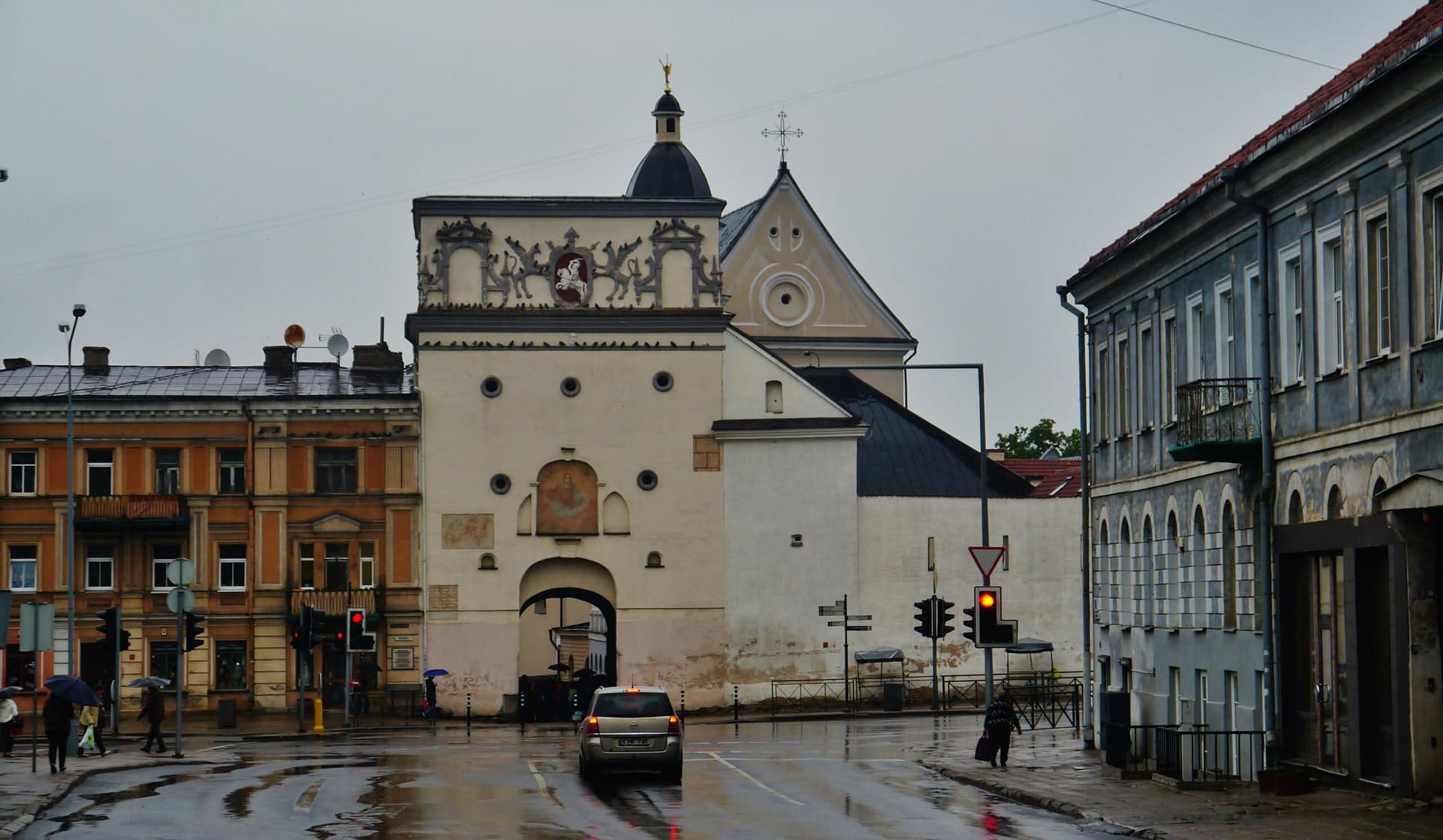
Gates of Dawn, Vilniaus
Vilnius, Vilnius County, Lithuania
0.1 km away
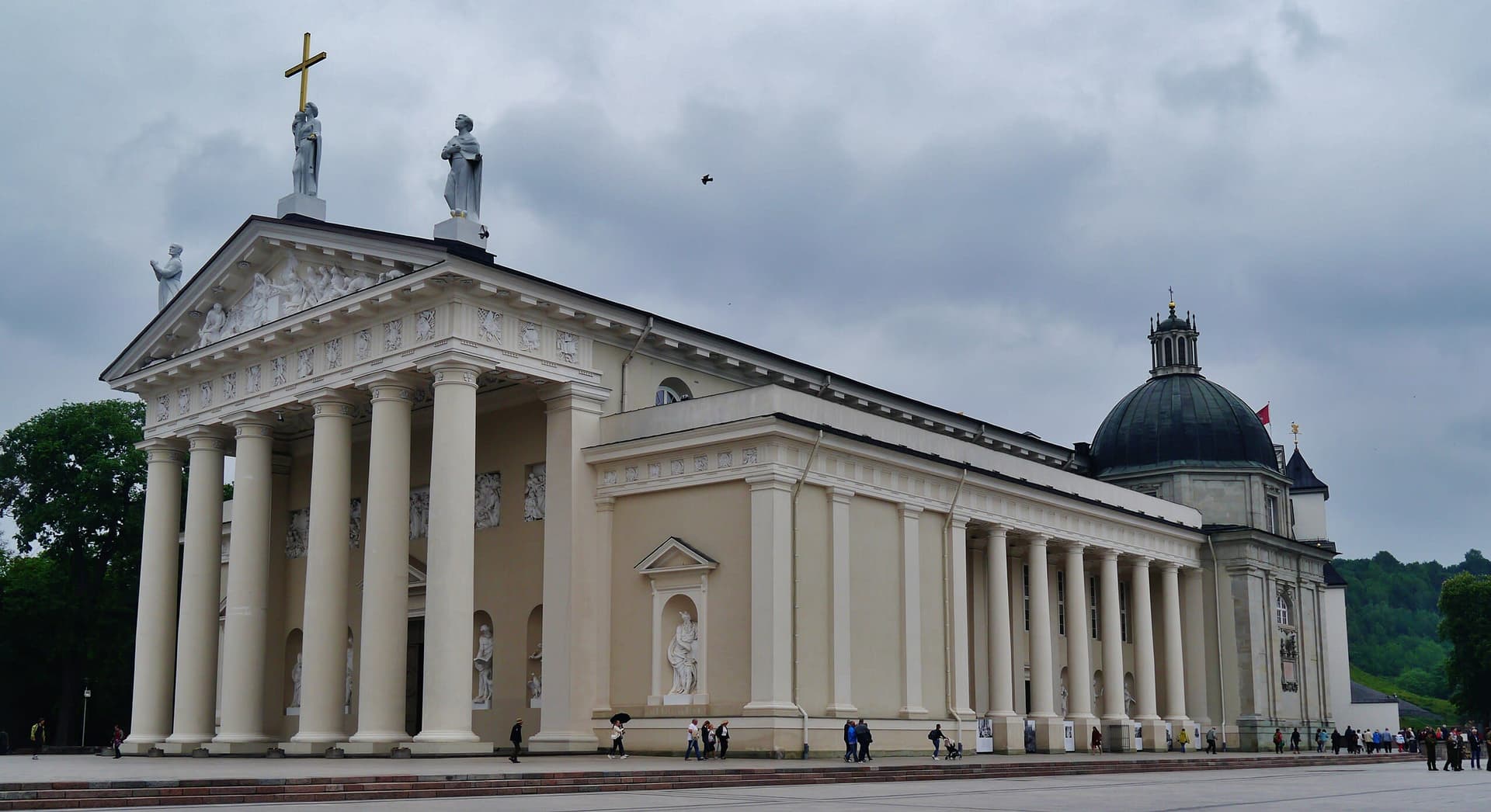
Vilnius Cathedral and Chapel of St Casimir, Lithuania
Vilnius, Vilnius County, Lithuania
1.2 km away
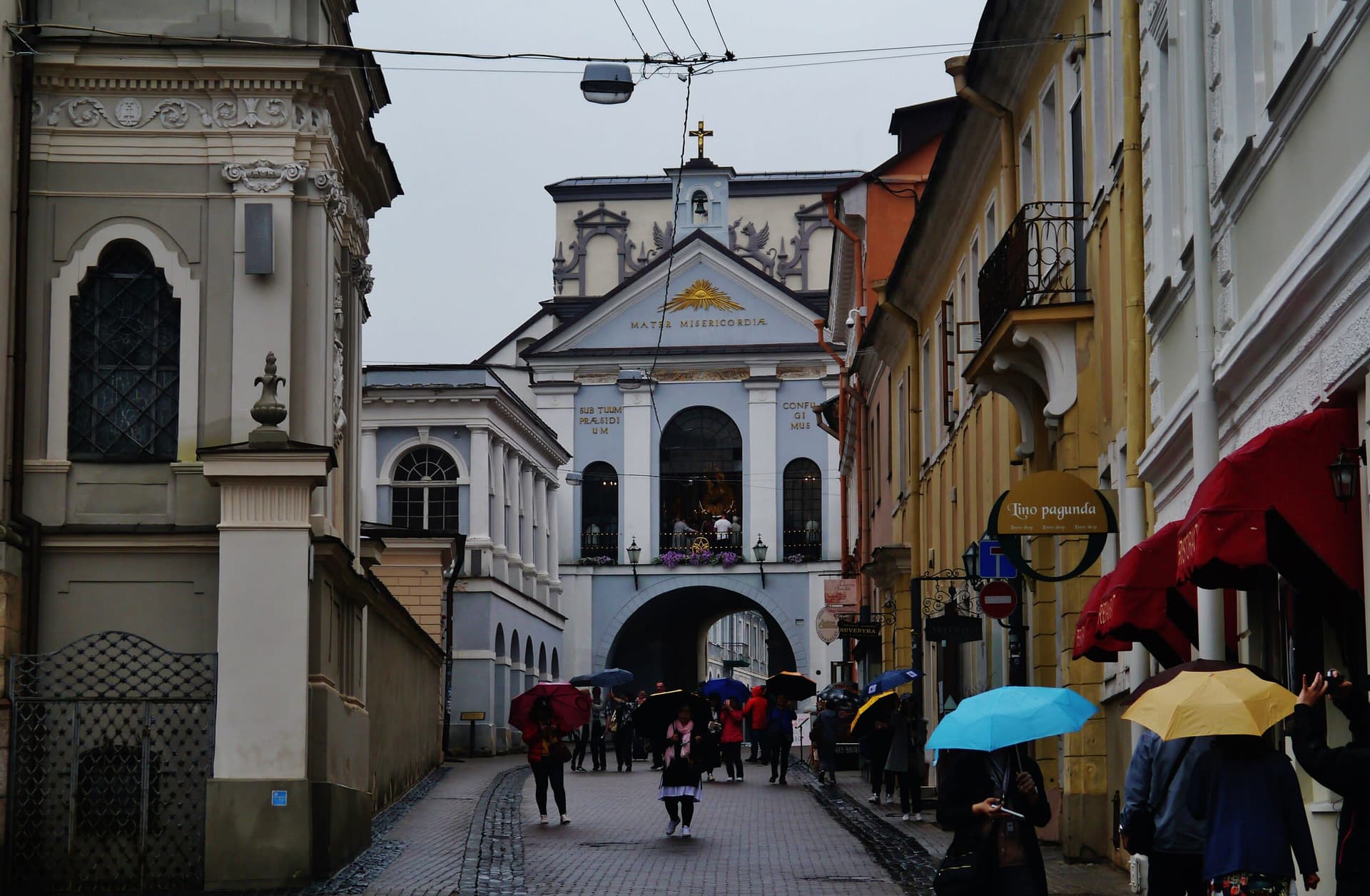
Our Lady of the Gate of Dawn
Vilnius, Vilnius County, Lithuania
1.3 km away
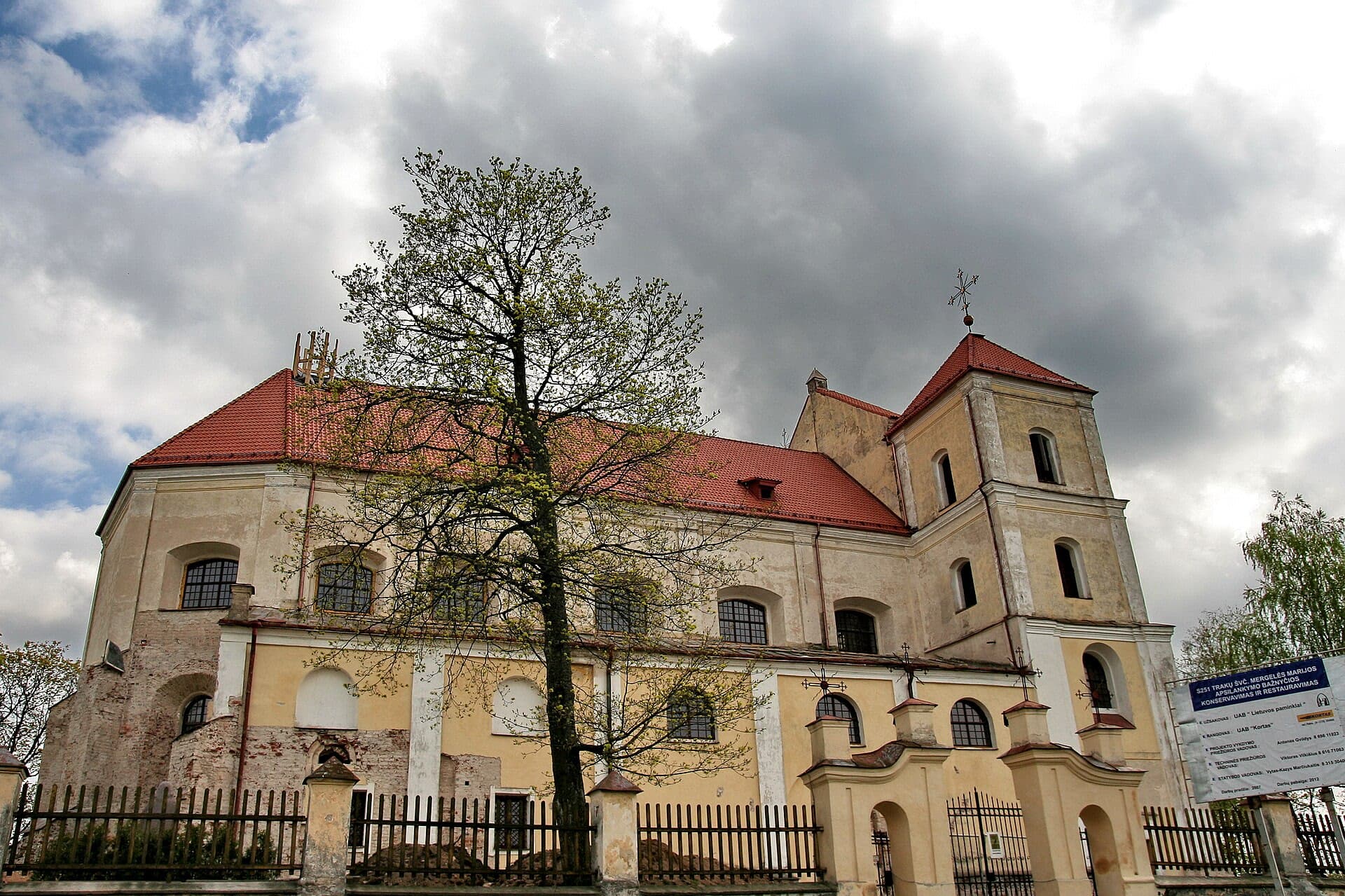
St. Mary Church, Trakai, Lithuania
Trakai, Vilnius County, Lithuania
23.1 km away