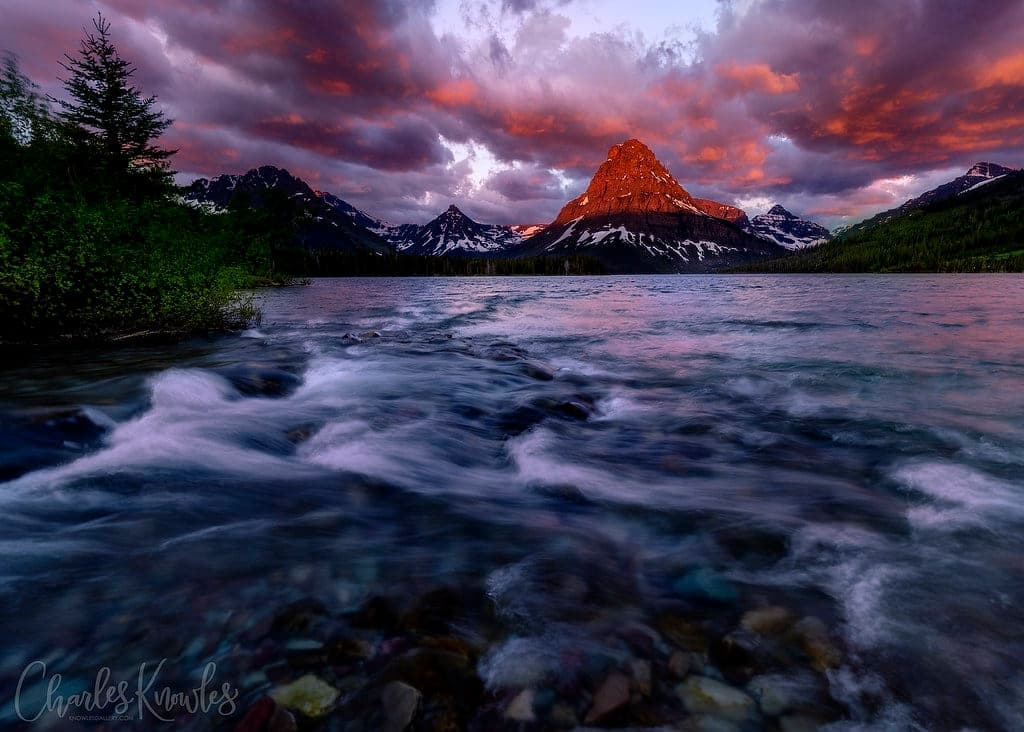
Two Medicine Lake, Montana
The Backbone of the World, where the Blackfeet know themselves to have been created
East Glacier Park, Montana, United States
At A Glance
- Coordinates
- 48.4922, -113.3664
- Suggested Duration
- A half day allows for the lakeside trail and boat tour. A full day permits more extensive hiking. Multiple days for camping and backcountry exploration.
Pilgrim Tips
- Standard outdoor clothing appropriate for mountain conditions. Weather can change rapidly. Bring layers, rain gear, and sun protection. Good hiking footwear for trails.
- Photography of the landscape is permitted. Do not photograph Blackfeet practitioners or ceremonial objects without explicit permission.
- Glacier National Park contains hazards including bears, sudden weather changes, and challenging terrain. Follow park guidelines for backcountry safety. If you encounter Blackfeet practitioners, maintain respectful distance. Do not disturb offerings or ceremonial sites.
Overview
At Two Medicine Lake, you stand within what the Blackfeet call Miistakis—the Backbone of the World. This is not metaphor. According to Blackfeet tradition, they were created among these mountains. The lake's name comes from Na-too-too-kase, the Place of Two Medicine Lodges, where ceremonies were held and prayers answered for at least 13,000 years. Today, Blackfeet tribal members still travel here for prayer and vision quests, maintaining an unbroken connection to the land their ancestors have known since before the last ice age receded.
Two Medicine Lake lies in the southeastern corner of Glacier National Park, surrounded by peaks that the Blackfeet call Miistakis—the Backbone of the World. The name is not poetic license. In Blackfeet understanding, these mountains are where the world finds its structure, where creation began, where the Blackfeet people originated. To stand at Two Medicine is to stand at the place of beginning.
The Blackfeet name for this place is Na-too-too-kase—the Place of Two Medicine Lodges. Along the shore of this lake, two medicine lodges once stood. Ceremonies were held there. Chants were sung. Prayers rose and were answered through spirit helpers sent by Old Man. The lodges are gone, but the place remains, holding what generations have given it.
Research by John Murray, the Blackfeet Tribal Historic Preservation Officer, has documented Blackfeet presence here extending back at least 13,000 years—among the oldest continuous cultural connections to a landscape in North America. This is not ancient history in the sense of something finished. This is living heritage. Blackfeet tribal members continue to travel to Two Medicine for prayer and vision quests, maintaining the relationship their ancestors established when ice still covered much of the continent.
Two Medicine is one of the few areas within Glacier National Park that retains its original Blackfeet name. When the park was established in 1910, most Indigenous names were replaced with English ones. That Two Medicine survived suggests its significance was too deep to ignore. Even those who drew the boundaries and renamed the mountains recognized that this place had its own name, given by those who knew it first.
The adjacent Badger-Two Medicine area, outside the park boundary, has faced threats from oil and gas development. The fight to protect this landscape has drawn on the same understanding that makes Two Medicine sacred: this is not scenery but relationship, not resource but relative.
Context And Lineage
Two Medicine has been central to Blackfeet life for at least 13,000 years. The lake takes its name from Na-too-too-kase, the Place of Two Medicine Lodges, where ceremonies were held along the shore. The Blackfeet call the surrounding mountains Miistakis—the Backbone of the World—and know themselves to have been created here.
The origin stories of Two Medicine are creation stories. The Blackfeet know themselves to have been created among these peaks and springs—the mountains called Miistakis, the Backbone of the World. This is not a place the Blackfeet came to from somewhere else. This is where they began.
The name Two Medicine derives from Na-too-too-kase—the Place of Two Medicine Lodges. Long ago, along the shore of this lake, two medicine lodges were built. In these lodges, ceremonies were held, chants were sung, and prayers were made. Old Man heard the prayers and answered through spirit helpers. The lodges gave the place its name, and though the structures are gone, the place remembers what happened there.
The surrounding peaks and the lake itself participate in this origin. They are not backdrop but participants—living presences in a cosmology where landscape and people are related rather than separate.
Two Medicine belongs primarily to the Blackfeet Nation—including the Piikani, Kainai, and Siksika peoples. The area lies within their traditional territory, which extended from this spine of mountains eastward across the plains. The creation of Glacier National Park in 1910 placed this sacred landscape under federal management, but Blackfeet connection to Two Medicine predates the park by 130 centuries and persists regardless of administrative boundaries.
John Murray
Blackfeet Tribal Historic Preservation Officer who documented Blackfeet presence in the Two Medicine area extending back at least 13,000 years—among the oldest continuous cultural connections to a landscape in North America.
Why This Place Is Sacred
Two Medicine is thin because it is old—13,000 years of continuous human connection—and because it is central: the place where the Blackfeet know themselves to have been created, the Backbone of the World that holds everything else in place.
The thinness at Two Medicine operates through depth of time. When you stand at this lake, you stand where people have stood for 130 centuries. The ice age was ending when the first seekers came here. The landscape was still forming, still being shaped by retreating glaciers. And yet people were already here, already recognizing something in this place that drew them.
Thirteen thousand years of human presence leaves a trace that goes beyond archaeology. Each generation who came to Two Medicine for ceremony, for vision, for prayer—each added to what the place holds. The medicine lodges stood here. The chants were sung here. The prayers were made here. The place absorbed it all. For the Blackfeet, Two Medicine is not empty landscape but crowded with presence: the accumulated weight of all those who have come before.
The mountains themselves reinforce this quality. These are not just any mountains but Miistakis—the Backbone of the World. In Blackfeet cosmology, this ridge gives the world its structure. Everything else hangs from these peaks, organized around this central spine. To be at Two Medicine is to be at the axis, the place where the world hinges.
The creation tradition deepens this understanding. The Blackfeet know themselves to have been created among these peaks and springs. Two Medicine is not simply a sacred site but the sacred site—the origin place, where the Blackfeet story begins. When tribal members come here for vision quests and prayer, they are returning to their birthplace, their first home, the ground that made them.
Visitors who know nothing of this history often report a distinctive quality to Two Medicine—a sense of presence, of something attending. This is not projection but perception. Something is here. The thinness has been cultivated over millennia.
Two Medicine served as a ceremonial center for the Blackfeet for thousands of years before Glacier National Park existed. The two medicine lodges that gave the place its name were structures for ceremony and healing. Along the shore, chants rose and prayers were offered to Old Man, who answered through spirit helpers. Vision quests drew seekers to the surrounding peaks. Medicinal plants were gathered. Lodge poles were collected. Game was hunted. The purpose was not singular but multiple—Two Medicine was where Blackfeet life was lived in its fullness, material and spiritual intertwined.
The creation of Glacier National Park in 1910 changed the relationship between the Blackfeet and Two Medicine. The park boundary placed sacred ground under federal management, with rules and restrictions that had not existed before. Unlike most areas within the park, Two Medicine retained its Blackfeet name—one of the few to do so. This preservation hints at the depth of connection even outsiders recognized.
The adjacent Badger-Two Medicine area, lying between the park and the Blackfeet Reservation, has faced repeated threats from oil and gas development. Leases were issued in the 1980s without adequate tribal consultation. For decades, the Blackfeet and their allies have fought to cancel these leases and protect the sacred landscape. Recent victories have retired some leases, but the struggle continues.
Throughout these changes, Blackfeet use of Two Medicine has persisted. Tribal members still come for prayer and vision quests. The ceremonies continue. The relationship that began 13,000 years ago remains unbroken, adapting to changed conditions while maintaining its essential character.
Traditions And Practice
For at least 13,000 years, the Blackfeet have come to Two Medicine for ceremony, vision quests, prayer, and the gathering of medicinal plants. These practices continue today. Non-Native visitors can hike trails, take boat tours, and appreciate the landscape, but should approach with awareness of the site's profound sacred significance.
The traditional practices at Two Medicine encompassed the full range of Blackfeet spiritual and material life. Medicine lodge ceremonies took place along the shore, in the two lodges that gave the place its name. Vision quests drew seekers to the surrounding peaks and isolated places. Medicinal plants grew here and were gathered by those who knew their uses. Game was hunted. Lodge poles were collected. The landscape provided both practical sustenance and spiritual connection.
The ceremonies held here were not separate from daily life but integral to it. Coming to Two Medicine was coming to the place of origin, the Backbone of the World. What happened here shaped what happened everywhere else. The prayers made here had consequences that extended far beyond the lake shore.
Contemporary practice at Two Medicine continues the traditional forms within changed circumstances. Blackfeet tribal members still travel to Two Medicine for prayer and vision quests. The ceremonies continue, adapted to conditions but maintaining their essential character. The national park administration has increasingly recognized the need to accommodate traditional cultural use alongside recreational visitation.
For the Blackfeet, Two Medicine is what it has always been: a living cultural landscape, the place of creation, the Backbone of the World. The 13,000-year connection remains unbroken. What their ancestors did here, they continue to do—maintaining the relationship that defines them as a people.
Non-Native visitors cannot participate in Blackfeet ceremony at Two Medicine. The appropriate practice for visitors is appreciation—hiking the trails, taking the boat tour, sitting by the lake, and letting the place affect you.
As you walk, consider that people have walked here for 130 centuries. The trail beneath your feet has been traveled longer than nearly any path in North America. The mountains you see are Miistakis—the Backbone of the World, the structure that holds everything in place. The lake before you held medicine lodges where prayers were answered.
You cannot share the Blackfeet relationship with this place. That relationship was formed across millennia, passed down through generations, rooted in creation itself. But you can recognize that such a relationship exists. You can approach Two Medicine not as scenery to photograph but as sacred ground to respect.
Blackfeet Sacred Landscape and Place of Creation
ActiveThe Blackfeet call the mountains surrounding Two Medicine 'Miistakis'—the Backbone of the World—and know themselves to have been created among these peaks and springs. This is not a place of pilgrimage but a place of origin, the landscape where Blackfeet existence began.
Vision quests. Prayer. Ceremony. Gathering medicinal plants. Hunting. Lodge pole collection. The full range of Blackfeet life, material and spiritual intertwined. Contemporary tribal members continue to visit for prayer and vision quests.
Place of Two Medicine Lodges (Na-too-too-kase)
ActiveThe name Two Medicine derives from Na-too-too-kase—the Place of Two Medicine Lodges. Long ago, two medicine lodges stood along the lake shore. Ceremonies were held in these lodges, chants were sung, and prayers were answered by Old Man through spirit helpers.
Ceremony in medicine lodges. Chanting. Prayer. Seeking answers from Old Man and the spirit helpers. The lodges are gone, but the practice of ceremony at this place continues.
Experience And Perspectives
Two Medicine offers accessible trails, boat tours, and camping within Glacier National Park. The lake sits beneath dramatic peaks, with hiking options ranging from easy lakeside walks to strenuous backcountry routes. Approach with awareness that this is sacred ground where the Blackfeet have prayed for 13,000 years.
The road to Two Medicine branches south from Highway 49, winding through aspen groves and lodgepole pine until the lake opens before you. The peaks rise on three sides—Rising Wolf, Sinopah, Painted Tepee—names that mix Blackfeet origin with later imposition. The water reflects the mountains on still days, creating that doubling that makes mountain lakes feel like doorways.
The facilities at Two Medicine are modest compared to the park's more famous valleys. A small store, a ranger station, a campground, a boat dock. The relative quietness is part of the appeal. This is not Many Glacier or Lake McDonald, crowded with tour buses and international visitors. This is a place that rewards those who make the effort to reach it.
Trails radiate from the lake in multiple directions. The easiest loop follows the northern shore, passing through forest and meadow with views across the water. The boat tour crosses to the far shore, from which hikers can continue to Twin Falls and beyond. More ambitious routes climb to passes and peaks, entering the backcountry that extends toward the park's heart.
For visitors attuned to the site's significance, the experience goes beyond scenery. The mountains surrounding you are Miistakis—the Backbone of the World, where the Blackfeet know themselves to have been created. The lake before you is Na-too-too-kase—where the medicine lodges stood, where ceremonies were held, where prayers were answered. Walking these trails, you walk where people have walked for 130 centuries, seeking what people have always sought: connection, guidance, meaning.
If you encounter Blackfeet tribal members, recognize that they may be here for spiritual purposes that your visit cannot share. Maintain respectful distance. Do not intrude or photograph. Their presence is not performance but practice.
Two Medicine Lake is located in the southeastern section of Glacier National Park. Access is via Two Medicine Road from Highway 49, south of the junction with Going-to-the-Sun Road. The road is typically open from late May through October, depending on snow. The nearest town is East Glacier Park (10 miles). A national park entrance fee is required. Facilities include a campground, store, ranger station, and boat dock.
Two Medicine is understood through multiple lenses: spectacular mountain scenery, national park destination, and—most profoundly—Blackfeet sacred landscape with 13,000 years of continuous cultural connection. The latter understanding transforms the former from scenery into relationship.
Archaeological and ethnographic research documents Blackfeet presence in the Two Medicine area extending back at least 13,000 years, as established by Blackfeet Tribal Historic Preservation Officer John Murray. This represents one of the oldest continuous cultural connections to a landscape in North America.
The creation of Glacier National Park in 1910 changed the administrative status of Two Medicine but did not sever the Blackfeet connection. The area retained its Blackfeet name—one of the few within the park to do so—suggesting that even non-Native observers recognized its distinctive significance.
The Badger-Two Medicine area, adjacent to the park, has been the subject of extensive legal and administrative proceedings regarding oil and gas leasing. These proceedings have documented the cultural significance of the landscape through expert testimony and tribal consultation.
For the Blackfeet, Two Medicine is not a location but a relationship—the place of origin, the Backbone of the World, Na-too-too-kase where the medicine lodges stood and prayers were answered. The 13,000-year presence documented by researchers corresponds to what Blackfeet tradition holds: that they were created here, that this is their beginning place, that the mountains and waters and all they contain are relatives rather than resources.
Contemporary Blackfeet continue to describe Two Medicine as a living cultural landscape. The ceremonies continue. The vision quests continue. The prayers continue. What their ancestors did for 130 centuries, they do still.
The specific practices, protocols, and teachings associated with Two Medicine are held within the Blackfeet community and are not available for public documentation. The full depth of 13,000 years of relationship exceeds what can be learned from external sources.
Visit Planning
Two Medicine Lake is located in southeastern Glacier National Park, accessible via Two Medicine Road when open (typically late May-October). Facilities include campground, store, ranger station, and boat tours. National park entrance fee required. The nearest town is East Glacier Park.
Two Medicine Campground (first-come, first-served). Lodging in East Glacier Park (10 miles). Additional camping and lodging throughout Glacier National Park.
Two Medicine is sacred ground within a national park. Visitors should follow park regulations while also recognizing the deep Blackfeet significance of the landscape. If you encounter practitioners, maintain distance. Do not disturb offerings or ceremonial sites. Approach as you would any place where people have prayed for thousands of years.
Two Medicine occupies a distinctive position: sacred ground that is also public land within a national park. The park framework provides access, trails, and facilities. The Blackfeet understanding provides context, meaning, and depth. Both frameworks deserve respect.
Standard national park etiquette applies: stay on trails, pack out trash, respect wildlife, follow regulations. These rules exist to protect the landscape for all visitors and for the future.
But additional awareness is needed. This is not ordinary park land. This is where the Blackfeet know themselves to have been created. This is where ceremonies have been held for 13,000 years. This is the Backbone of the World. Your presence here is welcome, but your presence does not make this place yours.
If you encounter Blackfeet tribal members, recognize that they may be here for purposes that differ from yours. They may be seeking vision, making prayer, conducting ceremony. Do not approach uninvited. Do not photograph them. Do not ask to participate. Their practice is not entertainment.
If you find evidence of ceremonial activity—prayer cloths, offerings, fasting sites—do not disturb them. These are not abandoned objects but prayers in place. Walk past. Let them be.
Standard outdoor clothing appropriate for mountain conditions. Weather can change rapidly. Bring layers, rain gear, and sun protection. Good hiking footwear for trails.
Photography of the landscape is permitted. Do not photograph Blackfeet practitioners or ceremonial objects without explicit permission.
Do not leave offerings unless you are a Blackfeet practitioner engaged in traditional practice. Do not disturb offerings left by others.
{"Follow all Glacier National Park regulations","Maintain distance from ceremonial activity","Do not photograph practitioners","Do not disturb offerings","Practice Leave No Trace principles","Bears are present—follow bear safety guidelines"}
Sacred Cluster
Nearby sacred places create the location cluster described in the growth plan. This block is intentionally crawlable and links into the wider regional graph.
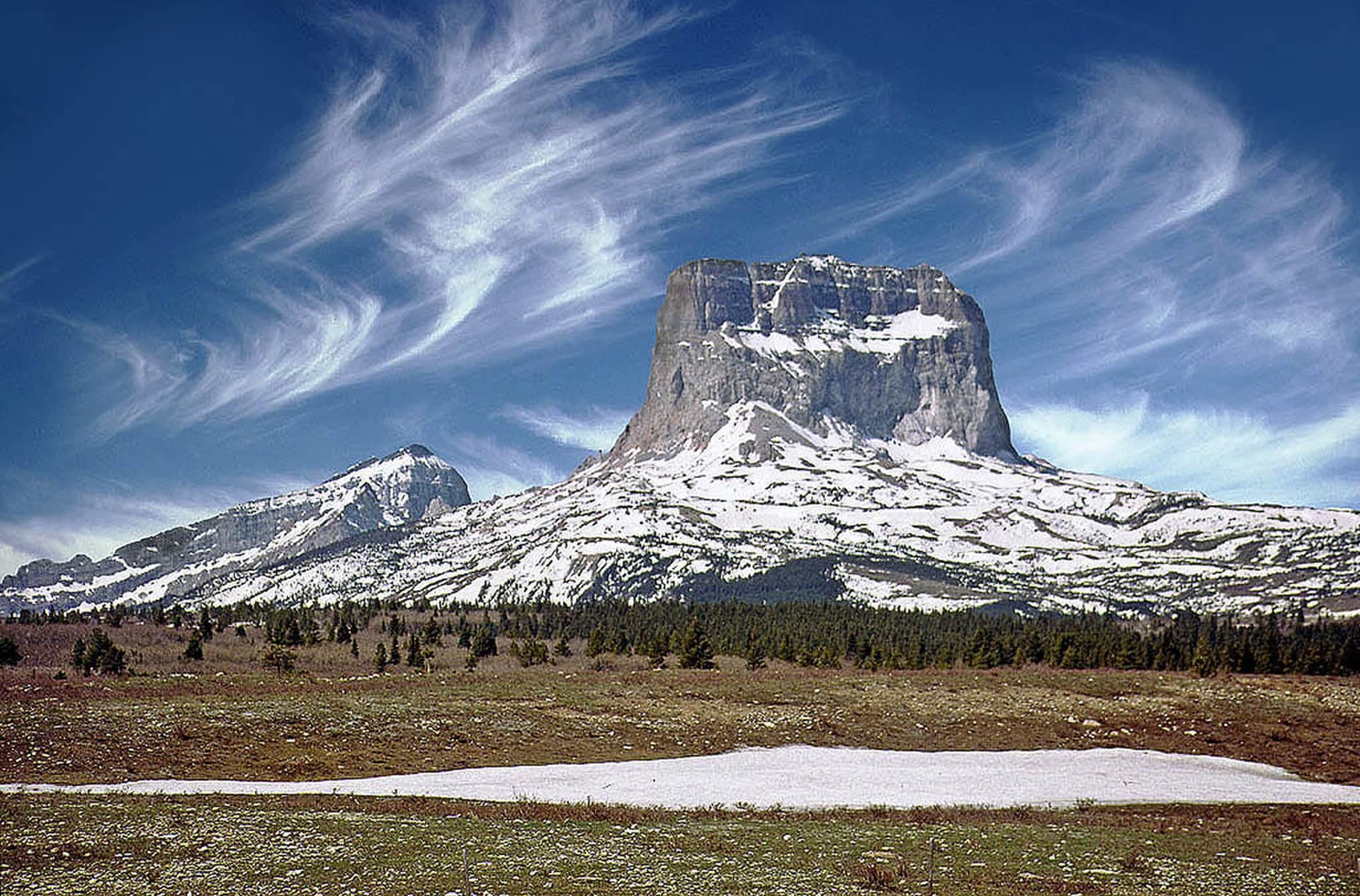
Chief Mountain (Ninaistakis), Glacier County, Montana
Babb, Montana, United States
61.4 km away
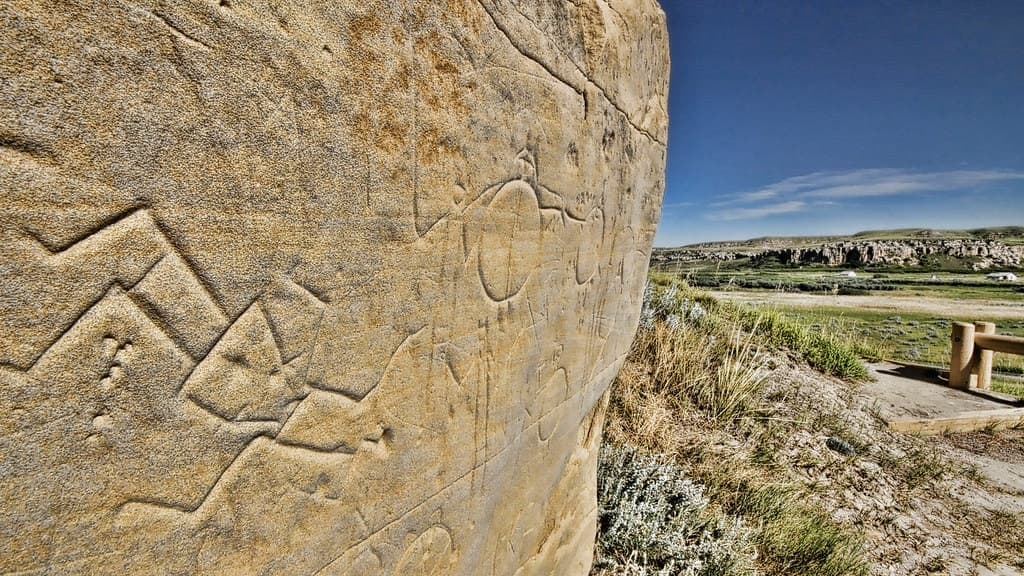
Writing-on-Stone Provincial Park
Milk River, Alberta, Canada
144.0 km away
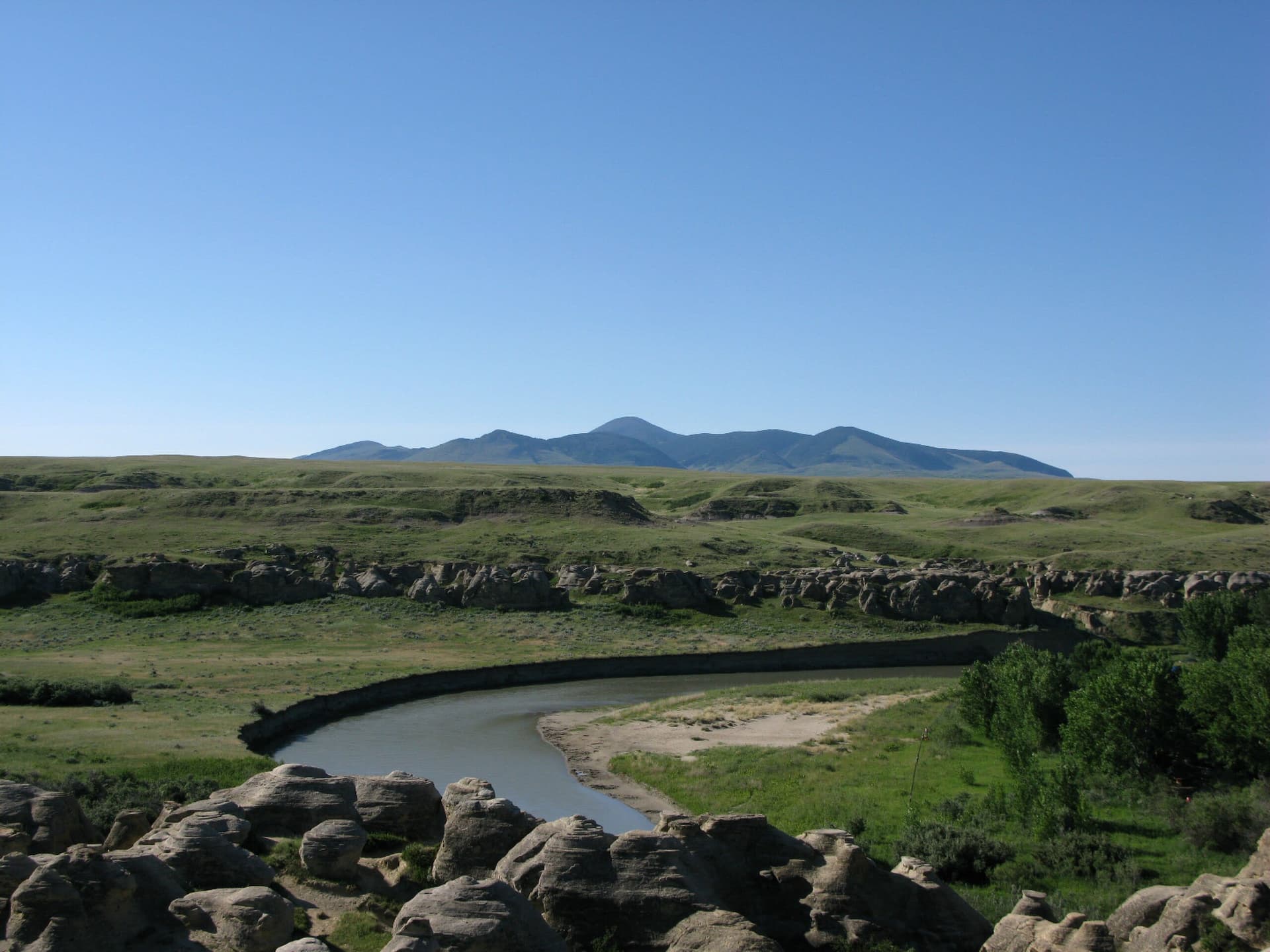
Sweet Grass Hills, Montana
Whitlash, Montana, United States
144.4 km away
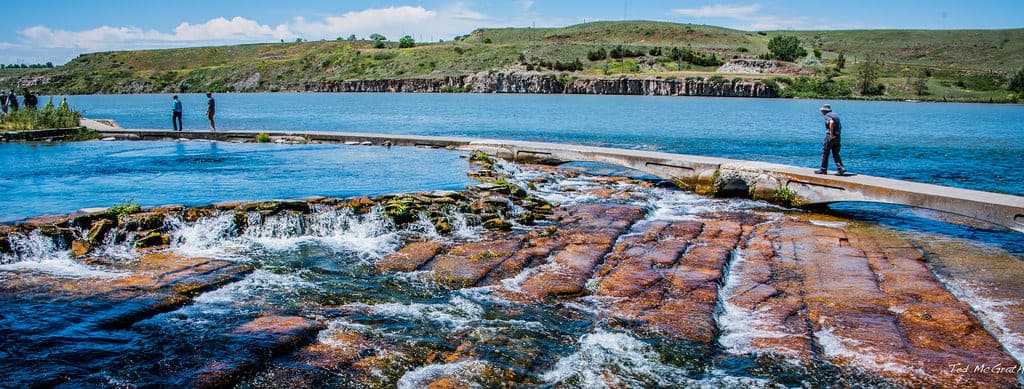
Giant Springs, Great Falls, Montana
Great Falls, Montana, United States
194.6 km away