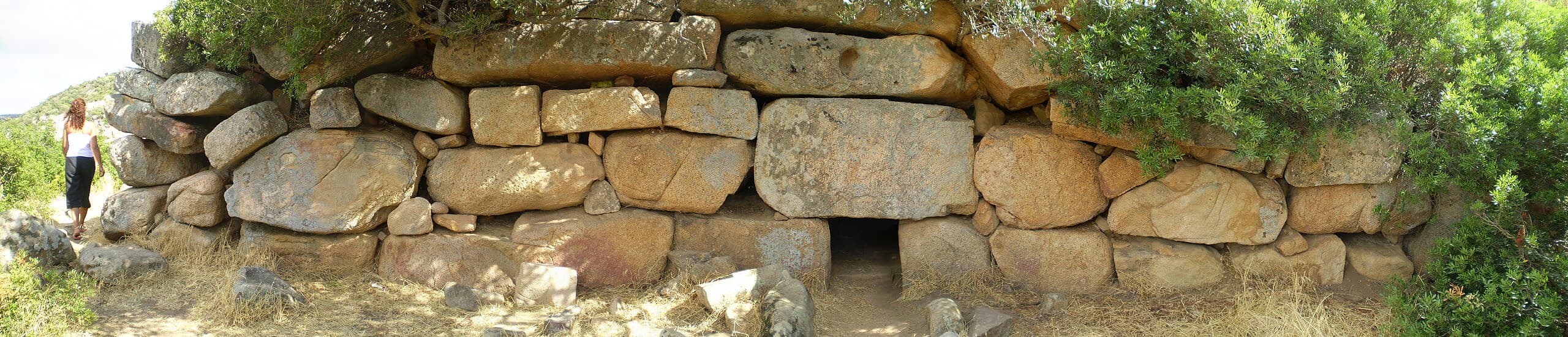
The Giants' Tomb of Barranc Mannu, Sa Tuerredda
A pilgrimage through the great ravine leads to a tomb where the living once slept beside the dead
Santadi, Sardinia, Italy
At A Glance
- Coordinates
- 39.0997, 8.7686
- Suggested Duration
- 2-3 hours including hike and site visit.
Pilgrim Tips
- Sturdy hiking shoes required. Weather-appropriate clothing.
- Photography permitted.
- Requires approximately 2 km hike on steep terrain. Not accessible for mobility-impaired visitors. Bring water and appropriate footwear.
Overview
To reach the Giants' Tomb of Barrancu Mannu, you must make a pilgrimage. The two-kilometer hike through the great ravine that gives the site its name transforms the journey into meditation. At trail's end stands a row-type Giants' Tomb from the thirteenth century BC, where the Nuragic people practiced incubation—sleeping beside ancestral bones to receive healing dreams. The remote location preserves what urban sites have lost: the experience of approaching sacred space through sacred landscape.
Barrancu Mannu means 'great ravine' in Sardinian, and the name describes both the landscape and the experience. To visit this Giants' Tomb requires a two-kilometer hike through terrain that nature has carved into something approaching sacred architecture. The journey becomes preparation; the arrival becomes arrival.
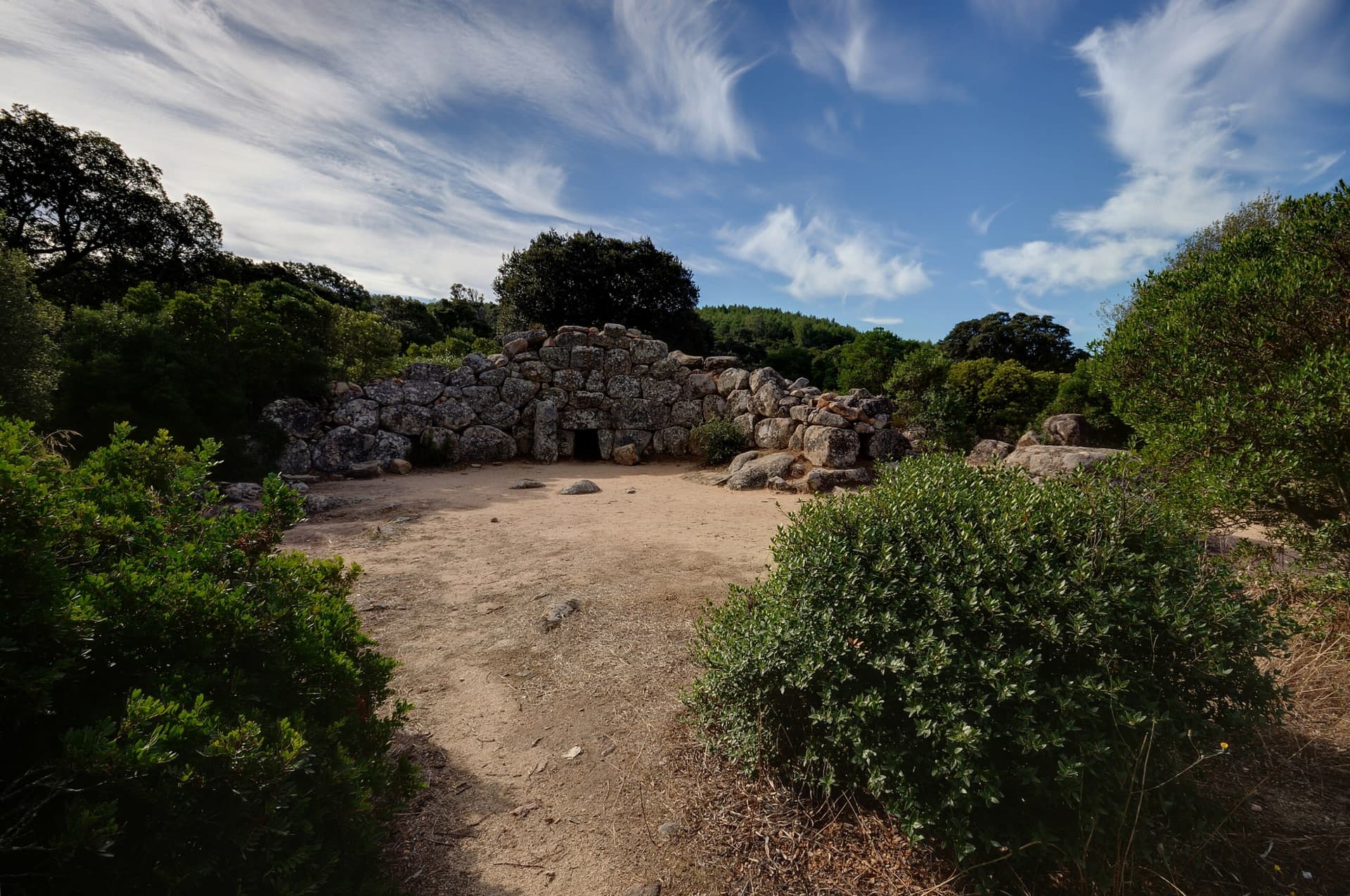
The tomb that awaits is a row-type Giants' Tomb from the Middle or Recent Bronze Age, approximately 1300 BC. The imposing central architrave dominates the curved exedra, which extends stone arms to embrace the space where funerary ceremonies once took place. Around the inside of the exedra, a low stone bench remains visible—seating for mourners or, some scholars suggest, beds for incubation sleepers.
Incubation was the practice of sleeping near ancestral tombs to receive healing or prophetic dreams. The Nuragic people believed their dead remained accessible, willing and able to assist the living through the medium of dreams. The Giants' Tomb was not merely repository but resource—a permanent point of contact between generations separated by death.
The remote location intensifies this understanding. Barrancu Mannu is not easily visited; you must want to come, must make effort, must walk. The physical journey mirrors the spiritual journey of those who came seeking ancestral guidance. The ravine contains natural monuments created by erosion—stone formations that may have added to the landscape's numinous character.
The site carries multiple names: Sa Tuerredda, Sa Fraigada, Barrancu Mannu. This multiplicity suggests ongoing significance across different communities and periods. The tomb meant something worth naming, worth distinguishing, worth remembering.
Today the hike remains the essential approach. GPS tracks are available for download; the trail requires no technical skill but demands willingness. Those who make the journey encounter not merely a tomb but a complete experience of sacred landscape—the great ravine leading to the place where the living once slept beside the dead.
Context And Lineage
Barrancu Mannu represents the Nuragic tradition of collective burial with incubation practices, requiring a pilgrimage-like approach through the great ravine that gives it its name.
The Giants' Tomb of Barrancu Mannu was built during the Middle or Recent Bronze Age, approximately 1300 BC, by the Nuragic civilization of the Sulcis region in southwestern Sardinia.
The builders chose a location that required effort to reach. The great ravine—barrancu mannu in Sardinian—created natural approach through landscape marked by erosion-carved rock formations. This was not convenient burial ground; this was sacred precinct.
The tomb follows the row-type pattern with imposing central architrave and curved exedra. The low stone bench around the inside of the exedra suggests this was a place for extended presence—mourners staying for ceremonies, pilgrims sleeping to receive incubation dreams.
Incubation was central to Nuragic spiritual practice. The living would sleep near ancestral tombs believing the dead could communicate through dreams. The Giants' Tomb was understood as permanent point of contact between generations—the dead did not depart but remained available for those willing to make the journey.
The multiple names for this site—Barrancu Mannu, Sa Tuerredda, Sa Fraigada—indicate significance across different communities and periods. A 2022 academic study documented the site's archaeology and cultural context.
The remote location that makes contemporary visiting effortful also preserved the tomb from development and disturbance. Barrancu Mannu retains integrity that more accessible sites have lost.
Built by Nuragic civilization (Middle/Recent Bronze Age, from ~1300 BC). Known by multiple traditional names. Documented in 2022 academic study.
The Nuragic Community of Sulcis
Builders and Users
Why This Place Is Sacred
Barrancu Mannu's thin quality emerges from the required pilgrimage through the great ravine, from the incubation practices that connected living and dead, and from the natural monuments that frame the approach.
The thinness at Barrancu Mannu begins with the journey. The two-kilometer hike through the ravine is not obstacle but initiation. Each step removes you further from ordinary life; each step brings you closer to the place where ordinary life was understood to intersect with something larger.
The ravine contains natural monuments—stone formations carved by erosion into shapes that might seem intentional. These natural features would have amplified the sense of entering sacred territory. The Nuragic people did not build in vacuum; they chose locations where nature had already marked something special. The great ravine offered both practical approach and spiritual preparation.
At trail's end, the Giants' Tomb presents familiar elements with particular intensity. The imposing central architrave. The curved exedra with its low stone bench. The corridor extending into darkness. What distinguishes Barrancu Mannu is context: you have earned your arrival through effort that Bronze Age pilgrims also expended.
The incubation tradition transforms understanding of the bench. This was not merely seating but sleeping space. The living came to sleep beside the dead, seeking dreams that would convey ancestral wisdom. The boundary between sleeping and waking, between living and dead, became permeable in this place.
The multiple names—Barrancu Mannu, Sa Tuerredda, Sa Fraigada—indicate the site held significance for different communities across time. Each name represents a tradition of approach, a way of understanding what this place offered. The multiplicity suggests that whatever the tomb provided was real enough to be named repeatedly.
Contemporary visitors who make the hike participate in something ancient. The physical effort, the gradual transition from ordinary landscape to sacred precinct, the arrival at a place designed for communion with the dead—these elements compose an experience that transcends tourism. Barrancu Mannu offers pilgrimage to those willing to undertake it.
Built during Middle/Recent Bronze Age (from approximately 1300 BC) as collective burial site and place for incubation practices. The low stone bench around the exedra may have served mourners and pilgrims seeking healing dreams.
Used throughout Nuragic period. Known by multiple local names. Documented in 2022 academic study. Remote location has preserved integrity.
Traditions And Practice
No active religious practices continue. Visitors engage through hiking pilgrimage to the remote site and contemplation of incubation traditions.
Collective burial with funerary rites. Incubation practices where the living slept near ancestral remains to receive healing or prophetic dreams. The low stone bench around the exedra provided space for extended presence.
Archaeological appreciation and hiking pilgrimage. GPS tracks available for the approach trail.
Approach the hike as pilgrimage, allowing the landscape to prepare you for encountering the tomb. Notice the natural monuments carved by erosion. Spend time with the stone bench, imagining incubation sleepers seeking ancestral guidance.
Nuragic Burial and Incubation
HistoricalBarrancu Mannu represents the Nuragic tradition of collective burial combined with incubation practices. Giants' Tombs were more than burial sites—they were places where the living could sleep beside the dead to receive healing dreams.
Collective burial with funerary rites in the exedra. Incubation sleeping on the low stone bench to receive ancestral communication. Pilgrimage through the great ravine to reach the sacred site.
Experience And Perspectives
The approximately two-kilometer hike through the great ravine leads to a well-preserved Giants' Tomb surrounded by natural rock formations. The journey transforms visiting into pilgrimage.
Begin in the hamlet of Barrancu Mannu, part of the municipality of Santadi. Pass through the village, continuing 150 meters beyond to the intersection or parking lot. The trail starts here, leading into the ravine that gives the site its name.
The first portion of the hike is relatively easy, following established path through vegetation. Notice the natural rock formations—erosion has created shapes that seem almost intentional, natural monuments framing your approach. The landscape itself prepares you for encountering something significant.
The final portion grows steeper, requiring more attention to footing. This is not technical hiking, but it demands willingness. The effort is part of the experience—you are doing what Bronze Age pilgrims did, making physical journey to reach spiritual destination.
The tomb emerges from the landscape with the authority of three thousand years. The imposing central architrave draws the eye; the curved exedra extends arms of stone. Walk the circumference, appreciating how the bull's-horn shape creates contained sacred space.
Notice the low stone bench visible around the inside of the exedra. This may have served multiple purposes: seating for funeral ceremonies, beds for incubation sleepers seeking healing dreams. Stand where the Nuragic people stood; sit where they may have slept.
The remote setting allows contemplation uninterrupted by crowds or commerce. The ravine surrounds you; the natural monuments maintain their watch. Whatever drew the Nuragic people to build here has not diminished—the landscape retains its particular character.
The return hike offers different perspective. Having encountered the tomb, you descend through the ravine with changed understanding. The natural monuments that seemed curious on approach now seem appropriate. The journey becomes circular, from ordinary world through sacred landscape and back.
Allow 2-3 hours for the complete experience including hike and time at the site.
From Santadi, pass through Barrancu Mannu village. Continue 150m past village to intersection or parking lot. Trail approximately 2 km—first portion easy, last portion steeper. GPS tracks available for download. Free access to outdoor site.
Barrancu Mannu can be understood as pilgrimage destination requiring effort to reach, as evidence of incubation healing practices, or as natural and cultural monument preserved through remoteness.
The 2022 academic study documents Barrancu Mannu as typical row-type Giants' Tomb with imposing central architrave. The site represents Nuragic funerary architecture in the Sulcis region.
Multiple traditional names (Barrancu Mannu, Sa Tuerredda, Sa Fraigada) suggest ongoing cultural significance across communities and periods.
The incubation traditions associated with Giants' Tombs interest those exploring ancient healing practices. The remote location and natural setting attract visitors seeking contemplation.
The full contents of the burial chamber remain undocumented. The specific community that built and used this tomb is not identified. Why the site has multiple traditional names requires further research.
Visit Planning
Located near Santadi in southwestern Sardinia. Requires approximately 2 km hike. Free access. Allow 2-3 hours including hike and site visit.
Accommodation available in Santadi and surrounding area.
Respect the natural environment and ancient tomb through careful movement and contemplative behavior.
Barrancu Mannu requires effort to reach—honor that effort by treating both the natural landscape and the ancient tomb with respect.
Sturdy hiking shoes required. Weather-appropriate clothing.
Photography permitted.
Not appropriate at archaeological sites.
Respect the natural environment. Do not disturb the ancient structures. Take all litter with you.
Sacred Cluster
Nearby sacred places create the location cluster described in the growth plan. This block is intentionally crawlable and links into the wider regional graph.
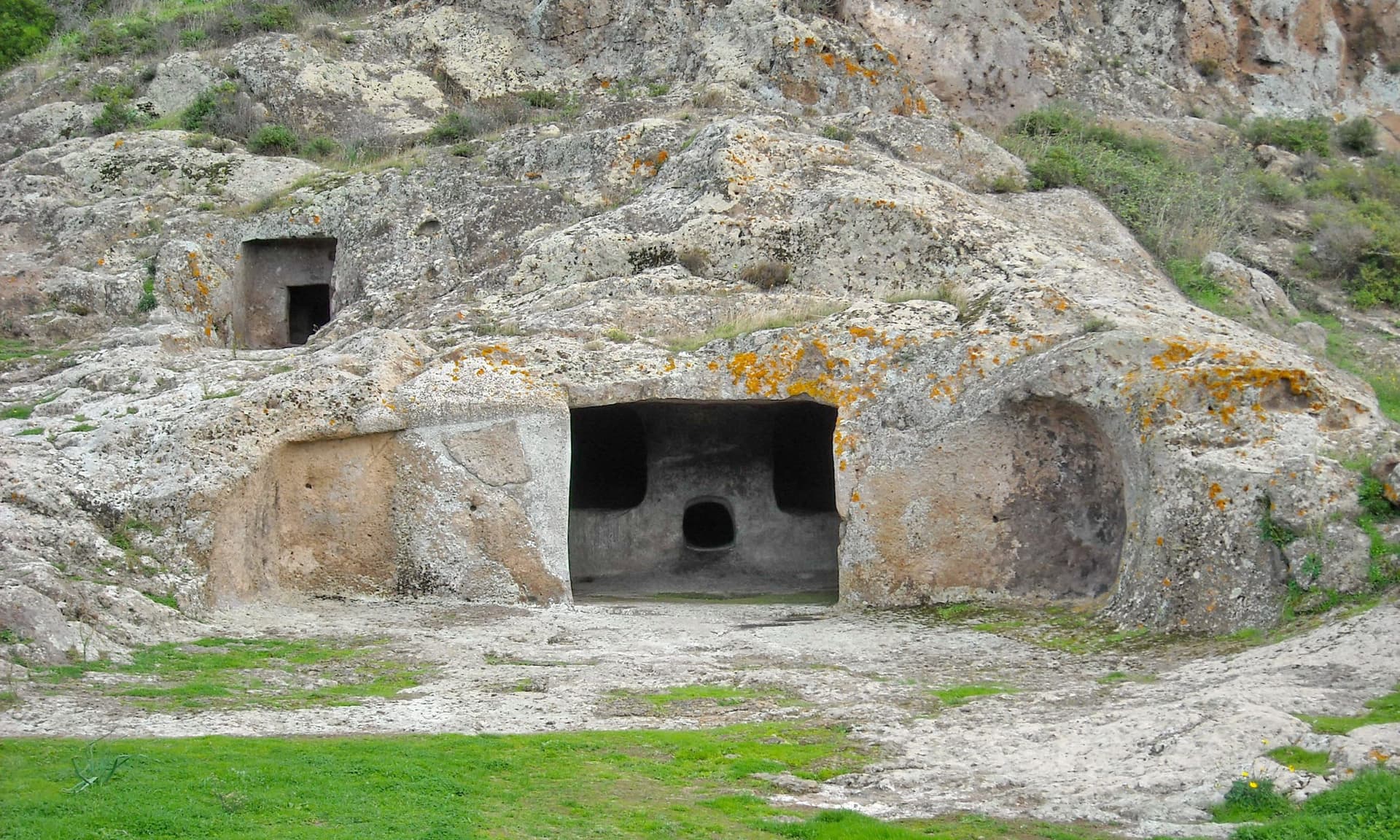
Necropolis di Montessu
Sa Baronia/Villaperuccio, Sardinia, Italy
9.0 km away
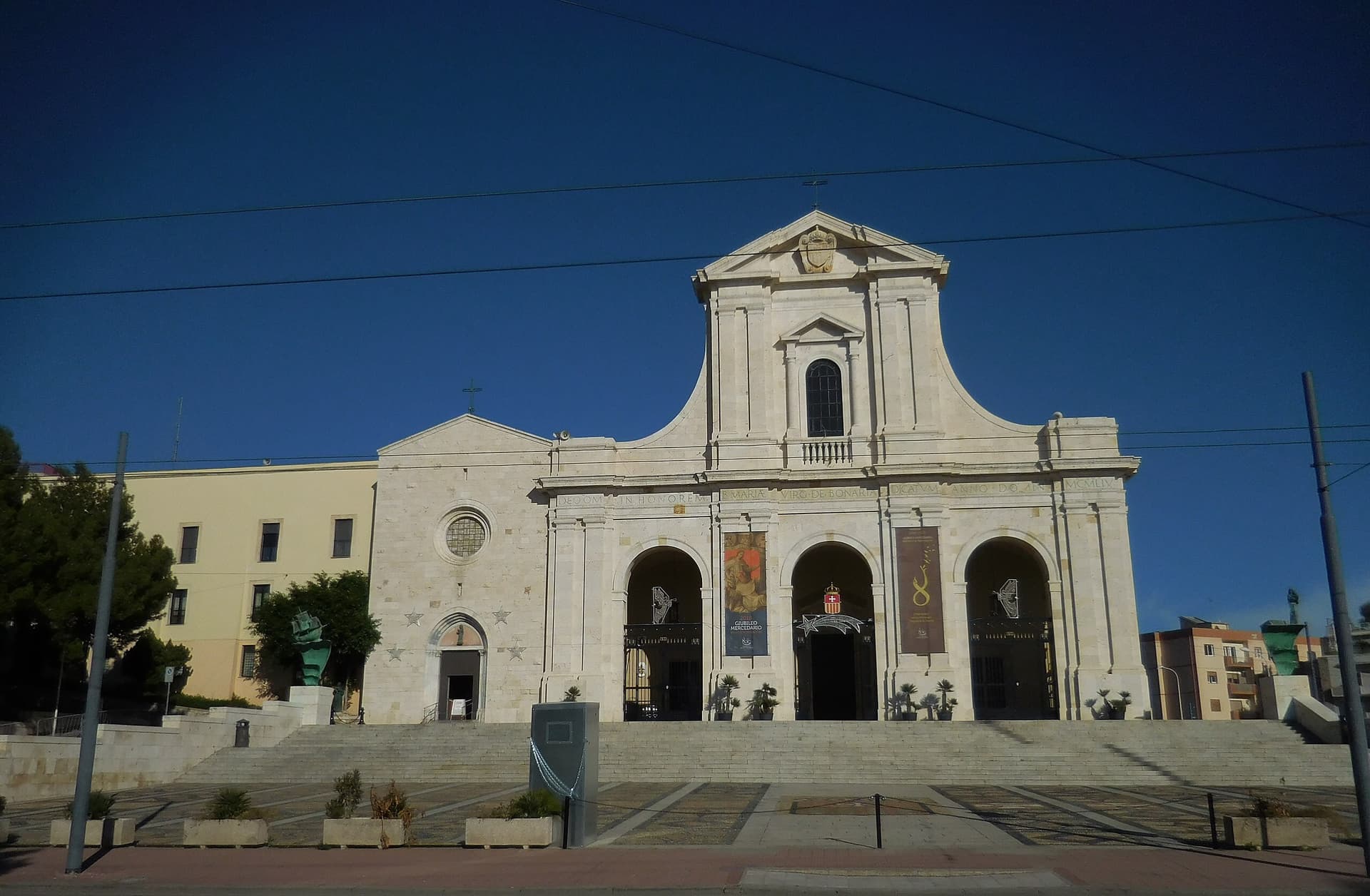
Basilica Santuario Nostra Signora di Bonaria
Cagliari, Sardinia, Italy
33.2 km away
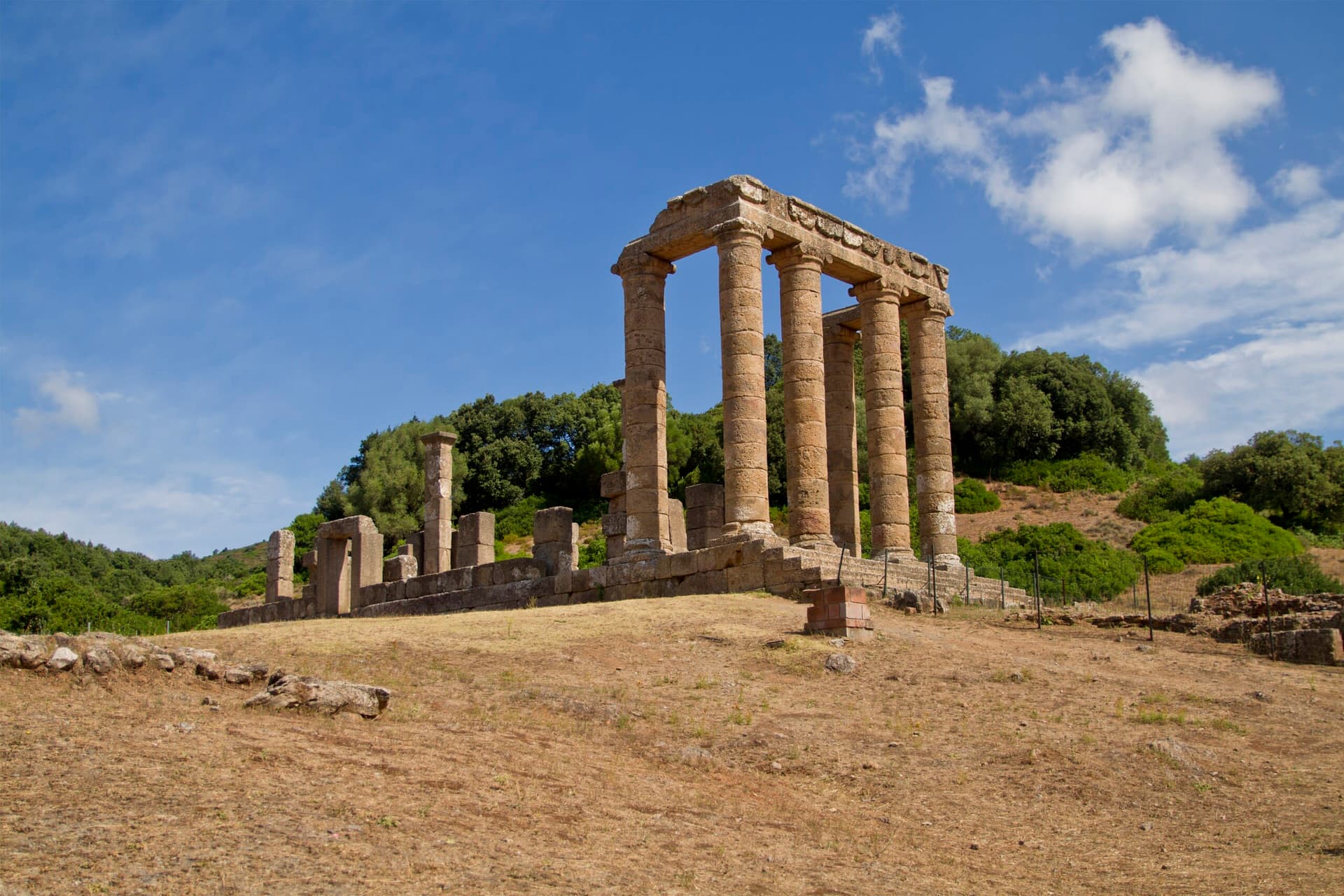
Temple of Antas
Frùmini Majori/Fluminimaggiore, Sardinia, Italy
40.1 km away
Giant’s Grave of Sa Domu e s’Orcu
Quartùcciu/Quartucciu, Sardinia, Italy
53.9 km away