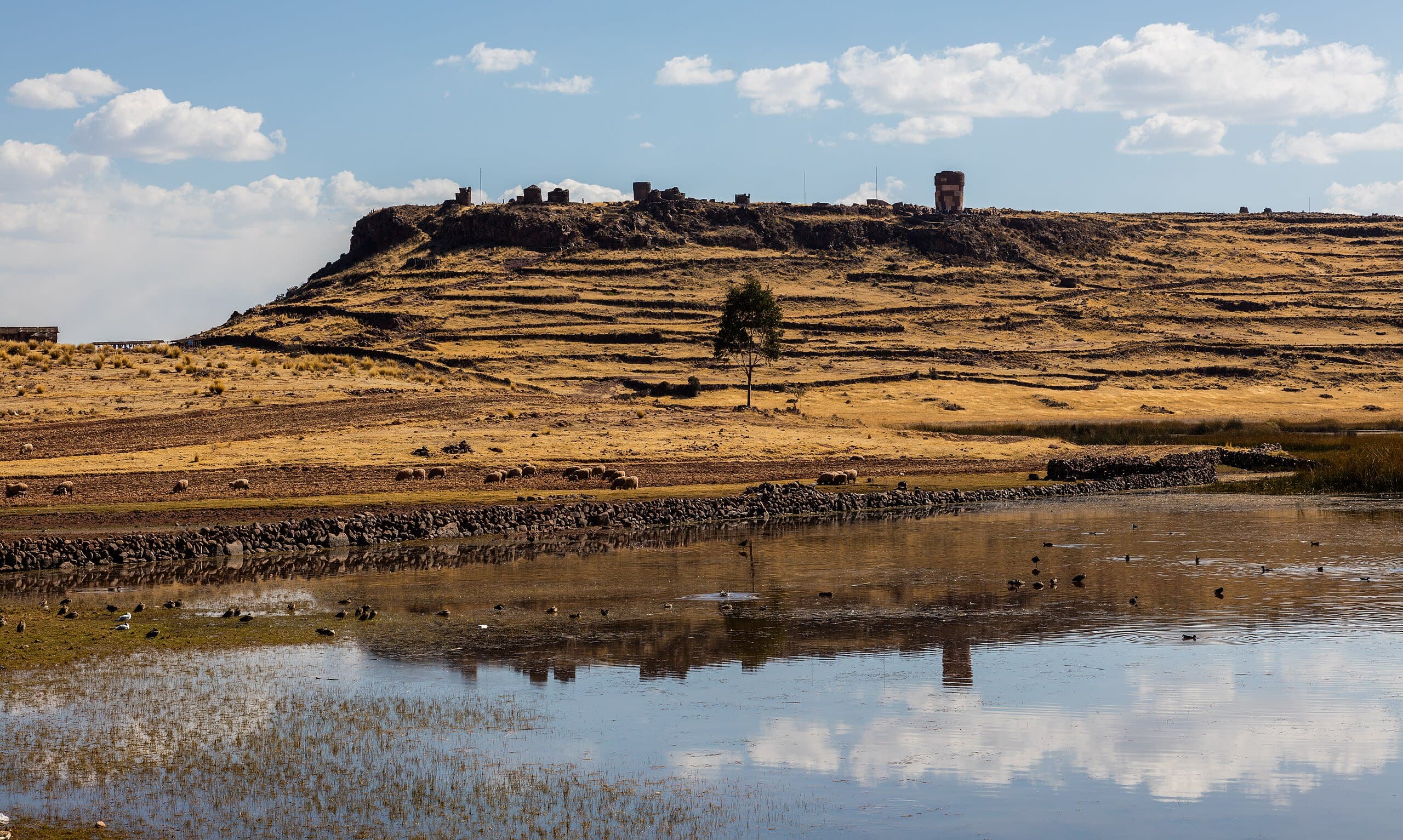
Sillustani
Where the Colla built tower-tombs facing the sunrise—returning their elite to the womb of Pachamama for rebirth
Atuncolla, Puno, Peru
At A Glance
- Coordinates
- -15.7167, -70.1500
- Suggested Duration
- One to two hours at the site; half day including travel from Puno.
Pilgrim Tips
- Comfortable clothing appropriate for altiplano conditions. Sun protection essential. Layers for temperature variation.
- Photography permitted throughout the site. Be respectful of the sacred nature of burial architecture.
- The site is a cemetery; treat it with corresponding respect. Altitude at 3,909 meters requires acclimatization. Some towers are unstable; keep appropriate distance.
Overview
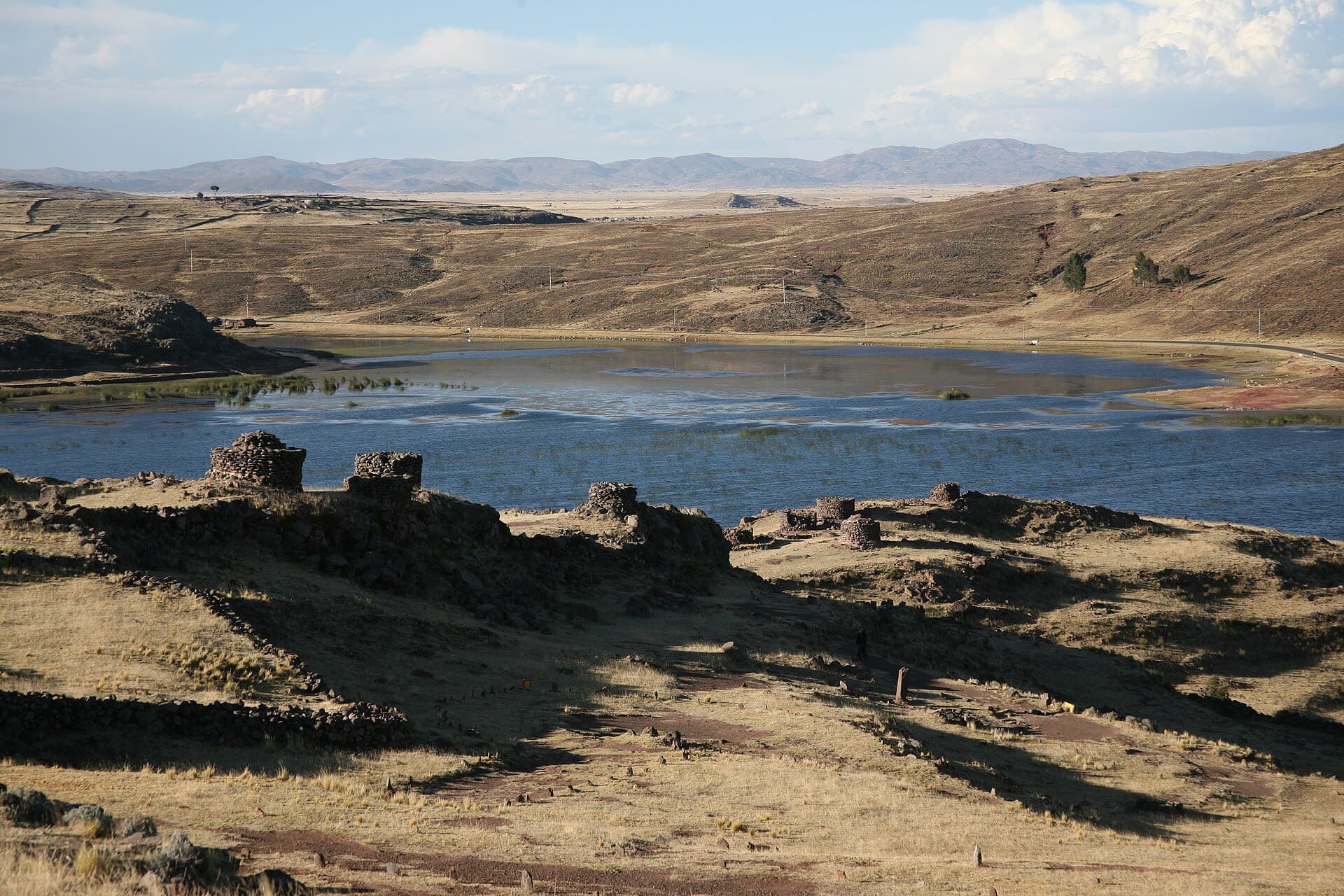
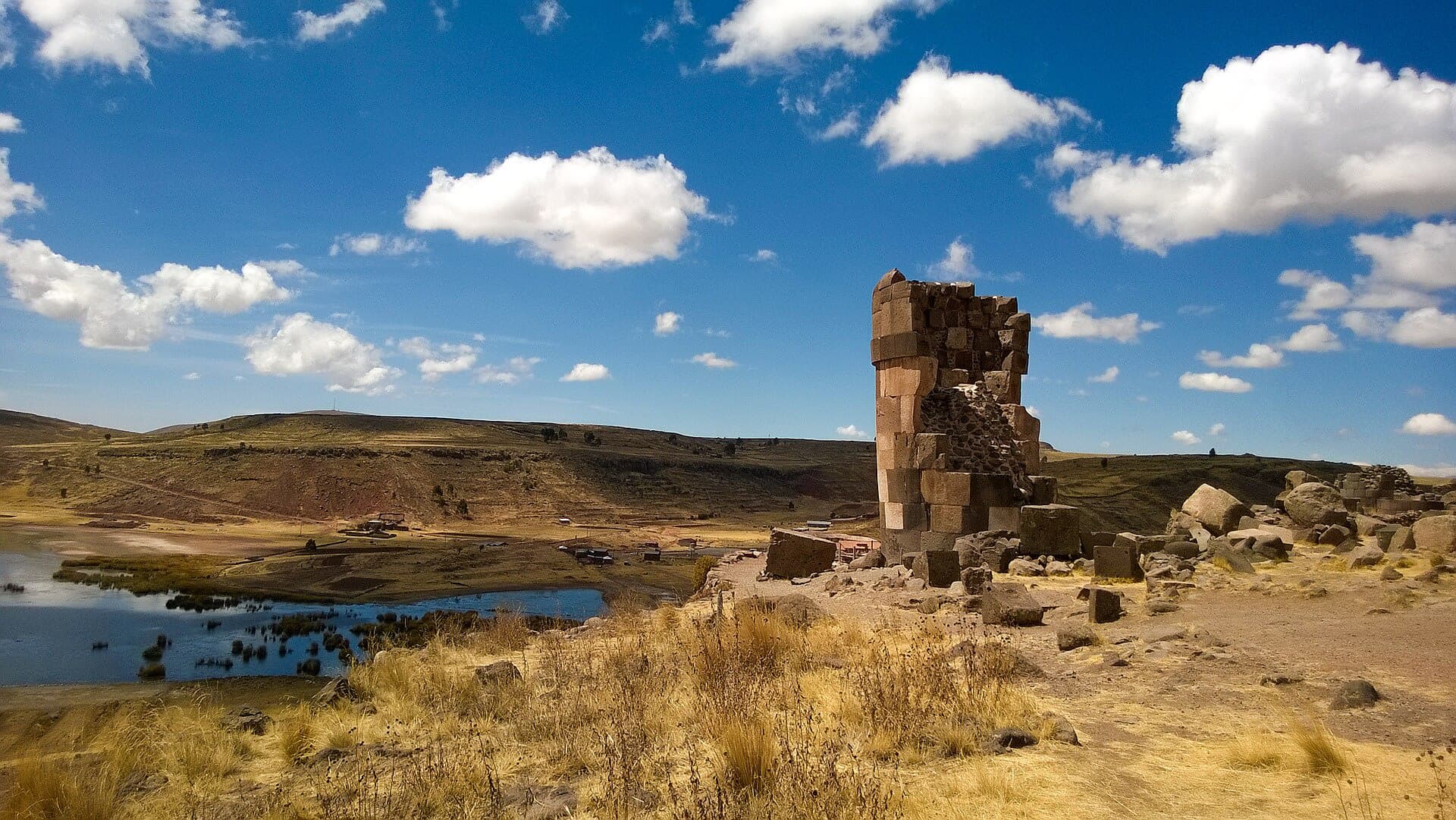
On a peninsula jutting into Lake Umayo, funeral towers rise against the altiplano sky. The Colla people built these chullpas to house their elite dead, who were buried in fetal position facing east—toward the rising sun that symbolized daily rebirth. The largest tower, the Lizard Chullpa built during the Inca period, reaches 12 meters high, its stones fitted so precisely that not even paper can pass between them. Sillustani represents the most preserved example of chullpa burial architecture in the Central Andes.
Sillustani occupies a dramatic peninsula on Lake Umayo, approximately 34 kilometers northwest of Puno at 3,909 meters elevation. The site contains approximately 90 chullpas—funeral towers that the Colla people built to house their dead long before the Inca arrived.
The Colla (Qulla), most likely a Puquina-speaking people, constructed these burial towers beginning in the pre-Inca period. The chullpa tradition extended across the entire south Central Andes, with above-ground burial styles going back at least to the mature Tiwanaku period (c. 500-950 CE). At Sillustani, the tradition reached its highest expression.
The towers range from 2 to 12 meters in height and up to 7 meters in diameter. Built from closely fitted volcanic stones, the walls taper slightly outward toward the top—an engineering achievement that stabilized the structures across centuries. The Lizard Chullpa, the largest and most famous, was built during the Inca period with remarkable precision: massive blocks fit together without mortar, so tightly that a sheet of paper cannot pass between them.
The burial practices encoded profound belief about death and rebirth. The dead were placed in fetal position—a symbolic return to the womb of Pachamama, Mother Earth. The only openings in the towers faced east, toward the sunrise that represented daily rebirth. The Colla believed the dead would be reborn with the sun, their tower-tombs orienting them toward the light that would call them back to life.
Each tower held multiple individuals, likely extended family groups. The Colla maintained living relationships with their ancestors, providing offerings that archaeological excavations have revealed: textiles, ceramics, and objects of gold, silver, and bronze. The dead were not gone but present, requiring care, influencing the living.
The Inca conquered the Colla in the 15th century but did not destroy their burial tradition. Instead, they adopted it, building chullpas like the Lizard Chullpa with Inca precision overlaying Colla practice. Many towers at Sillustani show pre-Inca characteristics redressed with Inca stone blocks—a visible stratigraphy of cultural layers.
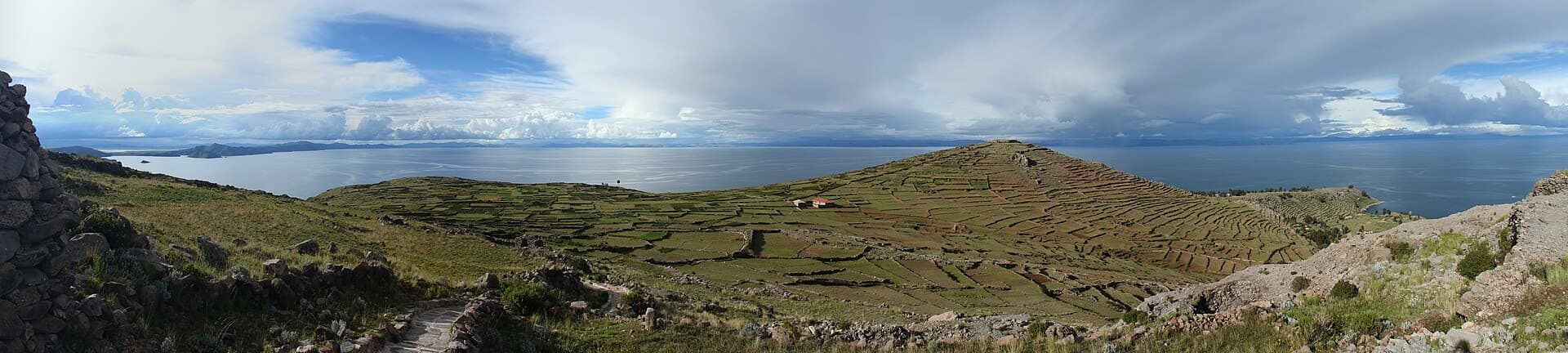
The lake that surrounds the Sillustani peninsula, Umayo, adds to the site's atmospheric power. In its center lies Umayo Island, a protected biodiversity area. The tranquil, mystical landscape of the Peruvian altiplano provides the setting for one of the Americas' most significant pre-Columbian burial sites.
Context And Lineage
The Colla people built Sillustani as an elite burial site before the Inca arrived. The chullpa tradition extended throughout the south Central Andes. Inca conquest brought new precision but preserved the underlying practice of orienting the dead toward sunrise for rebirth.
The tradition of above-ground burial in tower structures extends back at least to the mature Tiwanaku period (c. 500-950 CE), spreading throughout the south Central Andes. Among the Colla (Qulla) people of the Lake Titicaca basin, this tradition reached its highest expression at Sillustani.
The Colla, most likely a Puquina-speaking people, built these towers to house their elite dead. The architectural form—round, tower-like structures tapering outward toward the top—set the chullpas apart from other Andean burial practices. The design was both aesthetic and functional, creating stable structures that have survived for centuries.
Veneration of the dead and kinship were integral to Colla culture. The chullpas held not individuals but family groups, united in death as they had been in life. The dead were placed in fetal position, symbolizing return to Pachamama's womb and anticipation of rebirth. The only openings faced east, toward the sunrise that daily demonstrated the possibility of returning from darkness to light.
The Inca conquered the Colla in the 15th century but recognized the power of their burial practices. Rather than destroying the chullpas, the Inca adopted and refined them. The Lizard Chullpa, built during the Inca period, represents the fusion of Colla form with Inca precision—massive blocks fitted so tightly that paper cannot pass between them.
Many of the Sillustani towers show this cultural layering: pre-Inca characteristics visible beneath Inca redressing. Two peoples' reverence for the dead remains legible in the same stones.
Today, Sillustani is recognized as the best and most preserved example of chullpa architecture in the Central Andes, drawing visitors who seek to understand how pre-Columbian peoples understood death and what follows it.
Colla (Qulla) burial tradition, adopted by Inca (15th century). The chullpa style connects to Tiwanaku-period practices and influenced later Aymara burial customs.
Colla (Qulla) people
Original builders
Why This Place Is Sacred
Sillustani's thin quality emerges from the theological precision of its burial practice—towers built to orient the dead toward sunrise and rebirth—combined with the ongoing ancestral relationship the Colla maintained with their elite dead and the liminal landscape of the Lake Umayo peninsula.
Burial sites create thin places wherever the boundary between living and dead becomes permeable. At Sillustani, the Colla made this permeability intentional through architecture that encoded theology. The east-facing openings oriented the dead toward sunrise—the daily rebirth that would call ancestors back to life. The fetal burial position returned the dead to Pachamama's womb, completing the cycle that began with birth.
This theological precision created thin places by design rather than accident. The architects of Sillustani were building portals, orienting the dead toward the light that would transform them. Each tower was a womb-tomb, a point of passage between death and rebirth, between the world of the living and the world of the dead.
The ongoing relationship with ancestors intensified the thinness. The Colla did not bury and forget—they maintained connections through offerings and presence. The textiles, ceramics, and precious metals found with burials were provisions for continuing existence. The dead needed care; the living provided it. This reciprocal relationship kept the boundary between worlds permeable across generations.
The family structure of burials adds another dimension. Each chullpa held not individuals but extended family groups, united in death as in life. The towers became ancestral houses where multiple generations resided together, their collective presence creating concentrated thin-place power.
The landscape itself contributes to the site's thin quality. The peninsula jutting into Lake Umayo occupies threshold space—land surrounded by water, neither fully terrestrial nor aquatic. The lake's surface reflects sky; the towers reach toward it. The altiplano's vast openness and high altitude create conditions where ordinary perception shifts.
The cultural layering—Colla foundations redressed with Inca precision—adds temporal thinness. Two distinct peoples built here, united in their reverence for the dead, their practices overlapping in the same stones. To stand at Sillustani is to occupy multiple moments simultaneously.
Elite burial site of the Colla (Qulla) people, designed to orient the dead toward sunrise for rebirth. Later adopted and refined by the Inca.
From Colla burial tradition (pre-Inca) through Inca adoption and refinement (15th century) to modern archaeological preservation.
Traditions And Practice
Elite burial in chullpa towers, with the dead placed in fetal position and oriented toward the sunrise. Ancestor veneration through ongoing offerings. The practice unified extended families in death and maintained connections between living and dead.
Elite burials in chullpa towers. Fetal position burial symbolizing return to Pachamama's womb. East-facing openings for orientation toward sunrise and rebirth. Offerings of textiles, ceramics, gold, silver, and bronze. Family/clan burial in shared tombs. Ongoing ancestor veneration.
The site functions as an archaeological destination offering encounter with pre-Columbian beliefs about death and rebirth. While the chullpas are found across the altiplano, Sillustani is the most visited and best preserved example.
Approach the chullpas with awareness that you are entering a sacred cemetery where families were reunited in death. Notice the east-facing openings and consider the theology of sunrise-oriented burial. Let the Lake Umayo setting complete the experience.
Colla Chullpa Burial Tradition
HistoricalSillustani represents the highest expression of the chullpa burial tradition, where the Colla housed their elite dead in tower-tombs oriented toward sunrise for rebirth.
Elite family burial in tower structures. Fetal position for return to Pachamama's womb. East-facing openings for orientation toward sunrise. Offerings for the afterlife. Ongoing ancestor veneration.
Experience And Perspectives
Walk among funeral towers that reach 12 meters high, fitted with the precision that leaves no gap for paper. Contemplate the east-facing openings that oriented the dead toward sunrise. Let the Lake Umayo setting and altiplano sky complete the encounter with Colla and Inca beliefs about death and rebirth.
Sillustani lies approximately 34 kilometers northwest of Puno, about 45-50 minutes by road. The journey crosses altiplano landscape that prepares visitors for the site's atmosphere—vast sky, distant mountains, the clarity of high-altitude light.
Arrive at the peninsula and allow the setting to work on you. Lake Umayo surrounds most of the site, its surface reflecting clouds and creating the liminal quality that burial sites often possess. In the lake's center, Umayo Island rises—a protected biodiversity area that adds natural mystery to the archaeological.
Approach the chullpas that dot the peninsula. Approximately 90 towers stand here, ranging from 2 to 12 meters in height. The variety of sizes reflects the social hierarchy of those buried within—the largest towers for the most important families, smaller structures for those of lesser status.
Find the Lizard Chullpa, the site's most famous structure. Built during the Inca period, it represents the highest achievement of the chullpa tradition. The stones fit together without mortar, with the precision that characterizes Inca sacred architecture. The slight outward taper of the walls demonstrates engineering that stabilized the structure across centuries.
Examine the east-facing openings that characterize all the towers. These were not random but theological: the dead were oriented toward the sunrise that represented daily rebirth. Consider what it meant to place your ancestors facing the light that would call them back to life.
Note the towers that show pre-Inca characteristics redressed with Inca stone blocks—visible evidence of cultural layering, two peoples united in reverence for the dead.
Take time with the landscape. The altiplano's vastness, the lake's stillness, the towers reaching toward the sky—these elements create a setting appropriate for contemplating mortality and rebirth. The Colla chose this peninsula deliberately; its power is still apparent.
Located on a peninsula in Lake Umayo, approximately 34 km northwest of Puno (45-50 minutes by road). The site is at 3,909 meters elevation.
Sillustani can be understood as the finest example of chullpa burial architecture in the Andes, as a demonstration of Colla beliefs about death and rebirth, as evidence of cultural continuity across Inca conquest, or as a meditation on how architecture encodes theology.
Archaeological research has documented the burial practices and cultural succession at Sillustani while recognizing it as the best preserved chullpa site in the Central Andes.
The Colla understood death not as ending but as transition. The chullpa towers oriented the dead toward sunrise, toward the rebirth that each day demonstrated was possible. The fetal burial position returned the dead to Pachamama's womb.
The architectural persistence of the chullpas across cultures suggests that some sacred forms transcend the peoples who create them—that the Inca adopted the tradition because its power was undeniable.
The specific relationship between Sillustani's chullpas and those found elsewhere in the altiplano. The full ceremonial practices associated with chullpa burial. The identities and stories of those buried within.
Visit Planning
Located 34 km from Puno (45-50 minutes) at 3,909 meters. Open 8:00 AM to 5:00 PM. Entrance fee approximately S/5.50 (USD 2). The Lake Umayo setting adds to the site's atmospheric power.
Full range of accommodations in Puno. Day trip from Puno is standard.
Approach Sillustani as a cemetery where elite families were buried according to beliefs about death and rebirth. Do not enter or climb the chullpas. Respect the sacred character of the site.
Sillustani is a necropolis where the Colla and Inca buried their elite dead. While the corpses are no longer present (removed by archaeologists or looters), the sacred purpose of the site persists. Treat it as you would any cemetery.
Comfortable clothing appropriate for altiplano conditions. Sun protection essential. Layers for temperature variation.
Photography permitted throughout the site. Be respectful of the sacred nature of burial architecture.
No offerings at the chullpas.
Do not enter, climb on, or damage the chullpas. Stay on designated paths. Keep appropriate distance from unstable structures.
Sacred Cluster
Nearby sacred places create the location cluster described in the growth plan. This block is intentionally crawlable and links into the wider regional graph.