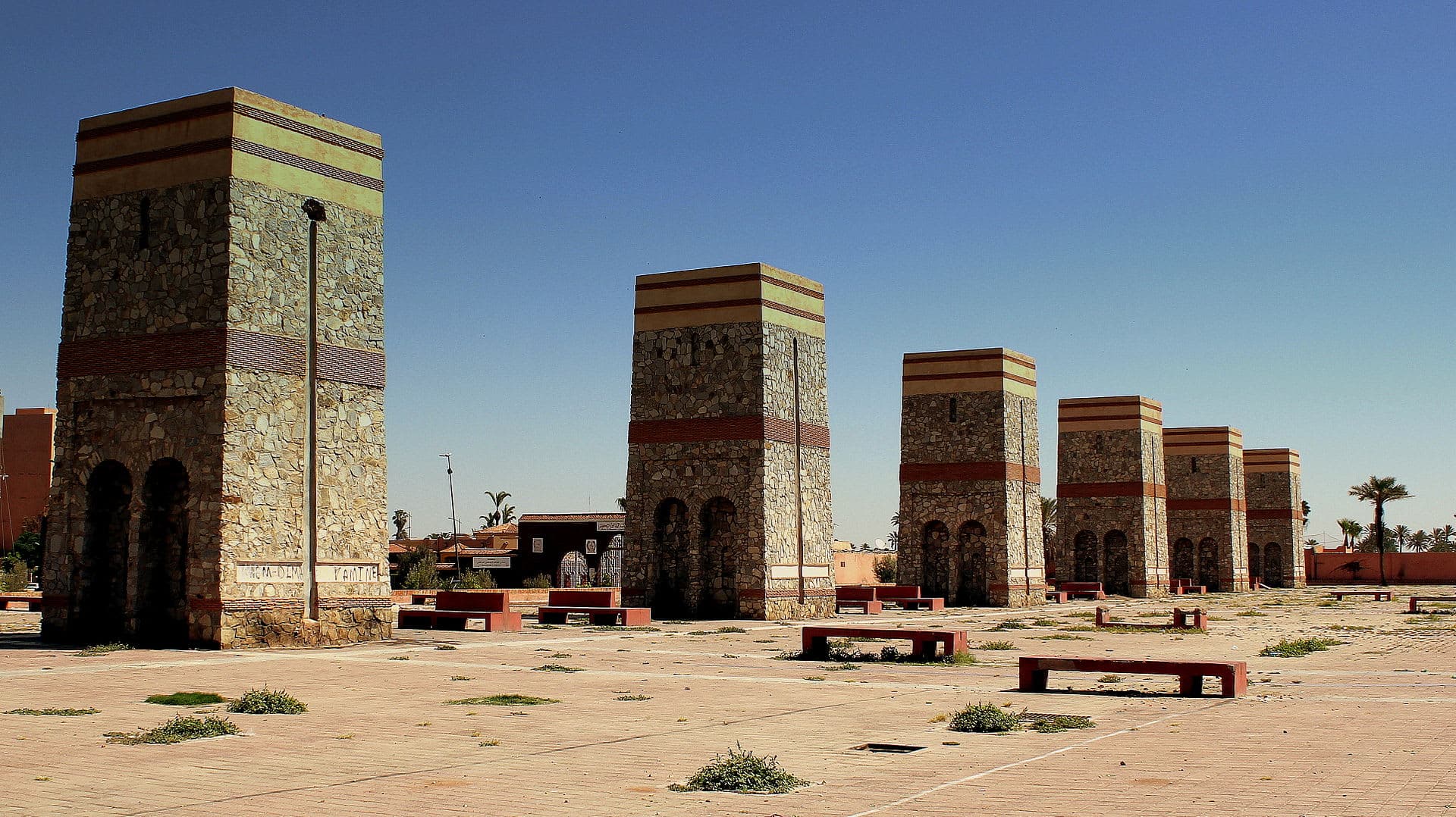
Seven Saints of Marrakesh
Seven holy men whose blessings shape Marrakesh, their tombs forming a pilgrimage within the city walls
Marrakesh, Marrakech-Safi, Morocco
At A Glance
- Coordinates
- 31.6237, -7.9936
- Suggested Duration
- The full traditional ziyara takes a week. Visiting the most significant shrines (Sidi Bel Abbes, Sidi Ben Sliman al-Jazuli) can be done in half a day. Finding all seven requires local knowledge and time.
- Access
- Shrines are distributed throughout the medina of Marrakesh. Some are in busy areas, others in residential neighborhoods. Navigation is challenging without a guide. Marrakesh Menara Airport has international connections.
Pilgrim Tips
- Shrines are distributed throughout the medina of Marrakesh. Some are in busy areas, others in residential neighborhoods. Navigation is challenging without a guide. Marrakesh Menara Airport has international connections.
- Modest dress throughout the medina. Women should cover hair near zawiyas. Loose, covering clothing for all.
- Exterior photography with discretion. Do not photograph worshippers without permission. No photography inside shrines.
- Non-Muslims cannot enter the shrines. Do not attempt to enter or photograph inside. These are living sacred spaces, not tourist sites. Respect the devotion of those entering. Dress modestly in the vicinity of the zawiyas.
Overview
Marrakesh is a city built around saints. Seven holy men—scholars, mystics, protectors of the poor—lie buried within its walls. Their tombs form a pilgrimage route that mirrors, in miniature, the circumambulation of the Kaaba. For Moroccan Muslims, visiting these shrines brings baraka: blessing that flows from those who lived close to God. The most beloved is Sidi Bel Abbes, patron saint of Marrakesh and protector of the blind.
Beneath the famous souks and tourist riads, Marrakesh is a city shaped by holy men. Seven saints lie buried within its walls, their zawiyas (shrine complexes) marking points of spiritual power that have drawn pilgrims for centuries.
The tradition was formalized by Sultan Moulay Ismail in the late 17th century. He established a week-long pilgrimage—the ziyara—that proceeds counterclockwise around the city, visiting each saint in turn. The direction mirrors the tawaf, the circumambulation of the Kaaba in Mecca. What Muslims do in the holiest place on earth, pilgrims do here in the red city of Morocco.
The seven saints span five centuries, from Qadi 'Iyyad (died 1149) to Sidi Abdallah al-Ghazwani (died 1528). Each represents a different face of Islamic piety: legal scholarship, Sufi mysticism, charitable devotion. But all are united by baraka—the blessing that flows through holy people and remains potent even after death.
Sidi Bel Abbes is the most beloved. Abu al-Abbas as-Sabti came to Marrakesh in the 12th century and devoted himself to the poor and the blind. His teaching was simple: charity, charity, charity. His zawiya continues this work today, feeding the needy, assisting the sightless. He is the patron saint of Marrakesh itself.
Non-Muslims cannot enter the shrines—these are living sacred spaces, not tourist attractions. But the geography of the ziyara reveals a different Marrakesh: not the medina of commerce but the medina of sanctity, where the walls remember not just sultans and merchants but the holy men whose blessings still flow through the red earth.
Context And Lineage
Seven holy men died in Marrakesh across five centuries (1149-1528). Sultan Moulay Ismail formalized a week-long pilgrimage to their tombs in the late 17th century. Each saint represents different aspects of Islamic piety: scholarship, mysticism, charity. Sidi Bel Abbes is the patron saint of Marrakesh.
Sultan Moulay Ismail of the Alawite dynasty (ruled 1672-1727) formalized the ziyara to the Seven Saints in the late 17th century. His motivation was both spiritual and political. Popular pilgrimages to local saints were an important feature of Moroccan religious life, but they could also consolidate power in the hands of zawiya leaders outside royal control. The Seven Saints of Regraga, a Berber tribe near Essaouira, attracted a significant pilgrimage that Moulay Ismail wished to counter.
By institutionalizing the Marrakesh ziyara under royal patronage, the sultan channeled popular devotion through state-approved channels. The pilgrimage proceeds counterclockwise around the city over seven days, visiting each saint in turn. The direction mirrors the tawaf around the Kaaba, connecting local practice to universal Islam.
But the saints themselves were not chosen arbitrarily. Each was a significant figure in the religious history of Morocco and the Maghreb: scholars, mystics, teachers, patrons of charity. Their baraka was real to the people who visited them. The sultan formalized what was already sacred.
The seven saints represent five centuries of Moroccan Islamic piety. Their zawiyas became centers of learning, charity, and Sufi practice. The tradition connects to broader networks of saint veneration across the Islamic world while remaining distinctly Moroccan in character.
Sidi Bel Abbes (Abu al-Abbas as-Sabti)
Patron saint of Marrakesh
Qadi 'Iyyad ibn Musa
Scholar and judge
Sidi Ben Sliman al-Jazuli
Sufi master
Sultan Moulay Ismail
Formalizer of the ziyara
Why This Place Is Sacred
The Seven Saints make Marrakesh thin by distributing baraka across the city. Each tomb is a point where blessing accumulates. The pilgrimage route creates a sacred geography that sanctifies not just shrines but the spaces between them. Sidi Bel Abbes, still serving the blind and poor through his zawiya, makes charity itself a form of thinness.
Thinness at the Seven Saints is the thinness of baraka—blessing that flows through holy people and, after their death, through their tombs. In Islamic tradition, the friends of God (awliya) draw close to the divine during their lives. This closeness does not end at death. The tomb becomes a conduit; the blessing remains accessible to those who visit.
The seven tombs distribute this thinness across Marrakesh. The city is not uniformly sacred—the souks are souks—but the zawiyas mark points of concentration. Pilgrims moving between them trace a pattern that sanctifies the journey as well as the destination. The counterclockwise direction, mirroring the tawaf around the Kaaba, connects local devotion to the universal practice of Islam.
Sidi Bel Abbes adds another dimension. His devotion was not abstract mysticism but practical charity. He fed the poor, cared for the blind, insisted that the rich share with those in need. His zawiya continues this work. To visit is not only to seek blessing for oneself but to encounter blessing made manifest in service to others. The charity is the thinness. The food given to the hungry is the baraka.
The five-century span of the saints creates historical depth. Qadi 'Iyyad died when the Almohads ruled Morocco. Sidi Abdallah al-Ghazwani died under the Saadians. The tradition absorbs each era, each political change, maintaining continuity through the persons of the saints. The city changes; the saints remain.
For non-Muslims who cannot enter the shrines, there is still thinness to be found: in the crowds of the devout entering the zawiyas, in the activity of charity at Sidi Bel Abbes, in the mere fact that a city famous for tourism is also a city built around holy men.
The ziyara was institutionalized by Sultan Moulay Ismail in the late 17th century, partly to consolidate royal patronage over popular saint veneration and partly to counter a rival pilgrimage to the Seven Saints of Regraga near Essaouira. The shrines themselves developed over centuries around the tombs of the saints.
The individual zawiyas developed around the tombs of each saint, expanded by donations and royal patronage. The formal week-long pilgrimage was established in the late 17th century. While the complete ziyara may be less commonly practiced today, individual visits to the zawiyas continue. Sidi Bel Abbes remains the most active, with ongoing charitable work.
Traditions And Practice
The traditional ziyara proceeds over a week, visiting each saint in turn in counterclockwise direction. Pilgrims pray, recite Quran, and seek intercession (tawassul). Individual visits to zawiyas continue year-round. The Zawiya of Sidi Bel Abbes maintains charitable work.
The formal ziyara begins Tuesday at the tomb of Sidi Yusuf ibn 'Ali near Bab Aghmat. Wednesday: Qadi 'Iyyad. Thursday: Sidi Bel Abbes. Friday: Sidi Ben Sliman al-Jazuli. Saturday: Sidi Abd al-'Aziz. Sunday: Sidi Abdallah al-Ghazwani. Monday concludes the pilgrimage. At each shrine, pilgrims pray, recite Quran, and seek the saint's intercession.
The full week-long ziyara may be less commonly practiced in its complete form, but individual visits to zawiyas continue. The Zawiya of Sidi Bel Abbes remains the most active, with ongoing charitable distribution. Religious occasions and the moulid (birthday celebration) of each saint bring larger gatherings.
For non-Muslims: Approach the Seven Saints as a way of understanding Marrakesh's sacred geography. Locate the major zawiyas (Sidi Bel Abbes, Sidi Ben Sliman al-Jazuli) and observe from outside. Note how these shrines shape the medina. Consider hiring a guide who can explain the religious and cultural context. For Muslims: Participate in the ziyara according to your tradition. The zawiyas welcome those who come in devotion.
Moroccan Sufi Islam
ActiveThe Seven Saints represent the importance of saint veneration and Sufi spirituality in Moroccan Islam. The ziyara connects local devotion to universal Islamic practice through its counterclockwise direction mirroring the tawaf.
Week-long ziyara visiting all seven tombs. Individual visits to zawiyas. Prayer, Quran recitation, and tawassul (seeking intercession). Charitable work at the Zawiya of Sidi Bel Abbes.
Experience And Perspectives
Non-Muslims experience the Seven Saints from outside—observing the activity at zawiyas, noting their locations in the medina, understanding Marrakesh as a city shaped by saints. The Zawiya of Sidi Bel Abbes is the most significant, with visible charitable activity. Muslim visitors can enter the shrines to pray and seek blessings.
For non-Muslims, the Seven Saints of Marrakesh offer a different kind of experience than sites that can be entered and photographed. These are living sacred spaces where entry is restricted to believers. The experience is one of limitation—and through limitation, of respect.
What you can experience: The exteriors of the zawiyas, some more visible than others. The atmosphere of devotion as Moroccan Muslims enter and exit. The location of each shrine within the medina's maze—some in busy areas, others tucked into residential neighborhoods. The charitable activity at the Zawiya of Sidi Bel Abbes, where food is distributed and the blind are assisted. The simple fact that this famous tourist city is also a city of saints, its geography marked by holy men whose presence shapes the space.
The Zawiya of Sidi Bel Abbes, in the northern part of the medina, is the most significant. The complex around the tomb is extensive, with charitable functions that extend beyond the shrine itself. Even from outside, you can observe the flow of people, the activity of giving and receiving that continues the saint's legacy of charity.
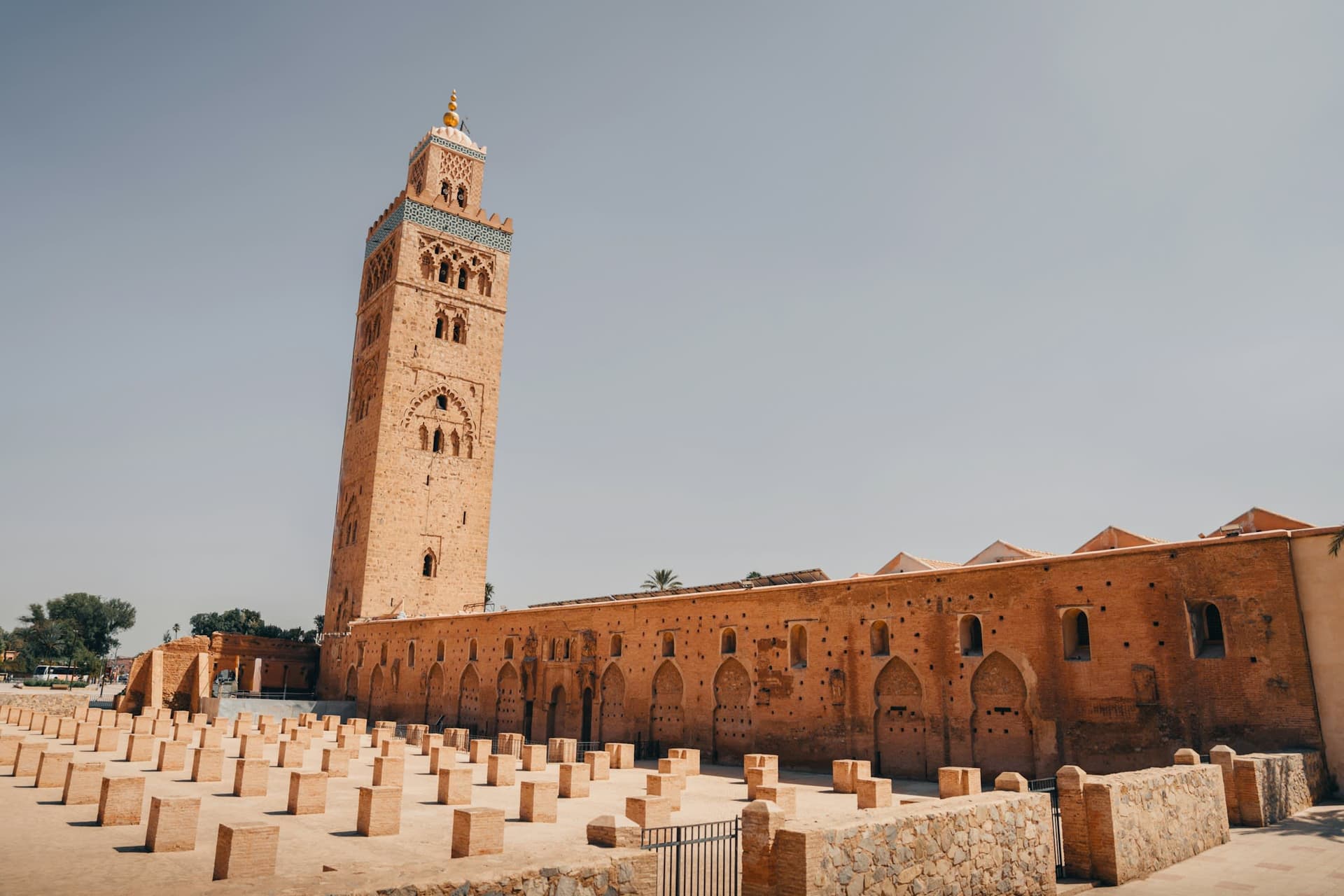
Sidi Ben Sliman al-Jazuli, buried near the Koutoubia, was a Sufi master whose order spread across Morocco. His shrine draws those who practice dhikr (remembrance of God) in his lineage. He was the only one of the seven not originally buried in Marrakesh—his body was transferred from Afoughal by the Saadians in 1523-24.
Locating all seven shrines requires local knowledge. Some are not marked for tourists. A guide who understands the religious significance can provide context that transforms a walk through the medina into a pilgrimage observed, if not performed.
For Muslim visitors, the experience is direct: entry into the shrines, prayer at the tombs, recitation of Quran, seeking the saint's intercession (tawassul). The full week-long ziyara, starting Tuesday and ending Monday, proceeds through all seven shrines in the traditional order, mimicking the circumambulation of the Kaaba.
The shrines are distributed throughout the medina. Sidi Bel Abbes is in the northern medina. Sidi Ben Sliman al-Jazuli is near the Koutoubia. Others are in residential areas. A guide is recommended to locate all seven and to understand the cultural and religious context. Non-Muslims should not attempt to enter the shrines.
The Seven Saints invite interpretation as an example of Moroccan popular religion, as a political project of the Alawite sultans, as a living tradition of saint veneration, and as a sacred geography that shapes Marrakesh beneath its touristic surface.
Historians and Islamic studies scholars recognize the Seven Saints pilgrimage as an important example of the integration of state power and popular religion in Morocco. Sultan Moulay Ismail's formalization of the ziyara demonstrates how rulers sought to channel saint veneration. The saints themselves represent significant figures in Moroccan intellectual and spiritual history.
For Moroccan Muslims, the Seven Saints are sources of baraka—blessing that flows from those who lived close to God. Visiting their tombs is not worship of the saints but seeking their intercession (tawassul). The saints are friends of God (awliya) whose prayers remain effective after death.
Some connect the seven saints to broader patterns of 'seven' in sacred geography worldwide. The counterclockwise pilgrimage direction interests those studying sacred geometry and circumambulation.
The relationship between the Seven Saints pilgrimage and older Berber traditions is not fully understood. Whether the number seven was chosen for theological reasons or reflects earlier seven-saint traditions is debated.
Visit Planning
Shrines located throughout Marrakesh medina. No entry fee, but donations appreciated. Local guide recommended to locate all shrines and understand context. Non-Muslims view from outside only.
Shrines are distributed throughout the medina of Marrakesh. Some are in busy areas, others in residential neighborhoods. Navigation is challenging without a guide. Marrakesh Menara Airport has international connections.
Marrakesh offers accommodations from budget hostels to luxury riads. Staying in the medina provides atmosphere and proximity to the zawiyas.
Non-Muslims cannot enter the shrines. Modest dress required. Photography of shrine exteriors may be sensitive. Respect the devotion of worshippers.
The Seven Saints of Marrakesh are living sacred sites, not museums. Non-Muslims are not permitted to enter the zawiyas. This restriction should be respected without resentment—it reflects the sacred character of the spaces and the difference between visitor and devotee.
From outside, you can observe, photograph exteriors with discretion, and note the activity around the shrines. Do not attempt to photograph worshippers without permission. Do not block entrances. Maintain respectful behavior appropriate to a religious site.
Dress modestly when visiting the vicinity of zawiyas. Women should cover hair; all should wear loose, covering clothing. This is appropriate throughout the medina but especially near religious sites.
If you are Muslim and wish to participate in devotions, approach with the sincerity appropriate to visiting the tombs of holy people. The traditions of your own practice regarding tawassul (intercession) will guide your devotion.
Modest dress throughout the medina. Women should cover hair near zawiyas. Loose, covering clothing for all.
Exterior photography with discretion. Do not photograph worshippers without permission. No photography inside shrines.
Donations to zawiya charitable work are welcomed.
Non-Muslims cannot enter the shrines. This is not negotiable. Respect the restriction.
Sacred Cluster
Nearby sacred places create the location cluster described in the growth plan. This block is intentionally crawlable and links into the wider regional graph.