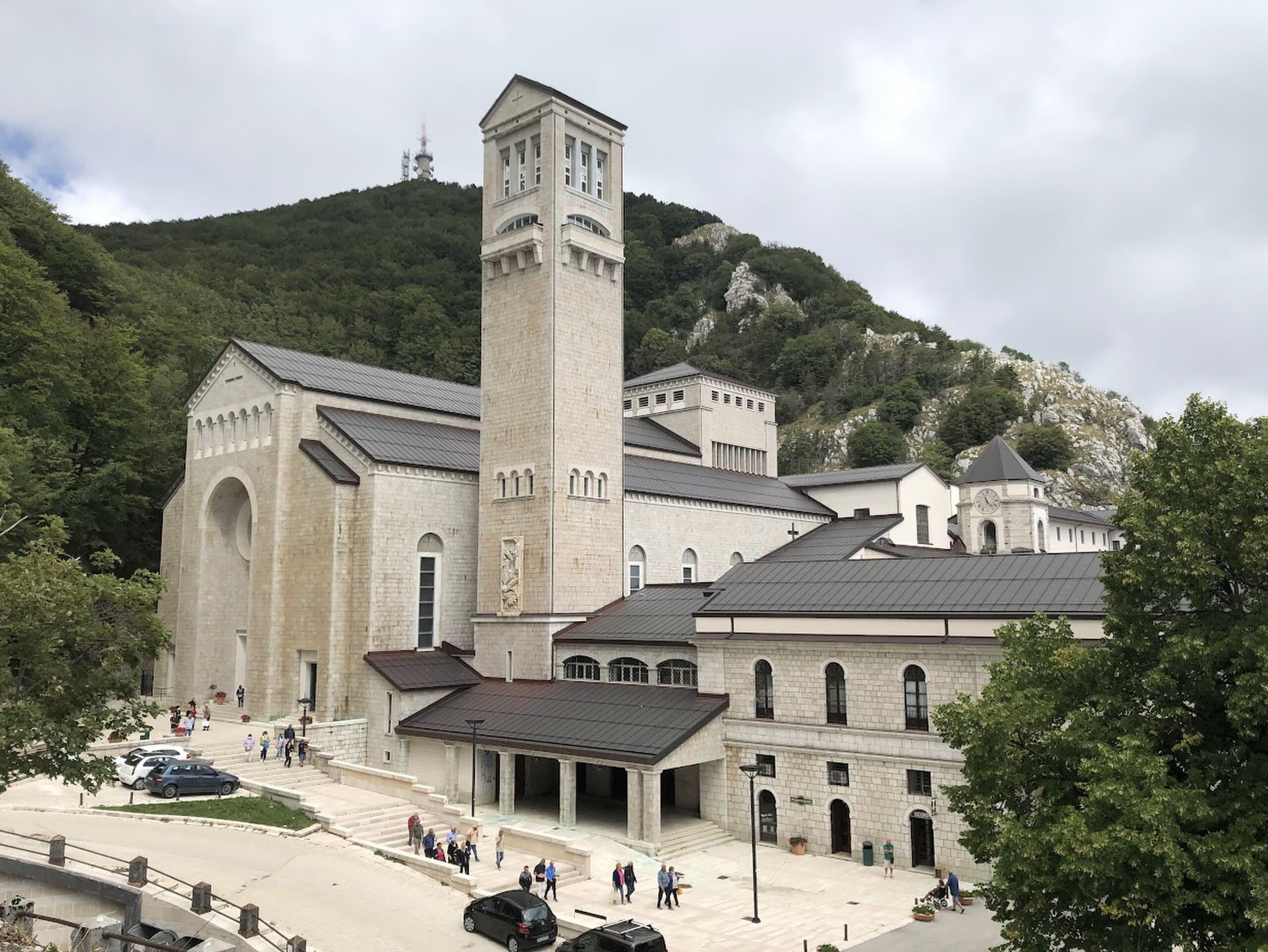
Sanctuary of Montevergine
Where the Great Mother has worn many faces, and the marginalized find shelter on a mountain between worlds
Mercogliano, Campania, Italy
At A Glance
- Coordinates
- 40.9357, 14.7283
- Suggested Duration
- A minimum of half a day allows time for the funicular journey, exploration of the basilica and museum, and contemplation. Those walking the traditional pilgrim route should allow 2-3 hours for the ascent alone. Visitors seeking deeper engagement may wish to attend morning Mass and spend a full day on the mountain.
- Access
- By funicular: The Montevergine funicular departs from Mercogliano, reaching the sanctuary in 7 minutes. Tickets cost 5 euros return. Parking is available at the base station for 1 euro per day. The funicular operates approximately 7:30am to 7:00pm but hours vary by season; check current schedules. By car: Roads reach Mercogliano from both Naples (about 55 km) and Avellino (about 8 km). The sanctuary itself is pedestrian-only; vehicles must stop at the funicular base or roadside parking. By foot: Traditional pilgrim routes ascend from Mercogliano and surrounding villages. The climb takes 2-3 hours depending on route and fitness. Public transport: Air Campania buses connect Naples and Avellino with Mercogliano.
Pilgrim Tips
- By funicular: The Montevergine funicular departs from Mercogliano, reaching the sanctuary in 7 minutes. Tickets cost 5 euros return. Parking is available at the base station for 1 euro per day. The funicular operates approximately 7:30am to 7:00pm but hours vary by season; check current schedules. By car: Roads reach Mercogliano from both Naples (about 55 km) and Avellino (about 8 km). The sanctuary itself is pedestrian-only; vehicles must stop at the funicular base or roadside parking. By foot: Traditional pilgrim routes ascend from Mercogliano and surrounding villages. The climb takes 2-3 hours depending on route and fitness. Public transport: Air Campania buses connect Naples and Avellino with Mercogliano.
- Modest dress is expected throughout the sanctuary complex. Shoulders should be covered, and shorts or skirts should reach the knee. Mountain weather makes this practical as well as reverent: even summer days can be cool and misty at 1,270 meters, and winter visits require warm layers.
- Personal photography is permitted in the basilica and grounds. Flash photography is prohibited near the Madonna icon. Tripods and professional equipment may require advance permission. During liturgies, photography should not disturb worship. The monks and pilgrims are not subjects for tourism photography; if you wish to photograph people, ask permission.
- This is an active Catholic sanctuary. While the atmosphere is welcoming, standard church etiquette applies. Dress modestly, maintaining silence in the basilica except during group responses at Mass. The monastery itself is closed to visitors; only the public areas of the sanctuary complex are accessible. The funicular operates on a schedule and closes in the evening. Check current times before visiting, especially outside peak season. The mountain can be significantly colder than the valley below; bring layers even in summer.
Overview
Rising 1,270 meters above the Campanian plains, the Sanctuary of Montevergine has drawn pilgrims for nine centuries to venerate Mamma Schiavona, the dark-skinned Madonna who protects those whom others reject. Founded by Saint William of Vercelli in 1124 on a mountain already sacred to Cybele, it stands as one of Italy's most beloved Marian shrines and a rare place where LGBTQ+ pilgrims receive the Church's embrace.
There is a mountain east of Naples where the Great Mother has never stopped listening. Her names have changed across millennia. The Greeks called her Cybele and climbed with drums and chanting. Christians call her Mary and climb with rosaries and song. But something deeper than names persists here, at the summit of Mount Partenio, where mist often shrouds the sanctuary and pilgrims arrive seeking what the world below has denied them.
Saint William of Vercelli came here in 1119, seeking solitude after bandits ended his journey to Jerusalem. He found a mountain already heavy with sacred presence, ruins of the goddess temple still visible among the stones. What he built became one of southern Italy's great pilgrimage centers, drawing 1.5 million visitors each year to venerate the Madonna di Montevergine, affectionately called Mamma Schiavona, the dark-skinned mother.
But Montevergine holds a mystery beyond typical Marian devotion. Here, since at least the 17th century and likely far earlier, LGBTQ+ pilgrims have climbed to receive the Madonna's blessing. The Juta dei Femminielli, held each February at Candlemas, brings hundreds of queer pilgrims dancing and singing up the mountain to a Madonna who, legend holds, once saved two young lovers of the same sex with a miraculous ray of warmth.
Something in this place refuses to conform. A Black Madonna, Byzantine and somber, in the heart of Italian Catholicism. A Benedictine sanctuary that welcomes those the Church elsewhere condemns. A mountain where the divine feminine has been venerated under many names for thousands of years, and where seekers of all kinds still find the veil thin between worlds.
Context And Lineage
Montevergine was founded by Saint William of Vercelli in 1124, built on a mountain already sacred since antiquity. The monastery grew under Benedictine rule and royal patronage, becoming one of southern Italy's great pilgrimage centers. The Madonna icon arrived from Constantinople in 1310, establishing the devotion to Mamma Schiavona. During World War II, the Shroud of Turin was hidden here from Nazi seizure. The LGBTQ+ pilgrimage tradition, documented from at least 1611, makes Montevergine unique among Catholic shrines.
Three founding stories converge at Montevergine. The oldest is nearly invisible: Greek colonists established worship of Cybele on this mountain, the Great Mother whose rites involved ecstatic procession. Virgil, according to legend, retreated here to study the Sibylline books. Ruins of the goddess temple remained when Christianity came.
The Christian founding belongs to William of Vercelli, a nobleman born in 1085 who as a young man walked barefoot to Santiago de Compostela. He attempted pilgrimage to Jerusalem but was attacked by bandits in southern Italy. Taking this as divine redirection, he wandered until he found Mount Partenio. Here, in 1119, he began his hermit's life. Followers gathered. By 1124, a chapel stood on the site; by 1126, a monastery. William spent his final years establishing other communities, dying in 1142. Pope Pius VI canonized him in 1785.
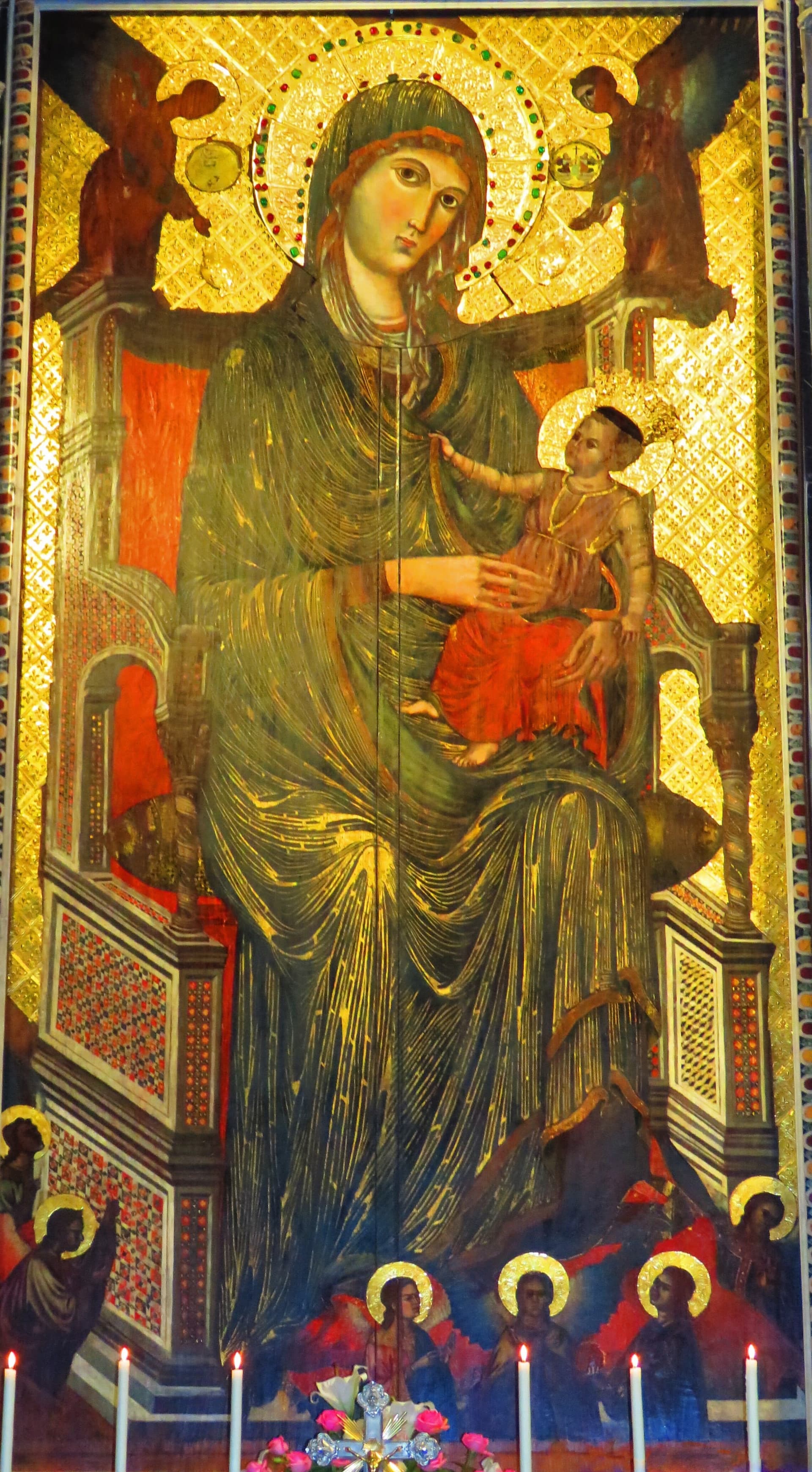
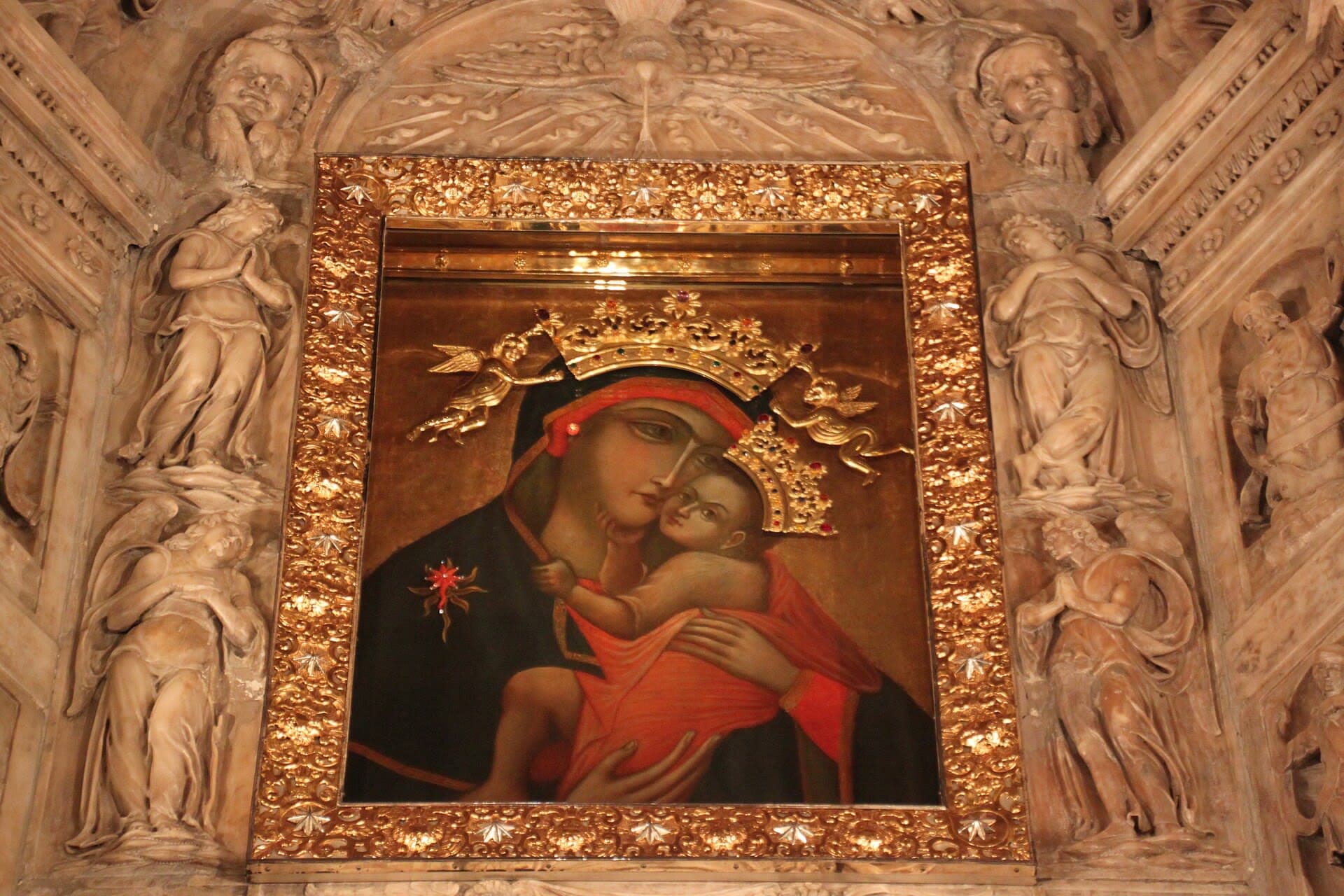
The Madonna's story begins in Constantinople. The icon now venerated as Mamma Schiavona is believed to have been painted around 1290, possibly by the Roman painter Pietro Cavallini or his school. In 1310, Empress Catherine II of Constantinople, wife of Philip II of Anjou, gifted the painting to the sanctuary. The Angevin lilies visible in the image testify to this royal connection. A devotional tradition, though not supported by scholarship, holds that the original face was painted by Saint Luke the Evangelist himself.
The monastery passed from the original Williamite order to Benedictine rule in 1149, with papal approval from Alexander III. The monks wear distinctive white habits, preserving their Williamite heritage within Benedictine structure. Montevergine remains one of only six territorial abbeys in Italy, its abbot holding episcopal authority over a territory rather than merely administering a monastery.
Royal patronage shaped the medieval sanctuary. The Angevin kings of Naples (1266-1435) expanded the complex in Gothic style, and it was through the Angevin court that the Madonna icon arrived. Later centuries brought artistic treasures, including works by Montano d'Arezzo and Ippolito Borghese. The 1980 earthquake damaged the old basilica severely; restoration continues.
The Shroud of Turin connection came during World War II, when Cardinal Fossati had the relic secretly transported to Montevergine in 1939 to protect it from Nazi seizure. The monks guarded Christianity's most famous relic until 1946, when it returned to Turin.
Saint William of Vercelli
founder
A nobleman turned pilgrim, hermit, and monastic founder. Born in Vercelli around 1085, he walked barefoot to Santiago de Compostela as a youth. After bandits thwarted his journey to Jerusalem, he found Mount Partenio and founded the monastery that became Montevergine. He died in 1142 and was canonized in 1785.
The Madonna di Montevergine
sacred figure
The Byzantine-style icon of Mary and the Christ Child, venerated for over 700 years. Her dark face gives her the affectionate name Mamma Schiavona, meaning dark-skinned mother. She is classified as a Hodegetria, she who shows the way, and is regarded as protector of the marginalized.
Cybele
deity
The Great Mother goddess whose worship on Mount Partenio predates Christianity. Her temple stood where the sanctuary now rises. Some scholars see continuity between her role as divine mother and the veneration of Mary at the same site.
Catherine II of Constantinople
historical
Empress of Constantinople and wife of Philip II of Anjou, who gifted the Madonna icon to the sanctuary in 1310, establishing the devotion that continues today.
Why This Place Is Sacred
Montevergine's sacredness emerges from its layers: a mountain venerated since antiquity as home to the Great Mother, transformed by Christian devotion yet never losing its quality of maternal shelter. The convergence of pre-Christian worship, medieval monasticism, Marian pilgrimage, and LGBTQ+ sanctuary creates a site of unusual spiritual density. The elevation itself, the mist-wrapped summit above the mundane world, reinforces the sense of crossing a threshold.
Mount Partenio was sacred before Christ. The Greeks established a temple to Cybele here, the Magna Mater, the Great Mother whose worship involved ecstatic procession with drums and chanting. The mountain was known as Mons Sacer, and legend held that Virgil himself retreated here to study the Sibylline books. When Christianity came, it did not erase this presence but transformed it. The mother goddess became the Mother of God, and the processions continued.
Saint William recognized something in this place when he arrived as a hermit in 1119. He built his chapel where the goddess temple had stood, and what drew him drew others. Within five years, a monastery rose on the mountain. The Williamite order, later absorbed into the Benedictines, has maintained continuous presence here for nine centuries. The monks still wear their distinctive white habits, still chant the hours as dawn breaks over the Apennines.
But it is the Madonna herself who creates the deepest thinness. The icon known as Mamma Schiavona arrived from Constantinople in 1310, a gift from the Angevin court. Her face is dark, her gaze direct and knowing. She is not the gentle Virgin of northern European painting but something older, more formidable. Classified as a Hodegetria, she who shows the way, she points to the Christ Child while meeting the pilgrim's eyes. Tradition holds that Saint Luke painted her original face, though scholars date the painting to the late 13th century.
What makes Montevergine thin is the layering of these presences. The mountain holds Cybele's memory. The stones hold the prayers of nine centuries of monks. The Madonna holds the tears of millions of pilgrims. And something about this particular convergence creates a place where boundaries soften, where those who arrive burdened often leave lighter.
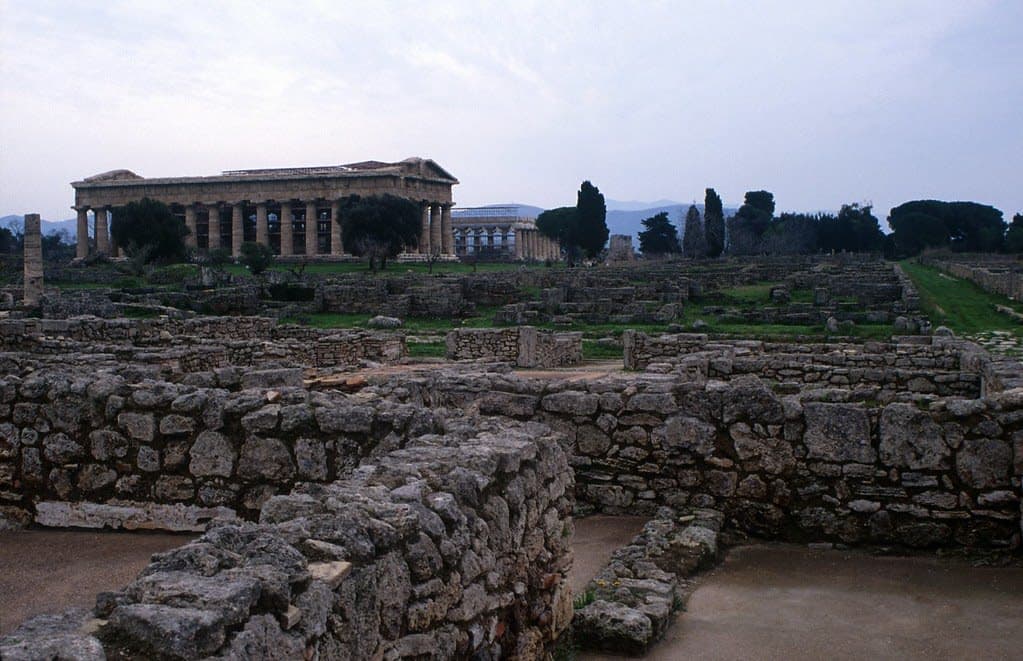
The mountain was first sacred as a dwelling place of Cybele, the Great Mother whose worship spread from Anatolia throughout the ancient Mediterranean. Archaeological evidence suggests a temple stood here during the Greek colonial period. Christian purpose arrived with Saint William, who understood his hermitage as a place of ascetic withdrawal and prayer. The monastery that grew around his cell served multiple functions: contemplative community, pilgrimage destination, royal chapel for the Angevin kings of Naples, and guardian of sacred treasures.
The sanctuary's meaning has expanded across centuries without erasing earlier layers. The goddess temple gave way to Christian chapel, but the mountain's quality of maternal protection persisted. The medieval monastery became a major pilgrimage center when the Madonna icon arrived in 1310. Royal patronage brought Gothic expansion. The 1980 earthquake devastated much of the old basilica, leading to extensive restoration.
The most remarkable evolution is the LGBTQ+ pilgrimage tradition, documented from 1611 when records mention men dressed as women among the pilgrims. The legend of the rescued same-sex lovers, whether its origin in 1252 or 1256, gave theological grounding to an acceptance that may have older roots. Today, the Juta dei Femminielli at Candlemas is a celebrated event, the Madonna receiving with equal embrace those whom other sanctuaries might turn away.
Traditions And Practice
Montevergine is a site of active Catholic worship with daily Mass and the Benedictine Liturgy of the Hours. Pilgrims venerate the Madonna icon in the new basilica, lighting candles and offering prayers. The major festivals are Candlemas (February 2), featuring the Juta dei Femminielli, and the Feast of the Birth of Mary (September 12). Traditional practices include the ritual climb and the weaving of broom branches by unmarried women.
The ascent itself is the first practice. Traditionally, pilgrims climbed Mount Partenio on foot, fasting and praying along the way. The Juta, meaning climb, transforms physical effort into devotion. Unmarried women would weave knots in broom branches during the ascent, promising to return the following year to untie the knot with their future spouse.
Once at the sanctuary, the primary devotion is veneration of the Madonna icon. Pilgrims kneel before Mamma Schiavona, offer prayers, and light candles. Votive offerings, testifying to answered prayers, have accumulated over centuries and are displayed in the monastery museum. The monks celebrate Mass daily in the basilica, and pilgrims may attend.
The Juta dei Femminielli, the LGBTQ+ pilgrimage at Candlemas, carries its own traditions. Pilgrims process up the mountain with tammorre drums and castanets trailing colored ribbons, singing traditional songs in Irpinian and Neapolitan dialect. Near the sanctuary steps, the solemn devotion gives way to celebration. The Madonna receives her marginalized children with joy.
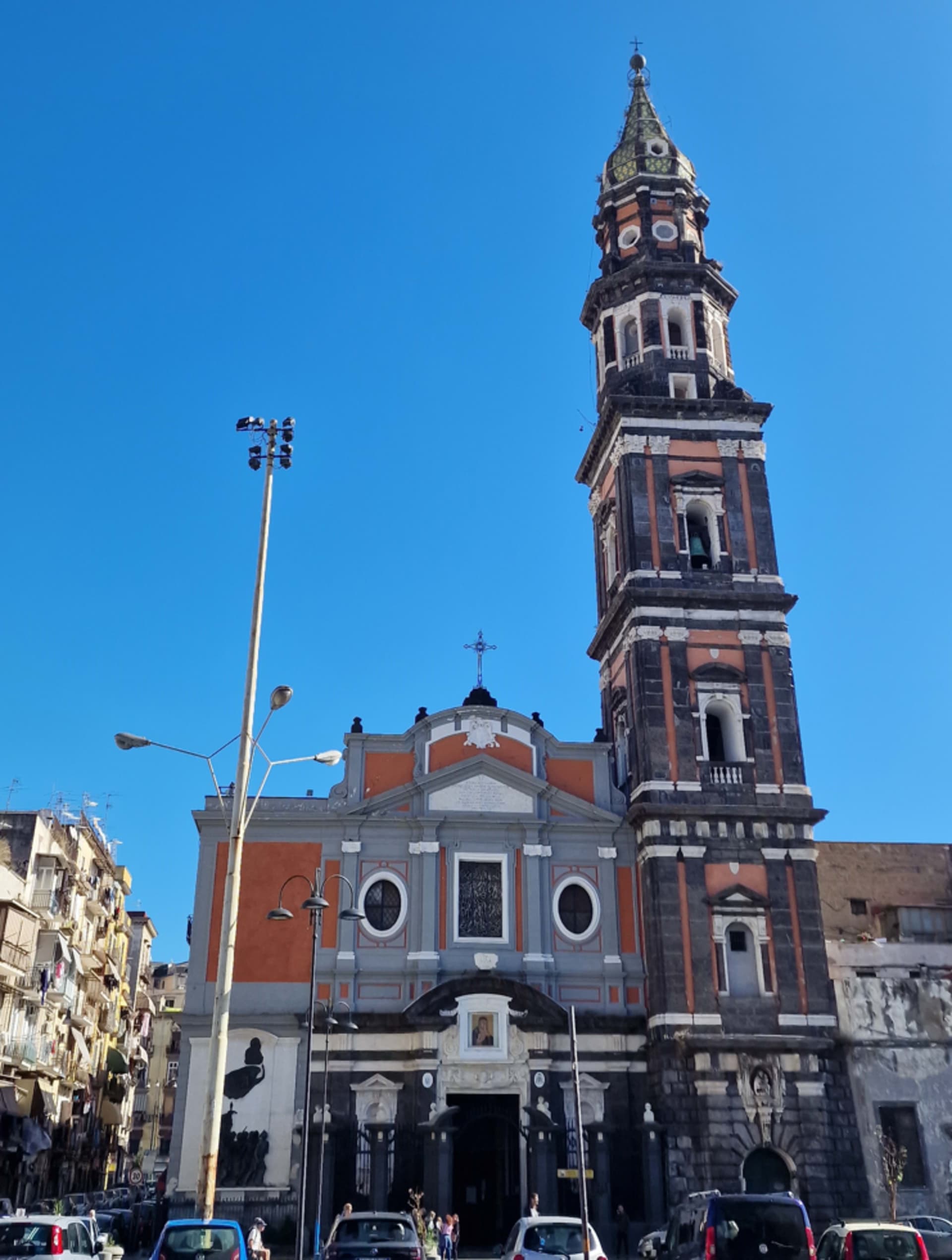
The funicular now offers an alternative to the walking ascent, making the sanctuary accessible to those unable to climb. Buses and cars reach the lower station at Mercogliano, where parking is available. The modern basilica, inaugurated in 1961, hosts regular liturgies and welcomes pilgrims throughout the year.
The monastery museum (MAM) displays the artistic and devotional heritage accumulated over nine centuries. The 18th-century pharmacy is preserved as a testament to the monks' healing tradition. Guided tours of the abbey complex are available.
The September feast, celebrating the Birth of Mary, draws large crowds from across Campania. The Candlemas celebration has gained increasing visibility as media coverage of the Juta dei Femminielli has brought international attention to this tradition of LGBTQ+ acceptance within a Catholic context.
If you come seeking the Madonna's blessing, approach with genuine intention. Light a candle before the icon and take time in silence. The Madonna is said to particularly hear those carrying wounds, whether from rejection, loss, or the burdens of being different.
If you can walk, consider at least part of the traditional ascent on foot. The change in altitude and the physical effort create a different quality of arrival than the funicular allows. Even the final hundred meters on foot, from the upper funicular station to the sanctuary, transforms the approach.
For those attending the Juta dei Femminielli, participation is welcome regardless of identity. Come with respect, come with joy. The songs are in Neapolitan dialect but the welcoming spirit transcends language. Bundle warmly; February on the mountain is cold.
Roman Catholicism (Benedictine)
ActiveThe Sanctuary of Montevergine is the cathedral church of the Territorial Abbey of Montevergine, one of only six territorial abbeys in Italy. Founded by Saint William of Vercelli in 1124 and placed under Benedictine rule in 1149, the monastery has maintained continuous monastic presence for nine centuries. The sanctuary houses the venerated Madonna di Montevergine, drawing approximately 1.5 million pilgrims annually. The monks wear distinctive white habits preserving their Williamite heritage.
Daily Mass and Liturgy of the Hours according to Benedictine tradition. Major festivals on February 2 (Candlemas) and September 12 (Birth of Mary). The monastery maintains a library, museum, and historic 18th-century pharmacy. Monks continue the tradition of hospitality to pilgrims that dates to Saint William's time.
Marian Pilgrimage
ActiveThe Madonna di Montevergine, called Mamma Schiavona or La Madonna Bruna, is one of Italy's most beloved Black Madonnas. The Byzantine-style icon, classified as a Hodegetria, arrived from Constantinople in 1310 and has been the focus of intense devotion ever since. Pilgrims climb Mount Partenio to seek her intercession, bringing their griefs, hopes, and thanksgivings to the dark-faced mother who is said to have special care for the marginalized.
Pilgrims traditionally ascend on foot, fasting and praying along the way. At the sanctuary, they venerate the icon, light candles, and offer prayers. Votive offerings testify to answered prayers. Unmarried women weave knots in broom branches during the ascent, promising to return to untie them with their future spouse. The major pilgrimage festivals are Candlemas and the September feast.
Juta dei Femminielli (LGBTQ+ Pilgrimage)
ActiveThe annual pilgrimage of LGBTQ+ people to Montevergine on Candlemas (February 2) is one of the oldest documented traditions of its kind. The legend holds that in 1252 or 1256, a same-sex couple discovered by their community was stripped, beaten, and left to die on the mountain in winter. The Madonna sent a ray of sunlight to warm them, saving their lives. Since then, Mamma Schiavona has been venerated as protector of LGBTQ+ people. The tradition is documented from at least 1611.
On Candlemas, LGBTQ+ pilgrims, particularly the femminielli of Neapolitan tradition, process up the mountain with tammorre drums and castanets trailing colored ribbons, singing traditional songs in Irpinian and Neapolitan dialect. Near the sanctuary steps, the procession gives way to celebration, embracing and dancing. Inside the sanctuary, pilgrims receive the Madonna's blessing.
Pre-Christian Cybele Worship
HistoricalBefore Christianity, Mount Partenio was sacred to Cybele, the Magna Mater or Great Mother goddess. Greek colonists established her worship here, climbing with drums and ecstatic chanting. The mountain was known as Mons Sacer (Sacred Mountain) and also Mons Virgilianus, from the legend that Virgil retreated here to study the Sibylline books. Ruins of the goddess temple remained visible when Saint William arrived. Some scholars see continuity between the ancient divine feminine and the current Marian devotion.
Ancient worship of Cybele involved processions with drums and chanting, performed by priests known as galli who were notable for gender non-conformity. These practices are not active today, though some observers see echoes in the drum-accompanied processions of the Juta dei Femminielli. The connection remains speculative rather than documented.
Experience And Perspectives
Visitors describe Montevergine as a place of unusual acceptance and emotional release. The ascent itself, whether by foot or the steep funicular, creates a sense of pilgrimage. The encounter with Mamma Schiavona, her dark face and knowing gaze, moves many to tears. For LGBTQ+ pilgrims especially, the experience of religious welcome in a Catholic sanctuary can be profound. The mountain setting, often misty and cold, reinforces the sense of having stepped outside ordinary time.
The approach matters. Whether you climb the ancient pilgrim paths or ride the funicular, one of Europe's steepest, the ascent creates transition. The world below falls away. Mist often wraps the upper mountain, muffling sound, softening edges. By the time you reach the sanctuary, you have already crossed a threshold.
Inside the new basilica, inaugurated in 1961, the Madonna waits. She is not what visitors expect. Her face is dark, her expression neither gentle nor severe but somehow both. She holds the Child but looks directly at you, as if waiting for what you have come to say. Pilgrims light candles, kneel, weep. The tears come easily here, as though something in the mountain draws them up.
For LGBTQ+ visitors, particularly those who have experienced rejection from religious institutions, Montevergine offers something rare: Catholic space that welcomes them. The legend of the rescued lovers hangs in the air. At Candlemas, the Juta transforms the sanctuary steps into celebration, pilgrims arriving with tammorre drums and castanets, songs in Neapolitan dialect, an outpouring of joy that is also devotion. Mamma Schiavona, protector of the marginalized, receives them all.
The monastery museum, rich with centuries of votive offerings, testifies to answered prayers. The 18th-century pharmacy preserves the monks' healing tradition. Outside, views stretch across the Avellino valley to distant Apennine peaks. The altitude makes summer cool and winter cold, but pilgrims come year-round, drawn by whatever it is that persists here.
Montevergine rewards those who come with genuine need. The site is not a museum to be toured but a living sanctuary to be encountered. If you carry something heavy, bring it. The Madonna is said to have particular sympathy for those the world has wounded.
Consider timing your visit for early morning, when the basilica is quiet and the monks' chanting may be heard from the abbey church. The funicular opens at 7:30am, arriving before the tour groups allows space for contemplation. If you are able to walk, the traditional pilgrim ascent takes two to three hours and creates a different quality of arrival.
Those seeking the Juta dei Femminielli should come for Candlemas, February 2. The procession up the mountain is joyful and inclusive, a celebration of survival and divine protection. But be aware that the February mountain can be bitter cold. Dress warmly and come ready to sing.
Montevergine invites multiple interpretations that need not resolve into one. Scholars trace the historical layers. Catholic tradition emphasizes Marian devotion and Benedictine continuity. LGBTQ+ pilgrims experience rare religious acceptance. Those attentive to pre-Christian memory sense the Great Mother beneath the Madonna. The mountain holds all these without contradiction.
Historians confirm Saint William of Vercelli's founding of the monastery in 1124 on a site previously sacred to Cybele. Archaeological evidence documents pre-Christian worship on Mount Partenio. The Madonna icon is dated by art historians to the late 13th century, likely around 1290, with attribution sometimes given to Pietro Cavallini or his school. The 1310 gift from Catherine II of Constantinople is documented by historical records and confirmed by the Angevin lilies visible in the painting.
The LGBTQ+ pilgrimage tradition is documented from at least 1611, when records describe cross-dressing pilgrims. Whether the tradition extends earlier is difficult to establish, though the medieval legend of the rescued lovers suggests ancient roots. The Shroud of Turin's presence at Montevergine from 1939-1946 is confirmed by monastic records and testimony.
From the Catholic perspective, Montevergine is a place of profound Marian devotion. The Madonna di Montevergine is one of Italy's most beloved Black Madonnas, her dark face understood by devotees as sign of her identification with the humble and marginalized. The sanctuary's acceptance of LGBTQ+ pilgrims is grounded in the Madonna's maternal compassion rather than any formal doctrinal shift.
The Benedictine monks understand their presence as continuation of Saint William's charism, maintaining the liturgical life that has sanctified this mountain for nine centuries. Their distinctive white habits preserve the Williamite heritage within Benedictine rule. The monastery library and museum preserve treasures of southern Italian religious art and culture.
Some interpret the continuity from Cybele to Mary as evidence of the Great Mother archetype persisting across religious paradigms. The mountain's long sacred history, predating Christianity by centuries, suggests to some that the land itself holds power independent of any tradition that claims it. The dark face of Mamma Schiavona, unlike conventional European Madonnas, connects for some to goddess traditions of the ancient Mediterranean.
The LGBTQ+ tradition at Montevergine is sometimes interpreted through the lens of Cybele's priests, the galli, who were known for gender non-conformity and ecstatic worship. Whether any actual continuity exists is unclear, but the coincidence of a site sacred to Cybele becoming a sanctuary for gender-diverse pilgrims strikes some as meaningful.
The name Schiavona has generated alternative interpretations: whether from the Neapolitan for dark-skinned or from a suggested Dalmatian or Slavic origin, the uncertainty invites speculation about the icon's origins and meaning.
The etymology of Schiavona remains debated: does it derive from the Neapolitan word for dark-skinned, or does it indicate Slavic or Dalmatian origin? The icon's history before 1310, when it arrived from Constantinople, is largely unknown. Whether it was always as dark as it appears now, or has darkened with age and candle smoke, is uncertain.
The origins of the LGBTQ+ pilgrimage tradition cannot be precisely dated. The 1611 documentation provides a terminus ante quem, but whether the tradition extends to medieval times, as the legend suggests, or even earlier, to Cybele's galli, remains open. The exact date of the legend itself, either 1252 or 1256 depending on sources, is uncertain.
What treasures and relics besides the Shroud of Turin were hidden at Montevergine during World War II is not fully documented. What relationship, if any, existed between the Christian sanctuary and the goddess temple it replaced is a matter of speculation rather than evidence.
Visit Planning
Montevergine is accessible by funicular from Mercogliano or by traditional foot pilgrimage. The funicular operates daily, taking 7 minutes to reach the sanctuary. February 2 (Candlemas) brings the Juta dei Femminielli; September 12 marks the Feast of the Birth of Mary. The mountain climate is cool year-round; dress accordingly. The site is approximately 55 kilometers east of Naples.
By funicular: The Montevergine funicular departs from Mercogliano, reaching the sanctuary in 7 minutes. Tickets cost 5 euros return. Parking is available at the base station for 1 euro per day. The funicular operates approximately 7:30am to 7:00pm but hours vary by season; check current schedules.
By car: Roads reach Mercogliano from both Naples (about 55 km) and Avellino (about 8 km). The sanctuary itself is pedestrian-only; vehicles must stop at the funicular base or roadside parking.
By foot: Traditional pilgrim routes ascend from Mercogliano and surrounding villages. The climb takes 2-3 hours depending on route and fitness.
Public transport: Air Campania buses connect Naples and Avellino with Mercogliano.
Mercogliano at the funicular base offers modest lodging. The city of Avellino, 8 kilometers away, has more options. Those seeking a fuller immersion in Campanian spirituality might base in Naples and make Montevergine a day pilgrimage alongside other sacred sites. No accommodations exist at the sanctuary itself.
Montevergine is an active Catholic sanctuary welcoming all visitors but requiring respectful behavior. Modest dress is expected, with shoulders and knees covered. Silence or quiet voices in the basilica, with photography generally permitted but flash prohibited near the Madonna icon. The LGBTQ+ pilgrimage tradition does not exempt visitors from basic reverence within the sacred space itself.
The sanctuary's unusual quality of inclusivity does not translate to informality within the sacred space. This is a place of active worship where pilgrims come for genuine devotion. Whether you arrive as believer, seeker, or curious visitor, the Madonna receives you, but the monks who maintain this place ask for respect in return.
Within the basilica, move quietly. Observe those in prayer and do not interrupt them. The candles lit before the Madonna represent real hopes and griefs; treat the space accordingly. When Mass is celebrated, either participate reverently or wait outside. The Benedictine liturgy is the monks' offering to God; your presence should honor that.
At the Juta dei Femminielli, the atmosphere shifts to celebration, but this occurs primarily on the approaches and steps rather than inside the sanctuary. The Madonna receives joy, but the transition from procession to devotion happens at the threshold. Outside, dance and sing. Inside, bow and pray.
Photographers should exercise restraint. The site allows photography but not at the expense of others' devotional experience. No flashes near the icon. No blocking pathways for shots. Consider whether the photograph serves your memory or merely your social media.
Modest dress is expected throughout the sanctuary complex. Shoulders should be covered, and shorts or skirts should reach the knee. Mountain weather makes this practical as well as reverent: even summer days can be cool and misty at 1,270 meters, and winter visits require warm layers.
Personal photography is permitted in the basilica and grounds. Flash photography is prohibited near the Madonna icon. Tripods and professional equipment may require advance permission. During liturgies, photography should not disturb worship. The monks and pilgrims are not subjects for tourism photography; if you wish to photograph people, ask permission.
Candles may be lit before the Madonna icon. Votive offerings are a long tradition at the sanctuary, though contemporary visitors typically offer candles or donations rather than physical ex-votos. The monastery accepts donations for maintenance of the sanctuary and the monks' ongoing work.
The monastery itself is closed to visitors; only the public areas of the sanctuary complex are accessible. Silence is expected in the basilica. Do not interrupt religious services. No food or drink inside the sanctuary. Monastic areas are strictly private.
Sacred Cluster
Nearby sacred places create the location cluster described in the growth plan. This block is intentionally crawlable and links into the wider regional graph.