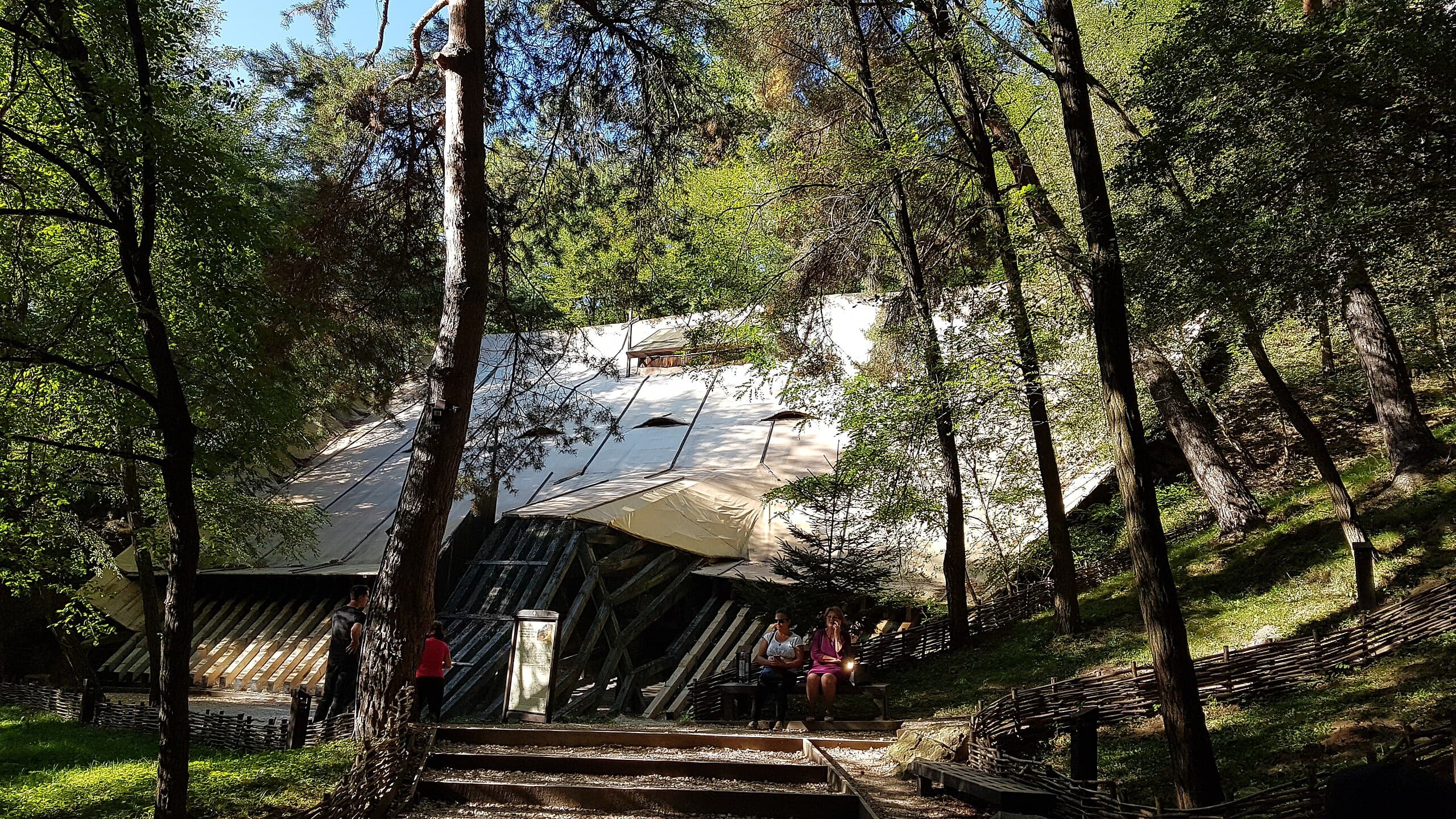
Rupestra Sinca Veche Monastery, Romania
A rock-cut temple of unknown origin where Orthodox nuns, New Age seekers, and unsolved mysteries coexist
Șinca Veche, Brașov, Romania
At A Glance
- Coordinates
- 45.7560, 25.1666
- Suggested Duration
- A visit of one to two hours allows time to see the cave temple with a guide, the Chapel of Saint Nectarius, the Annunciation Spring, and the monastery courtyard with its archaeological information panels.
- Access
- Located in Sinca Veche commune, Brasov County, approximately 45 km from Brasov and 22 km from Fagaras. Accessible by car via paved and signposted roads. Free parking and free admission. Limited public transport makes a car recommended. Mobile phone signal information was not available at time of writing; the area is rural, and coverage may be limited.
Pilgrim Tips
- Located in Sinca Veche commune, Brasov County, approximately 45 km from Brasov and 22 km from Fagaras. Accessible by car via paved and signposted roads. Free parking and free admission. Limited public transport makes a car recommended. Mobile phone signal information was not available at time of writing; the area is rural, and coverage may be limited.
- Modest dress is expected as an active monastery. Women should cover their shoulders and wear skirts below the knee. Men should wear long trousers. Head coverings for women are appreciated in the chapel.
- Photography is generally permitted in the cave and exterior areas. Avoid flash photography inside the cave to preserve the atmosphere and the carved surfaces. Check with the guide regarding any specific restrictions.
- The cave walls and carved symbols are fragile. Do not touch or scratch the surfaces. The cave must be visited with a guide. Be sensitive to the dual nature of the site: the Orthodox nuns regard it as a monastery, and bringing ritual objects or performing practices that conflict with Orthodox sensibility may cause tension. The cave's reputed energetic properties are experienced differently by different people; approach with openness rather than expectation.
Overview
Carved into tuff rock by unknown hands at an unknown date, the cave temple at Sinca Veche in Transylvania defies easy explanation. Its walls bear symbols from multiple traditions — a Star of David, what appears to be a yin-yang, a carved face some identify as Christ — while a spiral chimney channels sunlight onto the altar. Since 2009, an Orthodox community of nuns has kept watch over a site that draws pilgrims, energy workers, and anyone willing to sit with genuine mystery.
No one can tell you who carved this cave or when or why. That is the first thing to understand about Sinca Veche, and it is the source of everything that follows.
The rock-cut temple sits in the Transylvanian foothills near Brasov, carved from volcanic tuff by builders whose identity has been debated for centuries without resolution. Some researchers point to the Dacian period, linking the cave to worship of Zalmoxis, the deity of immortality. The mainstream archaeological position dates the cave to around 1742, when persecuted Orthodox monks carved hidden churches during the Habsburg suppression of their faith. Other theories invoke the Knights Templar, ancient astronomical knowledge, or origins stretching back thousands of years. None has achieved consensus.
What is present and undeniable is the cave itself. Several rooms connected by carved passages lead to a central chamber where a spiral chimney — cut through the living rock with obvious skill — channels a shaft of sunlight onto the altar below. Near the altar, someone carved a six-pointed star that may be a Star of David or a Seal of Solomon. Elsewhere, a symbol resembling the yin-yang appears in a context where no existing theory adequately explains its presence. Texts in an unidentified script mark some walls.
Since 2009, a community of Orthodox nuns has maintained a monastic presence at the site. The Chapel of Saint Nectarius houses relics of the saint and a fragment of the Holy Cross. But the cave itself predates and exceeds any single tradition's claim. The site is popularly known as the Temple of Destiny, where Romanian folk tradition holds that the Ursitoare — the three fates — gathered, and where wishes spoken in the darkness would be fulfilled.
Visitors report intense emotional and physical sensations inside the cave. Whether this reflects geology, acoustics, accumulated human intention, or something beyond current understanding, the effect is consistent enough to take seriously.
Context And Lineage
The Sinca Veche cave temple is a rock-cut sacred space of genuinely unknown origin, variously attributed to Dacian priests, persecuted Orthodox monks, or Knights Templar. The current Orthodox monastery was established in 2006, with a community of nuns since 2009.
The cave's origin remains one of Romania's most compelling sacred mysteries. The Dacian temple theory points to Roman-era coins and pottery found in the surrounding area as evidence of ancient habitation, with some researchers linking the cave to worship of Zalmoxis, the Dacian deity associated with immortality. The mainstream archaeological position dates the cave's creation to around 1742, during the Habsburg persecution of Orthodox Christians, when monks carved hidden churches to worship in secret. The first documented mention of the site may date to the 12th or 13th century, predating the persecution theory. The Knights Templar theory, based on the Seal of Solomon carved near the altar and perceived sacred geometry, lacks documentary evidence. Local folk tradition calls it the Temple of Destiny, where the Ursitoare — the Romanian fates, akin to the Greek Moirai — gathered to determine human destiny.
The cave temple's lineage is precisely what remains unknown. If Dacian, it connects to a pre-Christian sacred tradition largely lost to history. If Orthodox, it belongs to the narrative of persecuted monks preserving their faith underground. If Templar or otherwise, it connects to traditions for which no documentary trail exists. The current Orthodox monastic community represents the most recent layer in a site that has accumulated meaning from multiple traditions over centuries or possibly millennia.
Metropolitan Laurentiu Streza
historical
Metropolitan of Transylvania who donated land and supported the establishment of the current Orthodox monastery at the cave temple site in 2006.
Saint Nectarius the Wonderworker
patron_saint
Greek Orthodox saint known for healing miracles (1846-1920). A fragment of his relics is housed in the Chapel of Saint Nectarius at the monastery, alongside a fragment of the Holy Cross. His feast day, November 9, is celebrated at the site.
Why This Place Is Sacred
Sinca Veche's thinness emerges from genuine, unresolved mystery rather than established doctrine. The unknown origins, the coexistence of symbols from multiple traditions, the light shaft striking the altar, and the consistent reports of intense sensation within the cave all contribute to a quality of openness that invites seekers of every orientation.
The cave temple operates as a threshold in the most literal sense. You leave daylight and enter a space carved from rock by hands no one can identify, passing symbols no one can definitively interpret, until you stand in a chamber where the only illumination falls through a spiral shaft cut with evident precision. The effect is of entering a space that belongs to no tradition and therefore belongs to all of them.
The multi-religious symbolism intensifies this quality. The six-pointed star near the altar could be Jewish, Solomonic, Templar, or something else entirely. The yin-yang-like symbol has no credible explanation in a Transylvanian context. Crosses appear in various locations, linking the cave to Christian use, but alongside symbols that predate or transcend Christianity. Rather than resolving into a single narrative, these elements hold the space open.
The spiral chimney is the cave's most striking architectural feature. Cut through solid rock, it channels sunlight onto the main altar in a way that suggests astronomical intention, though whether the alignment marks a solstice, an equinox, or some other celestial event has not been definitively established. When light falls through the shaft, the chamber transforms. Visitors describe this moment as viscerally powerful regardless of their belief system.
The Annunciation Spring, believed to possess healing properties, adds the element of sacred water. Women have come to the cave to pray for fertility for generations. The folk tradition of wish-fulfillment — the name Temple of Destiny, the Ursitoare legend — represents a layer of meaning older than either the Orthodox or the esoteric interpretations.
What makes Sinca Veche genuinely thin is that no one has managed to close the question of what it is. The mystery is not a failure of research but a feature of the site itself.
Unknown. Competing theories attribute the cave's creation to Dacian priests worshipping Zalmoxis, Orthodox monks hiding from Habsburg persecution, Knights Templar, or builders from an even earlier period. The archaeological record does not conclusively support any single theory.
Historical records from the 18th century refer to the site as the Temple of the Chosen and the Stone Dug Monastery — already acknowledging both its sacred character and the mystery of its origins. The cave reportedly remained accessible throughout World War II and the communist period. In 2006, the Orthodox-Cultural Foundation Maica Sfanta established a monastery at the site with the patronage of Metropolitan Laurentiu Streza. A community of nuns arrived in 2009, creating the current dual identity as both active monastery and open sacred site.
Traditions And Practice
Sinca Veche sustains multiple forms of practice simultaneously: Orthodox monastic worship by the nuns' community, folk pilgrimage for healing and wish-fulfillment, and New Age energy work. The cave itself invites contemplative engagement regardless of tradition.
The folk tradition of praying in the cave for wish-fulfillment and healing predates the site's current institutional identity. Women have come to pray for fertility for generations. Drinking from the Annunciation Spring for healing of illness is an ongoing practice. During the Habsburg persecution period, Orthodox monks likely conducted liturgical services within the cave itself, an echo of the early Christian catacombs.
The nuns' community maintains daily Orthodox worship at the monastery. The Chapel of Saint Nectarius hosts veneration of the saint's relics and services on his feast day, November 9. Guided visits to the cave temple are provided free of charge. New Age practitioners use the cave for meditation, energy work, and charging ritual objects. Pilgrims of all backgrounds collect water from the Annunciation Spring. The candle altar in the courtyard accommodates Orthodox devotion alongside more informal spiritual gestures.
Enter the cave with a guide and resist the urge to immediately document or interpret what you see. Stand in the central chamber and attend to what you feel in the body. If sunlight is entering through the chimney, observe how the shaft of light transforms the space. Notice the carved symbols without rushing to assign them meaning. After the cave, sit quietly in the courtyard or walk to the Annunciation Spring. The contrast between the cave's ambiguity and the Chapel of Saint Nectarius's clarity can be illuminating — spend time in both spaces and notice how they differ.
Romanian Orthodox Christianity
ActiveThe site was re-established as an Orthodox monastery in 2006 under the patronage of Metropolitan Laurentiu Streza of Transylvania. A community of nuns has been in residence since 2009. The Chapel of Saint Nectarius houses relics of the saint and a fragment of the Holy Cross. The Orthodox identity connects the site to the tradition of persecuted monks who used cave churches as refuge during Habsburg rule.
Daily Orthodox worship by the nuns' community. Veneration of the relics of Saint Nectarius the Wonderworker. Celebration of Saint Nectarius feast day on November 9. Blessing and distribution of water from the Annunciation Spring. Prayer services in the Chapel of Saint Nectarius.
Romanian Folk Sacred Tradition
ActiveThe folk tradition of the Temple of Destiny predates all institutional claims on the site. The cave is understood as a place where the Ursitoare — the Romanian fates — gathered, and where prayer could influence human destiny. Women have sought the cave for fertility prayers for generations. The Annunciation Spring is believed to heal illness.
Prayer for wish-fulfillment and healing within the cave. Drinking from the Annunciation Spring for healing. Women praying for fertility. Making wishes in the darkness of the cave temple. These practices continue alongside and interwoven with both Orthodox and New Age use of the site.
New Age and Esoteric Spirituality
ActiveThe cave has become a major destination for practitioners who understand the site as a node of concentrated telluric energy. The multi-religious symbolism and unresolved origins are understood as evidence of an ancient wisdom tradition that transcends any single religion. The cave is sometimes described as forming an energy triangle with Varfu Omu and Sarmizegetusa Regia.
Meditation and energy work within the cave. Charging ritual objects — wands, crystals, amulets — with the cave's reputed energy. Healing rituals using the telluric properties some believe the site possesses. Approaching the visit as a spiritual encounter with an ancient power point.
Experience And Perspectives
Visitors consistently describe intense emotional and physical responses inside the cave — warmth, tingling, a sense of presence — alongside the intellectual fascination of encountering symbols no one can fully explain. The walk to the cave along a path lined with thousands of tiny carved crosses builds anticipation that the cave itself fulfills.
The experience begins on the path from the monastery complex to the cave temple. Rocks lining the route bear thousands of tiny carved crosses, placed by visitors over generations. The crosses accumulate — hundreds, then thousands — creating a passage marked by the devotion of those who came before. By the time you reach the cave entrance, something has already shifted.
Inside, the cave demands attention of a different kind. The rooms connect through passages carved from tuff, the stone cool and close. As your eyes adjust to the darkness, the carved symbols begin to emerge from the rock — the six-pointed star, the mysterious yin-yang, passages of unidentified script. The intellectual mind engages, trying to solve the puzzle, while something else responds to the enclosure, the darkness, the sense of being held within the earth.
The central chamber, when sunlight enters through the spiral chimney, produces the cave's most powerful moment. Light falls through cut rock onto the altar in a shaft that appears almost solid. The effect is theatrical in the best sense — designed to produce an encounter between light and darkness that transcends whatever belief system you carry.
Many visitors report physical sensations: warmth in the hands or chest, tingling, a sense of the air itself being different inside the cave. New Age practitioners describe these as telluric energies; Orthodox pilgrims may understand them as the presence of holiness; skeptics attribute them to suggestion and acoustics. What is notable is the consistency of the reports across very different visitor populations.
The guide who accompanies visitors provides context without imposing interpretation, leaving each person to draw their own conclusions — or to remain, as the cave itself seems to encourage, in a state of open not-knowing.
Arrive without a fixed theory. The cave rewards those who can resist the urge to solve it and instead sit with what it presents. Spend time in the central chamber when the light enters through the chimney, if timing permits. After the cave, visit the Annunciation Spring and drink the water. The Chapel of Saint Nectarius offers a different quality of sacred space — one with clear tradition and intention — that provides useful contrast to the cave's ambiguity. Summer hours (9:00 to 20:00) offer the longest window for visiting.
Sinca Veche is a site where multiple interpretive frameworks coexist without resolution. Rather than choosing among them, honest engagement means holding the mystery open and attending to what the cave itself communicates.
The mainstream archaeological position dates the cave's creation to around 1742, during the Habsburg persecution of Orthodox Romanians in Transylvania, when monks carved hidden churches in rock to worship in secret. The presence of Dacian-era archaeological finds in the surrounding area — coins from the time of Tiberius Caesar Augustus, ceramics from Dacian settlements — documents ancient habitation but does not necessarily link to the cave temple itself. The various carved symbols may have been added at different periods by different groups. Professional archaeologists have conducted limited formal excavation, and published scientific literature on the cave is sparse. The dating question remains genuinely open.
Within Romanian folk tradition, the cave is understood as a place of profound spiritual power — the Temple of Destiny where human fate could be influenced through prayer. This understanding predates the site's current Orthodox institutional identity. Orthodox tradition frames it as a monastery of persecuted monks who maintained their faith underground, a narrative of spiritual resistance that resonates deeply in Romanian consciousness. The nuns' community maintains both the folk and the institutional layers, honoring the cave's reputation as a place of healing and wish-fulfillment while grounding daily life in the liturgical cycle.
Alternative and esoteric perspectives are exceptionally prominent at Sinca Veche. These include the Dacian temple theory linking the cave to Zalmoxis worship and ancient initiation rites; the Knights Templar theory based on the Seal of Solomon and perceived sacred geometry; the telluric energy theory holding that the cave sits on a point of concentrated earth energy forming a triangle with Varfu Omu and Sarmizegetusa Regia; and suggestions of non-human origins for the sophisticated rock-cutting. New Age practitioners actively use the cave for energy work, crystal charging, and meditation. These interpretations lack academic support but often emerge from genuine experiences visitors report at the site.
The true age of the cave temple remains genuinely unknown — dating ranges from seven thousand years to fewer than three hundred depending on the source. The identity and intent of the original cave carvers is unknown. The meaning of the six-pointed star near the altar, the yin-yang-like symbol, and the texts in unidentified script have not been authoritatively explained. Whether the spiral chimney was designed for astronomical alignment, spiritual symbolism, or ventilation is debated. Whether the carved face some perceive as Christ is intentional iconography or pareidolia has not been determined. These are not gaps in research but features of a site that resists the certainty most sacred places eventually acquire.
Visit Planning
Sinca Veche is located approximately 45 km from Brasov, accessible by car. Free admission and free guided cave tours. Summer hours run 9:00 to 20:00, with reduced hours from October.
Located in Sinca Veche commune, Brasov County, approximately 45 km from Brasov and 22 km from Fagaras. Accessible by car via paved and signposted roads. Free parking and free admission. Limited public transport makes a car recommended. Mobile phone signal information was not available at time of writing; the area is rural, and coverage may be limited.
Guesthouses and pensions are available in Sinca Veche commune and surrounding villages. Fagaras, approximately 22 km away, offers a wider range of accommodation. Brasov, approximately 45 km away, provides full tourist infrastructure.
Sinca Veche requires sensitivity to its dual identity as both an active Orthodox monastery and a site that draws visitors from diverse spiritual backgrounds. Modest dress, respectful behavior in the cave, and awareness of the monastic community's presence are essential.
The site's contested identity makes etiquette particularly important. For the nuns who live and pray here, this is an Orthodox monastery. For many visitors, it is an ancient energy temple. Both experiences are real and valid, but the monastic community manages the site, and their expectations set the framework for all visits.
Inside the cave, maintain silence. The acoustics amplify sound, and conversation breaks the contemplative atmosphere that most visitors seek. Do not touch the walls, symbols, or carved surfaces. The guide will explain the layout and symbolism; follow their lead regarding where to stand and how long to spend in each area.
The courtyard area around the Chapel of Saint Nectarius and the candle altar follows standard Orthodox monastery protocol. Dress modestly, speak quietly, and approach the sacred objects with respect regardless of your personal beliefs.
Modest dress is expected as an active monastery. Women should cover their shoulders and wear skirts below the knee. Men should wear long trousers. Head coverings for women are appreciated in the chapel.
Photography is generally permitted in the cave and exterior areas. Avoid flash photography inside the cave to preserve the atmosphere and the carved surfaces. Check with the guide regarding any specific restrictions.
Visitors may purchase and light candles at the candle altar in the courtyard. Donations to the monastery are welcomed. A souvenir shop offers religious items.
Cave visits must be with a guide, provided free of charge. Do not touch or scratch the cave walls or carved symbols. Maintain respectful silence inside the cave. Respect the monastic community's privacy and schedule.
Sacred Cluster
Nearby sacred places create the location cluster described in the growth plan. This block is intentionally crawlable and links into the wider regional graph.
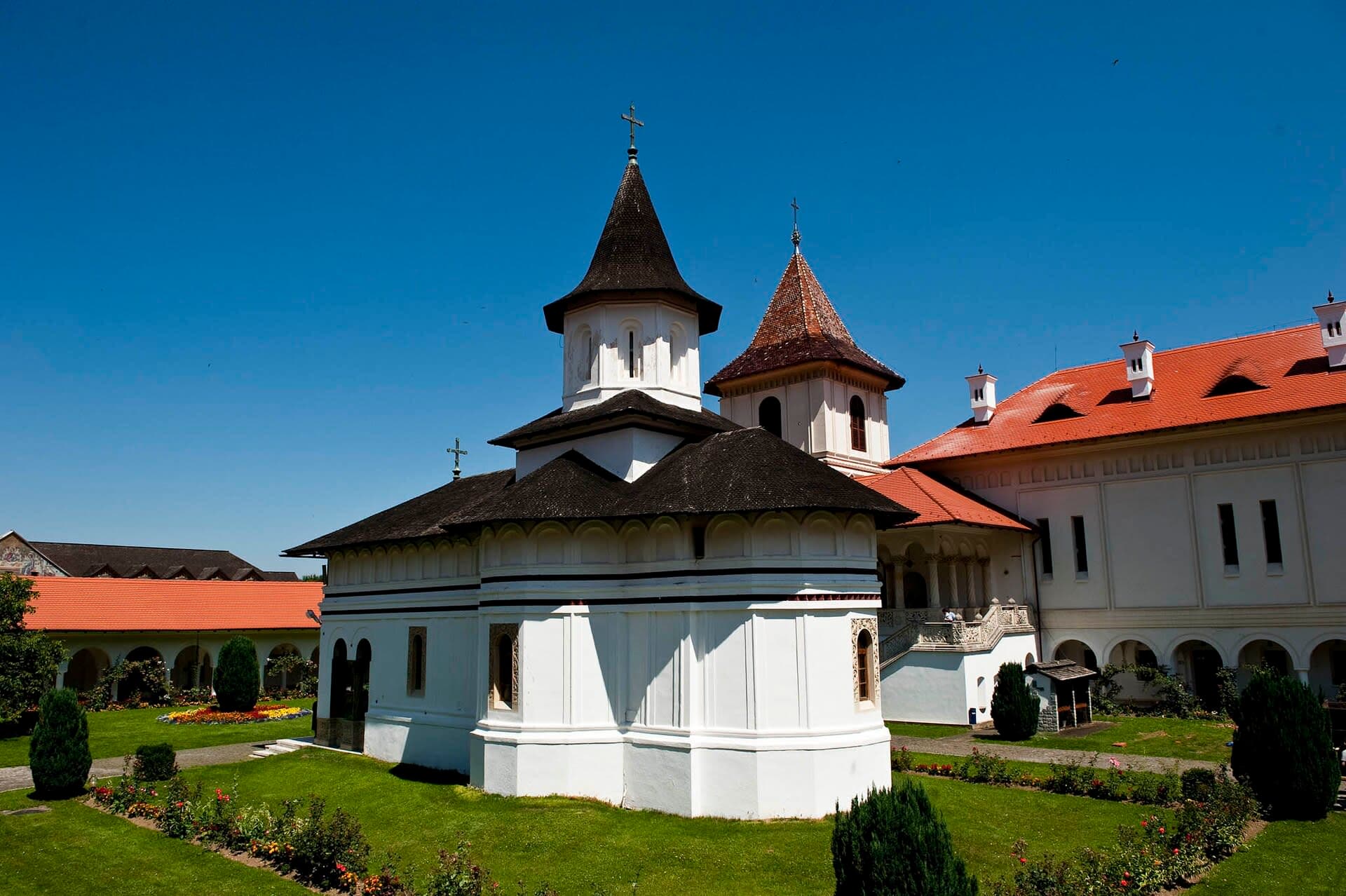
Sambata Brancoveanu Monastery, Romania
Stațiunea Climaterică Sâmbăta, Brașov, Romania
29.8 km away
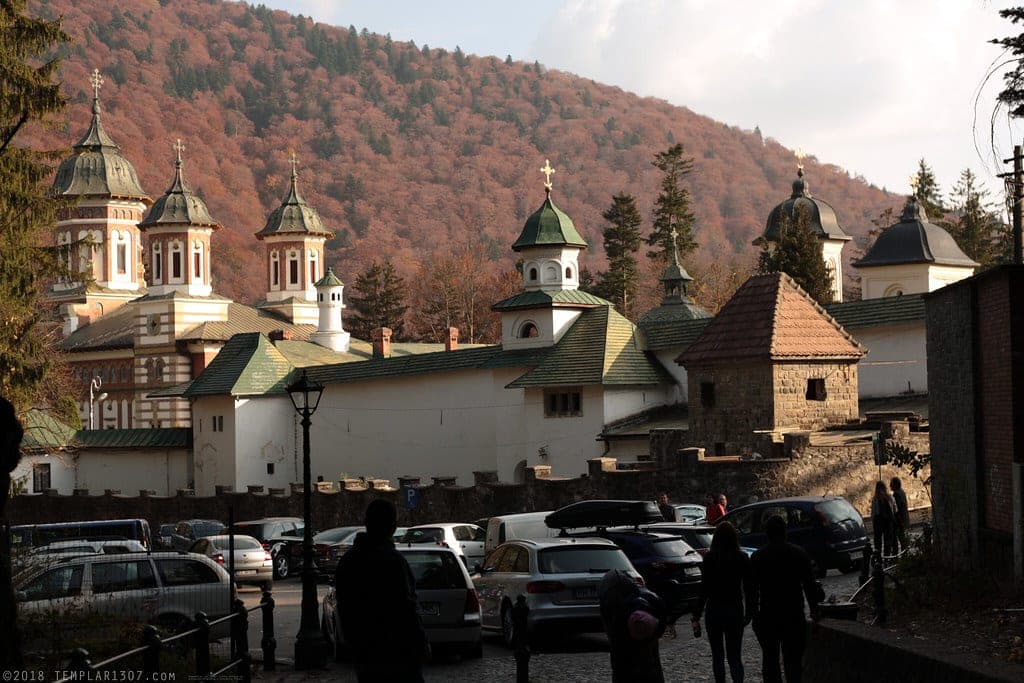
Sinaia Monastery, Romania
Sinaia, Prahova, Romania
53.6 km away

Darjiu Fortified Church
Darjiu, Harghita County, Romania
53.9 km away
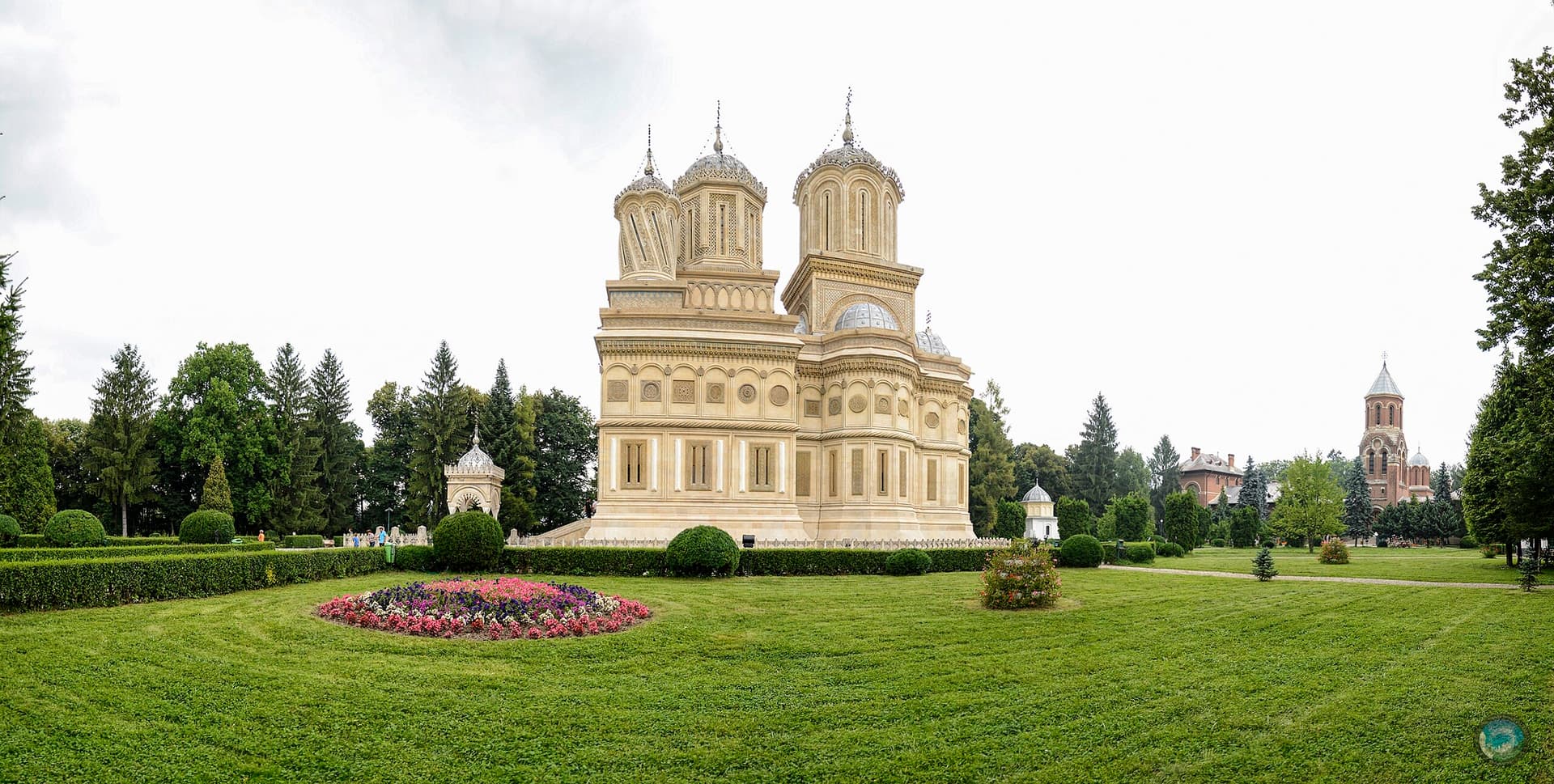
Curtea De Arges Monastery, Romania
Curtea de Argeș, Argeș, Romania
76.9 km away