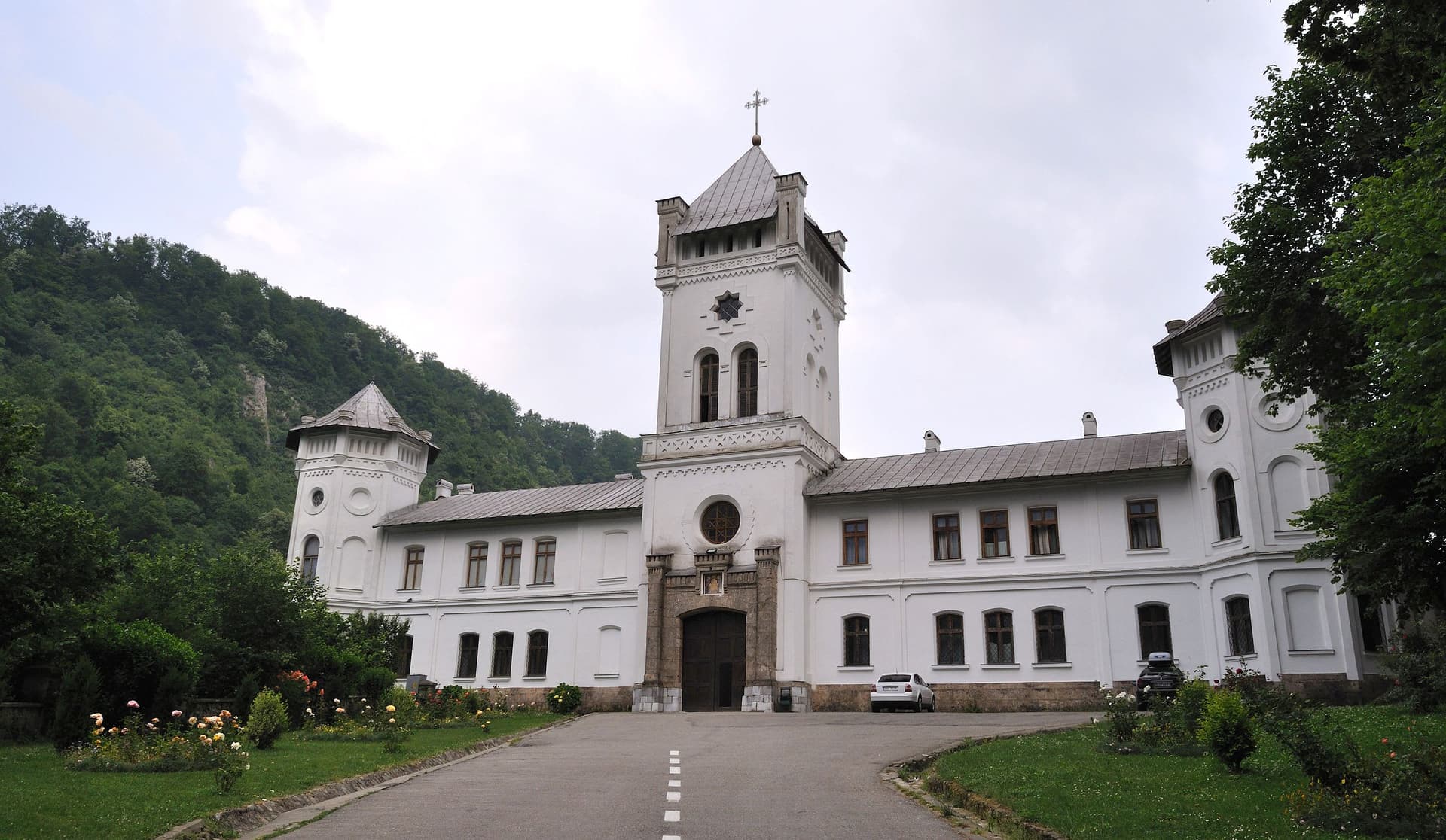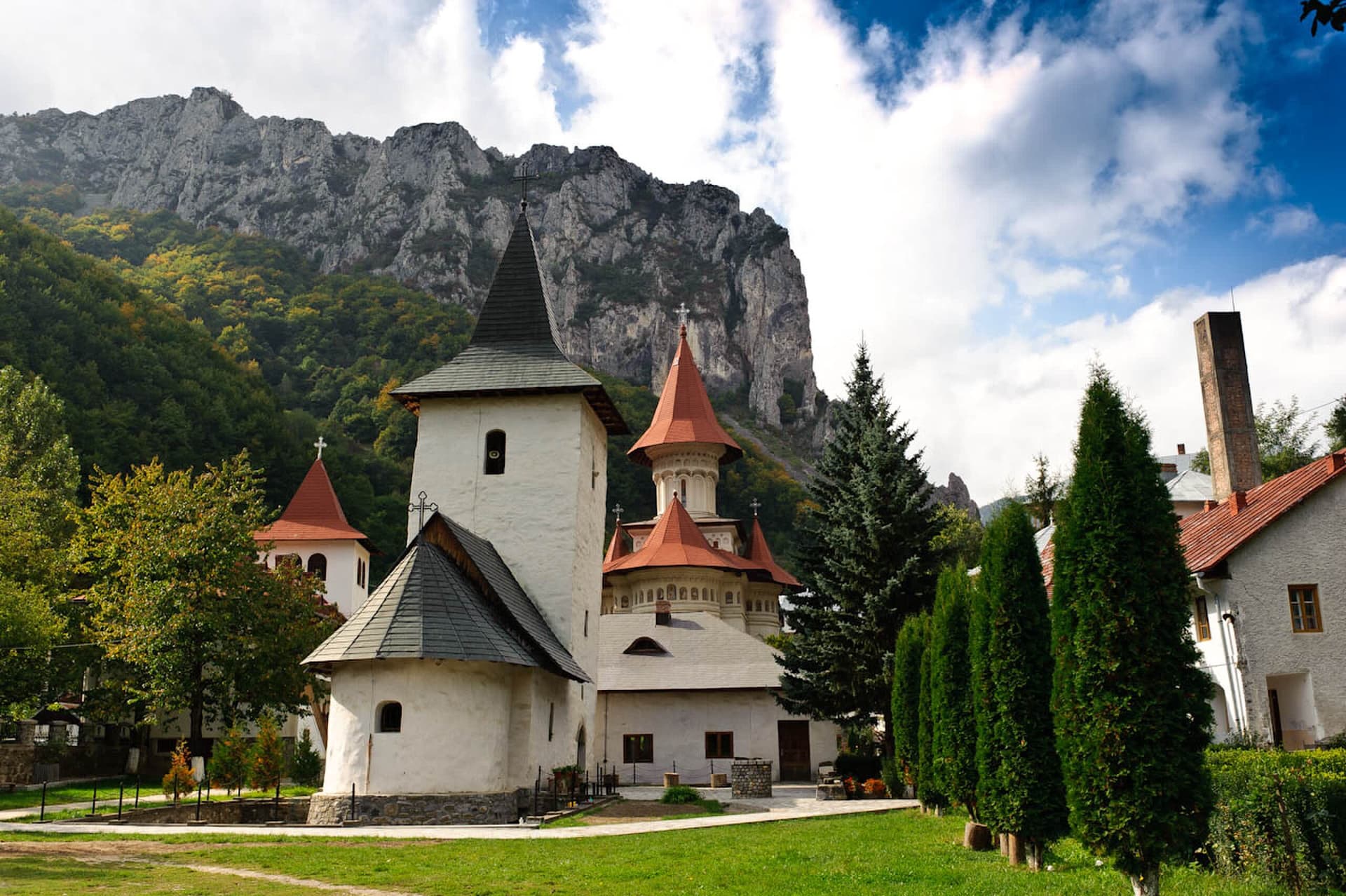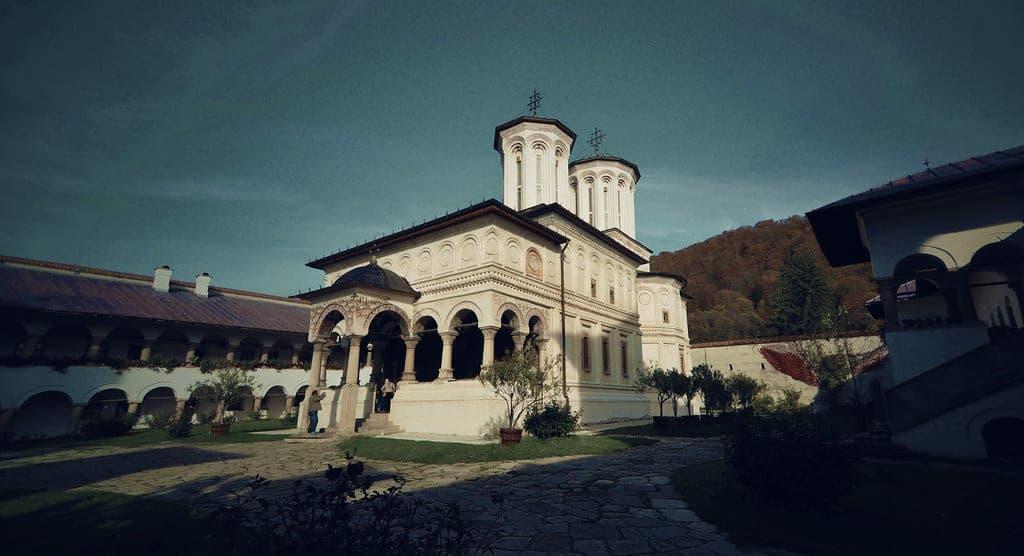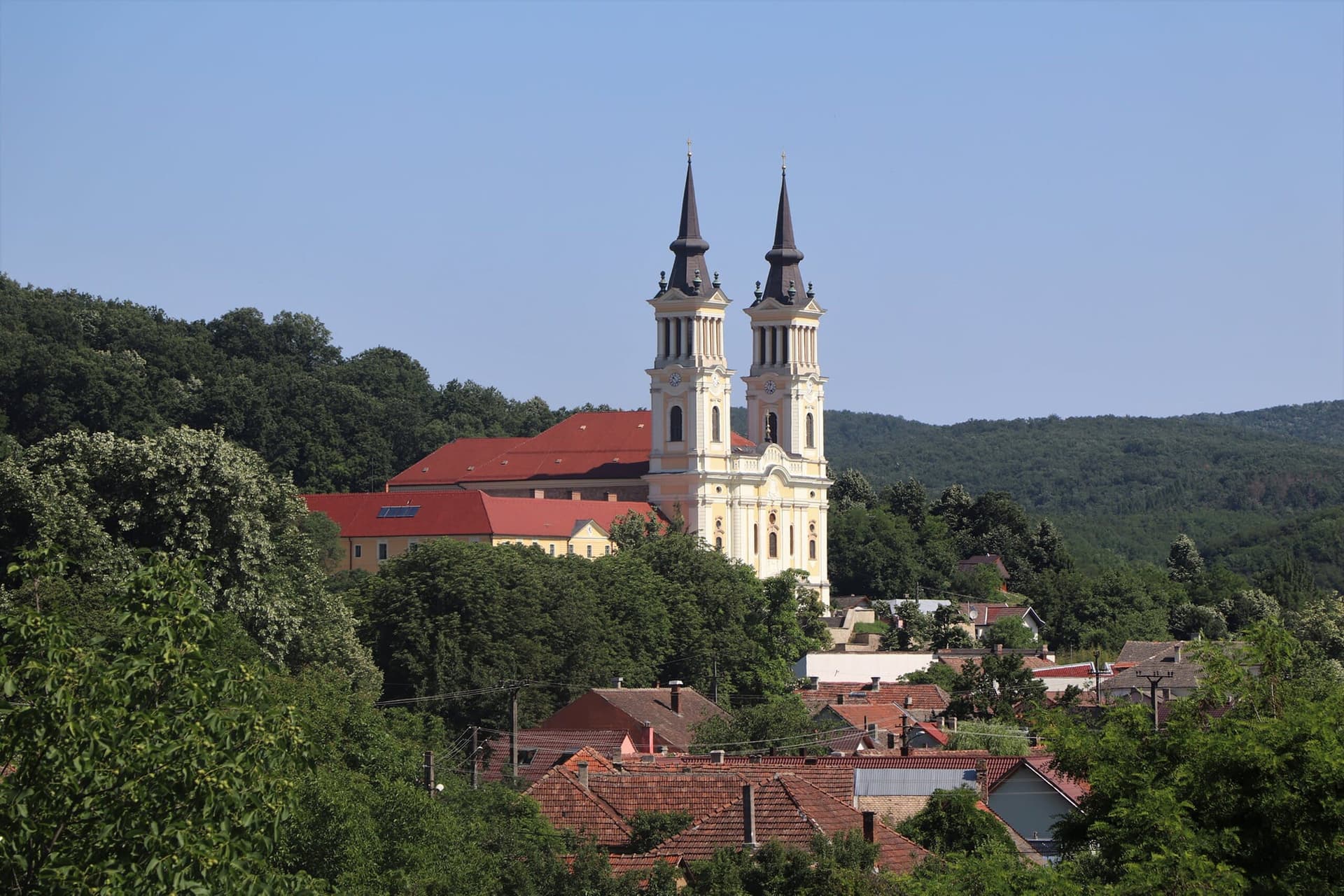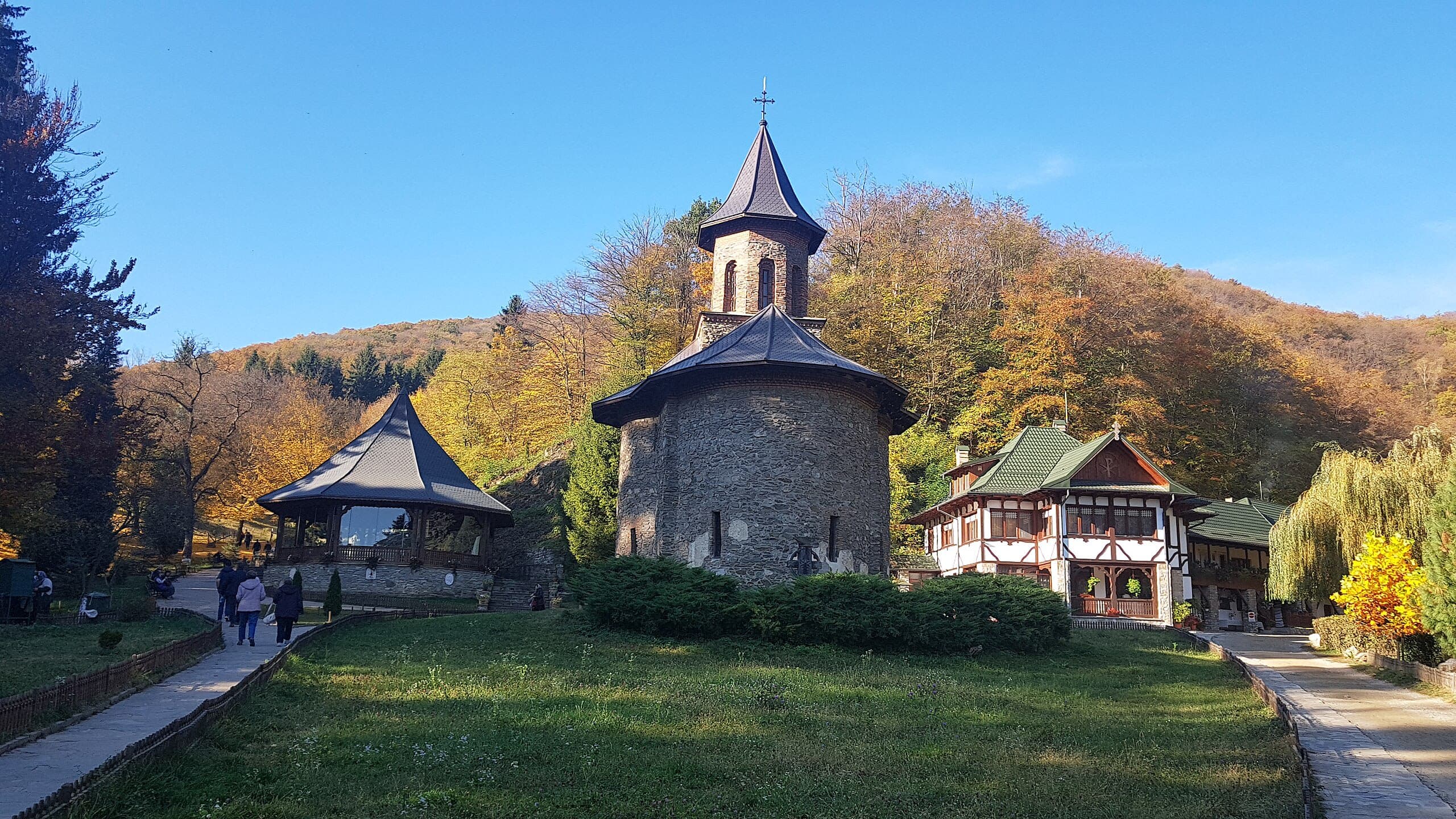
Prislop Monastery, Romania
A mountain valley nunnery where pilgrims gather at the tomb of Romania's most recently canonized saint
Hațeg, Hunedoara, Romania
At A Glance
- Coordinates
- 45.6318, 22.8503
- Suggested Duration
- Allow 1 to 2 hours for a visit to the monastery, church, and tomb. Those combining the visit with hiking in the Retezat Mountains area should plan a full day.
- Access
- Located approximately 13 km from Hateg and 30 km from Hunedoara, in the village of Silvasu de Sus, Hunedoara County. The road to the monastery is paved and well-managed. Most visitors arrive by car. Free parking is available. The monastery is approximately 320 km from Bucharest and 200 km from Cluj-Napoca. Mobile phone signal is available in the area, though it may weaken in the surrounding mountain terrain. No entrance fee information was available at time of writing.
Pilgrim Tips
- Located approximately 13 km from Hateg and 30 km from Hunedoara, in the village of Silvasu de Sus, Hunedoara County. The road to the monastery is paved and well-managed. Most visitors arrive by car. Free parking is available. The monastery is approximately 320 km from Bucharest and 200 km from Cluj-Napoca. Mobile phone signal is available in the area, though it may weaken in the surrounding mountain terrain. No entrance fee information was available at time of writing.
- Modest dress is required. Women should cover their shoulders and wear skirts below the knee. Head coverings are recommended inside the church. Men should wear long trousers.
- Photography is generally permitted on the monastery grounds. Inside the church, restrictions may apply. Exercise particular sensitivity and discretion around the tomb of Saint Arsenie Boca, where pilgrims are engaged in deeply personal prayer.
- Be mindful that many pilgrims at the tomb are in states of emotional intensity — seeking healing for themselves or loved ones, processing grief, or carrying hope. Discretion and quiet are essential in this area. The monastery is a functioning nunnery, and monastic living quarters are not accessible to visitors.
Overview
Prislop Monastery, nestled in a forested valley near the Retezat Mountains, carries seven centuries of monastic prayer and the living devotion of tens of thousands who come annually to the tomb of Saint Arsenie Boca. Canonized in 2024, Boca was a theologian, artist, and mystic who suffered under Communist persecution and whose tomb has become one of Romania's most emotionally charged pilgrimage sites. The 16th-century stone church, rebuilt by a Wallachian princess, anchors the monastery in a history that predates its modern fame.
Flowers grow on the grave of Arsenie Boca, even in winter. This is what pilgrims report, and this is what draws many of them to a nunnery in the mountains of Hunedoara County. Whether the phenomenon defies botanical explanation or simply reflects devoted hands tending the grave, the reports have become inseparable from the identity of Prislop Monastery.
The monastery itself is far older than its most famous resident. Saint Nicodemus of Tismana, who brought the hesychast contemplative tradition from Mount Athos to the Romanian lands, established a monastic community here in the late 14th century. He retreated to Prislop between 1399 and 1405, copying the Four Gospels in Church Slavonic. The stone church that stands today was rebuilt between 1564 and 1580 by Zamfira, daughter of a Wallachian ruler, and is recognized as a historical monument.
But it is Arsenie Boca who transformed Prislop from a significant historical monastery into a place of mass pilgrimage. Brought here in 1948, he sculpted the iconostasis, painted frescoes, and designed the garden with his own hands. The Communist authorities expelled him in 1959 and scattered the monastic community. He died on November 28, 1989, and was buried at Prislop. His tomb immediately became a pilgrimage site.
The canonization in 2024, with the formal ceremony at Prislop in November 2025 drawing 15,000 believers, confirmed what popular devotion had already decided. Pilgrims come with specific intentions: healing, guidance, intercession for loved ones. The atmosphere around the tomb is one of raw sincerity. Whatever one makes of miracle reports and posthumous sanctity, the human need that brings people to this valley is not in question.
Context And Lineage
Prislop Monastery was established in the late 14th century by Saint Nicodemus of Tismana as part of the hesychast movement he brought from Mount Athos. Rebuilt in stone by Zamfira in the 16th century, transformed by Arsenie Boca in the mid-20th century, and now revitalized by the pilgrimage following his 2024 canonization, Prislop carries the imprint of three distinct founding figures across seven centuries.
The story begins with hermits. Between the 13th and 14th centuries, solitary prayer-seekers settled along the Prislop River, drawn by the isolation of this mountain valley. The formalization came when Saint Nicodemus of Tismana, a Serbian-Romanian monk trained on Mount Athos who introduced the hesychast tradition to the Romanian lands, brought the hermitage under his guidance around 1377 to 1378.
Nicodemus retreated to Prislop between 1399 and 1405, copying the Four Gospels in Church Slavonic — a labor of prayer as much as scholarship. He returned to Wallachia and died at Tismana in 1406, but his imprint on Prislop endured.
The monastery's second birth came in the 16th century, when Zamfira, daughter of Moise Voievod of Wallachia, rebuilt it entirely in stone between 1564 and 1580. The church she constructed survives as a historical monument.
The third founding is Arsenie Boca's. Brought to Prislop in 1948 by Metropolitan Nicolae Balan, this hieromonk, theologian, and artist poured his gifts into the monastery — sculpting, painting, designing, restoring. Communist persecution cut short his work. He was expelled in 1959, lived in obscurity, and died on November 28, 1989. His burial at Prislop began its transformation into a national pilgrimage site.
Prislop's lineage runs through three distinct founding moments separated by centuries. Nicodemus brought the contemplative hesychast tradition from Mount Athos. Zamfira gave it permanence in stone. Arsenie Boca gave it a modern face — a saint whose life of contemplative gifts, artistic beauty, and political suffering resonates with the experience of 20th-century Romania. The current community of nuns maintains the thread that connects all three, holding daily prayer in a space shaped by each of these figures.
Saint Nicodemus of Tismana
saint
A Serbian-Romanian monk who trained on Mount Athos and brought the hesychast contemplative tradition to the Romanian lands. He founded or reformed multiple monasteries including Tismana and Prislop, retreated to Prislop between 1399 and 1405, and is canonized by both the Romanian and Serbian Orthodox Churches. Feast day: December 26.
Zamfira
historical
Daughter of Moise Voievod of Wallachia, she rebuilt Prislop Monastery entirely in stone between 1564 and 1580, earning the title of the monastery's second founder. The church she constructed survives as a classified historical monument.
Saint Arsenie Boca
saint
A Romanian Orthodox hieromonk, theologian, mystic, and artist (1910-1989) who served at Prislop from 1948 until his expulsion by Communist authorities in 1959. He personally sculpted the iconostasis, painted icons and frescoes, and restored the monastery. Persecuted for supporting anti-Communist resistance, he died on November 28, 1989, and was buried at Prislop. Canonized by the Romanian Orthodox Church in July 2024, with the formal ceremony at Prislop in November 2025 drawing 15,000 believers.
Why This Place Is Sacred
Prislop's quality as a thin place derives from the convergence of seven centuries of monastic prayer, the tomb of a recently canonized saint whose modern life is documented within living memory, a wonder-working icon of the Virgin Mary, and a forested mountain setting that creates natural conditions for spiritual withdrawal. The emotional intensity of pilgrimage devotion at Arsenie Boca's tomb adds a contemporary dimension rarely found at historic sites.
Three founders, seven centuries, one valley. The thinness at Prislop has accumulated in layers, each adding its own quality to the accumulated whole.
The deepest layer belongs to Saint Nicodemus of Tismana, who chose this place in the 14th century because its isolation suited the hesychast practice of interior prayer. Nicodemus had trained on Mount Athos, and the tradition he carried — seeking God through stillness — left its mark on the site. When he copied the Four Gospels here, each letter was an act of prayer, and that attention soaked into the ground.
Zamfira's rebuilding in the 16th century added permanence in stone, and the wonder-working icon of the Virgin Mary that the monastery houses has drawn its own centuries of devotion. But these older layers are now overlaid by something more immediate.
Arsenie Boca lived within living memory. People who knew him are still alive. His artistic work — the iconostasis he carved, the frescoes he painted — represents not historical reconstruction but direct personal expression. His suffering under Communist persecution places him in a lineage of Christian confessors that extends back to the early centuries of the faith. And his tomb generates reports of phenomena that resist easy categorization: the flowers, the healings, the sense of his continued presence.
The mountain setting holds all of this within a natural silence. The Retezat Mountains rise nearby, and the Prislop valley carries a quality of enclosure that concentrates attention inward. Pilgrims often describe the peace of the place as something almost physical — a pressure that settles on the shoulders and quiets the mind.
What distinguishes Prislop from other ancient monasteries is this combination of deep history and contemporary urgency. The saint buried here is not medieval but modern. The devotion he inspires is not scholarly but visceral.
Prislop was established as a monastic community within the hesychast movement that Saint Nicodemus of Tismana brought from Mount Athos to the Romanian lands in the 14th century. Its original purpose was contemplative withdrawal — creating conditions for the practice of inner prayer in a setting removed from the demands of the world.
The monastery passed through periods of flourishing and decline. After Nicodemus, it fell into disrepair until Zamfira rebuilt it in stone in the 16th century. A school for priests was established in the 17th century. Under Austrian Habsburg influence in the 18th century, it became Greek-Catholic. It returned to Orthodox worship in 1948, when Arsenie Boca was brought to serve as abbot. His expulsion in 1959 and the scattering of the community marked a dark period, but his burial here in 1989 began a transformation that has accelerated ever since. The nunnery was revived, and pilgrimage grew from modest numbers to tens of thousands annually. The 2024 canonization opened a new chapter in the monastery's history.
Traditions And Practice
Prislop maintains daily Orthodox liturgical services as an active nunnery. The principal pilgrimage practice is veneration at the tomb of Saint Arsenie Boca, which draws visitors year-round and intensifies on the feast day of November 28. The feast of Saint Nicodemus on December 26 honors the monastery's founder.
The community of nuns maintains the daily cycle of canonical hours and the Divine Liturgy according to the Romanian Orthodox rite. The wonder-working icon of the Virgin Mary is venerated within the church. Memorial services requested by pilgrims form a regular part of the monastery's liturgical activity, as many who come to Arsenie Boca's tomb bring prayer intentions for the living and the dead.
Pilgrimage to the tomb of Saint Arsenie Boca has become the defining contemporary practice at Prislop. Since his burial in 1989, the numbers have grown steadily, and the 2024 canonization elevated the site's significance further. The feast of Saint Arsenie on November 28 now draws thousands for vigil and liturgy. The monastery grounds and garden, designed by Boca himself, are accessible to visitors year-round.
December 26, the feast of Saint Nicodemus of Tismana, is also observed with special services, honoring the monastery's original founder.
Approaching the tomb of Saint Arsenie Boca is the central act of pilgrimage here. Whether or not you come as a believer, the sincerity of the devotion that surrounds the tomb invites your own sincerity. Bring a genuine question or intention rather than mere curiosity.
Walk the garden that Boca designed. The care he brought to the physical environment of the monastery reflects a spiritual sensibility that valued beauty as inseparable from holiness.
If timing allows, attend a service in the 16th-century church. The scale is modest, the atmosphere intimate, and the continuity with Nicodemus's original foundation is palpable in a way that the larger pilgrimage gatherings sometimes obscure.
Romanian Orthodox Christianity
ActivePrislop is one of the oldest and most important Orthodox monastic foundations in Transylvania, with roots in the 14th-century hesychast movement. Its significance has been dramatically amplified by the modern pilgrimage cult centered on Saint Arsenie Boca, canonized in 2024 as Holy Venerable Confessor Arsenie of Prislop. The monastery now serves as one of Romania's most important pilgrimage destinations.
Daily Divine Liturgy and canonical hours maintained by the nunnery community. Pilgrimage and prayer at the tomb of Saint Arsenie Boca. Veneration of the wonder-working icon of the Virgin Mary. Feast-day celebrations on November 28 and December 26 with thousands of pilgrims. Memorial services requested by pilgrims.
Hesychast Monastic Tradition
HistoricalThe monastery was founded within the hesychast movement that Saint Nicodemus of Tismana brought from Mount Athos to the Romanian lands in the 14th century. This tradition of interior prayer and contemplative withdrawal shaped the monastery's early character. Arsenie Boca's own contemplative practice in the 20th century is understood by some as a continuation of this tradition, though the direct connection is not fully documented.
Contemplative prayer and inner stillness, ascetic discipline, spiritual direction, manuscript copying and theological study. The formal hesychast practice as Nicodemus knew it is no longer the monastery's defining activity, having been superseded by the pilgrimage function, but its influence persists in the contemplative atmosphere of the site.
Experience And Perspectives
Visitors to Prislop report profound emotional experiences at the tomb of Saint Arsenie Boca, a deep sense of peace in the mountain setting, and appreciation for the modest but historically significant 16th-century church. Many describe being moved by the sincerity of fellow pilgrims, whose devotion creates a palpable atmosphere regardless of the visitor's own beliefs.
The road to Prislop winds through the Hateg area of Hunedoara County, and the monastery appears where the valley narrows, surrounded by forested slopes that rise toward the Retezat and Poiana Rusca mountains. The setting prepares you for something, though it does not tell you what.
Inside the compound, the 16th-century stone church stands modestly. It does not compete with the grand monasteries of Bukovina or Moldavia. Its significance is quieter, rooted in age and perseverance rather than scale. The iconostasis that Arsenie Boca carved with his own hands introduces a different register — personal artistic vision expressed through the traditional medium of Orthodox sacred art.
But it is the tomb that defines the experience for most visitors. Pilgrims approach with visible emotion. Some weep. Some pray aloud. Some simply stand in silence, holding something they have carried a long distance. The atmosphere is not that of a historical site but of a place where people come with real needs and genuine hope. Whether or not you share the belief that a saint lies here, the human reality of the devotion is undeniable.
The garden that Boca designed is its own kind of encounter — a space shaped by a spiritual sensibility that valued beauty as a form of prayer. Walking the grounds between the church and the tomb, particularly in the early morning before crowds arrive, offers the kind of quiet that asks questions rather than providing answers.
During the feast of Saint Arsenie on November 28, the monastery fills with thousands. The 2025 canonization ceremony drew 15,000 believers and 30 bishops to the summer altar. On these occasions, the individual encounter gives way to the communal — a gathering that carries the energy of a movement still gathering force.
Come with awareness that you are entering a place of active, intense devotion. Pilgrims around you may be carrying grief, illness, or desperate hope. Your presence as a visitor is welcome, but the primary atmosphere is one of prayer, not tourism.
If you visit outside the November feast period, the monastery offers a quieter encounter. The garden and grounds are accessible year-round. The 16th-century church repays careful attention — its proportions and age speak to something the modern pilgrimage phenomenon can sometimes overshadow.
For those unfamiliar with Orthodox veneration practices, simply observe. Stand at a respectful distance from the tomb and let the devotion of others communicate what words cannot.
Prislop Monastery invites interpretation through multiple lenses. Scholars study it as a case of post-Communist religious revival. Orthodox believers experience it as a place of direct encounter with a living saint. Cultural historians see in its 16th-century church one of Transylvania's oldest monastic foundations. These readings do not compete but reveal different aspects of a site whose significance continues to evolve.
Scholars recognize Prislop as one of Transylvania's oldest and most historically significant monastic foundations, rooted in the 14th-century hesychast renewal movement led by Nicodemus of Tismana. The 16th-century stone church is classified as a historical monument of national importance.
Academic research on the modern pilgrimage phenomenon at Arsenie Boca's tomb has examined it as a case study in post-Communist religious revival — how the cult of a spiritual figure persecuted by the state became a mass movement in the decades following 1989. Scholars have noted the spontaneous, popular nature of the veneration, which preceded and effectively pressured the institutional church toward canonization. The pattern inverts the typical hagiographic sequence: popular devotion came first, official recognition followed.
Within Romanian Orthodox tradition, Prislop is understood as a site blessed by the holiness of three founding figures across seven centuries. Saint Nicodemus brought the hesychast prayer tradition from Mount Athos. Zamfira's rebuilding is seen as providential renewal. Saint Arsenie Boca is revered as a modern holy elder gifted with clairvoyance, healing powers, and prophetic vision.
His suffering under Communist persecution places him in the lineage of Christian confessors — those who bore witness to faith at personal cost. The miraculous preservation of flowers on his grave year-round is received as a sign of divine favor. The faithful understand Prislop as a place where heaven and earth are particularly close, where prayers carry to God with special intensity through the saint's intercession.
Some visitors note the monastery's location in a mountain valley surrounded by ancient forests as contributing to an unusually concentrated contemplative atmosphere. Arsenie Boca's artistic work, which incorporated symbolic and visionary elements that exceeded traditional Byzantine iconographic conventions, has attracted interest from those drawn to mystical and visionary spirituality. His reported gifts of clairvoyance and prophecy are sometimes discussed beyond Orthodox frameworks, in the context of broader traditions of spiritual perception.
Several aspects of Prislop's story resist definitive documentation. The full nature and extent of Arsenie Boca's reported miracles, both during his life and posthumously, rest on faith and testimony rather than formal investigation. The phenomenon of flowers reportedly blooming on his grave year-round in freezing temperatures has not been scientifically studied. Details of Boca's experiences during Communist imprisonment, including accounts of prison doors opening by themselves, are based on oral testimony. The precise nature of his personal prayer practices and their relationship to the hesychast tradition is not fully documented.
Visit Planning
Prislop Monastery is located near Hateg in Hunedoara County, approximately 320 km from Bucharest and 200 km from Cluj-Napoca. The monastery is accessible year-round by paved road, with free parking available. The feast of Saint Arsenie on November 28 draws the largest pilgrimage gatherings.
Located approximately 13 km from Hateg and 30 km from Hunedoara, in the village of Silvasu de Sus, Hunedoara County. The road to the monastery is paved and well-managed. Most visitors arrive by car. Free parking is available. The monastery is approximately 320 km from Bucharest and 200 km from Cluj-Napoca. Mobile phone signal is available in the area, though it may weaken in the surrounding mountain terrain. No entrance fee information was available at time of writing.
Accommodation is available in Hateg and the surrounding area. For those combining a monastery visit with exploration of the Retezat Mountains, Hateg serves as a practical base. No information on pilgrim accommodation at the monastery was available at time of writing; inquire directly.
Prislop is an active nunnery and one of Romania's most emotionally charged pilgrimage sites. Modest dress, quiet behavior, and particular sensitivity around the tomb of Saint Arsenie Boca are essential. Visitors should be mindful that many pilgrims are engaged in deeply personal prayer.
The atmosphere at Prislop is shaped by the intensity of personal devotion that pilgrims bring to this place. Around the tomb of Saint Arsenie Boca, you will likely encounter people in prayer, in tears, in states of hope or grief that deserve the deepest respect. This is not a place for loud conversation, casual photography, or any behavior that interrupts the devotional atmosphere.
Inside the church, observe the practices of other worshippers. If you are unfamiliar with Orthodox veneration, standing quietly and watching is entirely appropriate. The nuns maintain the monastic rhythm; visitors are guests within that rhythm.
Discreet behavior with cameras is particularly important at the tomb. Photographing pilgrims in intimate moments of prayer without their knowledge or consent is a violation of the trust that the monastery extends to visitors.
Modest dress is required. Women should cover their shoulders and wear skirts below the knee. Head coverings are recommended inside the church. Men should wear long trousers.
Photography is generally permitted on the monastery grounds. Inside the church, restrictions may apply. Exercise particular sensitivity and discretion around the tomb of Saint Arsenie Boca, where pilgrims are engaged in deeply personal prayer.
Visitors may light candles purchased at the monastery. Small donations are welcomed. Memorial services can be requested through the monastic community.
Maintain silence and reverence around the tomb. Do not touch icons, frescoes, or sacred objects. Monastic living quarters are off-limits. Follow instructions from the community of nuns.
Sacred Cluster
Nearby sacred places create the location cluster described in the growth plan. This block is intentionally crawlable and links into the wider regional graph.