Petroglyphs Park
Where the rocks still teach and the spirits still speak through stone
North Kawartha, Ontario, Canada
At A Glance
- Coordinates
- 44.6256, -78.0564
- Suggested Duration
- Allow 1.5 to 2 hours minimum for the Learning Place film screening and a visit to the petroglyph site. Three to four hours is recommended to include one or two of the park's seven hiking trails. A full day permits exploration of the complete trail system, including the Minnow Lake Trail and the meromictic McGinnis Lake. This is a day-use park with no camping facilities.
- Access
- Petroglyphs Provincial Park is located at 2249 Northey's Bay Road, Woodview, Ontario, approximately 55 km northeast of Peterborough. Access is via Highway 28 north from Peterborough, then east on Northey's Bay Road. Day-use parking is available at the park. An Ontario Parks daily vehicle permit is required; fees vary by category and year. Annual Ontario Parks passes are also accepted. Check ontarioparks.ca for current rates. The walk from the Learning Place to the petroglyph site is accessible. The park encompasses 1,643 hectares and is classified as a historical-class provincial park, day-use only. Mobile phone signal may be limited in this forested area of the Canadian Shield; confirm signal availability before relying on phone-based navigation at the site.
Pilgrim Tips
- Petroglyphs Provincial Park is located at 2249 Northey's Bay Road, Woodview, Ontario, approximately 55 km northeast of Peterborough. Access is via Highway 28 north from Peterborough, then east on Northey's Bay Road. Day-use parking is available at the park. An Ontario Parks daily vehicle permit is required; fees vary by category and year. Annual Ontario Parks passes are also accepted. Check ontarioparks.ca for current rates. The walk from the Learning Place to the petroglyph site is accessible. The park encompasses 1,643 hectares and is classified as a historical-class provincial park, day-use only. Mobile phone signal may be limited in this forested area of the Canadian Shield; confirm signal availability before relying on phone-based navigation at the site.
- Standard outdoor clothing appropriate for the season. The walk from the Learning Place to the petroglyph site is accessible and does not require specialized footwear. Comfortable walking shoes are recommended for the park's seven hiking trails. No specific religious dress code, but respectful, modest attire is appropriate when visiting a sacred site.
- Photography and videography of the rock carvings is strictly prohibited for spiritual reasons. This restriction is requested by the Anishinaabe community and enforced by park staff. It applies to all recording devices. Photography is permitted throughout the rest of the park, including on hiking trails and at natural features.
- Do not attempt to participate in or imitate Anishinaabe ceremonies. Fasting, sweat lodges, and tobacco offerings at this site are practices conducted within the Anishinaabe spiritual tradition by community members. They are not available to general visitors. Do not leave offerings of any kind at the rock unless you are part of the Anishinaabe community and know the appropriate protocols. Well-meaning gestures from outside the tradition can be disrespectful. Do not touch the rock surface or the carvings. The marble is fragile, and the petroglyphs have already weathered significantly from their original depth of two to three inches. But beyond preservation, touching is inappropriate at a sacred site. The raised walkway exists for a reason.
Overview
Deep in the boreal forest of Ontario's Canadian Shield, a crystalline marble outcrop holds the largest known concentration of indigenous rock carvings in Canada. The Anishinaabe call this place Kinoomaagewaapkong, the rocks that teach. Carved between 900 and 1400 CE, these are not relics of a vanished culture. They are living teachings, and the Anishinaabe still come here to listen.
Before European surveyors mapped this land, before provincial boundaries were drawn across it, before anyone thought to call it a park, this rock was already old in its purpose.
On a gently sloping outcrop of crystalline marble at the southern edge of the Canadian Shield, Algonkian-speaking peoples carved approximately 900 to 1,200 figures into stone. They used gneiss hammers to incise images that were originally two to three inches deep: shamans, turtles, snakes, birds, the horned serpent Mishikinebik, and a dominant figure whose head appears to represent the sun. They carved these images not as decoration but as communication, reaching through the rock surface to the spirit world they believed lay directly beneath it.
The Anishinaabe, descendants of those carvers, call this place Kinoomaagewaapkong, meaning the rocks that teach. In their understanding, rocks are M'Shoomisnaan, grandfather, because they have witnessed the passage of all time and hold within them the histories of every relationship between land, water, and beings. The deep crevices in this marble are not geological features alone. They are entrances to the spirit world. Underground water flows beneath the rock, and the sounds it makes are understood as the voices of spirits speaking.
Three geologists rediscovered the carvings in 1954 during a mineral survey. The province established a park in 1976. A protective building went up in 1984. But for the Anishinaabe, this site was never lost, never needed rediscovering. It remained what it had always been: a place where the physical and spiritual worlds meet, where teachings pass from stone to seeker, where ceremony continues in present tense.
Context And Lineage
Kinoomaagewaapkong holds the largest known single concentration of indigenous rock art in Canada, carved by Algonkian-speaking peoples between approximately 900 and 1400 CE. Rediscovered in 1954, systematically studied by Joan and Romas Vastokas in the 1960s, and protected within a provincial park since 1976, the site is both a National Historic Site and an actively sacred place where Anishinaabe ceremony continues under the stewardship of Curve Lake First Nation.
In Algonkian cosmology, the rock surface was understood as a boundary between worlds. Spirits dwelled beneath the earth, preferring places near water. This outcrop of crystalline marble, with underground streams flowing through it and deep crevices opening into darkness, was recognized as a place where that boundary could be crossed.
The shamans who carved the petroglyphs were not creating art in any Western sense. They were enacting spiritual communication. Each figure incised into the marble was a gesture toward the world below, an invocation, a message sent through stone. The images they chose, shamans with radiating power, the horned serpent Mishikinebik who embodied medicine and wisdom, animals of land and sky and water, reflect a cosmology in which all beings participated in the exchange between worlds.
The Anishinaabe who carry this knowledge today understand the carvings as teachings that remain active. The rocks teach. That is what the name means, and it is meant literally.
The lineage at Kinoomaagewaapkong is unbroken. Algonkian-speaking peoples began carving figures into this marble outcrop around 900 CE, and the work continued for perhaps five centuries. The Anishinaabe, linguistic and cultural descendants of those carvers, have maintained a continuous relationship with the site.
This continuity was not disrupted by colonization in the way that many indigenous sacred sites were severed from their communities. The remote forest location offered some protection. When three geologists stumbled upon the carvings in 1954, they found a site the Anishinaabe had never left.
The institutional history that followed, the academic study by the Vastokases in the 1960s, the park designation in 1976, the protective building in 1984, the National Historic Site status in 1981, added layers of Western stewardship. But the decisive shift came in 2002 when Curve Lake First Nation opened the Learning Place and took responsibility for how the site's story is told. The interpretive voice at Kinoomaagewaapkong is now an Anishinaabe voice. The resolution passed by Chiefs-in-Assembly in 2025 to advocate for full indigenous caretaking represents the next step in a trajectory toward the community reclaiming what was always theirs.
Joan M. Vastokas
scholar
University of Toronto art historian who, with Romas K. Vastokas, conducted the first systematic recording of the petroglyphs from 1965 to 1968. Their monograph Sacred Art of the Algonkians remains the definitive scholarly interpretation of the site.
Romas K. Vastokas
scholar
Trent University art historian who co-led the systematic recording and study of the petroglyphs. His collaboration with Joan Vastokas produced the foundational academic analysis of the carvings' cultural and spiritual context.
Gimaa Keith Knott
community leader
Chief of Curve Lake First Nation who has advocated publicly for the community to become primary caretaker of Kinoomaagewaapkong, reflecting the broader movement toward indigenous stewardship of indigenous sacred places.
The Algonkian Carvers
original creators
The unnamed Algonkian-speaking shamans and spiritual practitioners who carved approximately 900 to 1,200 figures into the crystalline marble between 900 and 1400 CE. Their identities are unknown, but their work constitutes the largest single concentration of indigenous rock art in Canada.
Curve Lake First Nation Interpreters
contemporary stewards
The Curve Lake First Nation staff who operate the Learning Place visitor centre and deliver interpretive programming. They are the living link between the teachings encoded in the rock and the visitors who come to receive them.
Why This Place Is Sacred
Kinoomaagewaapkong's sacredness is rooted in the Anishinaabe understanding that the rock itself is a living grandfather, that the crevices in the marble are entrances to the spirit world, and that the underground water carries the voices of spirits. Over 900 carvings made across centuries create a concentrated field of spiritual communication. The site's deep forest setting and the audible presence of water beneath stone produce a quality of encounter that visitors consistently describe as unlike ordinary experience.
The marble outcrop at Kinoomaagewaapkong sits in the boreal forest, reached by a walk through trees that gradually thins the noise of the ordinary world. This seclusion is not incidental. The site exists at the edge of the Canadian Shield, where the rock of the continent's ancient core meets the softer landscape to the south, a geological boundary that may also have registered as a spiritual one to the people who chose this place for their carvings.
What makes this rock different from any other is, in the Anishinaabe understanding, what lies beneath it. Underground water flows through channels in the marble, producing sounds that are audible to those standing on the surface. For the Anishinaabe, these sounds are the voices of spirits. The deep crevices in the rock are not erosion patterns but doorways, passages into the world below where spirits dwell. Algonkian mythology held that spirits preferred to live near water, and this outcrop, with its subterranean streams, was understood as a place where the membrane between worlds grew thin enough for communication.
The petroglyphs themselves are that communication made visible. Each figure carved into the rock was an act of reaching through, using the stone surface as a medium for dialogue between the physical world above and the spiritual world below. The shamans who created these images were not decorating a surface. They were opening channels.
Over perhaps five centuries, carvers returned to this same outcrop, adding their voices to those already inscribed. The result is a palimpsest of sacred intent, layer upon layer of spiritual communication concentrated in a single place. This accumulation across time is itself a source of the site's power. It is a place where the boundary between worlds has been intentionally thinned by generations of practice.
The petroglyphs were created as acts of spiritual communication by Algonkian-speaking shamans. The rock surface was understood as a boundary between the physical world and the spirit world directly beneath it. Carving figures into this boundary was a means of invocation, vision seeking, and dialogue with the spirits. The images of shamans, animals, celestial figures, and the horned serpent Mishikinebik reflect a cosmology in which the rock served as a meeting point between realms.
The site's spiritual significance has remained continuous from the period of active carving (approximately 900-1400 CE) through to the present day. The Anishinaabe never abandoned the site or its teachings.
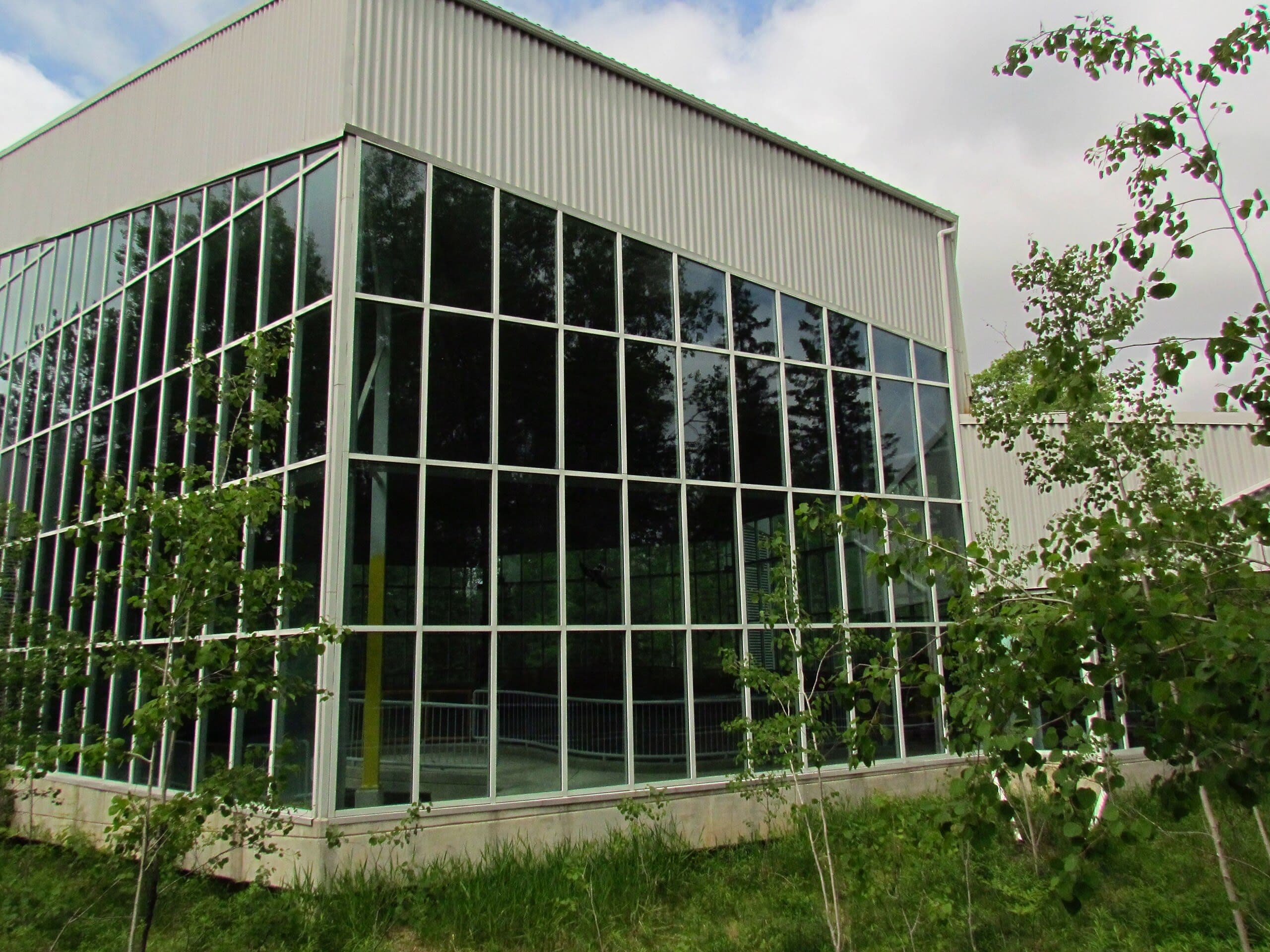
Modern history has layered institutional frameworks over this continuity. The provincial park, established in 1976, brought formal protection but also introduced state management of indigenous sacred space. The National Historic Site designation in 1981 added federal recognition. The protective building, constructed in 1984-1985, enclosed the outcrop in a glass-and-steel structure to prevent water damage, a decision praised by conservationists as scientifically sound but questioned by some scholars for fundamentally altering the character of an open-air sacred site.
The most significant recent development is the partnership between Ontario Parks and Curve Lake First Nation, who opened the Learning Place visitor centre in 2002 and now provide all interpretive programming at the site. In 2025, Curve Lake First Nation's Gimaa Keith Knott spoke publicly about a resolution by Chiefs-in-Assembly to advocate for the community to become primary caretaker. This movement represents a broader shift toward indigenous stewardship of indigenous sacred places.
Traditions And Practice
Kinoomaagewaapkong is an active ceremonial site where Anishinaabe people conduct fasting, sweat lodge ceremonies, tobacco offerings, and communion with ancestors. General visitors experience the site through structured interpretive programming rather than participation in ceremony. The site's power lies partly in what it asks you not to do: not photograph, not rush, not consume.
The petroglyphs were originally created through shamanic practice. Algonkian shamans used gneiss hammers to carve figures into the crystalline marble as acts of spiritual invocation. The rock surface functioned as a threshold, and the act of carving was itself a ritual gesture, an opening of channels to the spirit world below. The images, particularly the shamanic figures with radiating lines of power and the horned serpent Mishikinebik, suggest practices of vision seeking and spirit communication.
Contemporary Anishinaabe ceremony at the site continues traditions that predate the park, the building, and the Western discovery. Community members fast at the sacred rock, undertaking periods of prayer and spiritual seeking. Sweat lodge ceremonies are conducted in the area. Sacred tobacco, asemaa, is offered as a means of showing respect, making prayers, and communicating with the spirits. People come to be comforted by their ancestors, to receive teachings, and to maintain the relationship between the living community and the knowledge held in the rock.
Some teachings at the site are specific to women, addressing the connection between women, the earth, water, and the moon, and speaking of roles and responsibilities to families and community. These gender-specific teachings reflect a cosmology in which different knowledge is held by different members of the community.
The structured visitor program at the Learning Place represents a contemporary adaptation that allows the sacred site to be shared without being compromised. The award-winning film The Teaching Rocks provides cultural context. Curve Lake First Nation staff offer interpretive programming that conveys the spiritual significance of the carvings from within the tradition.
This programming is itself a form of practice, a deliberate act of teaching that extends the meaning of the site's name. Kinoomaagewaapkong means the rocks that teach, and the contemporary interpretation ensures that the teaching continues through human voices as well as stone ones.
Begin at the Learning Place. Watch the film with full attention. Let the Curve Lake First Nation staff shape your understanding before you approach the rock.
When you enter the protective building, walk slowly. Let the carvings come to you rather than hunting for specific figures. The raised walkway circles the entire outcrop, and each angle reveals different images. Some are deeply incised and immediately visible. Others are weathered and require patience to discern. Give that patience.
Stand still for a time in one place. Listen. Underground water sometimes produces faint sounds beneath the marble. Whether or not you hear it, hold the knowledge of what flows below. You are standing on what the Anishinaabe understand as a boundary between worlds.
If the carvings provoke reflection, allow it. This is a place where people have brought their inner lives for over a thousand years. You do not need ceremony to be contemplative. Silence and attention are their own form of respect.
Anishinaabe (Ojibwe/Nishnaabe)
ActiveKinoomaagewaapkong is among the most spiritually significant sites for the Anishinaabe people. The rock is M'Shoomisnaan, grandfather, holding the histories and teachings of all creation. The carvings are living instructions about clan systems, community responsibilities, the roles of women, and the interconnection of all beings. The crevices in the rock are entrances to the spirit world, and the underground water carries the voices of the spirits.
Ceremony continues at the site through fasting, sweat lodge ceremonies, sacred tobacco offerings, communion with ancestors, vision quests, and seeking teachings from the rock carvings. Some teachings are specific to women. Curve Lake First Nation operates the Learning Place and provides interpretive programming for visitors.
Algonkian (Historical Carvers)
HistoricalThe Algonkian-speaking peoples who carved the petroglyphs between approximately 900 and 1400 CE created the largest known single concentration of indigenous rock art in Canada. Using gneiss hammers to incise figures into crystalline marble, they enacted spiritual communication with the world below the rock surface. The images include shamans, animals, celestial figures, and the horned serpent Mishikinebik, a powerful positive force associated with medicine and wisdom.
Shamanic rituals at the rock surface included vision quests, spirit invocations, and carving as an act of spiritual communication with the spirit world beneath the rock. The creation of images was itself a ritual practice, not separate from ceremony.
Conservation and Heritage Stewardship
ActiveThe protective building constructed in 1984-1985 represents one approach to preserving indigenous rock art: a seven-sided glass-and-steel structure that shields the outcrop from the water damage that was eroding the carvings. Ontario Parks and the National Historic Sites designation provide institutional frameworks for protection.
Ongoing conservation monitoring, visitor management through the structured interpretive program, partnership with Curve Lake First Nation for cultural interpretation, and the evolving relationship between institutional and indigenous stewardship models.
Experience And Perspectives
Visitors to Kinoomaagewaapkong encounter the site through a carefully structured program: a film at the Learning Place, then a guided walk to the sacred rock beneath its protective building. The prohibition on photography forces full presence with the carvings. Many visitors describe a quality of stillness and depth, heightened by the knowledge that the rock beneath their feet is believed to be a threshold to the spirit world.
The experience begins before you reach the rock. At the Learning Place, managed by Curve Lake First Nation, you watch a film called The Teaching Rocks. This is not optional programming to fill time. It is the entry point, the context that transforms what follows from sightseeing into something closer to understanding.
The walk from the Learning Place to the protective building passes through boreal forest. The trees close in. The sounds of the parking lot and the highway fall away. By the time you reach the seven-sided building that shelters the rock, the world has quieted.
Inside, a raised cement walkway surrounds the outcrop. The marble surface slopes gently, and across it, hundreds of figures emerge from the stone. Shamans with radiating lines. Turtles and snakes. Birds in flight. The horned serpent Mishikinebik. Abstract shapes whose meanings are held within traditions that predate writing. A dominant figure whose head appears to represent the sun, possibly Kitchi Manitou, the Great Spirit.
Because you cannot photograph them, you must look. This is the quiet genius of the restriction. Without a camera mediating the experience, your attention has nowhere to go but into the carvings themselves. You notice details that a viewfinder would flatten. You begin to see how the figures relate to one another, how the natural contours of the rock shaped where the carvers placed their images.
Some visitors report hearing the underground water. The sound is faint, not always audible, and dependent on conditions. But when it comes, the knowledge that you are standing on a rock surface understood as a boundary between worlds, with spirit voices moving beneath your feet, produces a shift in perception that is difficult to dismiss as imagination.
The surrounding park offers seven hiking trails through the boreal landscape, including paths to Minnow Lake and the rare meromictic McGinnis Lake. These trails are worth exploring, but they serve a different purpose. The petroglyphs are the heart of this place. Everything else is the body through which you approach it.
Come with time. The minimum visit of an hour and a half, enough for the film and the rock, will give you the outline. But Kinoomaagewaapkong rewards those who slow down.
Arrive before the middle of the day if possible. The Learning Place programming sets the frame for everything that follows, so engage with it fully rather than treating it as a preamble. The Curve Lake First Nation staff who interpret the site carry knowledge that no guidebook contains.
When you enter the protective building, let your eyes adjust. The light inside is different from the forest outside. Walk slowly around the cement walkway. Resist the urge to identify and catalogue what you see. Instead, let the carvings accumulate in your attention. Notice what draws your eye and what you return to.
If you are carrying a question, a transition, something unresolved, bring it with you to the rock. This is a place people have brought their questions for over a thousand years. You do not need to belong to a particular tradition to hold a question in the presence of something old and attentive.
Leave your phone in your pocket. Not because the rules require it at the rock, though they do, but because the experience asks for your full attention. What you receive here cannot be captured in a photograph. It can only be carried in memory.
Kinoomaagewaapkong is understood through multiple frameworks that do not always converge. Academic scholarship documents the carvings as the largest concentration of indigenous rock art in Canada and interprets them through ethnographic analogy. Anishinaabe tradition holds them as living teachings from a living rock. Some alternative researchers have proposed external origins that are rejected by both scholarship and indigenous knowledge. The most honest approach holds these perspectives in awareness without forcing resolution.
The foundational academic study is Sacred Art of the Algonkians by Joan M. and Romas K. Vastokas, published in 1973 following their systematic recording of the site from 1965 to 1968. The Vastokases identified categories of images including sun figures, shamans, human figures, fertility themes, thunderbirds, the horned serpent, birds, reptiles, animals, tracks, artefacts, abstractions, and boats. Using ethnographic analogies from documented Ojibwe traditions, they interpreted the carvings as serving shamanic purposes, including vision quests and spirit invocations.
The dating of the carvings remains approximate. Most scholars place them between 900 and 1400 CE, though some suggest an earlier origin during the Archaic period. Direct dating of rock carvings is technically difficult, and the range reflects genuine uncertainty.
The protective building constructed in 1984-1985 has generated scholarly debate. The Canadian Conservation Institute endorsed it as scientifically sound preservation, citing water as the primary agent of deterioration. Others have argued that enclosing an open-air sacred site in a glass-and-steel structure fundamentally alters its character, severing the carvings from the natural environment that gave them meaning. This tension between conservation and spiritual integrity remains unresolved in the academic literature.
For the Anishinaabe, the petroglyphs are not historical artefacts requiring academic interpretation. They are Kinoomaagewaapkong, the rocks that teach, and their teachings are active, ongoing, and not fully available to outsiders.
The rock is M'Shoomisnaan, grandfather. It holds within it the histories and relationships of land, water, and all beings. The carvings speak of clan systems and responsibilities, of the interconnection of all creation, of women's connection to earth, water, and moon. Some teachings are specific to certain members of the community and are not meant for general dissemination.
The crevices in the rock lead to the spirit world. The underground water carries the voices of spirits. These are not metaphors in the Anishinaabe understanding. They are descriptions of reality.
Curve Lake First Nation's advocacy for primary caretaking authority reflects a straightforward principle: the people for whom the site is sacred, who understand its teachings from within the tradition, are its appropriate stewards. The institutional frameworks of provincial parks and national historic sites, while offering protection, also impose external authority on indigenous sacred space.
Some alternative researchers have proposed non-indigenous origins for the petroglyphs, including speculation about European or other external cultural influences. These claims are not supported by credible evidence and are rejected by both the academic consensus and the Anishinaabe community. The petroglyphs are firmly rooted in Algonkian and Anishinaabe spiritual culture, and theories suggesting otherwise risk disrespecting both the scholarly record and living indigenous tradition.
Genuine mysteries remain at Kinoomaagewaapkong. The precise meaning of many individual carvings is uncertain, as the spiritual context of their creation was transmitted through oral tradition rather than written record. Some of that knowledge may be held within the Anishinaabe community as restricted sacred knowledge not intended for publication.
The exact dating of the petroglyphs cannot be determined with current methods. Whether this particular outcrop was chosen primarily for its geological properties, the underground water, the crystalline marble, the acoustic effects, or for reasons now inaccessible to outsiders, remains an open question.
The number of petroglyphs itself is uncertain, with counts ranging from approximately 900 to over 1,200 depending on criteria used and the difficulty of distinguishing weathered carvings from natural marks. The identity of the individual carvers, whether the work represents a single sustained tradition or distinct episodes across centuries, and the full scope of the teachings encoded in the images, all remain beyond definitive external knowledge.
Visit Planning
Petroglyphs Provincial Park is located northeast of Peterborough, Ontario, open seasonally from May to October. The site operates 10:00 AM to 5:00 PM with no vehicle entry after 4:00 PM. An Ontario Parks daily vehicle permit is required. Allow at least two hours for the film and petroglyph visit, longer to explore the hiking trails.
Petroglyphs Provincial Park is located at 2249 Northey's Bay Road, Woodview, Ontario, approximately 55 km northeast of Peterborough. Access is via Highway 28 north from Peterborough, then east on Northey's Bay Road. Day-use parking is available at the park. An Ontario Parks daily vehicle permit is required; fees vary by category and year. Annual Ontario Parks passes are also accepted. Check ontarioparks.ca for current rates. The walk from the Learning Place to the petroglyph site is accessible. The park encompasses 1,643 hectares and is classified as a historical-class provincial park, day-use only. Mobile phone signal may be limited in this forested area of the Canadian Shield; confirm signal availability before relying on phone-based navigation at the site.
Petroglyphs Provincial Park is a day-use park with no camping or overnight accommodation. The nearest towns with lodging are Woodview and communities along Highway 28. Peterborough, approximately 55 km to the southwest, offers the fullest range of accommodation options. For those visiting both Kinoomaagewaapkong and Serpent Mounds, Peterborough serves as a practical base.
Kinoomaagewaapkong is an active sacred site with specific restrictions rooted in Anishinaabe spiritual practice. No photography of the petroglyphs. No dogs at the sacred rock. No touching the carvings. Approach with the understanding that you are entering a living place of worship, not an archaeological exhibit.
The restrictions at Kinoomaagewaapkong are not arbitrary park rules. They originate from the Anishinaabe community's understanding of the site as a living sacred place, and they deserve the respect you would extend to any active house of worship.
The photography prohibition is the most significant. It applies to all recording devices, cameras, phones, and video equipment, at the petroglyph site. This is not a preservation measure. It is a spiritual restriction. The carvings are considered sacred communications, and recording them is understood as inappropriate in the same way that recording someone's private prayer would be inappropriate. Honor this fully. Do not attempt to take covert photographs.
Dogs are not permitted at the petroglyph site. Benches are available approximately 100 metres away for visitors with dogs to wait. Dogs are also not allowed inside any park buildings.
Do not touch the rock surface or any of the carvings. Stay on the raised cement walkway within the protective building.
Maintain a quiet, contemplative atmosphere at the petroglyph site. Loud conversation and disruptive behaviour are inappropriate.
The visitor program begins at the Learning Place with a film screening. This is not a suggestion but the intended entry point to the experience. Skipping it and going directly to the rock misses the context that makes the visit meaningful.
Standard outdoor clothing appropriate for the season. The walk from the Learning Place to the petroglyph site is accessible and does not require specialized footwear. Comfortable walking shoes are recommended for the park's seven hiking trails. No specific religious dress code, but respectful, modest attire is appropriate when visiting a sacred site.
Photography and videography of the rock carvings is strictly prohibited for spiritual reasons. This restriction is requested by the Anishinaabe community and enforced by park staff. It applies to all recording devices. Photography is permitted throughout the rest of the park, including on hiking trails and at natural features.
Offering sacred tobacco is an Anishinaabe spiritual practice with specific protocols. General visitors should not leave physical offerings of any kind at the petroglyph site. If you wish to express respect or gratitude, do so internally through silent reflection. The form of respect this site asks for is presence, attention, and restraint.
No photography or videography of the petroglyphs. No dogs at the petroglyph site or inside buildings. No touching the rock surface or carvings. Stay on the raised cement walkway. No vehicle access after 4:00 PM; all vehicles must exit before gates close at 5:00 PM. No swimming at McGinnis Lake, which is a protected meromictic ecosystem.
Sacred Cluster
Nearby sacred places create the location cluster described in the growth plan. This block is intentionally crawlable and links into the wider regional graph.
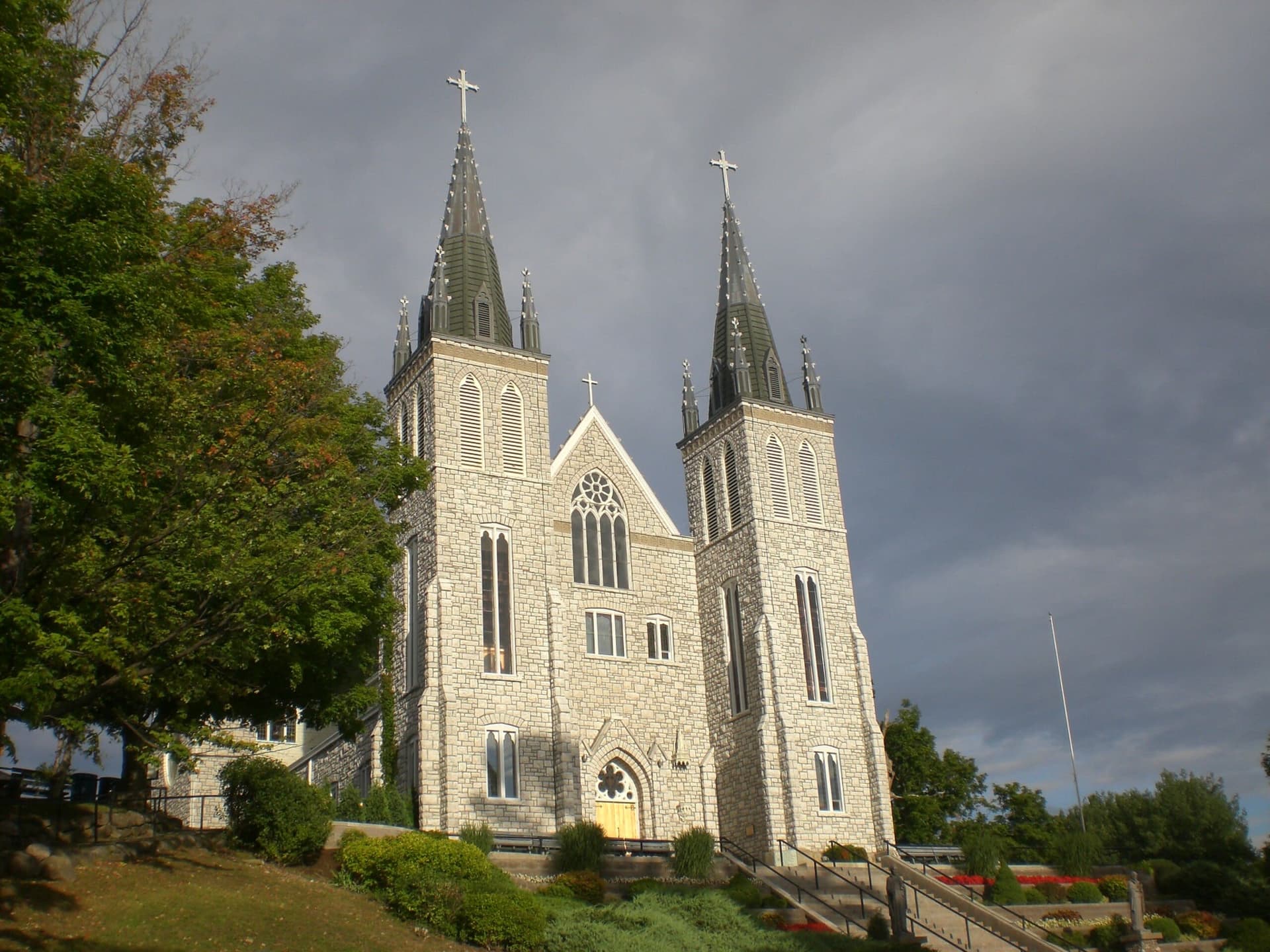
Martyrs' Shrine
Tay, Ontario, Canada
141.6 km away
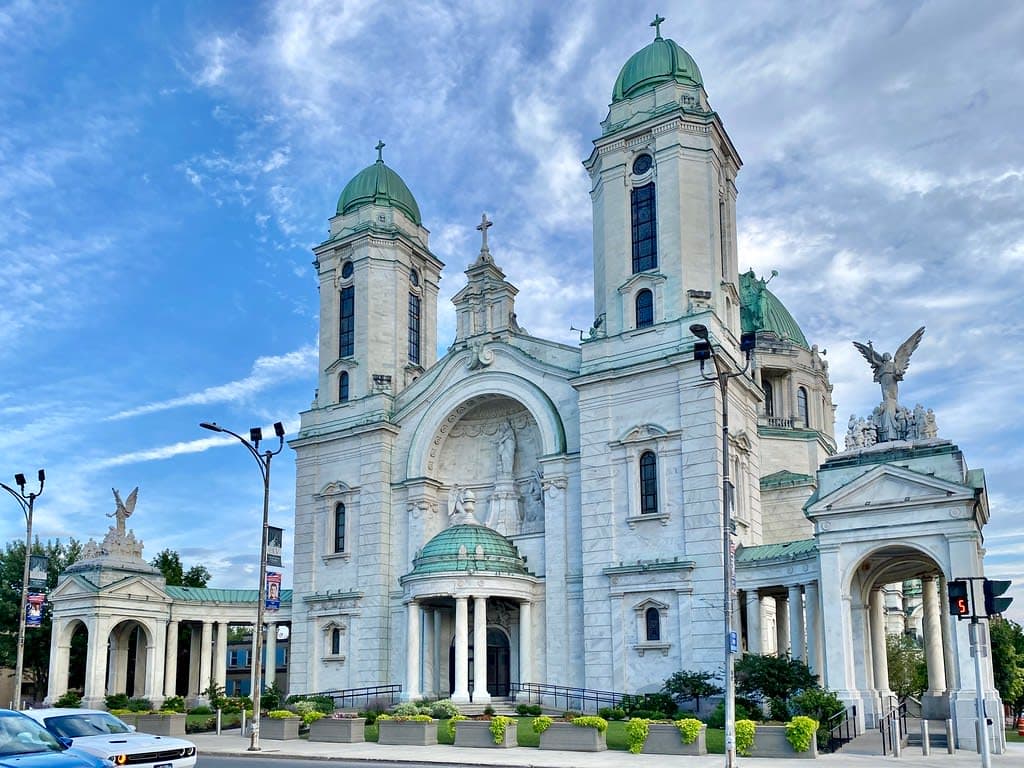
Our Lady of Victory Basilica, Lackawanna, New York
City of Lackawanna, New York, United States
209.5 km away
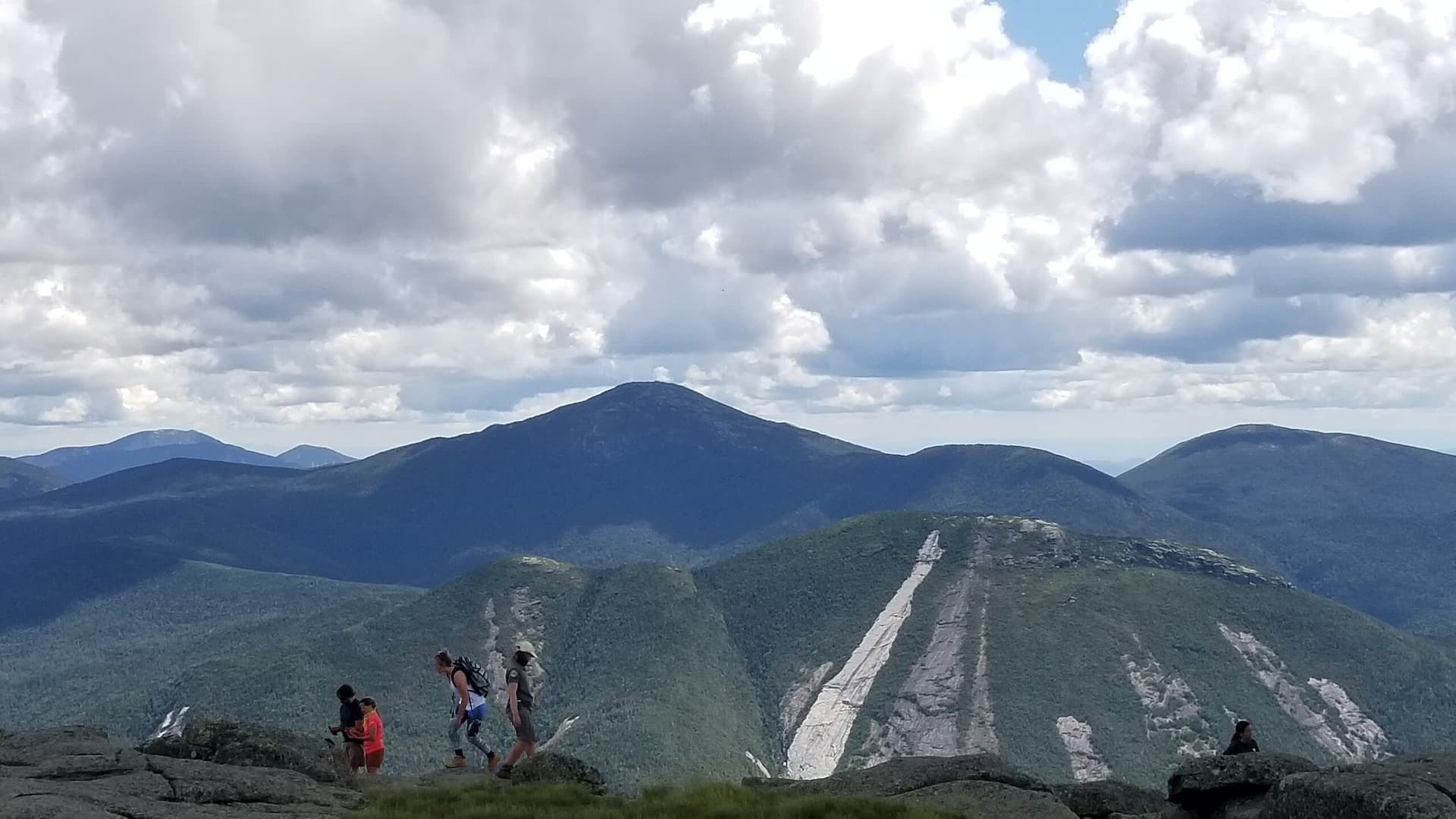
Mt. Marcy, New York
Town of Keene, New York, United States
333.4 km away
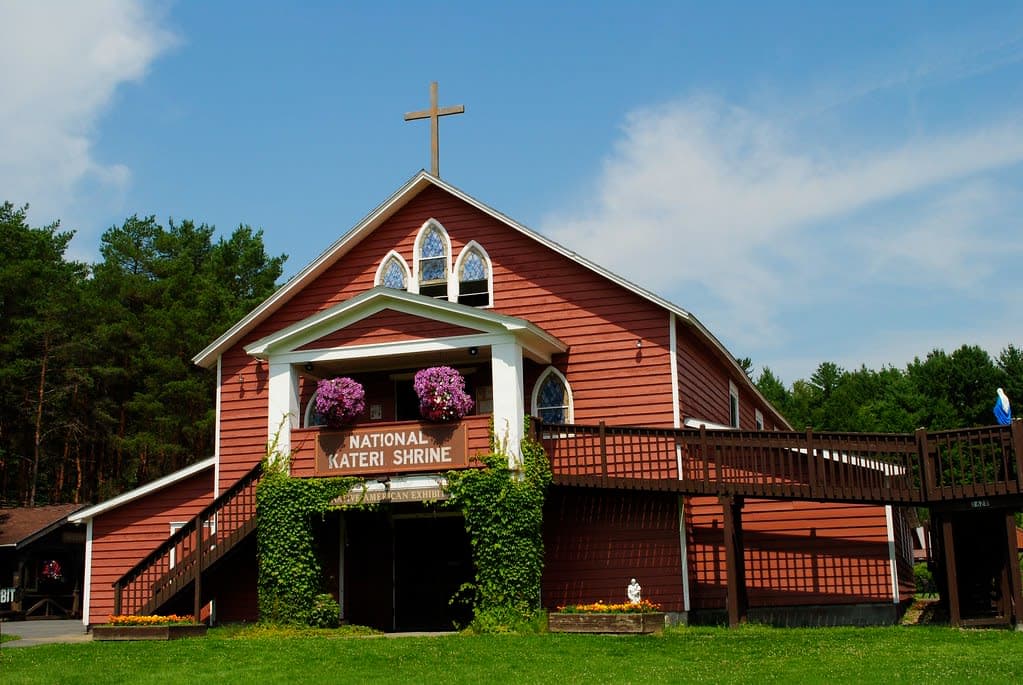
Shrine of Saint Kateri Tekakwitha, Fonda, New York
Village of Fonda, New York, United States
348.1 km away