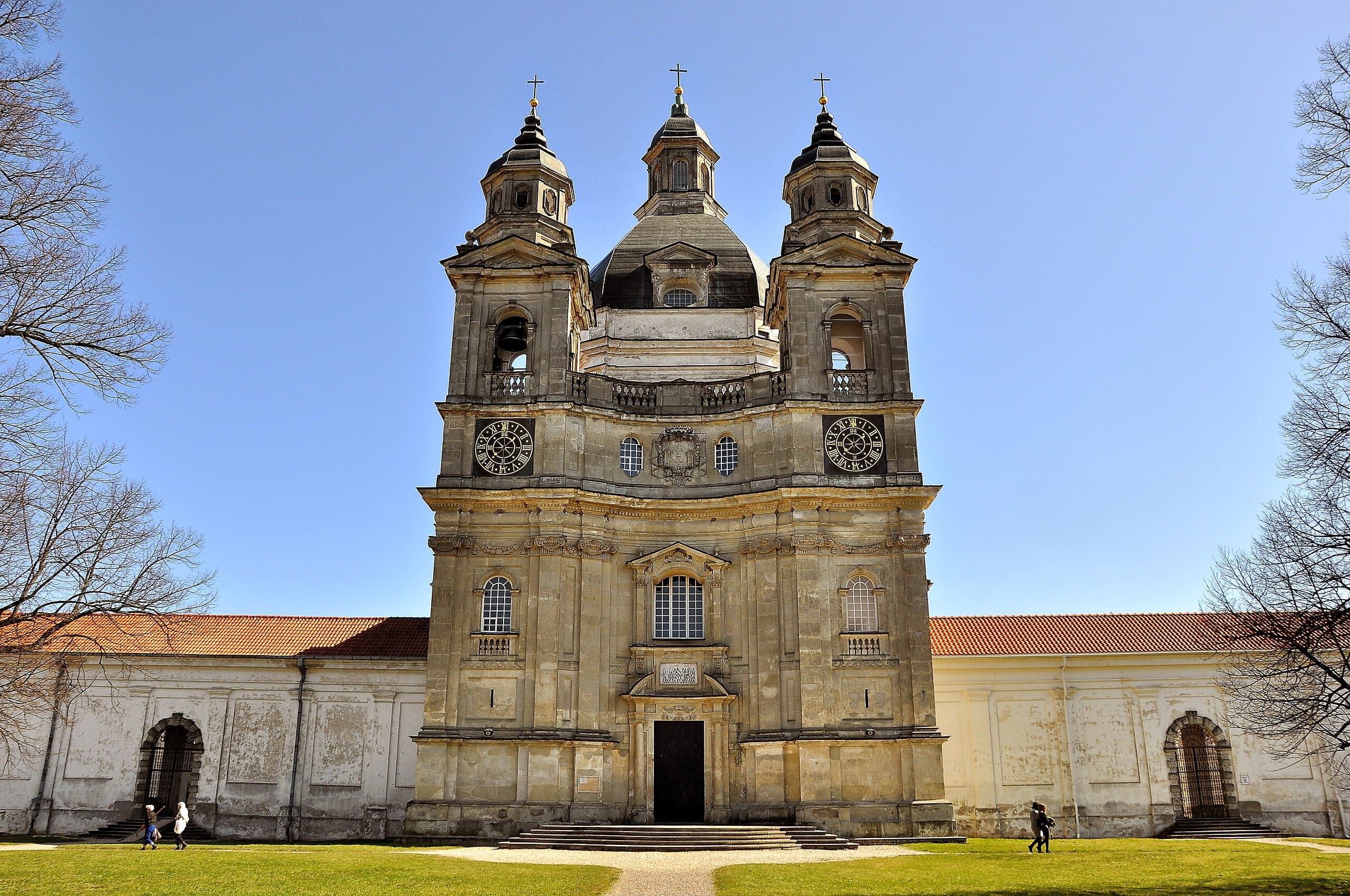
Pazaislis Monastery and Church, Kaunas
Baroque splendor on a forested hill, where Camaldolese silence gave way to music and resilient faith
Kaunas, Kaunas County, Lithuania
At A Glance
- Coordinates
- 54.8763, 24.0223
- Suggested Duration
- A self-guided visit of the church and grounds takes one to two hours. A guided tour, which must be booked in advance, provides deeper access and context. Attending a concert extends the visit to a full afternoon or evening. Combining the monastery with a walk along the Kaunas Reservoir shoreline makes a satisfying half-day excursion.
- Access
- Located approximately 10 kilometers southeast of Kaunas city center, on the bank of the Kaunas Reservoir. Buses to Pazaislis or Karmelava depart approximately every 30 minutes from Kaunas bus station. Also easily reached by car or taxi from central Kaunas, with parking available at the monastery. The complex is part of the John Paul II Pilgrim Route in Lithuania. Mobile phone signal is generally available at the site.
Pilgrim Tips
- Located approximately 10 kilometers southeast of Kaunas city center, on the bank of the Kaunas Reservoir. Buses to Pazaislis or Karmelava depart approximately every 30 minutes from Kaunas bus station. Also easily reached by car or taxi from central Kaunas, with parking available at the monastery. The complex is part of the John Paul II Pilgrim Route in Lithuania. Mobile phone signal is generally available at the site.
- Modest dress is expected when entering the church: covered shoulders and knees. Concert audiences during the music festival tend to dress smartly. Comfortable walking shoes are advisable for the forested grounds.
- Photography is permitted in the church and grounds but should be done respectfully. Flash photography may be restricted to protect the 340-year-old frescoes. No photography during religious services. Check current guidelines at the entrance.
- The monastery includes areas of monastic enclosure that are not open to visitors. Respect these boundaries. Guided tours must be booked in advance and provide the most comprehensive access. Flash photography may be restricted to protect the historic frescoes. The forested grounds and lakeside setting are beautiful but involve uneven terrain in places.
Overview
Lithuania's largest and most artistically magnificent monastery complex rises on a wooded hill above the Kaunas Reservoir. Founded in 1667 for silent Camaldolese hermits, Pazaislis now shelters the Sisters of St. Casimir and hosts the country's premier classical music festival, its hexagonal church adorned with 140 Florentine frescoes that survived centuries of upheaval.
The monks who built Pazaislis slept in coffins and used bricks for pillows. They maintained vows of perpetual silence, communicating only in gestures and written notes. For over 160 years, the Camaldolese hermits inhabited this monastery on the forested hill above the Nemunas River, filling their days with liturgical observance and contemplative prayer in a church of almost scandalous beauty.
That beauty was intentional. Grand Chancellor Kristupas Zygimantas Pacas founded Pazaislis as an offering to God, sparing no expense to create the most magnificent sacred space in the Grand Duchy of Lithuania. He brought Italian architect Pietro Puttini to design the complex and Florentine painter Michelangelo Palloni to cover the interior with frescoes. The hexagonal church plan, unprecedented in European ecclesiastical architecture of the period, creates a sense of sacred geometry that photographs only partially convey. Standing inside, surrounded by approximately 140 surviving frescoes, the eye cannot rest. Every surface speaks.
The painting that matters most arrived before the church was complete. In 1661, Pope Alexander VII personally gave Pacas the Mother of Fair Love, a small Marian icon that became the spiritual heart of the monastery. The painting's subsequent history reads like a novel: carried to Russia during World War I, returned in 1928, confiscated by the Soviets, transferred to Kaunas Cathedral, stolen in 1978, recovered after intense communal prayer in 1979, and finally returned to Pazaislis in 2000. That a single painting could survive such trials and find its way home is, for believers, evidence of something more than coincidence.
Today the monastery holds two things simultaneously: the active religious life of the Sisters of St. Casimir, who have maintained a convent here since 1992, and the Pazaislis Music Festival, Lithuania's largest classical music event, whose summer concerts fill the Baroque church with sound that these acoustics were designed, whether knowingly or not, to carry. The convergence is not contradiction. Beauty and prayer have always been the same project at Pazaislis.
Context And Lineage
Pazaislis was founded in 1667 by Grand Chancellor Kristupas Zygimantas Pacas as a Camaldolese monastery, employing Italian architects and painters to create the finest Baroque sacred complex in the Grand Duchy of Lithuania. Its history encompasses Camaldolese silence, Russian Orthodox occupation, Soviet neglect, and post-independence restoration.
Kristupas Zygimantas Pacas, Grand Chancellor of the Grand Duchy of Lithuania, conceived Pazaislis as his supreme act of devotion. A man of enormous political power and deep religious conviction, he determined to build a monastery that would rival the greatest sacred spaces in Italy, the country whose art and spirituality he most admired.
In 1661, before construction began, Pacas received a gift from Pope Alexander VII: the painting of the Mother of Fair Love. This Marian icon, given as a personal token of papal favor, became the spiritual seed around which the monastery would grow.
Construction began in 1667. Pacas brought Pietro Puttini from Italy to design the complex and Michelangelo Palloni from Florence to paint the frescoes. The church was blessed in 1674, its facade towers completed by 1681, and the full complex finished around 1712, decades after Pacas's death in 1684. He was buried in the monastery, his final home in the house he had built for God.
The Camaldolese monks who inhabited Pazaislis practiced an extreme form of contemplative life. Their rule required perpetual silence, solitary cells, and ascetic disciplines including sleeping in coffins with bricks as pillows. For 164 years, until the Russian authorities suppressed them in 1831, these monks filled the extraordinary Baroque spaces with nothing but prayer.
The monastery's spiritual lineage passes through distinct phases: the Camaldolese hermits (1667-1831), whose extreme asceticism filled the Baroque spaces with contemplative silence; a period of Russian Orthodox occupation (1832-1914); the first tenure of the Sisters of St. Casimir (1920-1948); Soviet-era secular use; and the Sisters' return in 1992. Despite these disruptions, the thread of prayer has been largely continuous, and the art that Pacas commissioned continues to function as he intended: drawing the eye and spirit upward.
Kristupas Zygimantas Pacas
historical
Grand Chancellor of the Grand Duchy of Lithuania (1621-1684), founder of Pazaislis. His vision and resources created the most magnificent Baroque sacred complex in Lithuania. He was buried at the monastery he founded.
Pietro Puttini
historical
Italian architect (1633-1699) who designed the Pazaislis complex, including the innovative hexagonal church plan and concave facade that were unprecedented in European ecclesiastical architecture.
Michelangelo Palloni
historical
Florentine artist (1637-1712) who painted the church's approximately 140 frescoes between 1678 and 1685, creating one of the most significant surviving cycles of Baroque painting in Northern Europe.
The Sisters of St. Casimir
historical
Lithuanian women's religious congregation that has maintained a convent at Pazaislis since 1992, restoring the monastery's contemplative character after decades of Soviet-era secular use.
Pope Alexander VII
historical
Pope who gave the Mother of Fair Love painting to Pacas in 1661, establishing the icon that would become the spiritual heart of the monastery.
Why This Place Is Sacred
Pazaislis becomes a thin place through the accumulated weight of Camaldolese silence, the overwhelming beauty of Palloni's frescoes, the dramatic survival story of the Mother of Fair Love painting, and the ongoing contemplative life of the Sisters of St. Casimir. The forested setting above water completes the sense of a site set apart.
The monastery's position tells you something about what its founders sought. Set on a hill within forest, above a bend in the river now dammed into the Kaunas Reservoir, Pazaislis occupies a geography of withdrawal. The Camaldolese chose this location precisely because it enabled the separation from the world that their rule required. The trees, the water, the elevation: all serve as natural thresholds between ordinary life and the silence the monks cultivated.
Inside the church, the threshold becomes aesthetic. Palloni's frescoes, painted between 1678 and 1685, inhabit every available surface with biblical narratives, saints, and celestial imagery rendered in the Florentine Baroque style he brought from Italy. The effect is of being surrounded, even overwhelmed, by sacred story. The hexagonal plan ensures that no matter where you stand, you are within the embrace of the imagery. There is no neutral vantage point.
The centuries of prayer that saturated these walls have a quality that persists even now. The Camaldolese prayed here in silence for 164 years. Russian Orthodox monks occupied the church for nearly a century. The Sisters of St. Casimir have maintained daily prayer since their return in 1992. The prayers have changed language and denomination, but the act itself has been nearly continuous since 1674.
The Mother of Fair Love painting, now restored to the church after its extraordinary twentieth-century odyssey, carries its own thin-place quality. Objects that have survived what this painting has survived acquire a resonance beyond their artistic merit. Pilgrims who pray before it are connecting not only to its sacred significance but to the narrative of loss and return that has become inseparable from the image itself.
Pacas founded Pazaislis as an expression of devotion through beauty, creating a sacred space that would glorify God through the finest architecture and art available. For the Camaldolese monks, the monastery served as a setting for their extreme contemplative practice, a place where silence, prayer, and the beauty of the church itself constituted a complete spiritual life.
After the Camaldolese were suppressed in 1831 by the Russian authorities, the monastery became a Russian Orthodox house, then served various military and institutional purposes. The Soviet period brought further degradation. Restoration began after Lithuanian independence, and the Sisters of St. Casimir returned in 1992. The Pazaislis Music Festival, launched in 1996, added a cultural dimension that has brought international attention and funding for ongoing conservation. The return of the Mother of Fair Love painting in 2000 completed a spiritual restoration that paralleled the physical one.
Traditions And Practice
Pazaislis combines active religious life with cultural programming. The Sisters of St. Casimir maintain daily prayer and worship, while the annual Pazaislis Music Festival brings classical concerts to the Baroque church and grounds. Pilgrims visit the Mother of Fair Love painting, and the monastery serves as a stop on the John Paul II Pilgrim Route.
The Camaldolese monks who first inhabited Pazaislis practiced one of the most austere forms of monastic life in the Catholic tradition. Perpetual silence governed their days. Communication was by gesture and written note. They slept in coffins with bricks as pillows, maintaining a constant awareness of mortality. Liturgical offices structured the day, with the sung Mass in the Baroque church serving as the spiritual centerpiece. Their practice was contemplation through deprivation: stripping away everything that was not God, in a setting of paradoxical beauty.
The Sisters of St. Casimir maintain daily prayer and worship at the monastery, preserving the contemplative character of the space in a form less extreme than the Camaldolese but equally committed. Mass is celebrated, though current schedules should be confirmed in advance. The Feast of the Assumption on August 15 is a significant celebration. The Pazaislis Music Festival, held annually from June through August, presents approximately 30 concerts of classical music in and around the monastery, with the opening and closing concerts held in the Baroque church. The convergence of sacred art and music in this setting creates an experience that blurs the boundary between concert and liturgy.
Enter the church with the awareness that you are entering a space designed to transform perception. The Camaldolese understood that beauty could serve the same function as silence: stripping away distraction, opening attention to the sacred. Let the frescoes work on you before you study them. The hexagonal plan means that the entire interior is available from every position; there is no need to move systematically. Simply stand and receive.
If you visit during the music festival, attending a concert in the church itself is a form of pilgrimage by other means. The acoustics reveal what the architects may have known: that sound and sacred art intensify each other in ways that neither can achieve alone.
Before you leave, find the Mother of Fair Love painting. Knowing its story of loss and return, consider what it means that a painting given by a pope in 1661 found its way back to this specific altar after wars, theft, and Soviet confiscation. Whether you call that providence or coincidence says something about what you bring to the encounter, but the painting's presence here, after everything, is a fact that asks to be reckoned with.
Roman Catholicism
ActivePazaislis is one of the most important Catholic sacred sites in Lithuania, housing the largest monastery complex in the country and the venerated Mother of Fair Love painting. The site's significance spans the Camaldolese founding, the endurance through Russian and Soviet persecution, and the post-independence restoration of Catholic religious life under the Sisters of St. Casimir.
Daily prayer and worship by the Sisters of St. Casimir, Mass, Eucharistic adoration, Feast of the Assumption celebrations, and veneration of the Mother of Fair Love painting. The monastery is a stop on the John Paul II Pilgrim Route.
Camaldolese Hermitic Monasticism
HistoricalPazaislis was the first Camaldolese monastery in the Grand Duchy of Lithuania and the fourth in the Polish-Lithuanian Commonwealth. The hermits' extreme ascetic practices, including vows of silence, sleeping in coffins, and using bricks as pillows, represent one of the most demanding forms of contemplative life in the Catholic tradition.
Perpetual silence, solitary prayer in individual cells, extreme ascetic disciplines, and communal liturgical observance in the Baroque church. The monks maintained this life for 164 years, from 1667 until their suppression in 1831.
Heritage Conservation and Cultural Programming
ActiveThe ongoing restoration of the monastery complex and the annual Pazaislis Music Festival represent a contemporary tradition of cultural stewardship. The festival, Lithuania's largest classical music event, has brought international attention and resources to the monastery's preservation since 1996.
Approximately 30 concerts annually during the June-August festival season, restoration and conservation of Baroque frescoes and architecture, guided tours, and cultural education programming.
Experience And Perspectives
Visitors to Pazaislis consistently report being overwhelmed by the Baroque architecture and frescoes, finding the experience of beauty itself transformative. The peaceful forested setting, the contemplative atmosphere maintained by the Sisters of St. Casimir, and the extraordinary acoustics during concerts create conditions for encounter that exceed ordinary tourism.
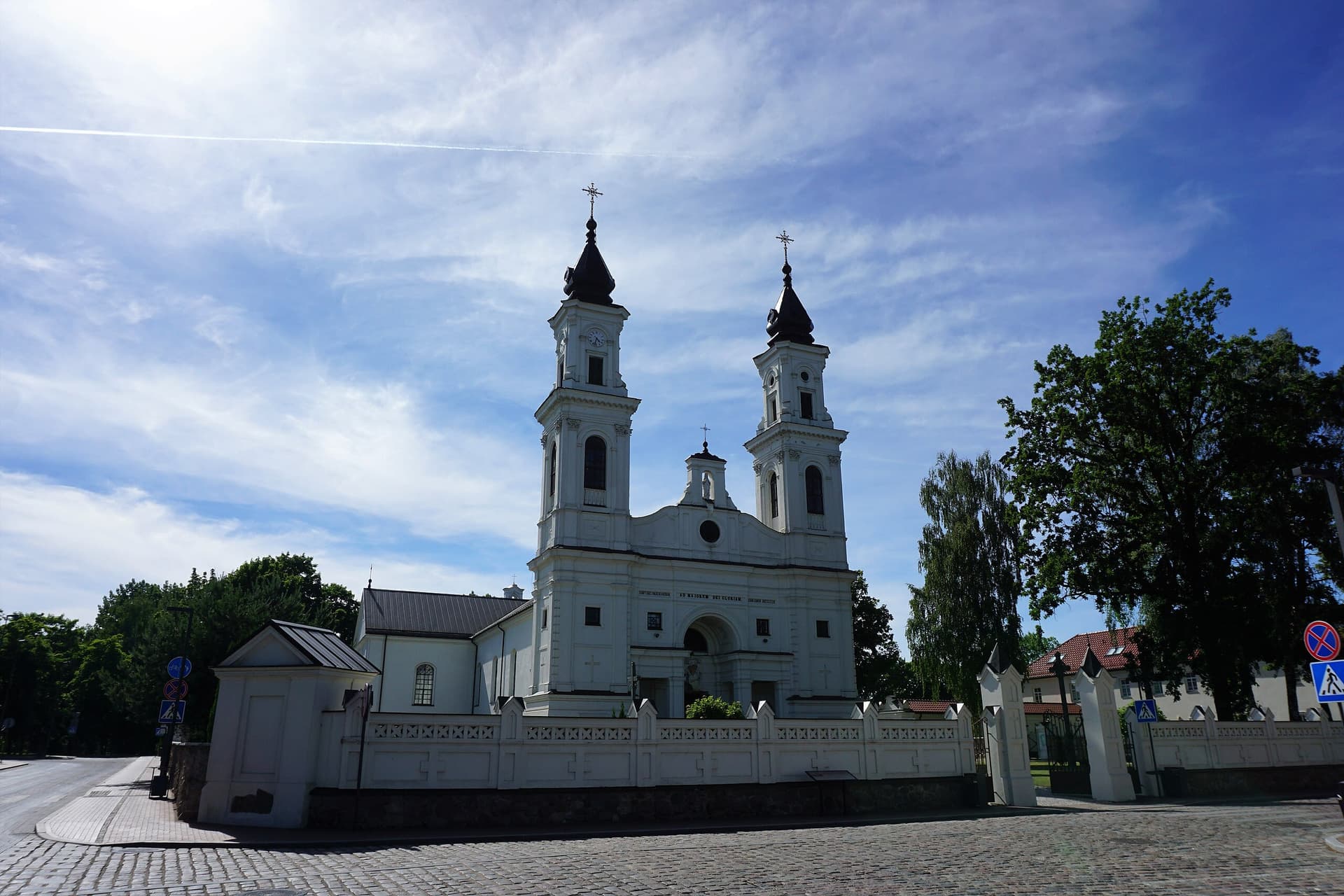
The first encounter with Pazaislis is architectural. The concave facade, flanked by towers, creates a welcoming gesture, as if the building is opening its arms. Pass through the entrance and the hexagonal interior takes over. The scale is not enormous by cathedral standards, but the density of artistic content per square meter may be unmatched in the Baltic region. Palloni's frescoes occupy every surface not covered by stucco sculptures by Giovanni Batista Merli. The overall effect is of stepping into a three-dimensional painting.
Visitors frequently use the word 'overwhelm,' not in a negative sense but as a description of what happens when beauty exceeds the capacity to process it intellectually. The response becomes physical: a catch in the breath, a settling of attention, a quieting. Those who stay long enough for the initial impact to subside often describe a second phase, in which individual frescoes begin to speak, particular details emerge, and the space shifts from spectacle to companion.
The contrast between the monastery's turbulent history and its current serenity is itself a source of transformation. Standing in a church that has been Camaldolese, Orthodox, warehoused, neglected, and restored, visitors encounter a parable of resilience. The frescoes that survived, some damaged but present, carry the marks of their passage through time.
During the Pazaislis Music Festival, the experience becomes multimodal. The church's acoustics, designed for chanted prayer, prove equally suited to chamber music and choral works. The convergence of Baroque visual art and Baroque music, experienced simultaneously, creates a synesthetic encounter that many describe as one of their most profound aesthetic experiences.
Give yourself at least an hour inside the church, and do not rush. Sit in the hexagonal nave and let the frescoes work at their own pace. If you are visiting during the music festival, attend a concert in the church itself, not only in the monastery grounds. The combination of sound and sight in this space is irreducible. After the church, walk the forested grounds and down to the shore of the Kaunas Reservoir. The transition from sacred art to natural beauty mirrors the Camaldolese movement between communal worship and solitary contemplation.
Pazaislis invites engagement through multiple lenses: as an architectural masterpiece, as a site of contemplative spirituality, as a case study in cultural resilience, and as a living community where art, prayer, and music intersect. Each perspective enriches the others.
Art historians and architectural scholars regard Pazaislis as the finest example of Baroque architecture in the Baltic region and one of the most significant in Northern Europe. The hexagonal church plan and concave facade were innovative designs unprecedented in European ecclesiastical architecture at the time of construction. The approximately 140 surviving frescoes by Michelangelo Palloni are considered masterpieces of Baroque painting, representing the direct transplantation of Florentine artistic traditions to the Grand Duchy of Lithuania. The complex demonstrates the cultural ambitions of the Lithuanian-Polish elite and their connections to Italian artistic and spiritual movements.
Lithuanian Catholic tradition reveres Pazaislis as a place of deep spiritual significance, representing the endurance of Catholic faith through centuries of upheaval. The Mother of Fair Love painting, with its extraordinary story of loss and return, is seen as a symbol of divine protection. The Camaldolese monks' extreme asceticism, though long past, continues to inform the site's spiritual character. The return of the painting to Pazaislis in 2000 is celebrated as a spiritual homecoming, a sign that what is consecrated to God cannot be permanently taken away.
Some visitors are drawn to the sacred geometry of the hexagonal church plan and the symbolic program of the Baroque frescoes as expressions of hermetic and mystical traditions embedded within Catholic art. The Camaldolese monks' practices, sleeping in coffins and maintaining perpetual silence, evoke contemplative disciplines that resonate across traditions. The monastery's position on a forested hill above water mirrors the placement of sacred sites in many world traditions, suggesting universal patterns in how humans identify places of spiritual significance.
The identity of the Dutch artist who painted the Mother of Fair Love remains unknown. The full circumstances of the painting's theft from Kaunas Cathedral in 1978 and its recovery in 1979, reportedly prompted by intense communal prayer, are not fully documented in accessible sources. The extent of damage and alteration to the original frescoes and stucco work through centuries of neglect, military use, and repurposing is still being studied by conservators.
Visit Planning
Pazaislis is located approximately 10 kilometers southeast of Kaunas city center, on the shore of the Kaunas Reservoir. Accessible by bus or car, it combines well with a broader visit to Kaunas. The Pazaislis Music Festival runs from June through August.
Located approximately 10 kilometers southeast of Kaunas city center, on the bank of the Kaunas Reservoir. Buses to Pazaislis or Karmelava depart approximately every 30 minutes from Kaunas bus station. Also easily reached by car or taxi from central Kaunas, with parking available at the monastery. The complex is part of the John Paul II Pilgrim Route in Lithuania. Mobile phone signal is generally available at the site.
The Montepacis hospitality complex, associated with the monastery, offers accommodation and dining near the site. Kaunas city center provides a full range of hotels and guesthouses approximately 10 kilometers away.
Pazaislis is simultaneously an active convent, a heritage site, and a concert venue. Visitors should maintain a contemplative atmosphere, respect the monastic enclosure, and dress modestly when entering the church.
The dual nature of Pazaislis requires visitors to calibrate their behavior to the specific context. In the church, the atmosphere is sacred regardless of whether you have come for prayer, art, or music. Move quietly, speak in whispers, and allow the space the reverence it has received for nearly four centuries. The Sisters of St. Casimir live and pray here; your visit intersects with their vocation.
During the music festival, the etiquette shifts toward that of a concert hall but retains the sacred dimension. Applause is appropriate after performances, but the behavior between pieces, in the pauses when the frescoes reassert their presence, should honor the space.
The monastery grounds offer a more relaxed atmosphere for walking and enjoying the natural setting. The shore of the Kaunas Reservoir is accessible and popular with locals. Here the etiquette is simply that of a shared public space in a historically significant setting.
Modest dress is expected when entering the church: covered shoulders and knees. Concert audiences during the music festival tend to dress smartly. Comfortable walking shoes are advisable for the forested grounds.
Photography is permitted in the church and grounds but should be done respectfully. Flash photography may be restricted to protect the 340-year-old frescoes. No photography during religious services. Check current guidelines at the entrance.
Candle offerings and monetary donations to the parish or convent are welcome and support the ongoing restoration of this historic complex.
Monastic enclosure areas are off-limits to visitors. Church visiting hours are Monday through Friday, 10:00 to 17:00, though these may vary seasonally. Guided tours require advance booking. No food or drink inside the church.
Sacred Cluster
Nearby sacred places create the location cluster described in the growth plan. This block is intentionally crawlable and links into the wider regional graph.
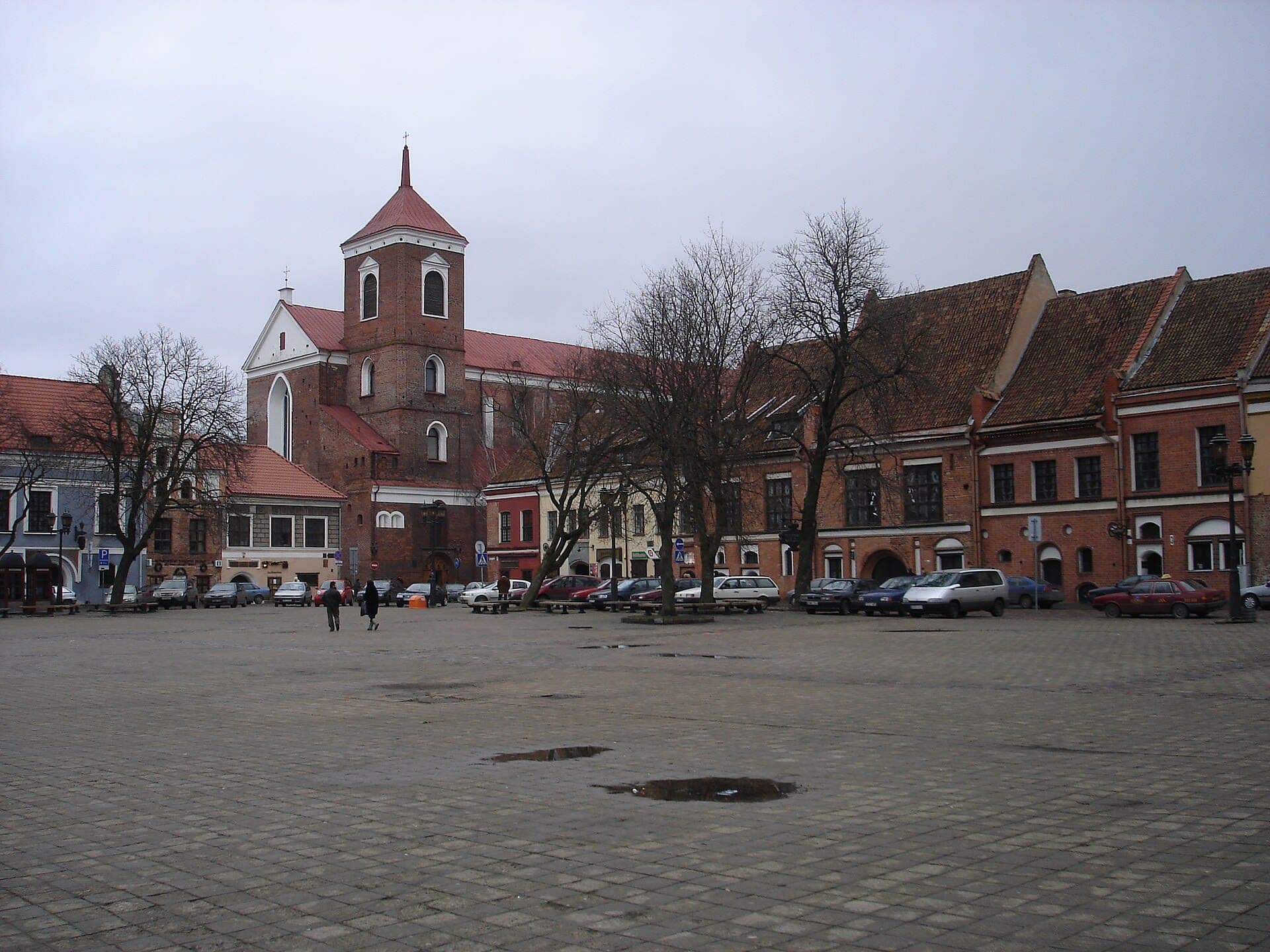
Kaunas Cathedral Basilica, Lithuania
Kaunas, Kaunas County, Lithuania
8.8 km away
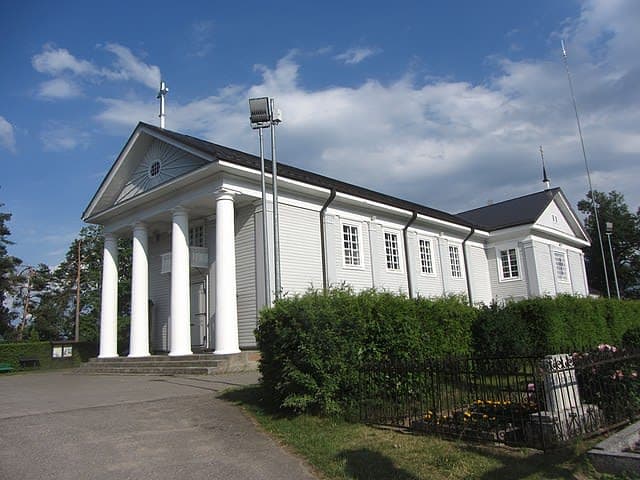
Church of the Assumption of the Virgin Mary, Pivasiunai
Pivašiūnai, Alytus County, Lithuania
51.4 km away
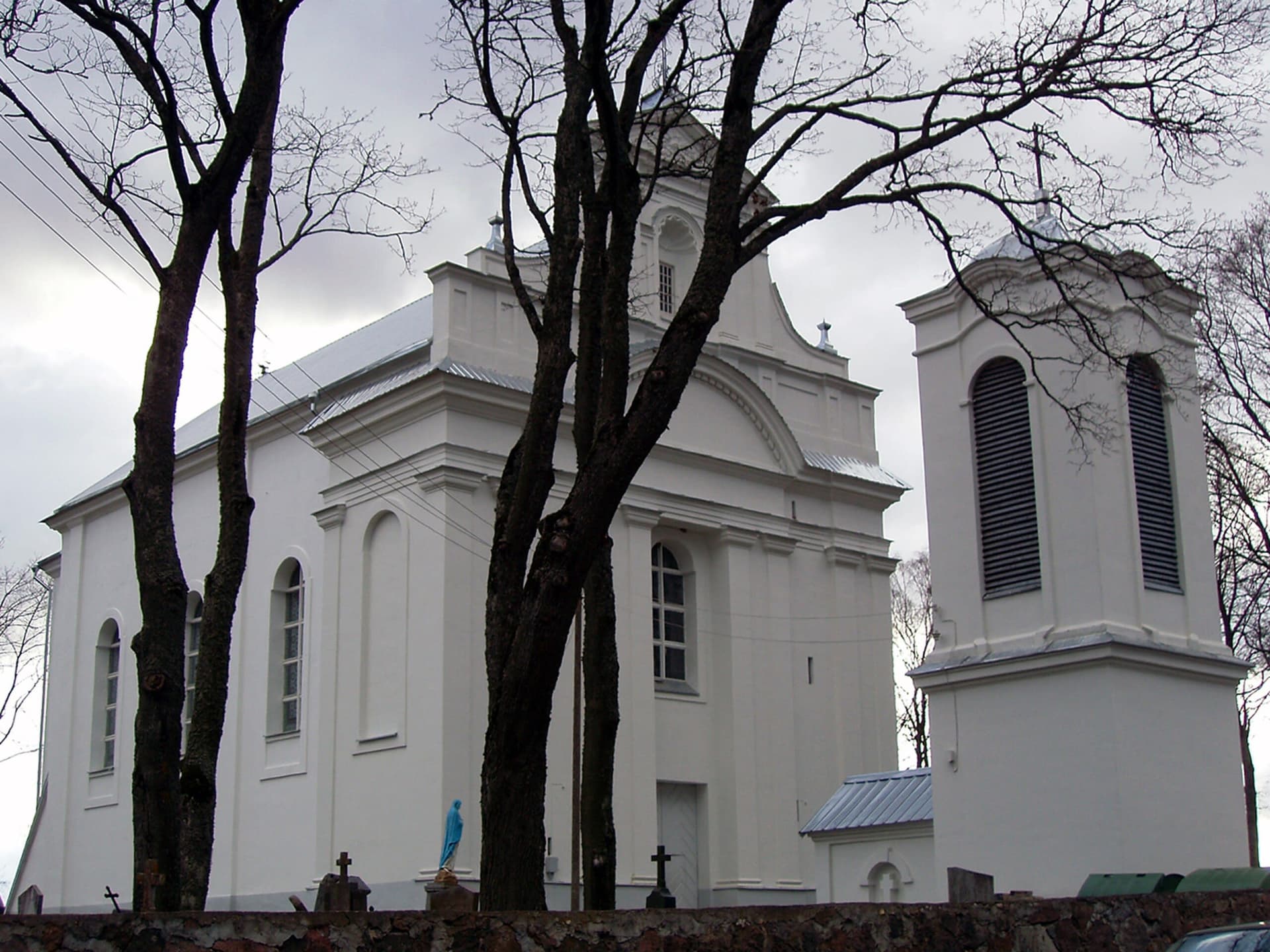
Church of the Virgin Mary Victorious, Kazokiskes
Kazokiškės, Vilnius County, Lithuania
52.8 km away
Basilica of Saint Michael the Archangel, Marijampole
Marijampolė, Marijampolė County, Lithuania
56.3 km away