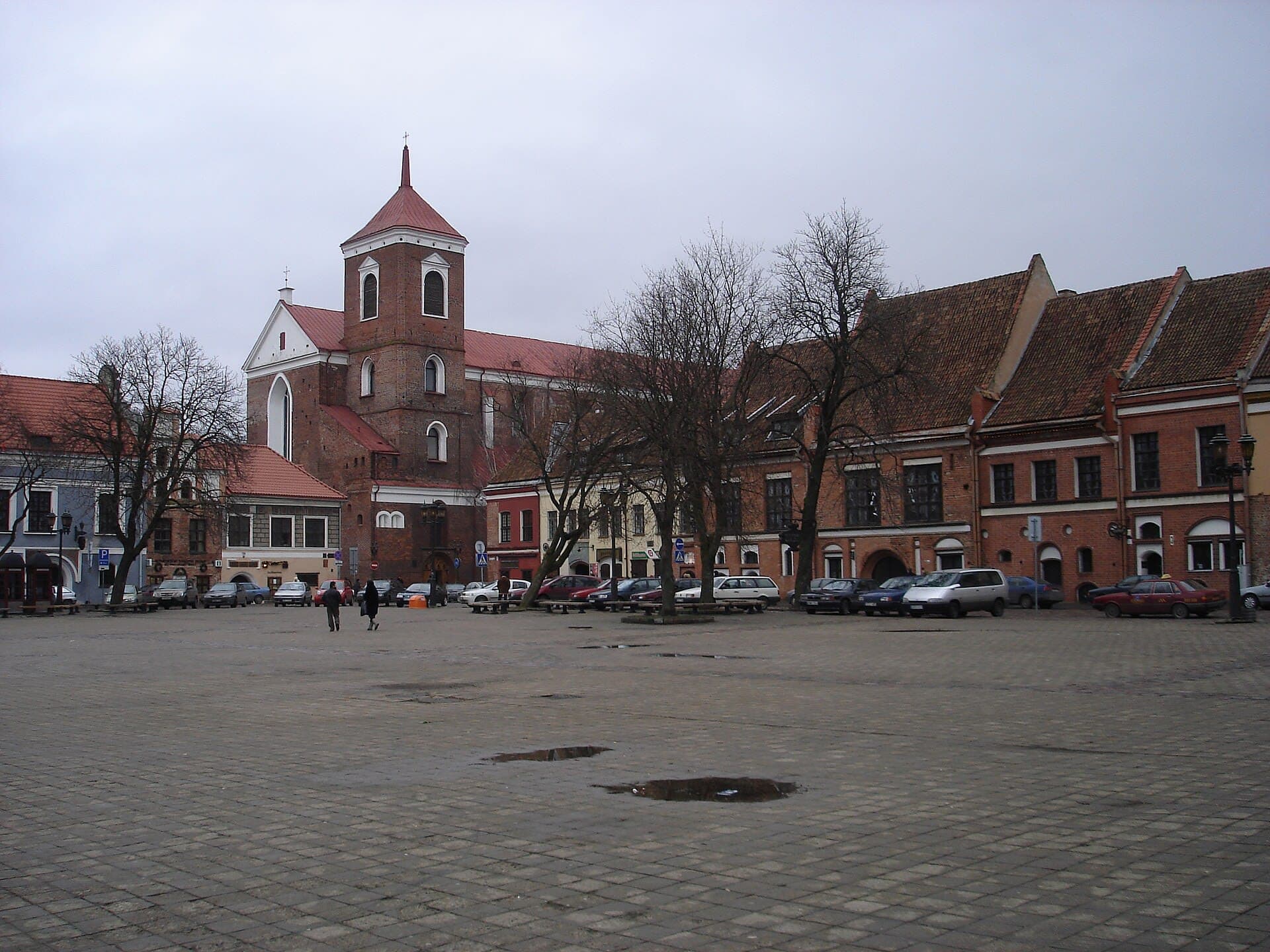
Kaunas Cathedral Basilica, Lithuania
Lithuania's largest Gothic church, where six centuries of worship meet the tombs of the nation's spiritual heroes
Kaunas, Kaunas County, Lithuania
At A Glance
- Coordinates
- 54.8972, 23.8890
- Suggested Duration
- 30 minutes to 1 hour for a general visit. Longer if attending Mass or spending time in the Chapel of the Blessed Sacrament.
Pilgrim Tips
- Modest clothing covering shoulders and knees, appropriate for an active Catholic archcathedral.
- Generally permitted outside of services. No flash photography. Photography during Mass should be avoided.
- Be mindful of Mass times when planning a visit. Photography during Mass should be avoided. The chapel of the Blessed Sacrament requires particular quiet and reverence. Flash photography may be restricted to protect artwork.
Overview
Founded by Grand Duke Vytautas the Great in the early fifteenth century, Kaunas Cathedral Basilica is the largest Gothic church in Lithuania and the seat of the Archbishop of Kaunas. Within its layered interior, spanning Gothic, Renaissance, Baroque, and Neo-Gothic periods, lie the tombs of Lithuania's most revered Catholic figures: the poet-priest Maironis, Bishop Valiancius, and Cardinal Sladkevicius.
Six centuries of Lithuanian faith are compressed into the walls of Kaunas Cathedral Basilica. Founded by Vytautas the Great, the most celebrated ruler of the Grand Duchy of Lithuania, the church has survived wars, fires, reconstructions, and occupations to remain what it was always intended to be: the spiritual center of a city at the confluence of two rivers.
The first documented reference dates to April 22, 1413, when the church was already hosting indulgenced feasts. But the building you enter today is the product of centuries of accumulation. The original Gothic structure, the only Lithuanian Gothic church with a basilica floor plan rather than a cross-shaped plan, received a Renaissance tower in the seventeenth century, a Baroque interior ensemble of seven altars and pulpit in the 1770s and 1780s, and a Neo-Gothic Chapel of the Blessed Sacrament in 1895. Each era left its mark without erasing what came before.
The tombs are what give the cathedral its particular weight. Maironis, the poet-priest called the father of Lithuanian national poetry, rests here. Bishop Motiejus Valancius, who defended Lithuanian language and culture under Tsarist oppression, is buried within. Cardinal Vincentas Sladkevicius, the first Lithuanian cardinal, who served as a secret bishop during the Soviet era, lies in the cathedral he helped preserve. These are not historical footnotes but figures who shaped the Lithuanian nation, and their presence in this space makes every visit a form of encounter.
During the years when Kaunas served as Lithuania's provisional capital (1920-1939), this cathedral functioned as the principal church of the entire nation. That interlude of national significance lingers in the space, adding yet another layer to a building already dense with meaning.
Perpetual Eucharistic adoration continues daily in the Chapel of the Blessed Sacrament. The prayer that Vytautas the Great initiated has not ceased.
Context And Lineage
Founded by Grand Duke Vytautas the Great, first documented in 1413, and elevated through cathedral, basilica, and archcathedral status over the centuries. The cathedral served as Lithuania's principal church during the provisional capital period (1920-1939).
Vytautas the Great, who expanded the Grand Duchy of Lithuania to its greatest territorial extent, established the church as part of the Christianization and urban development of Kaunas. The first documented reference, April 22, 1413, records the church already hosting indulgenced feasts, suggesting an earlier foundation.
Vytautas endowed the church around 1430, ensuring its financial stability. Construction of the current structure continued through the centuries, not reaching completion until approximately 1624. The long construction period produced a building that accumulated architectural styles like geological strata: Gothic foundations, Renaissance tower, Baroque interior, Neo-Gothic chapel.
In 1895, Pope Leo XIII elevated the church to cathedral status as the seat of the newly created Diocese of Samogitia. In 1921, it received the title of Minor Basilica. In 1926, Pope Pius XI elevated it to archcathedral when the Archdiocese of Kaunas was established.
The cathedral's lineage extends from the medieval Grand Duchy of Lithuania through the Polish-Lithuanian Commonwealth, the Russian Empire, Lithuanian independence, Soviet occupation, and restored independence. Its continuity as a place of worship across these political transformations makes it a thread connecting Lithuania's present to its distant past.
Vytautas the Great
Founder
Maironis (Jonas Maciulis)
Poet-priest buried in the cathedral
Bishop Motiejus Valancius
Bishop buried in the cathedral
Cardinal Vincentas Sladkevicius
First Lithuanian cardinal, buried in the cathedral
Karolis of Skaruliai and Tomas Podgaiskis
Architect and sculptor of the Baroque interior
Why This Place Is Sacred
The thinness at Kaunas Cathedral arises from the layering of six centuries of continuous worship, the presence of the tombs of Lithuania's spiritual and national heroes, and the perpetual Eucharistic adoration that maintains an unbroken thread of prayer.
What accumulates in a place where people have prayed for six hundred years? The answer at Kaunas Cathedral is tangible. Stand in the nave and the space communicates its history not through plaques or guided tours but through the quality of the atmosphere itself.
The Gothic exterior, with its massive buttresses and the tallest medieval church walls in Lithuania, announces scale. But the interior surprises with warmth rather than austerity. The late Baroque ensemble of seven altars and pulpit, created between 1775 and 1784 by architect Karolis of Skaruliai and sculptor Tomas Podgaiskis, transformed the Gothic shell into a space of golden intimacy. The contrast between exterior severity and interior warmth is itself a threshold experience.
Descend to the Chapel of the Blessed Sacrament, added in 1895 in Neo-Gothic style. Here, perpetual Eucharistic adoration takes place from 9:30 to 18:00 daily. The chapel is smaller, quieter, and more inward than the main nave. Those who sit here join a prayer that has been offered continuously in this space for over a century.
The tombs concentrate the thinness further. Stand before the mausoleum of Maironis, created 1934-1935 by architect Stasys Kudokas and sculptor Bernardas Bucas. Maironis gave the Lithuanian language its poetic voice. His poetry was a form of resistance, insisting that Lithuanian culture had value in an era when imperial powers sought to erase it. To stand at his tomb in the cathedral where he served is to encounter the intersection of art, faith, and national identity.
The crystal vaults of the sacristy, among the widest late Gothic vaults in Europe, represent the building's oldest surviving architectural element. These vaults have witnessed every transformation the cathedral has undergone. Their persistence is their testimony.
Grand Duke Vytautas the Great established the church as part of the Christianization and development of Kaunas in the early fifteenth century. By 1413, it was already hosting indulgenced feasts. The church served as the principal parish church of Kaunas for centuries before its elevation to cathedral status.
The church evolved through multiple phases: Gothic origins under Vytautas the Great, Renaissance tower addition in the seventeenth century, Baroque interior transformation in the 1770s-1780s, Neo-Gothic chapel addition in 1895. Elevated to cathedral in 1895 by Pope Leo XIII, granted Minor Basilica status in 1921, and became an archcathedral in 1926. During Lithuania's provisional capital period (1920-1939), it served as the nation's principal church.
Traditions And Practice
Daily Mass continues the liturgical tradition established under Vytautas the Great. Perpetual Eucharistic adoration is offered daily in the Chapel of the Blessed Sacrament. The cathedral serves as the venue for major archdiocesan celebrations including ordinations and the Feast of Saints Peter and Paul.
Indulgenced feasts have been documented at the cathedral since 1413. Episcopal ordinations, the burial of bishops and notable clergy in the crypts, and major liturgical celebrations of the Catholic calendar have taken place here for centuries. The cathedral has served as the site of some of Lithuania's most significant ecclesiastical events.
Daily Mass is celebrated at multiple times throughout the day. Perpetual Eucharistic adoration takes place in the Chapel of the Blessed Sacrament from 9:30 to 18:00. The sacraments of baptism, confession, and marriage are administered. The Feast of Saints Peter and Paul (June 29) is the titular feast. Christmas carol concerts are held in the cathedral. The altar of Pope John Paul II contains relics of the saint. Visitors venerate the tombs of Maironis, Valancius, and Sladkevicius.
Attend Sunday Mass, particularly the 10:30 or 12:00 service, to experience the cathedral at its liturgically richest. Spend time in the Chapel of the Blessed Sacrament during Eucharistic adoration for a contemplative experience. Visit the tombs of Maironis, Valancius, and Sladkevicius to reflect on the intersection of faith and national identity in Lithuanian history. If possible, arrange a guided tour through the Kaunas tourism office to access the sacristy and its Gothic crystal vaults.
Roman Catholicism
ActiveAs the seat of the Archbishop of Kaunas, the cathedral has been the spiritual center of Catholic worship for the Kaunas Archdiocese since 1926. Founded by Vytautas the Great in the early fifteenth century, it is the oldest and largest Gothic church in Lithuania. During the provisional capital period (1920-1939), it served as the principal church of the entire nation. The tombs of Maironis, Valancius, and Cardinal Sladkevicius make it a site of pilgrimage for those honoring Lithuania's spiritual heritage.
Daily Mass at multiple times. Perpetual Eucharistic adoration (9:30-18:00) in the Chapel of the Blessed Sacrament. Sacraments including baptism, confession, and marriage. Archdiocesan celebrations. Christmas carol concerts. Veneration at the tombs. Feast of Saints Peter and Paul (June 29).
Experience And Perspectives
Enter through doors that have welcomed worshippers since the fifteenth century. The Gothic exterior gives way to a warm Baroque interior of golden altars and carved pulpit. The Chapel of the Blessed Sacrament offers silence. The tombs of Maironis, Valancius, and Sladkevicius invite reflection on faith and nationhood.
Approach the cathedral from Vilniaus Street in the heart of Kaunas Old Town, where the Nemunas and Neris rivers converge. The red-brick Gothic exterior rises with a solidity that announces permanence. The 55-meter Renaissance tower, added in the seventeenth century, lifts the eye above the roofline of the surrounding Old Town.
Enter and allow the transition from Gothic exterior to Baroque interior to do its work. The seven altars and carved pulpit, created between 1775 and 1784, fill the space with a warm formality. Gold leaf catches the light from tall windows. The proportions are generous without being overwhelming. The basilica floor plan, unusual among Lithuanian Gothic churches, creates a sense of breadth rather than the typical Gothic emphasis on height.
Move to the Chapel of the Blessed Sacrament on the south side. Built in 1895 in Neo-Gothic style, its wood carvings and quieter scale create a space within a space. Eucharistic adoration takes place here daily from 9:30 to 18:00. Sit in this chapel and the rhythm of the larger church falls away. What remains is the presence that perpetual prayer sustains.
Find the tombs. Maironis, whose poetry gave Lithuanian identity its voice, rests in a mausoleum designed by Stasys Kudokas. Bishop Valancius, who organized Lithuanian resistance to Tsarist cultural suppression, is buried nearby. Cardinal Sladkevicius, who served as a secret bishop during Soviet occupation and became the first Lithuanian cardinal, lies in the space he helped to preserve. These are not abstract historical figures but people whose choices shaped the nation in which you now stand.
If time permits, ask to see the sacristy with its late Gothic crystal vaults. Among the widest in Europe, these vaults are the cathedral's oldest surviving architectural achievement, a reminder that beneath the Baroque surface, the Gothic bones remain.
Enter through the main west doors into the nave. The seven Baroque altars line the nave and aisles. The Chapel of the Blessed Sacrament is on the south side. The Maironis mausoleum is visible within the cathedral. The sacristy with its Gothic crystal vaults may require request for access. Check the posted Mass schedule for service times.
Kaunas Cathedral Basilica can be read as architecture, as liturgical space, as national monument, or as the resting place of Lithuania's spiritual heroes. Each reading enriches the others. The building refuses to be only one thing.
Architectural historians classify the cathedral as a singular blend of Gothic, Renaissance, Baroque, and Neo-Gothic elements accumulated over six centuries. It is the largest Gothic church in Lithuania and the only Lithuanian Gothic church with a basilica floor plan. The crystal vaults of the sacristy are noted as among the widest late Gothic vaults in Europe. Historians emphasize the cathedral's role in Lithuanian national identity, particularly during the provisional capital period (1920-1939) when it served as the de facto center of Lithuanian spiritual and civic life.
Lithuanian Catholic tradition sees the cathedral as the spiritual heart of Kaunas and a living symbol of the nation's Catholic heritage. The tombs of Valancius, Maironis, and Sladkevicius make it a pilgrimage site for those honoring Lithuania's spiritual and national heroes. The cathedral's survival through wars, occupations, and Soviet atheism is understood as testimony to the endurance of Lithuanian faith. The perpetual Eucharistic adoration in the Chapel of the Blessed Sacrament maintains the cathedral's contemplative core.
The cathedral's position at the confluence of two rivers is noted by those interested in sacred geography as a potent location. River confluences have been recognized as spiritually significant sites across many traditions, including the Hindu concept of sangam. The layering of architectural styles from Gothic to Neo-Gothic has been interpreted as a physical record of evolving spiritual consciousness, each era adding its understanding to the accumulated whole.
The exact date of the cathedral's foundation remains uncertain due to lost records. The identity of the original Gothic architects commissioned by Vytautas the Great is not documented. The contents and condition of the burial crypts beneath the cathedral have not been fully catalogued in publicly accessible sources.
Visit Planning
Located in the heart of Kaunas Old Town at the confluence of the Nemunas and Neris rivers. Free admission. Open year-round with daily Masses. Approximately 100 km west of Vilnius by highway and rail.
Kaunas Old Town offers a range of accommodation within walking distance of the cathedral. The Old Town's atmospheric streets provide a fitting setting for a visit centered on sacred heritage. Day trips from Vilnius are also feasible.
Active Catholic archcathedral basilica. Modest dress, quiet behavior, and respect for those in prayer are essential. Photography permitted outside of services.
Kaunas Cathedral Basilica is the seat of the Archbishop of Kaunas and a place of daily worship. Visitors are welcome, but the primary function of the space is prayer.
Dress modestly, with shoulders and knees covered. The cathedral is not a museum, and your attire signals your awareness of its sacred purpose.
Quiet behavior is expected throughout, particularly in the Chapel of the Blessed Sacrament where Eucharistic adoration is taking place. Lower your voice. Turn off your phone. Allow the silence of the chapel to include you.
During Mass, either participate or wait until services conclude before exploring. The liturgy takes precedence over tourism.
Photography is generally permitted when services are not in progress. No flash photography, to protect the Baroque artwork and carved surfaces. Photography during Mass should be avoided entirely.
Modest clothing covering shoulders and knees, appropriate for an active Catholic archcathedral.
Generally permitted outside of services. No flash photography. Photography during Mass should be avoided.
Candle offerings and monetary donations to the parish are welcome.
Quiet and respectful behavior, especially during services and in the Chapel of the Blessed Sacrament. No food or drink inside the cathedral. Be mindful of Mass times.
Sacred Cluster
Nearby sacred places create the location cluster described in the growth plan. This block is intentionally crawlable and links into the wider regional graph.
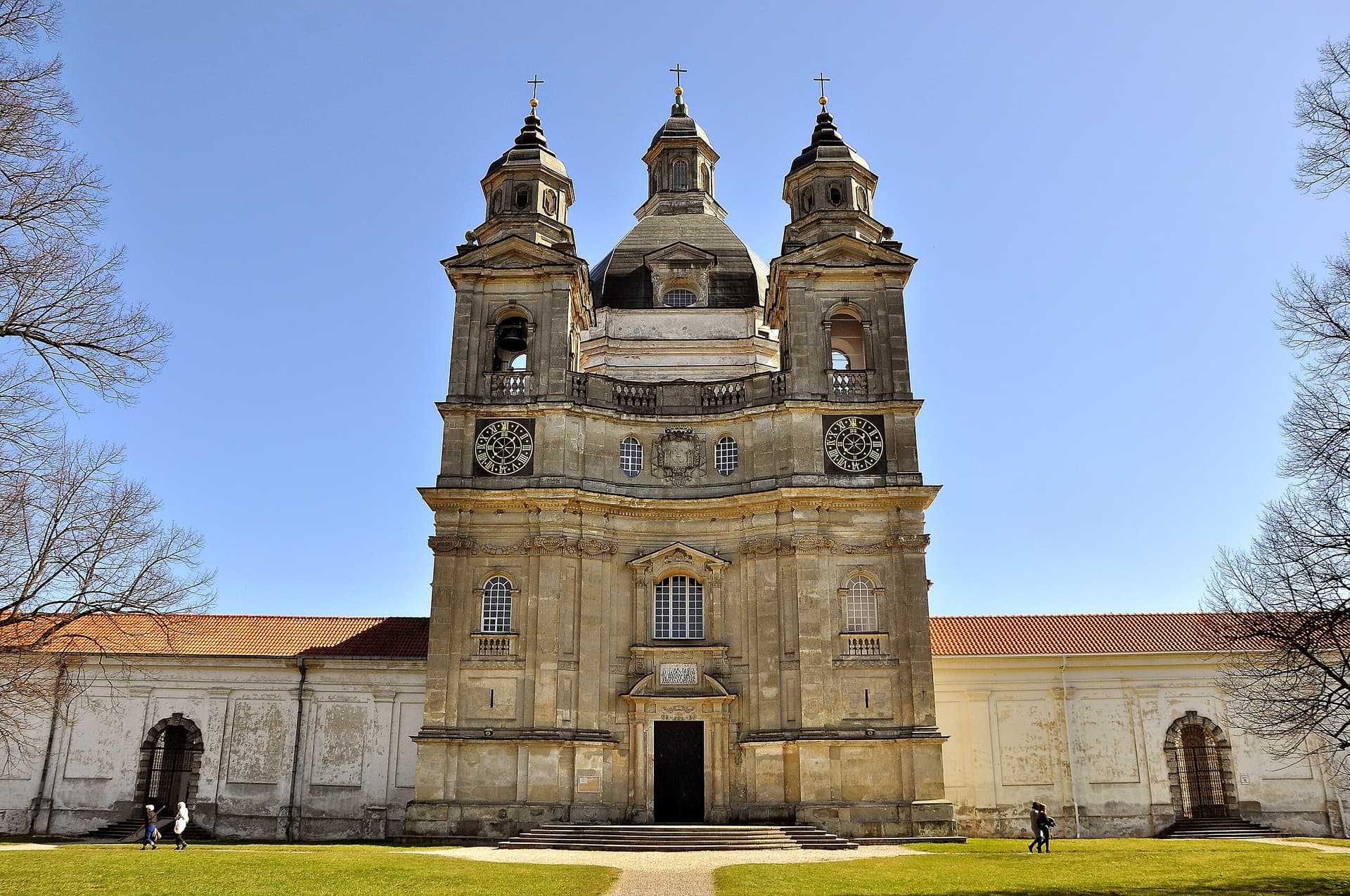
Pazaislis Monastery and Church, Kaunas
Kaunas, Kaunas County, Lithuania
8.8 km away
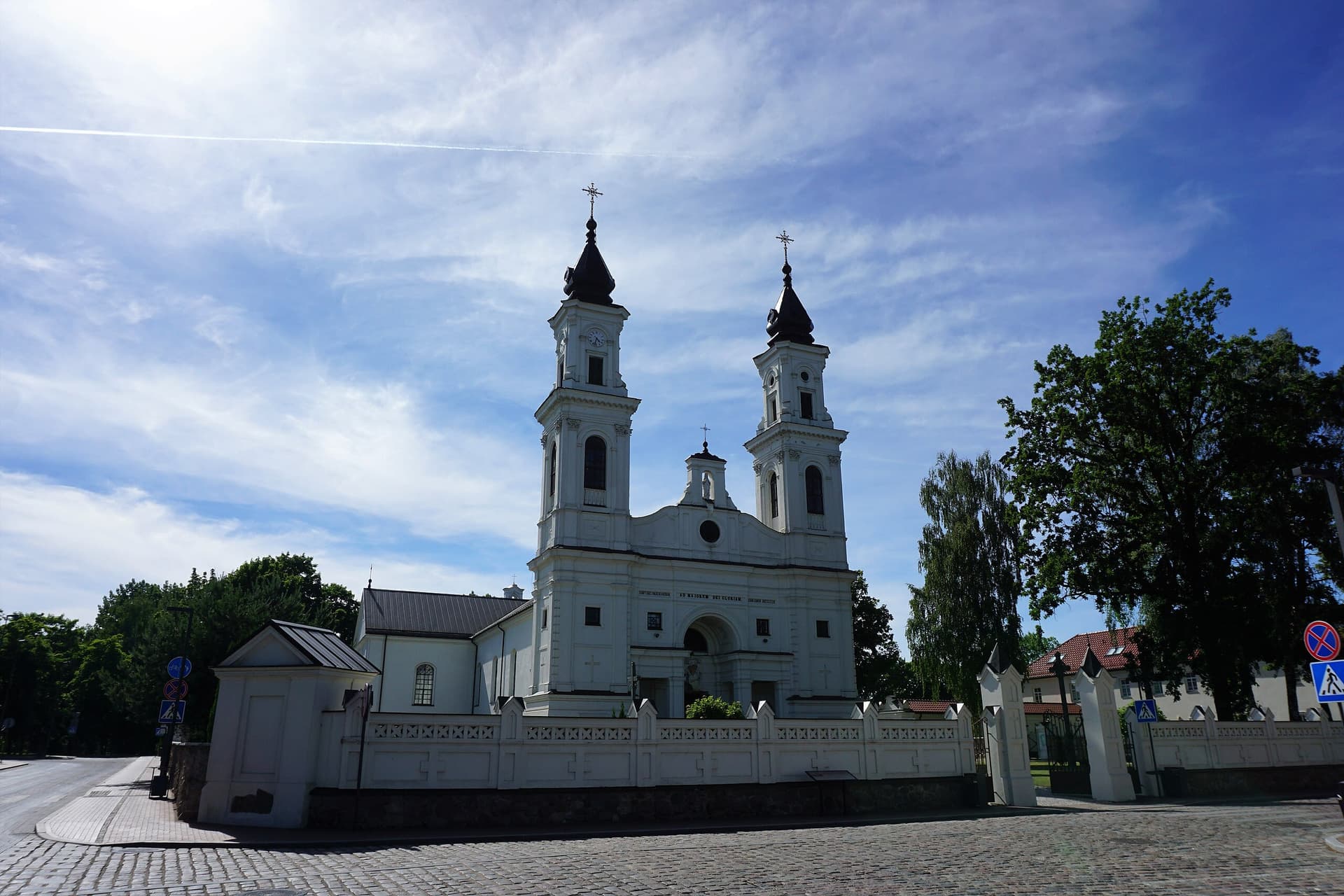
Basilica of Saint Michael the Archangel, Marijampole
Marijampolė, Marijampolė County, Lithuania
51.7 km away
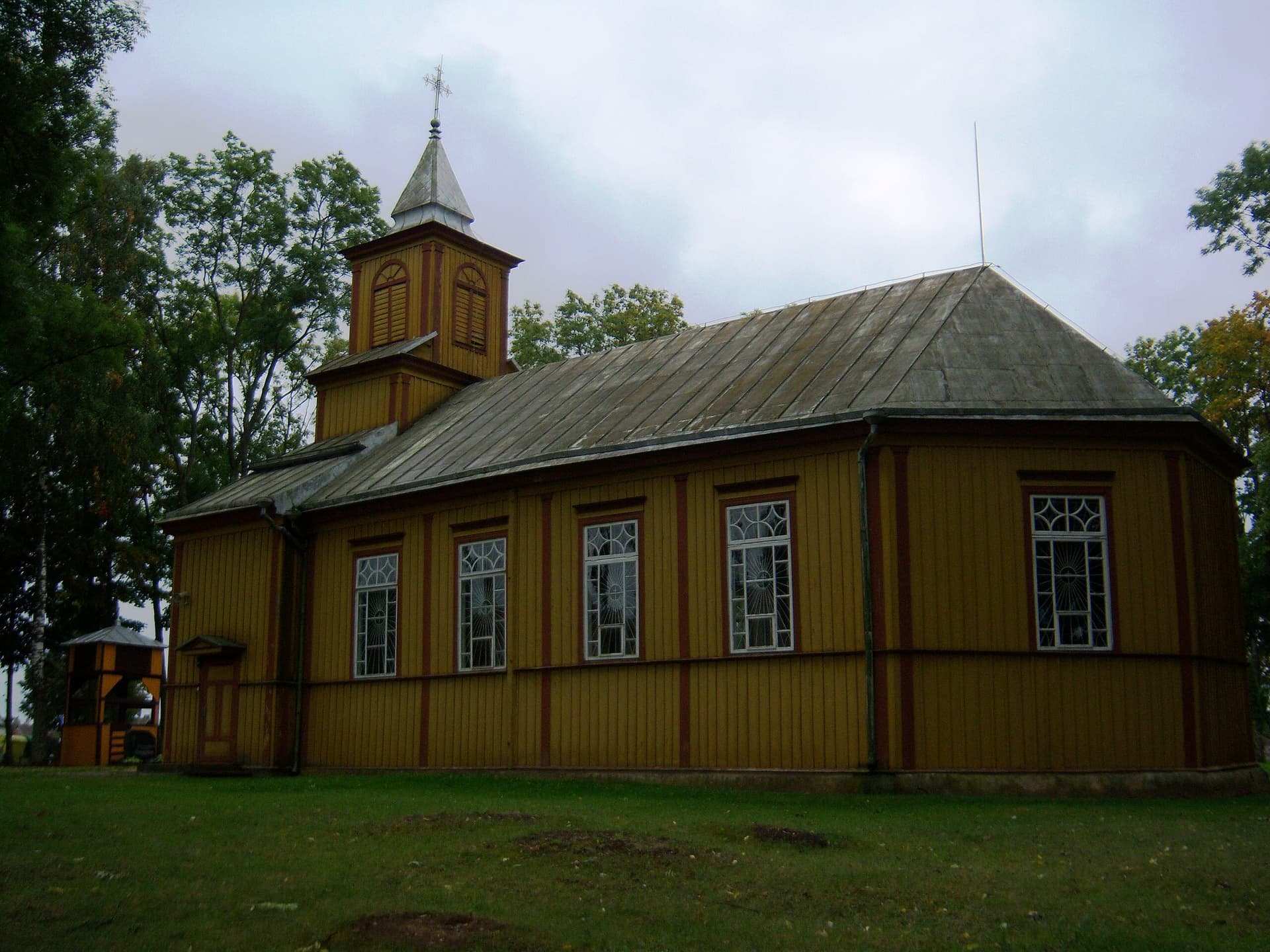
Church of the Assumption of the Virgin Mary, Alksnenai
Stirnėnai, Marijampolė County, Lithuania
53.4 km away
Church of the Assumption of the Virgin Mary, Pivasiunai
Pivašiūnai, Alytus County, Lithuania
57.6 km away