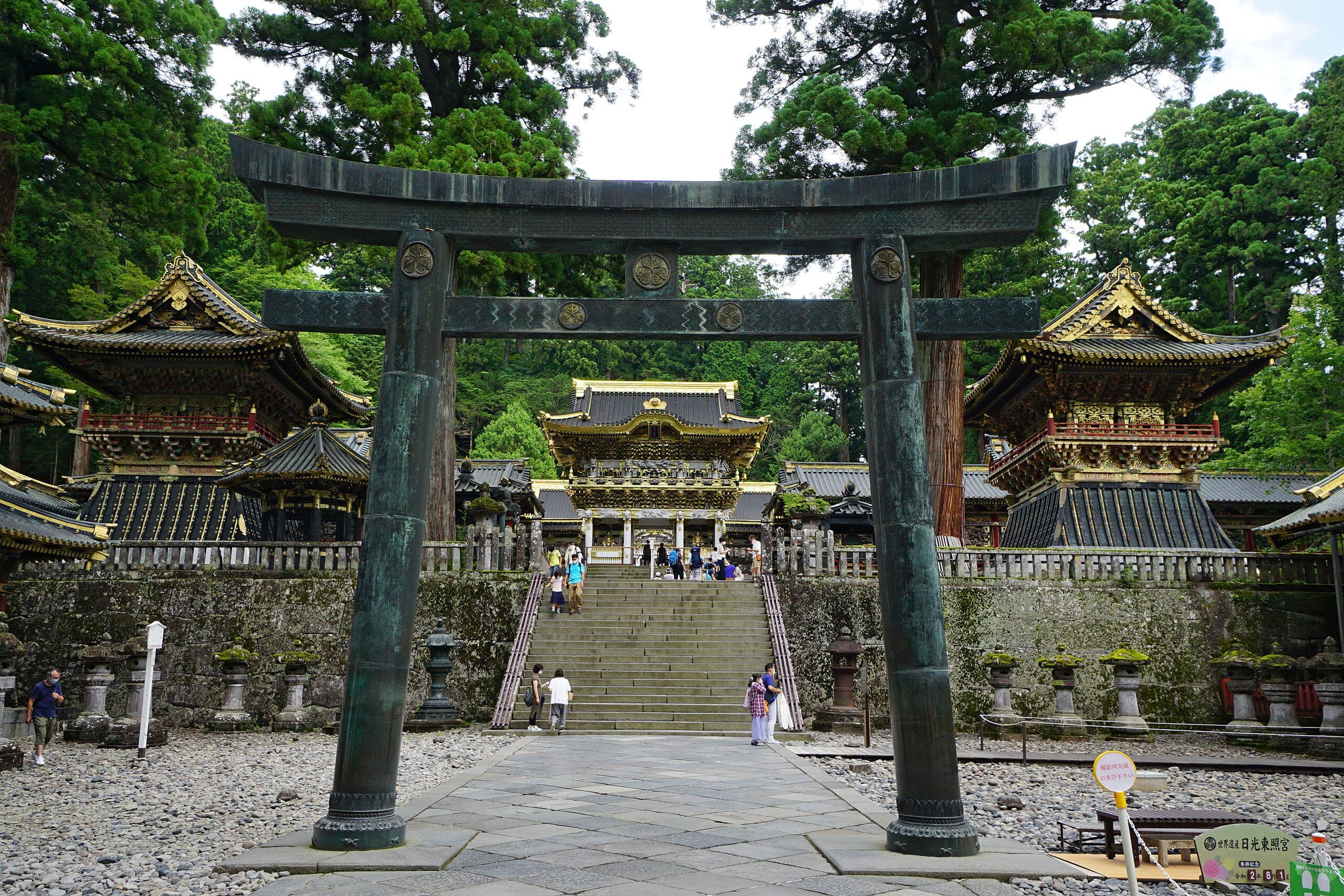
Nikkō Tōshō-gū
Where Japan's most powerful shogun became a god, and magnificence was made theology
Nikko, Tochigi Prefecture, Japan
At A Glance
- Coordinates
- 36.7555, 139.5925
- Suggested Duration
- 2-3 hours minimum for thorough visit. 1 hour for quick overview though this misses much.
Pilgrim Tips
- No specific dress code. Comfortable walking shoes strongly recommended.
- Permitted in most areas; some restrictions inside buildings. Signs indicate where photography is prohibited.
- The shrine can be extremely crowded, especially during peak seasons and festivals. Early morning visits offer somewhat quieter experience. The ornate detail can produce visual fatigue; plan for breaks.
Overview
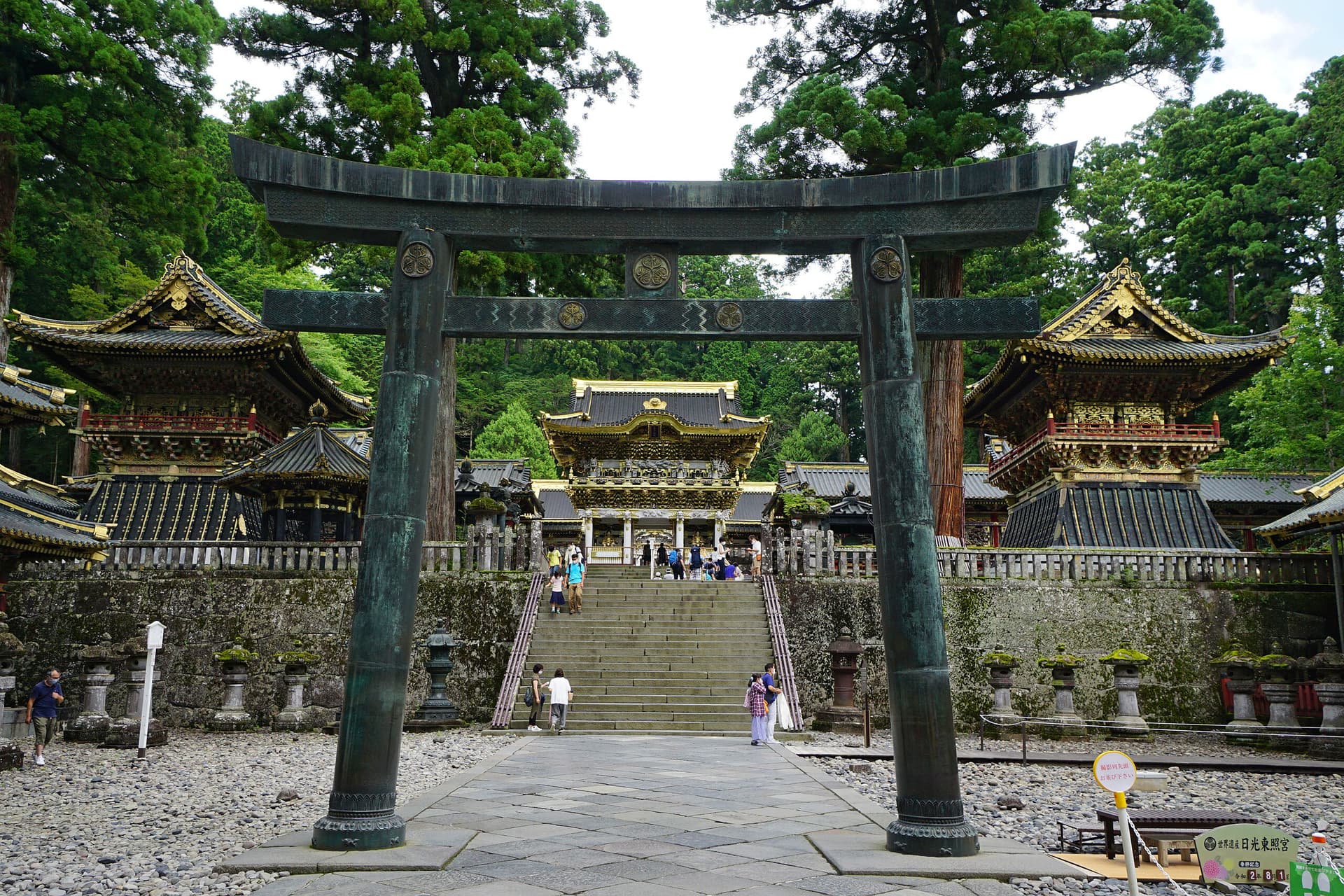
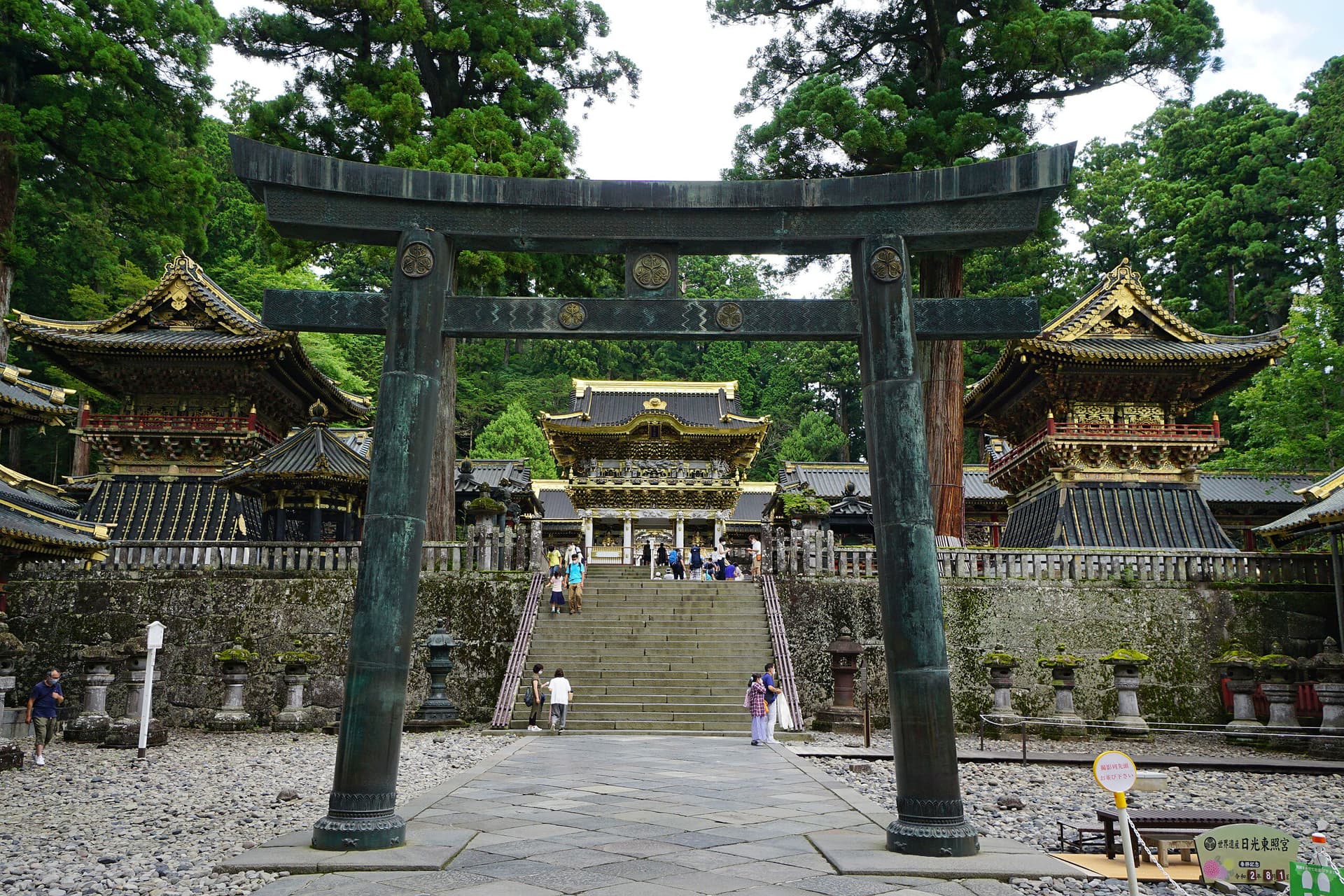
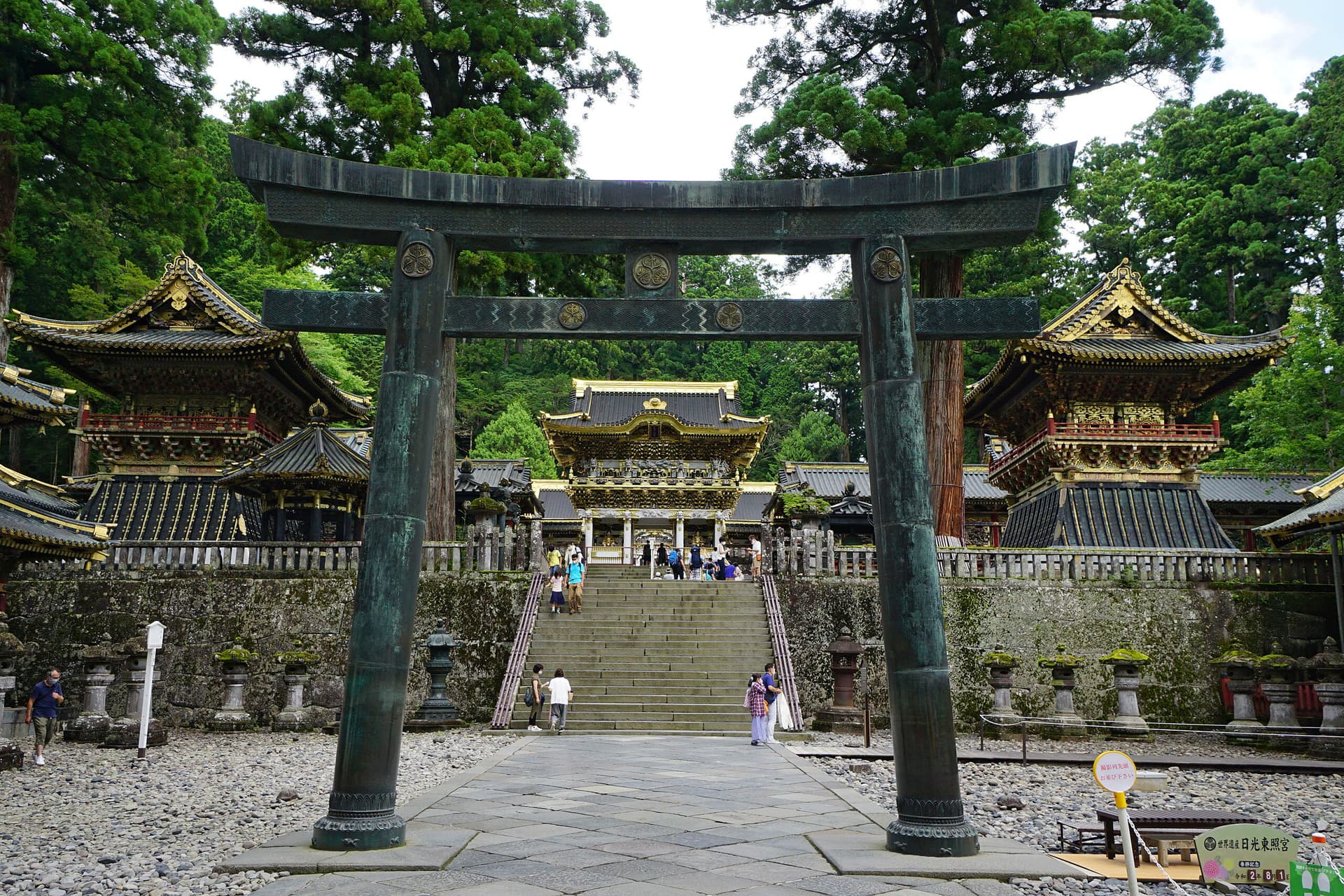
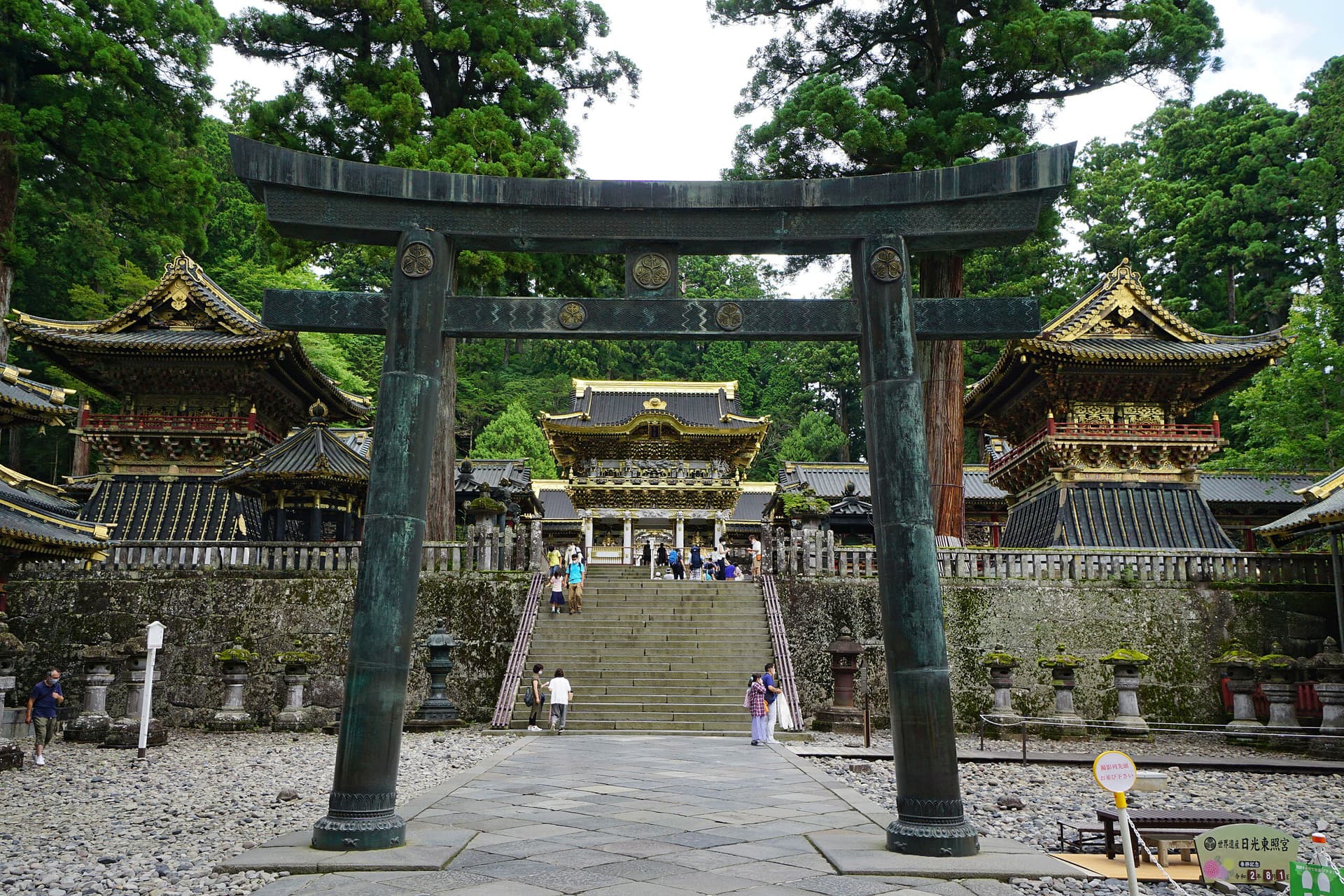
Nikko Toshogu is the mausoleum and shrine of Tokugawa Ieyasu, the warlord who unified Japan and founded a dynasty that ruled for 300 years of peace. After his death in 1616, Ieyasu was deified as a kami and enshrined in this complex of overwhelming beauty, built by 127,000 craftsmen with over 5,000 carvings. UNESCO recognizes it as 'an outstanding example of architectural and artistic genius.'
Some buildings are meant to impress. Nikko Toshogu was meant to overwhelm. When Tokugawa Iemitsu rebuilt his grandfather's mausoleum in 1636, he deployed resources that would define the limits of human craftsmanship. 127,000 workers. Over 5,000 carvings. Gold leaf that seems to catch light from impossible angles. The message was theological: Tokugawa Ieyasu was not merely buried here. He had become a god.
The shrine complex violates every principle of Japanese aesthetic restraint. Where traditional taste values understatement, Toshogu shouts. Every surface is carved, painted, lacquered, gilded. The famous Yomeimon Gate alone contains over 500 sculptures. This excess was not indulgence but argument. The Tokugawa were demonstrating that they possessed divine mandate.
Ieyasu himself had requested a simple shrine. His grandson had other plans. In transforming the modest original into this spectacle, Iemitsu was claiming cosmic legitimacy for Tokugawa rule. The bet paid off: the dynasty he founded lasted 300 years, the longest period of peace in Japanese history.
Climbing the stone steps to Ieyasu's tomb, surrounded by ancient cedars, the atmosphere shifts. The carvings fall away. Here, at the end, is simple stone in forest. The shogun who unified Japan lies beneath a bronze urn, his power now historical. The famous sleeping cat guards his rest. The three wise monkeys encode moral teaching: see no evil, speak no evil, hear no evil.
UNESCO calls Toshogu 'an outstanding example of architectural and artistic genius.' But it is more than museum piece. Worship continues. Ieyasu is still venerated as a kami. The shrine that began as political theology remains active as religion.
Context And Lineage
Nikko Toshogu was built to enshrine Tokugawa Ieyasu, the warlord who unified Japan and founded a dynasty that ruled for 300 years. The initial shrine was built in 1617; the current complex was created in 1636 by Ieyasu's grandson Iemitsu using 127,000 craftsmen. UNESCO designated it a World Heritage Site in 1999.
Before his death in 1616, Tokugawa Ieyasu instructed that a small shrine be built in Nikko to house his spirit. He declared he would become the guardian deity of Japan, the nation he had spent his life unifying. His remains were initially buried at Kunozan, then transferred to Nikko in 1617.
His grandson Iemitsu transformed the modest original shrine into the magnificent complex visible today. Believing that honoring his grandfather with unprecedented splendor would legitimize Tokugawa rule, Iemitsu deployed 127,000 craftsmen and vast wealth. The result was not merely a mausoleum but an argument: that Tokugawa Ieyasu had become a god, and that his descendants ruled by divine right.
Toshogu represents the apex of Tokugawa religious architecture and the political theology of the Tokugawa regime. The shrine's care has continued through subsequent eras. Today, the annual festivals, including the Thousand Samurai Procession in May and October, re-enact Ieyasu's funeral cortege, maintaining the ritual connection to the founder.
Tokugawa Ieyasu
enshrined_deity
Warlord (1543-1616) who unified Japan after a century of civil war, founding the Tokugawa Shogunate that ruled for 300 years of peace. After death, he was deified as Tosho Daigongen and enshrined at Nikko.
Tokugawa Iemitsu
builder
Third Tokugawa Shogun (1604-1651), grandson of Ieyasu. He ordered the massive reconstruction of Toshogu in 1636, transforming a modest shrine into the elaborate complex visible today.
Hidari Jingoro
legendary_craftsman
Legendary sculptor traditionally credited with the sleeping cat (Nemuri-neko) at Toshogu, though his historical existence is debated. His name has become synonymous with master craftsmanship.
Why This Place Is Sacred
Nikko Toshogu's sacred power derives from the deification of Tokugawa Ieyasu, the accumulated weight of centuries of veneration, the intentional magnificence designed to manifest divine presence, and the tomb's setting among ancient cedars. The shrine demonstrates that in Japan, political and spiritual power could be one.
The thinness of Toshogu operates differently than at most sacred sites. This is not a place where the sacred was discovered but where it was deliberately constructed. Tokugawa Iemitsu set out to build a shrine that would prove his grandfather's divinity, and the result speaks to the power of intention backed by unlimited resources.
In Shinto understanding, Ieyasu genuinely became a kami after death. This is not merely metaphor or honor. He was deified as Tosho Daigongen, 'Great Gongen, Light of the East,' a divine being with power to protect the nation. The shrine is his living presence, the place where devotees can access his continued power.
The magnificence serves theological purpose. The 5,000 carvings, the gold leaf, the overwhelming detail are all arguments for divine status. No mortal could merit such splendor. The shrine's beauty proves what it claims. This is architecture as theology.
The Yomeimon Gate, with its 500+ sculptures, is sometimes called the 'Twilight Gate' because one could gaze at it until sunset without exhausting its detail. The three wise monkeys on the Sacred Stable encode moral teaching in carved wood. The sleeping cat at the entrance to Ieyasu's tomb, attributed to the legendary sculptor Hidari Jingoro, represents the peace that the shogun established.
But the path to the tomb itself offers different thinness. Climbing the 207 stone steps through ancient cedars, the carved magnificence falls away. At the summit, Ieyasu's grave is simple: a bronze urn beneath stone. After all the splendor, the end is quiet. The shogun who commanded nations lies in forest stillness.
The centuries of veneration have added their weight. What began as political project has accumulated genuine sacred power through generations of worship. Whether one understands Ieyasu as literal kami or historical figure, something undeniably resides here.
Tokugawa Ieyasu requested that a small shrine be built in Nikko to house his spirit after death. He wished to become the guardian deity of Japan, protecting the nation he had unified. His grandson Iemitsu transformed this modest intention into a declaration of divine legitimacy for Tokugawa rule.
Traditions And Practice
Nikko Toshogu is an active Shinto shrine where Tokugawa Ieyasu continues to be venerated as a kami. Daily worship, annual festivals including the Grand Festivals with Thousand Samurai Procession (May and October), and New Year's visits maintain the shrine's religious function.
Traditional practices include veneration of Tokugawa Ieyasu as Tosho Daigongen, procession rituals representing Ieyasu's funeral cortege, and seasonal festivals honoring the Tokugawa. The shogun himself is venerated as a protective deity who established peace.
Daily worship continues at the main sanctuary, where visitors can offer prayers and receive blessings. The Grand Spring Festival (May 17-18) and Autumn Festival (October 16-17) feature the Thousand Samurai Procession, a dramatic re-enactment of Ieyasu's funeral cortege with participants in period costume. New Year's visits (hatsumode) draw significant crowds.
Visitors can purchase omamori (protective charms) and ema (votive tablets). Prayer for success and protection, drawing on Ieyasu's qualities of patience, strategy, and ultimate triumph, is common.
Approach the shrine as both artistic masterpiece and living religious site. The aesthetic overwhelm can distract from the fact that people still come here to pray.
Take time with individual carvings rather than trying to absorb everything. The three wise monkeys, the sleeping cat, and details of the Yomeimon Gate reward sustained attention.
Make the climb to Ieyasu's tomb. This is where the shrine's true purpose is fulfilled. Whatever you think of the political theology, a man who shaped his nation's history lies here. The forest setting offers different encounter than the elaborate halls.
If possible, visit during the Grand Festivals to witness the Thousand Samurai Procession. This re-enactment connects the shrine to its founding moment.
Pray if it feels genuine. You need not believe Ieyasu is literally a god to recognize that power, historical weight, and centuries of veneration have concentrated something here.
Shinto
ActiveToshogu enshrines Tokugawa Ieyasu (1543-1616), founder of the Tokugawa Shogunate, who was deified as Tosho Daigongen, 'Great Gongen, Light of the East.' Ieyasu is venerated as the protector of the eight provinces of Kanto and is credited with bringing 300 years of peace to Japan.
Prayer and veneration of Ieyasu, annual festivals including the Thousand Samurai Procession, New Year visits, worship at the main sanctuary, prayer for success and protection.
Experience And Perspectives
Visitors to Nikko Toshogu encounter overwhelming artistic spectacle that can produce awe, disorientation, or both. The carved details reward close attention. The path to Ieyasu's tomb offers a different quality, the forest setting and stone steps creating contemplative space. Despite the crowds, moments of encounter with historical gravitas remain possible.
The first experience at Toshogu is often sensory overload. The sheer density of visual information, every surface carved, painted, and gilded, exceeds normal processing capacity. Some visitors feel overwhelmed; others feel transported. The effect was intentional. You were meant to feel the inadequacy of mortal response before divine majesty.
Take time at the Yomeimon Gate. This single structure contains more artistry than most temples. The 500+ sculptures include dragons, sages, children at play, flowers, waves, and mythological scenes. Each tells a story. Traditional guides say you could study it until twilight and still find new details. The nickname 'Twilight Gate' suggests you try.
The Sacred Stable houses the three wise monkeys, arguably the most famous carvings in Japan. 'See no evil, speak no evil, hear no evil' has entered global culture, but seeing the original in context reveals it as part of a sequence depicting the stages of life. The monkeys are not arbitrary wisdom but specific teaching.
The sleeping cat (Nemuri-neko) guards the entrance to Ieyasu's tomb. Attributed to the legendary sculptor Hidari Jingoro, this small carving has generated centuries of interpretation. It appears to sleep, but some see one eye open, ever watchful. Behind it, sparrows carved in flight complete the scene: a cat so at peace that birds can fly without fear. This is what Ieyasu's peace meant.
Climbing the 207 stone steps to the tomb itself offers transition. The carved splendor falls away. Ancient cedars replace gilded walls. At the top, the okusha (inner shrine) houses Ieyasu's remains in surprising simplicity. After all the magnificence, the end is stone in forest.
Many visitors find this climb more moving than the elaborate halls below. Standing where Japan's unifier rests, surrounded by trees older than the nation he created, something settles. The transience of even the greatest power becomes palpable. The cedars will outlast what the shogun built.
Despite the crowds, and Toshogu is Japan's most visited shrine, moments of genuine encounter remain possible. Early morning visits, quiet attention to single details, the climb to the tomb: these create space within the spectacle.
Allow 2-3 hours minimum. Rushing through Toshogu defeats its purpose. The shrine rewards attention to detail impossible in a quick tour.
Begin with willingness to be overwhelmed. The sensory excess is intentional. Let it work on you before trying to analyze it.
At the Yomeimon Gate, choose one section and study it thoroughly rather than trying to take in everything. Find the three wise monkeys and contemplate their teaching. Locate the sleeping cat before climbing to the tomb.
Make the climb to Ieyasu's tomb even if your legs protest. The 207 steps transition you from spectacle to sanctuary. What waits at the top is different from what lies below.
If possible, return a second time. First visits are consumed by the spectacle. Second visits allow subtler engagement.
Nikko Toshogu invites multiple interpretations: as artistic masterpiece, as political theology, as living shrine, and as historical monument. Each lens reveals something genuine about this complex site.
Scholars recognize Toshogu as the apex of Edo-period religious architecture and the political theology of the Tokugawa regime. UNESCO's designation notes it as 'a reflection of architectural and artistic genius' and 'the harmonious integration of buildings in a forest and natural site.'
The shrine's extravagance is understood as deliberate argument for Tokugawa legitimacy through divine association. Iemitsu was not simply honoring his grandfather but claiming cosmic authority for his dynasty. The theology worked: the Tokugawa ruled for 300 years.
Art historians study the carvings for insights into Edo-period craft and symbolism. The sleeping cat, three wise monkeys, and countless other elements encode meaning that scholars continue to unpack.
In Shinto tradition, Tokugawa Ieyasu genuinely became a kami after death, not merely symbolically but actually achieving divine status. The shrine is his living presence. Worship here connects devotees with his protective power.
The Tokugawa understanding saw Ieyasu as the founder of peace, the man whose patience and strategy ended a century of civil war. His deification recognized this achievement as transcending the merely human.
Some view the shrine's layout and symbolism as encoding esoteric spiritual knowledge. The carvings, in this interpretation, contain hidden teachings beyond their surface meaning. The three wise monkeys, the sleeping cat, the complex iconography of the Yomeimon Gate: all may point to something beyond the political theology.
The full symbolic meaning of all 5,000+ carvings has not been comprehensively decoded. The original appearance before later restorations is not entirely documented. Whether the legendary sculptor Hidari Jingoro actually existed, and which works can truly be attributed to him, remains debated.
Visit Planning
Nikko Toshogu is located in Nikko, Tochigi Prefecture, accessible from Tokyo by train (about 2 hours). The shrine is open year-round. Admission is 1,300 yen for adults, with additional fees for certain areas. Allow 2-3 hours minimum.
Nikko town offers ryokan (traditional inns) and hotels. Staying overnight allows for early morning visits before crowds arrive. The area is a common day trip from Tokyo but rewards longer stays.
Nikko Toshogu operates primarily as a tourist attraction but remains an active Shinto shrine. Standard respectful behavior applies. Photography is permitted in most areas with some restrictions inside buildings.
While Toshogu receives visitors primarily as tourists rather than pilgrims, it remains an active place of worship. Basic respect for this function is appropriate.
Follow marked pathways throughout the complex. Some areas are closed to visitors for preservation or religious reasons. Respect these restrictions.
Photography is permitted in most outdoor areas but may be restricted inside certain buildings. Signs indicate where photography is prohibited. Avoid flash photography near delicate artworks.
The climb to Ieyasu's tomb requires physical effort up 207 stone steps. This is a one-way path with others climbing behind you. Move at a steady pace and do not block others who wish to pass.
At the main worship hall and other religious spaces, maintain respectful quiet. While Toshogu is more flexible than purely religious sites, remember that some visitors come for worship.
Comfortable walking shoes are essential. The complex is extensive and involves significant walking on stone paths and steps.
No specific dress code. Comfortable walking shoes strongly recommended.
Permitted in most areas; some restrictions inside buildings. Signs indicate where photography is prohibited.
Coins for offering boxes; omamori and ema available for purchase.
{"Follow marked pathways","Respect areas closed to public","Photography restrictions in some buildings","Maintain respectful behavior at worship areas"}
Sacred Cluster
Nearby sacred places create the location cluster described in the growth plan. This block is intentionally crawlable and links into the wider regional graph.