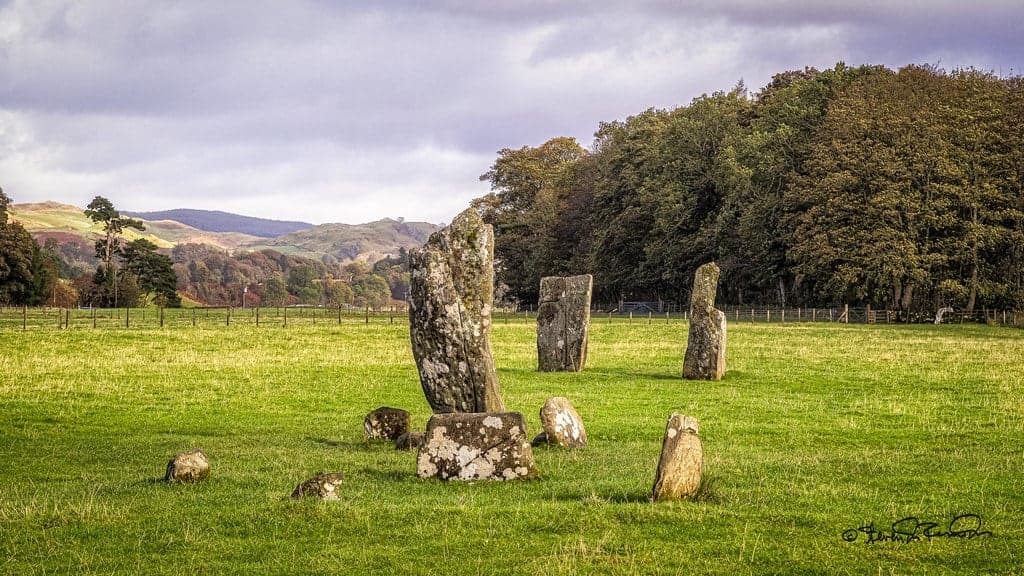
Nether Largie standing stones, Argyll, Scotland
Bronze Age stones bearing marks carved a millennium before they were raised
Kilmartin, Alba / Scotland, United Kingdom
At A Glance
- Coordinates
- 56.1217, -5.4954
- Suggested Duration
- 2-4 hours to include Temple Wood stone circles and nearby cairns
Pilgrim Tips
- No requirements. Dress for Highland weather, which can be wet, windy, and changeable even in summer. Waterproof boots are strongly recommended for the boggy approach.
- Photography is welcomed and the site offers exceptional opportunities, particularly in morning or evening light.
- The path crosses boggy ground; waterproof footwear is essential. Scottish weather changes rapidly; bring layers. Midges can be troublesome in summer, particularly in still, damp conditions. Do not touch or climb on the stones.
Overview
Five massive stones stand in an X-shaped pattern at the heart of Kilmartin Glen, mainland Scotland's richest prehistoric landscape. The tallest rises nearly three meters, its surface marked with cup-and-ring carvings thought to predate the monument by 1,500 years. These Bronze Age builders chose stones already ancient and sacred, raising them toward alignments with solstice sunrise and lunar standstill. Over 800 prehistoric sites lie within six miles. Something drew people here for millennia.
The Nether Largie Standing Stones occupy a position at the center of what may be mainland Scotland's most concentrated prehistoric sacred landscape. Five large stones arranged in an X-shaped pattern, the tallest standing nearly three meters high, mark a site where ceremonial life persisted for thousands of years. What distinguishes these stones from other Bronze Age monuments is a detail that arrests attention: the cup-and-ring marks carved into the central stone are approximately 1,500 years older than the monument itself. The builders, working around 1200 BCE, deliberately sourced stones that were already sacred, incorporating ancient power into new purpose.
The stones align roughly northeast-southwest, oriented toward the winter solstice sunrise and positions of the lunar standstill. Whether these alignments were astronomical markers, ceremonial sightlines, or both remains a matter of scholarly interpretation. The archaeoastronomer Alexander Thom called this one of Britain's most important sites; subsequent researchers have expressed more caution.
What seems certain is that these stones participated in a larger ritual landscape that included the nearby Temple Wood stone circles and a linear cemetery of burial cairns stretching through the glen. To stand among the Nether Largie stones is to occupy a nexus of prehistoric significance whose full meaning we cannot recover but whose presence we can still feel.
Context And Lineage
Erected around 1200 BCE by Bronze Age communities, the stones incorporate earlier carved surfaces and align with astronomical events in ways that continue to provoke scholarly debate.
Around 3,200 years ago, people in Kilmartin Glen raised five massive stones into an arrangement that would endure to the present day. They chose their materials with care. The central stone bore cup-and-ring marks already ancient, carved perhaps 1,500 years earlier during the Neolithic period. By incorporating these pre-existing sacred objects, the builders linked their monument to traditions reaching back beyond living memory.
The stones were aligned on a northeast-southwest axis, oriented toward astronomical events including the winter solstice sunrise and lunar standstill positions. Whether this reflects deliberate observatory function or ceremonial symbolism remains debated. Alexander Thom visited in 1970 and declared this one of Britain's most important sites for prehistoric astronomy; Jon Patrick's 1979 reassessment expressed doubt about deliberate astronomical orientation.
What seems clear is that the stones participated in a wider ceremonial landscape. The linear cemetery of burial cairns connects the living to generations of the dead. Temple Wood's stone circles, already standing for a millennium when these stones were raised, provided continuity with earlier traditions.
The Nether Largie stones belong to a tradition of megalithic monument building that characterized Neolithic and Bronze Age Britain. They share the glen with Temple Wood stone circles, the linear cemetery of cairns, and extensive rock art sites including Achnabreck. The density of monuments makes Kilmartin Glen one of the most significant prehistoric landscapes in Scotland.
Alexander Thom
archaeological surveyor
Archaeoastronomer who surveyed the site in 1970 and proposed it functioned as a sophisticated lunar observatory, calling it one of Britain's most important sites. His theories remain influential but contested.
Jon Patrick
archaeological surveyor
Melbourne University archaeoastronomer who reassessed Thom's hypothesis in 1979 and expressed doubt about deliberate astronomical orientation.
Why This Place Is Sacred
The stones carry marks from two distinct eras of sacred use, making visible the layering of sanctity across millennia. The surrounding glen concentrates prehistoric monuments in unusual density.
What makes a place thin? At Nether Largie, the answer may lie in visible evidence of accumulated reverence. The cup-and-ring marks on the central stone were carved perhaps 4,500 years ago. When Bronze Age people raised this stone into its current position around 3,200 years ago, they chose to incorporate something already ancient. This was not recycling but inheritance, the deliberate continuation of sacred significance across a span longer than separates us from the Roman Empire.
The glen amplifies this effect. Within six miles, archaeologists have identified over 800 prehistoric sites. Burial cairns run through the valley floor. Stone circles at Temple Wood, a five-minute walk away, predate the standing stones by a thousand years. Rock art sites dot the surrounding hills. Generation after generation chose this glen for their most significant monuments. We cannot know what they believed, but the concentration speaks to something they recognized here.
Contemporary visitors often describe a sense of presence that goes beyond the visual drama of standing stones. Whether this reflects accumulated human attention or something beyond conventional explanation, the consistency of such reports suggests something worth attending to.
The stones were erected around 1200 BCE as part of an integrated ceremonial landscape. The astronomical alignments suggest marking of seasonal transitions, particularly the winter solstice. The proximity to burial cairns indicates connection to ancestor veneration and mortuary practice. The incorporation of already-ancient carved stones points to deliberate engagement with earlier sacred traditions.
The monument's builders worked within a landscape that had been ceremonially active for at least two thousand years before them. After the Bronze Age, continuous ritual use ceased, but the site entered local memory. Scottish Traveller communities traditionally regarded Nether Largie as a protected place, believing it bad luck to touch the stones. Modern heritage protection began in the twentieth century. Contemporary pagans and those interested in archaeoastronomy now visit, particularly at solstices.
Traditions And Practice
No organized ceremonies take place. Visitors engage through contemplation, photography, and quiet presence. Some modern pagans and druids visit for solstice observations.
The original rituals are unknown. The astronomical alignments suggest ceremonies connected to solar and lunar calendars, marking seasonal transitions significant for Bronze Age agricultural communities. The proximity to burial cairns indicates associations with ancestor veneration and mortuary practice. Geophysical surveys have revealed additional burials near the stones, confirming the connection between the living and the dead at this site.
No organized ceremonies take place. Visitors come for contemplation, photography, and personal engagement with prehistoric heritage. Some contemporary pagans and neo-druids visit for solstice and equinox observations. The site's inclusion in the self-guided trail from Kilmartin Museum brings heritage tourists seeking connection with Scotland's deep past.
Approach slowly and observe from multiple angles. Look for the cup-and-ring marks on the central stone; they are weathered but visible. Sit with the stones rather than rushing through. If time permits, walk to Temple Wood and the nearby cairns to experience the interconnected landscape. Consider visiting at dawn or dusk when the light reveals the stones most dramatically.
Bronze Age ceremonial practice
HistoricalThe monument was created around 1200 BCE as part of a ritual landscape that had been developing for over two thousand years. The incorporation of earlier carved stones indicates conscious engagement with ancestral traditions.
Unknown specifically. Evidence suggests ceremonies connected to solar and lunar calendars, ancestor veneration, and mortuary ritual. The builders integrated their work with existing sacred sites including Temple Wood and the linear cemetery of cairns.
Scottish Traveller tradition
HistoricalTraveller communities traditionally regarded Nether Largie as a safe, protected place to camp and held that touching the stones brought bad luck.
Using the area as a traditional campsite while maintaining respectful distance from the stones themselves.
Contemporary paganism and neo-druidry
ActiveModern spiritual practitioners are drawn to Kilmartin Glen as one of Scotland's most important prehistoric sacred landscapes. The astronomical alignments make the stones places of pilgrimage for those seeking connection with ancient traditions.
Solstice and equinox observations, meditation, personal ritual. Some practitioners visit at sunrise or sunset to experience the alignments. The landscape's concentration of monuments allows pilgrimage connecting multiple sacred sites.
Experience And Perspectives
Visitors approach through boggy ground on wooden walkways, emerging into open pasture where the stones rise against Highland sky. The surrounding landscape of cairns and circles invites extended exploration.
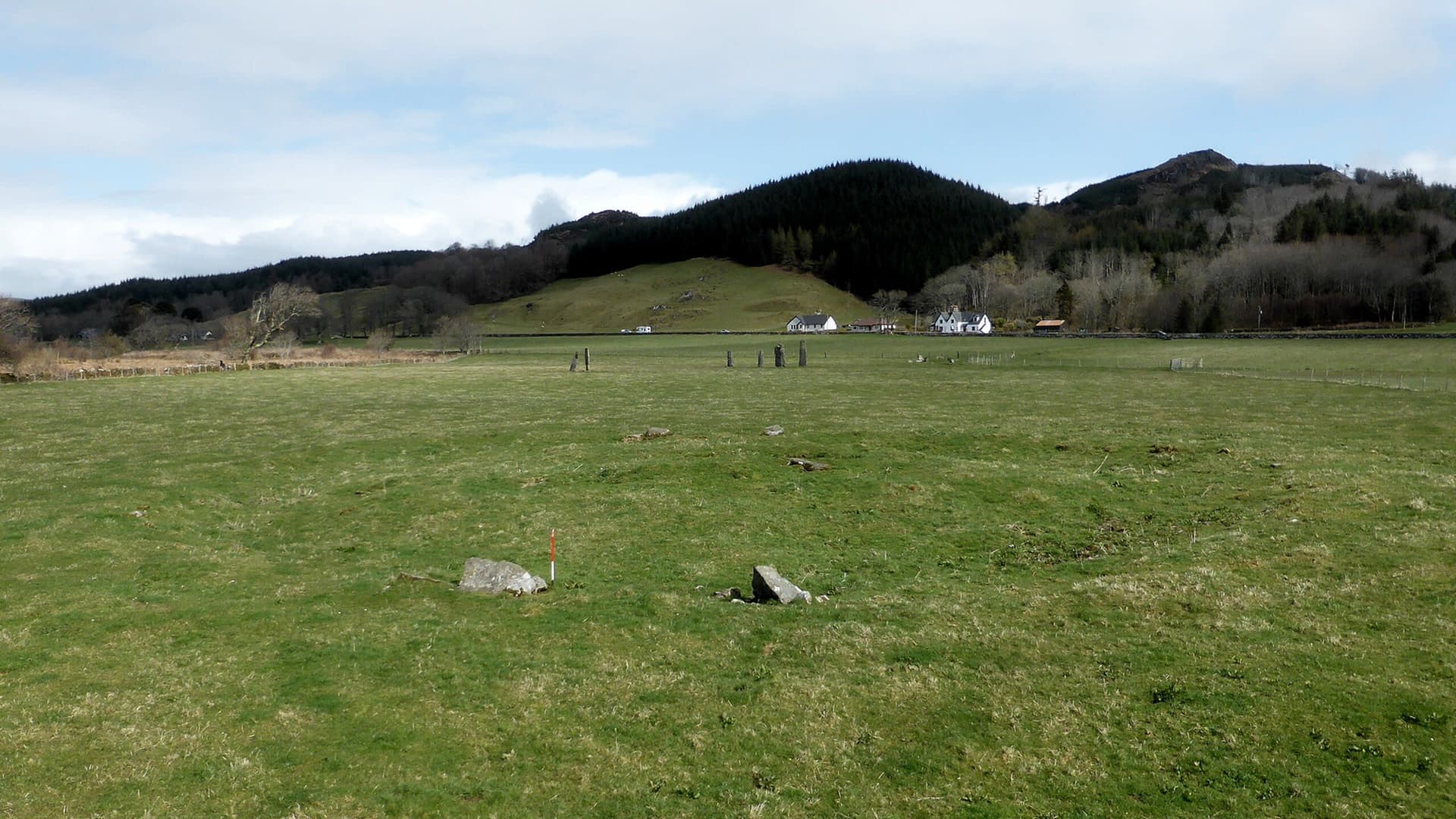
The path to Nether Largie begins at a car park in Lady Glassary Wood, following a wooden walkway across boggy terrain before reaching firmer ground. The stones appear gradually, their scale revealing itself as you approach across open pasture. The tallest stone, nearly three meters high, draws the eye first. Only closer inspection reveals the cup-and-ring marks that make this site exceptional, carved hollows and concentric rings worn by weather but still legible after four and a half millennia.
The arrangement of the five principal stones in an X-shaped pattern becomes clearer as you move around the site. Seven smaller stones and one fallen stone populate the area around the main configuration. A hundred meters to the northwest, an outlying stone points toward Temple Wood, suggesting the connectivity of this ritual landscape.
The glen's relative isolation preserves a quality of remoteness that more famous sites have lost. You may find yourself alone with the stones, with only sheep and wind for company. The light shifts rapidly; clouds move across the hills and the stones' appearance transforms within minutes.
For those who wish to engage more deeply, Temple Wood's stone circles lie within easy walking distance, and the linear cemetery of burial cairns stretches north and south through the glen.
The standing stones occupy open pasture accessed from Lady Glassary Wood car park on the B8025. The walk takes approximately ten minutes. Temple Wood stone circles lie five minutes' walk to the southeast. The Nether Largie cairns (South, Mid, and North) are accessible along paths heading northeast. Kilmartin Museum, 1.5 kilometers north, provides context and interpretation.
The stones invite multiple interpretations without resolving into a single explanation. Archaeological, astronomical, and spiritual readings coexist without contradiction.
Archaeological consensus dates the standing stones to approximately 1200 BCE. The X-shaped arrangement with northeast-southwest alignment may incorporate astronomical sightlines to the winter solstice sunrise and lunar standstill positions, though this remains debated. The cup-and-ring marks on the central stone predate the monument by roughly 1,500 years, indicating deliberate selection of already-sacred stones. The site forms part of an integrated ceremonial landscape including the linear cemetery of burial cairns, Temple Wood stone circles, and extensive rock art.
No continuous tradition survives from the monument's builders. Scottish Traveller communities historically regarded Nether Largie as a protected place and held that touching the stones brought bad luck. This belief, recorded in living memory, reflects traditional respect for the ancient monument independent of archaeological interpretation.
Some visitors perceive the stones and wider Kilmartin Glen as places of powerful earth energy, connecting them to ley line theories. Alexander Thom's astronomical interpretations, though academically controversial, have inspired interest in the stones as sophisticated observatory technology. Contemporary pagans and druids treat the stones as living sacred space where ceremony remains meaningful regardless of what archaeology can confirm about original use.
Fundamental questions remain unanswered. What specific ceremonies took place among the stones? Why were carved stones from earlier periods incorporated into the monument? What was the relationship between the standing stones, the stone circles, and the burial cairns? Why did this particular glen become such an important ceremonial center across millennia? The stones hold these questions without answering them.
Visit Planning
Freely accessible at all times from Lady Glassary Wood car park. Allow at least 30 minutes for the stones alone, or half a day to explore the wider glen including Temple Wood and the cairns.
Kilmartin Hotel in the village offers rooms and dining. Lochgilphead (8 miles) and Oban (30 miles) provide more options.
The site is freely accessible but protected. Do not touch or climb the stones. Follow footpaths and close gates. Leave nothing behind.
Nether Largie is an open-access heritage site with no entry fee or opening hours. This freedom comes with responsibility. The stones have stood for over three millennia and deserve the care that continuity implies. Scottish Traveller tradition held that touching the stones brought bad luck; this belief serves as wise counsel for preservation.
The stones occupy agricultural land, so respect the farming environment. Close any gates behind you. Stay on designated paths. Dogs should be kept under control, particularly during lambing season. Leave no offerings at the stones; this is not permitted at Scheduled Ancient Monuments.
No requirements. Dress for Highland weather, which can be wet, windy, and changeable even in summer. Waterproof boots are strongly recommended for the boggy approach.
Photography is welcomed and the site offers exceptional opportunities, particularly in morning or evening light.
Do not leave offerings. The site is protected as a Scheduled Ancient Monument.
Do not touch or climb the stones. Do not remove anything from the site. Stay on paths where possible. Control dogs around livestock.
Sacred Cluster
Nearby sacred places create the location cluster described in the growth plan. This block is intentionally crawlable and links into the wider regional graph.
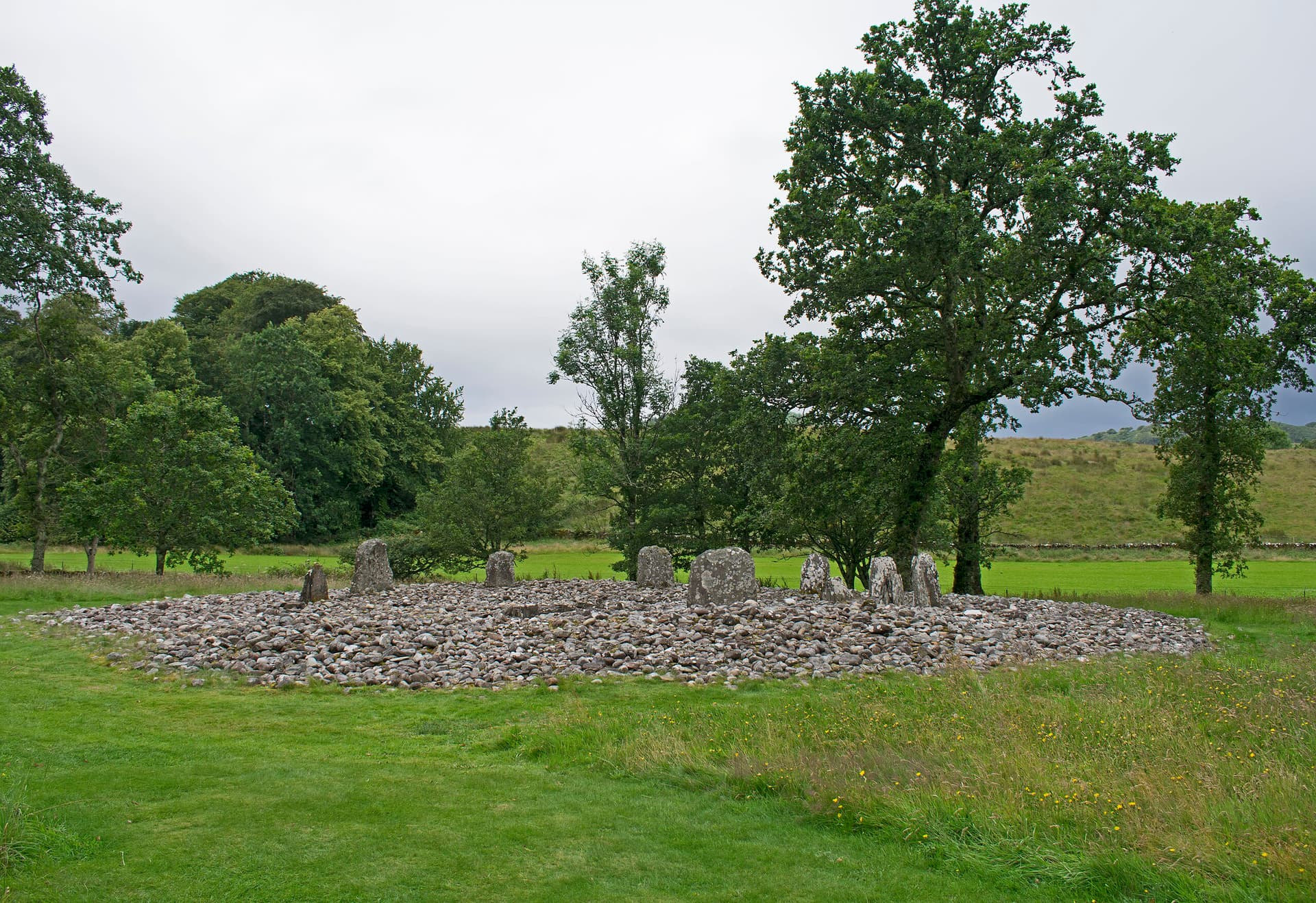
Temple Wood Stone Circle
Kilmartin, Argyll and Bute, United Kingdom
0.3 km away
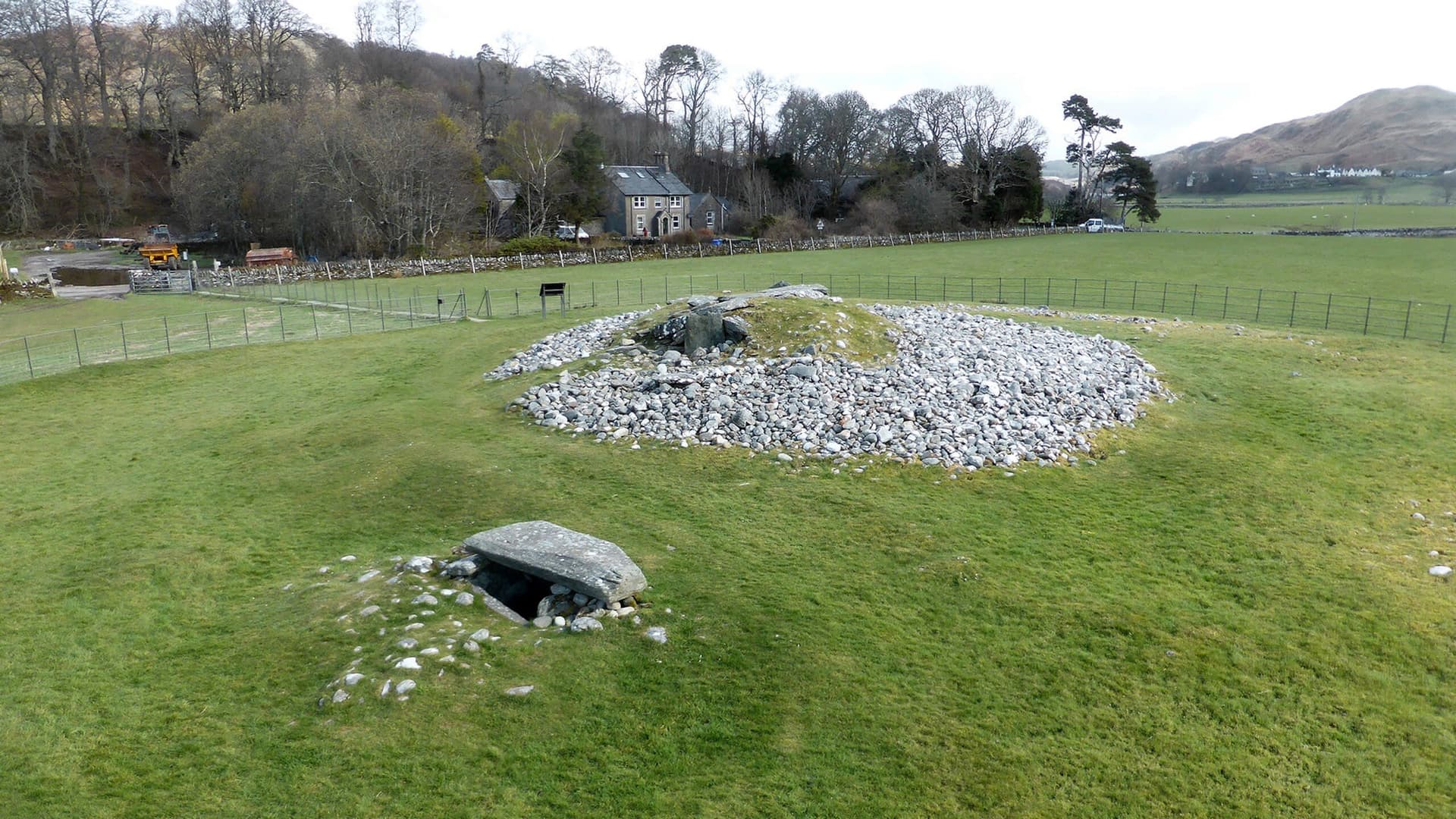
Nether Largie South Cairn
Kilmartin, Argyll and Bute, United Kingdom
0.3 km away
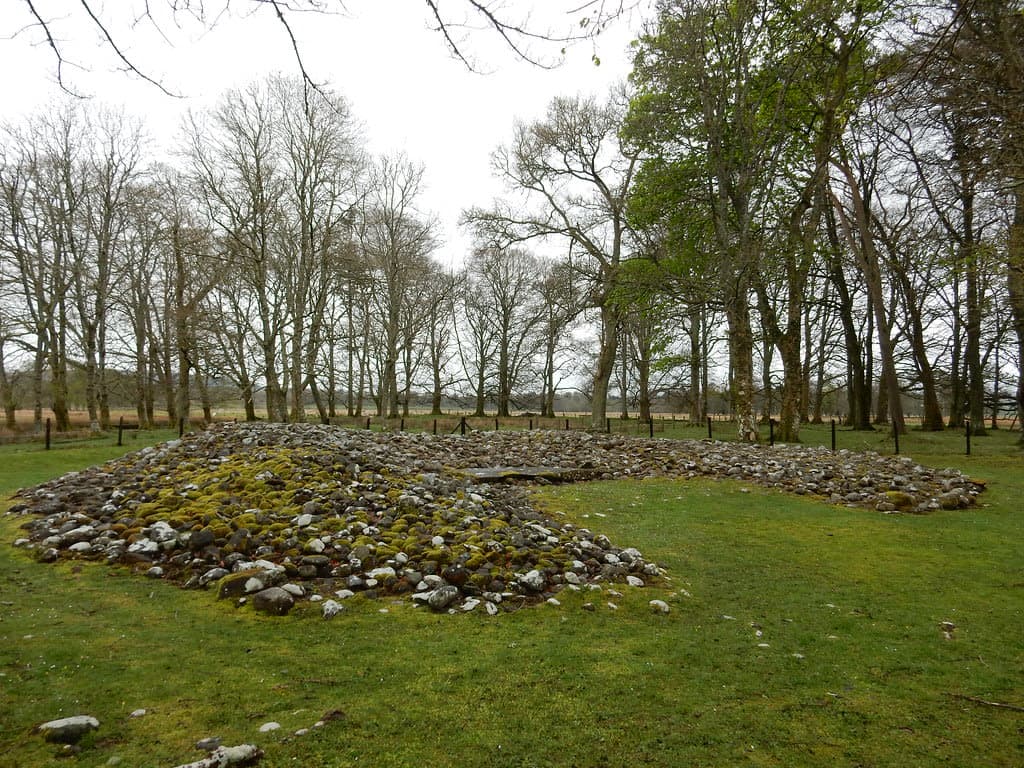
Ri Cruin Cairn
Kilmartin, Argyll and Bute, United Kingdom
0.6 km away
Ballymeanoch Neolithic site, Kilmartin Glen
Kilmartin, Alba / Scotland, United Kingdom
0.6 km away