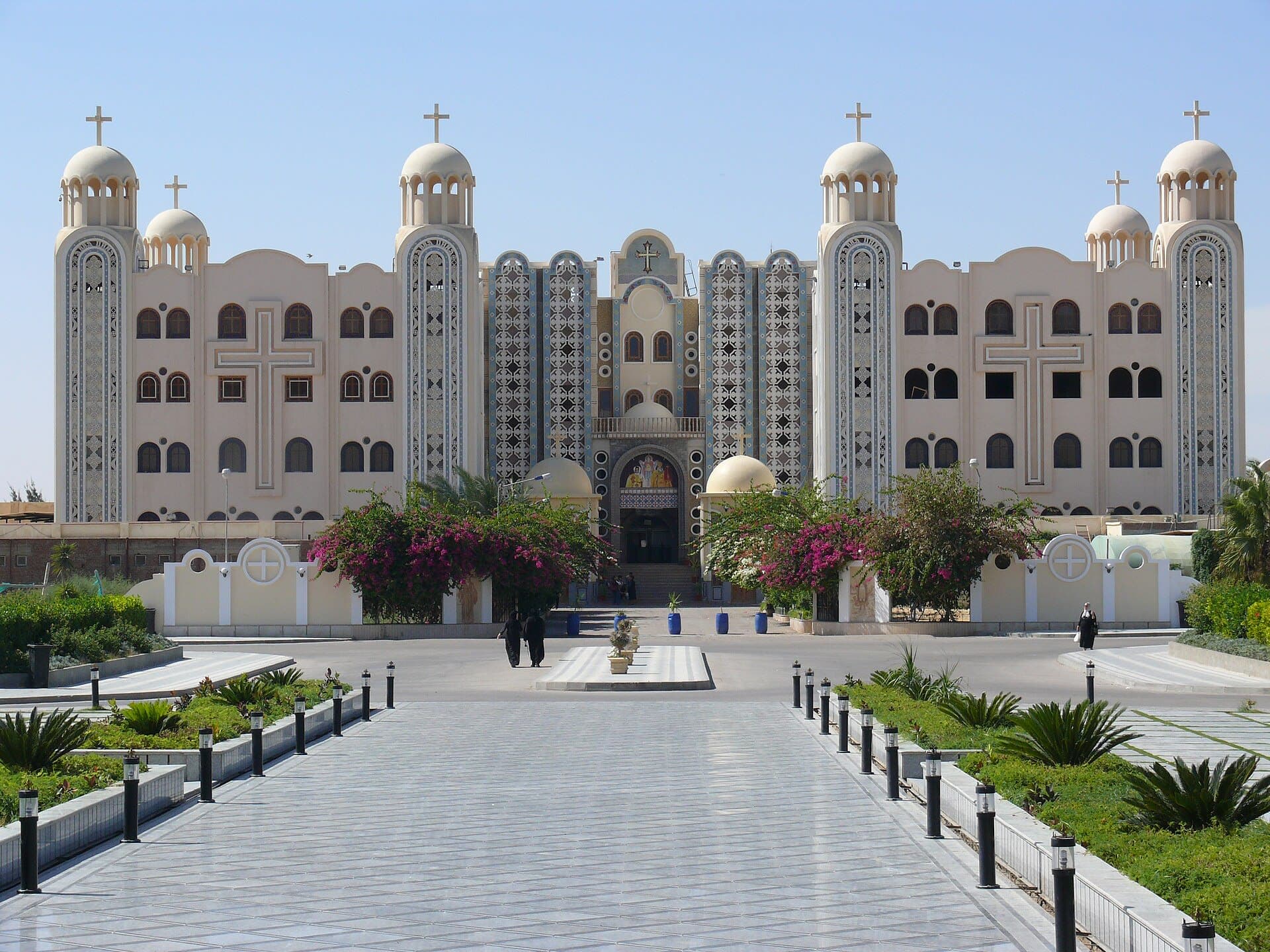
Monastery of Saint Minas
Where a martyr's tomb became Christianity's healing shrine, drawing pilgrims for sixteen centuries
Izbat Muhammad Farid, Alexandria, Egypt
At A Glance
- Coordinates
- 30.8411, 29.6635
- Suggested Duration
- Half day to full day. Allow 2-3 hours minimum for the main cathedral, relic veneration, and monastery complex. Add 1-2 hours for the Abu Mena archaeological site.
- Access
- From Alexandria (approximately 50 km, 90 minutes): Buses depart from Baheej Station to Abu Mina town, then microbus to the monastery. The desert road is recommended to avoid industrial areas around Lake Mariout. From Cairo (approximately 2.5-3 hours): Take the desert highway toward Alexandria. Parking is available at the monastery.
Pilgrim Tips
- From Alexandria (approximately 50 km, 90 minutes): Buses depart from Baheej Station to Abu Mina town, then microbus to the monastery. The desert road is recommended to avoid industrial areas around Lake Mariout. From Cairo (approximately 2.5-3 hours): Take the desert highway toward Alexandria. Parking is available at the monastery.
- Modest clothing. Women cover shoulders and knees; head coverings appreciated in churches. Men wear long pants.
- Generally permitted outdoors and at archaeological site. May be restricted inside churches and during services. Ask before photographing people.
- The site is extremely busy during the Feast of Saint Menas, and access may be limited. The desert location means extreme heat in summer. The archaeological site has uneven terrain. Some areas of the monastery may be restricted during services or for monastic privacy.
Overview
The Monastery of Saint Minas rises from the Egyptian desert where a miraculous camel stopped, revealing the burial site of one of Christianity's most venerated wonder-workers. For over 1,600 years, pilgrims have sought healing at this tomb. Today, the modern monastery established by Pope Kyrillos VI continues this ancient tradition of sanctuary, hospitality, and intercession, welcoming millions annually.
In the Mariout desert near Alexandria, the Monastery of Saint Minas marks one of Christianity's oldest healing shrines. The site's origins reach back to the late fourth century, when tradition holds that a camel carrying Saint Menas's relics stopped here and refused to move, indicating the divinely chosen burial place. What emerged around that tomb would become Abu Mena, the Marble City, a vast pilgrimage center that drew the faithful from across the Mediterranean world.
The ancient city fell to conquest and time, buried beneath desert sands until modern archaeology revealed its splendor. But the spiritual current never ceased entirely. In 1959, Pope Kyrillos VI, who had devoted his life to his patron Saint Menas, established the modern monastery adjacent to the UNESCO World Heritage ruins. This community of monks continues the ancient ministry of prayer, healing, and welcome.
What visitors encounter here is the intersection of two sacred realities. The archaeological ruins testify to the immense devotion that once made this one of Christianity's greatest pilgrimage centers. The living monastery demonstrates that devotion's continuity. The same saint who healed pilgrims in the fifth century continues, believers hold, to intercede for those who seek him today. The relics of Saint Menas, Pope Kyrillos VI, and Abba Mina Ava-Mina draw seekers from across Egypt and beyond, while the monks offer traditional hospitality to all who enter.
Context And Lineage
An ancient martyr's shrine revived in the twentieth century, combining 1,600 years of healing tradition with living Coptic Orthodox monastic life.
After Saint Menas's martyrdom during the Diocletian persecution, his body was miraculously preserved despite being cast into fire for three days. During the papacy of Athanasius of Alexandria (328-373 CE), the pope received a vision from an angel commanding him to place the saint's body on a camel and follow it into the desert. At a spot near a well at the end of Lake Mariout, the camel stopped and refused to move. The Christians understood this as a divine sign and buried Saint Menas there. A spring of healing water emerged at the site.
A second story tells of Emperor Zeno's daughter, afflicted with leprosy, who was advised to visit the tomb of Saint Menas. While praying there, Saint Menas appeared to her in a vision, indicating the location of his buried body. The next morning, she was completely healed. Her father then ordered the construction of a great basilica to honor the saint.
The modern monastery belongs to the Coptic Orthodox Patriarchate of Alexandria. It maintains a community of approximately 100 monks practicing cenobitic (community) monasticism in the tradition of Saint Pachomius. The archaeological site is a UNESCO World Heritage Site, managed jointly by Egyptian authorities and the monastery.
Saint Menas (Abu Mina)
Martyred soldier and wonder-worker (c. 285-309 CE)
Pope Kyrillos VI
116th Pope of Alexandria (1959-1971)
Abba Mina Ava-Mina
Modern Coptic saint
Why This Place Is Sacred
A place where sixteen centuries of accumulated faith, the physical presence of saints' relics, and continuous monastic prayer create an atmosphere of palpable spiritual intensity.
The thinness of this place has been building for over 1,600 years. Each generation of pilgrims who walked across the desert seeking healing, each liturgy celebrated over the martyr's tomb, each miracle attributed to Saint Menas has added to the site's spiritual density. The ruins of Abu Mena bear witness to the scale of this ancient devotion: a great basilica, baptistery, baths, dormitories, all built to accommodate the multitudes who came seeking the saint's intercession.
The physical presence of saints' remains creates another dimension of thinness. Coptic tradition holds that the saints remain spiritually present with their relics, continuing to intercede for those who venerate them. The monastery houses the relics of three saints, each associated with miraculous healings: Saint Menas himself, whose tomb has been a place of healing since antiquity; Pope Kyrillos VI, the beloved 116th Pope of Alexandria whose own miracles are documented and who established this modern community; and Abba Mina Ava-Mina. For believers, these are not merely historical figures but living intercessors.
The desert setting contributes its own quality. The monastery rises from barren sand, a place of intentional remoteness that has drawn those seeking spiritual transformation for millennia. The contrast between the vast empty desert and the concentrated life within the monastery walls emphasizes the sense of threshold, of moving from ordinary to sacred space. The monks' continuous cycle of prayer, following the ancient Coptic hours, maintains a spiritual current that pilgrims enter when they pass through the gates.
The site emerged as a martyr's shrine over Saint Menas's tomb, becoming a healing sanctuary where pilgrims sought the saint's miraculous intercession.
From a simple fourth-century tomb, the site grew into the vast Marble City of Abu Mena, one of late antiquity's greatest Christian pilgrimage centers. Destroyed in the seventh century and buried for over a millennium, the ruins were rediscovered in the early twentieth century. Pope Kyrillos VI's establishment of the modern monastery in 1959 renewed the ancient tradition of veneration and hospitality on this sacred ground.
Traditions And Practice
Daily Coptic liturgies, veneration of multiple saints' relics, hospitality to all visitors, and the annual Feast of Saint Menas drawing thousands of pilgrims.
The Feast of Saint Menas on 15 Hathor (November 24 Gregorian) is the major annual celebration, featuring special liturgies, processions, all-night vigils, the raising of incense, and thousands of pilgrims. The ancient practice of pilgrimage for healing continues. In antiquity, pilgrims took home holy water or oil in distinctive flask ampullae, examples of which are now preserved in museums worldwide. Today, visitors can purchase blessed oil and religious items from the monastery shops.
Daily Divine Liturgy follows the Alexandrian Rite, celebrated in the cathedral and monastery churches. Pilgrims venerate the relics throughout the day, often praying for intercession and healing. The monastery's hospitality service provides free foul and tea to all visitors, continuing the Christian tradition of welcome. This practice is taken seriously. Visitors are fed regardless of faith, nationality, or circumstance.
Plan to spend at least half a day, allowing time to attend part of a liturgy if possible, venerate the relics, receive the monastery's hospitality, and visit the archaeological site of Abu Mena. The Feast of Saint Menas (November 24) offers the most intense spiritual atmosphere but also the largest crowds.
Coptic Orthodox Christianity
ActiveThe Monastery of Saint Minas is one of the holiest sites in Coptic Christianity, built over the tomb of Saint Menas, one of the most venerated Coptic saints. The site has been a major pilgrimage destination for over 1,600 years. It holds the relics of Saint Menas, Pope Kyrillos VI, and Abba Mina Ava-Mina, representing unbroken continuity of Egyptian Christianity from late antiquity to the present.
Daily Divine Liturgy following the Alexandrian Rite, veneration of relics, annual Feast of Saint Menas (November 24), pilgrimage for healing and blessing, monastic prayer cycles (Agbia), hospitality to all visitors with free food and tea.
Eastern Orthodox Christianity
ActiveSaint Menas is venerated across the Eastern Orthodox world, not just within Coptic Orthodoxy. Greek Orthodox, Russian Orthodox, and other Eastern Churches commemorate him. The site was historically a pilgrimage destination for Christians from across the Mediterranean.
Veneration of Saint Menas as a Great Martyr and Wonderworker, feast day celebrations on November 11 (Julian) / November 24 (Gregorian).
Experience And Perspectives
Pilgrims and visitors encounter overwhelming hospitality alongside profound devotion, moving through modern cathedral spaces to venerate ancient relics.
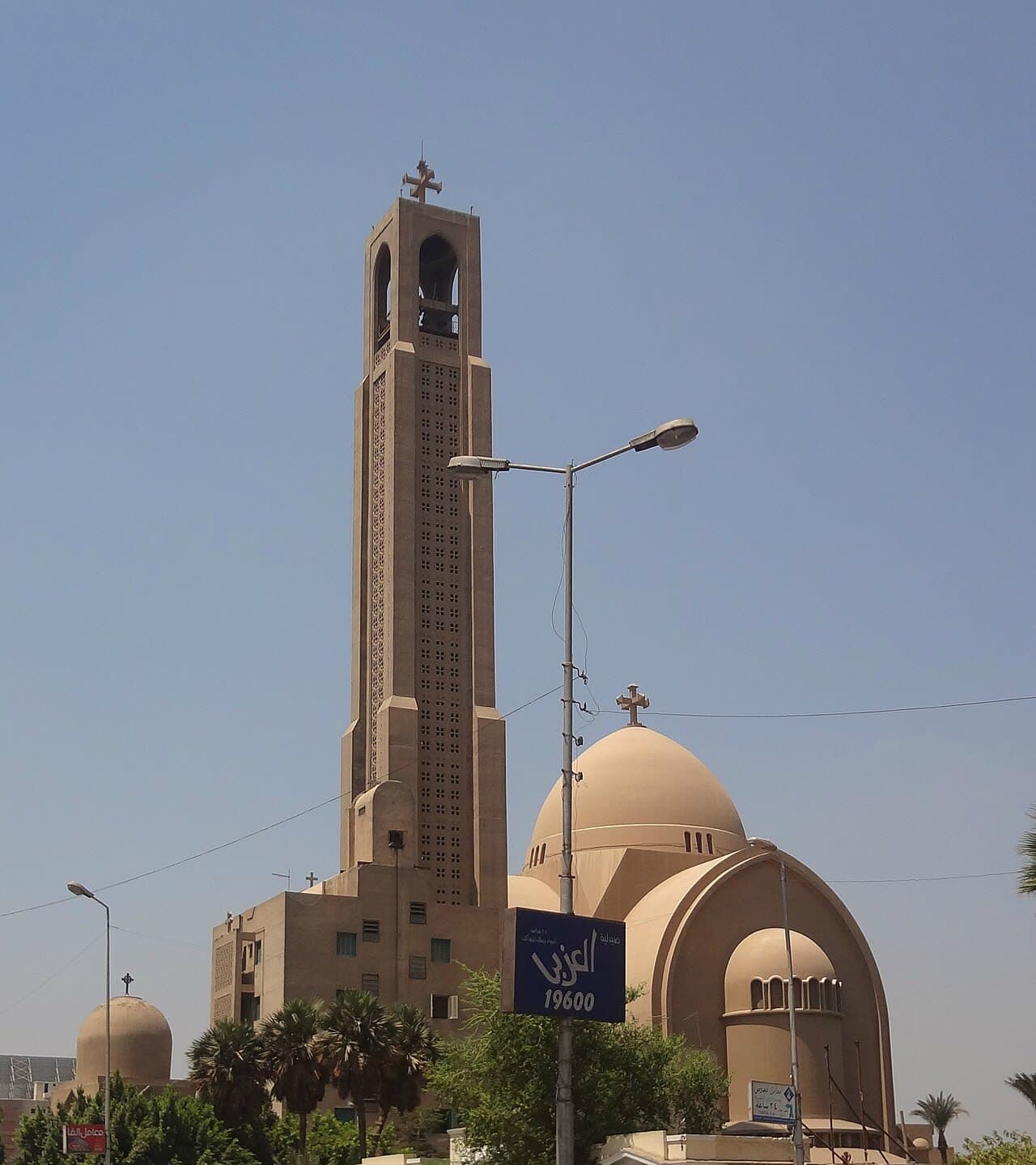
Approaching the Monastery of Saint Minas through the Mariout desert, the scale of the complex becomes apparent. This is no remote hermitage but a major religious center, its domes and crosses rising from the sand. Security checkpoints mark the transition from public road to sacred precinct. Inside the walls, the atmosphere shifts. The desert's harshness gives way to gardens, fountains, and the steady rhythm of monastic life.
The monastery's hospitality strikes visitors immediately. Monks and staff offer free food, the traditional Egyptian meal of foul (fava beans) and tea, to all who enter. This is not a formality but a continuation of the ancient Christian practice of xenophilia, love of the stranger. Pilgrims of all faiths are welcomed without question, fed without charge. This unconditional welcome creates the first layer of the monastery's transformative atmosphere.
The modern cathedral awes with its scale and decoration. Mosaics, paintings, icons, and religious art fill the space. But the heart of any visit is veneration of the relics. Pilgrims approach the shrines of Saint Menas, Pope Kyrillos VI, and Abba Mina Ava-Mina, many praying for specific intentions, seeking healing, intercession, answers to urgent prayers. The atmosphere at the relics is intense. Those who come expecting miracles and those who come as curious visitors alike find themselves affected by the concentrated faith of fellow pilgrims.
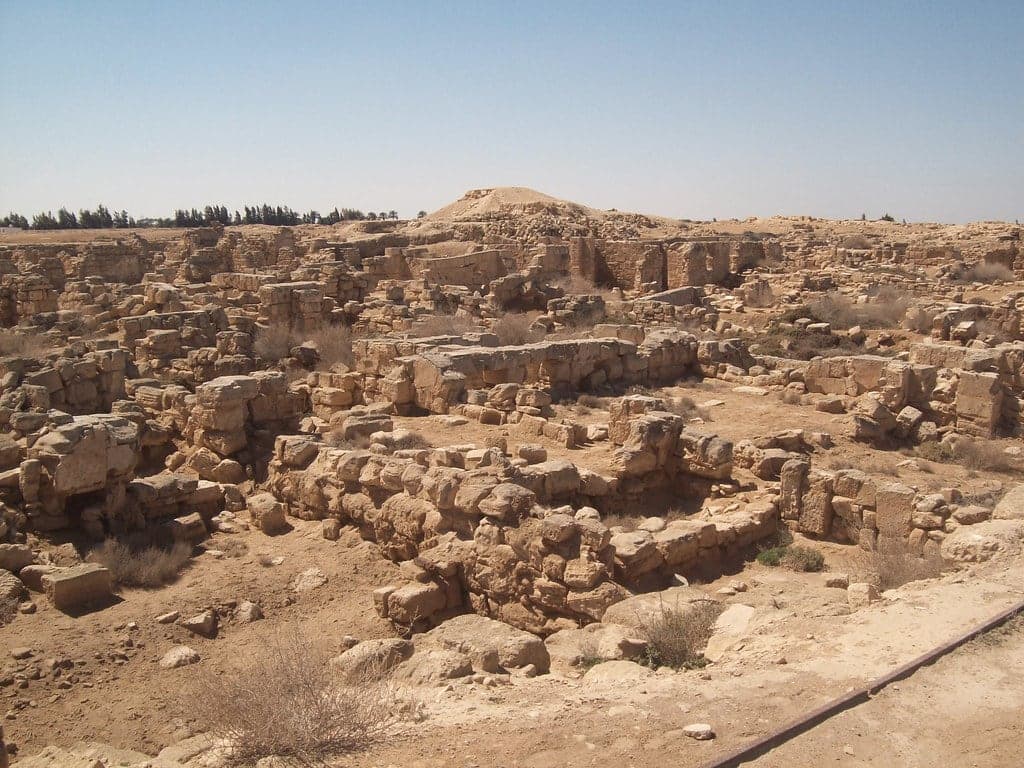
The archaeological site of Abu Mena, adjacent to the modern monastery, offers a different experience. Walking among the ruins of the great basilica and pilgrim facilities, visitors can imaginatively reconstruct the vast devotion that once gathered here. The contrast between silent ruins and living monastery creates a sense of sacred time collapsing. The same faith that built the Marble City continues in the community next door.
The monastery lies approximately 50 km from Alexandria and 2.5-3 hours from Cairo via the desert road. Approach from Alexandria is most common. The complex includes the modern monastery with its cathedral and churches, monastic quarters, pilgrim facilities, and the adjacent UNESCO World Heritage archaeological site of Abu Mena. Parking is available. Expect considerable walking within the complex on varied terrain.
The Monastery of Saint Minas represents the intersection of archaeological heritage and living faith, where ancient miracle traditions continue in a contemporary monastic setting.
Archaeological evidence confirms Abu Mena as one of the largest and most important pilgrimage centers in the late antique Christian world. German excavations (1905-2002) have revealed a sophisticated urban complex with the Great Basilica, baptistery, baths, dormitories, and extensive infrastructure. The site demonstrates the architectural and cultural fusion of Egyptian, Greek, and Asia Minor traditions. Menas flasks (ampullae) found across the Mediterranean attest to the site's international significance as a destination for healing pilgrimage. The UNESCO World Heritage designation recognizes its Outstanding Universal Value as an exceptional early Christian pilgrimage center.
Within Coptic tradition, Saint Menas (Abu Mina) is among the most beloved and powerful intercessors. His miracles during his lifetime and posthumously are celebrated in the Synaxarium and liturgical texts. The location was divinely revealed when the camel bearing his relics refused to move. Pope Kyrillos VI's establishment of the modern monastery represents the continuity of this sacred site and the saint's continued presence and power. The Coptic community views the site as proof of God's faithfulness to Egyptian Christians through persecutions and hardships.
Some visitors perceive the site as having powerful spiritual energy accumulated over 1,600 years of devotion. The desert setting is seen as conducive to spiritual experiences. The intersection of ancient ruins and living tradition creates a sense of thin place where the barrier between physical and spiritual worlds is permeable. The healing miracles reported are attributed by some to the concentrated faith and prayer of countless pilgrims.
The exact location of Saint Menas's original burial within the ancient ruins remains debated. Whether any remains of the original fourth-century church survive beneath later structures is uncertain. The fate of the Marble City's treasures after the Arab conquest is unknown. The mechanism behind the reported healing miracles attributed to the saints remains, for secular observers, unexplained.
Visit Planning
Accessible from Alexandria (50 km) or Cairo (2.5-3 hours), best visited October through April, with the Feast of Saint Menas (November 24) offering peak spiritual intensity.
From Alexandria (approximately 50 km, 90 minutes): Buses depart from Baheej Station to Abu Mina town, then microbus to the monastery. The desert road is recommended to avoid industrial areas around Lake Mariout. From Cairo (approximately 2.5-3 hours): Take the desert highway toward Alexandria. Parking is available at the monastery.
The monastery has limited guest facilities for pilgrims. Most visitors stay in Alexandria and make day trips. Accommodations in Borg El Arab are also available.
Modest dress, respectful behavior, gracious acceptance of hospitality, and awareness that this is an active monastic community.
The monastery welcomes all visitors, but this is first and foremost a place of worship and monastic life. Modest dress is required. Women should cover shoulders and knees; head coverings may be appreciated in churches. Men should wear long pants. Overly casual or revealing clothing is inappropriate.
Maintain silence and reverence in churches, especially during services. Do not interrupt liturgical celebrations. Photography may be permitted in outdoor areas and the archaeological site but is often restricted inside churches, especially during services. Always ask permission before photographing monks or worshippers.
Accept the monastery's hospitality graciously. The monks take genuine pride in welcoming guests, and declining their offerings of food may be seen as a rejection of their generosity. This hospitality is part of their spiritual practice, not merely a tourist amenity.
At the archaeological site, stay on designated paths and do not climb on, touch, or remove any stones or artifacts. These are protected heritage remains, not playground structures.
Modest clothing. Women cover shoulders and knees; head coverings appreciated in churches. Men wear long pants.
Generally permitted outdoors and at archaeological site. May be restricted inside churches and during services. Ask before photographing people.
Donations welcome but not required. Candles can be lit. Blessed oil and religious items available for purchase.
{"Remove shoes if requested","Maintain silence in churches","Do not enter restricted monastic areas","Do not interrupt services","Do not climb on archaeological ruins","Accept hospitality graciously"}
Sacred Cluster
Nearby sacred places create the location cluster described in the growth plan. This block is intentionally crawlable and links into the wider regional graph.