Monastery of Saint Mercurius, Cairo, Egypt
A Coptic sanctuary where fifteen centuries of prayer meet the living witness of saints
Cairo, Cairo, Egypt
At A Glance
- Coordinates
- 30.0130, 31.2310
- Suggested Duration
- One to two hours allows for exploring the church complex, viewing the iconostasis and pulpit, and visiting Mother Irini's shrine. Those wishing to attend a full service should add an additional one to two hours. Multiple visits reveal layers that a single stop cannot capture.
Pilgrim Tips
- Modest clothing is required. Women should cover their shoulders and wear skirts below the knee or long pants. Head coverings for women are respectful though not always required. Men should wear long pants and shirts with sleeves. Avoid revealing or tight-fitting clothing.
- Photography is generally permitted in the church areas outside of services. Ask permission before photographing specific icons, frescoes, or religious activities. Flash photography is typically not allowed, as it can damage ancient artwork and disrupt the atmosphere. Never photograph nuns or worshippers without explicit permission.
- Non-Orthodox visitors should not receive communion or approach the sanctuary area behind the iconostasis. These spaces are reserved for the faithful who have prepared through fasting and confession. Be careful not to disturb the nuns or impose on their hospitality. They are not tour guides but women in religious life who welcome respectful visitors while maintaining their primary vocation of prayer.
Overview
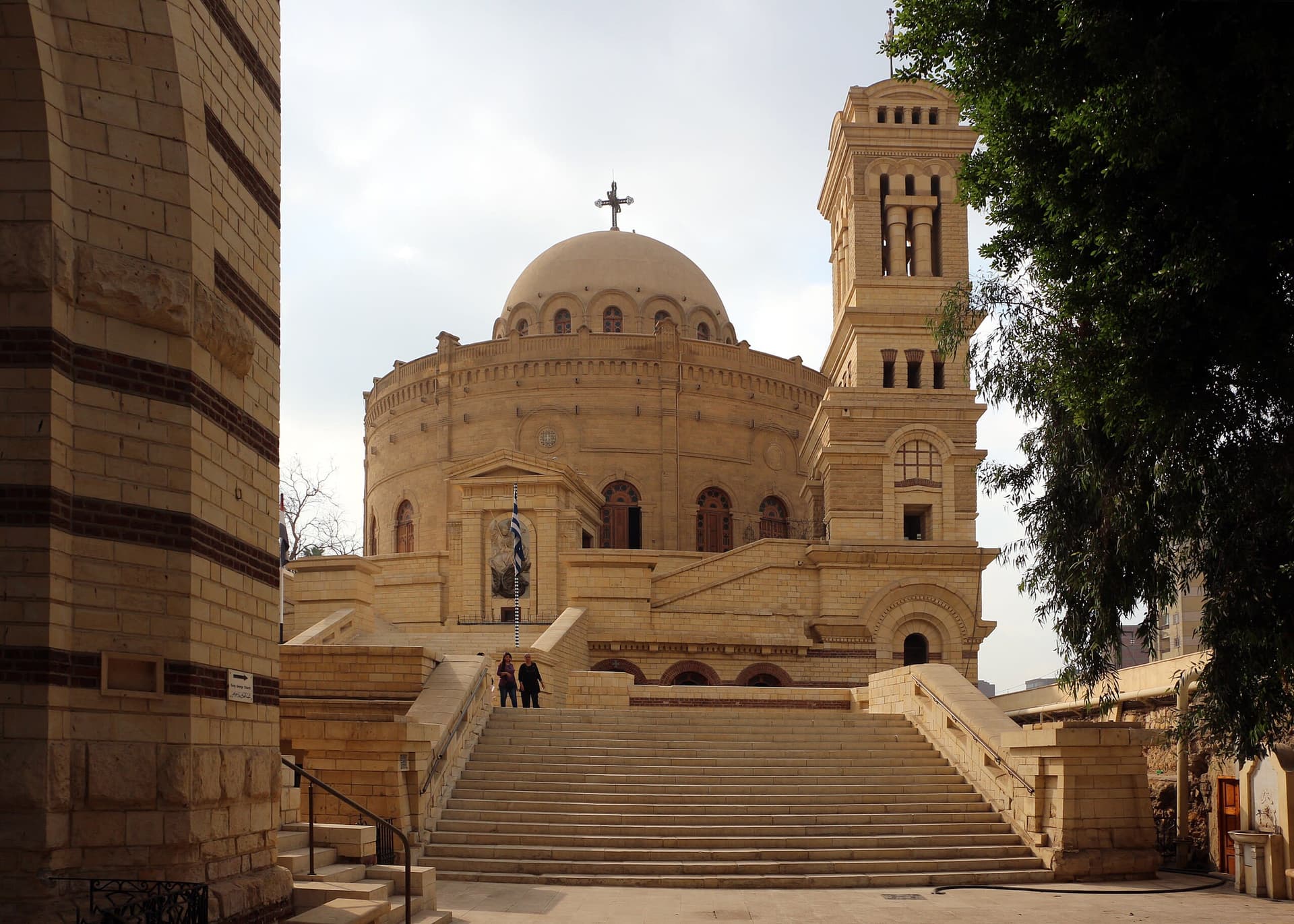
Rising from the ancient quarter of Coptic Cairo, the Monastery of Saint Mercurius preserves an unbroken tradition of Christian worship spanning 1,500 years. Home to the relics of the warrior-martyr Saint Mercurius and the shrine of the beloved Mother Irini, this active convent draws pilgrims seeking intercession and visitors drawn to the quiet persistence of faith.
Some places become sacred through age alone. Others through what happened there. The Monastery of Saint Mercurius holds both: it has stood in Old Cairo since the 6th century, and within its walls, generations of Copts have kept vigil, prayed for deliverance, and buried their patriarchs.
The church at its heart honors Philopater Mercurius, a 3rd-century Roman soldier martyred for refusing to worship pagan gods. Coptic Christians know him as Abu Seifein, Father of Two Swords, for the divine blade the Archangel Michael is said to have given him in battle. His relics rest here, transferred centuries ago from Armenia, lending the site a tangible connection to the age of martyrs.
But the monastery is not merely a repository of relics. Nuns still pray here, maintaining the rhythm of daily offices as their predecessors have for generations. In 2006, their abbess Mother Irini died after five decades of devoted service, and her shrine has become a destination in its own right, drawing Copts who seek her intercession. The miracles attributed to her are many. Whether one believes in such things or not, the devotion is palpable.
This is a place where the communion of saints is not theology but felt presence. The gap between ordinary and sacred narrows here, held open by centuries of human attention.
Context And Lineage
The Monastery of Saint Mercurius traces its origins to the 6th century, though the church was rebuilt by Patriarch Abraham in the 970s after destruction. It served as the Seat of the Coptic Pope from 1300 to 1500 and remains an active convent. The complex honors Saint Mercurius, a 3rd-century martyr, and houses the shrine of Mother Irini, a contemporary abbess revered for her holiness.
Philopater Mercurius was born around 224 AD in Cappadocia to Christian parents who had disguised their faith to serve in the Roman army. As a young officer, he distinguished himself in battle against the Berbers when, according to Coptic tradition, the Archangel Michael appeared and gave him a luminous sword, telling him victory was certain. He fought with two swords that day, his own and the angel's, earning the name by which Copts still know him: Abu Seifein, Father of Two Swords.
His faith could not remain hidden. When Emperor Decius demanded that all soldiers sacrifice to pagan gods, Mercurius refused. He was tortured and beheaded around 250 AD, at the age of twenty-five or twenty-six. His memory spread through the Eastern church, and his relics were venerated in Armenia before a portion was transferred to Egypt.
A second tradition surrounds his death. According to Orthodox hagiography, when the apostate Emperor Julian led his army against Persia in 363 AD, Saint Basil of Caesarea prayed before an icon of Mercurius in his church. He saw the figure of the saint leave the icon, sword in hand. The next day, Julian was killed in battle by a mysterious spear-wound. The Persians claimed no credit. Many Eastern Christians held that Saint Mercurius, over a century dead, had slain the emperor who sought to restore paganism.
The monastery has maintained continuous worship since its 6th-century founding, interrupted only by periods of destruction. For two centuries (1300-1500), it served as the primary seat of Coptic popes, and many patriarchs of earlier and later periods were consecrated or buried here.
The convent has maintained an unbroken line of nuns through the centuries, their prayers constituting what Copts understand as spiritual protection for the church and community. Mother Irini was the most recent figure of significance in this lineage, but she would not have claimed to be exceptional, only faithful to a tradition passed down through generations of anonymous sisters whose names are known only to God.
Saint Mercurius
patron saint
A 3rd-century Roman soldier martyred under Emperor Decius for refusing to worship pagan gods. Known as Abu Seifein (Father of Two Swords) for the divine sword given him by Archangel Michael. His relics are preserved in the church's main sanctuary.
Mother Irini
abbess and saint
Abbess of the convent from 1962 until her death in 2006. Known for her deep prayer life, reported visions, and miracles attributed to her intercession. Her shrine within the monastery draws steady pilgrimage from Copts seeking her help.
Patriarch Abraham
historical
The 62nd Coptic Pope (974-979), known as Abraham the Syrian. He rebuilt the Church of Saint Mercurius after its destruction, establishing the monastery complex that exists today.
Archangel Michael
angelic figure
According to tradition, appeared to Mercurius during battle and gave him a divine sword, establishing the warrior-saint's identity as Abu Seifein.
Why This Place Is Sacred
The sacredness of this monastery emerges from the convergence of relics, continuous worship, and accumulated prayer. Saint Mercurius's relics anchor the site to the age of martyrdom. The presence of Coptic patriarchs who resided and were buried here adds layers of ecclesiastical significance. The shrine of Mother Irini brings contemporary devotion into living dialogue with ancient faith.
What makes a place thin? In Coptic understanding, the answer lies in the communion of saints, the belief that the faithful who have passed into eternity remain accessible to the living. The Monastery of Saint Mercurius concentrates this accessibility with unusual intensity.
Saint Mercurius himself died in 250 AD, a Roman officer who chose martyrdom over apostasy. His relics were venerated in Armenia for centuries before a portion was transferred to Egypt, finding their home in this church. For Copts, relics are not mere bones but points of contact with the holy dead, channels through which prayers might be amplified and answered. The presence of Saint Mercurius's remains transforms the church into a site of ongoing encounter.
Between 1300 and 1500, this church served as the Seat of the Coptic Orthodox Pope of Alexandria. Patriarchs lived within these walls, governing a church that had endured centuries of pressure. Many were consecrated here. Many were buried here. The weight of their prayers, their struggles, their faith accumulated in the stones.
In the 20th century, Mother Irini added a new layer. She joined the convent at eighteen, became abbess at twenty-six, and spent the next forty-four years in prayer and service. Those who knew her describe visions, healings, and a presence that radiated holiness. Since her death in 2006, her shrine has drawn steady pilgrimage. Candles burn constantly. Prayers are whispered. Petitions are left and, according to devotees, answered.
The monastery thus holds three dimensions of sacred time simultaneously: the martyrs of the early church, the patriarchs of the medieval period, and a saint of living memory. Past is not past here. It remains present, available, listening.
The original church was built in the 6th century outside Babylon Fortress to honor the martyr Philopater Mercurius. It served as a parish church for the Coptic community of Old Cairo, a place of weekly worship and veneration of the saint. When Patriarch Abraham rebuilt it in the 10th century after its destruction, he established the monastery and convent that would grow around it, creating an integrated complex of prayer and community life.
The site has endured remarkable cycles of destruction and renewal. The original church was demolished during the early Islamic period and converted to a sugarcane warehouse before Patriarch Abraham restored it in the 970s. In 1168, a mob burned it to the ground. It was rebuilt within eight years. Each restoration added elements: the 12th-century cupola, the ornate iconostasis with ebony and ivory inlay, frescoes that are still being discovered and preserved today.
The shift of the Coptic patriarchate from Alexandria to Cairo in the 11th century brought heightened significance. For two centuries, this was effectively the Vatican of Coptic Christianity, the seat from which popes governed a church spanning Egypt and beyond. Even after the patriarchate moved, the site retained prestige as a burial place for church leaders.
Mother Irini's tenure as abbess from 1962 to 2006 brought renewed vitality. She emphasized devotion to Saint Mercurius and Saint Anthony the Great, maintaining rigorous spiritual practices while making the convent a place of welcome for those seeking guidance. Her death transformed her from abbess to intercessor, and the monastery now holds her memory alongside those of the ancient saints.
Traditions And Practice
The Monastery of Saint Mercurius maintains the full rhythm of Coptic Orthodox worship, including daily masses, feast day celebrations, and personal devotions at the shrines of Saint Mercurius and Mother Irini. Visitors may attend services and participate in appropriate devotional practices.
Coptic Orthodox worship here follows patterns established over centuries. The Divine Liturgy, celebrated daily, follows the Liturgy of Saint Basil or the Liturgy of Saint Gregory, sung in Coptic and Arabic. Incense rises continuously during services, symbolizing prayers ascending to God. The veneration of icons and relics is central, with the faithful kissing sacred images and objects as acts of devotion.
The Coptic calendar structures the year, with extensive fasting periods totaling over 200 days annually for devout practitioners. The feast of Saint Mercurius falls on 4 December in the Gregorian calendar (25 Hathor in the Coptic calendar), drawing heightened attendance and special celebrations.
Daily masses are held at 7:00 AM and 6:00 PM on weekdays, with Sunday mass at 9:00 AM. These services continue the ancient patterns but incorporate contemporary elements: sermons in Arabic, modern translations alongside traditional Coptic prayers.
Devotions at Mother Irini's shrine have become a distinctive contemporary practice. Pilgrims come throughout the day, lighting candles, speaking to her as to a living friend, and leaving written petitions asking for her intercession. Many report answered prayers, and the shrine has become a destination for Copts facing illness, family difficulties, or spiritual struggles.
If you are not Coptic but wish to engage meaningfully with this site, consider attending a weekday mass. The 6:00 PM service allows you to observe Coptic worship without the larger crowds of Sunday. Remain at the back unless invited forward. Stand when others stand. Do not approach the altar or attempt to receive communion, which is reserved for Orthodox Christians who have fasted and prepared.
At Mother Irini's shrine, you may light a candle and offer a silent prayer or intention. You need not share Coptic beliefs to participate in this way. Many visitors find it meaningful to bring a concern or question and simply sit with it in the presence of those praying around them.
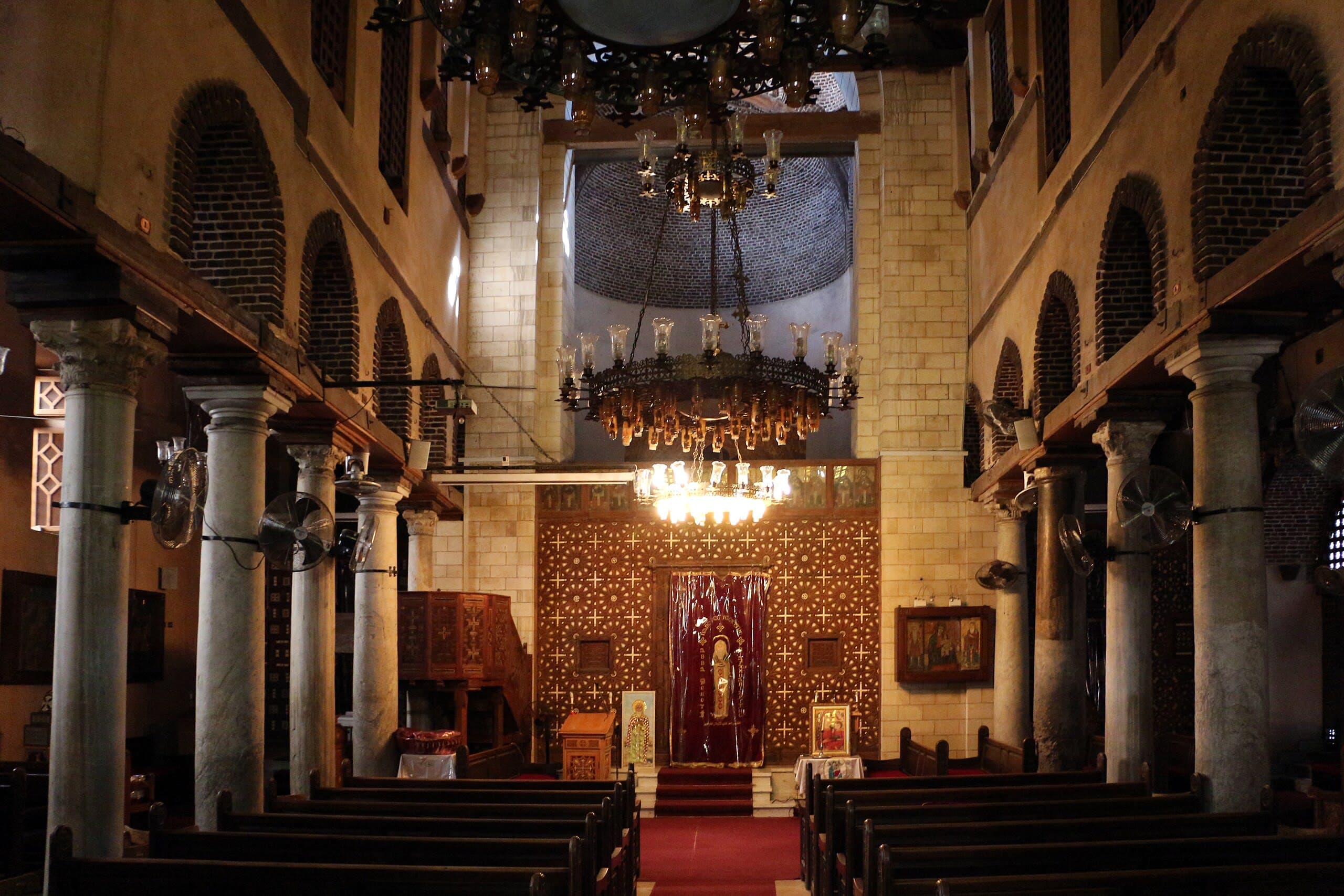
Before leaving, find the mosaic pulpit and the iconostasis. These works of art merit sustained attention. Look at the faces in the icons, the craftsmanship of the ebony and ivory. Consider that human hands made these things for purposes that transcend decoration.
Coptic Orthodox Christianity
ActiveThe Monastery of Saint Mercurius holds central importance in Coptic Orthodox Christianity as a former papal seat, burial site of patriarchs, and repository of Saint Mercurius's relics. The church served as the Seat of the Coptic Pope from 1300 to 1500 and has witnessed consecrations of patriarchs into the 18th century. The 1080 synod that established important Coptic canons was held here. Today, the site remains an active center of worship with a resident convent.
The monastery maintains the full rhythm of Coptic Orthodox worship: daily Divine Liturgy, veneration of icons and relics, fasting according to the Coptic calendar, and feast day celebrations. Pilgrimage to Mother Irini's shrine has become a significant contemporary practice, with devotees seeking her intercession for healing, family difficulties, and spiritual guidance. The nuns maintain continuous prayer as their primary vocation.
Experience And Perspectives
Visitors to the Monastery of Saint Mercurius encounter an atmosphere of deep quietude despite its location in one of Cairo's oldest and busiest quarters. The interplay of ancient architecture, active worship, and devoted pilgrimage creates a layered experience that shifts depending on whether one arrives during services, at the shrine of Mother Irini, or in the contemplative silence between.
Entering from the narrow streets of Coptic Cairo, visitors often describe the transition as palpable. The noise of the city recedes. The air changes, cooled by thick stone walls that have stood since the 6th century. Light falls differently, filtered through windows designed before electricity, giving faces and icons a quality that photographs rarely capture.
The church itself is unusual in structure: two stories, with five sanctuaries in the upper level. The main sanctuary contains the relics of Saint Mercurius behind the iconostasis, a screen of ebony and ivory whose craftsmanship draws even secular visitors to linger. The mosaic-decorated pulpit, supported by fifteen marble columns, stands as testimony to medieval Coptic artistry.
Those who attend mass describe being absorbed into a tradition that predates Western Christianity's divergence from Eastern. The Coptic liturgy is sung in Coptic and Arabic, following patterns established centuries ago. The incense is heavy and sweet. The congregation moves together through responses that most have known since childhood.
At Mother Irini's shrine, the atmosphere shifts toward intimacy. Pilgrims come singly or in small groups, speaking quietly or standing in silence. Candles are lit. Prayers are offered. Some leave written petitions. The devotion is personal, urgent, and often tear-streaked. Even non-Coptic visitors report being moved by the evident faith of those around them.
Recently discovered frescoes in the southern gallery add another layer of encounter. These images, hidden for centuries beneath later renovations, are still being carefully restored. To stand before them is to see something that was meant for eyes long dead, now visible again.
Approach this site as witness rather than tourist. You are entering an active place of worship where Coptic Christians come for prayer, not performance. The nuns who maintain the convent are not museum staff but women who have consecrated their lives to God.
If your visit coincides with a service, remain at the back unless invited forward. Observe the rhythms of worship without demanding explanation. The liturgy is not entertainment; it is prayer that has continued here for fifteen centuries.
At Mother Irini's shrine, you may feel uncertain how to behave if you are not Coptic. Simple presence is appropriate. Sitting quietly, observing the devotion of others, even lighting a candle if you feel moved to do so, these are welcome. What is asked is respect, not belief.
Bring your questions, but hold them lightly. The answers here come slowly, through presence rather than explanation.
The Monastery of Saint Mercurius holds meaning at multiple levels: as an archaeological treasure of early Christian architecture, as the historical seat of Coptic popes, and as an active center of Orthodox devotion. These perspectives complement rather than compete with one another.
The Monastery of Saint Mercurius represents one of the most historically significant Coptic sites in Cairo. The church preserves its 6th-century foundation while displaying layers of restoration from the 10th, 12th, and later centuries. The iconostasis and mosaic pulpit are considered masterworks of medieval Coptic art. The recently discovered frescoes in the southern gallery are actively being studied and may yield new insights into Coptic artistic traditions.
The site's role as papal seat from 1300 to 1500 makes it central to understanding Coptic ecclesiastical history. The 1080 synod called by Fatimid vizier Badr Al-Gamal, which established important Coptic canons, took place within these walls, demonstrating the church's significance in the complex relationship between the Coptic community and Islamic rulers.
For Coptic Christians, this monastery stands as testament to the faithfulness of their ancestors and the continuing reality of saintly intercession. Saint Mercurius is not a figure of the distant past but a living protector whose relics radiate holiness and whose prayers support the faithful. The patriarchs buried here remain part of the church's ongoing life, their witness strengthening those who struggle today.
Mother Irini, though recently deceased, is already venerated as a saint by many Copts, even before formal canonization. Her example of prayer, humility, and service inspires contemporary believers, while the miracles attributed to her intercession demonstrate that holiness has not departed from the earth. To visit her shrine is to approach someone who, though dead, remains active in the communion of saints.
The symbolism of Saint Mercurius as the bearer of two swords, one earthly and one divine, has attracted interest from those exploring the warrior-saint archetype across traditions. Some draw parallels to other holy warriors in Christian, Islamic, and pagan traditions, seeing in Abu Seifein an expression of sacred violence that transcends particular religions.
Others interested in sacred geography note the concentration of religious sites in Coptic Cairo, where church, mosque, and synagogue stand in close proximity, suggesting the area carries accumulated spiritual significance that predates any single tradition.
Recently discovered frescoes in the southern gallery are still being studied and restored, potentially revealing new insights into medieval Coptic art and iconography. The full extent of patriarchal burials within the complex has not been completely documented, and ongoing archaeological work may uncover additional historical layers.
The precise circumstances of the church's original construction in the 6th century, before its documented destruction and rebuilding, remain unclear. Similarly, the details of how and when Saint Mercurius's relics were transferred from Armenia to Egypt are preserved only in tradition rather than documented history.
Visit Planning
The Monastery of Saint Mercurius is located in Old Cairo (Coptic Cairo), easily reached via Metro. Admission is free. The site is open daily, with morning hours offering fewer crowds. Allow one to two hours for a visit, longer if attending services.
Hotels in central Cairo are abundant at all price points. The historic districts of Downtown Cairo and Garden City offer convenient access to Coptic Cairo via metro. For those seeking to immerse themselves in Cairo's Christian heritage, spending a full day in Coptic Cairo visiting multiple sites is rewarding. The Coptic Museum, adjacent to the churches, provides historical context that enriches visits to the monastery.
The Monastery of Saint Mercurius is an active site of worship requiring modest dress, quiet behavior, and respect for services in progress. Photography is generally permitted in church areas but should not disrupt devotion.
This is not a museum but a living monastery where nuns pray and worshippers come for mass, confession, and devotion. Your presence is welcome but should not interfere with the primary purpose of the site.
During services, maintain complete silence unless joining in responses you know. Position yourself at the back of the church. Do not walk around photographing during liturgy. If you must leave before the service ends, do so quietly and without drawing attention.
Outside of services, you may move through the church, light candles, venerate icons (if you know how), and visit Mother Irini's shrine. Speak quietly. Turn off phone sounds. Treat the space as what it is: a house of prayer that has functioned as such for fifteen centuries.
If you encounter nuns, a simple nod of greeting is appropriate. Do not attempt prolonged conversation unless invited. They may be in the midst of prayer obligations or convent duties.
Modest clothing is required. Women should cover their shoulders and wear skirts below the knee or long pants. Head coverings for women are respectful though not always required. Men should wear long pants and shirts with sleeves. Avoid revealing or tight-fitting clothing.
Photography is generally permitted in the church areas outside of services. Ask permission before photographing specific icons, frescoes, or religious activities. Flash photography is typically not allowed, as it can damage ancient artwork and disrupt the atmosphere. Never photograph nuns or worshippers without explicit permission.
Candles may be purchased and lit as devotional offerings. Monetary donations to the church or convent are welcome and support the ongoing maintenance of this ancient site and the work of the resident nuns.
Do not enter the sanctuary area behind the iconostasis. Maintain silence and reverence during services. Remove shoes if requested in certain areas. Be respectful of nuns and worshippers at all times. Some areas may be closed to visitors during services or for restoration work.
Sacred Cluster
Nearby sacred places create the location cluster described in the growth plan. This block is intentionally crawlable and links into the wider regional graph.