Le Puy
A volcanic needle bearing a thousand years of pilgrimage toward heaven
Le Puy-en-Velay, Auvergne-Rhône-Alpes, France
At A Glance
- Coordinates
- 45.0445, 3.8856
- Suggested Duration
- 75 minutes average for climb, chapel visit, and exhibits. Allow 2 hours for unhurried experience.
- Access
- 268 steps carved into volcanic rock—no alternative for full access. Virtual tour available since 2019 for accessibility. GPS: 45.0499873, 3.8825063. Located in Aiguilhe, 10-minute walk from Le Puy-en-Velay center. Parking available near base. Opening hours generally 9:30 AM - 5:30 PM; last admission 30 minutes before closing. Closed December 25 and January 1. Admission: 3-5 euros adult; night visits (July-August) 9 euros adult, 6 euros child/student.
Pilgrim Tips
- 268 steps carved into volcanic rock—no alternative for full access. Virtual tour available since 2019 for accessibility. GPS: 45.0499873, 3.8825063. Located in Aiguilhe, 10-minute walk from Le Puy-en-Velay center. Parking available near base. Opening hours generally 9:30 AM - 5:30 PM; last admission 30 minutes before closing. Closed December 25 and January 1. Admission: 3-5 euros adult; night visits (July-August) 9 euros adult, 6 euros child/student.
- Modest dress covering shoulders and knees inside chapel. Comfortable shoes essential for the 268-step climb.
- Generally permitted outside and in the chapel; check current restrictions for flash photography near frescoes
- The 268 steps require moderate fitness. Those unable to climb can access a virtual tour from the base. The steps can be slippery when wet. Allow adequate time; rushing defeats the purpose.
Overview
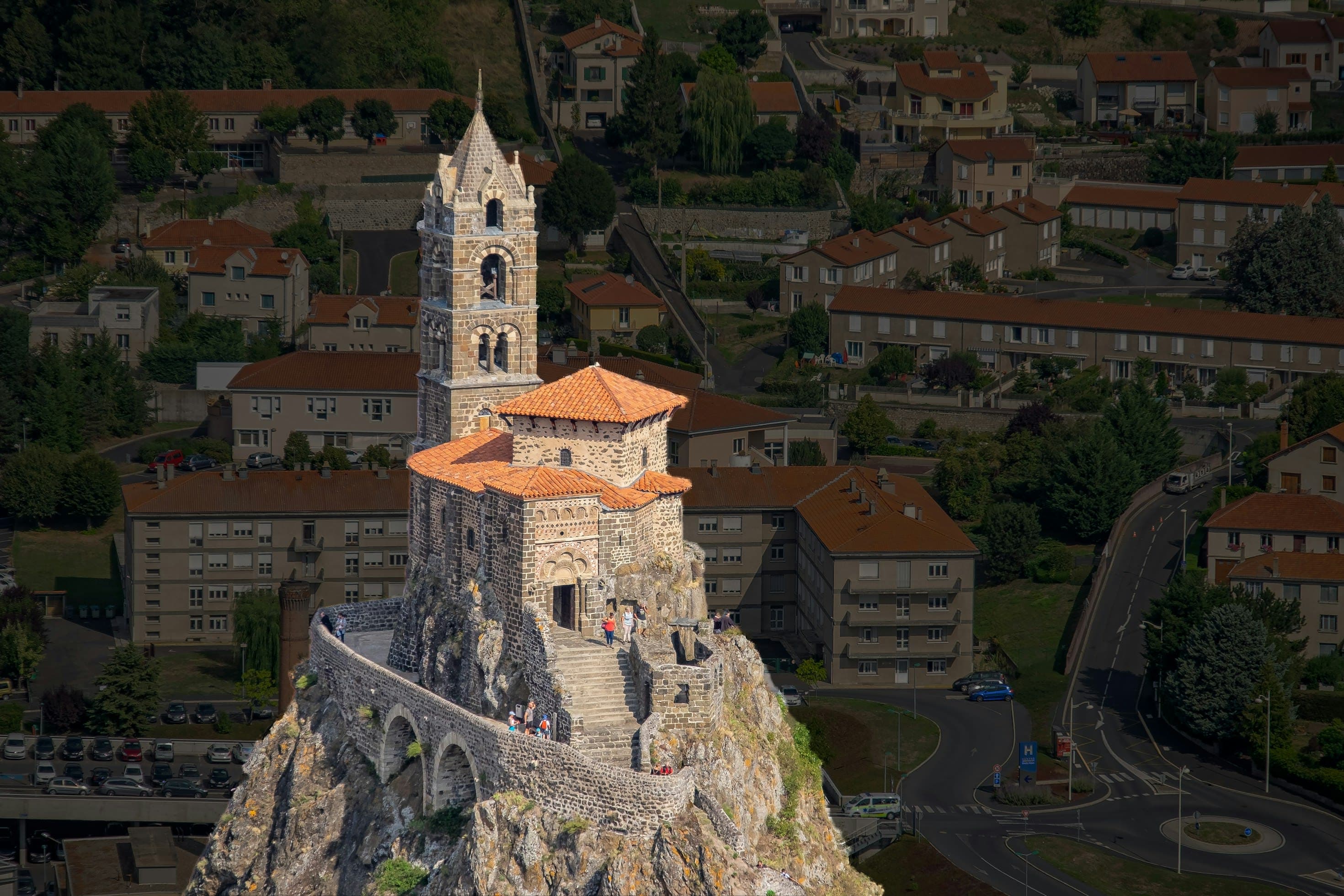
Two million years ago, underwater volcanoes created a needle of stone rising 82 meters from the valley floor. Prehistoric peoples built a dolmen on its summit. Romans dedicated it to Mercury. In 961, Bishop Godescalc crowned it with a chapel to St. Michael, guardian of high places, upon his return from Santiago de Compostela. Today, 268 steps carry pilgrims upward to where Europe's most dramatic pilgrimage begins—the Via Podiensis, the Le Puy route to Santiago.
Some places require ascent. The Rocher Saint-Michel d'Aiguilhe rises from the Puy-en-Velay basin like a finger pointing toward heaven—a volcanic plug so dramatic that humans have worshipped here for at least four thousand years. The 268 steps carved into its flanks are not obstacle but invitation: each step upward is a step closer to whatever waits at the summit.
What waits is a Romanesque chapel unlike any other, its architecture carrying traces of Moorish Spain brought back along the pilgrimage routes. Inside, 10th and 12th century frescoes emerge from plaster removed in the 1850s. In 1955, archaeologists discovered a cache of Byzantine treasures hidden in the altar—evidence that this small chapel atop a volcanic needle was once connected to the great networks of medieval pilgrimage.
For modern pilgrims, Saint-Michel d'Aiguilhe serves a particular function: it is where the Camino de Santiago begins. The Via Podiensis—the Le Puy route, most popular of the French Camino paths—starts here, in this town of volcanic needles and ancient faith. To climb to St. Michael's chapel is to prepare for the long walk ahead, to ask blessing, to feel the weight of the centuries of pilgrims who have passed this way.
Context And Lineage
Saint-Michel d'Aiguilhe stands at the intersection of volcanic geology, pre-Christian sacred tradition, and the great pilgrimage networks of medieval Christianity. It marks Le Puy-en-Velay as a spiritual center and gateway to the Camino.
In 961, Bishop Godescalc of Le Puy returned from pilgrimage to Santiago de Compostela—one of the first recorded such journeys from France. To commemorate his pilgrimage, he built a chapel on the volcanic needle above the town, dedicating it to St. Michael the Archangel. He was building on ancient foundations: a prehistoric dolmen already crowned the summit, and the Romans had dedicated the site to Mercury. Godescalc's chapel thus continued millennia of recognizing this extraordinary formation as sacred.
The chapel stands in the lineage of the Camino de Santiago pilgrimage, which Godescalc helped establish as a major Christian practice. The Hispano-Moorish architectural influences reflect the cultural exchange along these routes. The site is now part of the UNESCO World Heritage 'Routes of Santiago de Compostela in France.'
Bishop Godescalc
Bishop of Le Puy who built the original chapel in 961 upon return from Santiago pilgrimage
Dean Truannus
Dean of Le Puy Cathedral who collaborated with Godescalc on the chapel's construction
Isabelle Romée
Mother of Joan of Arc, reportedly visited the chapel in 1429
Why This Place Is Sacred
Saint-Michel d'Aiguilhe achieves its thinness through the combination of extraordinary geology, vertical ascent, and layered history—prehistoric, Roman, medieval Christian. The effort required to reach the summit creates a natural threshold between ordinary and sacred space.
The volcanic needle creates its own liturgy. Rising 82 meters from the valley floor, it demands that visitors climb—there is no other way to reach what waits at the top. This physical requirement transforms the approach from tourism to pilgrimage. Each of the 268 steps is a choice, a commitment, a small surrender to the vertical.
The thinness here is ancient. Prehistoric peoples recognized something in this geological anomaly worth honoring with a dolmen. Romans dedicated it to Mercury, messenger between worlds. When Bishop Godescalc built his chapel in 961, he was not creating a sacred site but inheriting one—adding another layer to what was already recognized as a place where heaven approached earth.
The dedication to St. Michael carries its own meaning. Michael is the guardian of high places, the archangel who stands at thresholds, who weighs souls. To reach his chapel requires effort; to enter it requires having earned the ascent. This is not a site that offers itself easily. It asks something of visitors, and in that asking, creates the conditions for encounter.
Prehistoric worship (dolmen), Roman Mercury cult, Christian chapel to St. Michael the Archangel
From prehistoric sacred high place through Roman dedication to Mercury to Christian chapel (961), the site has maintained continuous sacred use across traditions. The 12th century expansion brought Hispano-Moorish architectural influences from the Camino routes. Modern era brought UNESCO World Heritage recognition and the site's role as gateway to the Via Podiensis.
Traditions And Practice
Pilgrimage practice at Saint-Michel d'Aiguilhe centers on the ascent itself—268 steps as spiritual preparation—followed by prayer in the chapel and blessing for the journey ahead.
Mass, prayer to St. Michael, pilgrimage blessing, veneration of relics
Climbing the 268 steps as meditative practice, prayer in the chapel, blessing before beginning the Camino de Santiago, contemplation of frescoes and archaeological treasures, viewing the scenographic exhibits and films about the site's history
Approach the ascent as spiritual practice, not exercise. Let each step be intentional. At the summit, take time with the chapel before examining the frescoes or treasures. If beginning the Camino, carry the experience of this ascent with you—it is the first of many. Light a candle if it calls to you.
Roman Catholicism / Camino de Santiago
ActiveSaint-Michel d'Aiguilhe is part of the UNESCO World Heritage Routes of Santiago de Compostela in France. Built in 961 to commemorate Bishop Godescalc's Santiago pilgrimage, it marks Le Puy-en-Velay as the starting point of the Via Podiensis—the most popular French Camino route. The dedication to St. Michael, archangel guardian of high places and thresholds, frames the chapel as a place of spiritual beginning.
Pilgrimage ascent (268 steps), prayer in the chapel, Mass, blessing before beginning the Camino, veneration of relics and frescoes
Pre-Christian Sacred Tradition
HistoricalThe volcanic needle was recognized as sacred thousands of years before Christianity. A prehistoric dolmen crowned the summit; Romans later dedicated the site to Mercury. The Christian chapel continued this ancient pattern of recognizing extraordinary geology as numinous.
Prehistoric and Roman worship (specific practices unknown)
Experience And Perspectives
Visiting Saint-Michel d'Aiguilhe is an experience of vertical pilgrimage—268 steps up a volcanic needle to a chapel that has drawn the faithful for over a thousand years.
The approach to Saint-Michel d'Aiguilhe begins in the small town of Aiguilhe, a ten-minute walk from the center of Le Puy-en-Velay. The volcanic needle dominates the skyline, chapel perched impossibly at its summit, and you understand immediately what you have come to do: climb.
The 268 steps are carved into the rock itself, winding around the needle as they ascend. Early steps are easy; later ones require attention, breath, intention. The surrounding landscape opens as you climb—the Puy-en-Velay basin spreading below, the other volcanic formations (including the one bearing the giant statue of Notre-Dame de France) becoming visible. The physical effort quiets the mind.
At the summit, the chapel surprises with its intimacy. The Romanesque portal shows Moorish influences—pointed arches, decorative stonework—brought from Spain along the pilgrimage routes. Inside, the space is small but rich with frescoes recovered from beneath centuries of plaster. The colors remain vivid: reds, blues, ochres applied a thousand years ago by artists whose names are lost.
In 1955, archaeologists discovered a treasure trove in the altar: Byzantine crosses, a polychrome wooden crucifix, objects that speak of connection to the great pilgrimage networks of the medieval world. These are now displayed behind an iron grate, visible evidence that this remote mountaintop chapel was once part of something larger.
For those beginning the Camino de Santiago, this is where it starts. The Via Podiensis—the Le Puy route—leads from here through the Massif Central and across the Pyrenees to Santiago. To climb to St. Michael's chapel is to mark the beginning of that longer journey, to receive whatever blessing the ascent provides.
Saint-Michel d'Aiguilhe asks visitors to work for arrival. The 268 steps are the entry fee—not payment but preparation. Approach it as pilgrimage rather than sightseeing.
Saint-Michel d'Aiguilhe can be approached as geological wonder, architectural achievement, pilgrimage gateway, or threshold to the divine. Each perspective illuminates different facets of what this volcanic needle chapel offers.
Art historians recognize the chapel as an exceptional example of Romanesque architecture with significant Hispano-Moorish influences, reflecting cultural exchange along the Camino routes. The 10th and 12th century frescoes are important survivals. The 1955 archaeological discovery of Byzantine-style reliquary objects confirms the chapel's role in medieval pilgrimage networks. Geologists note the site's formation through underwater volcanic eruptions over two million years ago.
For Catholic tradition, the dedication to St. Michael marks this as a threshold place—Michael being the guardian of high places and weigher of souls. The chapel's role as starting point of the Via Podiensis connects it to the great tradition of Santiago pilgrimage. Bishop Godescalc's founding act in 961 established patterns that continue today.
Some earth-energy practitioners place Saint-Michel d'Aiguilhe on ley lines connecting sacred sites across France. The volcanic geology is sometimes interpreted as carrying particular telluric power. The alignment of sacred sites in the Le Puy basin—the cathedral, the chapel, the statue—suggests intentional sacred geography.
The specific practices of prehistoric and Roman worship on the summit remain unknown. The full provenance of the Byzantine treasures discovered in 1955 is still debated. What the medieval frescoes looked like before their 19th century recovery remains partially uncertain.
Visit Planning
Located in Aiguilhe, 10 minutes walk from Le Puy-en-Velay center. Open year-round with varying hours. Allow 75-120 minutes for full visit including ascent.
268 steps carved into volcanic rock—no alternative for full access. Virtual tour available since 2019 for accessibility. GPS: 45.0499873, 3.8825063. Located in Aiguilhe, 10-minute walk from Le Puy-en-Velay center. Parking available near base. Opening hours generally 9:30 AM - 5:30 PM; last admission 30 minutes before closing. Closed December 25 and January 1. Admission: 3-5 euros adult; night visits (July-August) 9 euros adult, 6 euros child/student.
Le Puy-en-Velay offers accommodation ranging from pilgrim hostels (gîtes) to hotels. Many pilgrims beginning the Camino stay the night before departure.
Standard church etiquette applies inside the chapel. The ascent and exterior are more relaxed, but the site's sacred character deserves respect throughout.
Saint-Michel d'Aiguilhe balances its role as tourist attraction and sacred site. The chapel interior requires the usual church comportment: modest dress, quiet voices, respectful presence. The ascent and exterior spaces allow more freedom, but remember that for many visitors—especially those beginning the Camino—this is not tourism but pilgrimage.
Modest dress covering shoulders and knees inside chapel. Comfortable shoes essential for the 268-step climb.
Generally permitted outside and in the chapel; check current restrictions for flash photography near frescoes
Candles available. Small entrance fee (3-5 euros) supports maintenance.
Respectful silence inside chapel. No climbing on the volcanic rock outside designated paths.
Sacred Cluster
Nearby sacred places create the location cluster described in the growth plan. This block is intentionally crawlable and links into the wider regional graph.
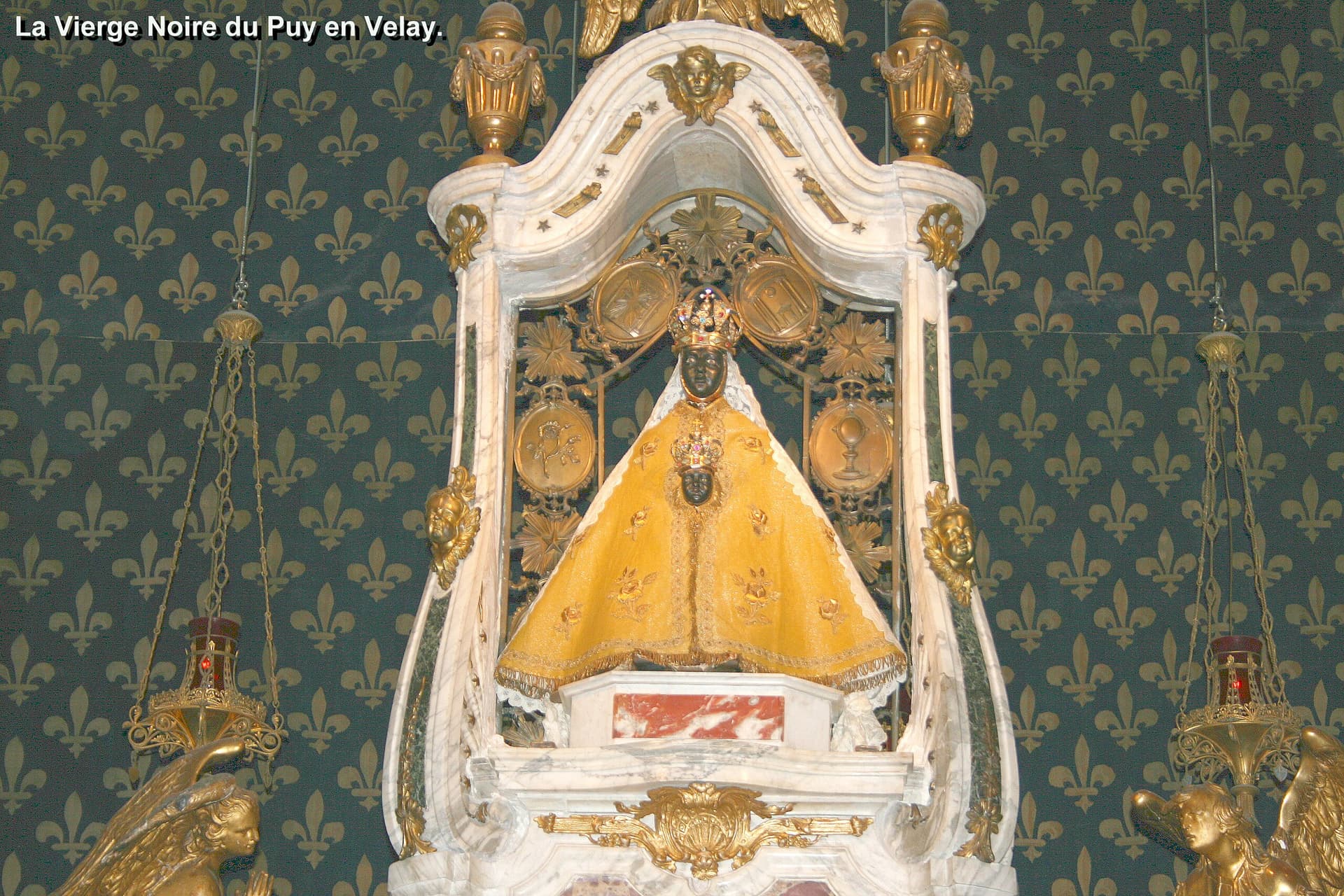
The Black Madonna of Le Puy
Le Puy-en-Velay, Auvergne-Rhône-Alpes, France
0.4 km away
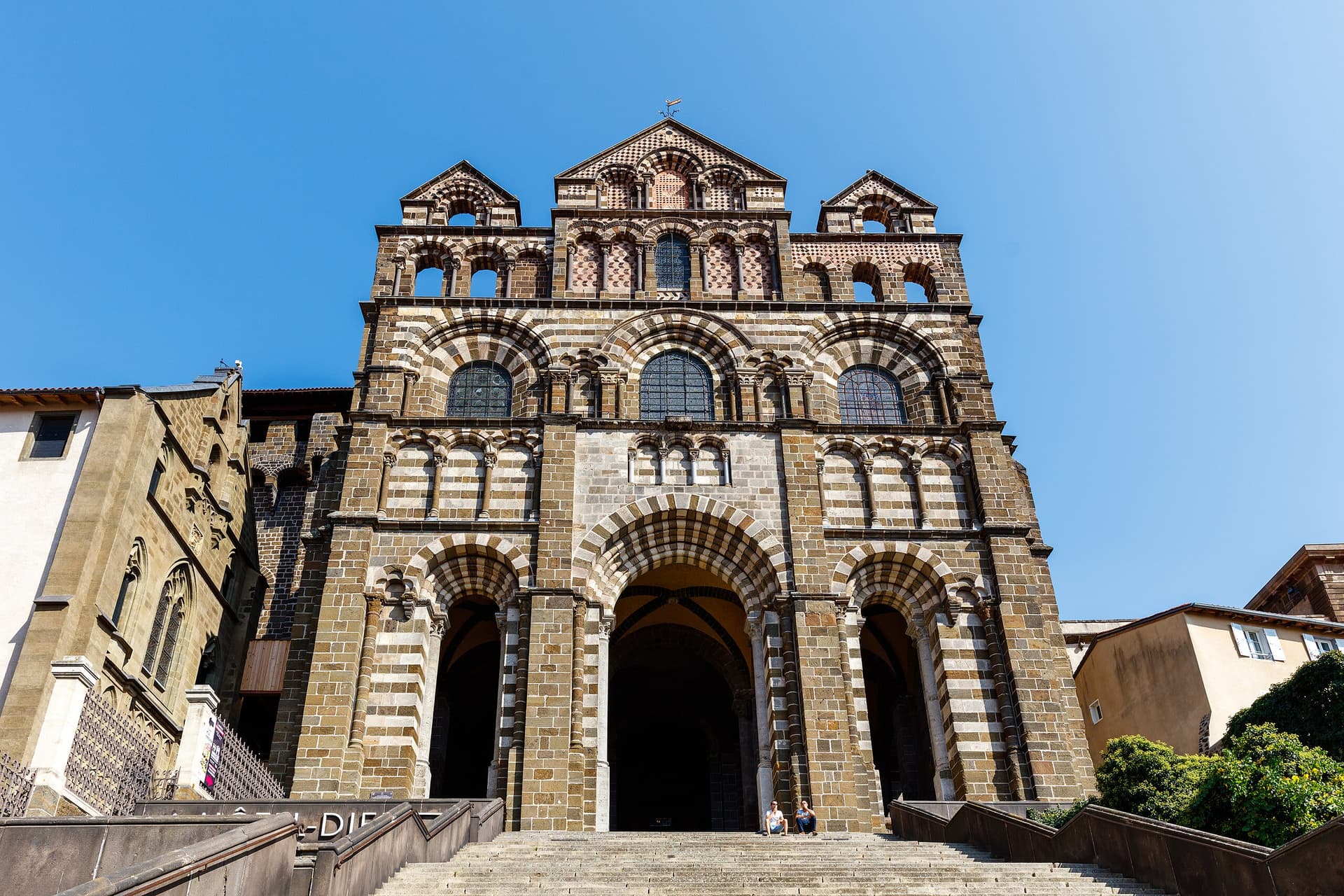
Cathédrale Notre-Dame-du-Puy
Le Puy-en-Velay, Auvergne-Rhône-Alpes, France
0.4 km away
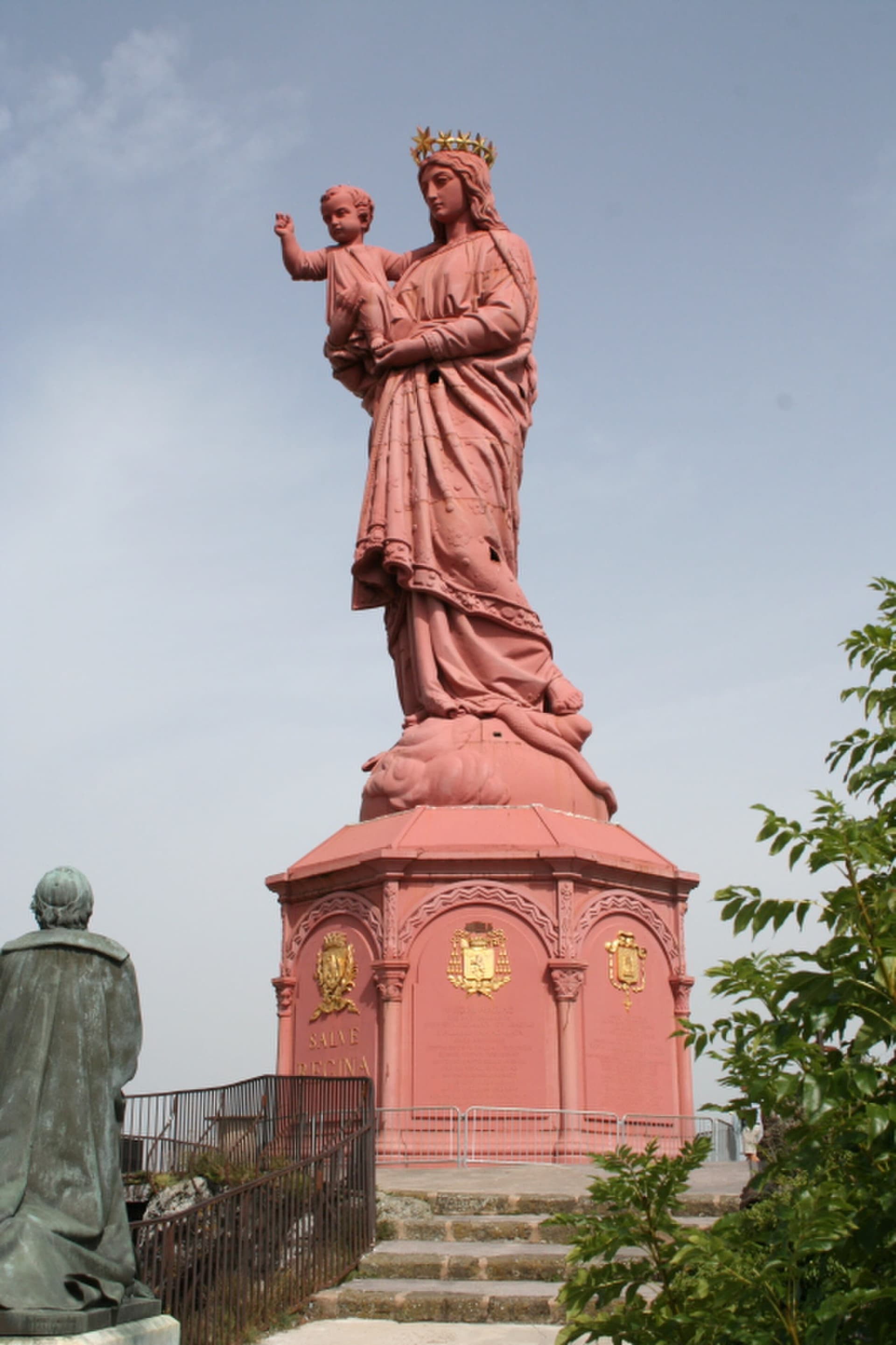
Our Lady of Le Puy
Le Puy-en-Velay, Auvergne-Rhône-Alpes, France
1.7 km away
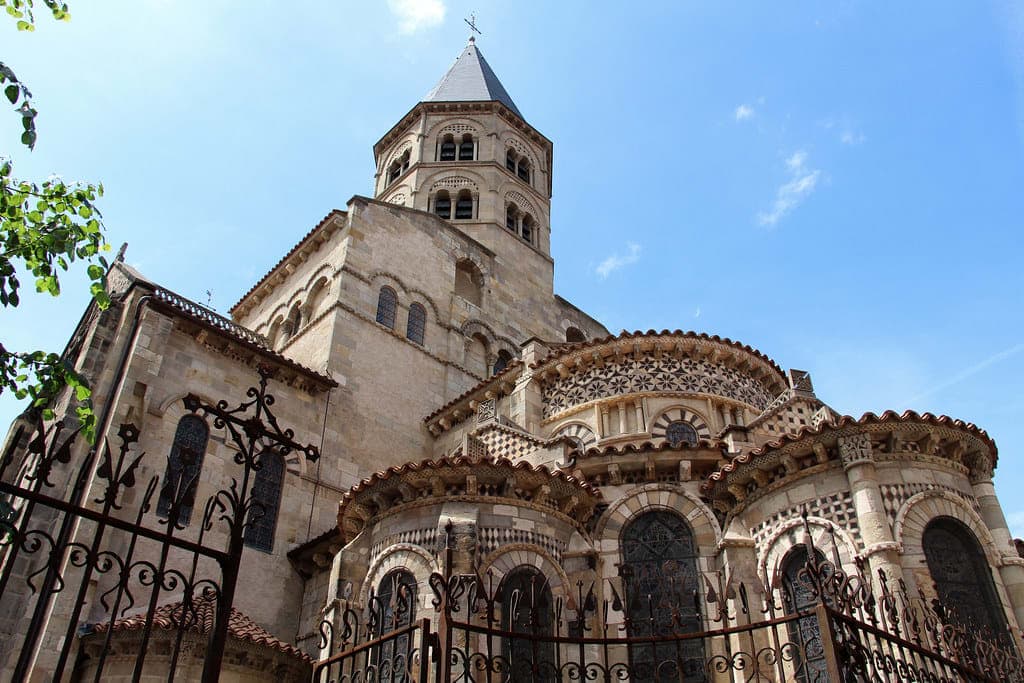
Basilica of Notre-Dame du Port
Clermont-Ferrand, Auvergne-Rhône-Alpes, France
103.0 km away