Kirkkokari Island (St. Henry’s Island)
Where Finland's patron saint met his death on frozen waters, pilgrims still gather each summer
Säkylä, Satakunta, Finland
At A Glance
- Coordinates
- 61.1472, 22.3255
- Suggested Duration
- The island itself can be explored in one to two hours. Those attending the annual pilgrimage Mass should plan for a half-day experience on the island, plus travel. The full pilgrimage walk from Turku takes seven days and covers 140 kilometers.
- Access
- Kirkkokari is located in Lake Köyliö, in the Satakunta region of southwestern Finland. From Helsinki, the drive to Köyliö takes approximately two and a half hours. From Turku, about one and a half hours. During the annual pilgrimage, ferry service transports pilgrims to the island. At other times, visitors must have access to a boat or arrange transport with local providers. In winter, when the lake freezes solid, it is possible to walk or ski across—but ice conditions must be verified locally, as they vary year to year. The nearest airports are Helsinki-Vantaa (best international connections), Turku Airport, and Tampere-Pirkkala Airport. Car rental is recommended for reaching Köyliö, as public transport to the area is limited.
Pilgrim Tips
- Kirkkokari is located in Lake Köyliö, in the Satakunta region of southwestern Finland. From Helsinki, the drive to Köyliö takes approximately two and a half hours. From Turku, about one and a half hours. During the annual pilgrimage, ferry service transports pilgrims to the island. At other times, visitors must have access to a boat or arrange transport with local providers. In winter, when the lake freezes solid, it is possible to walk or ski across—but ice conditions must be verified locally, as they vary year to year. The nearest airports are Helsinki-Vantaa (best international connections), Turku Airport, and Tampere-Pirkkala Airport. Car rental is recommended for reaching Köyliö, as public transport to the area is limited.
- During the pilgrimage Mass, dress as you would for church. The outdoor setting does not change the occasion's solemnity. Women need not cover their heads, but modest dress is expected—shoulders covered, nothing revealing. For walking the pilgrimage route or visiting outside formal occasions, practical outdoor clothing is appropriate. Good walking shoes are essential. In June, prepare for both warmth and potential rain. In winter, dress for extended exposure to cold if crossing the ice.
- Photography is permitted but should be practiced with restraint. During religious services, do not photograph. At other times, be mindful of others seeking contemplation. The urge to document should not override the experience being documented. Consider putting the camera away for your first hour on the island.
- The island has no facilities. Bring water and anything you may need, and carry out all waste. During the annual pilgrimage, ferry service is provided; at other times, you must arrange your own boat. In winter, verify ice conditions with locals before attempting to walk across the lake—Lake Köyliö's ice can be unpredictable. The site is culturally significant and actively used for worship. Behavior that would be inappropriate in a church is inappropriate here. This is not a picnic destination.
Overview
A small island in southwestern Finland marks the site where Bishop Henry was martyred in 1156, an event that tradition holds as the beginning of Finnish Christianity. Each June, pilgrims complete a 140-kilometer walk from Turku to gather here for Mass, continuing a devotion that has drawn the faithful for over seven centuries.
The ice of Lake Köyliö holds a story. In January of 1156, according to tradition, a bishop fleeing across the frozen surface met his death at the hands of a peasant named Lalli. That act of violence became the founding narrative of Finnish Christianity.
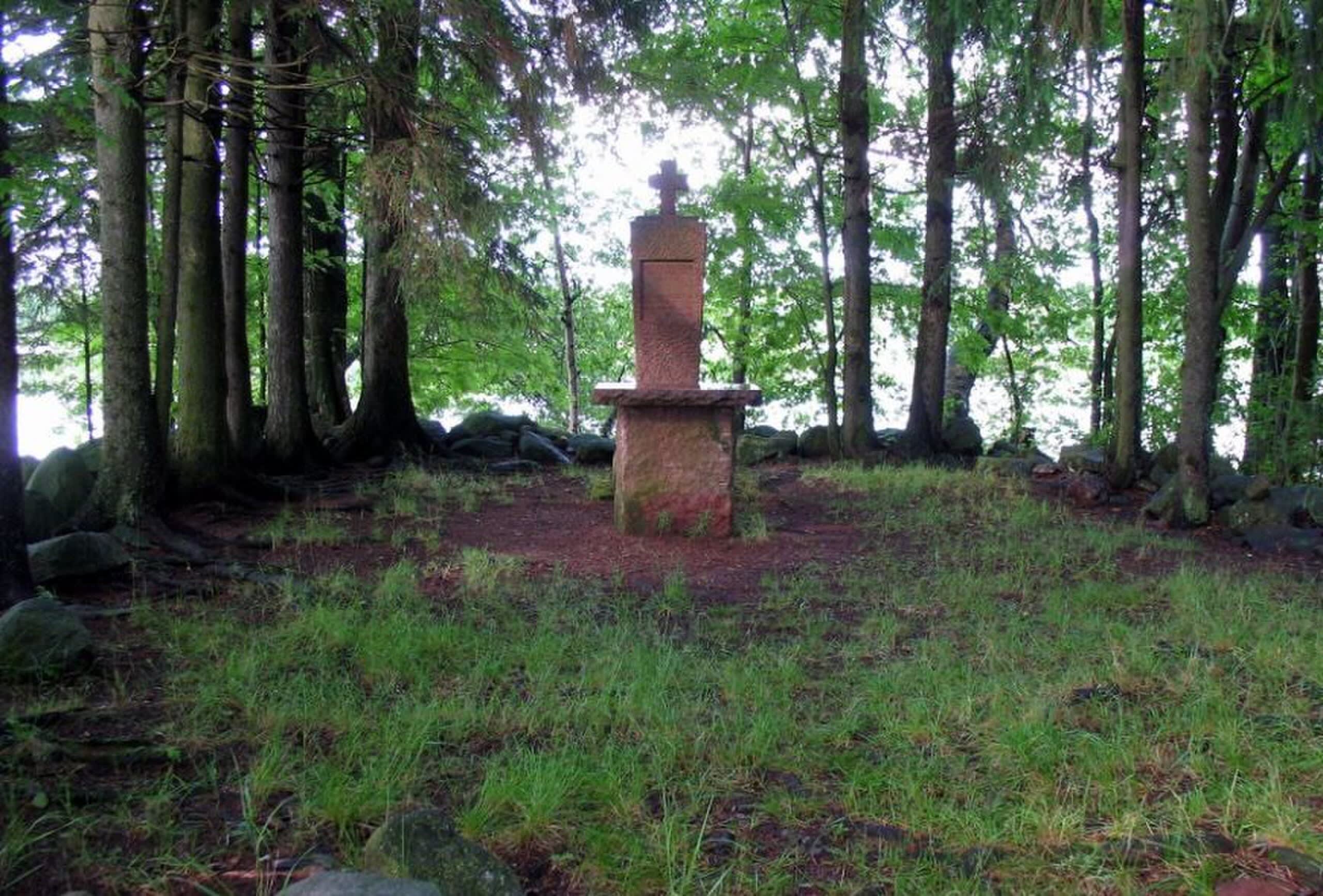
Kirkkokari rises from the lake as little more than a rocky outcrop—a church islet, as its name translates. The medieval chapel that once stood here has fallen to ruins, its foundations still visible among the trees. In 1955, a memorial was erected. In 1999, an altar followed. Each summer, when daylight barely fades and the land tilts toward solstice, pilgrims arrive by ferry to hear Mass celebrated in this natural cathedral.
The site occupies a distinctive position in Nordic Christianity. It is the only Roman Catholic pilgrimage destination in Finland, one of precious few in all Scandinavia. For Catholic Finns, this is where their faith took root—whatever the historical uncertainties that scholars continue to debate. The bishop who died here became Henry, patron saint of Finland, whose feast day is celebrated each January 19.
To stand on Kirkkokari is to stand at a confluence: of water and land, of legend and history, of ancient violence and centuries of prayer. The island holds what cannot be resolved, and draws those willing to sit with that tension.
Context And Lineage
Bishop Henry, traditionally believed to be an English missionary who accompanied King Eric of Sweden to Finland in 1155, was martyred the following year near Lake Köyliö. Though historians dispute whether Henry existed as a historical figure, his veneration began by the late 13th century and shaped Finnish Christian identity. Kirkkokari marks the traditional site of his death and has drawn pilgrims since medieval times.
According to the founding legend of Finnish Christianity, Bishop Henry accompanied King Eric of Sweden on a crusade to the Finnish coast around 1155. While the king returned home, Henry remained to organize the nascent church. The following January, the bishop and his entourage stopped at a farmhouse near Lake Köyliö. The farmer's wife, Kerttu, was alone. When she refused to provide food, Henry's party took provisions but left payment.
When Kerttu's husband Lalli returned, she told him of the theft but not of the payment. Enraged, Lalli pursued the bishop across the frozen lake. Near the island now called Kirkkokari, he caught Henry and killed him with an axe. The date was January 20, 1156—the first event in Finnish history recorded with known time, place, and principal figures.
The legend continues with Lalli's punishment. He took Henry's mitre and ring as trophies, but when he tried to remove the mitre, his scalp tore away with it. The ring took his finger. Lalli fled into the forest and eventually drowned in Lake Hiirijärvi—Mouse Lake. Meanwhile, the bishop's body was collected by the faithful. They placed it on a sledge drawn by oxen, which wandered south until they stopped of their own accord. Where they halted, Nousiainen Church was built.
Veneration of Henry as a saint is first documented in 1296, in a letter from Pope Boniface VIII—140 years after the traditional date of his death. Archaeological evidence from Kirkkokari dates pilgrimage activity to the latter half of the 14th century. His relics were translated from Nousiainen Church to Turku Cathedral in 1300, establishing Turku as the primary center of his cult.
The Reformation disrupted but did not destroy Henry's memory. Lutheran Finland retained him as a significant figure in national Christian heritage, even as formal veneration ceased. When Catholic practice returned to Finland, the pilgrimage revived. Today, the annual walk from Turku to Kirkkokari has become the central expression of devotion to Finland's patron saint, drawing not only Catholics but ecumenical participants who honor shared Christian roots.
Henry
saint
Patron saint of Finland, traditionally believed to be an English-born bishop who brought Christianity to the Finns. His historicity is disputed, but his veneration has shaped Finnish Christian identity for seven centuries. His feast day, January 19, is celebrated as a solemnity in Finland.
Lalli
legendary
The Finnish peasant who, according to tradition, killed Bishop Henry. In some later interpretations, Lalli represents Finnish resistance to foreign religious imposition, though the legend itself portrays his act as driven by deception and rage rather than principle.
Kerttu
legendary
Lalli's wife, whose partial truth—telling of the bishop's party taking food but not of their payment—set the tragedy in motion. Her role in the legend raises questions about truth, omission, and consequence.
Eric IX of Sweden
historical/legendary
Swedish king who traditionally led the crusade that brought Henry to Finland. Later canonized as Saint Eric of Sweden, though his crusade to Finland lacks contemporary documentation.
Why This Place Is Sacred
Kirkkokari's sacredness emerges from the convergence of martyrdom, isolation, and sustained devotion. The island's separation from the mainland creates natural liminality, while the story of Henry's death imbues the frozen waters with memorial significance. Seven centuries of pilgrimage have accumulated here, layer upon layer of prayer.
Martyrdom sites carry particular weight in Christian tradition. Where blood was shed for faith, the membrane between worlds is said to wear thin. Kirkkokari holds this quality—not despite the violence of its origin but because of it. The bishop who died here became, through that death, the vessel through which Christianity entered Finnish consciousness.
The island's geography reinforces its separateness. Water serves as threshold. To reach Kirkkokari requires intention; you cannot stumble upon it. In winter, when ice locks the lake, pilgrims once walked the same surface where Henry met Lalli's axe. In summer, a boat carries visitors across a boundary that feels more than physical.
The ruins participate in the site's thinness. Stones from the medieval chapel still define the space where prayers were offered for centuries. What was built has largely fallen, yet something remains. Pilgrims describe the island as held—contained within its own quiet, despite its small size.
The annual gathering intensifies this quality. When Mass is celebrated each June, the accumulated intention of centuries seems to concentrate. The bishop stands where bishops have stood. The faithful receive communion where the faithful have received it since the Middle Ages. Continuity itself becomes a form of presence.
Archaeological evidence dates veneration at Kirkkokari to the latter half of the 14th century, though the martyrdom it commemorates occurred two hundred years earlier. A memorial chapel was constructed, becoming a destination for pilgrims who sought the intercession of Bishop Henry. The island served as a waypoint on a pilgrimage route that connected Köyliö with Nousiainen, where Henry's body had been laid to rest, and Turku, where his relics were later enshrined.
The Reformation swept through Finland in the 16th century, and Catholic pilgrimage fell into abeyance. The chapel at Kirkkokari was abandoned by the 18th century, its stones gradually claimed by weather and vegetation. For two centuries, the island held its memory in silence.
Revival came slowly. In 1955, a memorial to the Christianization of Finland was erected on the island—an acknowledgment, even from a Lutheran nation, that something had begun here. In 1979, a pilgrimage route was officially marked, connecting Turku through Nousiainen to Köyliö and onward to Kokemäki. The St. Henry Pilgrimage Association formed in 2000, and in 1999, a new altar was constructed on the island.
Today the pilgrimage draws Catholics, Lutherans, and Orthodox Christians in ecumenical spirit. What was once forbidden has become shared heritage. The island that witnessed division has become a place of gathering.
Traditions And Practice
The primary practice associated with Kirkkokari is the annual pilgrimage culminating in a bishop's Mass on the last pre-Midsummer Sunday. The 140-kilometer walk from Turku follows Saint Henry's Way over seven days. Visitors at other times engage in personal prayer at the altar and contemplation among the ruins.
Medieval pilgrims traveled from across Finland to honor the site of Henry's martyrdom. The original route connected Kirkkokari with Nousiainen, where Henry's body was first interred, and with Turku Cathedral, where his relics were later enshrined. Pilgrims sought the saint's intercession, offered prayers for the dead, and participated in the Mass celebrated at the island chapel.
The feast of Saint Henry, January 19, was marked by special observances. Winter pilgrims crossed the ice of Lake Köyliö, walking the same frozen surface where the bishop had fallen. This winter pilgrimage carried particular devotional weight, as pilgrims literally followed in Henry's final footsteps.
Each year on the last pre-Midsummer Sunday—typically around June 15—Catholic pilgrims complete a week-long walk from Turku Cathedral to Kirkkokari. The route covers approximately 140 kilometers, passing through Nousiainen and following marked paths. Each evening, pilgrims gather for prayer and fellowship. On the final day, they take the ferry to the island for solemn Mass celebrated by the Catholic bishop of Finland.
The January 19 feast day is observed as a solemnity in Catholic Finland, with special Masses in parishes and at Saint Henry's Cathedral in Helsinki, which contains a relic of the saint. Some pilgrims still visit Kirkkokari in winter, crossing the ice when conditions permit.
Ecumenical participation has become part of the pilgrimage's character. Lutheran and Orthodox Christians walk alongside Catholics, honoring shared roots while maintaining their distinct traditions. The route itself is maintained cooperatively.
If you cannot join the annual pilgrimage, consider visiting the island on a day of personal significance—an anniversary, a birthday, a date that marks transition. Bring nothing but what you need. The island invites simplicity.
At the altar, you need not pray in any formal sense. Sit with whatever you carry. The practice of pilgrimage has always included bringing burdens to holy places and leaving them there. The form matters less than the intention.
If you visit in winter and conditions permit walking on the ice, consider approaching from the direction Henry is said to have come—from the east, toward the island. Let the crossing be slow. The bishop was running for his life; you have no pursuer. That difference is worth noticing.
Roman Catholic
ActiveKirkkokari is the only Roman Catholic pilgrimage site in Finland and one of the few in all Scandinavia. It marks the traditional site of Bishop Henry's martyrdom—the founding event of Finnish Christianity in Catholic understanding. Henry is the patron saint of Finland and of the Catholic Church in Finland; a relic is enshrined in the main altar of Saint Henry's Cathedral in Helsinki. The annual pilgrimage represents the living heart of Finnish Catholic devotion.
The primary practice is the annual pilgrimage culminating in the bishop's Mass on the last pre-Midsummer Sunday. Pilgrims walk 140 kilometers over seven days from Turku Cathedral, following Saint Henry's Way through Nousiainen. The January 19 feast day is celebrated as a solemnity throughout Finland, with special observances at the Helsinki cathedral. Private pilgrimage to Kirkkokari, with prayers at the altar, continues the medieval practice of seeking the saint's intercession.
Lutheran
ActiveThough the Reformation ended formal veneration of saints in Lutheran Finland, Bishop Henry remains an important figure in Finnish Christian heritage. The pilgrimage route is maintained ecumenically, and Lutheran Christians participate in the annual walk alongside Catholics and Orthodox. For Lutherans, the pilgrimage is less about saintly intercession than about honoring shared roots and practicing embodied spirituality through walking.
Lutheran participation in Saint Henry's Way has grown in recent decades as part of broader ecumenical engagement and renewed interest in pilgrimage across Protestant traditions. Lutherans join the walk, share in fellowship, and may attend the Mass as observers. Some Lutheran parishes organize their own pilgrimage groups. The practice emphasizes historical connection and spiritual discipline rather than invocation of the saint.
Experience And Perspectives
Visitors to Kirkkokari describe a distinctive quality of peace that the island's small scale and water boundary seem to create. The annual pilgrimage Mass offers a sense of participation in living tradition, while solitary visits allow contemplation of the ruins and reflection on what this place has meant across centuries.
The crossing changes you before you arrive. Whether by ferry during the annual pilgrimage or by private boat at other times, the passage across Lake Köyliö involves a leaving-behind. The mainland recedes; ordinary concerns seem to remain on the shore you departed. By the time you step onto the island's rocks, something has already shifted.
Kirkkokari is small enough to hold in a single view, yet visitors consistently report that time behaves differently here. An hour passes in what feels like minutes. The ruins invite lingering—not for their architectural interest, which is modest, but for the accumulated weight of what they represent. Those who sit quietly among the foundation stones often describe a sense of companionship with pilgrims who came before.
The annual Mass transforms the experience entirely. When several hundred pilgrims gather on the island, having walked together for days, the community itself becomes the primary encounter. Strangers who have shared the road sit shoulder to shoulder. The bishop celebrates in the open air, and the familiar liturgy takes on unfamiliar resonance. Participants describe feeling connected not only to those present but to the centuries of worshippers who preceded them.
Winter visitors encounter a different island. The ice that sealed Henry's fate returns each year, and walking across the frozen lake to reach Kirkkokari carries its own contemplative power. The landscape becomes the story: white expanse, dark trees, the spot where a bishop fell.
Approach Kirkkokari as pilgrimage rather than tourism. The island offers no facilities, no interpretation center, no guided tour. What it offers is presence—yours and, perhaps, something harder to name.
If possible, time your visit for the annual pilgrimage in June. Walking even a portion of Saint Henry's Way will prepare you for arrival in a way that driving cannot. The physical effort becomes devotional practice, regardless of formal belief.
For solitary visits, come prepared to sit. Bring nothing that requires power; the island has none. Let the silence work. The ruins speak, but only to those who stay long enough to hear.
Kirkkokari exists at an intersection of faith and history, legend and evidence. Scholars question whether Bishop Henry existed at all; believers venerate him as Finland's patron saint and heavenly protector. Both perspectives deserve serious engagement, and the site is large enough in meaning to hold both.
Historians widely note the absence of contemporary evidence for Bishop Henry's existence. No documents from his lifetime mention him. The first reference to him as a saint appears in 1296, 140 years after his traditional death date. The legend as commonly told shows signs of later composition, with elements that parallel other medieval martyrdom narratives.
Some scholars, including linguist Mikko Heikkilä, have proposed that Henry may be based on a German missionary named Heinrich who was active in the early 12th century. Others suggest the figure is entirely legendary—a founding myth constructed to give Finnish Christianity a patron and origin story.
Archaeological evidence from Kirkkokari dates active veneration to the latter half of the 14th century, well after any historical Henry would have lived. The chapel ruins are medieval but cannot confirm or deny the earlier events they commemorate. The scholarly consensus, such as it exists, holds that while a missionary bishop may have been killed in Finland in the mid-12th century, the elaborate legend that developed around this event is largely hagiographical invention.
The Catholic Church in Finland venerates Saint Henry as the heavenly patron of Finland, a martyr who brought the Christian faith to the Finnish people. His feast day, January 19, is celebrated as a solemnity—the highest rank of liturgical celebration. The annual pilgrimage to Kirkkokari is understood as an act of thanksgiving for the blessings bestowed upon Finland through Bishop Henry and his successors.
From this perspective, the historical questions that occupy scholars are of secondary importance. What matters is the continuity of faith—the unbroken chain of prayer and devotion that connects contemporary pilgrims with those who first honored this site. The relics of Saint Henry, a portion of which remain in Helsinki's cathedral, are treated as genuine regardless of academic debate. Faith does not require the kind of evidence historians seek.
Genuine mysteries surround Kirkkokari beyond the question of Henry's historicity. What was the island's significance before it became associated with the bishop's death? Islands in Finnish lakes often held pre-Christian sacred associations, though no evidence survives for Kirkkokari specifically.
What happened to Henry's relics after 1720, when they were reportedly sent to St. Petersburg during the Russian occupation? Some believe they were destroyed; others hold hope they survive somewhere, unidentified. The question remains open.
Perhaps most intriguingly: why has this site continued to draw pilgrims across the centuries, through Reformation, through wars, through shifts in belief? What is it about the place itself—the water, the isolation, the story—that sustains devotion? These questions may not have answers, only ongoing encounter.
Visit Planning
Kirkkokari is accessible by boat from the shores of Lake Köyliö in southwestern Finland. The annual pilgrimage on the last pre-Midsummer Sunday includes ferry service. At other times, visitors must arrange private boat access. Winter visits require verifying ice conditions. The nearest services are in Köyliö village.
Kirkkokari is located in Lake Köyliö, in the Satakunta region of southwestern Finland. From Helsinki, the drive to Köyliö takes approximately two and a half hours. From Turku, about one and a half hours.
During the annual pilgrimage, ferry service transports pilgrims to the island. At other times, visitors must have access to a boat or arrange transport with local providers. In winter, when the lake freezes solid, it is possible to walk or ski across—but ice conditions must be verified locally, as they vary year to year.
The nearest airports are Helsinki-Vantaa (best international connections), Turku Airport, and Tampere-Pirkkala Airport. Car rental is recommended for reaching Köyliö, as public transport to the area is limited.
Köyliö village offers limited lodging options. For a wider selection, Eura (approximately 20 km) or Rauma (approximately 40 km) provide more choices. Those walking the pilgrimage route stay in accommodations arranged by the St. Henry Pilgrimage Association along the way.
For visitors seeking to combine the Kirkkokari visit with broader exploration of Finnish sacred sites, basing in Turku provides access to the cathedral, museums documenting Finnish Christian history, and the beginning of Saint Henry's Way.
Kirkkokari is an active Catholic pilgrimage site that requires respectful behavior. During the annual Mass, dress and conduct appropriate to worship are expected. At all times, treat the memorial, altar, and ruins with care befitting a place where prayer has been offered for centuries.
The fundamental principle is reverence. Kirkkokari is small, but it holds large meaning for those who consider it sacred. Even if you do not share the Catholic faith, your presence enters a space shaped by centuries of devotion. Approach accordingly.
During the annual pilgrimage Mass, you are attending a religious service. Arrive before it begins. Remain through its conclusion. Silence your devices entirely—not just vibrate. Participate or observe quietly, but do not treat the liturgy as spectacle. If you are not Catholic, you may still receive a blessing during communion; simply cross your arms over your chest when approaching.
At the altar and memorial, whether during organized events or private visits, maintain quiet. Sit rather than stand if you plan to stay more than a few minutes. The ruins are not a playground; do not climb on remaining walls or stones.
Conversation is not prohibited, but be aware of others seeking silence. If you are visiting as part of a group, keep voices low and gather at the island's edges rather than at the altar if extended discussion is needed.
During the pilgrimage Mass, dress as you would for church. The outdoor setting does not change the occasion's solemnity. Women need not cover their heads, but modest dress is expected—shoulders covered, nothing revealing.
For walking the pilgrimage route or visiting outside formal occasions, practical outdoor clothing is appropriate. Good walking shoes are essential. In June, prepare for both warmth and potential rain. In winter, dress for extended exposure to cold if crossing the ice.
Photography is permitted but should be practiced with restraint. During religious services, do not photograph. At other times, be mindful of others seeking contemplation. The urge to document should not override the experience being documented. Consider putting the camera away for your first hour on the island.
No physical offerings are expected or particularly traditional at this site. The offering you bring is your presence and intention. If you wish to light a candle, bring one with you—the island has no facilities—and take the remnant when you leave. Do not leave objects, flowers, or notes; they will be removed.
Access to the island is by boat only, except during the annual pilgrimage when ferry service operates. There are no toilets, no water, no shelter. The island is small; respect any areas that may be marked off for preservation. Do not remove stones, plants, or anything else from the site.
Sacred Cluster
Nearby sacred places create the location cluster described in the growth plan. This block is intentionally crawlable and links into the wider regional graph.