Hill of Uisnech
Ireland's sacred center, where the goddess Ériu rests and the Bealtaine fire has burned for millennia
Loughnavalley, County Westmeath, Ireland
At A Glance
- Coordinates
- 53.4899, -7.5618
- Suggested Duration
- Guided tours last 1.5-2 hours. The Bealtaine Fire Festival is an evening event. Allow additional time for the visitor center and tea/coffee following your tour.
- Access
- Located at Rathnew, Loughnavalley, County Westmeath, in Ireland's midlands. Access by car is typical; the site is approximately 100 km west of Dublin. No public transport to the site itself. All visits must be pre-booked through uisneach.ie or by phone (+353 87 718 9550). Do not arrive without a booking.
Pilgrim Tips
- Located at Rathnew, Loughnavalley, County Westmeath, in Ireland's midlands. Access by car is typical; the site is approximately 100 km west of Dublin. No public transport to the site itself. All visits must be pre-booked through uisneach.ie or by phone (+353 87 718 9550). Do not arrive without a booking.
- Sturdy, waterproof footwear essential. Weather-appropriate layers—Irish weather is changeable. Prepare for wind at the summit. No specific spiritual dress requirements.
- Photography is permitted during tours. Be mindful of other visitors. At ceremonies and festivals, follow guidance from organizers regarding photography of ritual elements.
- The site is on private farmland; independent access is not possible. Tours require pre-booking. The terrain is uneven and can be muddy; sturdy footwear is essential. Festival events draw crowds and require advance booking. The walking tour covers approximately 3 km and requires reasonable fitness.
Overview
On a gentle hill in the heart of the Irish midlands, five provinces once met at a massive limestone boulder. This is Uisnech—the axis mundi of Ireland, the navel from which the island's spiritual geography radiates. Here the druid Mide lit a fire that blazed for seven years, and here the High Kings kindled the Bealtaine flame from which all Ireland's hearths were renewed. Beneath the Stone of Divisions, the goddess Ériu rests—she whose name the island bears.
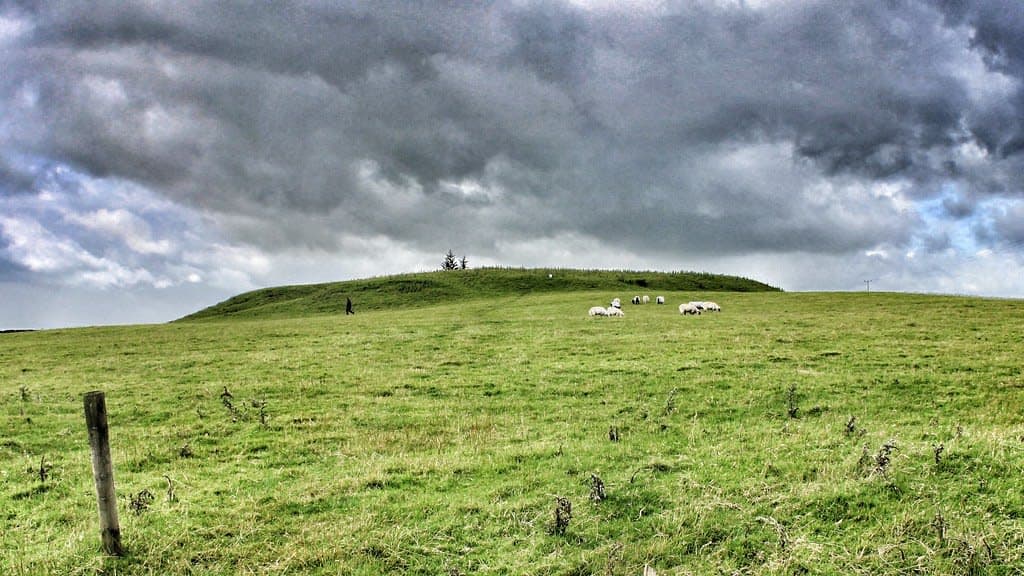
The Hill of Uisnech rises only 180 meters above the surrounding countryside, yet its modest height belies a significance that reaches to the foundations of Irish identity. Standing on its summit, where views extend to twenty counties, you stand at what Irish tradition has always known as the center—not merely the geographical middle of the island but its spiritual heart, its omphalos, its axis mundi.
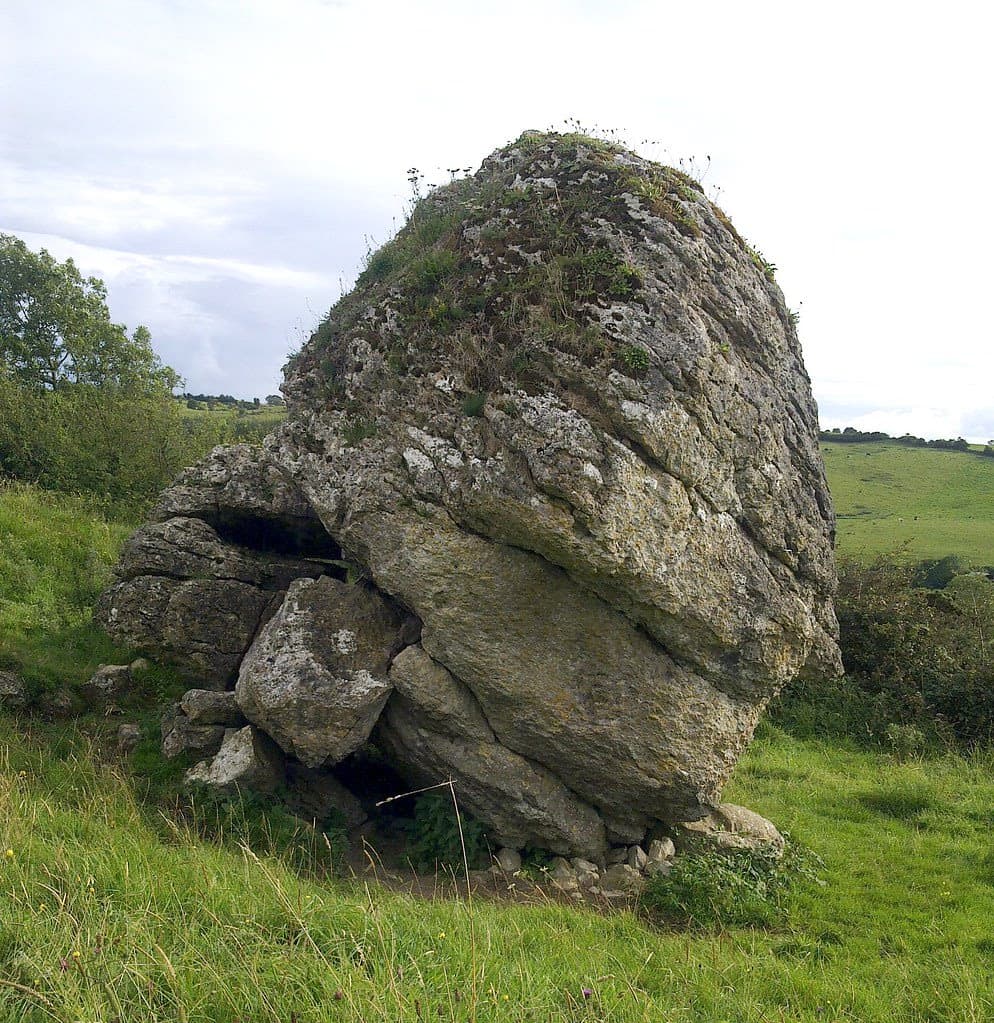
The great limestone boulder called the Cat Stone—Ail na Míreann, the Stone of Divisions—marks where the five provinces of ancient Ireland met. More than a boundary marker, this glacial erratic represents the convergence point of Ireland's sacred geography. Beneath it, mythology tells us, rests Ériu, the goddess-queen of the Tuatha Dé Danann, whose name the island bears. When the mythical Milesians arrived to claim Ireland, they met Ériu at this very place, and the poet Amergin promised that the land would forever carry her name.
Uisnech was Ireland's hearth. The Dindshenchas recounts that the druid Mide lit a fire here that burned for seven years—the mother flame from which all Ireland's hearth fires were kindled. Each Bealtaine, as winter gave way to summer, the High King would light the great fire on Uisnech's summit. From this central blaze, fires were kindled on sacred hills throughout Ireland, creating a chain of flame visible across the island—a fire-eye opening in the darkness, signaling the return of warmth and light.
In 2009, the Bealtaine Fire Festival was revived after centuries of dormancy. In 2017, President Michael D. Higgins became the first Irish head of state in nearly a thousand years to light the ceremonial fire. Standing on Uisnech as the flames rise, surrounded by thousands who have gathered to witness the ancient rite, visitors participate in one of Europe's oldest continuous sacred traditions—a practice that has marked the turning of seasons at Ireland's center for five millennia.
Context And Lineage
Uisnech stands at the intersection of Irish mythology, archaeology, and living ceremony, recognized for five thousand years as the sacred center of Ireland, where provinces meet, the goddess rests, and the Bealtaine fire has marked the turning of seasons since before recorded history.
Irish mythology preserves multiple origin narratives for Uisnech's significance. The Lebor Gabála Érenn (Book of Invasions) tells of the Milesians meeting the goddess Ériu at Uisnech as they sought to claim Ireland. Ériu asked the poet Amergin to promise that the land would bear her name if she granted them victory. Amergin agreed, and Ireland became Éire—the land of Ériu. She is said to rest beneath the Stone of Divisions, her presence giving the center its ultimate significance.
The Dindshenchas tells another origin: the druid Mide came to Uisnech and lit a fire that blazed for seven years. The druids of other tribes complained that this fire diminished their own, and Mide had their tongues cut out. This brutal story encodes Uisnech's primacy—the fire at the center silences all competition. From Mide's fire, all Ireland's hearths would be symbolically kindled at each Bealtaine.
Uisnech belongs to the network of Irish 'Royal Sites' that includes the Hill of Tara, Rathcroghan, Dún Ailinne, Cashel, and the Navan Fort. While Tara is associated primarily with royal power, Uisnech represents spiritual power—the complementary center where druidic rather than kingly authority held sway. The site is shortlisted for UNESCO World Heritage nomination as part of the Royal Sites of Ancient Ireland.
Ériu
Goddess-queen of the Tuatha Dé Danann, for whom Ireland (Éire) is named; said to rest beneath the Stone of Divisions
Mide
Druid who lit the first fire at Uisnech, burning for seven years; eponym of the province of Meath (Mide)
Amergin
Milesian poet who promised to name the land for Ériu
Lugh
God of the Tuatha Dé Danann, associated with Uisnech; gives name to nearby Lough Lugh
President Michael D. Higgins
First Irish head of state to light the Bealtaine fire in nearly a thousand years (2017)
Why This Place Is Sacred
Uisnech embodies thin place qualities as Ireland's acknowledged axis mundi—the meeting point of five provinces, the resting place of the goddess who named the island, and the source of the sacred fire that symbolically renewed every hearth in Ireland at the turning of each summer.
The concept of thin places describes locations where the boundary between ordinary reality and the sacred grows permeable. Uisnech possesses this quality in its most concentrated form, not as one sacred site among many but as the sacred center from which Ireland's entire spiritual geography radiates.
The site's designation as omphalos—the navel—carries profound implications. In cultures throughout the world, the center is where creation began, where heaven touches earth, where the worlds can be traversed. Uisnech serves this function for Ireland. The Stone of Divisions marks where all provinces converge; standing there, one stands in all of Ireland simultaneously.
The presence of the goddess Ériu beneath the stone adds another dimension. This is not merely a place of assembly or fire but the burial place of the sovereignty goddess herself. The island that Europeans would eventually call Ireland takes its name from her, and she rests at its center. To stand at Uisnech is to stand at the place where Ireland becomes Ireland, where the goddess's presence gives the land its essential character.
The fire tradition creates a third layer of thin place quality. The Bealtaine flame at Uisnech was not simply one fire among many but the source fire, the original flame from which all others derived. When the High King lit this fire, he performed an act of cosmic renewal—kindling the light that would spread to every hearth, symbolically reigniting the entire island. This tradition, revived in our time, continues to create annual moments of heightened sacred presence.
Uisnech served as the sacred and political center of Ireland, where assemblies were held, fires were lit, and the unity of the island was ceremonially affirmed. The mythology suggests it was a place of druidic activity and a gateway to the mystical fifth province, Mide—the province of the center, of vision and sovereignty.
Human activity at Uisnech spans approximately five thousand years, from Neolithic passage tomb construction through Bronze and Iron Age ceremonial use to early medieval royal assemblies. Christian influence reframed some sites (the passage tomb became 'St. Patrick's Bed') but did not erase the site's fundamental significance. After centuries of neglect, the revival of the Bealtaine Fire Festival in 2009 and its presidential endorsement in 2017 have restored Uisnech to living sacred use.
Traditions And Practice
The Hill of Uisnech supports both formal Celtic calendar celebrations—particularly the Bealtaine Fire Festival—and year-round guided pilgrimage that connects visitors to Ireland's sacred center through mythology, archaeology, and landscape.
The central traditional practice at Uisnech was the lighting of the Bealtaine fire. As the calendar turned from Beltaine to summer, the High King would kindle the great flame on the summit. From this fire, other fires were lit on sacred hills throughout Ireland, creating a visible chain of flame across the island. Every hearth in Ireland was symbolically renewed from this central source.
Assemblies and fairs accompanied the fire. People gathered at the center to conduct business, settle disputes, and celebrate the return of summer. The site's function as the meeting point of provinces made it neutral ground for such gatherings.
Ceremonies at the Cat Stone likely honored the goddess Ériu and affirmed the sacred geography of the five provinces. The stone's encircling ring-barrow indicates burial practices, suggesting ancestor veneration at the very heart of Ireland.
The Bealtaine Fire Festival, revived in 2009, draws thousands annually to witness the great fire's lighting. The ceremony includes music, ritual, and community celebration, creating a contemporary expression of ancient practice. President Higgins's participation in 2017 added official recognition to what had been a grassroots revival.
Other Celtic calendar events are celebrated: Samhain (November), Imbolc (February), and Lughnasadh (August). Each offers a different encounter with Ireland's seasonal spirituality.
Year-round guided tours provide access to the mythology and archaeology. Private tours can be arranged for groups seeking deeper engagement or personal ceremony.
For meaningful engagement, attend the Bealtaine Fire Festival if possible—this represents the site's fullest expression. Otherwise, book a guided tour and approach it as pilgrimage rather than tourism. Walk the landscape with attention. At the Cat Stone, acknowledge Ériu—the goddess whose presence makes the center sacred. Consider what it means to stand where all provinces meet. If drawn to a particular monument, take time with it. The five thousand years of accumulated meaning cannot be absorbed in a single visit, but each visit adds to your understanding.
Druidic and Pre-Christian
HistoricalUisnech served as the sacred center of pre-Christian Ireland, associated with druidic authority, the Bealtaine fire, and access to the mythical fifth province.
Fire ceremonies, assemblies, provincial gatherings, veneration of the goddess Ériu.
High Kingship and Royal Assembly
HistoricalHigh Kings of Ireland lit the Bealtaine fire at Uisnech, exercising spiritual authority complementary to the political authority centered at Tara.
Royal fire lighting, political assemblies, fairs and gatherings.
Contemporary Celtic Revival
ActiveThe Bealtaine Fire Festival, revived in 2009, represents the most significant revival of ancient Irish ceremonial practice at its original location.
Bealtaine fire lighting, Celtic calendar celebrations, guided pilgrimage, community gathering.
Experience And Perspectives
Visitors to Uisnech encounter a landscape rich with five thousand years of human sacred activity, guided by local experts through mythology, archaeology, and living tradition. The Bealtaine Fire Festival offers the most powerful encounter, but year-round tours provide meaningful access to Ireland's sacred center.
The experience of Uisnech begins with the understanding that you approach Ireland's acknowledged center. The guided tour—required because the site is on private farmland—actually enhances rather than diminishes the encounter, as knowledgeable guides weave together the mythology, archaeology, and landscape into a coherent narrative of sacred significance.
The walk covers approximately three kilometers across the 250-acre site, ascending gradually to the summit. Along the way, over thirty-five archaeological monuments bear witness to five millennia of human activity. The guide interprets these remains, connecting visible features to the invisible web of meaning that makes Uisnech what it is.
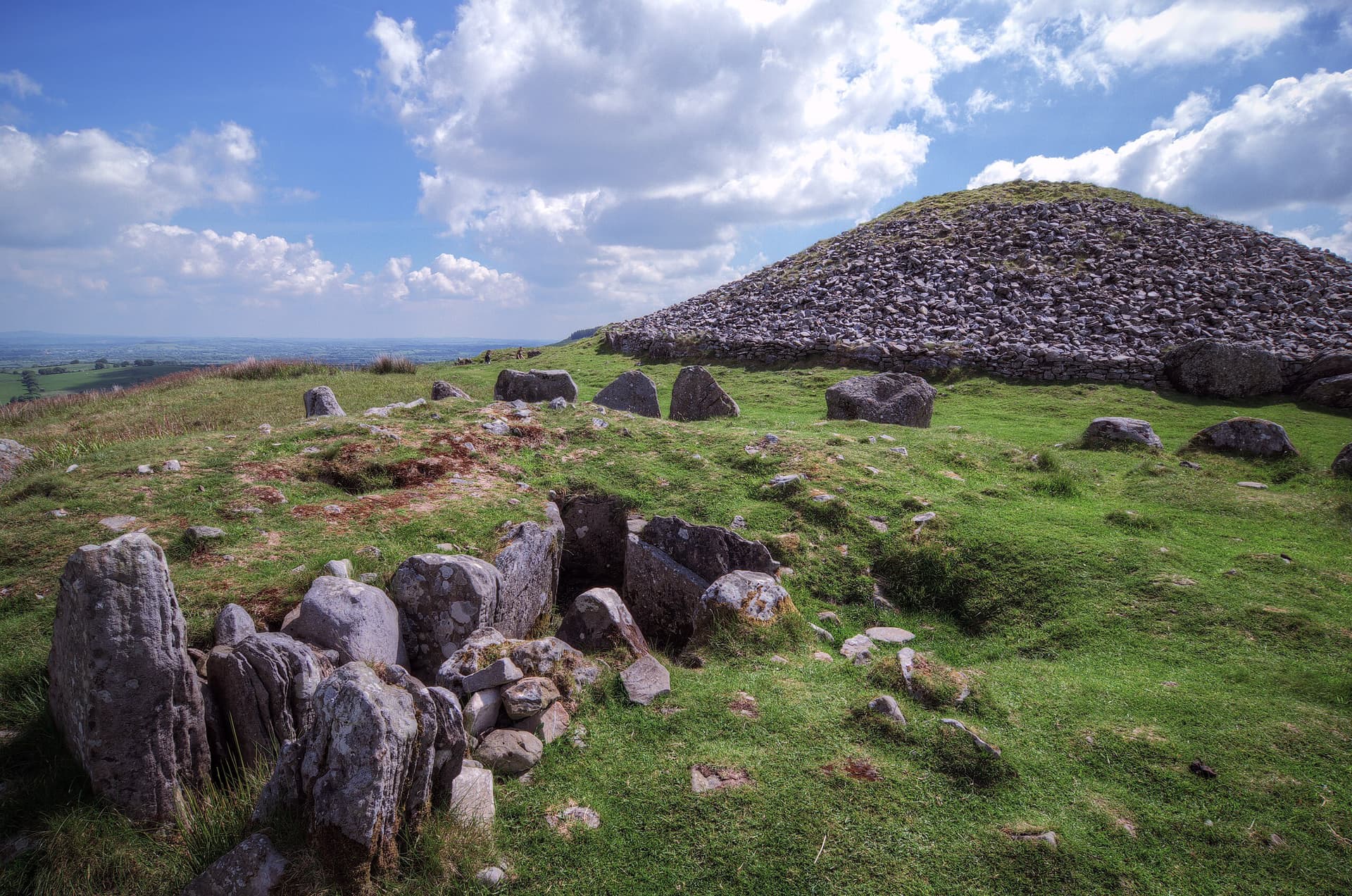
The Cat Stone dominates the experience. This massive limestone boulder—almost six meters tall, weighing over thirty tons—was deposited by glaciers at the end of the last Ice Age and recognized by early peoples as inherently significant. A Bronze Age ring-barrow surrounds it, marking it as a place of burial and ceremony. Standing before the stone, hearing the story of Ériu resting beneath it, visitors often report a shift in awareness—a recognition that they stand at a place where meaning has accumulated over thousands of years.
From the summit, views extend to twenty counties on clear days. This panoramic perspective creates the experiential foundation for understanding Uisnech as center. You stand at the hub; Ireland spreads around you in all directions. The landscape itself teaches what the mythology proclaims.
The Bealtaine Fire Festival transforms individual experience into collective ceremony. Thousands gather as the sun sets, the great fire is kindled, and the ancient ritual renews itself. Those who witness the flame rising on Uisnech's summit participate in one of Europe's oldest living traditions—a practice that has marked the turning of seasons at this place for five thousand years.
Approach Uisnech as pilgrimage to Ireland's sacred center. Book your tour in advance; spontaneous access is not possible. Wear sturdy footwear and prepare for variable weather. Arrive fifteen minutes early for your tour. Walk the landscape with openness, allowing the guide's narrative and the land itself to work on your awareness. At the Cat Stone, take time—this is the Stone of Divisions, the resting place of Ériu. If you can attend the Bealtaine Fire Festival, do so; it represents the site's most powerful expression.
Understanding the Hill of Uisnech requires engaging with Irish mythology, archaeology, and contemporary revival simultaneously. The site's significance is encoded in medieval texts, confirmed by archaeological evidence, and renewed through living festival tradition.
Archaeological research, particularly by Dr. Roseanne Schot since 2001, has confirmed over thirty-five monuments spanning approximately five thousand years—from a probable Neolithic passage tomb on the summit to early medieval features. Geophysical surveys have revealed additional buried remains. The site's function as a ceremonial and assembly center is well-established, though specific practices remain matters of interpretation. Uisnech is shortlisted for UNESCO World Heritage nomination as one of Ireland's Royal Sites.
Irish mythology presents Uisnech as the omphalos—the navel of Ireland. The Lebor Gabála Érenn records the goddess Ériu granting the island her name here. The Dindshenchas describes the druid Mide's fire that established the site's primacy. The Cat Stone marks where five provinces meet, encoding Ireland's sacred geography. These medieval literary sources preserve much older traditions, though distinguishing historical practice from literary elaboration remains challenging.
Contemporary pagans and Celtic reconstructionists recognize Uisnech as one of Europe's most significant axis mundi sites—a place where the center holds and all directions radiate. The revival of the Bealtaine fire is understood not as reenactment but as genuine rekindling of spiritual tradition. Some practitioners work with Uisnech as a portal to Mide—the fifth province, the province of vision and sovereignty that exists at the center of the other four.
Significant questions remain. What ceremonies did druids conduct here? What did the Neolithic builders believe? How did practices evolve across five thousand years of use? What lies within the unexcavated passage tomb? The mythology provides narrative but not verifiable historical detail; the archaeology provides evidence but not interpretation. The fires burn again, but whether they burn as they once burned remains unknown.
Visit Planning
The Hill of Uisnech offers guided tours year-round (weekends, or private tours by arrangement) with the Bealtaine Fire Festival in May providing the most powerful experience of this living sacred site. Pre-booking is essential.
Located at Rathnew, Loughnavalley, County Westmeath, in Ireland's midlands. Access by car is typical; the site is approximately 100 km west of Dublin. No public transport to the site itself. All visits must be pre-booked through uisneach.ie or by phone (+353 87 718 9550). Do not arrive without a booking.
Mullingar (20 km) offers the nearest range of accommodation. Athlone (25 km) provides additional options. For the Bealtaine Fire Festival, book accommodation well in advance.
Uisnech is accessed via guided tours on private farmland, requiring pre-booking, punctual arrival, and appropriate outdoor attire. The site's archaeological significance demands care not to disturb monuments, while its sacred character invites reverent attention.
Visiting Uisnech means entering a working farm that also happens to be one of Ireland's most significant sacred sites. This dual nature requires respect for both the practical realities of land management and the profound significance of what the land holds.
All access is via guided tour. This is not a limitation but an opportunity—the guides are knowledgeable and passionate, and their interpretation transforms a walk through fields into a pilgrimage through five thousand years of Irish sacred history. Pre-book your tour; walk-up access is not available.
Arrive fifteen minutes early. Tours depart on time to cover the material adequately. The walk is approximately 3 km over uneven, sometimes muddy terrain. Sturdy footwear is not optional but essential.
Dogs are not permitted—this is a working farm with livestock. Stay with your guide and on designated paths. The archaeological monuments are protected; do not climb on them, disturb them, or remove anything from the site.
The sacred character of Uisnech calls for appropriate presence. Listen to the mythology; allow it to inform your experience. At the Cat Stone, take the time you need—this is the center, the place where Ériu rests. Maintain quiet respect when others are engaged in their own contemplation.
For the Bealtaine Fire Festival and other events, follow event-specific guidelines provided by the organizers. These gatherings combine celebration with ceremony; both aspects deserve your participation.
Sturdy, waterproof footwear essential. Weather-appropriate layers—Irish weather is changeable. Prepare for wind at the summit. No specific spiritual dress requirements.
Photography is permitted during tours. Be mindful of other visitors. At ceremonies and festivals, follow guidance from organizers regarding photography of ritual elements.
The site's managed nature and archaeological significance mean personal offerings should not be left. Channel devotion through attention, intention, and support of the site's maintenance and programming.
{"All access by guided tour only—pre-booking required","Arrive 15 minutes before tour departure","Dogs not permitted","Stay on designated paths with your guide","Do not climb on or disturb archaeological monuments","Do not remove any materials from the site","Follow event-specific guidelines for festivals"}
Sacred Cluster
Nearby sacred places create the location cluster described in the growth plan. This block is intentionally crawlable and links into the wider regional graph.